
Reviewed · KYOTO SAMURAI & NINJA EXPERIENCES
Kyoto: Samurai Ninja Museum guided tour
Kyoto already has a talent for history theater, but this museum tour turns it into hands-on fun. I like the small-group pace and the chance to try real-feeling props, including dress-up with a samurai helmet and the ninja star throwing. The main thing to consider is that it is only 1 hour, so if you want lots of free time to wander, you’ll feel the clock.
The guided part is where the value lives. Guides such as Mami, Miu, Aya, Sayo, Akiko, and Taka are repeatedly praised for clear English and for tying samurai and ninja to Japanese history, not just props. Since it’s hands-on, the experience leans active rather than quiet museum stroll.
You also get a neat mix of roles and skills in one stop: samurai-style dress-up, a katana lesson, and ninja tools training like the shuriken throw and ninja fukiya practice, all in one place. For $28, that’s a lot of participation packed into a short window—just plan to arrive a bit early and handle your own transportation since rides aren’t included.
In This Review
- Key things that make this tour worth your hour
- Why a Samurai and Ninja Museum tour makes sense in Kyoto
- Getting in fast: the 1-hour pace and what it means for your day
- The guide talk: samurai and ninja context you can actually use
- Dress-up and the real-gear feeling: samurai helmet, armor vibe, and replica sword
- Hands-on weapons time: shuriken throwing plus katana lesson and ninja fukiya
- Shuriken throwing: the payoff moment
- Katana lesson: basics that create context
- Ninja fukiya: a small detail with big story value
- What the museum visit feels like inside that hour
- Price and value: is $28 really fair for what you get?
- Who this Kyoto tour is best for
- Should you book the Kyoto Samurai Ninja Museum guided tour?
- FAQ
- How long is the Kyoto Samurai Ninja Museum guided tour?
- How much does the tour cost?
- What’s included in the experience?
- Do I need to buy the museum ticket separately?
- What language is the guide in?
- Is there free cancellation?
Key things that make this tour worth your hour
- Samurai-ninja mashup that still stays tied to real history, with English explanation during the visit
- Dress-up with a real samurai helmet plus a replica sword experience for memorable photos
- Shuriken throwing as a real finale-style activity (the part most people talk about after)
- Hands-on weapon lessons: a katana lesson and ninja fukiya practice happen inside the same museum visit
- Small group format (limited to 10 participants) that keeps the guide’s attention on you
- Skip-the-ticket-line entry so you can spend more time doing than waiting
Why a Samurai and Ninja Museum tour makes sense in Kyoto
Kyoto is famous for centuries of everyday life layered under temples and streets. A museum tour might not sound like the most Kyoto thing at first, but this one works because it connects the samurai and ninja story to place and time—especially the way Kyoto is tied to those warrior eras.
What I like is that this isn’t a lecture where you passively nod. You move through short, guided chunks and then get pulled into doing something: putting on gear, holding a replica sword, and throwing shuriken. That active format is perfect if you’re traveling with kids, but it still works for adults who want more than a photo stop.
One practical note: because the duration is about an hour, you should treat it as a focused museum experience rather than a full museum day. If you’re hoping for a deep, self-paced browse of every display panel, plan another visit time on your own.
Pick up the blade again with these Kyoto sessions


Getting in fast: the 1-hour pace and what it means for your day
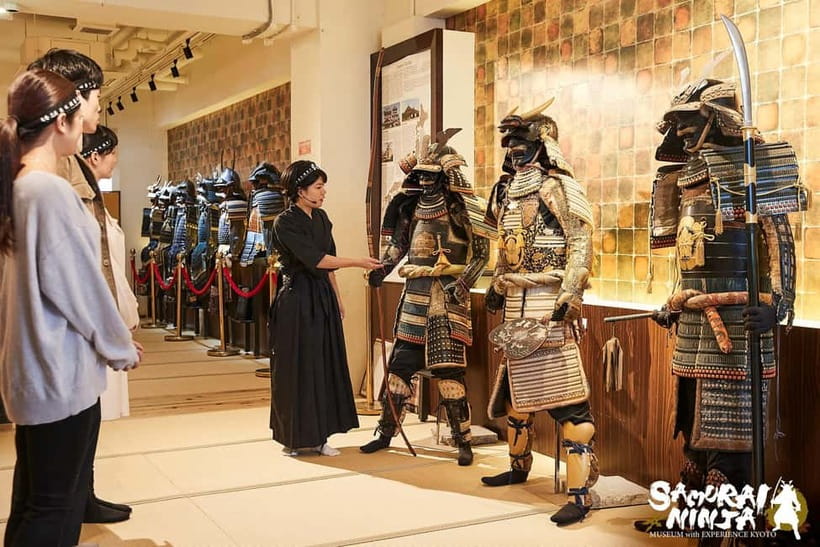
This tour is built around a tight schedule. You get museum entry plus a guided visit with an English-speaking guide, and you skip the ticket line. That combination matters in Kyoto, where waiting can eat the best part of your morning or afternoon.
The upside is momentum. You don’t spend your energy figuring things out at the door. The downside is that every activity is timeboxed—so you’ll get a taste of each hands-on moment rather than extended practice.
The tour also runs with small-group size (limited to 10 participants). That usually means less standing around and more back-and-forth with the guide. There’s also a note that the activity has a maximum of 30 travelers overall, which suggests multiple groups are running at once. If you’re sensitive to crowds, aim for a less peak time, and keep an eye on your specific start time when you book.
Transportation is on you. The ticket includes the museum experience, but it doesn’t include getting to and from the attraction. If you’re staying far out, factor in a little travel buffer so you’re not rushing to make the start.
The guide talk: samurai and ninja context you can actually use
The guided explanation is a huge part of why this tour earns such strong ratings. People repeatedly highlight guides like Miu and Mami for giving detailed historical facts and for linking samurai and ninja to Japanese history in a way that feels logical, not random.
Here’s what that means for you: you’ll leave with a clearer mental map. Instead of thinking of ninja as just sneaky characters and samurai as just sword guys, you get a framework for how the two fit into different periods of Japan and how Kyoto ties into the larger story.
You’ll also get interaction. Many guides are praised for engaging the audience with questions and for making sure the group is involved, not just watching. That matters if you tend to drift through tours while others ask questions—this format nudges you to participate.
Still, keep your expectations realistic. It’s a museum tour that includes activities like dress-up and throwing stars. You’re not signing up for a long academic seminar. If you want hours of lecture, you’ll probably prefer a longer museum route. But if you want a solid foundation plus fun, this is the right blend.
Dress-up and the real-gear feeling: samurai helmet, armor vibe, and replica sword
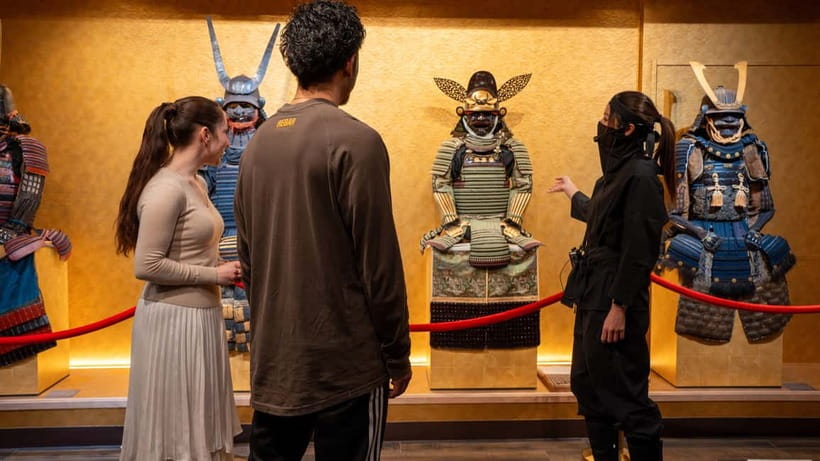
This is where the tour stops being purely informational. You dress up like a samurai and wear a real samurai helmet. You’ll also hold a replica sword. When you see people light up in pictures, this is usually the moment.
I like this part because it’s not just costume for looks. A helmet and armor-style experience helps you understand scale and posture. Even if you already know the visuals from books or games, handling the gear gives your brain a physical reference point. That makes the historical explanation stick better later.
The tour also includes a samurai-armor experience as part of the hands-on setup (described as wearing real armor as well). If you’re considering this tour for young kids, it’s worth knowing the experience can involve putting on heavier or bulkier items. For adults, it’s quick and fun; for people with mobility limits, it’s a good sign that the tour is listed as wheelchair accessible, but you should still wear comfortable shoes and plan for some time in gear.
Also, for photo lovers: this is one of those activities where photos are part of the experience. You’ll get the chance to look the part and then pair it with what you learned. That’s a practical way to remember a history topic without turning it into a pure performance.
Hands-on weapons time: shuriken throwing plus katana lesson and ninja fukiya
If you’re deciding based on what you’ll actually do, look at the hands-on lineup. You’ll get:
- a shuriken (ninja star) throwing experience
- a katana lesson
- practice using a ninja fukiya
In other words, you’re not stuck at one “try this once” station. The tour spreads activities across different warrior themes, which keeps energy up and makes the history feel more tangible.
Other Kyoto tours and experiences to compare




Shuriken throwing: the payoff moment
The shuriken throw is repeatedly described as a fun finale. That tracks: it’s simple to understand, easy to watch, and naturally becomes a mini-competition in a safe setting. It’s also the kind of activity that works across age groups. Adults get the novelty; kids usually get the excitement; everyone gets photos.
From a planning standpoint, you’ll enjoy this more if you’re not shy about getting involved. It’s not a passive demonstration. You’ll be positioned and guided so you can try it.
Katana lesson: basics that create context
The katana part is listed as a lesson. That likely means you get an introductory walkthrough rather than a training program. Still, it matters, because it turns the word katana from a trivia item into a physical concept: how a sword is presented, how handling differs from just owning one.
If you’re expecting advanced sword mastery, you might be disappointed. But for a 1-hour guided experience, basic instruction plus explanation is exactly the right scale.
Ninja fukiya: a small detail with big story value
The ninja fukiya practice is one of those unique additions that helps prevent the tour from feeling like the same action scene over and over. It’s a reminder that ninja tools were part of a broader toolkit, not only a story about blades and shadows.
If you’re the kind of traveler who likes unusual skills—things you don’t see at other attractions—this is one of the reasons this tour gets attention.
What the museum visit feels like inside that hour
Even without a long, slow itinerary, you can expect the session to flow like a guided sequence: history talk, then hands-on transitions, then the action moment with throwing.
This structure has a real advantage: it helps you stay focused. Museums can be tiring when you’re reading quietly for too long. A tour with active segments breaks up that fatigue while keeping the story connected.
The balance is also what many people seem to praise: enough information to understand what you’re doing, plus enough interaction to make it memorable. Guides are repeatedly described as giving a nice push-pull between explanation and participation, which is exactly what you want in a short time window.
One possible drawback is that the tour’s “interactive” format means the emphasis is less on exploring exhibits at your own pace. If you like to linger at details, you’ll probably want additional time later to revisit areas independently. But as a first taste of samurai-and-ninja culture in Kyoto, this works well.
Price and value: is $28 really fair for what you get?
$28 for a 1-hour guided museum visit can feel like a bargain, but value depends on how you measure it. Here’s how I’d think about it.
You’re paying for:
- museum entry
- an English-speaking guide
- hands-on activities like shuriken throwing and dress-up
- inclusion of multiple warrior experiences in one booking
If you were to purchase entrance tickets plus pay separately for a guided session, you’d usually spend more. And if you were hunting for experiences that involve props—helmet, replica sword, and throwing—those tend to cost extra. In that sense, the price fits the experience format: a guided “do it with a guide” session rather than just admission.
The only time the value might not feel great is if you expected a long, museum-only visit or if you don’t care about interactive activities. But if you want something that’s fun and educational inside one hour, $28 is reasonable.
Who this Kyoto tour is best for
This is a strong match if you:
- want a short activity that still feels complete
- enjoy hands-on history over pure sightseeing
- travel with kids or teens who need movement and participation
- want a guided English explanation tied to samurai and ninja themes
- like taking photos that look like you actually stepped into the story
It may be less ideal if you:
- want a quiet, self-paced museum run
- hate structured activities and prefer to roam freely
- are looking for deep training in swordsmanship or martial technique
Wheelchair accessibility is listed, which is a good sign for inclusivity. Just remember the tour includes costume and hands-on elements, so comfort and mobility can affect how much you enjoy the experience.
Should you book the Kyoto Samurai Ninja Museum guided tour?
I’d book it if you want a practical, entertaining way to learn about samurai and ninja in Kyoto without spending half a day planning. The biggest reasons are the small group format, the high participation level, and the fact that you do multiple hands-on activities—dress-up, katana lesson, shuriken throwing, and ninja fukiya practice—inside one hour.
I’d think twice if your idea of a museum day is lots of quiet wandering. This tour is active by design. Also, you’ll need to handle your own transportation since it’s not included.
If you’re on a first Kyoto visit and you want one “story + action” stop that’s easy to fit into a schedule, this is an efficient choice.
FAQ
How long is the Kyoto Samurai Ninja Museum guided tour?
It lasts 1 hour.
How much does the tour cost?
The price listed is $28 per person.
What’s included in the experience?
The tour includes a museum tour with a professional English-speaking guide, samurai costume, and a ninja star throwing experience. The description also mentions hands-on activities like a katana lesson and ninja fukiya practice as part of the tour.
Do I need to buy the museum ticket separately?
No. Entry is part of the tour, and the tour also notes skip-the-ticket-line entry.
What language is the guide in?
The tour is offered with an English-speaking guide.
Is there free cancellation?
Yes. Free cancellation is available up to 24 hours in advance for a full refund.
More Tours in Kyoto





More Tour Reviews in Kyoto

More Samurai and Ninja Sessions

Just added: more Kyoto tours to browse








Kyoto Samurai & Ninja Experiences, compared.
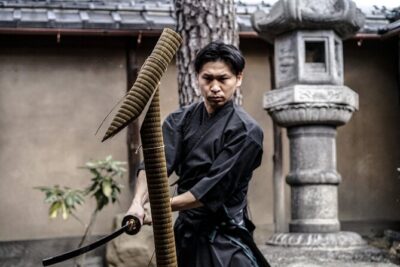 ★ 5.0Kyoto Samurai ExperienceFrom $1191,294 reviews
 ★ 4.9Kendo and Samurai Experience with Uniform and GearFrom $103815 reviews
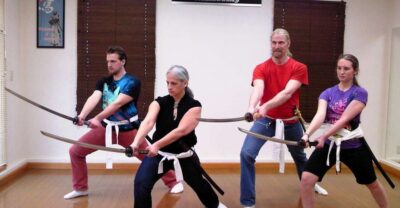 ★ 4.9Samurai Sword Class by Experts in Traditional ArtsFrom $64657 reviews
 ★ 4.5Skip the lines Basic Ticket at SAMURAI NINJA MUSEUM KYOTOFrom $28632 reviews
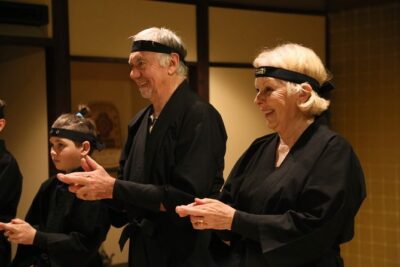 ★ 5.0Ninja 1-hour Hands-on Lesson by Japanese master in Kyoto -EntryFrom $80489 reviews
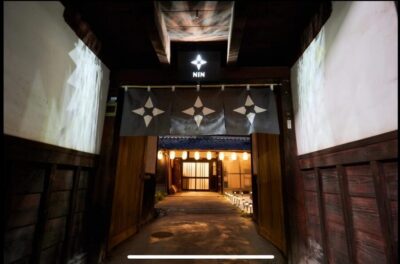 ★ 4.8Ninja Weapon Forging ExperienceFrom $148478 reviews
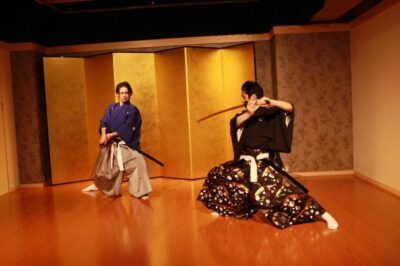 ★ 4.5Samurai Kenbu Traditional Sword Dancing ShowFrom $32426 reviews
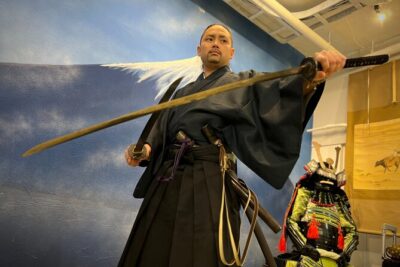 ★ 5.0Samurai Training with Modern day Musashi in KyotoFrom $132256 reviews
Browse the lists this tour appears in