
Kyoto’s geisha streets are more than postcards. This is a small-group walk through Kyoto’s famous Hanamachi, and I really like how Peter MacIntosh combines clear explanations with practical photography tips while you’re actually on the street. You end up noticing details you would’ve missed on your own.
I also appreciate the focus on truth: you’ll get stories, context, and myth-busting about geisha culture, not a dusty lecture. The only real drawback is simple—seeing maiko or geiko isn’t guaranteed, so go for the experience of understanding the place, not for a guaranteed sighting.
You’ll meet in front of the Minamiza Kabuki Theatre at 4:00 p.m., and the tour runs about 105 minutes, finishing around 5:45. Bring comfortable shoes, water, and your camera—just leave the tripod at home.
In This Review
- Key highlights you’ll feel right away
- First Stop: Minamiza Kabuki Theatre and a 4:00 p.m. start
- Hanamachi streets: cobblestones, traditional architecture, and what you should notice
- Peter MacIntosh’s approach: decades of research without the foggy lecture tone
- Photography tips that make Kyoto streets look like Kyoto
- Maiko and geiko: exciting possibility, no guarantees
- Price and value: what $54 buys in time, group size, and teaching
- Practicalities that affect your comfort (and your photos)
- Who should book this geisha walking tour in Kyoto?
- Should you book? The best way to think about it
- FAQ
- FAQ
- Where do we meet for the tour?
- What time does the tour start and when does it finish?
- How long is the Kyoto Geisha Walking Tour?
- How large is the group?
- Is the tour wheelchair accessible?
- Is it guaranteed to see maiko or geiko?
- Are cameras allowed, and what are the photo rules?
- What should I bring?
Key highlights you’ll feel right away
- Up to 9 people: a quieter, more personal stroll through Hanamachi than the big-group chaos.
- Peter MacIntosh in native English: stories and cultural context delivered in a way that’s easy to follow.
- Photography help on location: tips meant for Kyoto’s streets and traditional architecture (not generic camera talk).
- Myths answered, misconceptions corrected: practical context that changes how you view what you see.
- Hanamachi cobblestones and architecture: you’ll slow down and look at the details you normally rush past.
- Maiko/geiko sighting is possible, not promised: you’re there for understanding first.
First Stop: Minamiza Kabuki Theatre and a 4:00 p.m. start
The whole vibe starts at the meeting point: in front of Minamiza Kabuki Theatre, on the corner of Shijo and Kawabata. That location matters because it puts you near the action while still giving you a clean starting line for moving into the geisha district atmosphere.
At 4:00 p.m., you’re not just beginning a walk—you’re stepping into that early evening rhythm where Kyoto feels more contemplative and the streets look especially photogenic. And because the group is limited to 9, the guide can actually manage pacing. You’re less likely to get stuck behind a tall view-blocker while everyone tries to shoot the same narrow street.
The tour runs about 105 minutes, finishing around 5:45. That’s long enough to cover more than one stretch of Hanamachi, while still short enough that you won’t feel like you’re trapped outside for hours if the weather turns.
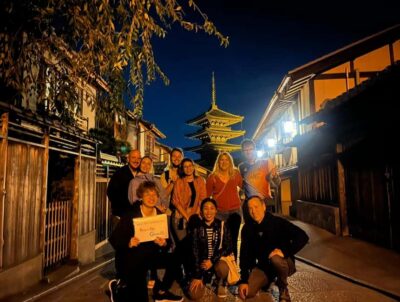
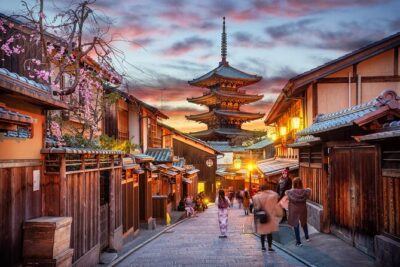
More evenings along the lantern-lit lanes of Gion
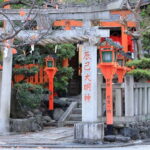
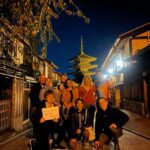
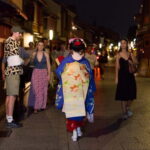
Hanamachi streets: cobblestones, traditional architecture, and what you should notice
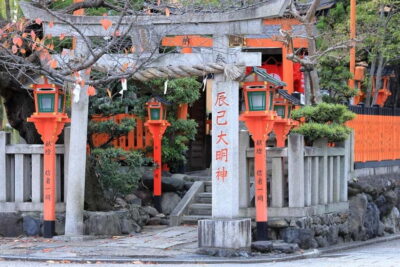
The core experience is a scenic stroll through Kyoto’s geisha districts, with special attention on Hanamachi’s charm. Expect cobblestone lanes, traditional-style buildings, and the kind of street layout where details come from small changes: doorways, signage, wall textures, and the way buildings align along the lane.
This kind of walk is valuable because Hanamachi is easy to misread. From the sidewalk, it can look like a “photo backdrop.” With the guide’s context, you start seeing how these neighborhoods developed and how the culture is reflected in everyday spaces.
As you go, Peter MacIntosh shares facts and stories tied to what you’re seeing. You’ll also hear about how geisha culture has been treated across time through woodblock prints, literature, and cinematic portrayals. That matters because it helps you separate:
- what’s been romanticized,
- what’s historically accurate, and
- what you’re seeing today.
Even if you’ve studied Kyoto photos for months, walking the streets in person changes everything. You don’t just see the look; you feel the scale, the quiet, and the pace.
Peter MacIntosh’s approach: decades of research without the foggy lecture tone
What makes this tour feel different is the guide’s mix of research, storytelling, and direct answers. Peter MacIntosh is the native English speaker leading the experience, and the tone is built for real understanding—questions welcomed, myths corrected, and explanations matched to what you’re passing by.
Because this is the original Geisha Walking Tour established in 2002, there’s an implied long-term sharpening of the route and the teaching style. More importantly, the tour is framed around a simple goal: help you understand the “flower and willow world” as something living and human, not just costume or tradition-as-a-souvenir.
In practice, that means you’re not stuck with a single narrative. You get layers—history alongside present-day realities—plus specific stories that make the culture easier to picture. And because it’s a walking tour, the stories stay connected to the street, rather than drifting into vague background facts.
A lot of cultural tours sound serious, but this one leans into clarity. If you’ve ever felt lost in Kyoto’s cultural terminology, you’ll likely come away with words you can actually use.
Photography tips that make Kyoto streets look like Kyoto
You’ll get photography tips as part of the tour, and the fact that tips happen while you’re walking is a big deal. It’s one thing to hear camera advice in a workshop. It’s another to have guidance tailored to what’s in front of you: narrow lanes, changing light, and subject placement where timing matters.
The rules also shape your photo strategy. Photography is allowed, but you need to respect privacy of geishas and locals. That’s not just etiquette talk—it’s how you keep the experience dignified and avoid disrupting people who live with this neighborhood’s daily rhythm.
Also note what’s not allowed: no tripods, and no video recording or audio recording. So think handheld, quick framing, and patience. Bring your camera, but be ready to move with the group instead of setting up a base camp.
If you’re hoping for “street portrait” style shots, adjust expectations. This tour isn’t about crowding for images. It’s about learning how to photograph respectfully while still capturing the mood of Hanamachi.
Maiko and geiko: exciting possibility, no guarantees
Here’s the honest part that you should plan around: there is no guarantee of seeing maiko and geiko along the way. That’s clearly stated, and I’m glad it is. It sets the right mindset.
If you do spot one, it can feel like the whole neighborhood clicks into focus. But even without a sighting, the tour is still worthwhile because the guide is teaching you how to read the signs: what certain traditions mean, why certain details matter, and what roles geiko and maiko represent in the culture.
Don’t treat the tour like a lottery ticket. Treat it like an orientation to Hanamachi. The real payoff is how your eyes change as you walk—how you understand the environment you’re standing in.
Other Kyoto tours and experiences to compare
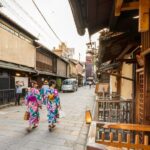
Price and value: what $54 buys in time, group size, and teaching
At $54 per person for about 105 minutes, this is priced like an expert-led cultural experience, not a budget “walk and go” tour. The value comes from three things you can feel immediately:
First, the group is small—limited to 9. That size helps the guide answer questions and keep pace in narrow streets.
Second, you’re paying for a native English speaker with decades of research and stories. When the tour clarifies misconceptions and explains what you’re looking at, the time feels efficient.
Third, the tour includes photography tips and a set of souvenir postcards. Those postcards are a small extra, but they also remind you of what you learned while the walk is still fresh.
What’s not included is just as important: meals and drinks are not part of the tour, and there’s no hotel pickup/drop-off. So you’ll want to plan to eat or grab water before and after.
If you’re trying to decide between doing nothing but roaming on your own, the cost is basically buying you context + guidance + photography help. If you enjoy learning while you walk, it’s a fair trade.
Practicalities that affect your comfort (and your photos)
This is a walking tour. That means you should show up prepared.
Bring:
- Comfortable shoes (cobblestones are not your friend in stiff, slick shoes)
- Camera (the tour includes photo tips)
- Water (Kyoto weather can shift fast)
Be prepared for any weather condition. There’s no promise you’ll be indoors, so pack accordingly.
Also remember the conduct rules: no smoking, and you can take photos but must respect privacy. The tour also bans tripods, video recording, and audio recording. That’s worth planning for if you like filming on your phone or using a tripod for stability.
Finally, it’s not suitable for children under 8. If you’re traveling with younger kids, this is probably not the best fit for attention spans and comfort on a focused cultural walk.
Who should book this geisha walking tour in Kyoto?
This tour is a strong fit if you want:
- guided context in English without losing details,
- a small-group experience in Hanamachi,
- help with photography etiquette and street-level shooting,
- myth-busting that makes what you see feel clearer.
It’s also a good pick if you’re the kind of traveler who hates cultural confusion. You don’t want a surface-level “pretty streets” outing. You want to understand what the neighborhood represents.
If you’re traveling mainly for a guaranteed maiko/geiko sighting, you may feel let down, because sightings aren’t promised. Go anyway if you can appreciate culture even when people aren’t directly in the frame.
And if you prefer quiet, thoughtful sightseeing over big-group rushing, the 9-person limit should feel like a win.
Should you book? The best way to think about it
If your goal is to understand Kyoto’s geisha districts, this tour makes that goal realistic. The walk gives you structure, a guide who explains in native English, and practical photography advice that you can use right away.
I’d book it if you’re excited by cultural context, street-level details, and respectful travel. I’d skip it if you’re only interested in filming, tripod setups, or a guaranteed celebrity-style sighting.
FAQ
FAQ
Where do we meet for the tour?
Meet in front of the Minamiza Kabuki Theatre at the corner of Shijo and Kawabata.
What time does the tour start and when does it finish?
The tour meets at 4:00 p.m. and finishes at approximately 5:45 p.m.
How long is the Kyoto Geisha Walking Tour?
The duration is 105 minutes.
How large is the group?
The group is small and limited to 9 participants.
Is the tour wheelchair accessible?
Yes, it is wheelchair accessible.
Is it guaranteed to see maiko or geiko?
No. There is no guarantee of seeing maiko and geiko along the way.
Are cameras allowed, and what are the photo rules?
Photography is allowed. You should respect the privacy of geishas and locals. Tripods are not allowed, and video recording and audio recording are not allowed.
What should I bring?
Bring comfortable shoes, a camera, and water.
More Tours in Kyoto
More Tour Reviews in Kyoto
Still in Gion? Keep Going

Just added: more Kyoto tours to browse





Gion & Geisha District Tours, compared.
 ★ 4.7Kyoto Geisha Walking Tour: Gion District & Hidden GemsFrom $253,273 reviews
 ★ 4.9Gion Magical Night Walking Tour with Geisha TriviaFrom $242,393 reviews
 ★ 4.7Gion Geisha District Walking Tour – Stories of GeishaFrom $202,187 reviews
 ★ 4.9Best of Kyoto: Gion, Geisha, Pagodas & CobblestonesFrom $242,058 reviews
 ★ 4.5Night Walk in Gion: Kyoto’s Geisha DistrictFrom $212,003 reviews
 ★ 5.0Kyoto Night Foodie Tour in Gion (9+ dishes + 6 Sake tastings)From $1631,762 reviews
 ★ 5.0Kyoto Gion Geisha District Walking Tour – The Stories of GeishaFrom $251,441 reviews
 ★ 5.0Kyoto Gion: 2-Hour Geisha Culture & History Walking TourFrom $231,186 reviews
Browse the lists this tour appears in