
Reviewed · KYOTO SAMURAI & NINJA EXPERIENCES
Ninja 1-hour Hands-on Lesson by Japanese master in Kyoto -Entry
Ninja training sounds like a movie plot, but it’s surprisingly practical. In this 1-hour dojo lesson in Kyoto, you’ll learn basic ninja routines and try real weapon moves with a master instructor in English. I love the hands-on practice you get, not just watching. I also like the small-group size (up to 6), which keeps the coaching focused and the pace friendly.
What really works for me is how the lesson turns your body into the lesson plan. You’ll work on ninja breathing, Kuji-In-style meditation, and ninja walking before you move on to weapons. A possible drawback to note: it’s only about entry-level basics, so if you’re chasing deep historical study, the time can feel short for that.
If you want a fun break from temples and lines, this is a great choice. You’ll dress in ninja gear, practice safely, and leave with clear skills you can actually remember on the plane home.
In This Review
- Key Highlights You Should Know Before You Go
- Finding the Dojo: NINJA DOJO and STORE KyotoJapan (Hakurakutenchō)
- The 1-Hour Flow: Kuji-In Meditation to Ninja Walking
- The Trap-House Segment: Why the Gimmick Actually Teaches Something
- Weapon Practice Stations: Sword, Kunai, Shuriken, and Blow Darts
- Sword training (controlled and beginner-friendly)
- Kunai and shuriken (throwing with targets)
- Blowgun with darts (aiming skills in miniature)
- Small Group Coaching: Up to 6 People Means Less Waiting
- The English-Language Sensei and the Ninja Outfit
- Price in Context: Is $80.58 Worth It for One Hour?
- Who Should Book This Ninja Lesson in Kyoto?
- Best-fit age range (based on how the lesson feels)
- When It Might Not Fit Your Style
- Should You Book This Ninja Lesson in Kyoto?
- FAQ
- How long is the Ninja hands-on lesson in Kyoto?
- How big is the group for this lesson?
- Where do I meet for the activity?
- Is the lesson taught in English?
- What techniques do you practice during the lesson?
- What weapons are included in the training?
- Do they provide ninja clothing?
- Is food or drink included?
- Do I need good weather for the experience?
- What if I cancel last minute?
- Is the location easy to reach?
Key Highlights You Should Know Before You Go
- Kuji-In + ninja breathing: basic mind-body foundations before weapon practice
- Ninja walking drills: including a tricky floor setup designed to teach footwork and avoidance
- Weapon stations with supervision: sword, kunai, shuriken, and a blowgun with darts
- Trap-house style segments: a guided gimmick with real training moments built into it
- Max 6 in the class: more time with the instructor, less time waiting
- Photo-friendly experience: instructors take pics/videos during the session (no added charge noted)
Finding the Dojo: NINJA DOJO and STORE KyotoJapan (Hakurakutenchō)
You meet at NINJA DOJO and STORE KYOTOJapan, in Shimogyo Ward, at 528 2F, Hakurakutenchō, Kyoto. It’s easy to plan around because it’s in a central area and described as near public transportation. That matters in Kyoto, where you can burn half your day just figuring out how to get from A to B.
The class starts and ends at the same meeting point, so you’re not juggling transfers, trains, or meeting someone else across town. For a 1-hour activity, this “no hassle” structure is a big part of the value.
One practical point: since you’ll be renting ninja clothing during training, you’ll likely want to show up ready to change into the provided outfit and move around comfortably.
Pick up the blade again with these Kyoto sessions
The 1-Hour Flow: Kuji-In Meditation to Ninja Walking
This is an entry-level lesson, so don’t expect advanced martial arts. What you do get is a tight sequence that teaches the basics of ninja discipline—body, breath, and timing—before weapons enter the picture.
Kuji-In (ninja meditation) comes first. The goal here isn’t mystical performance for photos. It’s a short practice meant to get you focused and calm enough to move deliberately. Then you’ll move into ninja breathing—small, physical techniques that make the rest of the session feel more controlled.
Next up is ninja walking, which is where the class gets real and slightly funny. In some sessions, you’ll train your footwork on a challenging floor setup designed to make you learn how to avoid hazards and keep balance. You’re not expected to “perform like Naruto.” You’re expected to follow the instructor’s cues and get steadier as you go.
If you’re traveling with kids, this portion is a sweet spot. It’s active, but not chaotic. Adults also tend to like it because you get instant feedback on posture and steps—things you can correct in real time.
The Trap-House Segment: Why the Gimmick Actually Teaches Something
A “ninja trick house” moment is built into the lesson, including a demonstration and training experience involving traps. This is the part that might sound gimmicky on paper, but the better you approach it, the more fun (and useful) it becomes.
Here’s the idea: after breathing and walking drills, the lesson needs a setting where you apply those basics under a little pressure—dark corners, moving through a layout, and quick reactions when something changes. Some classes are described with features like secret rooms and trap-door type moments inside the dojo environment.
Could you skip it and just do weapons? Sure. But the trap-house segment is often what turns “ninja basics” into a story you can remember. It also gives the instructor a chance to demonstrate how ninja training can mix alertness, timing, and movement skills rather than focusing only on punching or swinging.
If you’re the type who hates themed sets, go in expecting a short theatrical element. Then watch how it connects to what you just practiced: staying controlled, moving carefully, and responding to cues.
Weapon Practice Stations: Sword, Kunai, Shuriken, and Blow Darts
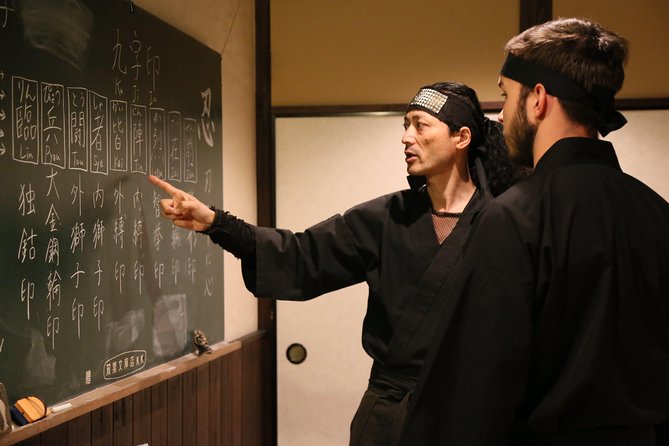
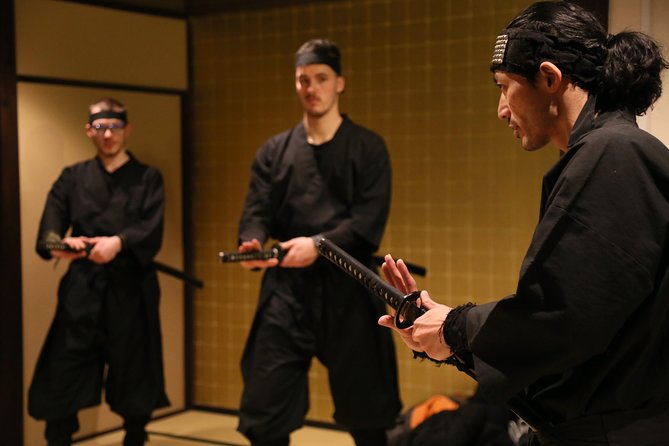
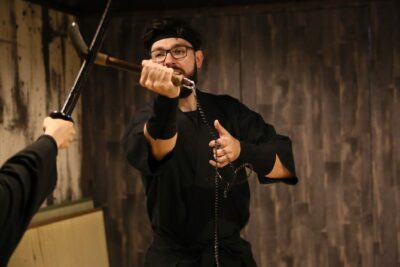
This is the star of the show: multiple weapon stations, each taught with the instructor’s guidance. The tour includes sword training, kunai (dagger) training, shuriken (ninja star) training, and ninja blowgun (blow darts) training.
Sword training (controlled and beginner-friendly)
Sword practice can sound intimidating, but in a beginner class the focus is typically on safe handling, stance, and basic technique rather than flashy combos. The lesson also includes a demonstration step before you try. That’s important because it helps you understand the “why” behind the movement—how you hold it, how you keep control, and how you aim your body, not just your arm.
Other Kyoto tours and experiences to compare





Kunai and shuriken (throwing with targets)
For throwing weapons like kunai and shuriken, the training structure matters. You’re not just tossing objects and hoping for the best. You learn technique and then throw at targets under supervision.
Some classes include wooden targets for the blowgun portion, and you’ll likely feel the difference between “I can throw” and “I can throw consistently.”
Blowgun with darts (aiming skills in miniature)
Blowgun practice is a great equalizer. You may not have the arm strength for some throwing styles, but breath control and aiming make a difference. It’s also usually very satisfying for kids because the results are visible fast—hit or miss—so everyone gets that instant feedback loop.
A key reassurance from the experience details: instructors are careful with the weapons and teach safe handling. That safety mindset is part of why this works as a family activity.
Small Group Coaching: Up to 6 People Means Less Waiting
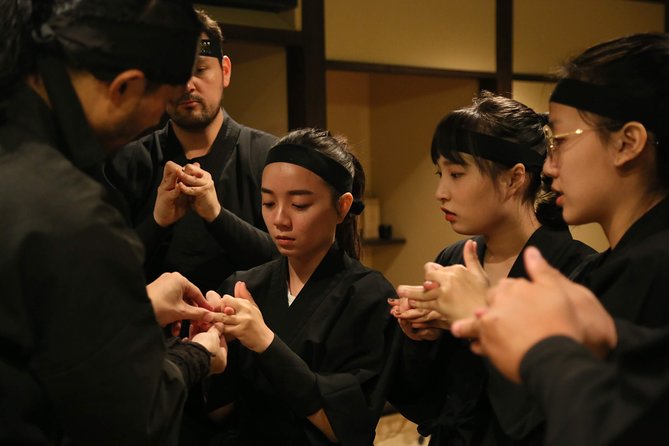
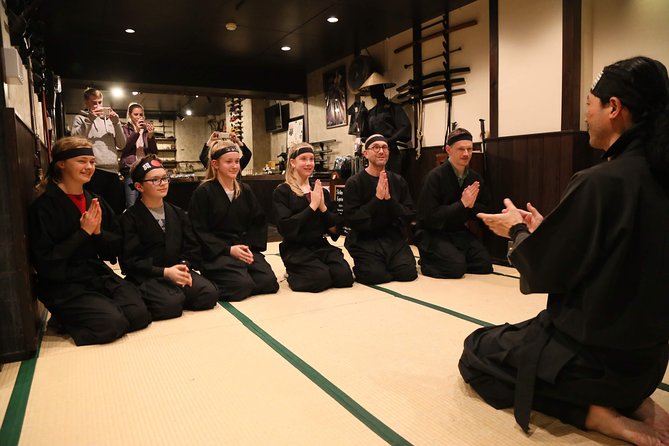
A maximum of 6 travelers keeps the class from turning into a production line. In a hands-on lesson, that size limit is everything.
With small groups, you get:
- More time to correct your stance and breathing
- Faster help when you’re confused
- More individual attention during weapon stations
It also makes the dojo feel more like a training space and less like a performance. In practice, it means you can laugh, ask questions, and re-try throws without feeling rushed.
This is one of those travel moments where “small group” isn’t just a marketing phrase. It changes how much you actually learn.
The English-Language Sensei and the Ninja Outfit
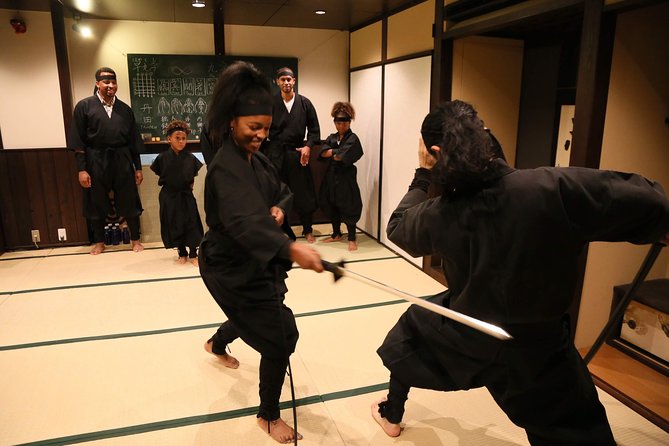
Your instructor is described as a Japanese sensei master who has trained in ninja arts, and they teach in English. That combination matters. You’re not stuck decoding gestures. You’re learning terminology and technique in a way you can use immediately.
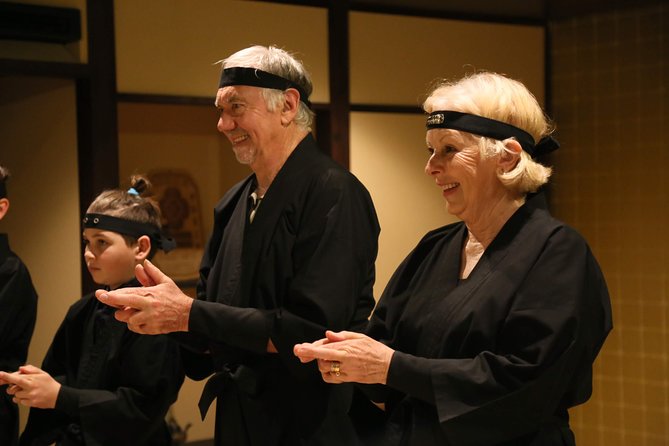
You also get ninja clothes rental during training. For a lot of visitors, this is more than a costume moment. It helps you slip into the body mechanics of the drills because the clothing setup is part of the training feel. It also makes the session photogenic without taking over the lesson—your outfit supports the practice.
If you’re traveling with teenagers or kids, the outfit is a big part of the fun. If you’re traveling as a couple or solo, it’s still a useful way to make the experience feel more like participation and less like watching.
Price in Context: Is $80.58 Worth It for One Hour?
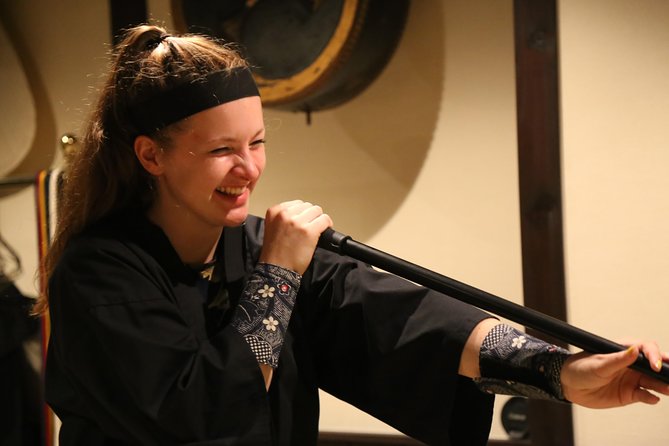
At $80.58 per person for about 1 hour, this isn’t a budget activity. But it also isn’t overpriced for what you get—especially in Kyoto, where prices for “hands-on experiences” can vary wildly.
Here’s the value math that makes sense:
- You get a real instructor-led lesson in a dojo setting
- You practice multiple skills (breathing/walking/meditation + sword + throws + blowgun)
- Ninja clothing is included
- The group size is capped at 6, which supports more coaching time
If you compare this to a class where you only watch or do one station, this stands out. The session is packed, and the structure keeps it from feeling like you paid for a single photo op.
The main “watch out” is time. It’s only 1 hour, so you won’t leave as a ninja expert. You’ll leave with basics and a clear sense of how the techniques fit together.
If you want more repetition and more turns at the weapons, you might find yourself wishing you booked a longer option—but that’s a “want more practice” complaint, not a “we did nothing” complaint.
Who Should Book This Ninja Lesson in Kyoto?
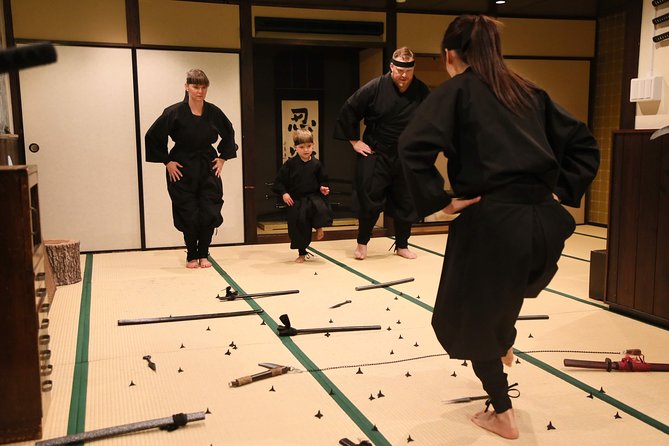
This experience is a great match if you want:
- A family-friendly activity in Kyoto that works for kids and adults
- A break from temples with an indoor setting
- A hands-on lesson where you actually try sword and throwing techniques
- A short “story-based” training format that feels different from standard sightseeing
It also works well as a date. You share laughs, practice together, and get a light challenge—not too serious, but not random either.
Best-fit age range (based on how the lesson feels)
It’s described as suitable for all ages, and plenty of families with kids enjoy it. If you’re traveling with younger kids, focus on the walking and breath components plus the throwing stations—those are typically the most engaging.
For adults, the payoff is watching your own progress in small steps: posture improves, breath control becomes easier, and throws start to look more consistent.
When It Might Not Fit Your Style
You might want to skip—or at least not expect a history seminar—if you’re traveling specifically to study ninja lore in depth. The focus is training and practice, not long lectures.
Also, the trap-house segment (the themed part) is intentional. If you dislike gimmicks entirely, you could perceive that portion as entertainment first. The good news: it’s short, and the lesson still centers on skills you practice.
Finally, if you’re the type who hates weapon-related activities, even with careful supervision, this may feel like too much action for your comfort level. Most people find it fun, but your tolerance matters.
Should You Book This Ninja Lesson in Kyoto?
Yes, if you want a Kyoto activity that’s playful but still structured. The combination of breathing + walking drills and multiple weapon stations makes it feel like you’re learning a real method rather than running through one themed stop. Add the small group limit, English instruction, and included ninja clothing, and the price starts to look reasonable for what you actually do during the hour.
I’d skip it only if you’re hunting for academic history or long-form instruction. If you want skills, reactions, and something memorable for the whole family, this is the kind of lesson that leaves you grinning—and talking about what you learned on the walk back.
FAQ
How long is the Ninja hands-on lesson in Kyoto?
It’s about 1 hour.
How big is the group for this lesson?
The class has a maximum of 6 travelers.
Where do I meet for the activity?
You meet at NINJA DOJO and STORE KYOTOJapan, 528 2F Hakurakutenchō, Shimogyo Ward, Kyoto, 600-8422. The activity ends back at the same meeting point.
Is the lesson taught in English?
Yes. The sensei master who teaches the class uses English.
What techniques do you practice during the lesson?
You practice ninja meditation (Kuji-In), ninja breathing, ninja walking, and then move into weapons practice.
What weapons are included in the training?
You do sword training, kunai (dagger) training, shuriken (ninja star) training, and ninja blowgun (blow darts) training.
Do they provide ninja clothing?
Yes. Ninja clothes rental is included during training.
Is food or drink included?
No. Food and drink are not included.
Do I need good weather for the experience?
Yes. The experience requires good weather, and if it’s canceled due to poor weather, you’ll be offered a different date or a full refund.
What if I cancel last minute?
You can cancel for a full refund if you cancel at least 24 hours in advance. If you cancel less than 24 hours before the start time, the amount paid is not refunded.
Is the location easy to reach?
It’s described as near public transportation. Service animals are allowed, and most travelers can participate.
More Workshops in Kyoto
More Tour Reviews in Kyoto






More Samurai and Ninja Sessions

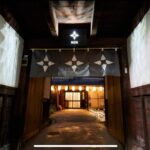
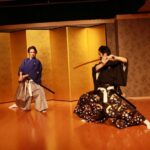
Just added: more Kyoto tours to browse








Kyoto Samurai & Ninja Experiences, compared.
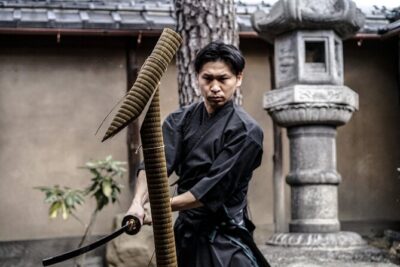 ★ 5.0Kyoto Samurai ExperienceFrom $1191,294 reviews
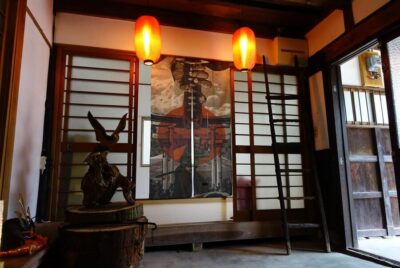 ★ 4.9Kendo and Samurai Experience with Uniform and GearFrom $103815 reviews
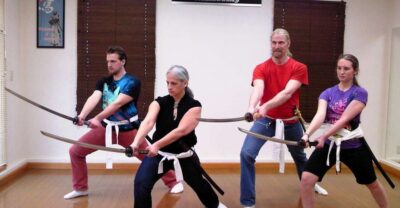 ★ 4.9Samurai Sword Class by Experts in Traditional ArtsFrom $64657 reviews
 ★ 4.5Skip the lines Basic Ticket at SAMURAI NINJA MUSEUM KYOTOFrom $28632 reviews
 ★ 4.8Ninja Weapon Forging ExperienceFrom $148478 reviews
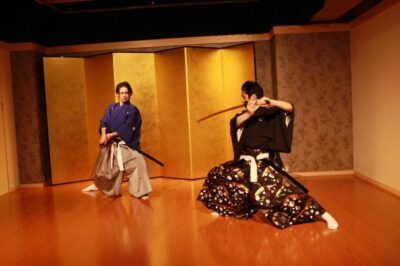 ★ 4.5Samurai Kenbu Traditional Sword Dancing ShowFrom $32426 reviews
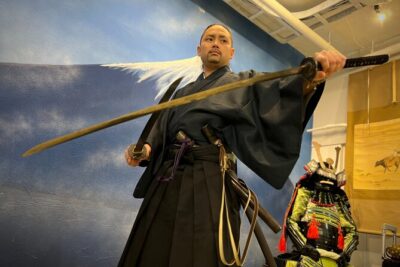 ★ 5.0Samurai Training with Modern day Musashi in KyotoFrom $132256 reviews
 ★ 5.0Ninja 2-hour Hands-on Lesson by Japanese master in Kyoto -MediumFrom $95218 reviews
Browse the lists this tour appears in