
Reviewed · KYOTO SAMURAI & NINJA EXPERIENCES
Kyoto: Samurai Sword Class by Experts in Traditional Arts
Kyoto is one thing, but this class feels like stepping into it. You’ll learn the rhythm of Kenbu with a real instructor, starting with bowing and ending with a short sword dance performance. I like how practical it is, not just sightseeing. You get hands-on time holding the sword, not just watching from the back.
Two things I especially like: first, the lesson focuses on respectful technique, like learning how to bow and how to present the sword toward an opponent. Second, the format is built for beginners in a small group, so you can ask questions and correct form without feeling lost. The added costume photo session and a completion certificate make the time feel like a proper keepsake, not a quick demo.
One consideration: this is not a sit-and-watch experience. There’s no observation-only option, and there’s no waiting room for people without an appointment. If you want a casual stroll, this won’t match that mood.
In This Review
- Key points at a glance
- Where to Train in Kyoto: Samurai Kembu Theater Dojo
- The 90–120 Minute Flow: How the Class Stays on Track
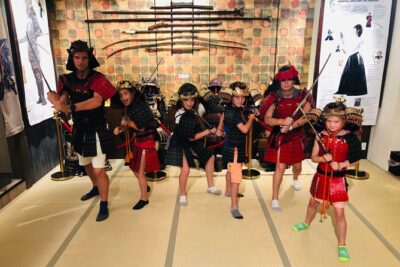
- Getting Dressed Like a Samurai: Costume Choices and Practical Reality
- Bowing and Sword Basics: What You Actually Learn
- Safety and “No Hollywood” Rules You Should Know
- The Costume Photo Shoot: A Fun Break That Doesn’t Eat Your Time
- Instructor Energy: Why the Class Feels Personal in a Small Group
- Optional Performance After Class: 10 vs 30 Minutes
- Price and Value in Kyoto: What $64 Buys You
- Who This Kenbu Class Fits Best (And Who Might Prefer Another Plan)
- Practical Tips to Make Your Session Go Smooth
- Should You Book Kyoto: Samurai Sword Class by Experts in Traditional Arts?
Key points at a glance
- Small group training limited to 10 participants, so you get attention and corrections
- Hands-on Kenbu basics: bowing, drawing, returning the sword to its scabbard, stylized strikes
- Costume photos and certificate to mark your progress and give you something tangible
- Optional sword dance show (10 or 30 minutes) with commentary from an instructor
- Safety-first rules: follow staff instructions; no bags, weapons, or sharp objects
Where to Train in Kyoto: Samurai Kembu Theater Dojo
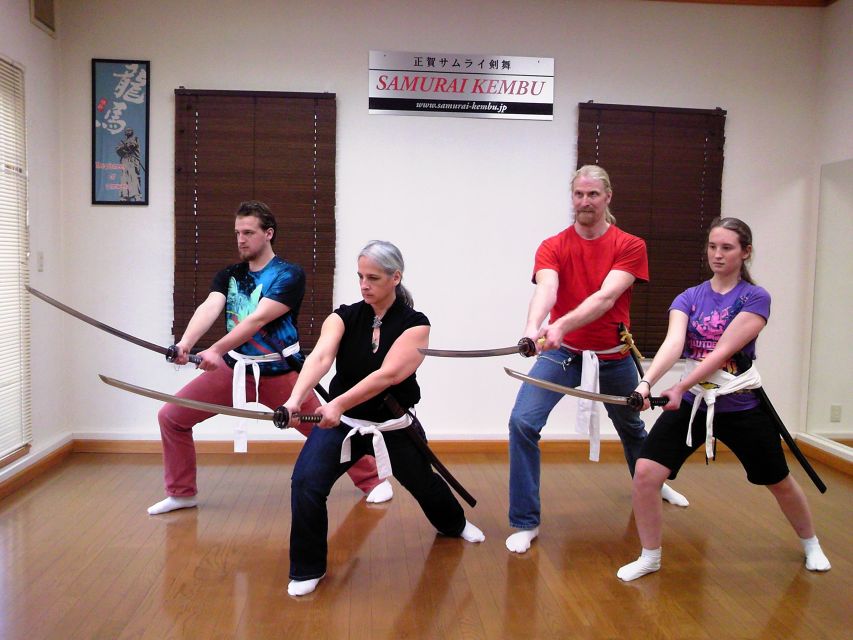
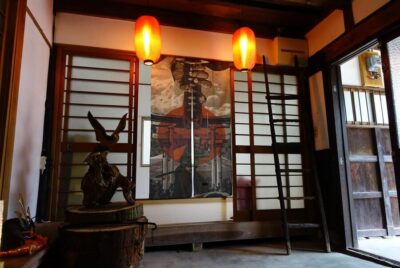
You’ll go to Samurai Kembu Theater (Kyoto dojo) at 35-7 Sanchome, Higashi-iru, Sanjo-hanamikoji, Higashiyama-ku. The entry is B1F of the Gozan Building, so don’t be surprised if you need to look for signage down a level. It’s in central Kyoto, which is helpful if you’re building a day around Higashiyama.
A useful detail for planning: there’s no waiting room. If you arrive early, you likely can’t hang around inside. That means you’ll want to time your arrival so you’re on time without needing a long buffer.
Pick up the blade again with these Kyoto sessions
The 90–120 Minute Flow: How the Class Stays on Track
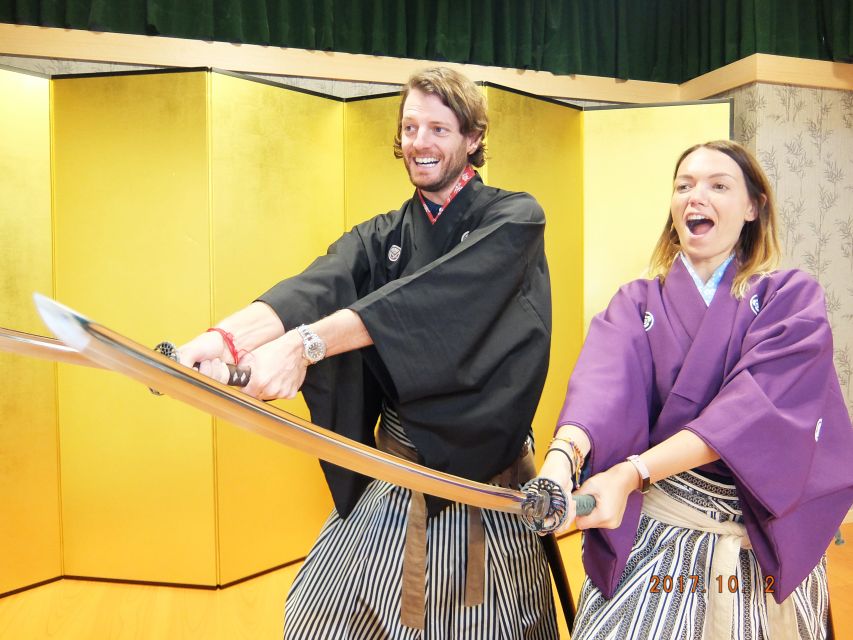
The session runs 90 minutes to 2 hours, depending on the option you choose and the starting time. The structure is simple, and that’s a good thing: you’re not left wondering what happens next. Here’s the pacing you can expect.
First comes a short film about the basics of samurai and Kenbu (about 4 minutes). That gives you vocabulary and context before you touch anything.
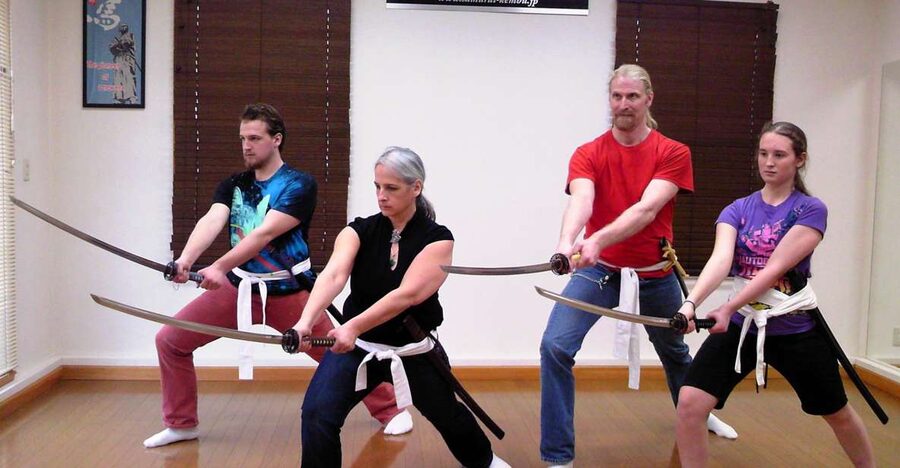
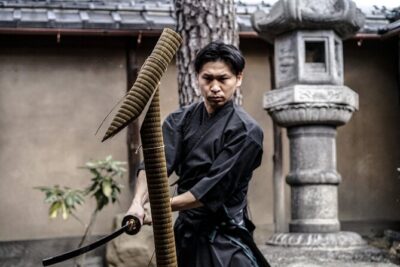
Then you suit up and take hold of your sword. The training moves in steps: bowing first, then the mechanics of drawing and returning the sword to its protective scabbard. Only after those fundamentals do you practice stylized movements—controlled strikes and movement patterns that look like combat, but are taught as disciplined form.
Near the middle, you also get your costume photo session. After that, the lesson turns toward respect and opponent etiquette: how to show respect with the sword and how to bow to your instructor at the end.
You’ll finish by grabbing your completion certificate, then you may watch a short performance (either 10 minutes or 30 minutes) with commentary that helps you understand the techniques you just practiced.
Getting Dressed Like a Samurai: Costume Choices and Practical Reality
This is one of the main reasons people end up loving the class. You don’t just wear a costume for show. You change into it so the training feels tied to the tradition, right down to posture.
You’ll have a chance to choose your outfit, and the costumes used are traditional-style samurai clothing. In past sessions, participants also reported receiving small keepsakes from the experience. The class info clearly includes a tenugui towel, and some people mentioned keeping additional small items like a scarf or socks. That’s a nice extra if you like Japan souvenirs that are tied to what you did.
Two practical tips here:
- Wear clothes suited for exercise and movement. You’ll need to pivot, draw, and practice controlled strikes.
- Don’t show up in a single hoodie or just tights. The costume change needs more flexibility than that outfit allows.
Bowing and Sword Basics: What You Actually Learn
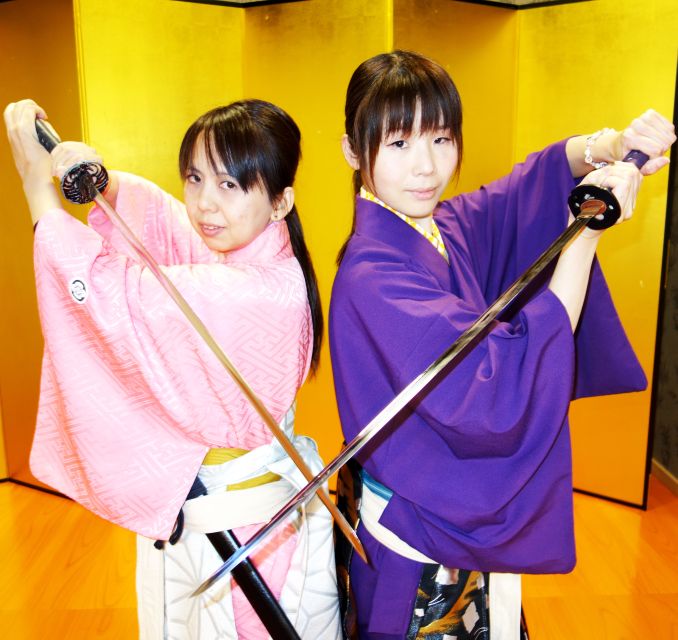
The most valuable part of this class is that it doesn’t treat sword practice like a stunt. It treats it like etiquette plus technique.
You start with bowing—learning how to bow before training begins. Then you handle the sword and practice the key motion of drawing it and returning it to the scabbard. This is basic, but it’s also where discipline shows up. Your body has to learn the timing: handle placement, smooth movement, and control.
After that, you move into stylized movement practice. The class is built around Kenbu technique, which is a sword dance form. That matters because it explains why the movements look artistic. You’re not just swinging. You’re learning choreographed motion that keeps balance, shape, and intent.
One more respectful detail: you learn how to show respect to your opponent with the sword. That’s not just symbolic. It trains your awareness—what you do with the blade, where it points, and how you end a sequence.
Safety and “No Hollywood” Rules You Should Know
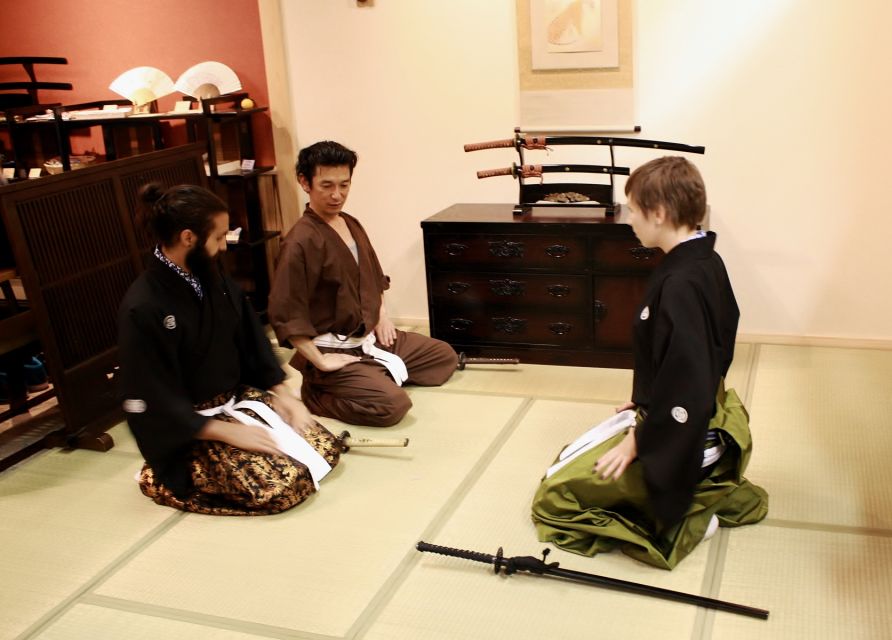
You’ll be using a training sword in a controlled setting, and that comes with clear boundaries. The rules are strict: no weapons or sharp objects brought from outside. Smoking isn’t allowed. No food or alcohol.
Also, follow instructor instructions on the day for safety reasons. These classes are hands-on, so staff guidance is part of the training itself. If you have any concerns about movement, mention them early so they can position you safely and explain at your pace.
And yes, you should plan clothing and bag-free comfort. There’s no room for large luggage or travel bags, and food isn’t part of the session.
Other Kyoto tours and experiences to compare



The Costume Photo Shoot: A Fun Break That Doesn’t Eat Your Time
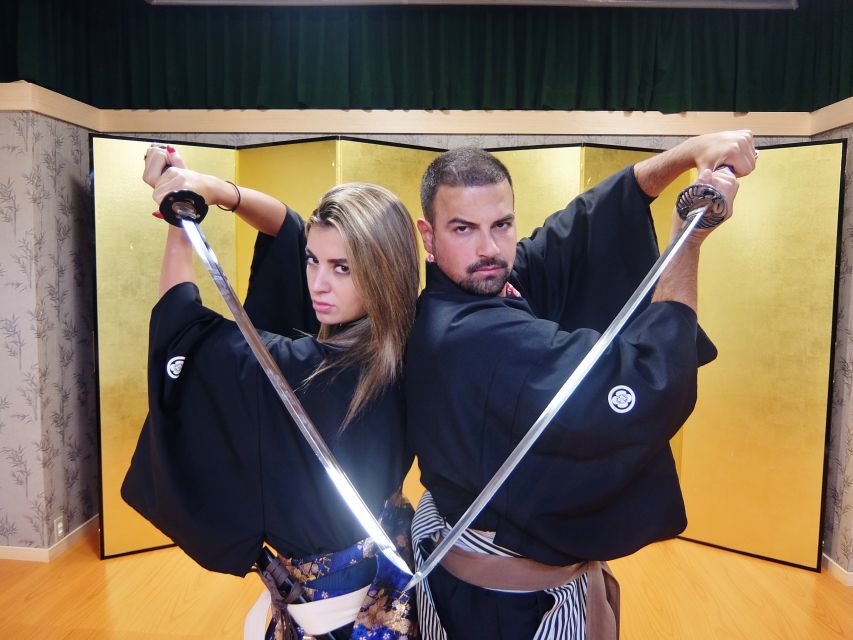
There’s a real benefit to scheduling the photos in the middle of the lesson. Your costume is clean, your head is still in training mode, and you get the fun part without finishing the day drained.
The class includes a photo shoot, and it’s done in your samurai costume. That’s what makes this different from a lot of “show + quick demo” activities. You leave with images that actually match the experience you just went through, including the sword-adjacent style that makes Kenbu feel real.
In some past sessions, people also described a more full photo/video setup by groups, but the confirmed inclusion here is the photo session. Either way, this is a good moment to ask staff to capture angles that show the posture you practiced.
Instructor Energy: Why the Class Feels Personal in a Small Group
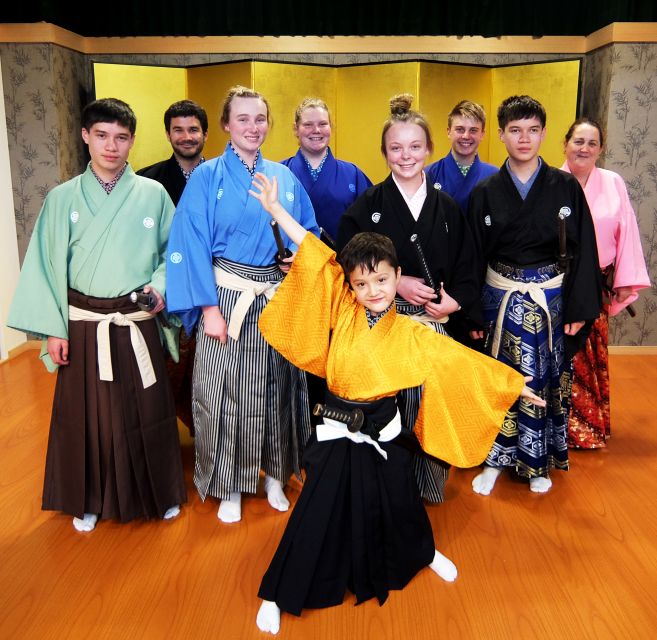
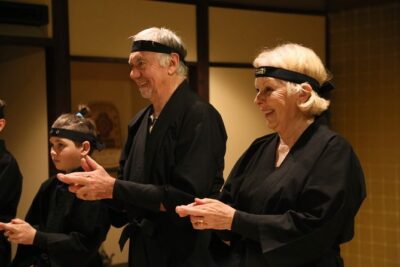
This is limited to 10 participants, which is a big deal. You’re not in a crowd where you’re just waiting for your turn. You can get direct cues on posture and timing.
The instructor team can include different sensei depending on the session. Names that have come up include Hoga sensei, Kazu/Kasu, Rui, Kashin, and Hisyo. The common theme in the instruction style is clear: they balance seriousness with humor, and they teach in a way beginners can follow.
That balance is what makes the difference between awkward sword poses and learning actual form. When the instructor is patient, you spend more time improving and less time worrying you look silly.
Optional Performance After Class: 10 vs 30 Minutes
At the end, you can add a performance. You’ll watch either a 10-minute or 30-minute option, with commentary by a sword dance instructor. This is not just entertainment padding. It connects the movements you practiced to what the art looks like when done smoothly by masters.
If you choose the longer option, you generally get more time to notice details: how footwork and blade angles match the choreography. The shorter option is still worth it if you’re trying to keep your Kyoto day efficient.
Either way, the performance is a strong closer. It turns your “I practiced parts of Kenbu” into “I can see how this becomes an art.”
Price and Value in Kyoto: What $64 Buys You
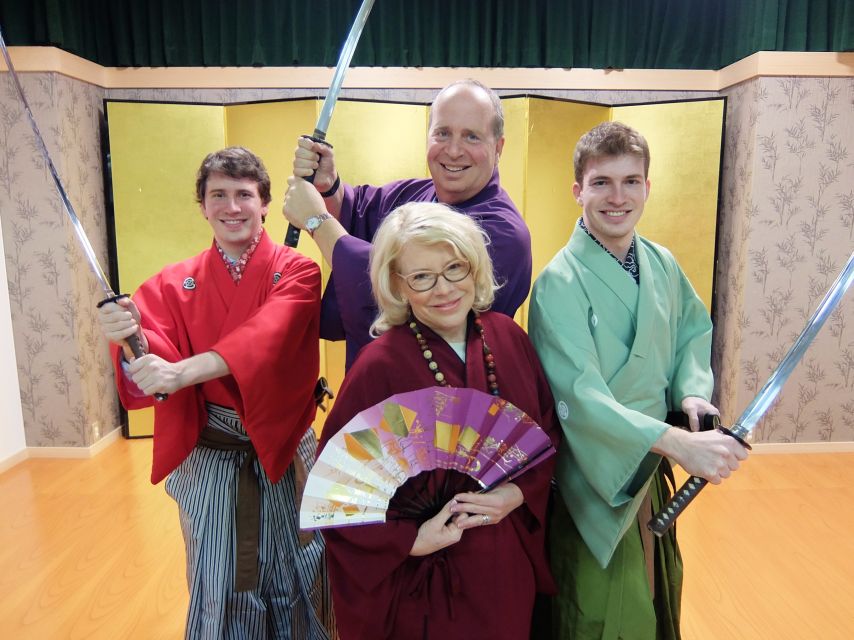
At about $64 per person for 90 minutes to 2 hours, this isn’t a cheap add-on, but it’s also not overpriced for what you do. Here’s why the value feels fair.
You’re not paying just for a show. You’re paying for:
- an English-speaking instructor (with Japanese as well),
- hands-on sword technique practice,
- costume fitting and a photo session,
- a completion certificate, and
- a tenugui towel.
When you break it down, the money goes mostly toward coached practice time and the photo keepsake. For Kyoto, that’s a practical bargain compared with experiences where you mostly watch, stand, or take photos without learning much.
Also, the small group size matters. Your “per-person attention” stays higher than large group activities.
Who This Kenbu Class Fits Best (And Who Might Prefer Another Plan)
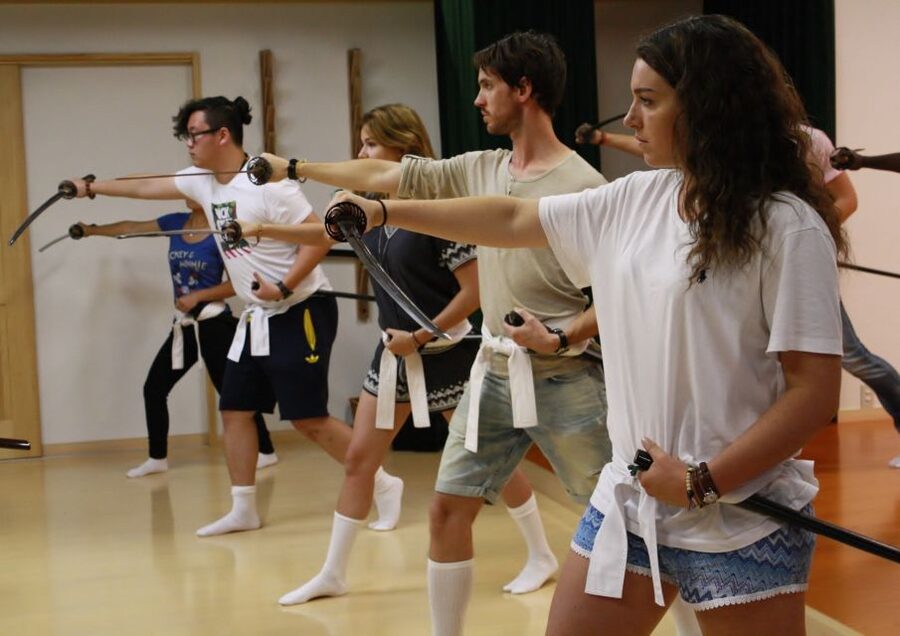
You’ll likely love this if you want a hands-on Kyoto experience that’s:
- beginner-friendly but still challenging enough to feel satisfying,
- structured (so you know what you’re doing at each step),
- culturally rooted in samurai sword dance technique, not a generic sword gimmick.
It’s also a decent choice for families in many cases. The experience isn’t suitable for children under 4, and for ages 5 to 10, the guidance says it’s desirable they attend with interest in learning since lessons are conducted with adult participants.
If you’re traveling with teenagers, this often lands well because it mixes history, movement practice, and photo fun in one compact block.
You might want to skip it if:
- you only want to observe,
- you can’t handle instruction-based movement,
- you’re carrying large luggage and can’t comfortably store it (there’s no room for large bags).
Practical Tips to Make Your Session Go Smooth
A few small things will help you enjoy the day instead of troubleshooting it.
- Arrive with exercise-ready clothing. You’ll move, and you’ll need to change into the costume.
- Keep your bag situation simple. The rules don’t support large luggage or travel bags.
- Don’t plan a snack break. Food and drinks aren’t part of the activity.
- If you want the best momentum, choose a time that matches your energy. This is active training for your body, even though the movements are stylized.
Also remember: it’s an appointment-based room. There’s no waiting space for drop-ins.
Should You Book Kyoto: Samurai Sword Class by Experts in Traditional Arts?
Yes, if you want a hands-on Kyoto activity that combines Kenbu sword dance basics, respectful bowing etiquette, costume dressing, and a certificate. This is the kind of experience that’s hard to recreate on your own. The structure keeps you learning from start to finish, not just taking pictures.
I’d skip it only if you’re looking for a relaxed, spectator-only cultural stop. This class is active, rule-based, and instruction-driven. If that sounds like your kind of fun, book it and give yourself the time to enjoy the photos and the end performance too.
More Workshops in Kyoto
More Tour Reviews in Kyoto



More Samurai and Ninja Sessions

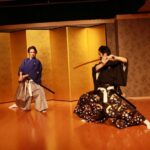
Just added: more Kyoto tours to browse





Kyoto Samurai & Ninja Experiences, compared.
 ★ 5.0Kyoto Samurai ExperienceFrom $1191,294 reviews
 ★ 4.9Kendo and Samurai Experience with Uniform and GearFrom $103815 reviews
 ★ 4.5Skip the lines Basic Ticket at SAMURAI NINJA MUSEUM KYOTOFrom $28632 reviews
 ★ 5.0Ninja 1-hour Hands-on Lesson by Japanese master in Kyoto -EntryFrom $80489 reviews
 ★ 4.8Ninja Weapon Forging ExperienceFrom $148478 reviews
 ★ 4.5Samurai Kenbu Traditional Sword Dancing ShowFrom $32426 reviews
 ★ 5.0Samurai Training with Modern day Musashi in KyotoFrom $132256 reviews
 ★ 5.0Ninja 2-hour Hands-on Lesson by Japanese master in Kyoto -MediumFrom $95218 reviews
Browse the lists this tour appears in