
Reviewed · KYOTO SAMURAI & NINJA EXPERIENCES
Samurai Training with Modern day Musashi in Kyoto
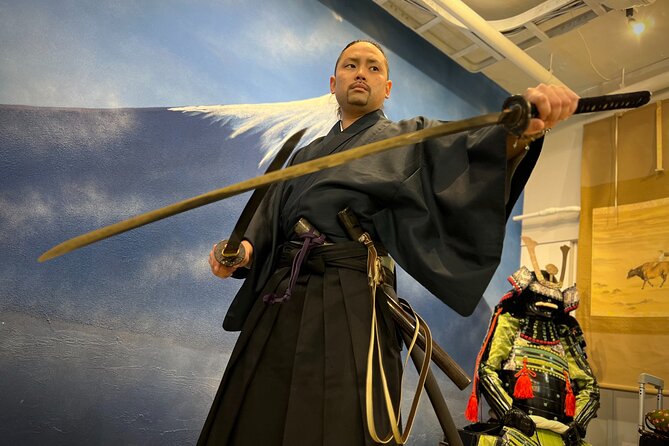
A Kyoto dojo beats any staged samurai show. This class pairs hands-on iaido-style sword training with real instruction from Sensei Yushin and team in a small setting. I like the focus on practical basics—drawing, sheathing, and form—and the chance to watch the master’s two-katana performance. One thing to note: at this time, mat cutting with a real katana isn’t offered, so think kata practice and demonstrations, not a cutting contest.
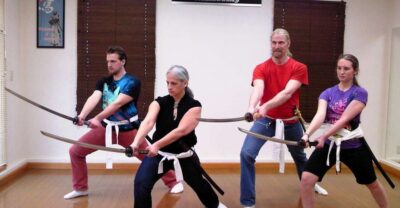
You’ll dress in full training regalia—dōgi, obi, and hakama—and then work through a structured routine that builds from safety to an actual kata form. I also appreciate that the group stays small (max 9; often 6), which makes corrections feel personal. If you’re traveling with very small kids, this is age 12+ and does require moderate physical fitness.
In This Review
- Key things to know before you go
- Kyoto Dojo Reality Check: What Modern-Day Musashi Teaches
- From Dōgi to Hakama: Getting Dressed and Settling In
- Sword Safety, Sword Parts, and the Routine You’ll Actually Practice
- Learning an Actual Katana Kata (Form Practice, Not a Quick Show)
- The Two-Katana Performance: Why the Finale Feels Worth the Time
- Who This Works For: Beginners, Families, and Teens
- Price and Value: Is $132.65 Worth It?
- Timing and Meeting Point: Planning Your 1.5 to 2 Hours
- Should You Book Samurai Training with Modern-Day Musashi in Kyoto?
- FAQ
- What’s the duration of Samurai Training with Modern day Musashi in Kyoto?
- Where does the training take place?
- How many people are in a class?
- What’s included in the training?
- Do you get to cut mats with a real katana?
- What sword type is used for practice?
- What should I bring or wear?
- Is the instruction available in English?
- Is there a minimum age and physical requirement?
- FAQ
- What’s the cancellation policy if I need to change my plans?
Key things to know before you go
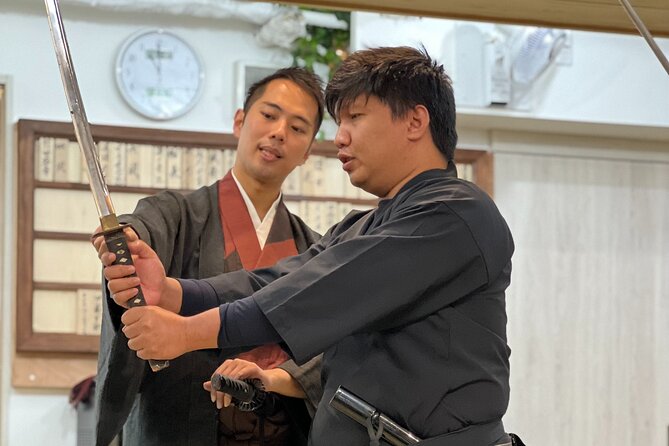
- Real dojo training in Kyoto, not a performance-only setup
- Small group size (max 9, often 6 per class), with hands-on corrections
- Dōgi/obi/hakama dressing before you start practicing
- Learn a katana kata form: draw, sheath, wield, then practice the sequence
- Two-katana performance by the master as a big finale
- No mat cutting with real katana currently, with training using safer practice swords like iaito
Kyoto Dojo Reality Check: What Modern-Day Musashi Teaches
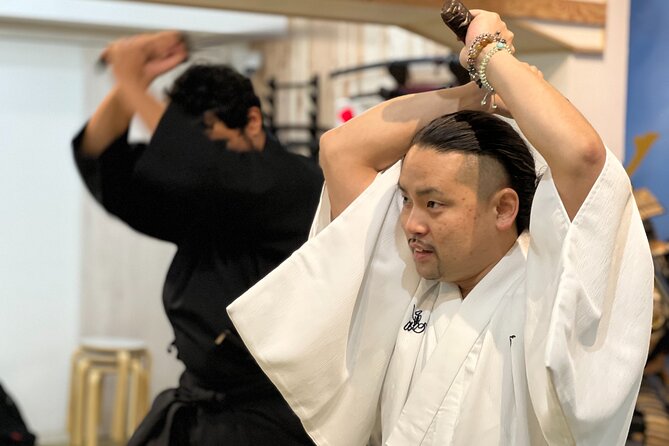
This experience is interesting because it’s built like real practice. You’re not just standing around watching a scripted act. In a Kyoto dojo setting, you’ll learn sword basics in a disciplined way, then finish with performances that show how the routine looks when it’s executed well.
What I like most is the balance: you get a real chance to move, not just take photos in costume. And you get to witness two-katana skill from the master—something that’s hard to find in standard “samurai experience” packages.
The other big practical plus is that the instruction is organized for beginners. You’ll start with fundamentals (how to handle the sword safely), then move into a kata form step-by-step. That matters because katana training is all about control—your first goal is to do it the right way, at the right tempo.
Pick up the blade again with these Kyoto sessions
From Dōgi to Hakama: Getting Dressed and Settling In
You’ll begin by dressing in samurai training gear: dōgi, obi, and hakama. This isn’t just costume dressing. It changes the feel of movement and helps you understand the seriousness of dojo practice. You’ll also get that moment of switching from tourist mode to training mode, which is half the magic of Kyoto martial arts.
Once you’re in gear, the session shifts into instruction about samurai culture and swordsmanship. Expect a mix of explanation and demonstration, with an emphasis on proper handling. In the feedback from past participants, instructors like Jordan and John often come up as friendly guides who help keep things clear while the master teaches the core technique.
If you’re wondering what to do if you’ve never touched a sword before: don’t worry. The class is structured to start simple. The goal is that you can leave understanding what you practiced and why the form matters.
Sword Safety, Sword Parts, and the Routine You’ll Actually Practice
The heart of the experience is the hands-on routine. You’ll practice:
- how to draw
- how to sheath
- how to wield the katana
- and how to put it into an actual kata form
Safety gets treated like part of the curriculum, not an afterthought. Participants specifically highlight learning safe handling and getting corrected on form. That’s exactly what you want here. Katana training isn’t just about looking cool; it’s about control and discipline.
A key detail: mat cutting with a real katana is not currently offered. That aligns with other safety-focused changes mentioned in feedback—so if you’re buying this for the thrill of cutting, you’ll be happier coming for technique, kata, and demonstrations.
You should also know that the program uses practice swords such as iaito for training. Reviews mention “real swords, but less sharpened” for some practice. For you, that means the session still feels authentic, while instructors keep risk low.
One more practical point that surprised people: you may see the dojo includes additional traditional touches, like a Shinto shrine, which adds atmosphere without turning the class into a theme park. This is one of those settings where rules matter, and that’s good for first-timers.
Learning an Actual Katana Kata (Form Practice, Not a Quick Show)
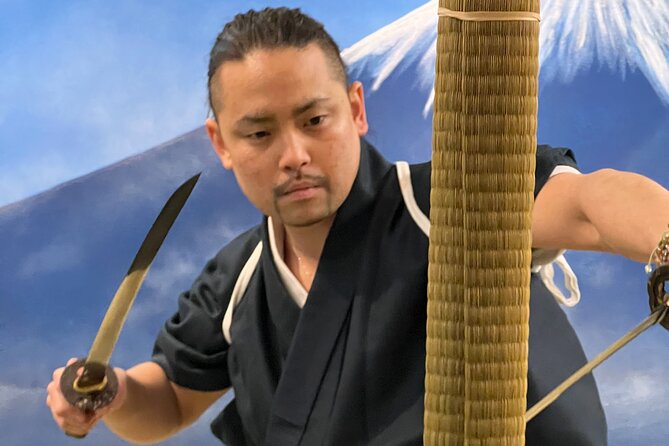
The session includes instruction in an actual katana kata (form). This is where the experience becomes more than a novelty.
You won’t just watch a form once and call it done. You’ll learn how the sequence feels, then practice it with instructor feedback. People repeatedly mention attention to detail and correction—exactly what makes the difference between “I swung a sword” and “I learned a form.”
This is also where the small-group size pays off. With max 9 travelers and often around 6 participants, you can actually get adjustments. In larger classes, beginners often get left to their own rhythm. Here, the coaching is frequent enough that you can correct your timing as you go.
Expect explanations about samurai culture alongside technique. That pairing matters because it helps you understand why the form is built the way it is. Even if you never become a martial artist, you’ll leave with a framework for what you saw: drawing and sheathing as discipline, not just movement.
The Two-Katana Performance: Why the Finale Feels Worth the Time
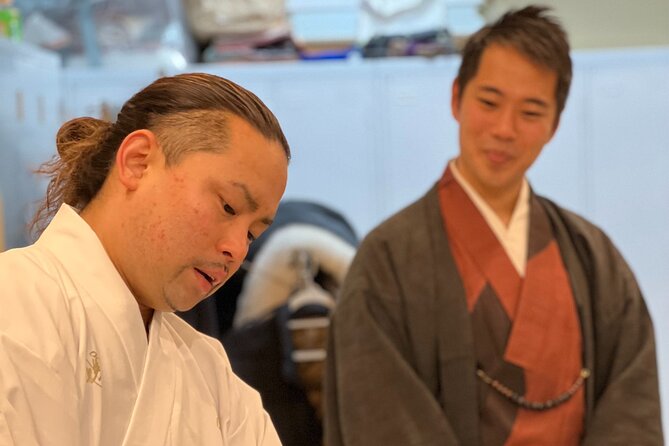
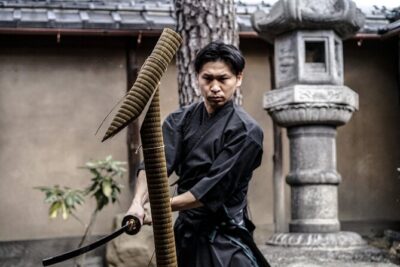
After practice, you’ll watch the master’s katana performance. The overview calls out a powerful two-katana performance, and the class is designed so that this becomes the payoff.
This is valuable for two reasons:
- You get context. Watching after you’ve tried the basics helps you see what “good” looks like.
- You see capability, not cosplay. Reviews emphasize professionalism and the feeling that you’re watching real skill in a real dojo setting.
If you’re used to tourist-style sword shows, this one can feel different because you’re inside the training space, not watching from far away behind a rope. Some participants also mention you can take video and photos during kata learning, so you can review your steps later.
Even with the “no mat cutting with a real katana” note, the performance still delivers the drama. It’s the movement quality, timing, and control that make it impressive.






Who This Works For: Beginners, Families, and Teens
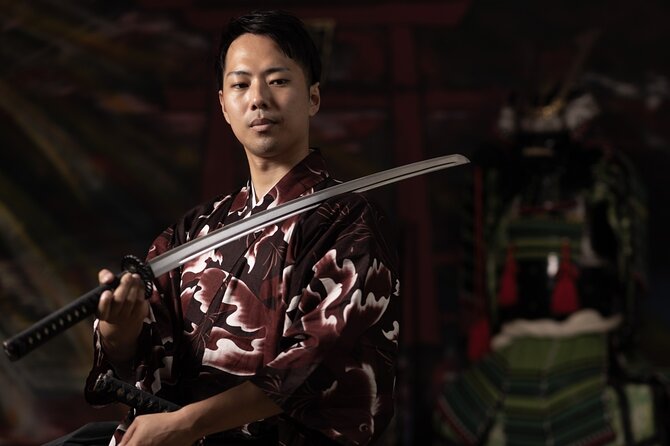
This class is a strong fit if you:
- want a hands-on martial arts experience in Kyoto
- like structured instruction over free-for-all entertainment
- have at least a moderate fitness level
- are comfortable with 1.5 to 2 hours of standing and practicing forms in training gear
Age requirement is 12 years or older. That makes it workable for many families with older kids. Feedback includes praise for teenagers and even multi-generational groups, with instructors adjusting their approach to different comfort levels.
For absolute beginners: the session is designed to start at the basics. You’re learning how to draw, sheath, and wield with guidance, then applying it into kata form. For people with some martial arts background, the focus on routine and corrections still feels legit.
If you’re looking for a super athletic workout, this isn’t presented that way. It’s more about control, posture, and correct form. Plan on learning and practicing, not sweating through a boot camp.
Price and Value: Is $132.65 Worth It?
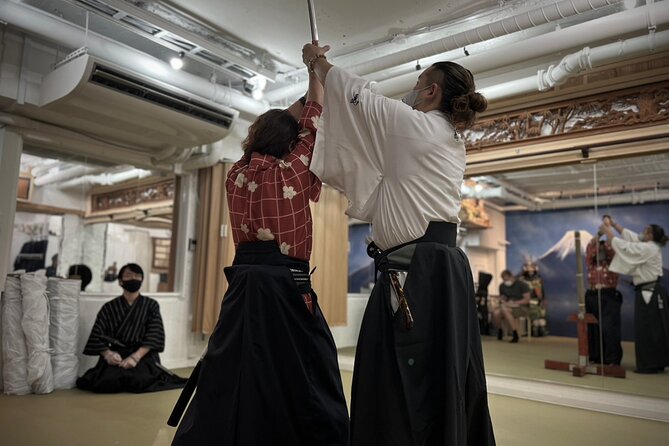
At $132.65 per person, you’re paying for something specific: instruction inside a real dojo with small-group coaching and a master-led component (plus the dressing and structured training program).
Here’s how I think about value:
- Small group size (often around 6) means more instructor attention than mass “show” activities.
- You’re not just watching a performance; you’re practicing fundamentals and learning an actual form.
- The two-katana performance adds a high-skill highlight that many standard experiences don’t offer.
The tradeoff is that this is not built around cutting targets right now. If your personal definition of “worth it” is mat cutting, you might feel disappointed. But if your goal is real technique and culture in an actual training setting, the price can start to feel fair.
In short: I’d book this if you want a structured dojo experience in Kyoto that doesn’t treat you like set dressing.
Timing and Meeting Point: Planning Your 1.5 to 2 Hours
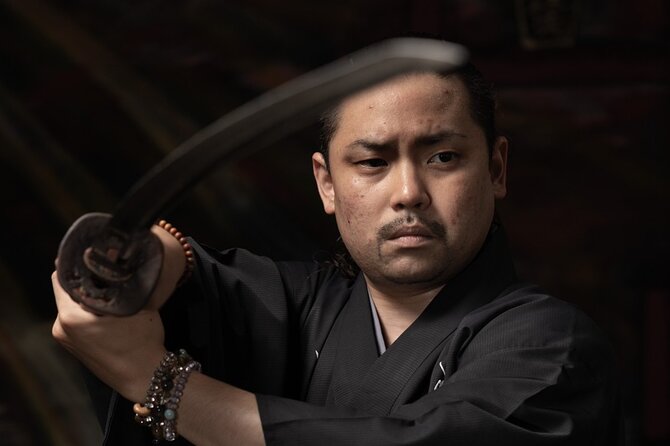
The session runs about 1 hour 45 minutes (roughly 1.5 to 2 hours). That flexible end time depends on the number of participants, which makes sense for a class where everyone needs feedback and correction time.
It starts at:
452-4 Matsugaechō, Nakagyo Ward, Kyoto, 604-8034, Japan
and ends back at the meeting point.
The location is noted as near public transportation, which matters in Kyoto. This kind of experience is easiest if you plan your day around it, rather than trying to squeeze it in between long transfers.
Practical tip: wear clothing that’s easy to change in and out of, because you’ll get dressed into dōgi/obi/hakama before training. Also, bring a bit of patience with time. When you’re learning a kata with multiple instructors and a master performance, “soon” can mean a bit of waiting while the group cycles through training steps.
Should You Book Samurai Training with Modern-Day Musashi in Kyoto?
Yes, if you want a real dojo class with real form practice, not a fast tourist show. I’d especially recommend it if you care about:
- structured sword basics (draw, sheath, wield)
- learning an actual kata sequence
- ending with the master’s two-katana performance
- a small group where instructors can correct your form
I’d think twice if your main goal is cutting with a real katana. With the current note that mat cutting isn’t offered, this is better framed as technique and demonstrations, not a test of power.
If you fit the age requirement (12+) and you’re okay with moderate physical effort for a short practice session, this can be one of those Kyoto activities that sticks with you because you’ll understand what you watched while you were doing it.
FAQ
What’s the duration of Samurai Training with Modern day Musashi in Kyoto?
The class is about 1 hour 45 minutes, roughly 1.5 to 2 hours depending on how many participants are in the session.
Where does the training take place?
The experience starts at 452-4 Matsugaechō, Nakagyo Ward, Kyoto, 604-8034, Japan and ends back at the meeting point.
How many people are in a class?
The experience lists a maximum of 9 travelers. It’s described as small groups of 6 participants per class, though there may be more when there are only a small number of parties.
What’s included in the training?
You’ll dress in samurai training gear (dōgi, obi, hakama), learn about samurai culture and swordsmanship, practice drawing and sheathing and wielding a katana, learn an actual katana kata form, and watch the master’s katana performance.
Do you get to cut mats with a real katana?
No. Mat cutting with a real katana is not currently offered.
What sword type is used for practice?
The training uses safer practice swords such as iaito, and instruction focuses on safe handling. Reviews also mention practice with real swords that are less sharpened, depending on the situation.
What should I bring or wear?
You’ll be dressed in the training gear on site. Wear clothing that’s easy to change before and after the session.
Is the instruction available in English?
Yes. Reviews note that instructors speak English (along with Japanese).
Is there a minimum age and physical requirement?
You must be 12 years or older. The activity also notes a moderate physical fitness level is recommended.
FAQ
What’s the cancellation policy if I need to change my plans?
Free cancellation is available up to 24 hours before the experience start time for a full refund. If you cancel within 24 hours, the amount paid is not refunded.
More Tour Reviews in Kyoto
More Samurai and Ninja Sessions

Just added: more Kyoto tours to browse








Kyoto Samurai & Ninja Experiences, compared.
 ★ 5.0Kyoto Samurai ExperienceFrom $1191,294 reviews
 ★ 4.9Kendo and Samurai Experience with Uniform and GearFrom $103815 reviews
 ★ 4.9Samurai Sword Class by Experts in Traditional ArtsFrom $64657 reviews
 ★ 4.5Skip the lines Basic Ticket at SAMURAI NINJA MUSEUM KYOTOFrom $28632 reviews
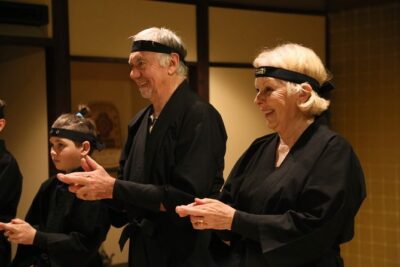 ★ 5.0Ninja 1-hour Hands-on Lesson by Japanese master in Kyoto -EntryFrom $80489 reviews
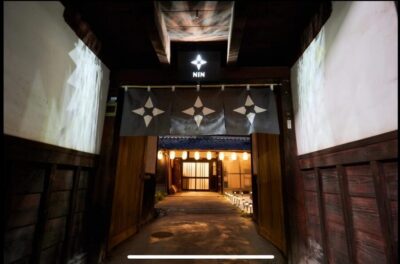 ★ 4.8Ninja Weapon Forging ExperienceFrom $148478 reviews
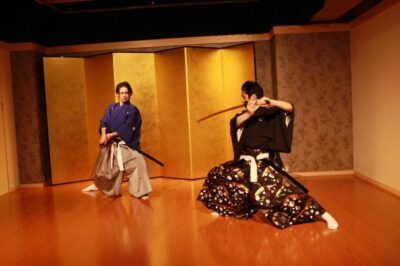 ★ 4.5Samurai Kenbu Traditional Sword Dancing ShowFrom $32426 reviews
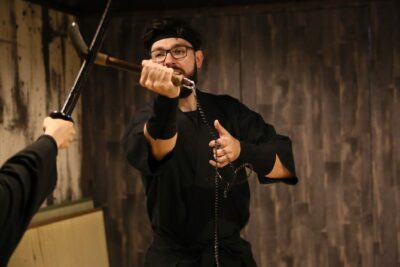 ★ 5.0Ninja 2-hour Hands-on Lesson by Japanese master in Kyoto -MediumFrom $95218 reviews
Browse the lists this tour appears in