
Reviewed · KYOTO SAMURAI & NINJA EXPERIENCES
Kyoto: Samurai Kenbu Traditional Sword Dancing Show
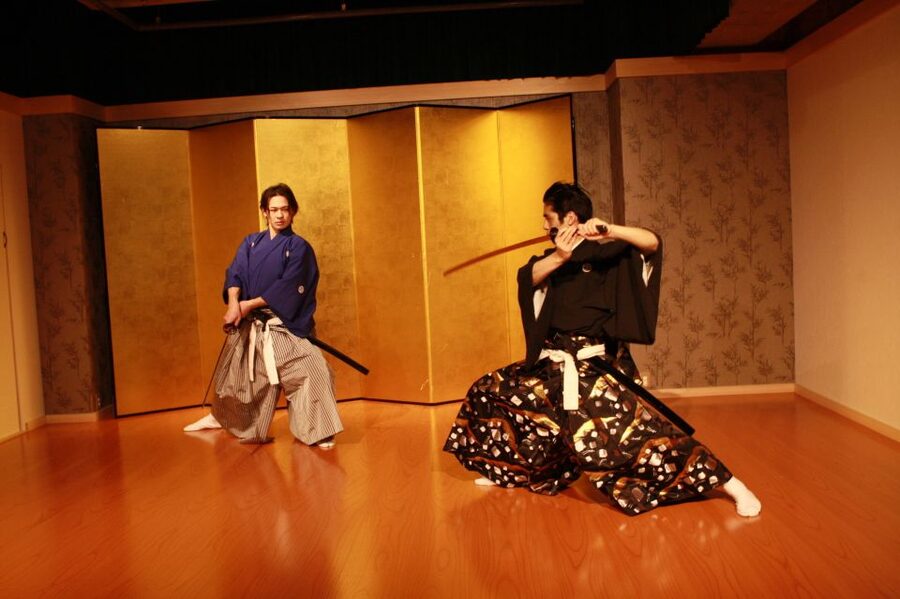
A sword dance that feels close and human. I love the English narration that connects each Kenbu sequence to samurai life between the 12th and 19th centuries, and I love the hands-on sword mini-lesson where you practice drawing and swinging a katana in a controlled way. One drawback to consider: this is choreographed sword dancing and storytelling, not a big action fight show, and filming is not allowed during the performance.
You’ll meet at the Samurai Kembu Theater near Sanjo, slip out of your shoes, and settle in for about an hour. If you time your arrival well, you’ll also catch the easy post-show moment for photos, plus a chance to try the folding fan technique if there’s time.
In This Review
- Key things to know before you go
- Sanjo Station to Samurai Kembu Theater: quick arrival tips
- Before the first sword move: what happens in the theater
- Kenbu on stage: stories, samurai poems, and fan work
- The ending that makes it different: your short katana lesson
- Photos and the after-show window: when you can shoot
- Price and time in Kyoto: value for $32 and one hour
- Who this Kenbu show is perfect for (and who might not love it)
- Quick practical checklist so you don’t lose time
- Should you book this Kyoto Samurai Kenbu show?
- FAQ
- How long is the Kyoto Samurai Kenbu Traditional Sword Dancing show?
- How much does it cost?
- Where do I meet for the show?
- What languages is the instruction or narration offered in?
- Can I take photos or video during the show?
- Do I get to try holding or swinging a sword?
- Is there instruction on using a folding fan?
- Is it wheelchair accessible?
- Is free cancellation available?
- Is pickup or drop-off included?
Key things to know before you go
- English narration for the stories behind each Kenbu movement, so the history clicks instead of feeling vague
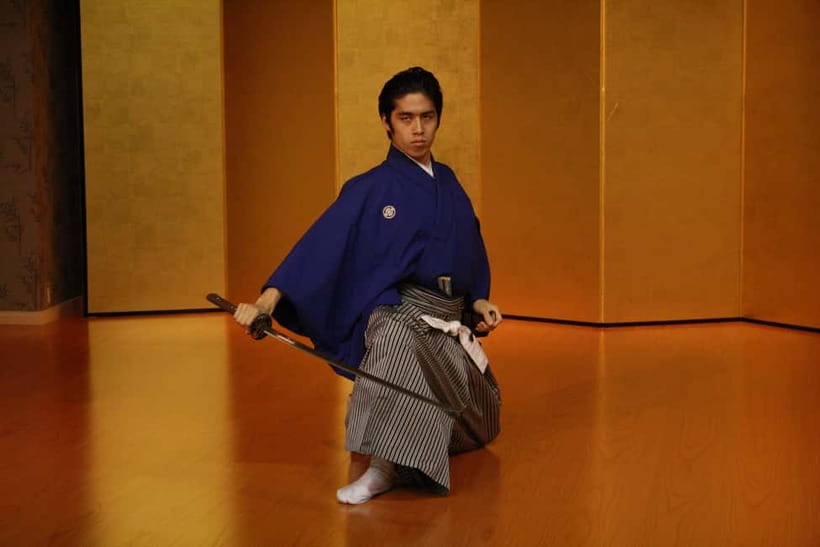
- Controlled katana practice at the end, starting gently and building to firmer swings on an instructor’s command
- Folding fan techniques included as part of the samurai-style performance training
- Shoes-off theater etiquette, plus limited space once you arrive
- After-show photo time when performers return, including a brief photo-taking window
- Choreography over sparring, so go in expecting grace, not a gladiator-style brawl
Sanjo Station to Samurai Kembu Theater: quick arrival tips
This show is easy to reach on foot once you’re in the Sanjo area. Plan to meet at Samurai Kembu Theater, Kyoto, which is about a 4-minute walk from Subway Sanjo Keihan Station (Kyoto City Subway) and roughly 5 minutes from Sanjo Station on the Keihan Main Line.
Do not play chicken with the clock. You’re best arriving 5–15 minutes early. The theater has no waiting room, and if you miss your slot, you can’t just hang around inside until the show starts. Also note there’s no room for large luggage or travel bags, so keep your daypack small.
One small-but-important etiquette detail: you take off your shoes when you arrive. It’s standard in many Japanese indoor spaces, but it’s worth remembering if you’re traveling with bulky footwear or you’re rushing between stops.
If you’re wondering about accessibility, the activity is listed as wheelchair accessible, which is a big plus for Kyoto activities that can be awkward in stair-heavy areas.
Pick up the blade again with these Kyoto sessions
Before the first sword move: what happens in the theater
When you sit down, the experience starts like a lesson disguised as performance. A performer narrates an introduction about Kenbu—its history and the basic feel of the techniques—so you have a mental map before the swords start moving.
From there, the show builds through a sequence of demonstrations. Each segment comes with a short story and context about Samurai culture spanning roughly the 12th to the 19th centuries. I like this pacing because it gives you something to watch for. You’re not just staring at motion; you’re tracking how the movement carries meaning.
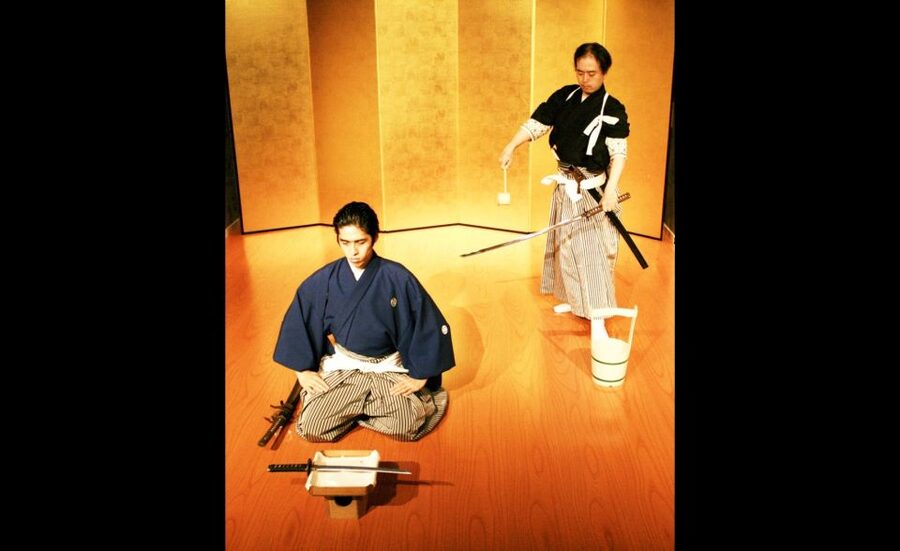
Also pay attention to the parts that focus on duty and responsibility. The program specifically includes a discussion about the seriousness of carrying a samurai sword. That topic matters because it changes how you read the performance. The sword isn’t framed as a toy—it’s framed as a responsibility tied to behavior, discipline, and culture.
One practical note: the show is designed with an understanding that you may be seated close and watching carefully. So keep your hands free, keep your space tidy, and listen for the narration cues.
Kenbu on stage: stories, samurai poems, and fan work
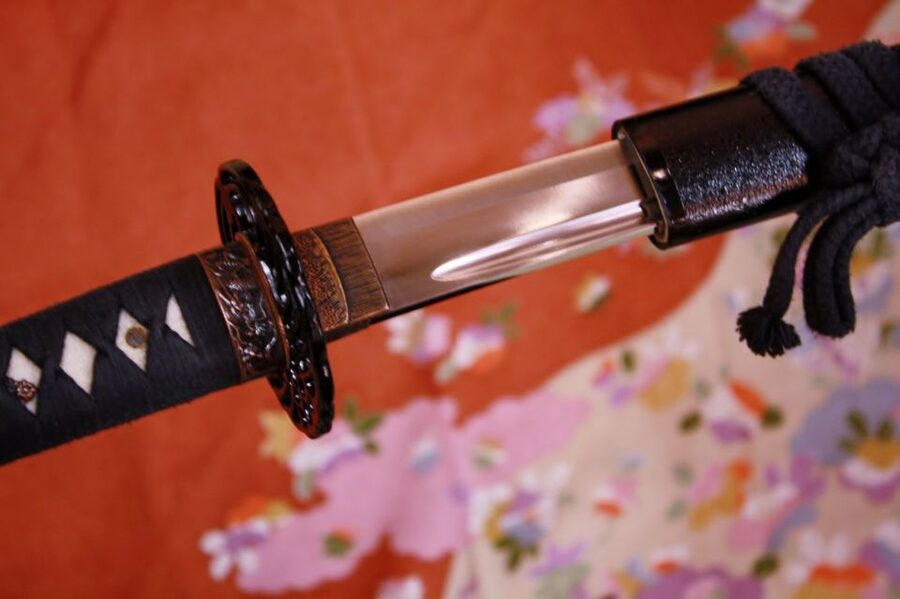
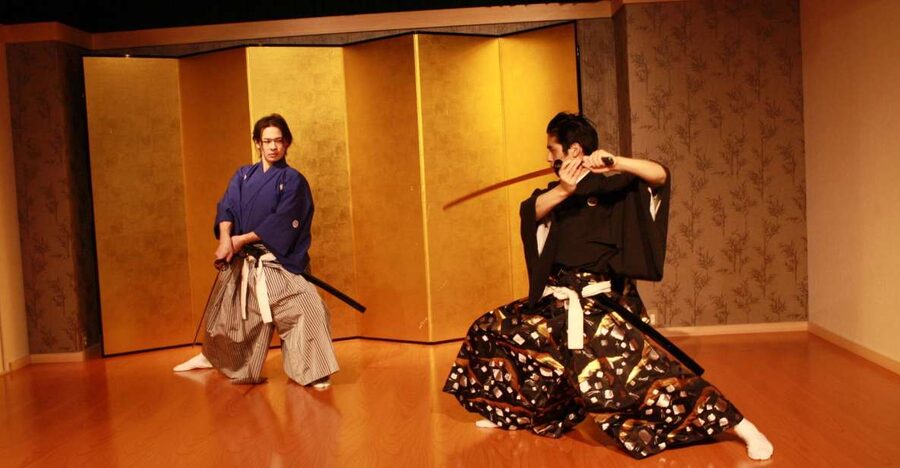
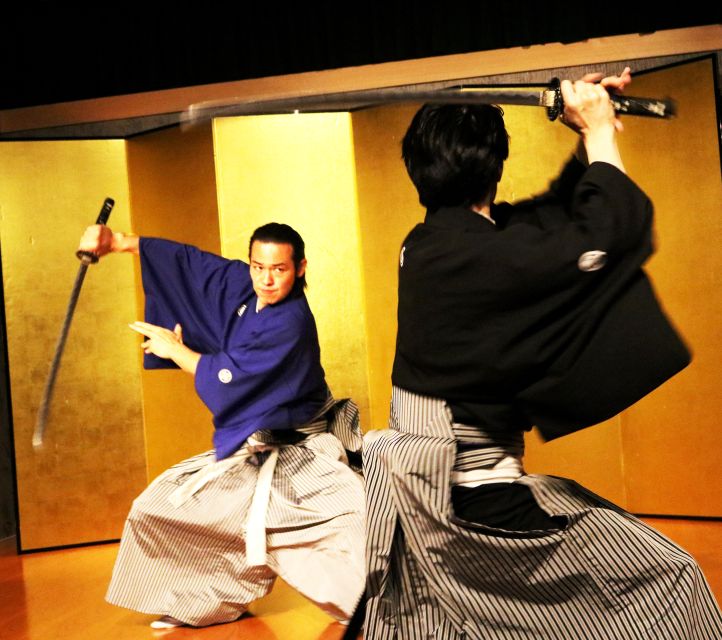
Kenbu is sword dancing, but it’s not just graceful swinging. In this show, the sword movements are tied to storytelling—tales played out on stage with English narration. That narration is key if you want the cultural meaning to land without needing a crash course in samurai-era terms.
You’ll see what the program calls traditional-style and new-style Kenbu. In plain terms, that means you get both a classic performance feel and variations that show how the art continues to be practiced. You’re watching tradition, but you’re also seeing that it isn’t trapped in a museum case.
One detail I found especially worth watching for is the link between the sword work and the spoken/recited content. The performance references poems recited by samurai before heading to battle. Even if you don’t catch every poetic line, you can feel the structure: movement comes in phrases, like lines of speech. It’s more like theater rhythm than sports rhythm.
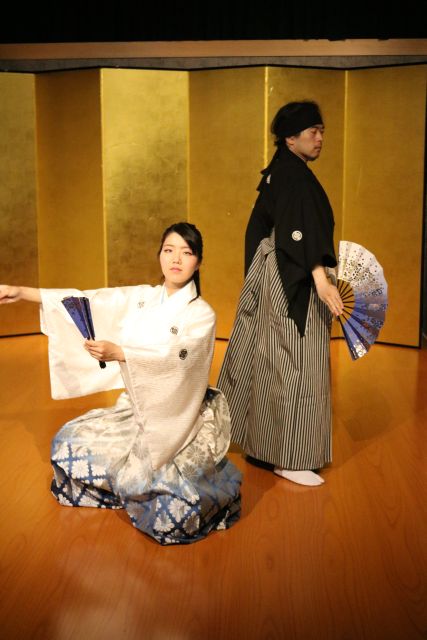
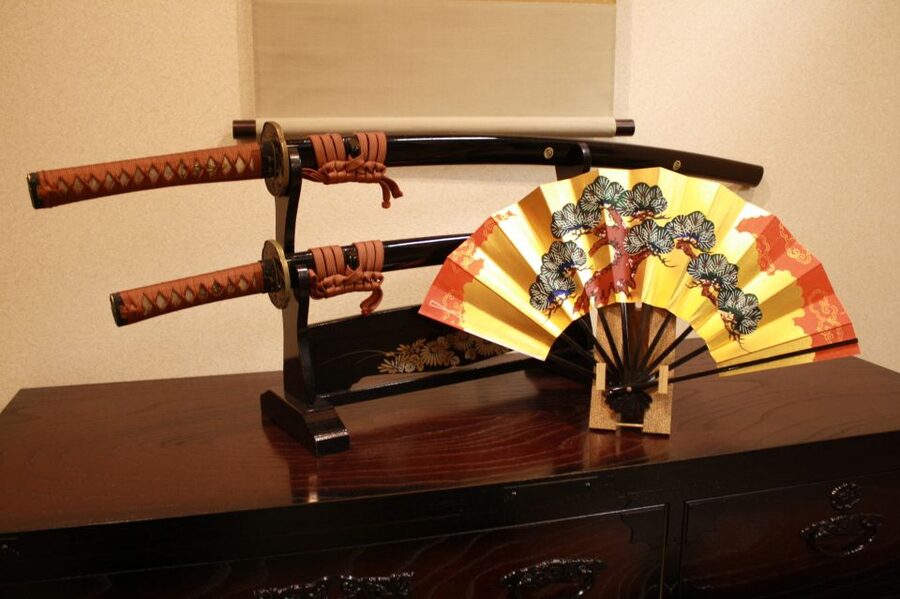
You’ll also see techniques using a folding fan, which fits with the idea that samurai training and presentation weren’t only about blades. The fan work shows up as part of the overall movement language, so when the sword and fan appear in the same performance world, it feels like one consistent system of gestures—not random props.
Finally, the show includes traditional tales performed on stage. Some segments are serious, some are dramatic, and the tone can shift. Even in the storylines, there’s often a human touch—small moments of levity that make the performance easier to follow.
The ending that makes it different: your short katana lesson
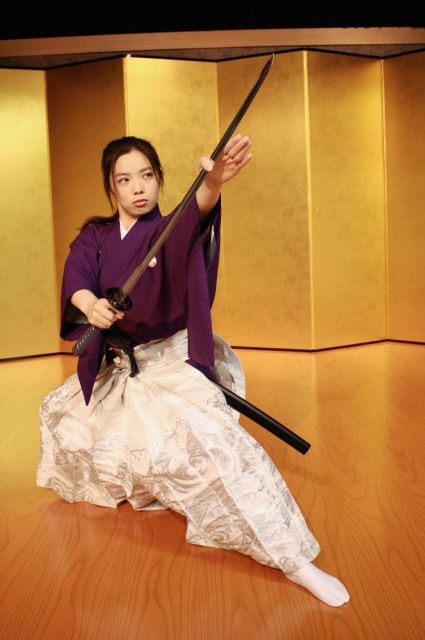
The last part is the reason this experience feels more memorable than simply watching a show. After the main demonstrations, performers return and you get a mini-experience led by an instructor.
This is where you’re allowed to try. The program describes a clear step-by-step process:
- Pick up a sword
- Slowly pull the scabbard back
- Grasp the blade
- Follow the instructor’s command to swing gently at first, then gradually with more force
You’re not doing anything like real sparring. The emphasis is on control, safe handling, and learning the basic mechanics of how a katana is managed and moved. That matters for most visitors because it’s a surprise how hard sword handling looks compared with how it feels during practice.
If there’s time, you may also get instruction on using the folding fan. Think of it as a bonus that ties back to what you watched earlier: the fan isn’t just decoration; it’s part of the samurai-style movement toolkit.
One useful mindset: treat the lesson like learning choreography with a serious tool, not like a kendo battle. You’ll likely enjoy it more when you stop expecting speed, aggression, or full-contact action.
Photos and the after-show window: when you can shoot
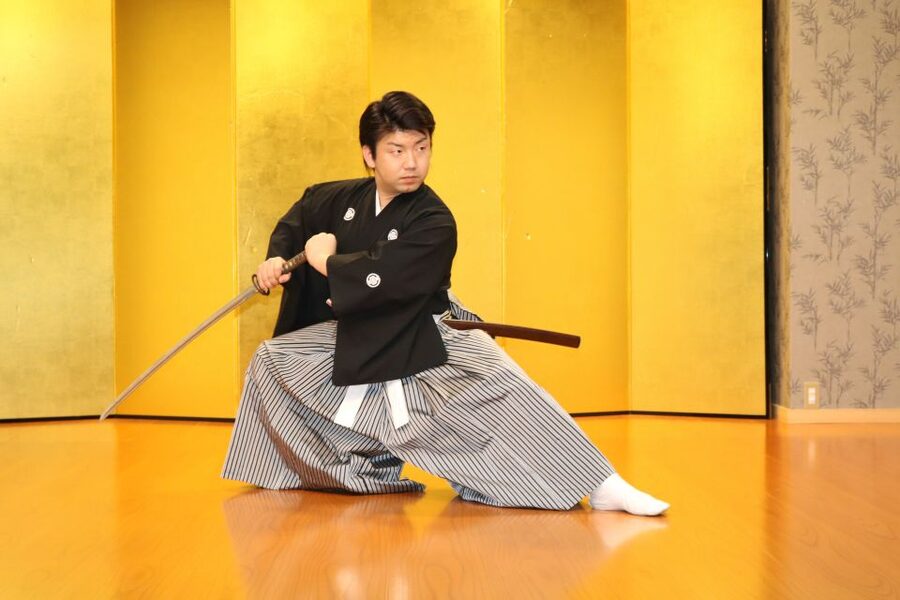
There’s a firm rule during the performance: please refrain from taking photos or videos during the show.
But here’s the good news: after the show, there’s a photo-friendly moment. Once performers return, you can take photos—so plan to have your camera ready for that window. Some people also mention that the staff may take photos for you, which is handy if you want a clean shot without juggling your phone awkwardly.
This setup is actually pretty sensible. It protects the performers’ concentration during the movement-heavy parts, then switches to audience-friendly photography after the main story beats are done.
Pro tip: check your camera settings before the show starts. Then you’re not fumbling with menus while the after-show moment is already happening.
Other Kyoto tours and experiences to compare


Price and time in Kyoto: value for $32 and one hour
At $32 per person for 1 hour, this sits in the sweet spot for a Kyoto evening plan. You’re not paying for a long guided tour that eats your whole afternoon. You’re paying for a focused cultural show plus an included hands-on lesson.
What makes the value feel real is the “watch-and-try” structure. If you only watched stage sword dancing, you might feel like you spent money for entertainment. But the included short lesson changes that. You leave with a memory that’s physical, even if it’s brief.
One more value point: the narration is in English and Japanese, and the show is built around storytelling. That means it’s not limited to people who already know samurai culture. You can walk in with curiosity and still follow along.
Do consider your expectations on the format. If you’re hunting for big fight visuals or a dramatic duel with lots of contact, you might feel slightly underfed. But if you want precision, grace, and the meaning behind the gestures, the price is pretty reasonable for what you get.
Who this Kenbu show is perfect for (and who might not love it)
I think this works best for you if:
- You want a Kyoto cultural performance that’s not just passive watching
- You like history explained through storytelling, not through heavy lectures
- You want a safe, structured chance to handle and swing a sword-like prop briefly
- You’re traveling with teens or older kids who can sit through about an hour of performance
It may be less ideal if:
- You’re expecting a large stage spectacle or nonstop action
- You’re very sensitive to narration clarity and need every spoken detail crystal clear
- You hate shows with rules around filming during the performance
Also, if you’re someone who likes humor in serious settings, you’ll probably appreciate how the performance can include lighter moments in the storytelling.
Quick practical checklist so you don’t lose time
- Bring a small bag; no large luggage is accommodated
- Arrive 5–15 minutes early
- Remember no waiting room if you’re late
- Keep in mind no photos/videos during the show
- Have your camera ready for the after-show photo window
- Wear shoes you can remove quickly (you’ll be taking them off)
Should you book this Kyoto Samurai Kenbu show?
I’d book it if you want a compact, meaningful Kyoto experience that mixes performance, cultural context, and a real chance to try basic sword handling. For the one-hour length and the included mini lesson, it’s strong value—especially if you enjoy traditional Japanese arts and want a story-driven activity that doesn’t require prior knowledge.
If you’re only interested in high-energy fighting, you might feel disappointed. Go in expecting dance, poems, fan techniques, and controlled sword practice—not a chaotic brawl.
If you want a safe bet for an hour in Kyoto where you’ll both watch and learn something you can physically remember, this one is worth your slot.
FAQ
How long is the Kyoto Samurai Kenbu Traditional Sword Dancing show?
The duration is 1 hour.
How much does it cost?
The price is $32 per person.
Where do I meet for the show?
Meet at the Samurai Kembu Theater, Kyoto. It’s listed as about a 4-minute walk from Subway Sanjo Keihan Station and about a 5-minute walk from Sanjo Station on the Keihan Main Line.
What languages is the instruction or narration offered in?
The instructor and narration are listed as English and Japanese.
Can I take photos or video during the show?
No. You’re asked to refrain from taking photos or videos during the show. There is an opportunity for photos after the performance.
Do I get to try holding or swinging a sword?
Yes. A short sword lesson is included, where you can pick up a sword, slowly draw the scabbard, grasp the blade, and swing gently at first, then more forcefully when instructed.
Is there instruction on using a folding fan?
If there is time, you may have the opportunity to learn how to use a folding fan as part of the samurai techniques.
Is it wheelchair accessible?
The activity is listed as wheelchair accessible.
Is free cancellation available?
Yes. You can cancel up to 24 hours in advance for a full refund.
Is pickup or drop-off included?
No. Hotel pickup and drop-off are not included.
More Show in Kyoto
More Tour Reviews in Kyoto






More Samurai and Ninja Sessions

Just added: more Kyoto tours to browse








Kyoto Samurai & Ninja Experiences, compared.
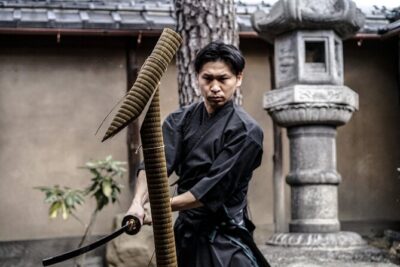 ★ 5.0Kyoto Samurai ExperienceFrom $1191,294 reviews
 ★ 4.9Kendo and Samurai Experience with Uniform and GearFrom $103815 reviews
 ★ 4.9Samurai Sword Class by Experts in Traditional ArtsFrom $64657 reviews
 ★ 4.5Skip the lines Basic Ticket at SAMURAI NINJA MUSEUM KYOTOFrom $28632 reviews
 ★ 5.0Ninja 1-hour Hands-on Lesson by Japanese master in Kyoto -EntryFrom $80489 reviews
 ★ 4.8Ninja Weapon Forging ExperienceFrom $148478 reviews
 ★ 5.0Samurai Training with Modern day Musashi in KyotoFrom $132256 reviews
 ★ 5.0Ninja 2-hour Hands-on Lesson by Japanese master in Kyoto -MediumFrom $95218 reviews
Browse the lists this tour appears in