
Reviewed · NIJO CASTLE TOURS
Kyoto: Nijo-jo Castle and Ninomaru Palace Guided Tour
Nijo Castle can feel like a maze until a guide gives you the rules of the game. This 1-hour English tour focuses on the most important parts—especially the Ninomaru Palace—and turns the architecture into something you can actually understand. The tour is a strong value if you want the Tokugawa story, not just pretty buildings.
My favorite part is how fast the guide connects each room and gate to shogun-era power. You also get a bit of exclusive access that most people miss, which makes the whole stop feel less routine. The main drawback: you’ll need to budget time and money for the separate admission fee (paid with cash on site).
In This Review
- Key highlights worth planning for
- Why Nijo-jo still feels like political power, not a museum
- The Nijo Castle layout: Honmaru vs Ninomaru (and why your tour targets the right one)
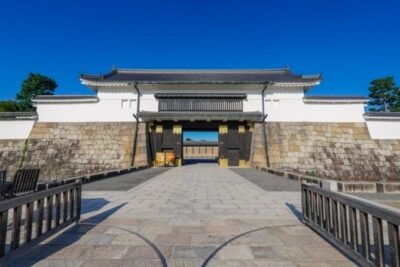
- Starting at Higashi Ote-mon Gate: the fastest way to get your bearings
- Through Kara-mon Gate to Ninomaru-goten Palace: where the route turns into a story
- Inside Ninomaru Palace: rooms, symbolism, and the shogun’s daily logic
- Ninomaru Garden: the calmer counterweight to the politics
- Price and logistics: $16 is just the guide, not the ticket
- Practicalities that affect your comfort (and your photos)
- What kind of traveler should book this?
- Should you book this Nijo-jo Castle guided tour?
- FAQ
- Is the $16 tour price the same as the castle admission ticket?
- How long is the Nijo-jo castle and Ninomaru Palace guided tour?
- What’s included in the guided portion?
- Is the tour offered in English?
- Where do I meet the guide?
- Do I get earphones?
- Can children join for free?
- What if I bring more than one child?
- Is the tour available every day?
- What if I’m late for the tour start time?
Key highlights worth planning for
- Ninomaru-goten Palace as the main event: the shogun’s residence and office during Kyoto visits
- UNESCO World Heritage setting, built in 1603 for Tokugawa Ieyasu’s Kyoto residence
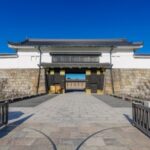
- Gates on the route (Higashi Ote-mon and Karamon/Kara-mon) that frame how the castle controlled access
- Tour-only restricted areas: some parts that feel off-limits to the general public
- Ninomaru Garden included, so you see castle architecture working with carefully shaped space
- Short and focused timing: a 1-hour guided loop, then you can pace the grounds yourself
Why Nijo-jo still feels like political power, not a museum
Nijo Castle isn’t just about old wood and stone. It was built for the Tokugawa shoguns to project control in Kyoto, the place where Japan’s cultural and imperial symbols lived. When you walk through it with a guide, you start noticing the message behind the design: this is a place built to manage people, movement, and authority.
I like how the tour doesn’t get stuck in generic history. It connects the Edo Period power structure to what you’re seeing—especially around the Ninomaru area, where the shogun would conduct business and live during official visits. That makes the whole experience feel practical, not ceremonial.
More of shogun-era Kyoto, starting at Nijo Castle
The Nijo Castle layout: Honmaru vs Ninomaru (and why your tour targets the right one)
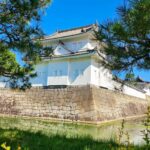
Nijo-jo is often described in three big zones: the Honmaru (main circle of defense), the Ninomaru (secondary circle of defense), and the gardens that surround both. If you wander on your own, it can be hard to tell which parts were meant for military dominance, which were meant for administration, and which were meant for display.
This guided tour makes that easier by aiming you straight at the Ninomaru side of the story. That’s where the palace you want—the Ninomaru-goten—comes in. The buildings here are among the best surviving examples of Japan’s feudal castle architecture, and UNESCO recognition in 1994 only adds weight to the site.
A helpful mental shortcut: the castle is not one uniform experience. Your guided hour focuses you on the power center, then lets you use the garden space for a slower look.
Starting at Higashi Ote-mon Gate: the fastest way to get your bearings
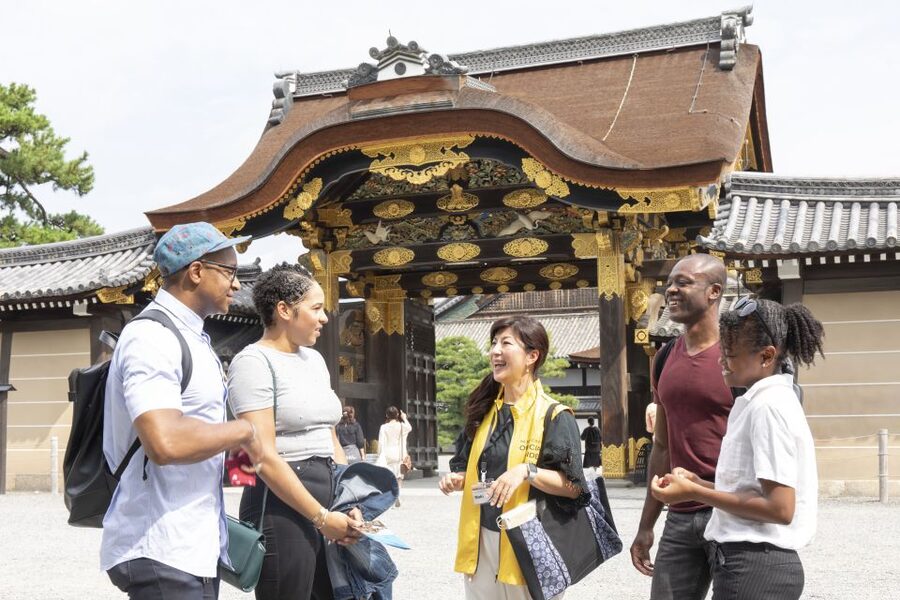
The tour begins at the Higashi Ote-mon Gate. After you enter through the East Main Gate, you gather at the reception area next to the General Reception (left side after entering). It’s one of those details that saves stress later, because Nijo Castle can have a crowd pattern that changes throughout the day.
This first segment matters more than it sounds. Getting oriented early helps you understand why the route zigzags and why gates and entry points feel deliberate. The guide sets up what you’ll see next: how the castle controlled access before you even reach the palace rooms.
One practical note: you need to be present when the tour starts. If you’re late, you can’t join in after the fact.
Through Kara-mon Gate to Ninomaru-goten Palace: where the route turns into a story
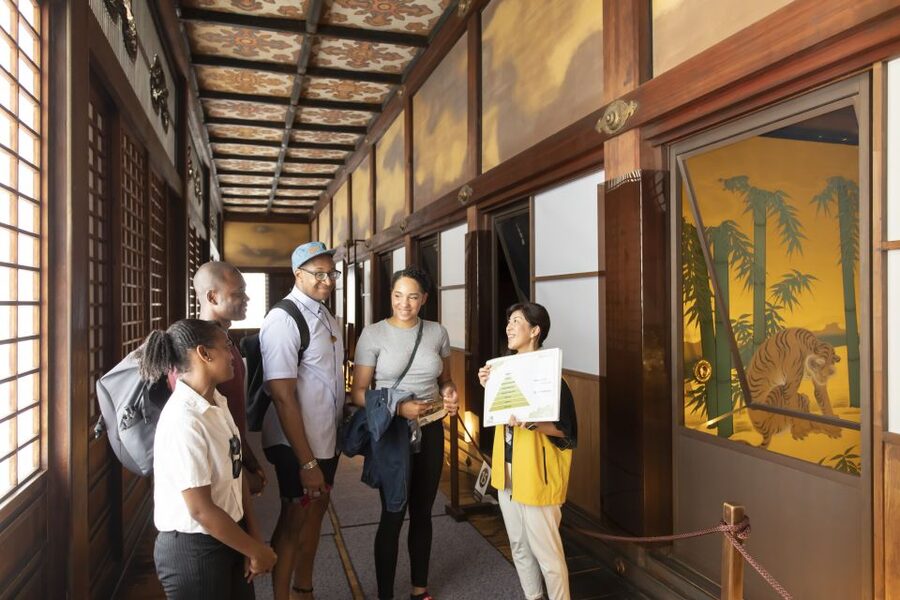
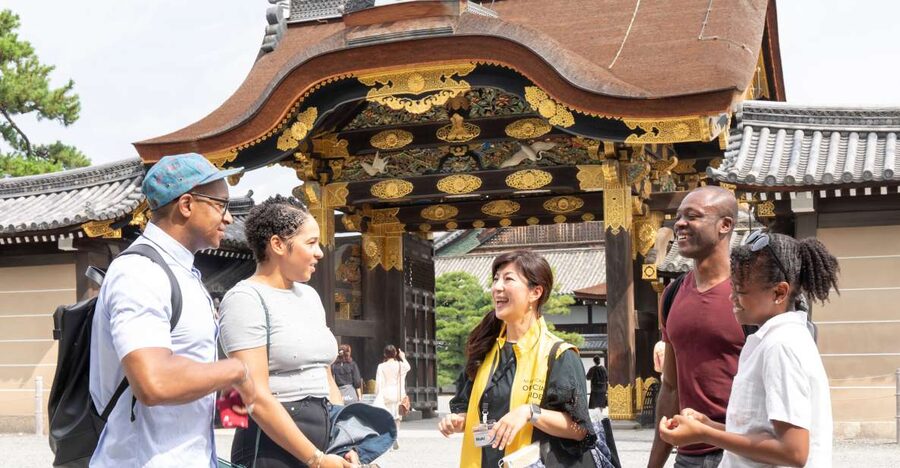
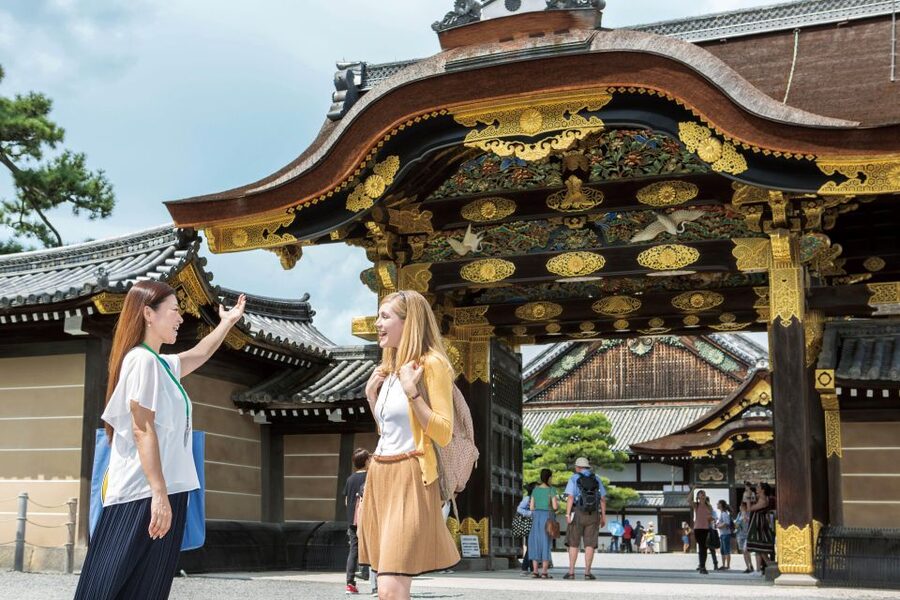
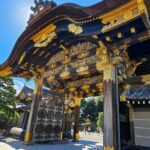
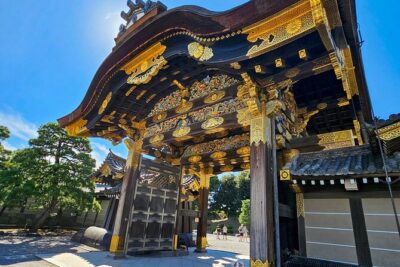
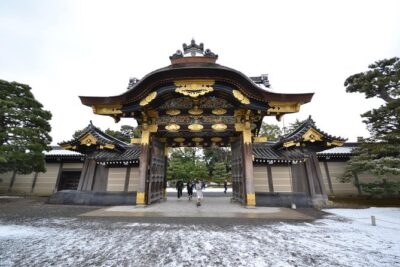
After the gate entrance, you move toward the Karamon Gate (listed as Kara-mon Gate). The Karamon is described as extravagant, and this is where the castle starts looking like a statement, not just a stronghold. Even if you’re not a “details person,” the guide’s job here is to slow you down and point out what the decoration and layout are communicating.
Then the tour reaches the centerpiece: Ninomaru-goten Palace. According to the context on site, this was the shogun’s residence and office during visits to Kyoto—and it remains intact. That intactness changes the experience. You’re not looking at a reconstructed vibe; you’re seeing structures that have survived from the era when the Tokugawa system was running the country.
If you’re wondering what to do in the palace beyond looking at woodwork: listen for the guide’s room-by-room logic. People often walk into palaces thinking it’s all “ceremony.” With the right guide, it becomes a map of responsibilities.
Inside Ninomaru Palace: rooms, symbolism, and the shogun’s daily logic
The palace is where the guided time pays off. Without context, a visitor might see rooms and admire craftsmanship. With context, you start noticing how space supported ranking, authority, and practical workflow.
Across many bookings, guides are praised for explaining the significance of rooms and decorations in clear chunks. Names you may hear include Kingo, Ayu, Ai, Kaoru, and Don-san. The consistent theme: strong explanations that help you picture who used each area and why.
A few concrete examples from the kind of commentary you can expect:
- why certain design choices and artwork matter in the political setting
- how the palace functioned as both residence and working space
- how castle design connected to daily life and risk management themes (people have specifically brought up topics like fire risks and other concerns)
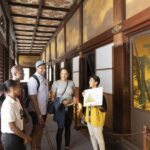
Also, there are real-world comfort limits. One review note is that inside the palace there’s no water, no photos, and no AC. In hot months, you’ll want to plan for that. Go in expecting warm interiors and limited amenities.
Other Kyoto tours and experiences to compare



Ninomaru Garden: the calmer counterweight to the politics
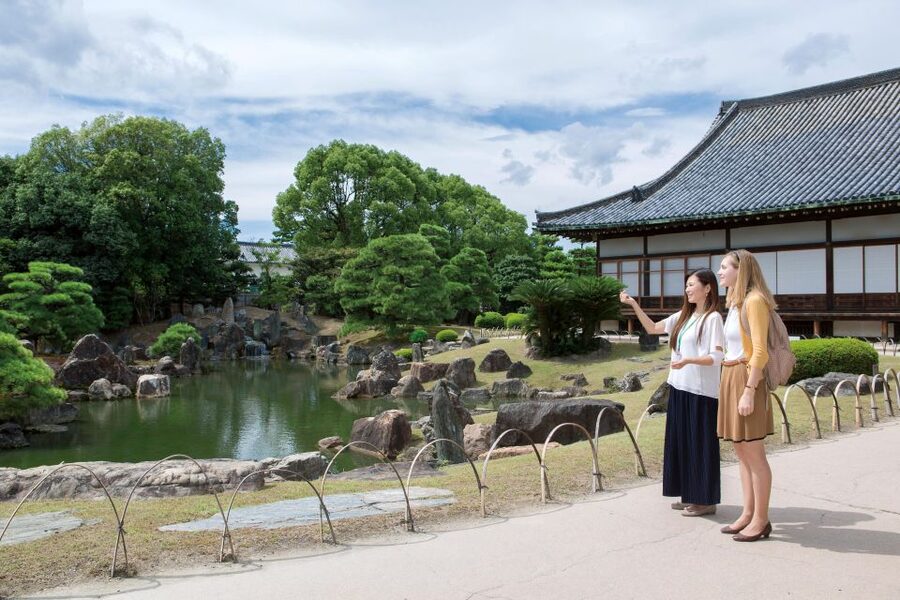
After the palace, the tour includes the Ninomaru Garden. This is where the experience softens. Gardens around the Ninomaru and Honmaru aren’t just decoration; they’re part of how the castle frames movement and perception. If the palace shows power through structure, the garden shows power through planning and restraint.
I like that this portion gives you a chance to reset your eyes and brain. It also pairs well with the idea that you’re not stuck in one room for the whole hour. You get visual variety, plus a slower pace where you can take in the wider layout.
Even with a guided loop, you may have time to stroll at your own pace through the garden areas afterward. A number of people describe enjoying that open walking time after the explanation.
Price and logistics: $16 is just the guide, not the ticket
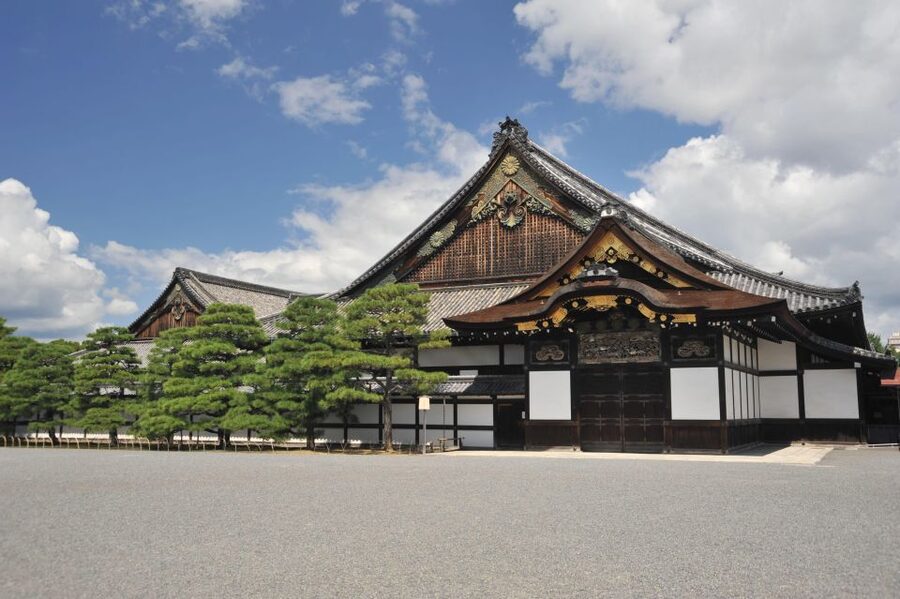
The tour price is $16 per person, and it includes a 60-minute guided experience covering: Higashi Ote-mon Gate, Karamon/Kara-mon Gate, Ninomaru-goten Palace, and the Ninomaru Garden.
But here’s the key value equation: admission fees to the castle are not included and must be paid separately with cash on site. Some reviews specifically call out an extra cost like 1300 yen for entry tickets. I can’t promise that amount is universal for every ticket type, but it’s a good signal that your total spend will be higher than $16 once you account for entry.
So is it worth paying extra for the guide? For me, the answer is yes if you care about meaning. Nijo Castle is exactly the kind of place where context changes the experience from pretty to memorable. The guide doesn’t just narrate. It helps you understand what the architecture is doing for Tokugawa power.
Also, there’s an “exclusive access” angle in the highlights, and some bookings mention additional areas restricted to tour groups. That alone can justify a guided format because you’re getting a route most independent visitors don’t.
Practicalities that affect your comfort (and your photos)
This is an English live tour. Earphones are only provided to paid participants. If you’re traveling with kids, note the rules around earphones and free entry: each paid participant can bring one child aged 0–12 for free, but the child must be accompanied by an adult. If earphones are needed for children, you’ll be asked to purchase adult tickets for them.
No transportation is included, so plan how you’ll get to Nijo Castle on your own. The meeting point details help a lot, and it’s worth arriving early enough to settle in before the guide starts.
Timing-wise, the tour is 1 hour, and it runs only on days when the Ninomaru Goten isn’t closed. The site is closed on every Tuesday of July, August, December, and January, plus Dec 26 to Jan 3 due to Ninomaru Goten closure. If you’re visiting during those windows, don’t assume you’ll be able to swap to another day without checking first.
Finally, pack like you’re going into a formal building in warm weather. The no-AC note matters in summer, and the no-water note matters for the palace interior. Bring what you can drink and plan your breaks outside.
What kind of traveler should book this?
Book it if:
- you want Tokugawa-era context in plain English, without getting lost in jargon
- you care about how rooms and decoration connect to shogun-level authority
- you like a focused 1-hour structure rather than a full-day wandering plan
You might skip (or pair differently) if:
- you prefer zero guidance and want maximum time for slow photo stops
- you’re traveling with strict timing and you’d rather spend that money on more Kyoto stops
One extra note on group experience: several people describe small groups, including cases with around four people. If you’re hoping for a quieter feel, this type of setup is a good sign.
Should you book this Nijo-jo Castle guided tour?
If you’re going to Nijo Castle anyway, I think this is the easiest “make it count” upgrade. The 1-hour format keeps you from getting stuck in information overload, and the focus on Ninomaru Palace is where the meaning lives. Add in the chance of tour-only restricted access, plus consistently strong guide performance in English, and the value starts to make sense even with the extra ticket cost.
My decision rule:
- If you like understanding what you’re seeing, book it.
- If you just want views and photos at your own pace, consider skipping the guide or planning extra independent time around the gardens.
FAQ
Is the $16 tour price the same as the castle admission ticket?
No. The tour price covers the guided experience, but the castle admission fee is not included and has to be paid with cash on site.
How long is the Nijo-jo castle and Ninomaru Palace guided tour?
The guided tour lasts 60 minutes.
What’s included in the guided portion?
The included stops are Higashi Ote-mon Gate, Karamon Gate, Ninomaru-goten Palace, and Ninomaru Garden.
Is the tour offered in English?
Yes. The tour guide language is English, and the tour is conducted only in English.
Where do I meet the guide?
Meet at the Nijo Castle Tour Ticket Booth. You should enter through the East Main Gate and gather at the reception area next to the General Reception on the left side after entering. (Staff will guide you after you notify them at reception.)
Do I get earphones?
Earphones are provided to paid participants. If earphones are needed for children, please purchase adult tickets.
Can children join for free?
Each paid participant can bring one child aged 0–12 to join for free, as long as the child is accompanied by an adult.
What if I bring more than one child?
If you want to bring more than one child, each additional child must purchase an adult ticket.
Is the tour available every day?
Ninomaru Goten has closures, so the tour is not held on every Tuesday of July, August, December, and January, plus Dec 26 to Jan 3 due to closure.
What if I’m late for the tour start time?
You won’t be able to participate if you are not present when the tour begins, so arrive well before the start time.
More Tours in Kyoto


More Tour Reviews in Kyoto
More of Castle-Era Kyoto
Just added: more Kyoto tours to browse





Nijo Castle Tours, compared.
 ★ 4.7Nijo Castle, Kiyomizu & Fushimi Inari Guided TourFrom $54700 reviews
 ★ 5.0Nijo, Kinkaku-ji, Arashiyama, Kiyomizu & Fushimi InariFrom $51699 reviews
 ★ 4.7Imperial Palace & Nijo Castle Guided Walking TourFrom $49453 reviews
 ★ 5.0Nijo Castle World Heritage Guided Tour with AdmissionFrom $39128 reviews
 ★ 4.5Kyoto Imperial Palace & Nijo Castle Guided Walking Tour – 3 HoursFrom $55106 reviews
 ★ 4.6Nijo Castle and Kyoto Imperial Palace Guided TourFrom $6398 reviews
 ★ 5.0Nijo Castle and Imperial Palace Visit with GuideFrom $7953 reviews
 ★ 5.0Golden Pavilion, Nijo Castle, & Nishiki Market Half day tourFrom $9029 reviews
Browse the lists this tour appears in