
Reviewed · MORNING
Kyoto: Early Morning Tour with English-Speaking Guide
Wake up early. It pays off in Kyoto.
This small-group morning tour stacks three of Kyoto’s best-known stops into one smooth plan, with a 5-hour-ish pace that gets you sightseeing before the day crowd crush. I especially like the early start mindset and the fact it’s led by an English-speaking guide (for example, Natsuki and Hinano Yoshida show up as guides in past groups), so you’re not just walking in silence.
You’ll also appreciate the way the tour slows down at the right moments, especially during the Fushimi Inari visit for that thoughtful, pause-and-look feeling at the shrine. And at the other main sights, guides often help with practical photo spots and context that makes the scenery easier to understand. One big win: guides like Ramu and Aya are praised for pacing that feels neither rushed nor sleepy.
One consideration: this is a walking tour using public transport, not a private, chauffeured ride. If you’re sensitive to lots of walking, if you use a cane, or if you need stroller/wheelchair access, this won’t fit well—and being late at the Kyoto Station meeting point can mean you miss the tour with no refund.
In This Review
- Key things to know before you go
- Kyoto Station meeting: easy to find, and you need to be on time
- Why the early morning plan works so well in Kyoto
- Fushimi Inari Taisha: torii gates plus a calmer rhythm
- Arashiyama in one hour: bamboo views with less stress
- The in-between travel: public transit that keeps you independent
- Kinkaku-ji (Golden Pavilion): guided entry plus a clear plan
- Price and value: what $101 buys you (and what it doesn’t)
- Pacing, walking, and who this tour fits best
- Guide quality: why people keep praising the same things
- Should you book this Kyoto early morning tour?
- FAQ
- What is the meeting point for the Kyoto tour?
- How long is the tour?
- Is this a private tour?
- What language is the guide?
- How do you pay for transportation and temple entry?
- Do I need to bring anything?
- Is the tour wheelchair or stroller accessible?
- What happens if I’m late to the meeting point?
Key things to know before you go
- Start at Kyoto Station: central ticket gate by Kyoto Tower and a 7-Eleven, with a GuideMe Japan sign.
- Small group, big coverage: up to 8 people, English guide, and public trains between sights.
- Fushimi Inari first: you get to pause at the torii gates before the busiest waves arrive.
- Arashiyama + bamboo views: the morning timing helps you experience the area with less congestion.
- Kinkaku-ji time slot: you get a guided visit, but you’ll still want to budget the entrance fee and transport.
Kyoto Station meeting: easy to find, and you need to be on time
The tour begins at Kyoto Station Central Ticket Gate, at the big gate where you can spot Kyoto Tower outside, and it’s near a 7-Eleven. Your guide will message you on WhatsApp ahead of time, so download it before you arrive in Japan. They’ll hold a sign that says GuideMe Japan, which makes the meeting point less stressful.
Then comes the part you should treat seriously: the group can’t wait for late arrivals because other groups are involved. If you’re late, you won’t be able to join and you won’t get a refund. That means your best move is simple: arrive early, use the station map, and don’t rely on last-minute platform hunting.
This matters because the tour is built around time. Kyoto’s highlights are famous for a reason, and the schedule is tight enough that the early start isn’t just a nice bonus—it’s what makes the day work.
Other Kyoto tours and experiences to compare


Why the early morning plan works so well in Kyoto
Kyoto is a magnet. Even when you pick the right day, the wrong time can turn a beautiful shrine or garden walk into a slow shuffle. This tour’s structure directly fights that problem by pushing you out early and keeping you moving between three major areas.
You’re also done by lunch. That’s a practical advantage if you’re trying to see more of Kyoto later—maybe a quieter temple on your own, a riverside stroll, or a long meal when everyone else is still queuing.
And because it’s a small group (up to 8), you’re less likely to get separated into chaos. The guides are used to managing the flow: where to stand, where to walk, and how to keep your sightseeing time meaningful instead of spent negotiating crowds.
Fushimi Inari Taisha: torii gates plus a calmer rhythm
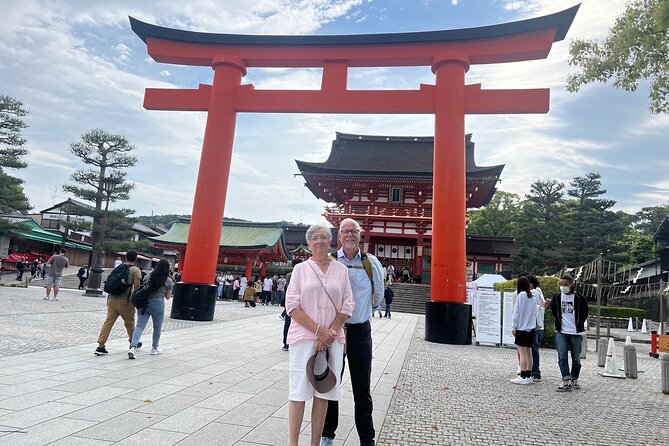
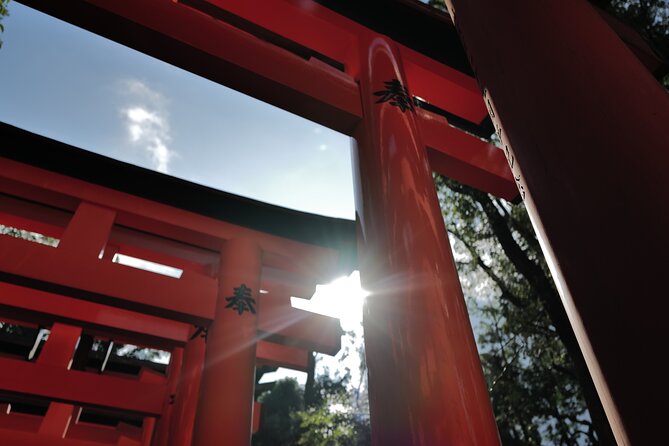
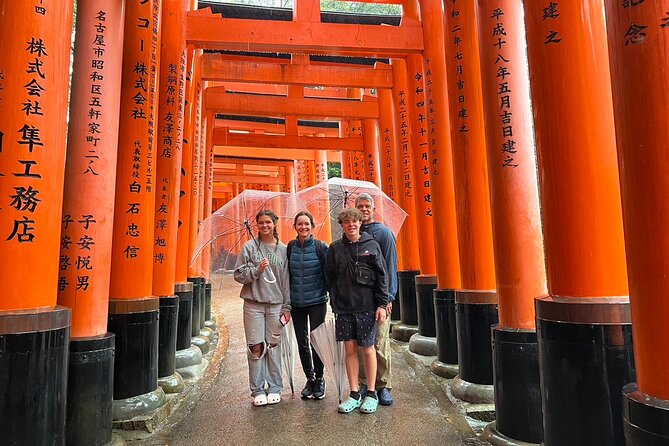
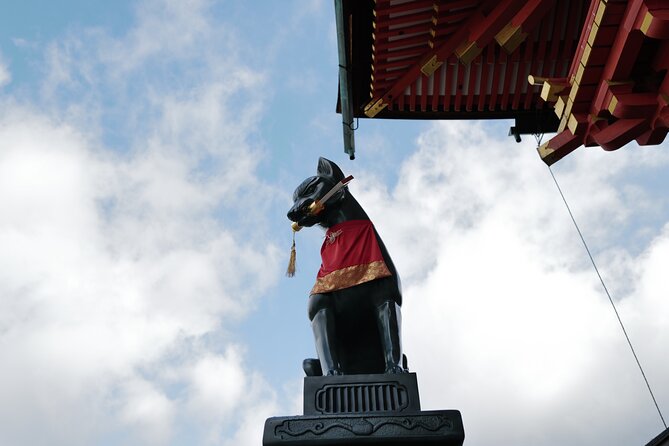
Your first guided stop is Fushimi Inari Taisha, typically a 70-minute visit. This is the shrine of torii gates, the one you’ve seen in photos where the paths look endless. In person, the scale and repetition have a mind-trick effect—you start noticing how the light changes as you move deeper into the gates.
What makes the guided approach valuable here is not just facts. A good guide helps you pace yourself so you don’t get swept along by the heaviest stream of people. The tour is designed so you can take in the shrine without feeling like you’re constantly dodging bodies.
You also get that brief moment of reflection built into the timing. The quiet feeling at early hours is real, and it’s the kind of experience that’s hard to replicate if you arrive mid-morning when tour groups stack up.
One more practical plus: guides often know the best spots for photos in a way that saves time. Past groups mention guides who helped with camera angles and even photo-taking, so you’re more likely to leave with pictures you actually like.
Arashiyama in one hour: bamboo views with less stress
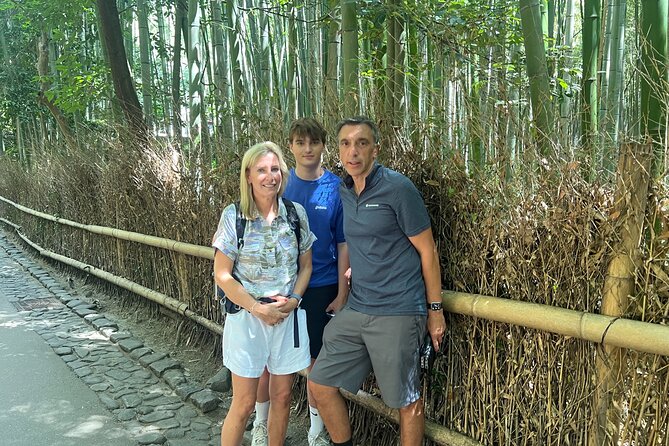
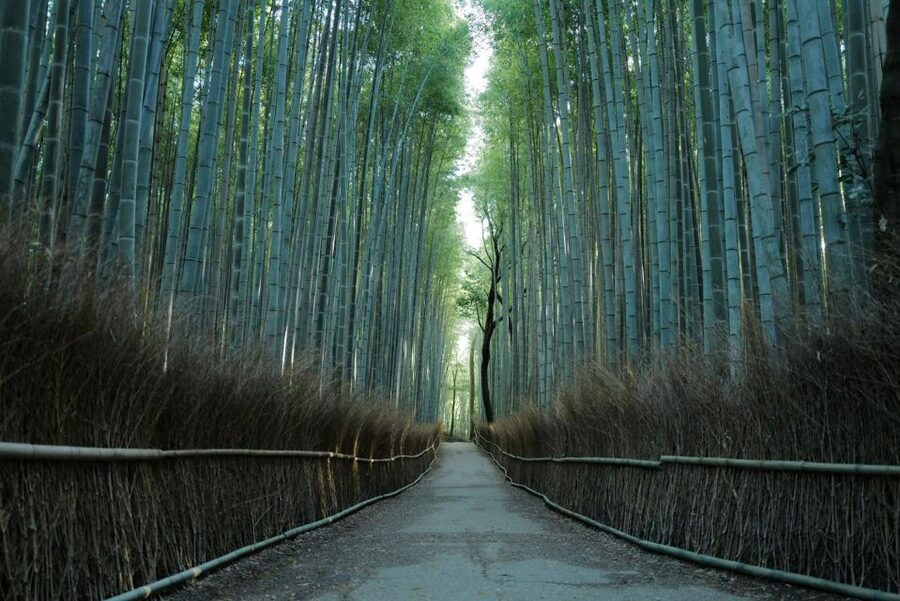
Next comes Arashiyama, guided for about an hour. Arashiyama is another Kyoto star. It’s famous for the bamboo grove, plus the broader district atmosphere—walkways, riverside energy, and that classic “Kyoto postcard” look.
The benefit of squeezing Arashiyama into a morning window is straightforward: you’re less likely to hit the thick crowds right as you’re trying to enjoy the views. One review highlight that stuck with me: bamboo scenery, even in cold weather, can feel magical when you’re not fighting for space.
That said, one hour is exactly one hour. You’re not doing Arashiyama at leisurely depth like someone who lives there. You’re getting the signature experience plus enough context to understand why people make a pilgrimage here.
If you love photos, this is where the tour can feel especially helpful. Several groups praised guides for knowing photo spots and keeping the group moving efficiently while still making sure everyone can look and capture the moment.
The in-between travel: public transit that keeps you independent
This tour is a walking tour that uses public transportation, not a bus-ride day. Between stops, you’ll use trains and other transit links, and the guide keeps everything coordinated.
Why this is good value: Kyoto’s transit system can feel intimidating at first, especially if your kanji reading is limited. A strong guide reduces that friction. In multiple past groups, guides were praised for helping with transit navigation, so you finish the tour with more confidence for the rest of your Kyoto days.
Do note the practical tradeoff: since you’re on public transit, you’ll be paying transport costs separately. Plan on about 1240 yen for transportation. You’ll also want to have an IC card such as SUICA, ICOCA, or PASMO (or a JR Pass if you have one) to make tapping and ticketing smoother.
Other Kyoto tours and experiences to compare




Kinkaku-ji (Golden Pavilion): guided entry plus a clear plan
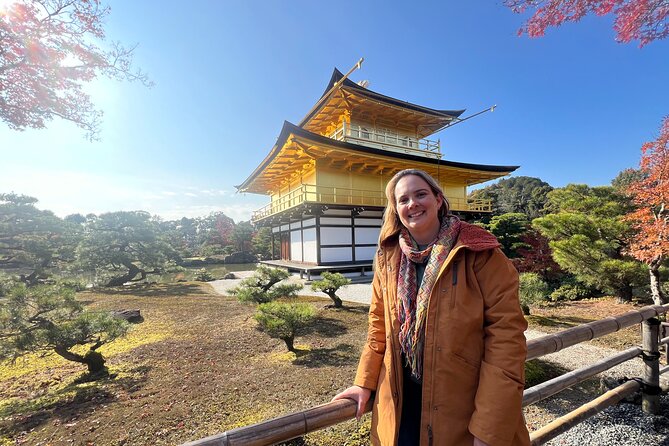
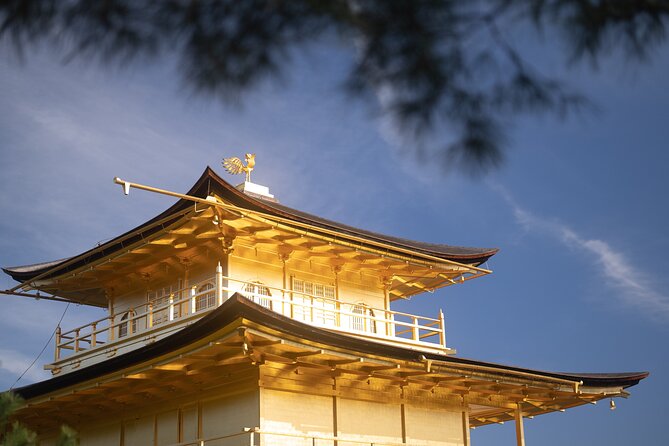
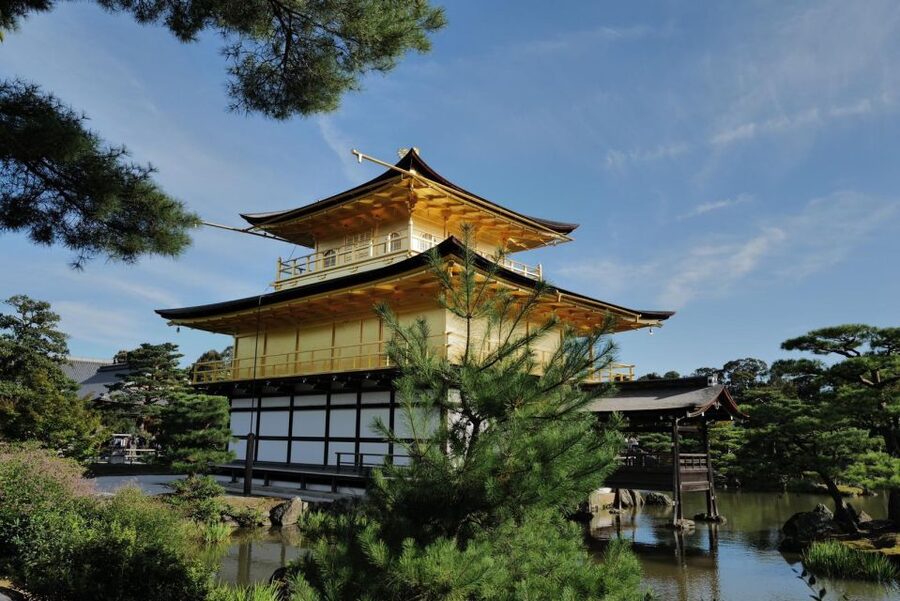
Your final major stop is Kinkaku-ji, the temple also known as the Golden Pavilion. You’ll get about one hour guided here, and it’s the kind of place where timing affects your experience immediately. When crowds swell, it becomes harder to focus on details—the buildings, the reflections, and the way the temple’s appearance changes depending on where you stand.
Two important costs to plan for:
- The entrance fee for Kinkaku-ji is 500 yen.
- Transportation costs are not included (budget that ~1240 yen figure).
So is the tour still worth it? For a first-time Kyoto visit, yes—because the tour doesn’t just drop you at a site. It gets you there in a manageable sequence and gives you a guided visit at a tempo that fits into a single morning.
Also, real life happens. One group noted a bus hiccup and that the guide handled it by switching to a taxi to keep the schedule on track. That’s the kind of practical problem-solving you want from a guide when you’re depending on transit timing.
Price and value: what $101 buys you (and what it doesn’t)
At $101 per person for roughly 330 minutes (about 5 hours, give or take around 30 minutes), you’re paying for three things:
1) A competent English-speaking guide,
2) A structured route through major highlights,
3) The advantage of an early start that helps you enjoy the sites before crowds pile in.
What’s not included:
- Lunch
- Transportation fee (about 1240 yen)
- Kinkaku-ji entrance fee (500 yen)
Here’s the value math in plain terms: if you’re going to visit all three areas anyway, and you’d normally spend energy figuring out transit and where to stand for photos, the guided format saves you time and stress. Plus, you’re not just buying walking directions. You’re buying context and pacing, which is often what makes Kyoto feel meaningful rather than exhausting.
Pacing, walking, and who this tour fits best
This tour is built as a walking day. It’s not private, it’s not a bus tour, and it’s not designed for heavy accessibility needs. It’s also not recommended for people who use a cane, and it’s not wheelchair or stroller accessible. People with heart problems should think carefully as well.
If you’re an able-bodied adult who enjoys early mornings, you’ll probably love this format:
- You get big hits without building your own itinerary from scratch.
- The group size keeps it friendly and manageable.
- The early timing gives you a calmer feel at Fushimi Inari and Arashiyama.
If you’re traveling with kids, this can still work, but your child will need to handle walking and transit steps comfortably. Some guides have been praised for keeping an inclusive, attentive tone with families, which is a nice sign for kid-friendly pacing.
Guide quality: why people keep praising the same things
The most consistently praised aspects in past groups are pretty clear:
- Guides are fun to talk with and make the sites feel alive with stories and context.
- English is strong, with explanations that are easy to follow.
- Pacing is described as well balanced, helping you see a lot without feeling rushed.
- Guides often add practical extras like food recommendations after the tour and photo-help during the stops.
Names that show up in high praise include Ramu, Genki, Koi, Aya, Chihiro, Haruki, Rin, Moto, and Alisa. That’s not the point of the tour, but it’s a signal that the operator is selecting guides who take their job seriously.
If you’re the type who likes asking questions, this is a great style of tour. Several groups specifically mention that guides answered questions well and helped people understand what they were seeing beyond the obvious photo targets.
Should you book this Kyoto early morning tour?
Book it if:
- You want the three big highlights in one morning: Fushimi Inari, Arashiyama, and Kinkaku-ji.
- You value early crowds advantage more than slow, wandering sightseeing.
- You prefer a guide to handle the timing and transit so you can focus on the experience.
- You like small-group energy (up to 8 people).
Skip it (or look for another option) if:
- You need wheelchair or stroller accessibility.
- You don’t handle walking well or you use a cane.
- You’re arriving late or you can’t reliably make the exact meeting time at Kyoto Station.
If your goal is a confident first Kyoto morning with less stress and more seeing, this is a smart way to spend your time.
FAQ
What is the meeting point for the Kyoto tour?
The meeting spot is Kyoto Station Central Ticket Gate, near Kyoto Tower and close to a 7-Eleven. The guide will be holding a board that says GuideMe Japan.
How long is the tour?
The tour is approximately 330 minutes, which means it can differ by around 30 minutes before or after the estimated time.
Is this a private tour?
No. It’s a group tour with a small group size, up to 8 participants.
What language is the guide?
The tour offers live guides in English and Korean.
How do you pay for transportation and temple entry?
Transportation is not included (about 1240 yen), and Kinkaku-ji entrance is also not included (500 yen). Bring an IC card such as SUICA, ICOCA, or PASMO, or use a JR Pass if you have one.
Do I need to bring anything?
Bring comfortable shoes and cash.
Is the tour wheelchair or stroller accessible?
No. The tour is not wheelchair or stroller accessible, and it is not recommended for guests who use a cane.
What happens if I’m late to the meeting point?
The tour cannot accept late guests. If you are late and miss the start, you cannot join and you will not be given a refund. Try to arrive 5–10 minutes early.
More Guided in Kyoto
More Tours in Kyoto




More Tour Reviews in Kyoto


Just added: more Kyoto tours to browse








Morning, compared.
 ★ 5.0Kyoto Early Morning Tour with English-Speaking GuideFrom $681,427 reviews
 ★ 4.6From Kyoto: Nara Guided Morning TourFrom $77335 reviews
 ★ 4.0Kyoto Morning Tour from Kyoto or OsakaFrom $87281 reviews
 ★ 5.0Morning Japanese Bento Cooking ClassFrom $67149 reviews
 ★ 5.0Arashiyama Bamboo Forest Morning Tour by BikeFrom $103115 reviews
 ★ 5.0Traditional Japanese Washi Papermaking- Kyoto morningFrom $3377 reviews
 ★ 5.0Explore Hidden Alleyway with a Local Expert (Morning tour)From $10361 reviews
 ★ 4.9Early Morning Fushimi Inari Shrine – Beat the CrowdsFrom $7048 reviews