
Reviewed · GION & GEISHA DISTRICT TOURS
Kyoto: Gion Geisha District Walking Tour – Stories of Geisha
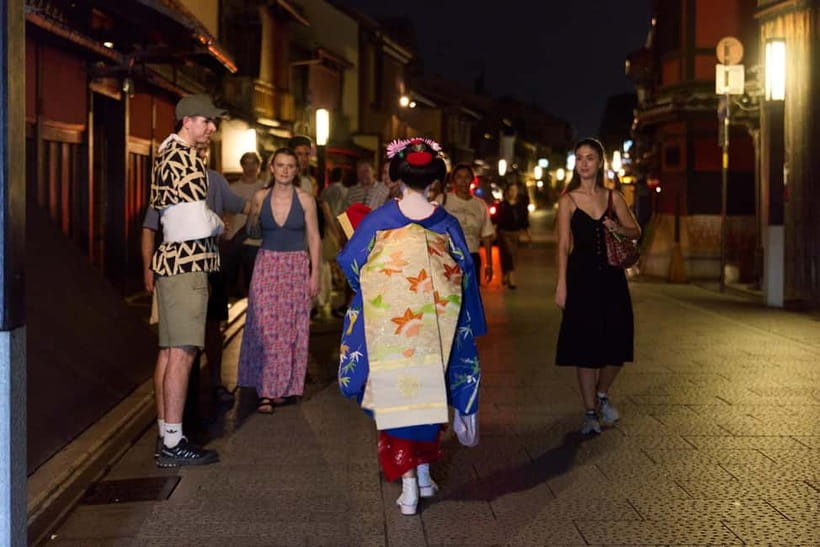
Night turns Gion into a living stage. This 2-hour night walking tour is a practical way to understand Kyoto’s geisha world, moving through the old lanes with a local guide as you look for geiko and maiko heading to appointments.
I especially like how the route strings together the most photogenic, historically meaningful spots—Pontocho Alley by the river and then the walk through Gion toward Hanamikoji. I also like that the guide keeps it conversational, answering questions and pacing the stops so you can actually process what you’re seeing.
One thing to consider: it’s mostly an outdoor nighttime walk, so you need to dress for weather and remember that sightings can be hit-or-miss on quieter evenings (and it’s not a kids tour—it’s not suitable for children under 10).
In This Review
- Key highlights you won’t want to miss
- Why night is the right time for Gion and Pontocho
- Ben’s Cookies Kyoto Shijo: starting where it’s easy to find
- Pontocho Alley: wooden teahouses and a river-side mood
- Izumo-no-Okuni statue: kabuki enters the story
- Gion’s lanes near Yasaka Shrine: where the district feels alive
- Gion Corner: tying the neighborhood to performance traditions
- What makes the guide matter (and why you’ll likely remember it)
- Pace and what you can realistically expect in 2 hours
- Price and value: what $20 buys you here
- Practical tips: what to bring, how to dress, and how to act
- Who should book this, and who might want a different plan
- Should you book Kyoto’s Gion Geisha District walking tour?
- FAQ
- How long is the Kyoto Gion Geisha District Walking Tour?
- How much does it cost?
- Where do we meet the guide?
- What languages are offered?
- What should I bring?
- Is alcohol allowed?
- Is the tour suitable for children?
- Can I get a refund if plans change?
Key highlights you won’t want to miss
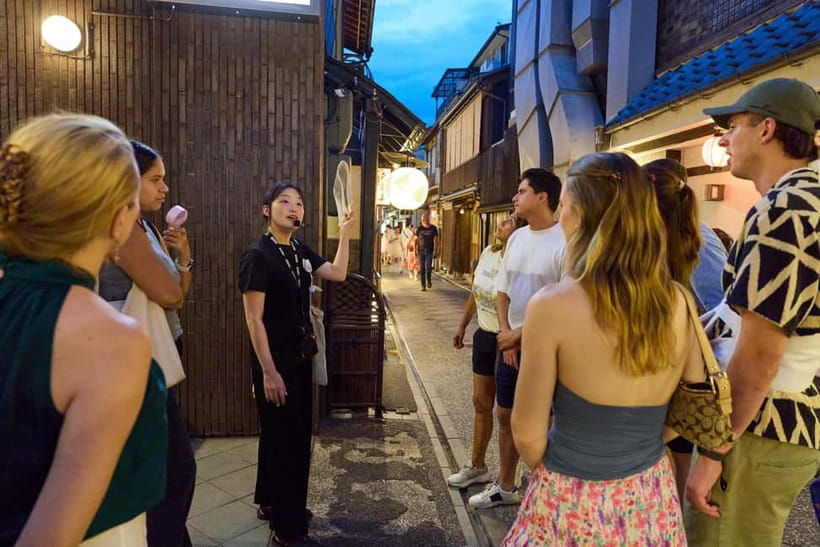
- Meet at Ben’s Cookies Kyoto Shijo with a guide holding a sign board
- Pontocho Alley at night, with old wooden teahouses and a river-side feel
- The Izumo-no-Okuni statue, tied to the story of kabuki’s origins
- Gion stops near Yasaka Shrine, plus Hanamikoji Street for that signature Kyoto look
- Chances to spot geiko or maiko on the move (no guarantees)
- Easy pace + time for questions, with guides who explain and adjust for your level
Why night is the right time for Gion and Pontocho
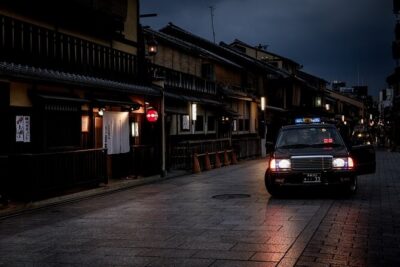
Gion reads differently after dark. During the day, you mostly see the architecture. At night, you get the social atmosphere—people moving with purpose, lantern-lit streets, and that slightly hushed feeling that makes the district feel ceremonial rather than just scenic.
This matters because the culture you’re trying to understand isn’t just costumes and photos. It’s timing—appointments, roles, and traditions that still shape how the neighborhood functions. When you walk it with a guide, the night setting helps the explanations make sense. You’re not just collecting facts; you’re seeing how the district works as a stage.
And yes, part of the appeal is that you may actually spot geiko and maiko along the way. Even when you don’t, the guide’s context makes the neighborhood feel less like a theme park.
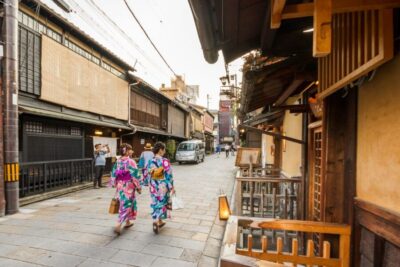
More evenings along the lantern-lit lanes of Gion

Ben’s Cookies Kyoto Shijo: starting where it’s easy to find
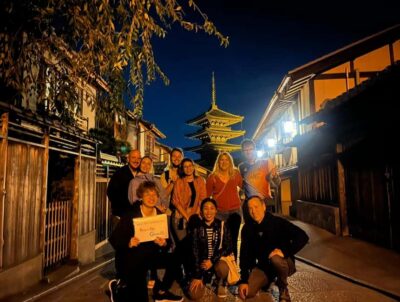
You begin in a very practical spot: in front of Ben’s Cookies Kyoto Shijo. Your guide will be holding a sign board, so you’re not wandering around trying to guess which group is yours.
This kind of start is a big deal in Kyoto. The city can feel complicated fast—narrow streets, lots of crossings, and crowds at the wrong times. Starting at a clear, recognizable landmark helps you get oriented early, which makes the first part of the walk less stressful and more focused.
If you’re arriving a little nervous, you’ll appreciate that the tour gets moving soon after meeting. The early minutes set the tone: you’re walking with direction, not simply browsing.
Pontocho Alley: wooden teahouses and a river-side mood
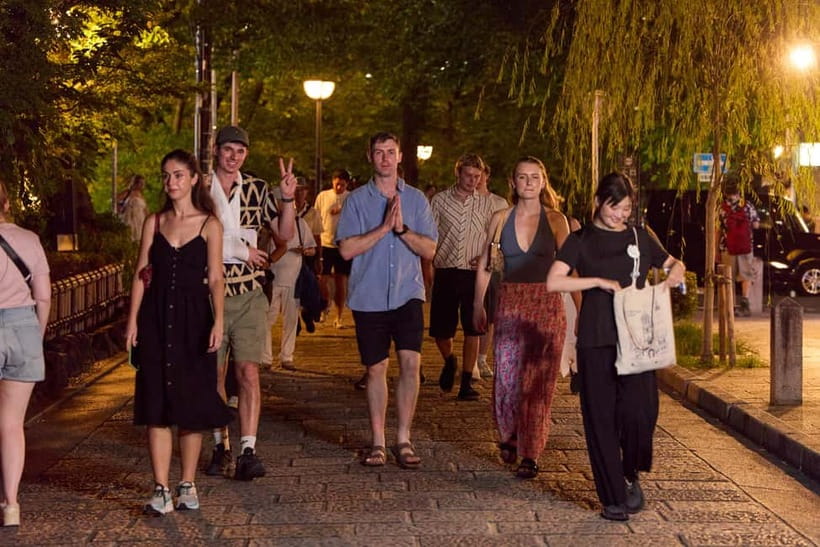
The tour heads to Pontocho Alley, known for its traditional atmosphere and its lineup of eateries and clubs. At night, the alley feels like it has its own lighting language—narrow, shadowy, and intimate.
What makes this stop worth your time isn’t only the look. It’s the framing. Your guide uses Pontocho as a gateway to explain how the district’s entertainment history connects to the geisha culture you’re about to learn about. You’re also walking through a place that feels built for walking slowly: narrow paths, walls close to the street, and frequent opportunities to pause and listen.
A couple practical thoughts:
- Wear shoes that handle uneven surfaces and small slopes without fuss.
- Keep an eye out as you walk—some of the most interesting moments happen at street corners, not in the middle of the alley.
Izumo-no-Okuni statue: kabuki enters the story
After Pontocho, you cross the river and stop at the statue of Izumo-no-Okuni. This is a small detour on paper, but it’s a meaningful one: the guide connects her story to the tradition of kabuki.
Why you should care: when you’re learning about geisha culture, you’re really learning about Kyoto’s performance and entertainment ecosystem—how arts evolve, how public taste changes, and how traditions build on earlier influences. This stop gives you an anchor point so the evening doesn’t feel like a sequence of random sights. It becomes a connected narrative.
It’s also a good moment to slow down. Night walks can blur together, so having a landmark tied to a story helps you remember what you learned while you’re still in the district.
Gion’s lanes near Yasaka Shrine: where the district feels alive
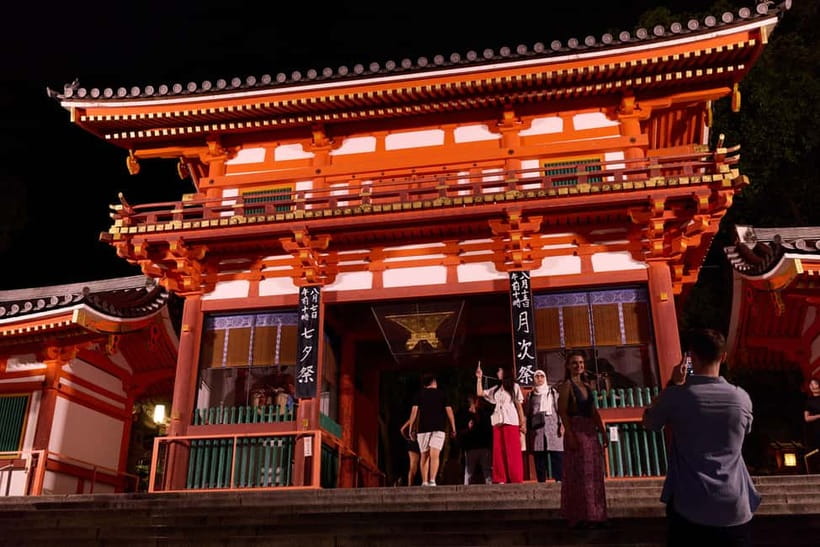
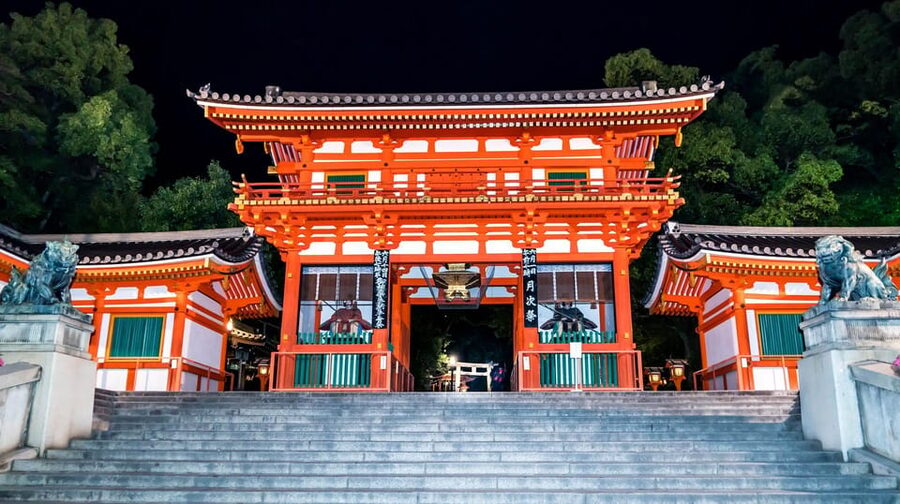
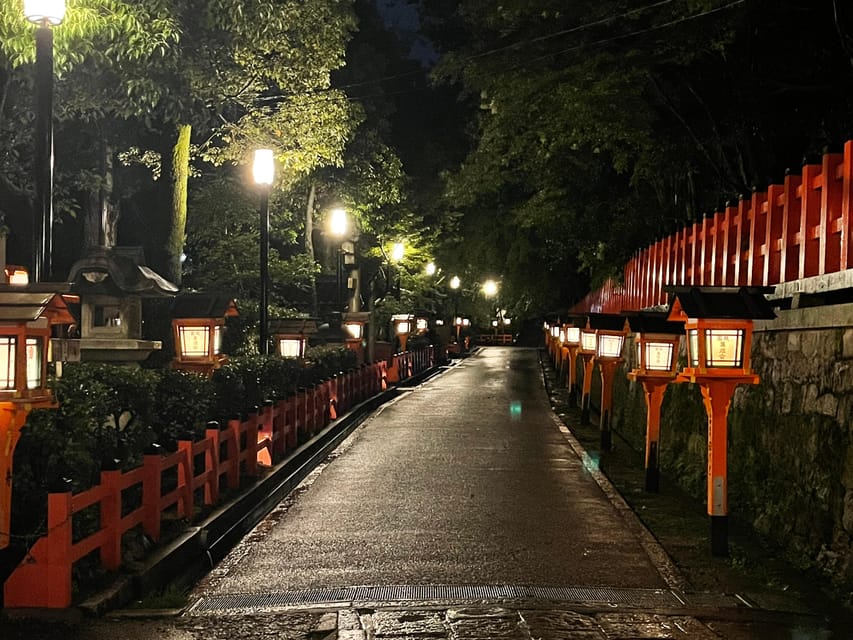
Next comes Gion, Kyoto’s most famous geisha entertainment area. The tour includes a visit to Yasaka Shrine, which adds a different layer to the experience. Instead of only focusing on entertainment history, you get the broader cultural setting that surrounds it—Kyoto’s spiritual and social life close to where the geisha districts developed.
From there, you continue through Hanamikoji Street. This is the corridor that many people associate with geisha districts. It’s the street where you’ll often feel the tour’s biggest payoff: the guide points out what to notice, and you get to practice looking respectfully—waiting for the moment when something real appears.
About sightings: the tour is designed for you to encounter geiko and maiko en route to appointments. Sometimes it happens. Sometimes it doesn’t. Either way, you’ll get more out of the walk if you treat sightings as bonus moments, not the whole point.
Other Kyoto tours and experiences to compare




Gion Corner: tying the neighborhood to performance traditions
The schedule includes a stop at Gion Corner. This is one of those places that helps bridge what you see on the streets with what Kyoto does as a cultural city—performing arts, ceremonies, and how tradition gets presented to the public.
Even without turning it into an academic lesson, this stop helps you understand why geisha culture has always been connected to performance. The district isn’t just a background. It’s part of an ongoing cultural system.
The best way to use this stop is to ask questions. Many guides on this tour are good at adapting to your level—people new to geisha culture and people who already know the basics can both come away with clearer context. If you’re the kind of traveler who likes to ask, this portion of the walk is where you can go beyond surface-level questions.
What makes the guide matter (and why you’ll likely remember it)
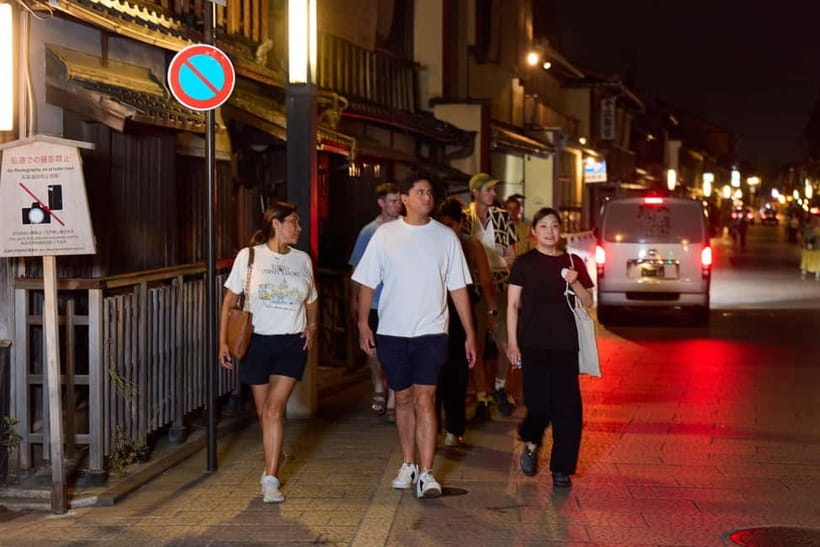
The tour is built around your local guide—and the reviews you’ll find suggest a pattern: guides stay friendly, explain clearly, and make time for questions.
A few guide-style details that show up again and again:
- Many guides adjust for your background, from complete beginners to people who want deeper history.
- Guides often keep the walk comfortable in pace, not rushing you from stop to stop.
- Several guides use real storytelling tools, including photos, to make the visuals easier to understand.
- Names you’ll see tied to great experiences include Manuel, Yukari, Nami, Yuki, Kenji, Ann, Michael, Deborah, and Adrian—and the common theme is passion paired with respect.
If you care about not getting the wrong vibe, this is where the value shows up. Geisha culture can be misunderstood by outsiders. A good guide doesn’t turn it into gossip or spectacle. Instead, they connect what you see—appointments, roles, and traditions—into a respectful explanation.
Pace and what you can realistically expect in 2 hours
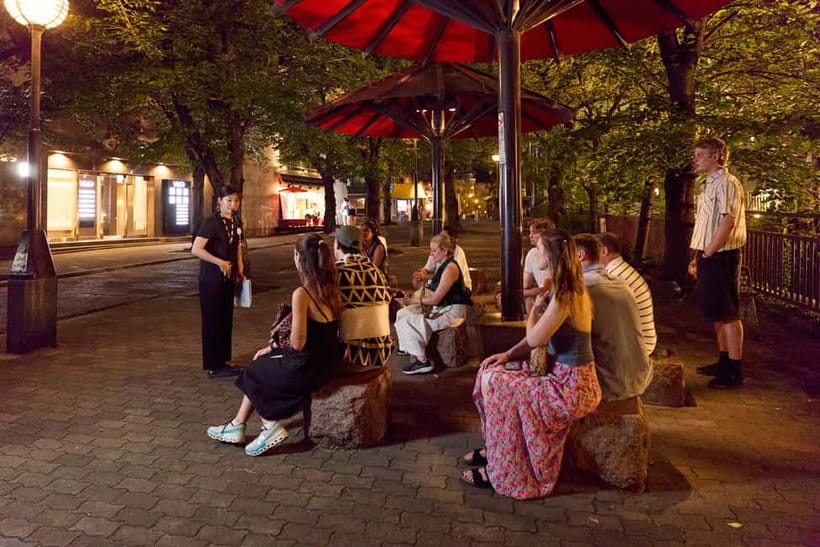
This is a compact tour at 2 hours, so you need to think of it as a guided “orientation walk” through the districts rather than an all-night hunt for performers.
The route packs a lot into that time: Pontocho Alley, the Izumo-no-Okuni statue stop, Gion, Yasaka Shrine, Gion Corner, and Hanamikoji Street. That schedule works because the walking segments are short and the story points are placed where you can pause.
Group size can vary. One recent experience started with a group of six, and another notes a larger group size around a dozen. Either way, the consistent point is that guides create room for questions and keep timing under control.
If you want the best experience:
- Plan to arrive a bit early so you start calm, not scrambling.
- Bring water (you’re told to, and you’ll feel the difference).
- Keep your expectations flexible—your best “win” is understanding the district, not forcing a sighting.
Price and value: what $20 buys you here
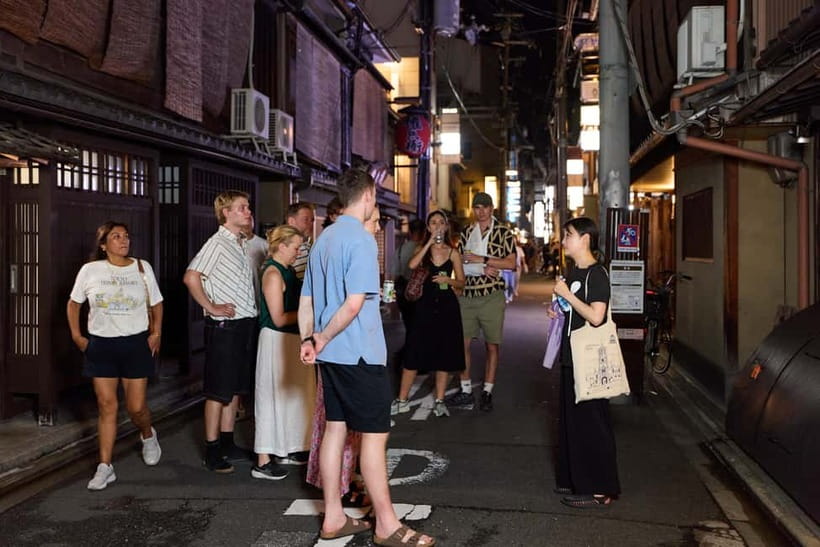
At $20 per person for a guided night walk, this is strong value—mainly because it’s not just walking around. You’re paying for translation, context, and direction in an area that’s easy to misread on your own.
Without a guide, you can still see Gion and Pontocho, sure. But the difference is what you’ll understand while you’re standing there:
- You get the story connections, like Izumo-no-Okuni and kabuki.
- You get a framework for geiko and maiko roles and what appointments mean in real life.
- You get help spotting what matters visually, while still respecting the privacy and rhythm of the district.
You also benefit from the guide’s local instincts—like where to look and how to pace stops so you don’t feel trapped in a crowd. When you’re short on time in Kyoto, paying for this kind of orientation can save you hours of guesswork later.
Practical tips: what to bring, how to dress, and how to act
Here’s the simple, useful stuff based on the tour rules and the realities of night walking.
Bring
- Water. It’s a walking tour, and two hours at night still adds up.
- Comfortable shoes. You’ll be in narrow lanes and uneven ground.
Don’t bring
- Alcohol and drugs aren’t allowed. Keep it clean and respectful.
Act
- Ask questions during pauses. Guides are set up to handle curiosity.
- Keep your tone calm and your attention respectful. The point is to understand the culture, not to treat the street like a stage for your own performance.
Dress
- It’s nighttime. Even in good weather, temperatures can drop. If rain shows up, you’ll be glad you planned for it. One experience specifically mentions the guide handling rain well by finding sheltered spots to continue the flow.
Who should book this, and who might want a different plan
This works best if you:
- Want a short, story-led night walk instead of hours of aimless wandering.
- Enjoy cultural history with real-world context.
- Like the idea of learning the difference between geisha culture terms and seeing how the district functions at night.
It’s not a good fit if you:
- Need a stroller-friendly or child-friendly tour. It isn’t suitable for children under 10.
- Want a totally guaranteed chance to see geiko or maiko. The tour is designed for possible encounters, but nighttime sightings depend on timing and availability.
If you’re doing your first days in Kyoto, this is a great way to get your bearings fast. The explanations help you navigate later with more confidence and less tourist confusion.
Should you book Kyoto’s Gion Geisha District walking tour?
If your goal is to understand Gion beyond the postcard version, I think this is an easy yes. For $20 and 2 hours, you get a focused route, a local guide in English or Spanish, and enough time to ask questions while walking through the districts at night.
Book it especially if:
- You’re short on time and want one night experience that makes the area click.
- You care about respectful cultural context, not just photos.
Consider another option if you:
- Can’t handle outdoor walking at night.
- Are traveling with kids under 10.
- Want a strict “guaranteed performer sighting” promise, because even with the best luck, you’re still walking a real neighborhood.
FAQ
How long is the Kyoto Gion Geisha District Walking Tour?
The tour lasts 2 hours.
How much does it cost?
It’s $20 per person.
Where do we meet the guide?
Meet in front of Ben’s Cookies Kyoto Shijo. The guide will be holding a sign board.
What languages are offered?
The live tour guide is available in English and Spanish.
What should I bring?
Bring water.
Is alcohol allowed?
No. Alcohol and drugs are not allowed.
Is the tour suitable for children?
It is not suitable for children under 10.
Can I get a refund if plans change?
You can cancel up to 24 hours in advance for a full refund.
More Tours in Kyoto

More Tour Reviews in Kyoto
Still in Gion? Keep Going

Just added: more Kyoto tours to browse






Gion & Geisha District Tours, compared.
 ★ 4.7Kyoto Geisha Walking Tour: Gion District & Hidden GemsFrom $253,273 reviews
 ★ 4.9Gion Magical Night Walking Tour with Geisha TriviaFrom $242,393 reviews
 ★ 4.9Best of Kyoto: Gion, Geisha, Pagodas & CobblestonesFrom $242,058 reviews
 ★ 4.5Night Walk in Gion: Kyoto’s Geisha DistrictFrom $212,003 reviews
 ★ 5.0Kyoto Night Foodie Tour in Gion (9+ dishes + 6 Sake tastings)From $1631,762 reviews
 ★ 5.0Kyoto Gion Geisha District Walking Tour – The Stories of GeishaFrom $251,441 reviews
 ★ 5.0Kyoto Gion: 2-Hour Geisha Culture & History Walking TourFrom $231,186 reviews
 ★ 5.0Chopsticks Making Workshop in Gion with Engraving OptionFrom $15958 reviews
Browse the lists this tour appears in