
Reviewed · KYOTO CRAFT & CALLIGRAPHY WORKSHOPS
Shamisen Experience in Kyoto 【Private】
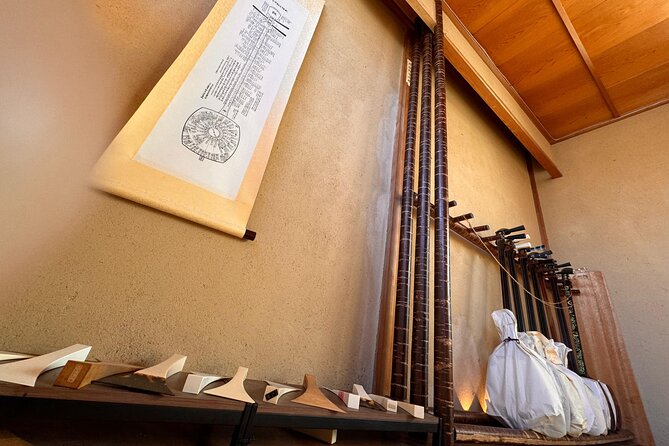
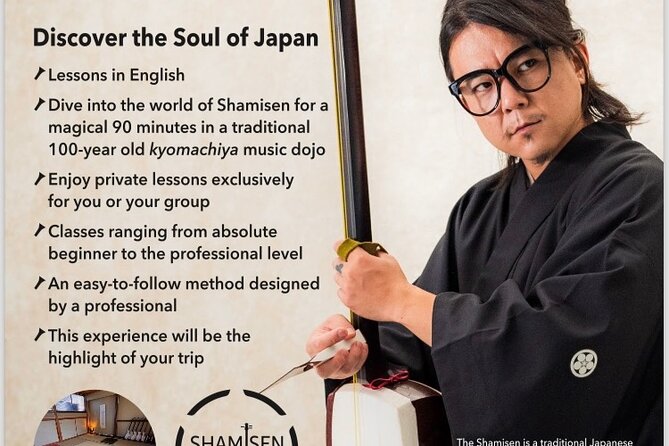
Kyoto has a lot of temples. This lesson swaps your camera for music, then sends you home with something you can actually keep playing. You get a private shamisen session in English with the teacher’s full attention, plus a tea break and a guided jam.
What I like most is the way this turns a first-time instrument lesson into a real performance moment. You start from basics (tuning, seating, posture) and still work toward playing a traditional Japanese song during your 1.5-hour session.
One possible drawback: it is short. You’ll make fast progress, but you won’t leave as a touring musician—so come for the skill and experience, not a lifetime transformation.
In This Review
- Key takeaways before you go
- Why a private shamisen lesson in Kyoto beats another boxed experience
- Meeting point in Kyoto: Murasakino Nakakashiwanocho (Kita Ward)
- English-first learning: what you’ll actually do in the lesson
- The tea break: a cultural pause that makes the music stick
- The jam session with traditional scales: the moment you’ll remember
- Jack-san’s teaching style: patient, personal, and practical
- Getting started fast: tuning, seating, and posture basics
- The souvenir gift: a small extra that makes it feel complete
- Price and value: what you’re paying $99.10 for
- Who should book this private shamisen experience
- When to book and what to bring to the dojo
- Should you book the Shamisen Experience in Kyoto (Private)?
- FAQ
- Is the shamisen lesson private?
- How long is the shamisen experience?
- Is the lesson taught in English?
- Do I need any prior shamisen experience?
- Does the lesson include a tea break?
- Will I receive a souvenir?
- Is there a left-handed shamisen option?
- Where does the experience meet?
- Do I need to print a ticket?
- What is the cancellation policy?
Key takeaways before you go

- Private, one-on-one teaching means you can ask questions and fix technique in real time.
- English instruction makes the learning curve far more manageable.
- Tea break included turns the lesson into a calm cultural chat, not just drills.
- Jam session with traditional scales is the payoff, where you play along with the teacher.
- Jack-san’s patience and guidance are repeatedly highlighted, from tuning to posture.
- Lefty shamisen available, so left-handed players are not forced to “adapt” awkwardly.
Why a private shamisen lesson in Kyoto beats another boxed experience
Kyoto can tempt you into doing everything at high speed: temples, photos, repeat. This private shamisen lesson is the opposite. It is hands-on, seated, and focused on one instrument and one person’s technique.
The big value for you is time with the teacher. Instead of blending into a classroom vibe, you get direct coaching—so mistakes don’t get brushed aside. And because it’s private, you can move at a beginner pace without slowing down anyone else.
Also, this isn’t just rhythm practice. The lesson is designed to lead you toward playing a traditional tune, then joining a jam session using traditional Japanese scales. That gives the experience a satisfying arc: you start learning how to make sound, then you learn how to make music.
Make something by hand in a Kyoto workshop
Meeting point in Kyoto: Murasakino Nakakashiwanocho (Kita Ward)
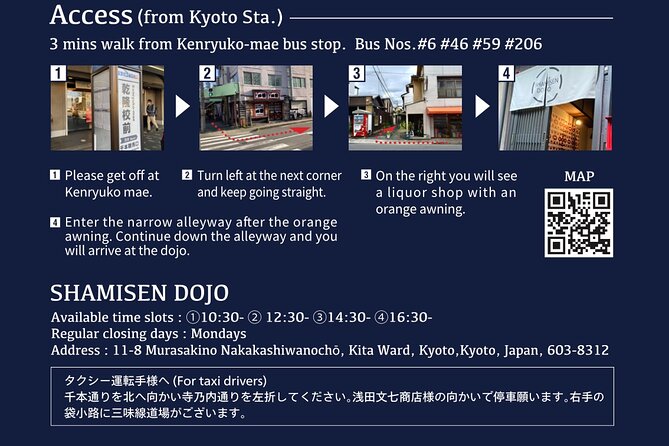
You’ll meet at Murasakino Nakakashiwanocho, Kita Ward, Kyoto, 603-8312, Japan, and the activity ends back at the same spot. That makes planning easy: you’re not forced into a long commute back to town.
It’s also described as near public transportation, which matters in Kyoto. Getting in and out smoothly keeps your day from feeling like a series of train transfers.
You’ll use a mobile ticket, so set your phone up for a scan. And because this is a private activity, only your group participates, which usually means less waiting and fewer scheduling headaches.
English-first learning: what you’ll actually do in the lesson
This is a beginner-friendly experience. No shamisen experience is required, and instruction is offered in English. That combo matters because the shamisen has its own body mechanics and musical logic—if you don’t get that clearly, the learning can feel like random guessing.
Inside the lesson, the focus is practical basics first:
- how to handle the instrument
- seating and posture
- tuning
- how to produce clean notes and shapes
From the way the teacher is described, the key is that instruction is paced to you. People consistently highlight Jack-san taking his time with fundamentals, and also teaching beyond the basics when you’re ready.
You don’t have to be musically trained either. The lesson is structured so you can follow the teaching, practice the moves, and still reach a satisfying milestone: playing a traditional Japanese song within the session.
The tea break: a cultural pause that makes the music stick
Most lessons teach skills. This one also teaches context, and it does it with something simple: Japanese tea.
You’ll have tea during relaxed conversation with the owner, who is also a professional shamisen player. That matters because you’re not just learning finger positions and rhythms. You’re learning how a musician thinks about the sound—what to listen for, how to correct your tone, and how to keep the mood right.
Tea breaks also help with patience. Shamisen technique is physical—your hands and your posture need to get comfortable. A quick pause makes it easier to reset and keep working without feeling rushed.
The jam session with traditional scales: the moment you’ll remember
The highlight is the jam session. The teacher guides you using traditional Japanese scales, then accompanies you while you play.
Here’s why that is so valuable: it turns the lesson from a “follow the instructor” activity into a real musical conversation. You’re encouraged to freely play melodies, not just repeat exercises.
This is where private instruction really earns its keep. With someone watching closely, you can adjust timing, phrasing, and tone while you’re playing along. If you’re unsure, you get direction immediately instead of stopping and restarting 20 times.
And because you’re working toward music you can recognize as traditional, the outcome feels more meaningful than simply mastering a technique. You’re practicing how the shamisen fits into Japanese musical expression.
Other Kyoto tours and experiences to compare





Jack-san’s teaching style: patient, personal, and practical
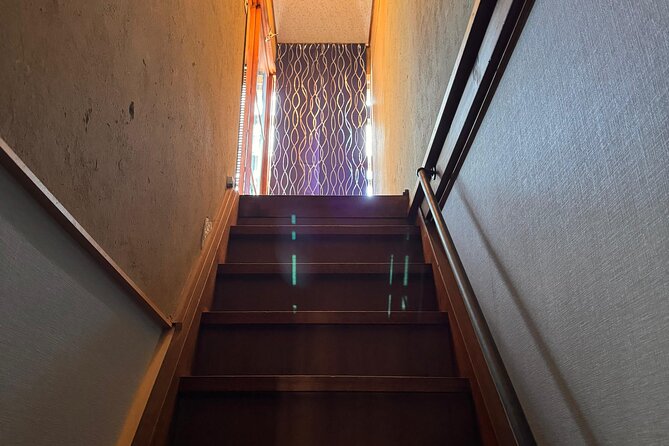
A lot of instrument teachers are good at explaining. Fewer are good at teaching in a way that stays calm when you’re new. The consistent thread here is Jack-san’s patience and his ability to teach both basics and advanced points when it clicks.
Another standout is communication. English is described as strong, and the teaching is clear enough that you can ask questions without feeling lost in translation. That helps you focus on the lesson instead of trying to decode every term.
People also mention that the teacher makes the experience personal—answering questions sincerely and adjusting instruction to the student. For you, that means the lesson likely won’t feel like a one-size-fits-all script.
If you’re the type who gets nervous when learning something new, this kind of teaching tone is a huge advantage. It lowers the stress, which makes practice easier.
Getting started fast: tuning, seating, and posture basics
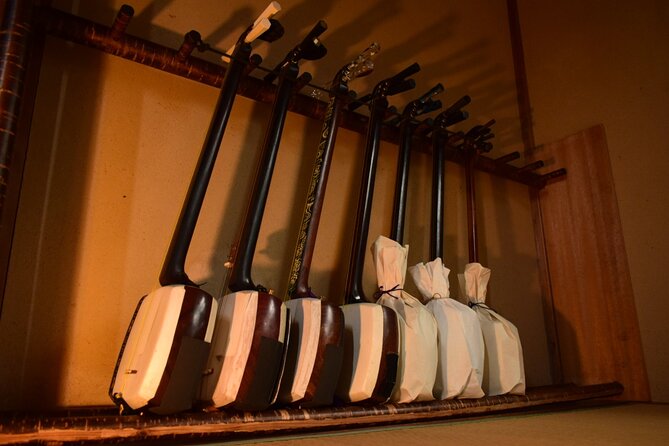
Shamisen lessons can be tricky because the instrument isn’t just something you hold—it’s something you sit with, position, and tune correctly. That’s why the fundamentals here matter.
You can expect to learn:
- how to tune the shamisen
- seating and posture needed to play properly
That sounds simple, but it’s often the difference between a frustrating first session and a confident one. If you leave knowing what posture should feel like, you’re more likely to keep practicing at home without rebuilding from scratch.
And since the teacher can adjust guidance during the jam, you also learn how technique affects sound in real time. That’s practical feedback you can’t get from a video.
The souvenir gift: a small extra that makes it feel complete
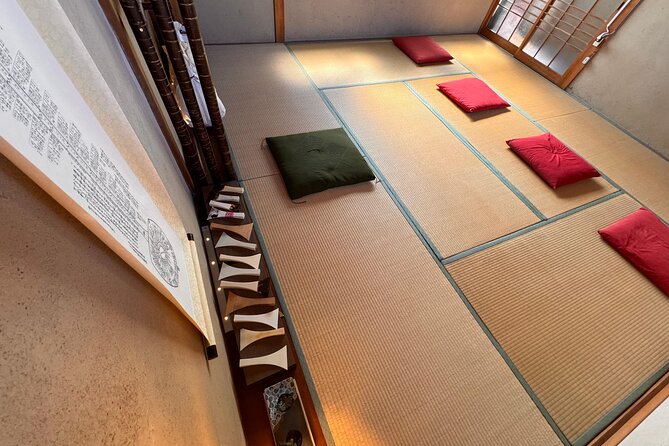
This lesson includes a special gift—a souvenir to remember your experience. It might sound minor, but it helps mark the experience. You’re not just walking away with muscle memory; you also have a physical reminder tied to what you learned.
In a city full of shopping stops, a lesson-based souvenir feels more personal. You can look at it later and remember the exact moments when the music finally sounded right.
Price and value: what you’re paying $99.10 for
At $99.10 per person for about 1 hour 30 minutes, the price is not bargain-basement. But the value logic makes sense.
You’re paying for:
- a private session (not a shared class)
- English instruction
- hands-on coaching with a professional shamisen player
- a tea break
- and a souvenir gift
For a private cultural lesson, that mix matters. Many paid experiences give you one component—maybe a performance, maybe a basic workshop. Here you get learning time plus a guided performance moment (the jam session) plus the tea pause.
Also, because the lesson is designed for people with no experience, you’re less likely to feel like you “wasted” money due to not already knowing the basics. The structure is built to bring you along.
If you’re on a tight schedule and want a meaningful Kyoto activity that isn’t another long walking circuit, this can be a strong value choice. If you’re chasing a full-day adventure, you might feel it’s too short—so match the activity to your mood.
Who should book this private shamisen experience
This fits you if:
- you want hands-on Japanese culture, not only sightseeing
- you’re curious about traditional instruments
- you want an experience guided in English
- you like music, even if you’re not a “music person” by identity
- you’re a left-handed player and want a setup that works for you (lefty shamisen is available)
It may not fit as well if:
- you only want outdoor Kyoto walking time and don’t want a seated lesson
- you’re expecting a full concert or a long performance show
- you need an activity that keeps going for half a day or more
In Kyoto, I like activities that give your day a different texture. This gives you that, without requiring you to be an expert.
When to book and what to bring to the dojo
This is typically booked about 35 days in advance on average. If your Kyoto dates are fixed, I’d book sooner rather than later—especially if you want a specific time slot.
For what to bring, keep it simple:
- Comfortable clothes you can sit in comfortably
- Your phone charged for the mobile ticket
- A curious attitude (seriously, that’s the best “equipment” for learning)
The meeting is near public transportation, but Kyoto days can still get busy. Build in a little buffer so you arrive relaxed, not rushing.
Should you book the Shamisen Experience in Kyoto (Private)?
Book it if you want one unforgettable Kyoto memory that’s active, not just visual. The strongest reason is the combination of private instruction, English teaching, and a lesson that ends with you playing alongside the teacher in a jam session using traditional scales. Add the tea break and the souvenir, and it becomes a full-feeling cultural experience for about 90 minutes.
Skip it if your ideal Kyoto day is all walking and big-ticket sightseeing. This is a focused sitting-and-playing experience. It’s great for beginners, but it’s not trying to replace a day of temples.
If you’re curious about traditional Japanese music and want a friendly, guided path in real time, this is an easy “yes” for your itinerary.
FAQ
Is the shamisen lesson private?
Yes. It’s a private tour/activity, so only your group participates.
How long is the shamisen experience?
It lasts about 1 hour 30 minutes.
Is the lesson taught in English?
Yes. The lesson is described as learning the shamisen in English.
Do I need any prior shamisen experience?
No experience is required. The curriculum is beginner-friendly.
Does the lesson include a tea break?
Yes. Japanese tea is included during the lesson.
Will I receive a souvenir?
Yes. There is a special gift—a souvenir to remember the experience.
Is there a left-handed shamisen option?
Yes. A lefty shamisen is available for left-handed players.
Where does the experience meet?
You start at Murasakino Nakakashiwanocho, Kita Ward, Kyoto, 603-8312, Japan.
Do I need to print a ticket?
No. The experience uses a mobile ticket.
What is the cancellation policy?
Cancellation is free up to 24 hours in advance for a full refund. If you cancel less than 24 hours before the start time, the amount paid will not be refunded.
More Private in Kyoto

More Tour Reviews in Kyoto






More Kyoto Workshops to Try

Just added: more Kyoto tours to browse








Kyoto Craft & Calligraphy Workshops, compared.
 ★ 5.0Chopsticks Making Workshop in Gion with Engraving OptionFrom $15958 reviews
 ★ 4.8Authentic knife making experience at a blacksmith in KyotoFrom $154350 reviews
 ★ 5.01-Hour Japanese Archery Experience in KyotoFrom $46176 reviews
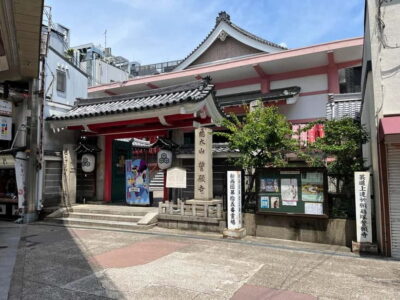 ★ 5.0Calligraphy class at Buddhist temple in city centerFrom $55167 reviews
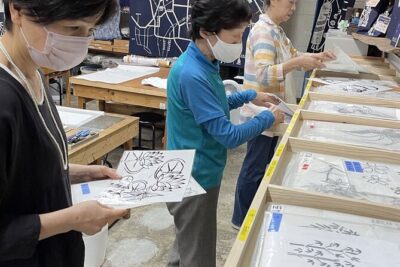 ★ 5.0Roketsu dyeing experience: M course Roketsu Dyeing ExperienceFrom $25163 reviews
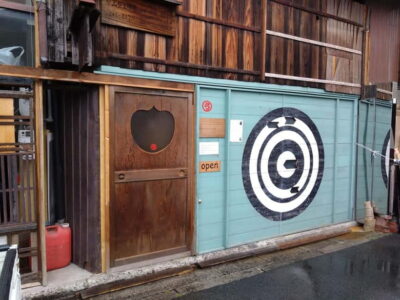 ★ 4.9Japanese Archery Workshop with Experienced InstructorFrom $38132 reviews
 ★ 4.8Japanese Calligraphy ClassFrom $5189 reviews
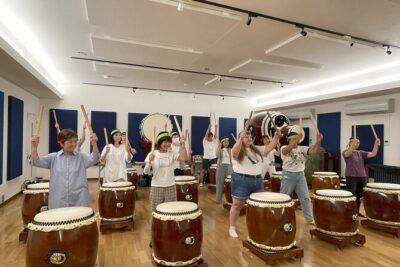 ★ 5.0TAIKO, Japanese Drum Experience from KyotoFrom $11586 reviews
Browse the lists this tour appears in