
Reviewed · KYOTO CRAFT & CALLIGRAPHY WORKSHOPS
TAIKO, Japanese Drum Experience from Kyoto
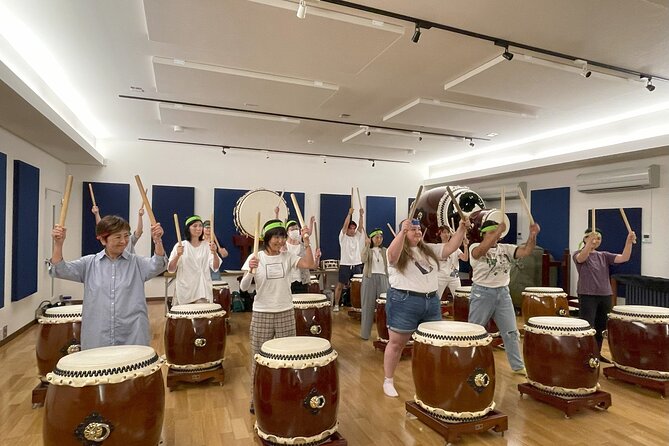
Some sounds hit you in the chest. This Kyoto Taiko class is part drumming lesson, part cultural workshop, and part good fun. I especially love the small-group format (max 15) that keeps things friendly and hands-on, and I like how the session goes beyond noise with history, technique, and a real instructor-led performance. One thing to consider: it’s time-sensitive—if you’re late to Kyoto Station, you may miss the drumming entirely.
Here’s the other reason I think this works for visitors: you don’t need a music background. You’ll get step-by-step coaching matched to your comfort and fitness, then you and your group play a simple piece together. If you want a break from temple photos and crowded streets, this is an active way to actually participate in Japanese culture.
In This Review
- Key points before you go
- Taiko in Kyoto: why this class feels different from sightseeing
- The Kyoto Station meet-up: the easiest way to avoid stress
- Getting to Takatsuki: train first, then a short studio car
- Start with taiko history: what you’ll actually learn first
- Hachimaki calligraphy: a hands-on souvenir with meaning
- The pro demonstration: how it sets expectations
- Learning taiko basics: technique you can follow on day one
- Your group performance: the payoff moment
- Photo time in happi and hachimaki: what you keep
- English guide support: how the communication stays easy
- Price and value: is $115.62 worth it?
- Who should book this Kyoto Taiko experience
- Should you book? My take
- FAQ
- What is the duration of the Kyoto Taiko experience?
- Where does the tour start and end?
- Do I need any previous drumming experience?
- Is there an English-speaking guide?
- Is taiko drumming included in the price?
- What about the hachimaki calligraphy?
- Will there be a photo at the end?
- How do transfers work from Kyoto to the studio?
- Do I need to pay cash during the experience?
- Can I bring an observer who won’t participate in drumming?
- What happens if weather is bad?
Key points before you go
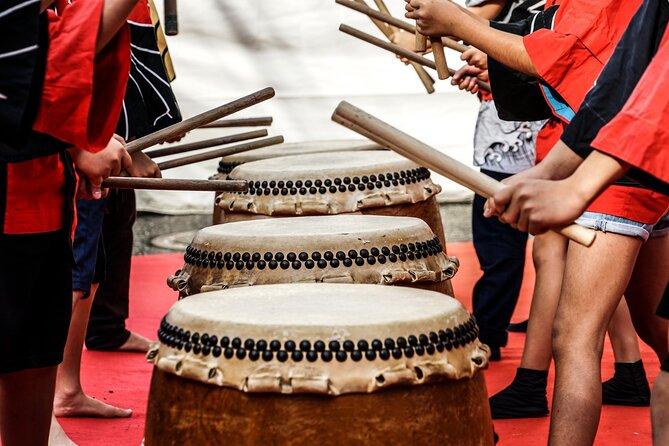
- Beginner-friendly taiko basics with instructor guidance for different skill and fitness levels
- Live pro demonstration that shows what you’re aiming for before you play
- Hachimaki calligraphy where you write wishes on a traditional headband
- Small group size (max 15) for better access to the instructor
- Round-trip transfers from Kyoto Station using train plus a studio car
- Commemorative costume photo in happi and hachimaki
Taiko in Kyoto: why this class feels different from sightseeing
Kyoto can be wonderfully slow—until you realize you still spend a lot of time just standing and looking. This experience shifts the balance. You start by learning what taiko drumming is, then you move into physical technique, and finally you end with a group rhythm you can feel and control.
The strongest part for me is the sequence. You first get context on taiko’s place in Japanese culture, then you see a professional performance, and only after that do you practice basics. That order matters. It helps you understand what each movement is meant to do, instead of copying random arm motions.
You’ll also walk away with something that’s not just a photo of a street. The session includes a hachimaki (headband) you mark with simple calligraphy—your wishes on fabric you can actually keep. And yes, the drumming itself is the headline, but the “craft plus rhythm plus group moment” mix is what makes it memorable.
Make something by hand in a Kyoto workshop

The Kyoto Station meet-up: the easiest way to avoid stress
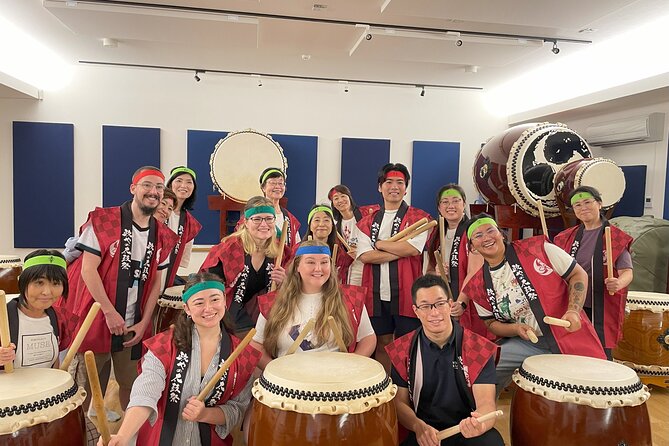
This runs from Kyoto Station with a start time that depends on the day’s schedule. Plan to arrive 15 minutes early, because the organizers can’t wait for late arrivals. Kyoto Station is big, and it’s easy to wander into the wrong gates.
Here’s the practical tip that will save you time: if you need help, ask for the central exit, not the Shinkansen central ticket gate. If you get turned around, you can easily lose a chunk of your time before the group departs.
Also note the practical format: you’ll use a mobile ticket, and the tour includes an English-speaking guide. That reduces the “where do I go next?” friction that can happen on short activities.
If you’re traveling with kids, there’s an age limitation: children under 7 aren’t allowed. And if you plan to bring an observer who won’t drum, you’ll need to handle it ahead of time, because notifying staff matters for transport planning.
Getting to Takatsuki: train first, then a short studio car
The trip itself is straightforward and part of the experience flow. From Kyoto Station, you take a short train ride to JR Takatsuki Station (about 12 minutes), and then you get in a cab for about 10 minutes to reach the studio.
What I like about this setup is that it avoids the common problem of “we’re in Kyoto so let’s take a taxi everywhere.” Direct taxi from Kyoto to the studio can be over an hour and quite expensive—especially if traffic slows down. Using the train keeps things predictable.
The tour includes the studio car ride (the cab cost is described as about 2000 yen, and up to four people can share one cab). The important detail is that you’re asked to pay in cash in Japanese yen at the studio on the day of the tour. So bring some yen that you’re okay using, just in case the cab portion is part of that cash payment.
One more timing note: the full duration is about 2 hours 30 minutes, and that includes transfers. You should expect to be back at Kyoto Station roughly 2.5 to 3 hours after departure.
Start with taiko history: what you’ll actually learn first
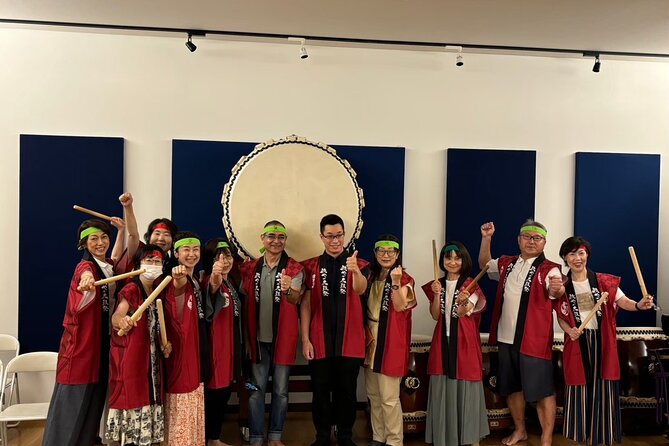
Before you touch the drum, you get a brief explanation of taiko’s history and why it matters in Japanese culture. This isn’t a long lecture. It’s enough to give your hands and ears a target.
You’ll learn how taiko drumming fits into Japanese life and tradition—then you’ll be shown what the drumming can sound like when it’s performed properly. That context helps you recognize the purpose behind the movements.
If you usually skip cultural intros because you want the action right away, this one still works. The history piece sets up the demonstration, and the demonstration sets up your practice. You’re not being asked to memorize facts; you’re being given a mental framework so the techniques make sense fast.
Hachimaki calligraphy: a hands-on souvenir with meaning
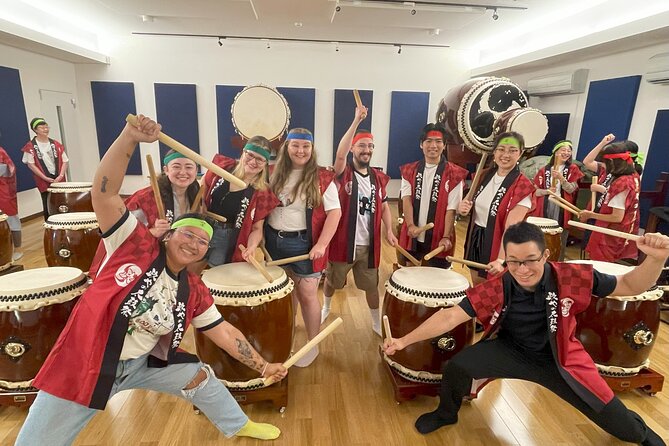
One of the most charming parts is the chance to do simple calligraphy on a hachimaki, a traditional Japanese headband. You write your wishes on the band—so instead of a generic souvenir, it’s personal.
This part is also a nice breather from heavy physical effort. Drumming can be intense, and calligraphy gives you a quieter moment where you can focus. It’s also a good reminder that taiko culture isn’t only about sound. It’s connected to symbols, festivals, and everyday expressions of intention.
You’ll likely use guided instructions, and the session keeps it beginner-friendly. If your Japanese writing skills are minimal, that’s okay. The goal here is participation, not calligraphy mastery.






The pro demonstration: how it sets expectations
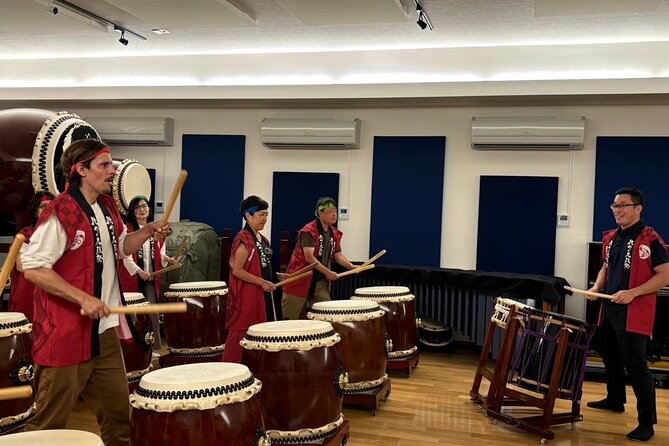
After the history and calligraphy, you’ll watch a powerful taiko demonstration by a professional instructor. This is one of the moments with the most energy in the session because you see the full style before practicing.
Aoi-san (also referred to as Aoi-sensei in some sessions) is one of the names that’s shown up as the taiko musician in past experiences. Another instructor name that appears is Mr Sakurai. Different days can mean different teachers, but the key is the same: you get a real, live demonstration.
A small warning that also serves as a good expectation: in at least one format described, you might see a combination of live playing and recorded elements. Either way, the main goal is to show how the rhythms land, how the posture works, and how the sound builds.
For your practice, this demonstration is a blueprint. When you start learning basics, you’ll know what “good” looks like.
Learning taiko basics: technique you can follow on day one
Now the lesson portion begins. Your instructor teaches the basic movements and techniques of taiko drumming, and the session is tailored to your skill and fitness level.
This is one of the most praised parts for a reason: you don’t get thrown into the deep end. You’ll learn step-by-step, and the teaching style is meant for beginners.
From what I can tell from how the experience is described, the focus isn’t just on hitting the drum. It’s on control—how you position your arms, how you strike, and how you keep time with the group. If you’ve never played any percussion before, it’s normal to feel awkward at first. The point is that you’re guided until it starts to click.
Also, expect that it’s physical. Even when you’re learning simple rhythms, the repeated arm action and stance work can get your heart rate going. If you’re looking for something more active than a standard walking tour, this scratches that itch without requiring athletic training.
Your group performance: the payoff moment
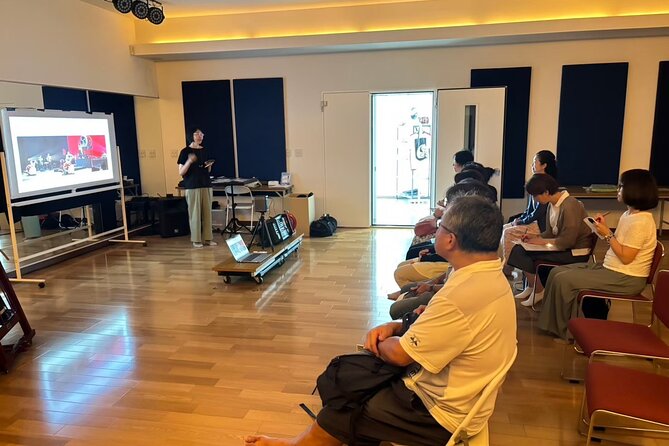
Once you’ve learned the basics, you play a simple piece of music together with fellow participants. This is where the session stops being instruction and becomes a shared event.
That group moment matters. Even if you’re the shy type, you’re supported by the structure: you practice movements, then the group rhythm lands. You don’t have to be a performer. You just need to follow the cues and play your part.
This is also why the small-group size is important. With max 15, you’re more likely to get feedback and encouragement instead of being one face in a crowd.
If you want to take home proof you didn’t just watch, this is it: you’ll leave having made music with a set of people, not just taken photos of instruments.
Photo time in happi and hachimaki: what you keep
The experience ends with a commemorative photo in traditional Japanese costume, including a happi and hachimaki. It’s quick, but it’s a fun closure. You get to look the part of a taiko participant, not just a tourist watching from the sidelines.
Couple this with your personalized hachimaki calligraphy, and you’ve got two tangible keepsakes tied to the experience: something you created, and a picture of you in the costume.
It’s the kind of souvenir that feels like a story, not just plastic.
English guide support: how the communication stays easy
The guide language is offered in English. And in past sessions, guides with names like Michiko, Akayo, Kumi-san, Akemi, and Akiko have been mentioned in experiences. When the session includes history, instructions, and encouragement, good translation matters.
For you, that means you don’t lose time trying to interpret what the instructor wants. You’ll hear the steps clearly, and you’ll know what to do next. That’s especially important in a hands-on class, where confusion can break the rhythm.
Price and value: is $115.62 worth it?
At $115.62 per person, you’re paying for more than just drum time. You’re paying for an instructor-led lesson, a professional demonstration, a guided cultural component (taiko history), and the materials for the hachimaki calligraphy experience.
You’re also paying for the logistics that make it work smoothly from Kyoto: the transfer using train plus a studio car, with the studio car portion handled by cash in yen at the studio. The tour also includes a one-way ticket to JR Takatsuki Station.
Here’s how I’d judge value for you:
- If you want a hands-on cultural activity with real instruction, the price starts to feel fair fast.
- If you only want to watch from the sidelines, it’s not. Observing without participating costs 9000 yen per person, and you need to notify staff in advance so transport can be arranged.
The best part of the value is that you leave with both a skill and a keepsake: you played taiko, and you wrote your wishes on a hachimaki.
Who should book this Kyoto Taiko experience
This is a great match if:
- You want an active cultural experience, not just sightseeing.
- You’re a beginner and want structure with a friendly instructor.
- You like the idea of drumming plus a craft element (hachimaki calligraphy).
- You’d enjoy a small group class where you can actually participate.
It’s also a solid option for couples and friends. One of the practical reasons: the return is efficient and timed, and the session structure keeps everyone together. Families can go too, as long as the kids meet the age requirement (7+).
If you hate instructions or you’re looking for a laid-back stroll, this may feel too hands-on. But if you want to learn a new skill in one afternoon, it’s a strong choice.
Should you book? My take
Book it if you want one unforgettable Kyoto moment where you make the noise and take something meaningful home. The small-group setup, the live demonstration, and the step-by-step basics are the winning combo. Add the hachimaki calligraphy and the costume photo, and it turns into a full experience rather than a quick activity.
Skip or reconsider if you’re likely to be late to Kyoto Station or you dislike physical activities. Timing is strict, and late arrivals can miss participation entirely.
If you’re planning a packed day, treat this as a main event that deserves its time block. You’ll thank yourself when you’re drumming, not rushing.
FAQ
What is the duration of the Kyoto Taiko experience?
It runs about 2 hours 30 minutes total, including transfer time. You should plan to return to Kyoto Station about 2.5 to 3 hours after the start time.
Where does the tour start and end?
The start and end point is back at Kyoto Station (the meeting point address is provided for Kyoto Station). The activity ends back at the meeting point.
Do I need any previous drumming experience?
No experience is required. The lesson is designed for all levels and is taught step-by-step.
Is there an English-speaking guide?
Yes. English is offered for the guide.
Is taiko drumming included in the price?
Yes. The experience includes taiko drumming instruction and participation in a simple piece.
What about the hachimaki calligraphy?
Calligraphy on a hachimaki is included, and you write wishes on the headband.
Will there be a photo at the end?
Yes. You’ll get a commemorative photo in traditional costume, including a happi and hachimaki.
How do transfers work from Kyoto to the studio?
You take a train from Kyoto Station to JR Takatsuki Station (about 12 minutes), then a short cab ride (about 10 minutes) to the studio.
Do I need to pay cash during the experience?
You’re asked to pay in cash (Japanese yen) at the drum studio on the day of the tour.
Can I bring an observer who won’t participate in drumming?
Observers without participating cost 9000 yen per person, and you should notify the organizers so transportation can be arranged.
What happens if weather is bad?
The experience requires good weather. If it’s canceled due to poor weather, you’ll be offered a different date or a full refund.
More Tour Reviews in Kyoto
More Kyoto Workshops to Try


Just added: more Kyoto tours to browse








Kyoto Craft & Calligraphy Workshops, compared.
 ★ 5.0Chopsticks Making Workshop in Gion with Engraving OptionFrom $15958 reviews
 ★ 4.8Authentic knife making experience at a blacksmith in KyotoFrom $154350 reviews
 ★ 5.01-Hour Japanese Archery Experience in KyotoFrom $46176 reviews
 ★ 5.0Calligraphy class at Buddhist temple in city centerFrom $55167 reviews
 ★ 5.0Roketsu dyeing experience: M course Roketsu Dyeing ExperienceFrom $25163 reviews
 ★ 4.9Japanese Archery Workshop with Experienced InstructorFrom $38132 reviews
 ★ 4.8Japanese Calligraphy ClassFrom $5189 reviews
 ★ 4.7Japanese Calligraphy WorkshopFrom $3284 reviews
Browse the lists this tour appears in