
Reviewed · KYOTO CRAFT & CALLIGRAPHY WORKSHOPS
Authentic knife making experience at a blacksmith in Kyoto
Hammering red-hot steel is a rare Kyoto experience.
This knife-making workshop turns raw steel into a practical Japanese kitchen knife in a live blacksmith setting. You get traditional attire, safety coaching, and hands-on forging plus sharpening, not a passive demonstration.
I especially love two things here. First, the instructors are hands-on and patient, including Mao, who has 10+ years of experience, plus other staff members like Taka, Mits, and Atsushi who show up in teaching and support roles. Second, you leave with an actual usable knife (about 13–15 cm) that’s ready for everyday cooking or a gift.
The main drawback to plan for is that this is physically active and heat-based. You’ll work around hot metal and do real hammering and refining, so you should show up rested and ready to focus on technique and safety.
In This Review
- Key takeaways before you book
- Why Kyoto knife making here feels real
- Getting there: Yase area meets a one-minute walk
- The 3-hour flow: from check-in to a take-home blade
- 1) Check-in and meet Mao
- 2) Traditional attire: the moment the craft clicks
- 3) Tool introduction and safety basics
- 4) How Japanese kitchen knives are built
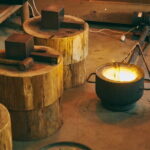
- 5) Heat the steel: red-hot steel time
- 6) The highlight: forging with real hammer strikes
- 7) Cooling and refining the shape
- 8) Sharpening: stones, grinders, and an edge you can feel
- 9) Polishing and finishing
- 10) Completion: take home your knife
- 11) Wrap-up Q&A
- Price and value: $154 for a real maker souvenir
- What you should realistically expect to do
- The small extras that make the day easier
- Who this workshop is best for (and who should skip it)
- What to bring (it’s simple)
- Knife care reality check (so your gift lasts)
- Should you book this Kyoto knife-making experience?
- FAQ
- How long is the knife-making experience?
- What is the price per person?
- What knife size do I take home?
- Is it hands-on or just watching?
- Where do I meet, and how do I get there?
- Does the workshop happen in one location?
- What language is instruction offered in?
- What do I need to bring?
- Who can participate, based on age?
Key takeaways before you book
- You take home a forged Japanese-style knife you personally shaped, boxed and bagged for the trip home.
- Traditional blacksmithing is genuinely taught, from furnace heat to edge sharpening, step-by-step.
- Small-group coaching means you get closer attention when your hammer angle is off.
- Kurouchi-style finish may be part of the look, which helps with a rustic charm and anti-rust practicality.
- Location is easy to reach by train, with a short walk near the Eizan Electric Railway.
Why Kyoto knife making here feels real
Kyoto is full of crafts, but true blacksmithing is a different category. In this workshop, the craft isn’t explained from behind glass. You handle the work itself: tools, hot steel, sharpening stones, and finishing steps.
The experience has a nice balance of tradition and practicality. You’re not just learning history. You’re learning what actually makes a knife usable: getting the blade shape, then bringing the edge to life through careful sharpening and finishing.
There’s also a clear “make it yours” feel. The goal isn’t perfection. It’s understanding the process well enough that your knife feels personal and practical afterward, even if your first hammer strike isn’t museum-grade.
Make something by hand in a Kyoto workshop
Getting there: Yase area meets a one-minute walk
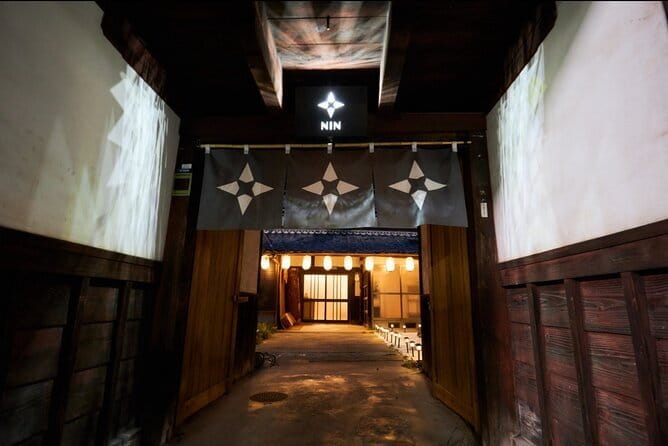
The meeting point is Studio Shinobi YASE (168-1 Yase-no-secho, Sakyo-ku, Kyoto City). It’s about a one-minute walk from the Yase-Hieizan Exit of the Eizan Electric Railway.
I like train access for this kind of class. You’ll be less stressed about timing, and you’ll be better positioned to arrive calmly. A few minutes of rushing around in a new neighborhood is exactly when you want your brain on hammer-angle mode.
One more planning note: the program operates out of two studios in Sakyo-ku. Your staff will message you before your visit to confirm whether you’ll attend Studio NIN Yase or Studio NIN Kendo. So if your navigation app sends you to the wrong building, it’s not your fault. It’s usually just the studio swap.
The 3-hour flow: from check-in to a take-home blade
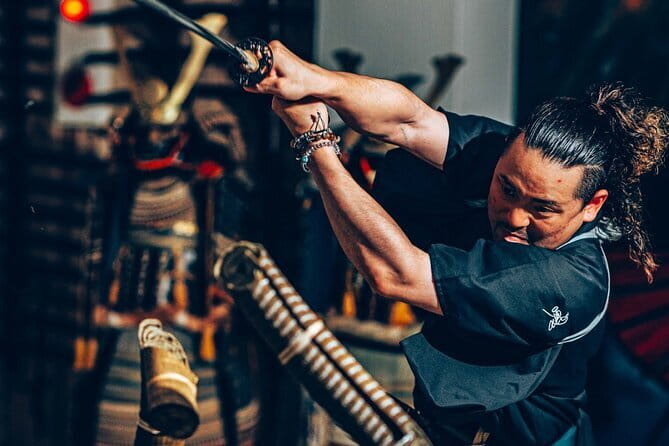
This is a clear, time-ordered sequence that keeps you moving without feeling like a marathon.
1) Check-in and meet Mao
You arrive at the studio and are welcomed by your instructor. Mao is the named instructor in the workshop flow, with 10+ years of experience. Expect real coaching, not just a few tips at the start.
2) Traditional attire: the moment the craft clicks
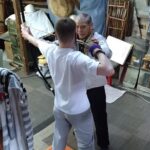
You change into traditional blacksmith attire. It sounds like a small detail, but it matters. The costume puts you mentally in the workshop rhythm before the heat and tools start.





3) Tool introduction and safety basics
Next comes tool handling and safety. You’ll learn how to manage key equipment like hammers, tongs, and grinders and understand how the workshop stays safe even with hot metal involved.
A big theme here is doing dangerous work safely. One practical approach I like is that the safety guidance is explained clearly and repeatedly, so you’re not guessing once the furnace starts roaring.
4) How Japanese kitchen knives are built
Mao explains traditional techniques and how each step changes raw steel into an actual blade. This is where you get context for why you hammer the way you do and why sharpening isn’t optional.
5) Heat the steel: red-hot steel time
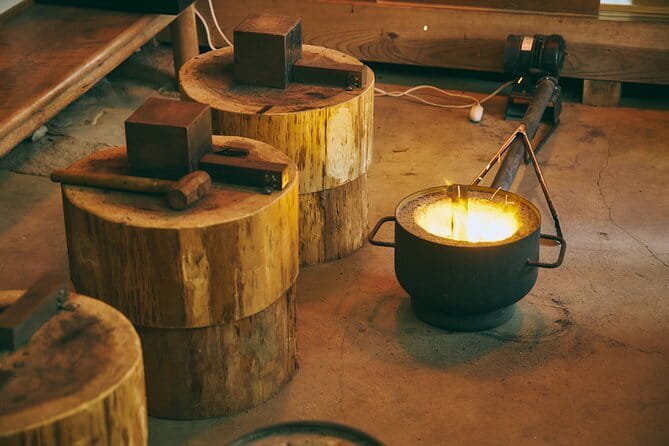
The raw iron is placed into the furnace and heated until it glows red-hot. This part is both thrilling and intense. You’ll feel the urgency of timing, because the metal is only workable in the right temperature window.
6) The highlight: forging with real hammer strikes
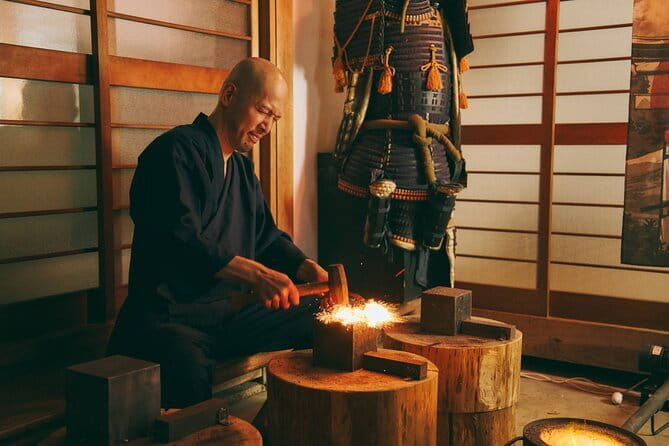
Now you do the work. Guided closely, you strike the glowing steel repeatedly with a hammer. Mao teaches the correct hammering angle, rhythm, and precision.
This is the core of the experience and also where you’ll feel how physical it is. You’re not swinging randomly. You’re learning control around heat, tool handling, and steady pressure.
7) Cooling and refining the shape
After forging, the metal is cooled and checked for shape. Then you refine rough edges and prepare the blade for sharpening.
This stage is important because it turns “forged” into “knife.” You’re doing the real-world cleanup so the edge and final feel can happen.
8) Sharpening: stones, grinders, and an edge you can feel
Under expert instruction, you shape the edge using sharpening stones and grinders. Even beginners can reach a functional edge here because the coaching focuses on the technique that matters most.
9) Polishing and finishing
Then comes polishing and final finish. This is where your knife shifts from metalwork to something elegant and gift-ready.
Some participants specifically point out a Kurouchi style finish, described as rustic and raw-looking, with a practical anti-rust charm. If you’re tempted to chase a super shiny silver look, remember: the point is often the traditional aesthetic and the protection that comes with it.
10) Completion: take home your knife
You finish with a handmade knife about 13–15 cm long. Photos and videos are welcome during the process, and the team may also capture moments for you along the way.
Finally, it comes in a box and bag, which is what you want for carrying it home without drama.
11) Wrap-up Q&A
At the end, ask questions about technique, history, or knife care. Mao is happy to share professional knowledge, and the other staff are the same kind of supportive—especially when you’re trying to understand what you did and why it works.
Price and value: $154 for a real maker souvenir
The workshop price is listed at $154 per person for about 3 hours. You’re paying for more than entertainment. You’re paying for:
- professional instruction during a dangerous-at-wrong-distance process
- tools, materials, and the consumables that let you actually finish
- traditional attire plus a take-home package (box and bag)
- a functional knife you can use, not just a decorative demo item
That value gets sharper when you compare the workshop to buying knives without the learning. Here, the knife is both a souvenir and a skill memory. You’ll also feel a new respect for maintenance because you shaped the edge yourself.
There’s also a note on scale: larger knives require over 5 hours and cost more than $400. This workshop uses a refined 2.5-hour format, which likely means the total class experience is timed so you still get everything needed for a complete 13–15 cm knife, without turning your day into a blacksmith career test.
What you should realistically expect to do
This isn’t a couch-friendly experience. Plan to:
- stand and work in a workshop setting
- hammer repeatedly with guidance
- handle tools carefully while working near hot metal
- focus during sharpening so the edge actually comes out right
If you want an experience that’s hands-on but not exhausting, this might be a surprise. People who love active learning tend to rate it highly because the effort makes the finished knife feel earned.
The good news is that the team keeps it manageable. Instructors are described as patient and upbeat, and they help you keep progressing so you end up with a usable result.
The small extras that make the day easier
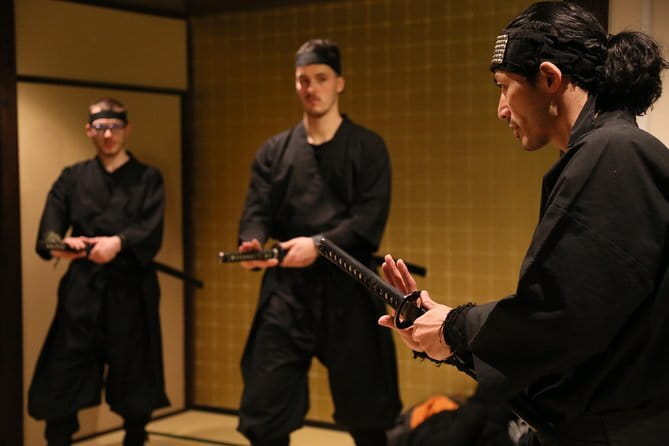
A few practical details show up repeatedly in participant notes and are worth knowing:
- You may get cooling help when the heat is intense, and some participants mention frozen neck coolers.
- The room can have strong heat sources around forging, so you’ll want to lean on the studio’s comfort setup, like air conditioning when available.
- The pacing is supported by the staff, and photos/videos are encouraged, so you’re not stuck trying to document while you work.
- Some participants mention an end-of-session food or drink moment like plum wine and sausages, plus cooking wraps at some points. If that’s not your thing, don’t worry. The main product is still the knife.
Who this workshop is best for (and who should skip it)
You’ll likely love this if you:
- want a hands-on cultural activity in Kyoto
- like making things with your hands, even if you start as a total beginner
- want a take-home souvenir you’ll actually use
- enjoy working with tools and learning by doing
It’s not a good fit if you:
- are looking for something passive or museum-style
- can’t handle physical work around heat and tools
Age limits also matter. Children under 15 must be accompanied by a guardian, and it’s not suitable for people over 95.
What to bring (it’s simple)
The workshop asks you to bring socks.
Everything else is handled: costume, towel, water, tools, materials, box, and bag. That’s a big deal for value and convenience, because you’re not hunting for protective gear or carrying equipment across Kyoto.
Also note the basic rule: no alcohol and drugs.
Knife care reality check (so your gift lasts)
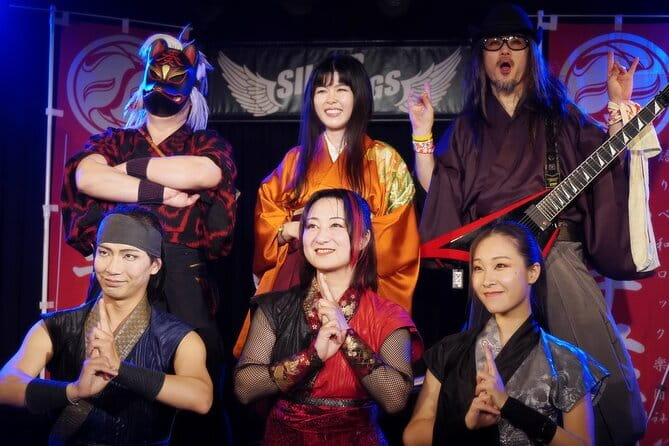
You’ll make a knife about 13–15 cm long, and you’ll leave with it boxed. After that, your job is maintenance. The workshop emphasizes making the blade finish and edge in a way that supports everyday practicality.
If your knife finishes in a Kurouchi style, understand why it looks the way it does. That rustic finish can help with anti-rust practicality. So once you get it home, don’t treat it like a mass-produced shiny display item. Treat it like a working tool.
Should you book this Kyoto knife-making experience?
Yes, if you want the rare Kyoto craft where you get your hands dirty in the best possible way. The cost makes sense because you’re paying for instruction plus materials plus a finished knife you can actually use.
Book it especially if you:
- want a memorable, practical souvenir
- like small-group instruction and clear safety coaching
- enjoy active learning more than passive sightseeing
Skip or reconsider if you:
- hate physical work
- have low tolerance for heat and tool handling
- want something more relaxed and observation-based
If you’re deciding between this and another “craft” class, choose this one when you want the real forging moment and the hands-on sharpening to end the day with a blade you made.
FAQ
How long is the knife-making experience?
The workshop duration is listed as about 3 hours.
What is the price per person?
The price is $154 per person.
What knife size do I take home?
Your finished knife is about 13–15 cm long.
Is it hands-on or just watching?
It’s hands-on. You forge the blade, then do sharpening and finishing with expert guidance.
Where do I meet, and how do I get there?
You meet at Studio Shinobi YASE in Sakyo-ku. It is a one-minute walk from the Yase-Hieizan Exit of the Eizan Electric Railway, and train access is recommended.
Does the workshop happen in one location?
The experience operates out of two studios in Sakyo-ku: Studio NIN Yase or Studio NIN Kendo. Your staff will message you prior to your visit to confirm which one you attend.
What language is instruction offered in?
The instructor offers English and Japanese.
What do I need to bring?
Bring socks. Costume, towel, water, tools, materials, and the packaging are provided.
Who can participate, based on age?
It’s not suitable for people over 95. Children under 15 must be accompanied by a guardian.
More Tour Reviews in Kyoto
More Kyoto Workshops to Try



Just added: more Kyoto tours to browse








Kyoto Craft & Calligraphy Workshops, compared.
 ★ 5.0Chopsticks Making Workshop in Gion with Engraving OptionFrom $15958 reviews
 ★ 5.01-Hour Japanese Archery Experience in KyotoFrom $46176 reviews
 ★ 5.0Calligraphy class at Buddhist temple in city centerFrom $55167 reviews
 ★ 5.0Roketsu dyeing experience: M course Roketsu Dyeing ExperienceFrom $25163 reviews
 ★ 4.9Japanese Archery Workshop with Experienced InstructorFrom $38132 reviews
 ★ 4.8Japanese Calligraphy ClassFrom $5189 reviews
 ★ 5.0TAIKO, Japanese Drum Experience from KyotoFrom $11586 reviews
 ★ 4.7Japanese Calligraphy WorkshopFrom $3284 reviews
Browse the lists this tour appears in