
Reviewed · KYOTO COOKING CLASSES
Private Plant-Based Japanese Cooking Class – Kyoto Edition
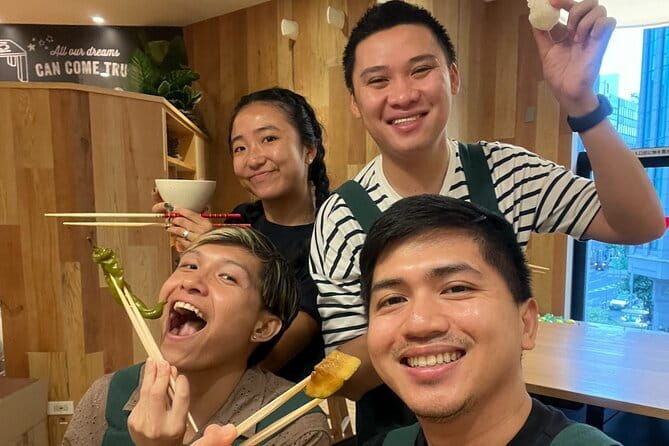
Kyoto teaches your chopsticks a new kind of calm. This private plant-based Japanese cooking class centers on Shojin Ryouri and uses fresh, seasonal vegetables sourced from local farmers, with hands-on cooking of rice and miso soup the traditional way. Two things I really like here are how practical the steps are (you’re not just watching) and how the menu turns Kyoto traditions into food you can recreate at home. The one consideration: it’s only about two hours, so if you’re looking for advanced knife skills or deep technique, this won’t feel like a long workshop.
The big plus for your trip is logistics: it’s in a convenient spot with direct station access, and you can fit it early (or between temple days) without losing a chunk of your day. It’s also private for your group and taught with an English lesson approach, so the language gap is much less of a worry than with many food experiences in Kyoto.
In This Review
- Quick highlights
- Kyoto Buddhist cuisine in a real kitchen
- What you’ll cook: rice, miso soup, seasonal vegetables, and yatsuhashi
- The class flow in two hours (so you know where the time goes)
- Studio atmosphere, teacher support, and an English-friendly lesson
- Value check: $98 per person for hands-on food you can repeat
- Where it fits in your Kyoto itinerary
- Who should book (and who might skip)
- Should you book this Kyoto Shojin Ryouri class?
- FAQ
- What is the duration of the cooking class?
- Where does the experience take place in Kyoto?
- Is this class private or shared with other groups?
- What dishes will I learn to make?
- Is there an English lesson?
- Do I get to take something home?
- What is the cancellation window?
Quick highlights
- Shojin Ryouri focus: plant-based Buddhist cuisine made with seasonal Kyoto ingredients
- From-scratch staples: rice and miso soup the traditional way
- Sweet Kyoto style: instructions for two flavors of yatsuhashi
- Private group setup: only your group participates, with a teacher who explains step by step
- Take-home souvenir: a bamboo lunchbox after the meal
Kyoto Buddhist cuisine in a real kitchen
Kyoto has a way of making food feel like part of the culture, not just fuel. In this class, you’re working within Shojin Ryouri, a plant-based style of Buddhist cooking that takes roots from Kyoto’s temples and food traditions. The experience is built around seasonal vegetables, so you’re tasting the logic of Japanese cooking: respect ingredients, keep flavors balanced, and use technique to make simple things feel special.
What makes it appealing is that it’s not just about eating. You’ll actually prepare core components—starting with rice and miso soup—and then move into other Kyoto specialties. In the feedback I saw, people kept coming back to how friendly the studio atmosphere feels and how clearly the process is explained, even when it’s your first time in a cooking class setting.
One more thing I appreciate: it’s positioned as a good first Kyoto activity. You get food, yes, but you also get in-person context from the lesson ambassadors—people who know Kyoto and can point you toward what to do next.
Roll up your sleeves for another Kyoto cooking class

What you’ll cook: rice, miso soup, seasonal vegetables, and yatsuhashi
The menu theme is straightforward: traditional plant-based Kyoto cooking, using fresh ingredients. You’ll learn how to make rice and miso soup from scratch, and you’ll also work with locally sourced seasonal vegetables as part of the meal.
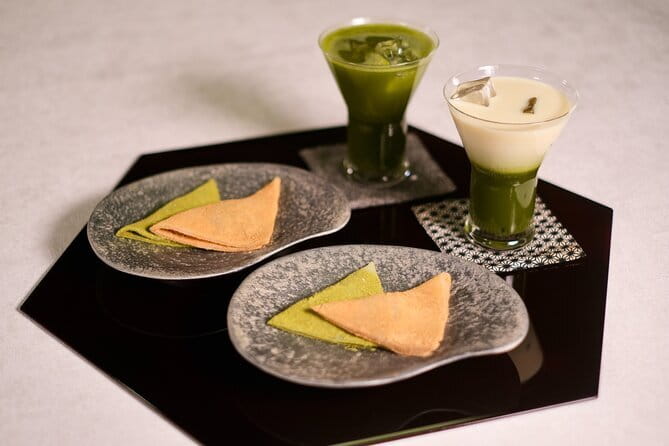
Then comes the sweet finale: yatsuhashi—Kyoto’s take on mochi—made in two flavors. If you’ve had yatsuhashi before as a packaged snack, this is the chance to understand how it’s shaped and how the sweetness is handled. It’s also the kind of class ending that feels gift-worthy. You’re not walking away with one dish and a full stomach. You’re walking away with methods you can reuse.
A practical note for your expectations: this class is built around approachable cooking. Some feedback points out that it’s simple enough for beginners, but it’s not aiming to teach complicated, high-level techniques. If you’re a serious home cook wanting a month-long fermentation project, this won’t be that. If you want a strong foundation and real Kyoto flavor, it hits.
The class flow in two hours (so you know where the time goes)
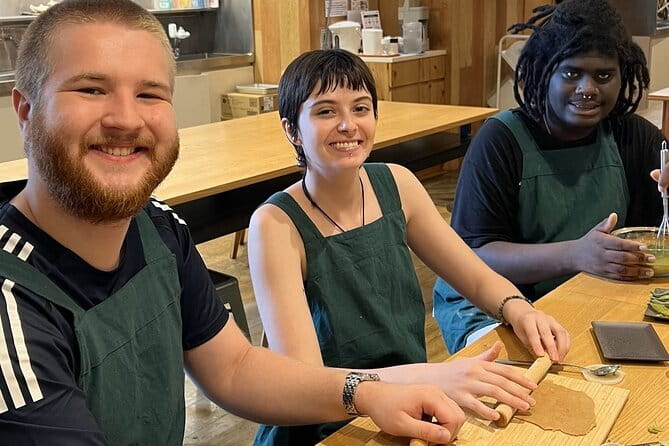
This is an approximately 2-hour session, and you should treat it like a focused food sprint. You’ll likely start with a welcome and an overview of what you’ll make, since the lesson is set up for active participation.
From there, the time typically breaks down into a few cooking blocks:
- Rice preparation: you’ll make rice in the traditional way rather than relying on shortcuts. This is where many people feel the biggest win because rice is the base of so many Japanese meals.
- Miso soup: you’ll learn how to assemble it and understand how miso behaves in the soup context, including how to balance depth with simplicity.
- Seasonal vegetable dishes: this is where the “Shojin” idea becomes real. You’ll work with vegetables sourced from local farmers and cook in a way that supports the overall meal balance.
- Yatsuhashi shaping and finishing: the two-flavor yatsuhashi portion is the fun, hands-on part that also gives you the most “Kyoto specific” payoff.
Finally, you eat. The value of a class like this is that you get feedback in the moment: you taste what you made, compare textures, and learn what the teacher is aiming for. And because the experience ends back at the meeting point, there’s no complicated end-of-tour scramble.
Studio atmosphere, teacher support, and an English-friendly lesson
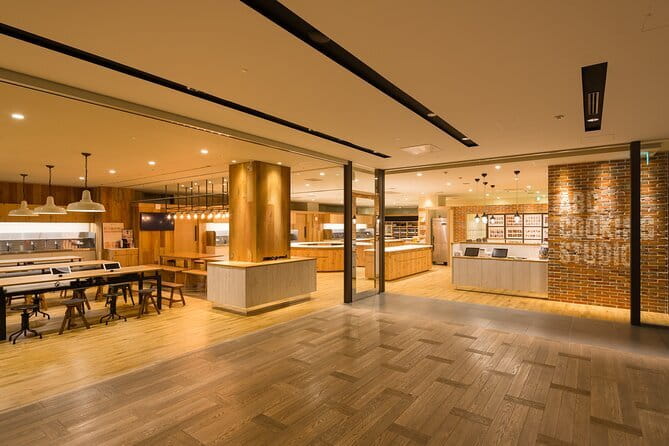
I like classes where the room feels calm and organized, and the studio here seems built for exactly that. Feedback highlights a big, clean kitchen space and a welcoming studio vibe—no “stress mode,” no awkward waiting for your turn.
The teaching style is another big reason this class earns a near-perfect recommendation rate. The instruction is interactive, with each person participating. You’re not stuck watching someone do everything, and the step-by-step explanations matter when you’re learning unfamiliar Japanese techniques.
English support comes up repeatedly. People mention teachers speaking English and Japanese fluently, and you’ll also see the experience described as an English lesson for traditional Japanese dishes. One teacher name shows up in the feedback—Haruhi—praised for being patient and insightful. That kind of calm coaching helps beginners a lot, especially if you’ve never handled Japanese ingredients beyond what you’ve seen in a supermarket.
Value check: $98 per person for hands-on food you can repeat
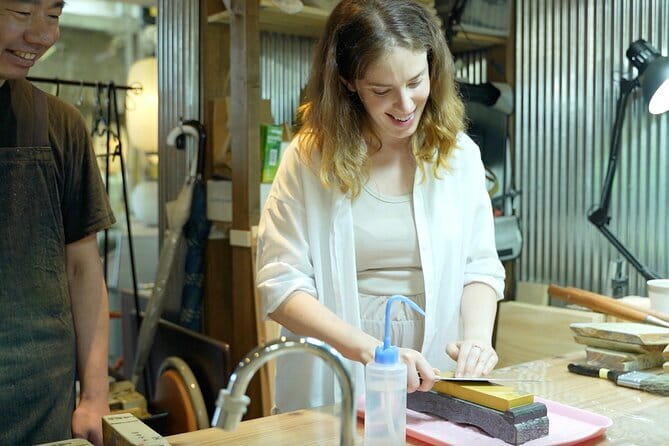
At $98 per person, you’re not buying a quick tasting—you’re buying time, technique, and edible souvenirs. Here’s how I’d think about value.
First, you’re making multiple components: rice, miso soup, a plant-based meal built around seasonal vegetables, and two flavors of yatsuhashi. That’s more than a “snack workshop.” Second, the process includes practical teaching that you can use later. The biggest travel food win is learning something you can reproduce, not just something you can photograph.
Third, you take home a bamboo lunchbox. Even if you don’t use it every day, it’s a tangible Kyoto reminder—and it makes the experience feel complete rather than temporary.
Two small value multipliers to consider:
- Private group setup: you’re only cooking with your group, which makes the experience feel less crowded and more personal.
- Group discounts: if you’re traveling with friends or family, the pricing can make more sense as you spread it across a group.
One more reality check: you’re getting about two hours. That’s a great length for a day trip, but it also means you’ll learn the essentials rather than becoming an expert in every method.
Other Kyoto tours and experiences to compare



Where it fits in your Kyoto itinerary
This class is a smart placement activity because it’s not a half-day commitment. It’s about 2 hours, and it’s located near public transportation with direct station access. That matters in Kyoto, where moving efficiently between neighborhoods can save energy for temples and viewpoints.
If you’re planning a temple-heavy day, this is a nice counterbalance. You’ll go from quiet stone and incense to a warm cooking studio where you’re making food from fresh ingredients. If you’re planning a food and shopping day, this class gives you the one experience that’s harder to fake later: learning how Kyoto vegetarian cooking is structured.
It’s also a great “first stop” option. Food is a fast way to get oriented in a city—what people eat, how they think about ingredients, and what Kyoto is famous for beyond shrines.
Who should book (and who might skip)
This Kyoto plant-based cooking class is a strong match for:
- first-time cooking class participants
- food lovers who want a Kyoto-specific cultural angle (Shojin Ryouri)
- groups traveling together, since it’s private for your party
- travelers who appreciate hands-on instruction in English
It may be less ideal if:
- you want a long, advanced course with complex techniques
- you’re only interested in meat-centric Japanese dishes (this class is plant-based by design)
If you’re the type of traveler who likes practical souvenirs, you’ll also probably enjoy the bamboo lunchbox take-home. If you enjoy learning steps you can repeat at home, you’ll likely find rice and miso soup training especially useful.
Should you book this Kyoto Shojin Ryouri class?
If you want a cooking experience that’s Kyoto-specific, approachable, and genuinely hands-on, I think it’s an easy yes. For $98 per person, you get multiple dishes, clear instruction, and a take-home bamboo lunchbox, all in a tight two-hour format that works with real travel days.
Book it if you’re aiming for: learn-to-make Kyoto food rather than just tasting it. Slots can fill, since the class is commonly booked around two weeks ahead on average, so grab your time window early—especially if you’re visiting during a busy season.
FAQ
What is the duration of the cooking class?
The class lasts about 2 hours.
Where does the experience take place in Kyoto?
The meeting point is LAQUE Shijo Karasuma101 Kankobokochō, Shimogyo Ward, Kyoto, 600-8009, Japan, and the experience ends back at the meeting point.
Is this class private or shared with other groups?
It’s a private tour/activity, so only your group will participate.
What dishes will I learn to make?
You’ll learn plant-based Shojin Ryouri dishes, including how to make rice and miso soup from scratch, and you’ll also make two flavors of Kyoto-style yatsuhashi (mochi).
Is there an English lesson?
Yes. The experience is described as an English lesson, and teachers are noted for speaking English.
Do I get to take something home?
Yes. After the meal, you can take the bamboo lunchbox home as a souvenir.
What is the cancellation window?
You can cancel up to 24 hours in advance for a full refund. If you cancel less than 24 hours before the start time, the amount paid will not be refunded.
More Private in Kyoto

More Tour Reviews in Kyoto






More Kyoto Cooking Classes

Just added: more Kyoto tours to browse








Kyoto Cooking Classes, compared.
 ★ 5.0Ramen Cooking Class at Ramen Factory in KyotoFrom $1311,937 reviews
 ★ 5.0Sushi Making in Kyoto! Same-day bookings welcome!From $53713 reviews
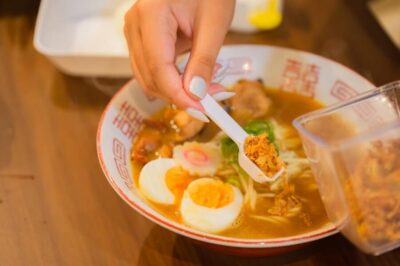 ★ 4.9Ramen Cooking Class at a Ramen Factory with SouvenirFrom $127532 reviews
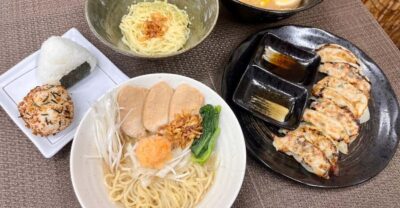 ★ 5.0Ramen, Gyoza, and Onigiri Cooking ClassFrom $90445 reviews
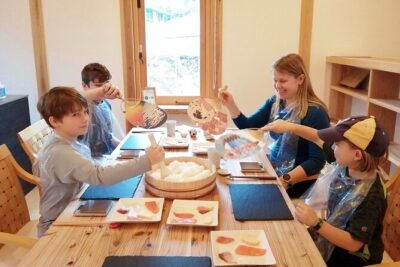 ★ 5.0The Original Small-Group Sushi Making Class in KyotoFrom $69436 reviews
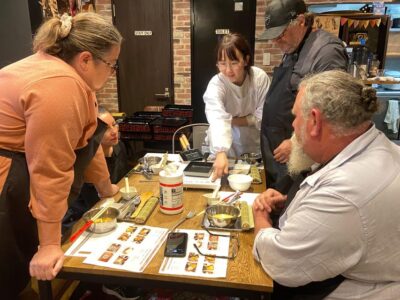 ★ 5.0Japanese Washoku Bento Small Group Cooking ClassFrom $58380 reviews
 ★ 5.0Kyoto Ramen and Gyoza Cooking Class with Professional ChefsFrom $86282 reviews
 ★ 4.9Afternoon Japanese Izakaya Cooking ClassFrom $67241 reviews
Browse the lists this tour appears in