
Reviewed · KYOTO COOKING CLASSES
The Original Small-Group Sushi Making Class in Kyoto
Sushi in Kyoto, taught by real pros. What makes this workshop special is the small group limit (8 people) and the fact you learn practical sushi skills—seasoning rice, making nigiri, and rolling maki—then eat a lot of what you produce. One drawback to flag up front: there’s no vegetarian or vegan option, so plan accordingly if your diet is plant-based.
I like that the class is taught in English and led by Kana, with her husband often pitching in as an assistant. The setting is a restored historic townhouse near Kiyomizu-dera and Gion, which keeps the experience calm and focused instead of feeling like a hectic demo. The practical result: you come away knowing what to do at home, not just watching someone else do it.
In This Review
- Quick hits before you book
- Sushi Making Class in Kyoto: What You’re Really Signing Up For
- The Townhouse Setting Near Kiyomizu-dera and Gion
- Price and Value: Is $69.64 Actually Fair?
- Meeting Your Instructors: Kana and Her Husband’s Helping Role
- The 90-Minute Flow: Rice First, Then Nigiri, Then Maki
- 1) Seasoning rice the right way
- 2) Making nigiri
- 3) Rolling maki
- Rolling Maki Without the Usual Mess
- What You Eat: Lunch or Dinner Worth Planning Around
- Allergies and Dietary Limits: What You Must Know
- Take-Home Keepsakes: The Stuff That Makes the Class Stick
- Getting There: Meeting Point and Easy Access
- Best Time to Book in Your Kyoto Schedule
- Who This Sushi Class Is For (and Who Might Want Something Else)
- Should You Book Atelier SUSHI? My Take
- FAQ
- How long is the sushi-making class?
- What group size should I expect?
- Is the class taught in English?
- Where is the meeting point?
- Will I eat the sushi I make?
- What’s included in the class?
- Are vegetarian or vegan options available?
- Is there any help for people with allergies?
- What kind of ticket do I receive?
- Is free cancellation available?
Quick hits before you book
- 8-person maximum means real hands-on coaching, not a lecture you half-miss
- Kana leads in English, with her husband assisting for extra attention
- You learn nigiri and maki, including rice seasoning and shaping techniques
- Apron and gloves are provided, plus Japanese tea (coffee and/or tea)
- You eat your own sushi as lunch or dinner depending on session time
- Take-home keepsakes often include class notes, a sushi mat, and chopsticks (plus rice/rolling guidance)
Sushi Making Class in Kyoto: What You’re Really Signing Up For
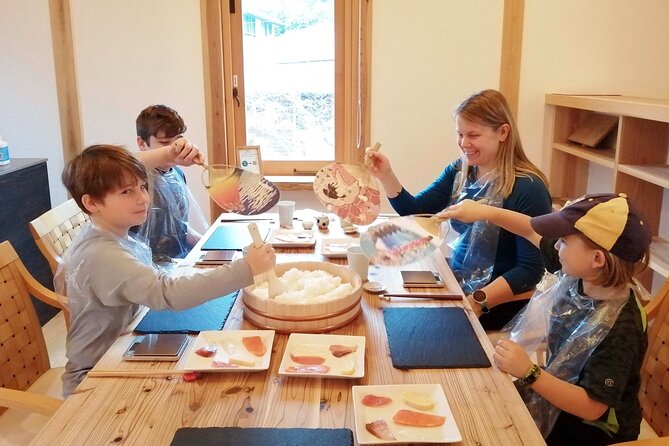
This isn’t a quick tasting tour. It’s a real skill-building workshop with a clear goal: you finish class able to make sushi at home.
The class is built around a simple rhythm. You start with the rice, move into shaping nigiri, then roll maki. Along the way, you get feedback in real time—what your fingers are doing, how your rice texture looks, and how your roll holds together. That matters, because sushi is mostly technique. If you nail the basics, the rest gets way easier.
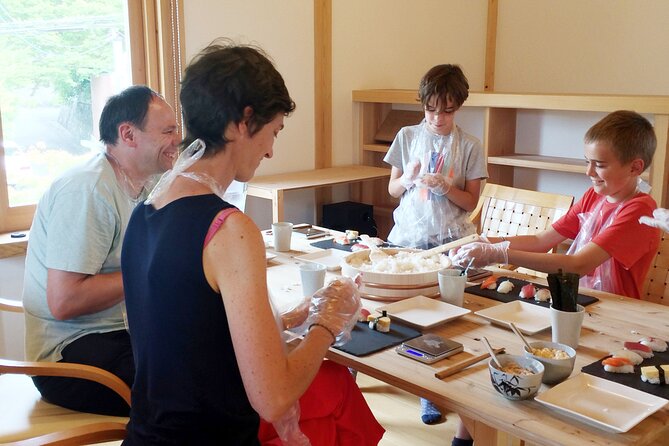
The other big factor is group size. With only up to 8 people, the instructor can slow down when someone needs it. I also like that the hosts share culture and travel-style tips as part of the experience, so the class feels human, not rigid.
And yes, you eat. This is not a tiny snack. The meal is served as lunch or dinner depending on when your workshop runs, and the portion tends to be satisfying once you’ve made everything yourself.
Roll up your sleeves for another Kyoto cooking class

The Townhouse Setting Near Kiyomizu-dera and Gion
You meet at Atelier SUSHI311-1 Kitatōryōchō in Higashiyama Ward, in a neighborhood that’s convenient for getting to the Kiyomizu-dera and Gion area.
More importantly, the workshop takes place in a restored historic townhouse. That sounds like a marketing line, but here it actually affects your experience. You’re not bouncing between crowded rooms or standing in a storefront. You’re in a calmer space where you can focus on hands-on work, ask questions, and pay attention to details like rice temperature and shaping.
If you’re the type who likes your Kyoto experiences to feel “quiet-cool” instead of touristy-noisy, this venue helps a lot.
Price and Value: Is $69.64 Actually Fair?
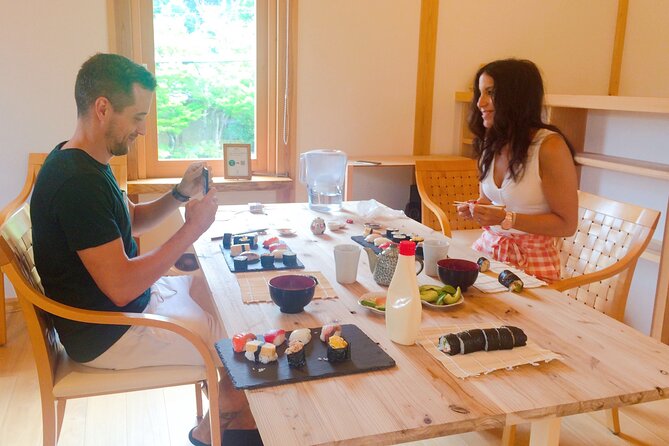
At $69.64 per person for about 1 hour 30 minutes, the price is easy to justify once you look at what’s included.
You’re paying for:
- English instruction from a Japanese instructor (Kana)
- hands-on practice with lots of time to correct your technique
- premium fresh fish and local ingredients used for the sushi you make
- a full sushi meal (lunch or dinner, depending on session)
- apron and gloves, plus coffee and/or tea
- take-home keepsakes and notes that help you reproduce the rice/roll steps later
A cooking class that includes both instruction and the meal you create tends to be good value. This one also limits group size, so you’re not just buying sushi—you’re buying time with a teacher.
Meeting Your Instructors: Kana and Her Husband’s Helping Role
Kana is the main lead for the class. You’ll likely recognize that name in the feedback again and again because she’s the one teaching the technique and pacing the session.
Her husband also assists in the kitchen. Multiple people describe them as warm, patient, and genuinely happy to explain things. That matters if you’re worried about being a slow learner. You can ask questions, and the instructors can help troubleshoot what’s going wrong with your rice stickiness, your nigiri shape, or your roll tightness.
Another nice bonus: the hosts often share Japanese culture context and practical recommendations for the rest of your Kyoto stay. It’s not random chatter. It usually connects to food habits, local areas, and how people think about craft.
The 90-Minute Flow: Rice First, Then Nigiri, Then Maki
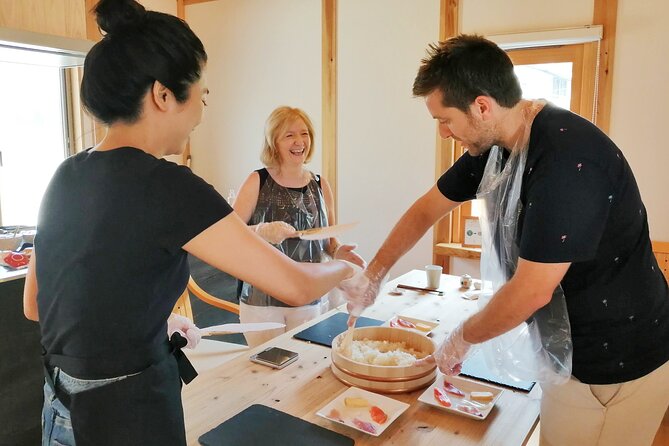
The workshop runs about 1 hour 30 minutes and is fully hands-on. While the exact order can vary a little by session, the core sequence is consistent:
Other Kyoto tours and experiences to compare

1) Seasoning rice the right way
Rice is the foundation. The class focuses on properly seasoning cooked rice so the texture and flavor work with the fish and toppings. If you’ve ever tried sushi at home and thought, why does mine taste flat or sticky, this part is the answer.
You’ll learn technique rather than just ingredients—how to handle the rice so it stays workable and not mushy.
2) Making nigiri
Next comes nigiri. You’ll shape pieces using the rice base and add fish. This is where small-group coaching becomes crucial. Even if you’ve rolled sushi before, nigiri is delicate: too much pressure changes the texture, and the rice-to-fish ratio needs to look and feel right.
From what people describe, the class usually covers making a couple of types of nigiri, so you practice more than one style instead of only one “template.”
3) Rolling maki
Then you roll maki. This is the step many people find tricky at first because you’re balancing three things: filling, tightness, and even thickness.
By the end, you should have enough confidence to repeat the motion at home—and not just copy a visual result.
Rolling Maki Without the Usual Mess
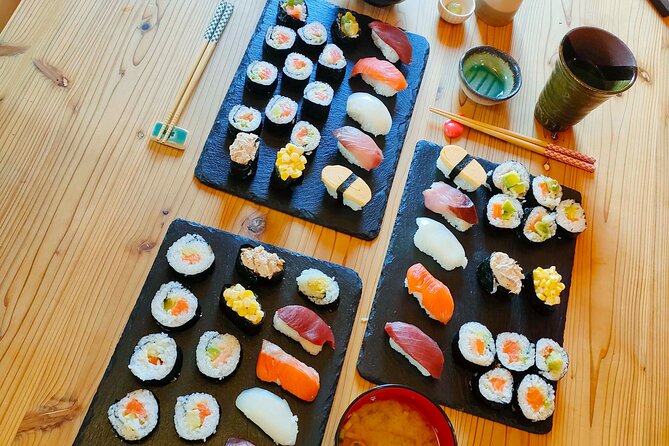
Rolling is where home sushi often falls apart, and that’s exactly why this class is worth doing.
Here’s what you’re learning that matters for success later:
- How to handle the mat and keep your roll consistent
- How to keep the rice layer even
- How to shape the roll so it slices cleanly
- How to avoid loose ends that unravel after cutting
Also, the instruction doesn’t stop at rolling. People leave with notes and take-home items that make it easier to recreate the process without guessing the next day.
If you’re the kind of person who likes clear steps, you’ll appreciate that the hosts simplify the technique so your first attempt isn’t a failure.
What You Eat: Lunch or Dinner Worth Planning Around
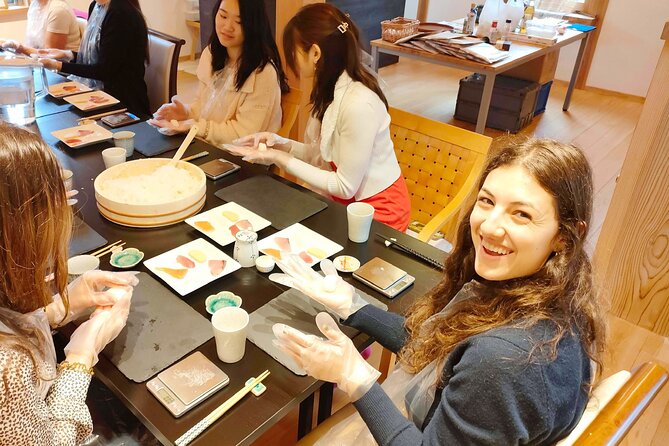
You make sushi, and you eat it. That’s the big payoff.
The meal is served as lunch or dinner depending on the workshop time. In practice, that means you should plan to come hungry. People consistently mention that the class produces a lot of food and that they didn’t leave unsatisfied.
There’s another subtle benefit: the fish is fresh, and the instructor’s technique helps you taste the ingredients the way sushi is supposed to taste—clean, controlled flavors instead of heavy sauces.
And you’ll also get Japanese tea (coffee and/or tea), which makes the whole experience feel like a proper meal, not a classroom snack break.
Allergies and Dietary Limits: What You Must Know
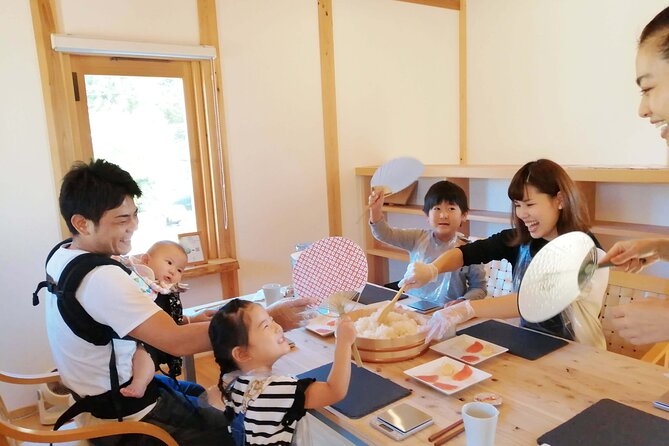
This is important.
- There is no vegetarian or vegan option.
- On the other hand, the class has accommodated gluten and shellfish allergies in at least some cases, based on feedback from people with celiac disease (gluten allergy) and shellfish allergies.
Because dietary needs can be serious, don’t assume every restriction can be handled the same way every time. If you have allergies, it’s smart to confirm them in advance with the provider so you get a clear yes.
Take-Home Keepsakes: The Stuff That Makes the Class Stick
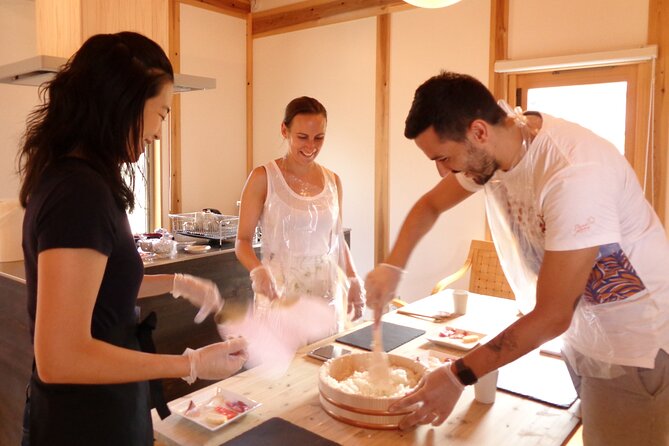
I love when a cooking class gives you more than a memory. This one tends to include practical take-home tools such as:
- class notes
- a sushi mat
- chopsticks
- and guidance that supports making the rice and rolling techniques at home
Some people also describe receiving recipes for the rice and rolling guidance that go beyond a generic handout. When you can replicate the steps later, the class becomes more than a one-time experience. It turns into a skill you actually use.
This is a key reason the small-group format feels worth the money. You leave with both know-how and equipment.
Getting There: Meeting Point and Easy Access
The meeting point is Atelier SUSHI311-1 Kitatōryōchō, Higashiyama Ward, Kyoto.
It’s near public transportation, which helps a lot in Kyoto where taxis can be tempting after a day of walking. The venue is also close enough to popular areas like Kiyomizu-dera and Gion that you can pair this with sightseeing.
One practical tip: schedule it when you’re not rushed. Even though the class is 90 minutes, you’ll want time before or after to enjoy the neighborhood vibe.
Best Time to Book in Your Kyoto Schedule
For me, this kind of class fits best earlier in your trip.
Why? Because the hosts often share useful local tips while you’re there. Also, you’ll learn technique and take-home notes, and you’ll be more likely to recognize sushi details when you eat it later—what good rice feels like, how rolls should slice, and how nigiri is built.
If you’ve got a tight schedule, aim for a meal session (lunch or dinner) so you’re not trying to cram sushi-making right before another big plan.
Who This Sushi Class Is For (and Who Might Want Something Else)
This class is a great fit if you:
- want hands-on technique instead of a demo
- like small, friendly groups with time for questions
- are interested in sushi basics you can reproduce at home
- want a Kyoto experience that’s more quiet and craft-focused than “walk-in, walk-out”
It may be less ideal if you:
- need a vegetarian/vegan meal (there isn’t one offered)
- have complex allergy restrictions you’re not sure can be accommodated—confirm first
- prefer a big-tour atmosphere with lots of sightseeing built in (this is a workshop, not a day-long excursion)
Should You Book Atelier SUSHI? My Take
If you care about learning real sushi technique and eating a proper meal you made yourself, I think this is a strong choice.
The standout value isn’t just the sushi. It’s the combination of:
- small-group coaching
- instruction in English with Kana leading the class
- a setting near Kiyomizu-dera/Gion that feels calm
- take-home materials that help you repeat the basics later
If your diet is plant-based, look elsewhere. If you eat fish and want a skill you can use at home, book this sooner rather than later.
FAQ
How long is the sushi-making class?
It’s about 1 hour 30 minutes.
What group size should I expect?
The class has a maximum of 8 travelers.
Is the class taught in English?
Yes, the workshop is conducted in English.
Where is the meeting point?
You’ll start at Atelier SUSHI311-1 Kitatōryōchō, Higashiyama Ward, Kyoto, 605-0918, Japan.
Will I eat the sushi I make?
Yes. A sushi meal is included and is served as lunch or dinner depending on the workshop time.
What’s included in the class?
In addition to the hands-on instruction, you get a sushi meal, English guidance, an apron and gloves, and coffee and/or Japanese tea.
Are vegetarian or vegan options available?
No vegetarian or vegan option is listed as included.
Is there any help for people with allergies?
The information provided doesn’t promise specific accommodations, but some feedback notes the staff went above and beyond for gluten and shellfish allergies.
What kind of ticket do I receive?
You receive a mobile ticket.
Is free cancellation available?
Yes. You can cancel up to 24 hours in advance for a full refund.
More Workshops in Kyoto
More Tour Reviews in Kyoto





More Kyoto Cooking Classes
Just added: more Kyoto tours to browse








Kyoto Cooking Classes, compared.
 ★ 5.0Ramen Cooking Class at Ramen Factory in KyotoFrom $1311,937 reviews
 ★ 5.0Sushi Making in Kyoto! Same-day bookings welcome!From $53713 reviews
 ★ 4.9Ramen Cooking Class at a Ramen Factory with SouvenirFrom $127532 reviews
 ★ 5.0Ramen, Gyoza, and Onigiri Cooking ClassFrom $90445 reviews
 ★ 5.0Japanese Washoku Bento Small Group Cooking ClassFrom $58380 reviews
 ★ 5.0Kyoto Ramen and Gyoza Cooking Class with Professional ChefsFrom $86282 reviews
 ★ 4.9Afternoon Japanese Izakaya Cooking ClassFrom $67241 reviews
 ★ 5.0Izakaya Style Cooking ClassFrom $71219 reviews
Browse the lists this tour appears in