
Reviewed · VIP
Private Kyoto Customizable Tour With Guide and Luxury vehicle
Kyoto feels like a puzzle with perfect pieces. This private 8–10 hour day lets you pick your priorities and hit major sights with an English-speaking guide and a driver, so you’re not stuck solving train transfers while the day slips by. I like that the plan is built around big Kyoto moments, yet it’s still adjustable if you want more temples, more shopping, or more history.
Two things I especially like: first, the schedule is structured enough to feel efficient (eight major stops, about an hour each), but flexible enough that traffic won’t ruin your pacing—extra time is provided if roads slow down. Second, I love the mix of iconic landmarks and everyday Kyoto life, from Kiyomizudera’s views to the food-focused energy of Nishiki Market.
One drawback to keep in mind: most sites have their own admission fees (some are free, but not all), and the overall experience quality will depend heavily on the guide you’re paired with. In the feedback I saw, guides like Malik and Charith got real praise for warmth and planning, while a smaller share of notes complained about guide energy or value for the price.
In This Review
- Key Things I’d Watch For
- Price and Time: What You’re Really Buying in Kyoto
- The Vehicle, the Comfort, and Why It Matters in Kyoto
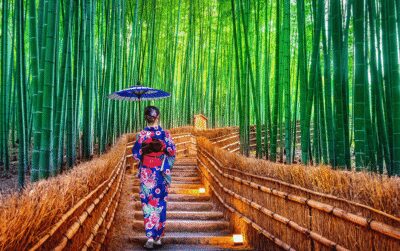
- Arashiyama: Togetsukyo Bridge and Bamboo Walks to Start the Day
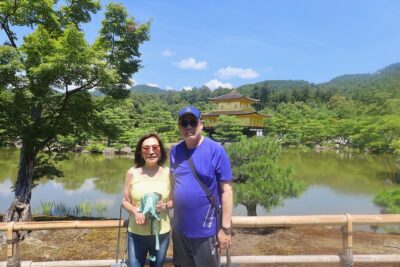
- Kinkakuji Golden Pavilion: Gold Leaf, Pond Views, and the Ashikaga Story
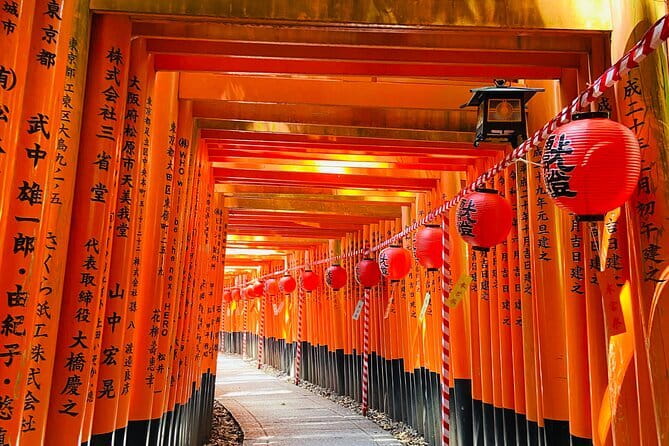
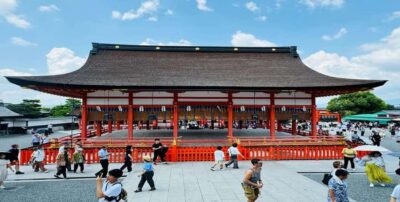
- Fushimi Inari Taisha: Thousands of Torii Gates and Mount Inari (233 m)
- Kiyomizudera: The UNESCO Temple and Its 13-Meter Wooden Stage Views
- Ginkakuji (Silver Pavilion): A More Subtle Kyoto Than Kinkakuji
- Sanjusangendo: 1001 Kannon Statues Inside a 120-Meter Hall
- Gion Corner: Geisha Neighborhood Energy Without Needing Fancy Tickets
- Nishiki Market: Kyoto’s Kitchen for Snacks, Sweets, and Practical Shopping
- How the $525.87 Group Price Works (And When It’s Worth It)
- Making This Day Actually Feel Custom
- A Real-World Caution: Guide Fit and Day-of Reliability
- Should You Book This Private Kyoto Day Tour?
- FAQ
- How much does the private Kyoto custom tour cost?
- How long is the tour?
- What time does the tour start?
- Is pickup offered?
- Is this tour private?
- What’s included in the price?
- Are admission tickets included?
- Are coffee, tea, and meals included?
- Is there onboard WiFi?
- What is the cancellation policy?
Key Things I’d Watch For
- Private, customizable itinerary: You set the day’s focus—temples, culture, shopping, or history.
- Driver-guide approach: An English-speaking guide handles the story and the logistics while you ride.
- Traffic buffer: If Kyoto traffic stretches the timeline, extra time is given.
- Classic Kyoto in one loop: Arashiyama → Golden Pavilion → Fushimi Inari → Kiyomizudera and more.
- Food + atmosphere stop: Nishiki Market is built for sampling and practical shopping.
- Some admissions are free, most aren’t: Plan on paying separately at several stops.
Price and Time: What You’re Really Buying in Kyoto
This tour runs about 8 to 10 hours and starts at 8:30 am. The price is $525.87 per group (up to 6), which matters because you’re not paying “per person” in the usual way—you’re paying for the private vehicle and guide time.
That can be a great value if you travel as a small group. If you split it with up to 6 people, the cost works out to roughly $88 per person for a full day of guided logistics. If you’re only two people, your per-person cost rises, so it’s worth making sure you’ll actually use the guide’s guidance (crowd timing, route flow, and what to prioritize).
Also, there’s one practical scheduling advantage: the tour is designed for a full day of stops with time at each place. It’s not a “drive-by photo hop” where you barely get out of the car.
Other Kyoto tours and experiences to compare
The Vehicle, the Comfort, and Why It Matters in Kyoto
You get an air-conditioned vehicle and WiFi on board, plus an English-speaking guide. In Kyoto—especially in hot or rainy seasons—this is not a small detail. You’re moving between neighborhoods and walking through temple grounds, markets, and shrine paths, so comfort and a place to reset between stops can keep the day from turning into one long shuffle.
One more thing I like in the setup: it’s a private tour, meaning it’s only your group. That usually makes it easier to move at your pace, ask questions without feeling rushed, and handle real-life details like strollers or accessibility needs. I saw specific praise in the feedback for guides who helped with family logistics, including a situation involving a child’s stroller and a foot cast.
Arashiyama: Togetsukyo Bridge and Bamboo Walks to Start the Day
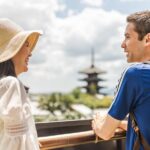
Arashiyama is a strong first stop because it sets the tone fast—water, wood, and the famous bamboo scenery. The standout is Togetsukyo Bridge, also called the Moon Crossing Bridge, and it’s especially pretty with the wooded slopes behind it. The bridge was rebuilt in the 1930s, but it traces back to origins in the Heian Period (794–1185), so you’re seeing something that blends “old Kyoto” with a later rebuild.
Right nearby, you can pair the bridge with the bamboo atmosphere. The walking routes through the bamboo groves are the kind of place where your phone will run out of battery before your attention does—light winds move the stalks and the space feels calm even when the area is popular.
Admission note: this stop lists admission ticket not included, so plan for separate fees if you choose any paid sections. (And bring comfortable shoes; bamboo paths and river areas can mean uneven walking.)
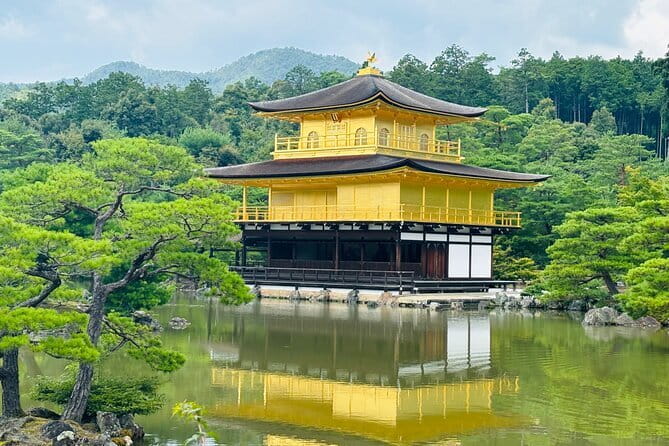
Kinkakuji Golden Pavilion: Gold Leaf, Pond Views, and the Ashikaga Story
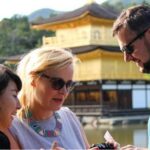
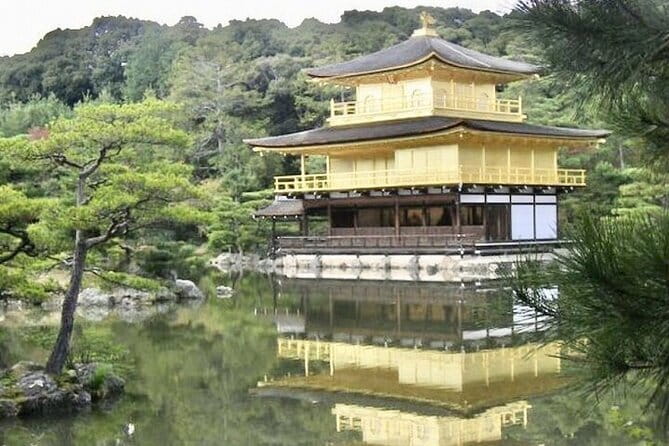
Next up is Kinkakuji (Golden Pavilion). The appeal is easy to understand: the upper floors are coated in gold leaf, and the whole pavilion is designed to be seen in relation to the pond and garden landscape.
But the deeper value here is the context your guide can give you. Kinkakuji was originally called Rokuonji and served as Ashikaga Yoshimitsu’s retirement residence. After Yoshimitsu died in 1408, the shogun converted it into a Rinzai Zen temple, and later Yoshimasa built Ginkakuji (the Silver Pavilion) across the city—so Kyoto’s northern and eastern “pavilion stories” connect directly.
Admission note: not included here. This is one of those stops where I think you’ll feel your money’s worth if you’re interested in how Kyoto’s temple culture ties into power and patronage.
Fushimi Inari Taisha: Thousands of Torii Gates and Mount Inari (233 m)
If you only have one shrine you want to experience fully, make it Fushimi Inari Taisha. The famous part is the thousands of red torii gates that line paths climbing behind the main shrine structures. It’s instantly recognizable, but what makes it memorable is the way the path system pulls you forward.
The hike isn’t just scenic—it’s also meaningful. The trails lead into the forested Mount Inari, which rises to 233 meters on the shrine grounds. Inari is the Shinto god of rice, and foxes are believed to be Inari’s messengers, so fox statues show up repeatedly along the grounds.
A fun detail your guide can help stitch together: this site’s history goes back to a time before Kyoto became the capital in 794, so it’s not just a “Kyoto postcard shrine,” it’s something older that became part of the city’s identity.
Admission note: listed as free. That’s a rare win in an itinerary full of extra fees.
Other Kyoto tours and experiences to compare
Kiyomizudera: The UNESCO Temple and Its 13-Meter Wooden Stage Views
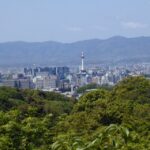
Kiyomizudera is one of Kyoto’s most famous temples for a reason: the main highlight is its wooden stage. It protrudes 13 meters over the hillside from the main hall, which means you’re not just looking at temple buildings—you’re getting a view over the trees and the valley below.
The temple’s name, Pure Water Temple, comes from the Otowa Waterfall on the hillsides east of Kyoto, where the temple was established in 780. It’s also a UNESCO World Heritage site since 1994, and your guide can connect why that UNESCO designation matters: this isn’t only about one pretty scene, it’s about preserving a type of historic temple experience.
Timing can matter here because the stage views are where people want to stand and look around. This is a place where I’d keep your expectations flexible; don’t plan to “rush” the view. Let it take the time it needs.
Admission note: not included.
Ginkakuji (Silver Pavilion): A More Subtle Kyoto Than Kinkakuji
Ginkakuji is often treated as the “cousin” to Kinkakuji, and that’s fair—but it’s also worth seeing on its own terms. The Silver Pavilion was tied to Ashikaga Yoshimasa, who built his retirement estate there in 1482, modeling it after Kinkakuji. After Yoshimasa’s death in 1490, it became a Zen sanctuary.
The story gets interesting with culture. Because Yoshimasa was known as a patron of arts and craftsmanship, the temple is linked to what people call Higashiyama Culture—different from the earlier Kitayama Culture connected to Yoshimitsu. In plain terms: this is Kyoto’s creative class shaping what you see.
The “less flashy” feeling can be exactly what you want after Golden Pavilion. If you’re temple-fatigued halfway through the day, Ginkakuji can feel like a slower, calmer landing.
Admission note: listed as free.
Sanjusangendo: 1001 Kannon Statues Inside a 120-Meter Hall
Sanjusangendo is the stop where Kyoto flips from architecture to scale. The highlight here is its 1001 statues of Kannon, the goddess of mercy, arranged so the hall feels like a living wall of devotion.
This temple has long history and long rebuilds. It was established in 1164, and a century later it was changed after the original structure was destroyed by fire. The hall measures 120 meters, and it’s described as Japan’s longest wooden structure, which helps explain why the space hits you fast once you’re inside.
Even the name has a technical detail: Sanjusangendo refers to the “thirty-three intervals” between columns at the back, a measuring method used for building size. Your guide can turn that into something you can actually notice when you’re there.
Admission note: not included.
Gion Corner: Geisha Neighborhood Energy Without Needing Fancy Tickets
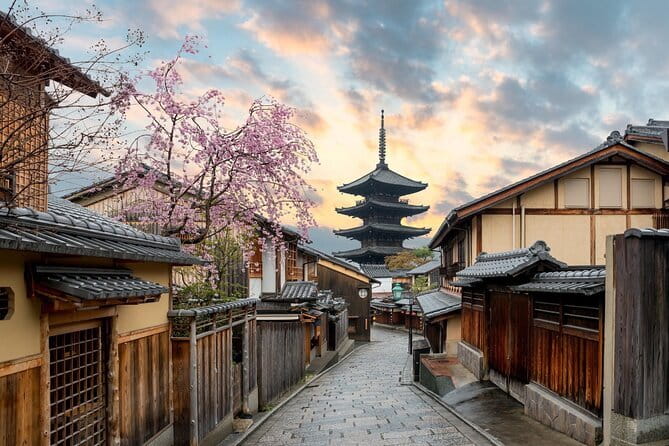
After temples, you get Kyoto’s living culture in Gion. The focus here is Gion Corner, where you’ll be near the classic stretch of Shijo Avenue between the Kamo River and Yasaka Shrine.
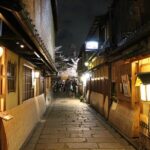
This is where the atmosphere matters. Shops, restaurants, and ochaya (teahouses) cluster around the area, and the neighborhood is known for entertainment connected to geiko and maiko. You’ll also see the famous merchant house architecture, machiya, with narrow fronts (about 5 to 6 meters) and long depths (up to about 20 meters). That shape isn’t random—it relates to how property taxes were historically calculated based on street frontage.
If you’re photographing, this is a good place to ask your guide for what to look for: signage, alley lines, and the details that make Kyoto feel distinct rather than generic.
Admission note: listed as free.
Nishiki Market: Kyoto’s Kitchen for Snacks, Sweets, and Practical Shopping
Nishiki Market is where you turn your guided day into personal fuel. It’s a narrow shopping street about five blocks long, lined with 100+ shops and restaurants, and it’s nicknamed Kyoto’s Kitchen because the focus is food.
What I like about this stop is that it’s not just sightseeing. It’s built for tasting and buying: fresh produce, knives and cookware, seasonal items, pickles, dried seafood, Japanese sweets, and sushi. Even if you don’t want a full meal, you can usually piece together small bites that won’t require a reservation.
The vibe is pleasant but busy, so think of it as a “move, sample, buy, repeat” hour rather than a slow sit-down experience. If you plan to do souvenirs, this is also one of the easiest places to shop without crossing the whole city.
Admission note: listed as free.
How the $525.87 Group Price Works (And When It’s Worth It)
The math is simple, but the decision is about how you’ll use the guide time. At $525.87 per group up to 6, you’re effectively paying for:
- a private English-speaking guide
- a private air-conditioned vehicle (with WiFi)
- about 8–10 hours of coordinated pacing across multiple neighborhoods
If you split with a full group of six, the guide and vehicle cost per person drops a lot, and you can treat admission fees as the only add-on. If you’re traveling as a couple or solo, admission fees and excluded meals (coffee/tea, lunch, dinner) weigh more on the value side.
Also note: several stops list admission ticket not included, so your “total day cost” will likely climb with temple and hall fees even if some shrines/temples are free. That doesn’t make the tour bad—it just means you should budget for it so there are no surprise feelings at the entrance.
One more value check: the itinerary covers eight big stops. That’s great if you want a full highlights day. If you already know exactly what you want and you’re confident navigating Kyoto on your own, a private tour can feel expensive.
Making This Day Actually Feel Custom
The point of a customizable private tour is control. With this one, you can shape your day around what you care about—temples, culture, shopping, or history—rather than taking whatever schedule happens to be pre-set.
Here’s how I’d use the flexibility:
- If you’re “temple-first,” spend a bit more time leaning into the major pavilion/shrine storytelling stops and treat markets as a quick palate break.
- If you’re “food and neighborhoods,” make Nishiki Market and Gion the anchor and keep temple stops timed so you’re not rushing through Kiyomizudera and Sanjusangendo.
- If crowds are a concern for your group, ask your guide how to sequence within the framework you have.
In the feedback, the happiest experiences seemed to come from guides who handled both history and practical pacing—helping people move through crowds, setting up smart photo moments, and keeping the day smooth. In particular, Malik and Charith were named as standout guides for knowledge, responsiveness, and planning.
A Real-World Caution: Guide Fit and Day-of Reliability
I’ll be honest about the risk side. A couple of notes were unhappy with guide style and perceived value—one mentioned the guide not matching expectations for energy and another said marketing hype didn’t match what they felt on the day. There was also a complaint about a last-minute cancellation, which is unusual but worth treating seriously.
My practical advice: once you book, confirm your pickup details early and make sure you have a reliable way to contact the provider on the day. If you’re planning around a fixed schedule (hotel check-out, train departure, or a special appointment), keep a bit of buffer in your own plan.
Should You Book This Private Kyoto Day Tour?
Yes, if you want a structured highlights day with a private guide and you value having someone handle routing and explanation while you relax. This tour makes the most sense for first-timers who want major Kyoto locations in one go, families who appreciate practical help on the move, and groups of up to six who can split the group price.
Don’t book expecting all admissions to be included and free. Several of the biggest stops are listed as not included, and meals like lunch and drinks are also not part of the package. If you’d rather build your own route from scratch and you’re comfortable navigating Kyoto independently, the private portion may feel pricey.
If your top priorities are Kinkakuji, Fushimi Inari, Kiyomizudera, and Gion/Nishiki, this itinerary hits a lot of Kyoto’s “must see” areas without making you play transportation Tetris all day. If guide quality matters most to you, I’d keep an eye on which guide you’re assigned and communicate your interests clearly before the day.
FAQ
How much does the private Kyoto custom tour cost?
It costs $525.87 per group, for up to 6 people.
How long is the tour?
The duration is approximately 8 to 10 hours.
What time does the tour start?
Start time is 8:30 am.
Is pickup offered?
Yes, pickup is offered.
Is this tour private?
Yes, it’s a private tour/activity, and only your group participates.
What’s included in the price?
Included: an air-conditioned vehicle, WiFi on board, and an English-speaking guide.
Are admission tickets included?
Not all admissions are included. The information provided lists admission ticket not included for several stops, with Fushimi Inari Shrine marked free and Ginkakuji marked free.
Are coffee, tea, and meals included?
No. Coffee and/or tea, lunch, and dinner are not included.
Is there onboard WiFi?
Yes, WiFi is included on board.
What is the cancellation policy?
Free cancellation is available up to 24 hours in advance for a full refund.
More Guided in Kyoto
More Tours in Kyoto
More Tour Reviews in Kyoto
Just added: more Kyoto tours to browse




VIP, compared.
 ★ 4.6Private Highlights Tour with Guide and Luxury VehicleFrom $383316 reviews
 ★ 5.0Luxury Kyoto 1-Day Private Car Tour with Nara & Osaka OptionsFrom $18561 reviews
 ★ 4.8Private Tour/Luxury Vehicle with Guide & photographerFrom $40735 reviews
 ★ 4.7Kyoto Day Tour with Certified Tour Guide & Luxury vehicleFrom $49024 reviews
 ★ 5.0The Kyoto VIP Experience!From $49220 reviews
 ★ 5.0Kyoto & Nara: Private Day Tour by luxury Vehicle & English GuideFrom $32312 reviews
 ★ 5.0Craig’s Kyoto Private Luxury Alphard Tour / The Early RiserFrom $23510 reviews
 ★ 5.0Kyoto Luxury Sake, Whisky and Cocktail TourFrom $2904 reviews
Browse the lists this tour appears in