
Reviewed · KYOTO CRAFT & CALLIGRAPHY WORKSHOPS
Private Japanese Calligraphy in Kyoto – Learn Shodō with a Master
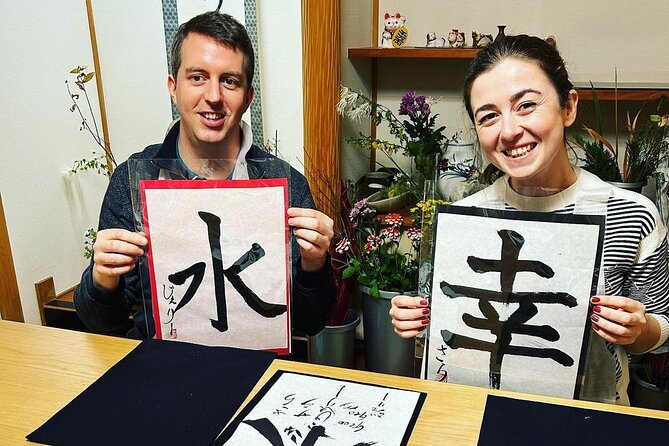
One brushstroke at a time, Kyoto slows down. This private Shodō calligraphy lesson is held in a calm Kyoto home, with master Aya (55+ years experience) focusing on you and your group. What makes it especially interesting is that you don’t just copy a character—you learn how the brush moves, then create a souvenir by writing a kanji of your choice and adding your name.
Two things I really like: first, it’s truly private, so the teacher can correct your grip and stroke in real time. Second, you leave with a finished piece of calligraphy made with the tools and paper provided. The main thing to watch is etiquette and timing: you’ll be in a tatami room, so you need clean socks, and if you’re more than 15 minutes late, the class can’t start and refunds aren’t offered.
In This Review
- Quick hits before you go
- Shodō in a Kyoto home: why this feels personal
- The 60-minute lesson: what happens step by step
- The warm-up: learning stroke control
- Choose your kanji, then add your name
- Tools and paper are handled for you
- You leave with finished calligraphy
- Meet Aya and her home-studio setup near Nijō Castle
- What you’ll learn (and what you’ll actually notice in your ink)
- Stroke order and brush movement
- The “mindset” part
- Your finished kanji and name
- Price, value, and the real question: is 1 hour enough?
- Who this class suits best (and who should think twice)
- Practical tips so your lesson goes smoothly
- Get your socks right
- Arrive with cushion time
- Expect a supportive beginner rhythm
- Come prepared to slow down
- Don’t overplan the rest of your day
- Should you book this Kyoto calligraphy class?
- FAQ
- How long is the private Japanese calligraphy class?
- Is it a private class or a shared group experience?
- What do I take home at the end?
- Do I need to know Japanese calligraphy before I go?
- What are the sock and tatami rules?
- Can children participate?
- What if I arrive late?
Quick hits before you go
- Private lesson with Aya: full attention from a calligraphy master with over 55 years of experience.
- Correct brush technique: you learn stroke order and movement, not just what the final character looks like.
- Choose your own kanji: pick a character you like, then add your name in Japanese.
- Take-home artwork is included: tools rental and paper are provided, and you keep your finished piece.
- Tatami rules matter: clean socks are required; barefoot tatami entry isn’t permitted.
- Plan for finding the place: it’s near transit and close to Nijō Castle, but map pins can be a little confusing—use the provided directions.
Shodō in a Kyoto home: why this feels personal
Kyoto is full of cultural activities that are staged for tourists. This one is different because it’s in a private home setting, with a dedicated studio space for the lesson. That matters because calligraphy isn’t just visual. It’s controlled, quiet, and physical—your posture, breath, and pressure all show up in the ink.
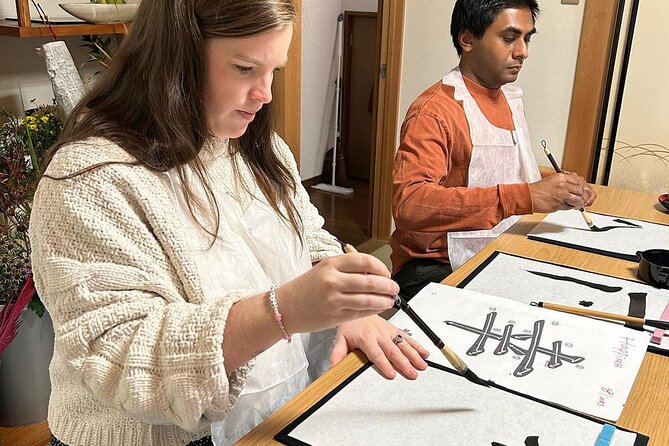
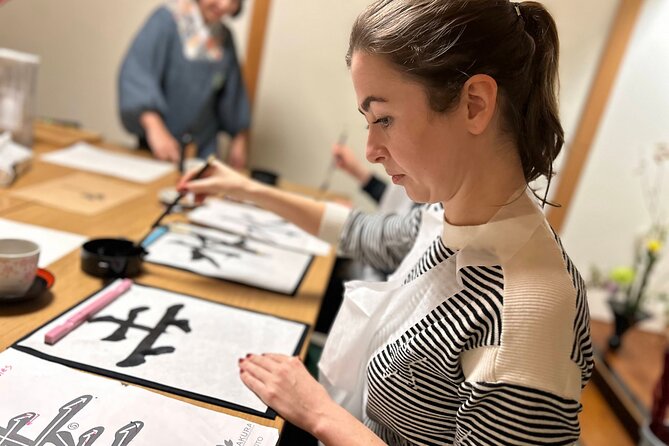
In this class, you’re not following a script with a crowd. It’s set up so Aya can watch how you hold the brush and help you adjust as you go. That one-on-one attention is the big value move here. Even if you’ve never touched a brush, the lesson is built for beginners and still feels “real,” not watered down.
You also get a bit of cultural context along the way. Many people think calligraphy is mostly aesthetics. Here, you’ll see how brush strokes connect to mindset and craft, and you’ll get some history in the middle of learning the technique. It makes your final piece feel earned.
Make something by hand in a Kyoto workshop
The 60-minute lesson: what happens step by step
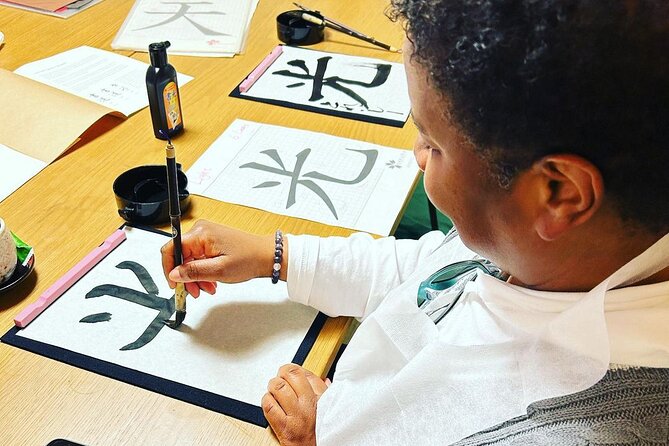
You’re signing up for about 1 hour, so everything moves at a good pace. The format is simple: you arrive, meet the host team, and then you’re guided through the basics of Shodō before you write your own artwork.
Here’s how the session generally flows:
The warm-up: learning stroke control
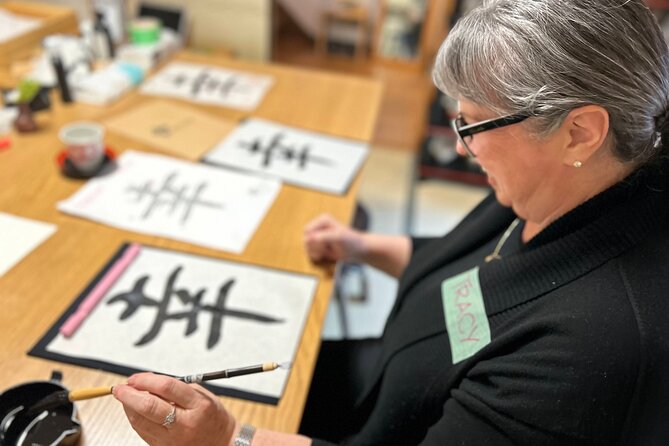
You start by practicing the correct brush movements needed for kanji. This is where a patient teacher matters most. If you try to force a character without learning how the brush should move, ink blots and the strokes look stiff. With direct guidance, you learn how to create smoother line work and better rhythm.
Choose your kanji, then add your name
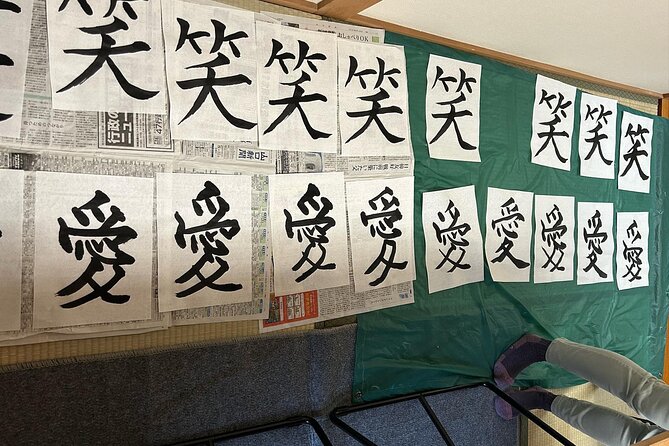
Once you understand the fundamentals, you pick a kanji character you want to write. Then you add your name in Japanese. That turns the class from a neat activity into something personal you’ll want to frame.
In short: first you learn the technique, then you apply it to create a keepsake.
Tools and paper are handled for you
You don’t have to bring your own supplies. The class includes tool rental and paper, and you’re guided through selecting and writing your character. That’s practical. It also keeps the lesson focused—no awkward shopping detours.
Other Kyoto tours and experiences to compare





You leave with finished calligraphy
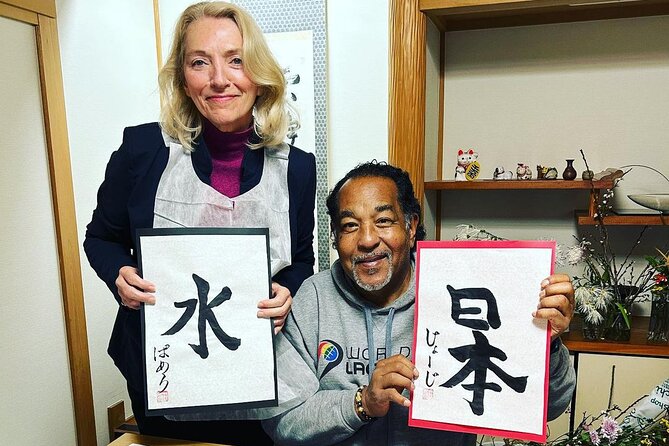
You walk away with your own artwork. The idea is not to make you practice endlessly—it’s to get you to a satisfying result in the time you have.
Meet Aya and her home-studio setup near Nijō Castle
The meeting point is SAKURA Experience Japanese Culture Nijo Home, located in Izumichō, Nakagyō Ward, close to public transportation. It’s also very near Nijō Castle (it’s about a short walk away in the area).
This is one of those locations where you’ll want to pay attention to directions. Some people find it tricky because Google Maps street views can show the wrong street-photo context. The map pin may be correct, but the visual cues might send you a block or two off. My advice: use the directions you’re given right before you go, and don’t rely only on what the street view picture looks like.
Inside, you’ll be in a tatami room, which brings one of the biggest etiquette points:
- wear or bring clean socks
- you can’t enter barefoot on tatami
That rule isn’t there to be difficult. It’s part of how people keep the space clean and respectful. Once you’re aware, it’s easy to handle.
Also, if you’re traveling in Kyoto during hot or rainy months, you’ll appreciate that the space can be comfortable—some classes in this style mention air-conditioning as a plus.
What you’ll learn (and what you’ll actually notice in your ink)
Calligraphy has a reputation for being mysterious. In this class, it becomes concrete fast. You’ll focus on things you can see in your own results:
Stroke order and brush movement
The teacher shows you how the brush should travel across the paper—direction, pressure, and how each stroke connects. Even beginners can start to feel the difference between making a line and making a character.
The “mindset” part
One of the more interesting aspects is how Aya connects brushwork to concentration and calm. You’ll often hear that Japanese calligraphy is quiet and deliberate, and that’s not just marketing. When you’re guided to slow down and commit to each stroke, the experience stops feeling like a craft project and starts feeling like a practice.
Your finished kanji and name
The final piece becomes a real souvenir. Not a photo souvenir. Not a postcard souvenir. Something you can hang at home that proves you learned a skill for an hour.
Price, value, and the real question: is 1 hour enough?
The price is $77.51 per person, and it’s a private class. On the surface, that might sound like a lot compared with group workshops you’ll see around Kyoto. But here’s the value logic:
- You’re paying for private coaching, not just participation.
- You don’t provide your own materials: tools rental and paper are included.
- You leave with a finished piece you can frame or display.
The time limit does matter, though. One hour is enough for a beginner to learn core stroke movement and produce a personal result. But if you have a very ambitious goal—like writing multiple long phrases or spending lots of time perfecting—this format may feel short. The class is designed to be efficient and focused.
If you want a low-pressure, high-reward souvenir that doesn’t take half a day, this hits the sweet spot.
Who this class suits best (and who should think twice)
This is a great fit for most adults and older kids who want an authentic cultural activity. It’s also a good match for rainy-day planning in Kyoto, because you’re indoors in a calm setting and you’re not battling weather for viewpoints.
That said, there are clear limits:
- Children under 12 can’t be accommodated to keep the learning environment quiet.
- If you’re the type who needs lots of “free time” or wandering during the activity, note that this is a lesson with clear structure.
Who usually loves it:
- beginners who want step-by-step guidance
- travelers who enjoy small, local experiences over big tourist shows
- couples or small groups who can benefit from full attention from the instructor
Who might not love it:
- people who are late-prone and don’t like rule-based experiences (tatami socks + strict start time)
- families expecting a kids-focused, high-activity class
Practical tips so your lesson goes smoothly
These are the details that actually help you enjoy the class instead of worrying about logistics.
Get your socks right
Bring clean socks. The tatami rule is taken seriously. Plan for it like it’s a museum expectation, not a suggestion.
Arrive with cushion time
You’ll need to be on time because if you arrive more than 15 minutes late, the class can’t start and refunds aren’t available. That’s not the time to try to find a side street after getting lost.
Expect a supportive beginner rhythm
Aya is set up to teach beginners. Many people find the atmosphere gentle and encouraging—she guides you without making you feel like you’re failing. Your job is just to follow the instructions and keep your strokes steady.
Come prepared to slow down
Calligraphy rewards patience. If you rush, your lines will show it. If you breathe and commit to each stroke, you’ll likely be surprised at how good your first real kanji looks.
Don’t overplan the rest of your day
Because it’s a private session, it’s best treated as a focused block. If you schedule a long hike or tight reservation right after, you might feel rushed.
Should you book this Kyoto calligraphy class?
I’d book it if you want a real cultural skill you can take home in your hands. The biggest reasons: the private attention, the clear beginner-friendly teaching, and the fact that your finished calligraphy is included—so you’re not leaving with only a memory, you’re leaving with something you can display.
Skip or think twice if your schedule is fragile or if you can’t follow rules like the tatami socks and strict start timing. Also, if you’re expecting a long, performance-style cultural tour, this is instead a focused lesson that trades sightseeing for hands-on craft.
If you’re in Kyoto and you want one activity that feels calm, personal, and genuinely Kyoto, this is a strong choice.
FAQ
How long is the private Japanese calligraphy class?
The class runs for about 1 hour.
Is it a private class or a shared group experience?
It’s a private class, with only your group participating and the instructor giving full attention.
What do I take home at the end?
You’ll take home your finished calligraphy artwork. The class also includes tools rental and paper, so you can create the piece during the lesson.
Do I need to know Japanese calligraphy before I go?
No. The class is designed for beginners, and you’ll learn the correct brush movements and how to write kanji, including how to add your name in Japanese.
What are the sock and tatami rules?
You need to wear or bring clean socks. Entering the tatami room barefoot isn’t permitted.
Can children participate?
Children under 12 can’t be accommodated to maintain a quiet learning environment.
What if I arrive late?
If you arrive more than 15 minutes late, the class can’t be offered and refunds aren’t available.
More Private in Kyoto

More Tour Reviews in Kyoto



More Kyoto Workshops to Try


Just added: more Kyoto tours to browse





Kyoto Craft & Calligraphy Workshops, compared.
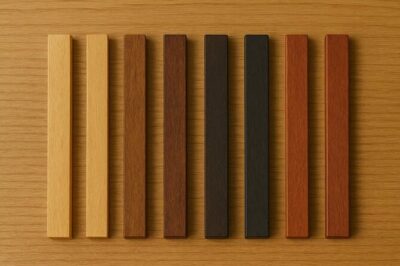 ★ 5.0Chopsticks Making Workshop in Gion with Engraving OptionFrom $15958 reviews
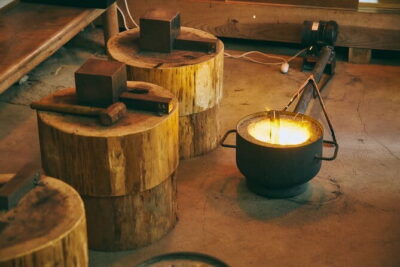 ★ 4.8Authentic knife making experience at a blacksmith in KyotoFrom $154350 reviews
 ★ 5.01-Hour Japanese Archery Experience in KyotoFrom $46176 reviews
 ★ 5.0Calligraphy class at Buddhist temple in city centerFrom $55167 reviews
 ★ 5.0Roketsu dyeing experience: M course Roketsu Dyeing ExperienceFrom $25163 reviews
 ★ 4.9Japanese Archery Workshop with Experienced InstructorFrom $38132 reviews
 ★ 4.8Japanese Calligraphy ClassFrom $5189 reviews
 ★ 5.0TAIKO, Japanese Drum Experience from KyotoFrom $11586 reviews
Browse the lists this tour appears in