
Reviewed · GION & GEISHA DISTRICT TOURS
Private Dinner with a Geisha
Gion turns into your living room for the night. This private dinner pairs a guided stroll around the geiko district with a reserved meal where a geiko or maiko joins you and entertains. It’s one of those Kyoto experiences that feels like culture, not a performance you watch from across the room.
Two things I really love: the way the evening gets explained by your English-speaking guide (often Mia), and the fact that dinner isn’t just food, it’s part of the conversation. In particular, the kaiseki-style courses set the tone: seasonal, multi-course, and served in a traditional rhythm that makes it easier to ask questions as the night unfolds.
One consideration before you book: dinner is traditional and can be hard to customize. If you’re picky, vegan/vegetarian, or very sensitive to seafood, you’ll want to flag dietary needs early, because the meal can be a set menu.
In This Review
- Key highlights worth knowing
- Why a geiko or maiko dinner in Gion feels different
- Meeting at Minamiza and timing your 5:00 pm start
- The Gion walk: what your guide points out before dinner
- Kaiseki dinner in a traditional room: the meal is part of the story
- The geiko or maiko accompaniment: conversation, questions, and personal stories
- Dinner-time entertainment: singing, instruments, and dance
- Price and value: why $381.49 per person can be worth it
- Drinks, age limits, and what to do if your group wants alcohol
- Food fit: who will love the kaiseki and who should think twice
- Who this private dinner is best for
- Should you book this private dinner with a Geisha in Kyoto?
- FAQ
- Where is the meeting point and when does the tour start?
- How long is the private dinner experience?
- Is this a private tour?
- What’s included with dinner, and is it different for the tea house option?
- What kind of entertainment should I expect during the meal?
- Can the operator handle dietary requirements?
- Is the tour refundable if I cancel or need to change dates?
Key highlights worth knowing
- Private access in Gion: you’re guided through the geiko district first, then welcomed into a private dining setting.
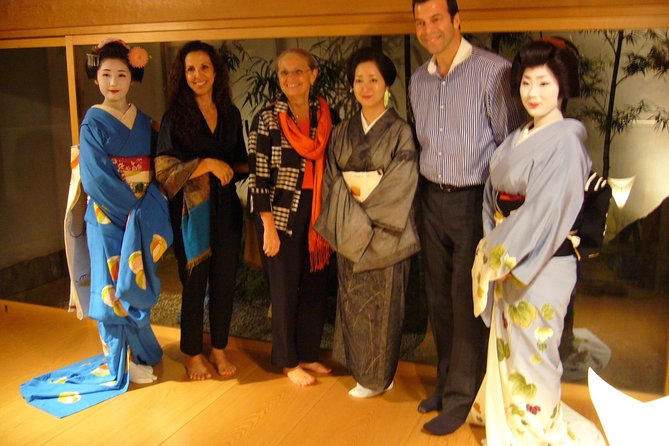
- Conversation with a maiko or geiko: you get time to ask questions and hear personal perspectives on traditions.
- Kaiseki-style dinner: multiple courses (tempura, seafood, vegetables are part of what’s typically served).
- Dinner-time entertainment: singing, musical instruments (often including shamisen in this setting), and dance.
- Tea house option adds drinks: if you choose the private tea house, sake and beer are included.
- Your guide sets the tone: people consistently praise the clarity and energy of guides like Mia in English.
Why a geiko or maiko dinner in Gion feels different
Kyoto’s geiko and maiko world is often treated like a mystery from the outside. Here, you’re not just seeing the signs of the craft, you’re getting context while you sit down to eat. That changes how you read everything around you in Gion.
The biggest difference is the mix of structure and spontaneity. You’ll have a guided walk and a clear meal plan, but the geiko/maiko accompaniment is interactive—talk, questions, and then performance during dinner. It turns the evening into a real exchange, not a scripted show with a Q and A you can’t control.
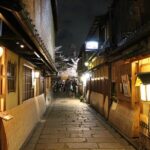
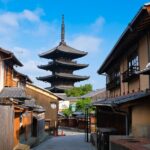
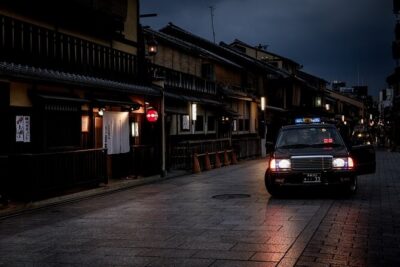
More evenings along the lantern-lit lanes of Gion


Meeting at Minamiza and timing your 5:00 pm start
Your evening begins at 5:00 pm at the main gate of Minamiza Kabuki Theatre, facing Shijo Street. It’s a smart start time for Gion: the light is changing, the streets feel lively without being fully night-noisy, and you’re not rushing through a day’s worth of sightseeing.
Plan to arrive a few minutes early. This experience is built around a set schedule and a prearranged start, and you’ll want to settle in before the walk begins (or before you head straight to the dinner venue, depending on your option).
Also note: this is a private tour/activity, meaning it’s meant for only your group. That makes punctuality even more important, because there’s no benefit to everyone waiting while you hunt for the meeting point.
The Gion walk: what your guide points out before dinner
If you choose anything beyond the casual dinner option, you’ll start with a walking tour in Gion. You’ll meet your guide at Minamiza, then head through the historic district with an expert English-speaking cultural guide.
This part matters more than it sounds. Gion can look like a beautiful postcard, but you’ll get tools to understand what you’re seeing: how the district is organized, why certain traditions exist, and how geiko/maiko life fits into daily Kyoto culture. Many guests highlight that the guide’s explanations make the myths easier to sort from reality.
You’ll also see how the evening’s tone is set on the street. Your guide helps you figure out what to listen for and what to notice, so when the conversation starts at dinner you’re not starting from scratch.
Kaiseki dinner in a traditional room: the meal is part of the story
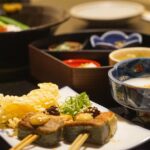
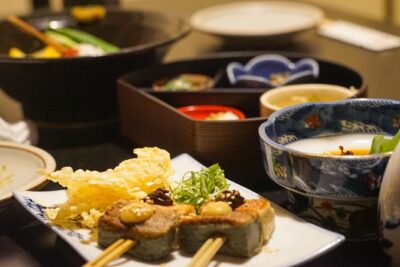
Dinner is the heart of the experience, and it’s typically a kaiseki-style meal with multiple courses. Expect a seasonal flow built around tempura, seafood, and vegetables, with dishes served course-by-course rather than all at once.
If you pick the private tea house option, you’ll also get drinks included—specifically sake and beer. If you don’t pick that option, drinks are available for purchase instead. One practical note: Japan’s minimum drinking age is 20, so plan accordingly if your group includes younger adults.
The best way to get value from the meal is to go in hungry and flexible. Reviews point out that the food is often praised as traditional and delicious, but the meal can be a fixed format. If your enjoyment depends on strict dietary rules, this is where you need to be careful.
The geiko or maiko accompaniment: conversation, questions, and personal stories
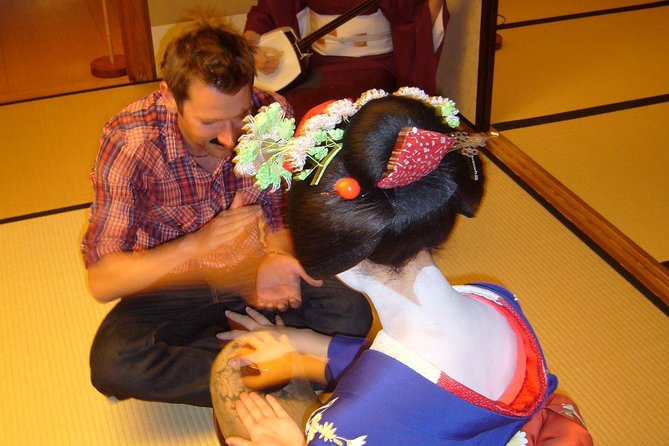
The goal here isn’t just to watch talent—it’s to talk with it. During dinner, the geiko, maiko, or both will entertain you and join the conversation, with your guide translating when needed.
What you should look forward to is personal perspective. Guests often mention asking about daily life, what it takes to become a geiko, and details like kimono routines and training. That kind of talk lands differently because it’s not a museum lecture; it’s a back-and-forth conversation in a traditional setting.
Some evenings also include little interactive moments. People describe playing games during dinner and having a light, friendly rhythm to the entertainment—while still keeping the experience respectful and traditional. It’s one reason this works so well for couples and families who want more than a passive dinner.
Other Kyoto tours and experiences to compare



Dinner-time entertainment: singing, instruments, and dance
Entertainment happens during the meal. You can expect singing, musical instruments, and dance, timed so you’re still eating rather than sitting through a full separate show.
Depending on the option and the room setup, the performance space can feel tight. Some guests found the dance portion brief or limited by the seating arrangement, which is worth keeping in mind if you’re expecting theater-style staging with lots of room for movement.
Still, the overall entertainment gets strong marks, especially when you get to see an experienced performer close up. Many descriptions point to elegant, composed artistry, with the added boost of Q and A and games that make the performance feel connected to you rather than happening at you.
Price and value: why $381.49 per person can be worth it
Yes, it’s pricey at $381.49 per person. But value here isn’t only about dinner costs—it’s about access and the full package: professional guide, dinner, geiko or maiko accompaniment, and a dance performance during dinner time.
What you’re paying for is extremely hard to replicate on your own. A geiko/maiko encounter is tightly managed, and this experience is designed around traditions that aren’t open to the public in the same way. Add a guided walk and English interpretation, and you’re effectively buying time, context, and a rare kind of hospitality.
That said, treat the meal as part of the deal. If food is a major priority and you’re not comfortable with seafood or traditional preparations, the value equation can flip quickly. One of the most useful decisions you can make is choosing the option that best matches your group’s appetite for traditional dining.
Drinks, age limits, and what to do if your group wants alcohol
If you choose the private tea house option, sake and beer are included. Japan’s minimum drinking age is 20, so if you’re bringing younger adults, plan on non-alcoholic options or check with your guide ahead of time.
If you choose the standard restaurant/tea house option without included drinks, you can buy drinks during the meal. Either way, keep the pacing in mind: this is a cultural evening with conversation, performance, and a multi-course flow, so it doesn’t feel like a quick bar stop.
Food fit: who will love the kaiseki and who should think twice
For most people, this is a win because kaiseki is designed to be tasted slowly and enjoyed in sequence. Guests describe dishes as tasty and traditional, and the multiple-course format can make it easier to experience a variety of flavors in one sitting.
But this is not the kind of dinner where you can expect major substitutions. You can advise specific dietary requirements at booking, and that’s your best move. Still, based on reported experiences, fixed-menu realities can be tough for vegetarians or guests with strong restrictions, especially when seafood is part of the course plan.
If you’re adventurous with Japanese cuisine and you don’t mind seafood or fish-based dishes, you’ll likely feel like the meal supports the rest of the evening. If you’re a very picky eater, vegan, or have a strict allergy you need guaranteed accommodations for, I’d be cautious and treat this as a special-occasion gamble unless the provider confirms your exact needs.
Who this private dinner is best for
This works especially well for people who want culture with context. If you like understanding why traditions exist—training, etiquette, and the realities behind the myths—you’ll get a lot from the guided walk and the dinner conversation.
It’s also a strong choice for:
- couples celebrating something in Kyoto
- families with older kids/teens who can enjoy a slower, respectful evening
- anyone who wants a rare, close-up geiko/maiko experience rather than a show from a distance
If your group is mostly interested in food variety over traditional formality, or if you need strict dietary accommodations, you may find the experience stressful instead of fun.
Should you book this private dinner with a Geisha in Kyoto?
I’d book it if your top priority is a genuine, guided geiko/maiko encounter tied to a traditional dinner setting. The combination of Gion context, an English-speaking guide like Mia, and dinner-time entertainment with conversation is exactly the kind of Kyoto evening that’s hard to recreate.
I’d think twice if you’re strongly diet-restricted, extremely picky, or you’re expecting a long, big-stage dance performance with maximum room to move. In that case, the safest plan is to confirm what you can be served based on your dietary requirements before you commit.
If you do book, go with curiosity and come hungry. This is the type of night where you’ll remember not only the moment, but also the meanings your guide gives you while you’re sitting right there in Gion.
FAQ
Where is the meeting point and when does the tour start?
You meet in front of the main gate of Minamiza Kabuki Theatre, facing Shijo street, in Kyoto. Start time is 5:00 pm.
How long is the private dinner experience?
The duration is about 3 hours 30 minutes (approximately).
Is this a private tour?
Yes. It’s listed as a private tour/activity, meaning only your group participates.
What’s included with dinner, and is it different for the tea house option?
Dinner is included. Drinks are only included if you select the private tea house option (sake and beer); otherwise, drinks are available to purchase.
What kind of entertainment should I expect during the meal?
During the meal, a geiko, maiko, or both entertain you with singing, musical instruments, and dancing.
Can the operator handle dietary requirements?
You’re asked to advise specific dietary requirements at booking. Because the meal is described as a traditional multi-course kaiseki format, it’s smart to communicate clearly when you book.
Is the tour refundable if I cancel or need to change dates?
No. This experience is non-refundable and cannot be changed for any reason. If canceled or amended, the amount paid is not refunded.
More Private in Kyoto

More Tour Reviews in Kyoto




Still in Gion? Keep Going

Just added: more Kyoto tours to browse








Gion & Geisha District Tours, compared.
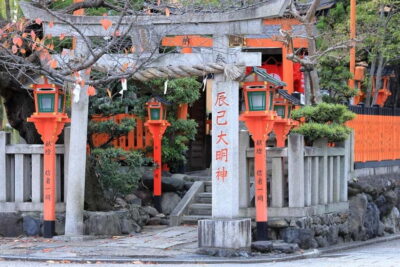 ★ 4.7Kyoto Geisha Walking Tour: Gion District & Hidden GemsFrom $253,273 reviews
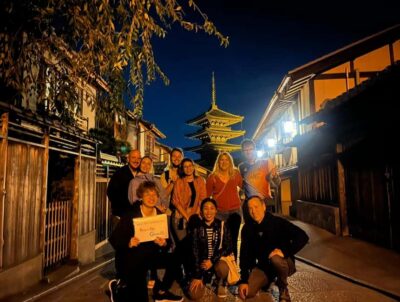 ★ 4.9Gion Magical Night Walking Tour with Geisha TriviaFrom $242,393 reviews
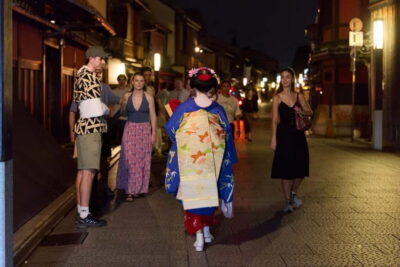 ★ 4.7Gion Geisha District Walking Tour – Stories of GeishaFrom $202,187 reviews
 ★ 4.9Best of Kyoto: Gion, Geisha, Pagodas & CobblestonesFrom $242,058 reviews
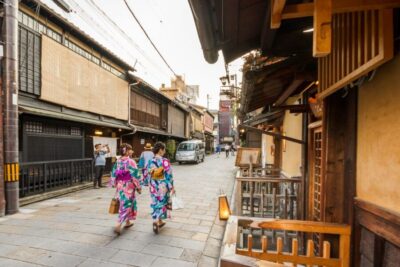 ★ 4.5Night Walk in Gion: Kyoto’s Geisha DistrictFrom $212,003 reviews
 ★ 5.0Kyoto Night Foodie Tour in Gion (9+ dishes + 6 Sake tastings)From $1631,762 reviews
 ★ 5.0Kyoto Gion Geisha District Walking Tour – The Stories of GeishaFrom $251,441 reviews
 ★ 5.0Kyoto Gion: 2-Hour Geisha Culture & History Walking TourFrom $231,186 reviews
Browse the lists this tour appears in