
Reviewed · GION & GEISHA DISTRICT TOURS
Kyoto Gion Geisha District Walking Tour – The Stories of Geisha
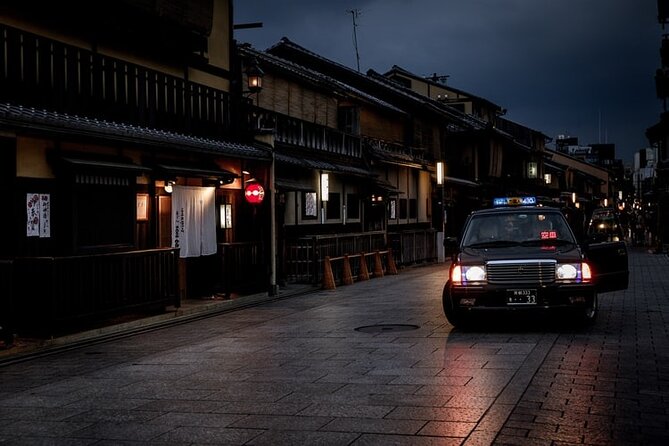
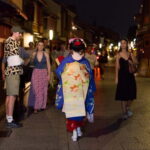
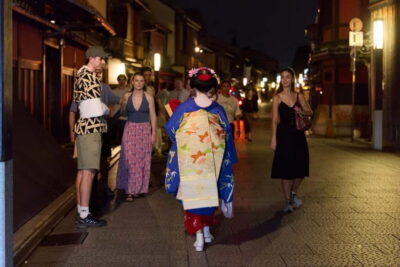
Gion looks different after dark. This small-group Kyoto walk focuses on geisha culture through real places and stories, with a smarter rhythm than daytime sightseeing. You’ll move through elegant streets while geisha and maiko head out to appointments, so the neighborhood feels lived-in rather than staged.
Two things I love about this experience are the small group size (max 15) and the way it’s paced for evening atmosphere. It also puts you in the right part of town after the biggest tourist crowds have gone, which makes the whole district easier to read.
One drawback to consider: it’s still a walking tour, and Kyoto evenings can get chilly fast. The tour is about 2 hours, so bring warm layers and expect steady time on your feet.
In This Review
- Key highlights at a glance
- Entering Gion at the hour most people miss
- Price and time: $25 for a focused 2-hour cultural walk
- Getting started at Ben’s Cookies Kyoto Shijo
- Stop 1: Izumo-no-Okuni and the kabuki connection
- A quick pivot to Minamiza and performance traditions
- Stop 2: Tatsumi Bridge and the Shinbashi-Gion vibe
- Stop 3: Hanamikoji Street’s machiya-lined atmosphere
- Cultural center stop: Gion Corner as a fast guide to traditional arts
- Stop 4: Yasaka Shrine to close the loop
- The guide is the product: stories that answer your real questions
- What to expect on your walk (and how to get more out of it)
- Who this tour is best for
- Practical comfort checklist for a chilly Kyoto night
- Should you book the Kyoto Gion Geisha District Walking Tour?
- FAQ
- How long is the Kyoto Gion geisha district walking tour?
- How much does it cost?
- What is the group size limit?
- Where does the tour start and end?
- Are tickets mobile?
- What stops are included on the route?
- Is bottled water included?
- What happens if weather is poor?
- Is free cancellation available?
Key highlights at a glance
- After-crowds Gion stroll: see the district when it’s calmer and more atmospheric
- Max 15 people: easier questions, better attention, less chaos on narrow lanes
- Geisha-to-culture context: you don’t just pass buildings, you learn what they mean
- Landmark stops in walking order: from kabuki roots to Yasaka Shrine
- Guides with strong storytelling: many guides are praised for clear answers and friendly pacing
Entering Gion at the hour most people miss
Gion is famous, but daytime can feel like you’re touring a postcard stuck on repeat. This tour targets the opposite mood: the streets after dark, when the neighborhood slows down and you can actually notice details. The result is a walk that feels like cultural sightseeing with breathing room.
A big plus is the focus on geisha culture in context, not as a single celebrity spotlight. You’re learning about how geiko and maiko fit into Kyoto’s older entertainment world, and how the district’s spaces shaped that life. That framing makes the places you pass feel less random and more connected.
And because the group stays under 15, your guide can actually answer questions as you go. I like that because “Gion facts” are only half the value. The other half is understanding what you’re seeing and how to interpret it.
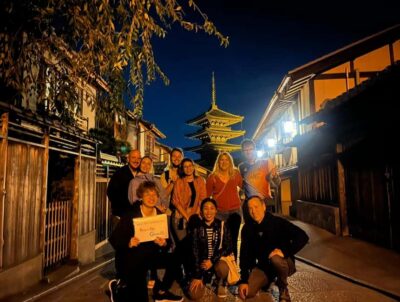
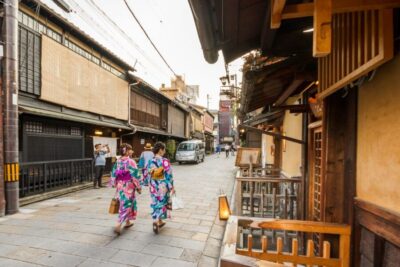
More evenings along the lantern-lit lanes of Gion
Price and time: $25 for a focused 2-hour cultural walk
At $25 per person for about 2 hours, you’re paying for guidance, storytelling, and a route designed to avoid the biggest crush. That’s decent value in Kyoto, where many activities either cost more or feel too general.
This isn’t marketed as a long museum visit. It’s a concentrated evening walk, so it works best when you want to get oriented fast. If you already plan to do Kyoto temples and gardens earlier in your trip, this fills a different niche: entertainment history, social customs, and the district’s geography.
Just note one practical point: bottled water isn’t included. If you’re sensitive to dry air or you walk at a brisk pace, grab water before you start.
Getting started at Ben’s Cookies Kyoto Shijo
The tour meets at Ben’s Cookies Kyoto Shijo, near Shijo in Shimogyo Ward, and ends at Yasaka Shrine in Gion. That end point matters. Finishing at a major shrine gives you a natural “destination feeling,” and it also helps you keep your evening plans flexible afterward.
Since the tour includes a mobile ticket, you won’t need to hunt for paper vouchers. That’s a small thing, but it reduces friction when you’re juggling train timing and a busy neighborhood.
One more reason the meeting setup works: you start on the west side of your evening route, then walk into the Gion area where the story really lives. It keeps the walk from feeling like you’re backtracking for the main sights.
Stop 1: Izumo-no-Okuni and the kabuki connection
The first landmark is the Statue of Izumo-no-Okuni, a bronze sculpture tied to Okuni, often associated with the early roots of kabuki theater. This is a smart opening stop because it gives you a cultural “origin point.” Even if you don’t know kabuki history, the guide’s explanation helps you connect later entertainment traditions to older performance arts.
Why this matters for you: it stops the tour from feeling like a set of charming street corners. Instead, it builds a timeline of Japanese performing culture. That makes the geisha district stories land better, because you’re not treating geisha culture like it came out of nowhere.
The only consideration here is that the stop itself is brief. This tour is designed to keep momentum and stay in the right evening light, so you’ll get context rather than a long deep-feel museum moment.
A quick pivot to Minamiza and performance traditions
Right after the Izumo-no-Okuni stop, the route includes Minamiza, a historic theater known for kabuki performances. Even with a short stop, it helps you see how entertainment spaces shaped what people valued—and what performers needed to support that world.
If you like tying cultural stories to physical places, you’ll appreciate this part. It’s the kind of connection that you can’t easily pull out of a brochure on your own.
For some people, theaters are where they want more time. Here, you’ll get the snapshot, not the full show experience. If you want a full kabuki performance, you’ll still need to book that separately—but this stop gives you the background so the theater world makes more sense afterward.
Other Kyoto tours and experiences to compare
Stop 2: Tatsumi Bridge and the Shinbashi-Gion vibe
Next up is Tatsumi Bridge, linked with the Shinbashi side of the broader Gion area. This is one of those places where the guide can point out subtle neighborhood cues: what roads and crossings meant, how districts grew around specific entertainment patterns, and why certain street lines mattered to everyday life.
This stop works well for you at night because you’re less distracted by crowds and more able to notice how the neighborhood flows. A bridge isn’t just scenery here; it’s a route marker inside the district’s geography.
The only practical drawback: nighttime walking means you’ll want to watch your footing and keep your attention on the guide. Some of these streets can be narrow or uneven, so don’t assume the pace is fully slow and leisurely.
Stop 3: Hanamikoji Street’s machiya-lined atmosphere
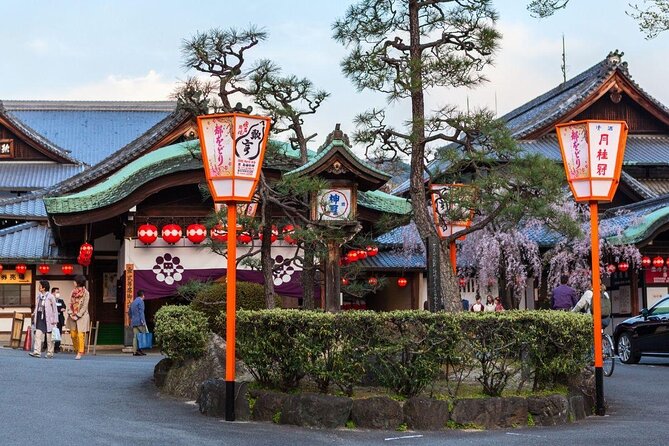
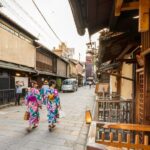
Then comes Hanamikoji Street, the classic Gion lane people recognize, but the tour helps you see past the obvious. You’ll learn what machiya houses and the street’s structure signal about the area’s traditions—especially the way commerce, hospitality, and performance culture shaped daily life.
What I like about this stop is that it’s both visual and interpretive. You can look at the buildings, yes. But you’ll also get a guide’s lens for why these facades and streets matter in geisha culture.
One consideration: Hanamikoji is still a famous street, even at night. The tour’s point is that it’s quieter than daytime, but it’s not empty. If you want photos, plan for respectful behavior. You’re in a real neighborhood, not a theme park.
Cultural center stop: Gion Corner as a fast guide to traditional arts
The tour includes Gion Corner, described as a cultural center and performance venue offering a condensed experience of traditional Japanese arts. This part is especially valuable if you’re the type of traveler who likes to understand what you’re watching—before you decide what you want to learn more about later.
Even when the stop is brief, it gives you a way to connect the dots between the broader performing-arts world and the specific geisha district tradition. In a short 2-hour window, that’s a big win.
If you prefer only “outdoor walking” sights, you might wish this segment were longer. But as part of an evening route, it keeps the tour grounded in culture rather than turning into pure street sightseeing.
Stop 4: Yasaka Shrine to close the loop
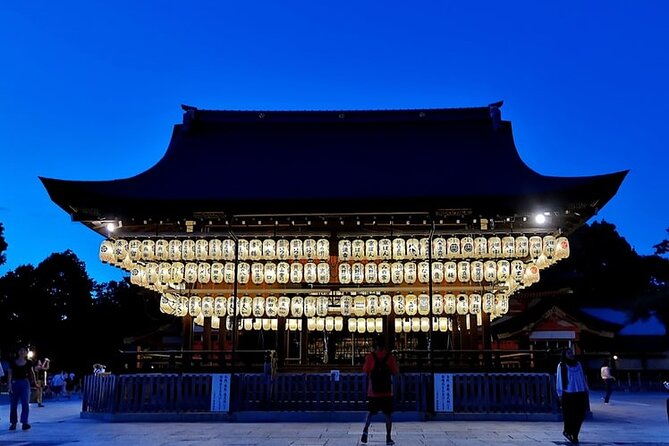
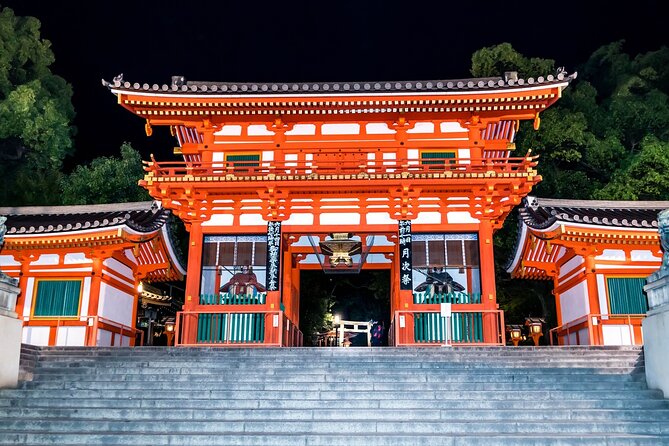
The final stop is Yasaka Shrine, one of the best-known Shinto shrines in the Gion area. Finishing here works because it ties the geisha district story back to Kyoto’s wider spiritual and cultural landscape.
You’ll likely feel a shift in atmosphere at the shrine compared to the lane-by-lane Gion walking. That contrast helps you reset your senses and makes the tour feel like a full evening arc: entertainment history first, then a broader cultural anchor at the end.
The only caveat is practical: shrines can be busy when events are happening. This tour ends at a major site, so you’ll want to be aware of your surroundings and keep things calm and respectful, especially when crowds gather.
The guide is the product: stories that answer your real questions
This tour stands or falls on the guide. And the reviews give you a clear pattern: guides are praised for friendly, down-to-earth delivery and for answering questions without making it feel like a lecture.
For example, you’ll see strong mentions of guides like Shin, Deborah, Melanie, Manuel, Joy, and Ben for being able to connect geisha history with present-day practice. People also talk about guides explaining details and even sharing practical tips like how to interpret the neighborhood’s “codes” so you’re not just wandering and guessing.
Other names that come up often include Nami, Tommy, Kenji, Adrian, Manny, Ikari, and Nikki. The common thread is clarity and engagement: the best moments aren’t just facts, they’re the explanations that make you understand what matters in the district.
If you’re going on your first Kyoto trip, this is one of the quickest ways to get real context. Book it early enough in your itinerary and you’ll carry the understanding into your later temple and district walks.
What to expect on your walk (and how to get more out of it)
You’re walking for about 2 hours after dark, through multiple points of interest in and around Gion. The pace is built around short stops and story-based connections, so it won’t feel like you’re stuck reading a sign at each corner.
Here’s what will make the experience better for you:
- Dress for cold. Kyoto can be crisp at night. Reviews specifically mention needing warm coats in winter.
- Bring a charged phone or camera. The tour is short, so you’ll want to capture the street scenes while the mood is right.
- Don’t overthink what you might see. The description focuses on geisha and maiko making appointments as you walk. You might spot signs of that life, but the main value is the guided context.
- Ask questions early. With a max group size, you can usually get answers without feeling rushed.
If you go expecting a performance, you may be slightly disappointed. This is a walking tour centered on stories and interpretation, not a guaranteed show. That’s not a negative if you want cultural understanding over a scripted spectacle.
Who this tour is best for
This experience suits a range of travelers, especially if you like culture that has real place-based context.
I think it’s a strong fit if:
- you’re visiting Kyoto for the first time and want a fast orientation to Gion
- you want an evening activity that doesn’t feel touristy in the worst way
- you prefer small groups and real conversation over large crowds
- you’re traveling with teens or mixed ages and need something educational but still fun
- you care about how traditions work in daily life, not just big museum facts
If you only want “top sights” in the shortest possible time, the route might feel like too many story stops. But if you enjoy narrative history, this style is exactly the point.
Practical comfort checklist for a chilly Kyoto night
Even when a tour feels simple, the comfort choices make a difference.
- Warm layers: Kyoto evenings can turn cold quickly
- Comfortable shoes: you’ll be walking steadily for about 2 hours
- Water: bottled water is not included, so plan to buy it nearby
- Mobile ticket ready: keep your phone accessible at the start
One more small tip: when you’re in Gion streets, keep your volume down and be careful with where you stop. The neighborhood is active, and your best photos often come from stepping aside rather than blocking paths.
Should you book the Kyoto Gion Geisha District Walking Tour?
If you want an after-dark Kyoto experience that teaches you how the district works—through places, performance culture roots, and geisha-world context—then yes, I’d book it.
This tour earns its high marks because it’s short, focused, and guided by people who can explain the why behind the streets. The max 15 group size is a real quality booster, and the after-crowds timing makes the whole area feel more readable.
Book it if you like small-group storytelling and want a smarter introduction to Gion than you’d get wandering on your own. Skip it only if you strongly prefer long museum-style stops or you don’t want any cold-weather walking at night.
FAQ
How long is the Kyoto Gion geisha district walking tour?
The tour lasts about 2 hours.
How much does it cost?
It costs $25.00 per person.
What is the group size limit?
The tour has a maximum of 15 travelers.
Where does the tour start and end?
It starts at Ben’s Cookies Kyoto Shijo (89 Shinchō, Shimogyo Ward) and ends at Yasaka Shrine (625 Gionmachi Kitagawa, Higashiyama Ward).
Are tickets mobile?
Yes, the tour uses a mobile ticket.
What stops are included on the route?
The walk includes stops such as the Izumo-no-Okuni Statue, Minamiza, Tatsumi Bridge, Hanamikoji Street, Gion Corner, and Yasaka Shrine.
Is bottled water included?
No. Bottled water is not included.
What happens if weather is poor?
The experience requires good weather. If canceled due to poor weather, you’ll be offered a different date or a full refund.
Is free cancellation available?
Yes. You can cancel up to 24 hours in advance for a full refund.
More Tours in Kyoto

More Tour Reviews in Kyoto


Still in Gion? Keep Going

Just added: more Kyoto tours to browse








Gion & Geisha District Tours, compared.
 ★ 4.7Kyoto Geisha Walking Tour: Gion District & Hidden GemsFrom $253,273 reviews
 ★ 4.9Gion Magical Night Walking Tour with Geisha TriviaFrom $242,393 reviews
 ★ 4.7Gion Geisha District Walking Tour – Stories of GeishaFrom $202,187 reviews
 ★ 4.9Best of Kyoto: Gion, Geisha, Pagodas & CobblestonesFrom $242,058 reviews
 ★ 4.5Night Walk in Gion: Kyoto’s Geisha DistrictFrom $212,003 reviews
 ★ 5.0Kyoto Night Foodie Tour in Gion (9+ dishes + 6 Sake tastings)From $1631,762 reviews
 ★ 5.0Kyoto Gion: 2-Hour Geisha Culture & History Walking TourFrom $231,186 reviews
 ★ 5.0Chopsticks Making Workshop in Gion with Engraving OptionFrom $15958 reviews
Browse the lists this tour appears in