
Reviewed · GION & GEISHA DISTRICT TOURS
Kyoto Night Foodie Tour in Gion (9+ dishes + 6 Sake tastings)
Gion at night is made for eating. I like how this tour turns Kyoto backstreets into a full meal, with 9+ dishes you eat as you walk. I also love the six sake tastings that come from three different types of local sake, so you get variety without needing to plan or book anything yourself.
One big consideration: this is not an allergy-safe tour. Food is prepared in kitchens outside the tour operator’s control, so you can’t count on substitutions if you have strict dietary needs.
In This Review
- Key things to know before you go
- Why Gion and Pontocho at Night Makes Sense
- Price and What You Get for $163.49
- The 3.5-Hour Flow: Where You’ll Walk and Why It Matters
- Starting Near Izumo-no-Okuni and Getting Oriented Fast
- Gion Shirakawa Area: A Night-Walk Before the First Bites
- Stop 1 in Gion: Obanzai-Style Kyoto Local Plates
- Stop 2 in Pontocho: Eating in a Famous Night Dining Corridor
- Final Stop at Kawaramachidori: Standing Bar Sake Tastings
- What the 9+ Dishes Really Do for Your Stomach
- Guides: The Human Part That Turns Food into Stories
- Dietary Restrictions: How to Handle Them Without Stress
- Weather and Comfort: Summer Heat Is Real
- Who This Tour Fits Best
- Should You Book This Kyoto Night Foodie Tour in Gion?
- FAQ
- How long is the Kyoto Night Foodie Tour in Gion?
- How many dishes and sake tastings are included?
- Where is the tour starting point?
- Where does the tour end?
- Is the tour suitable for people with allergies or special diets?
- Are there options besides alcohol at the final stop?
- How many people are in the group?
Key things to know before you go
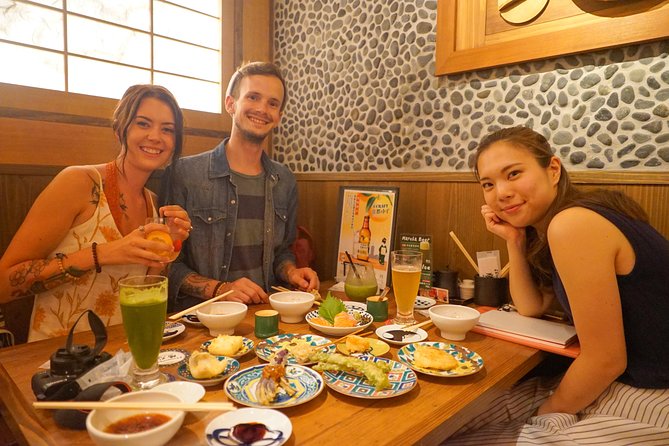
- Max 7 people keeps the dinner feel personal, not chaotic.
- Gion Shirakawa to Pontocho to Kawaramachidori gives you a real night-walk route through classic Kyoto areas.
- 9+ dishes is meant to be a full dinner, not a few tiny bites.
- Six sake tastings from three types of local sake helps you compare styles.
- Standing-bar sake at the end mixes Kyoto atmosphere with easy participation.
- It ends back where you started, so the night doesn’t leave you figuring out routes.
Why Gion and Pontocho at Night Makes Sense
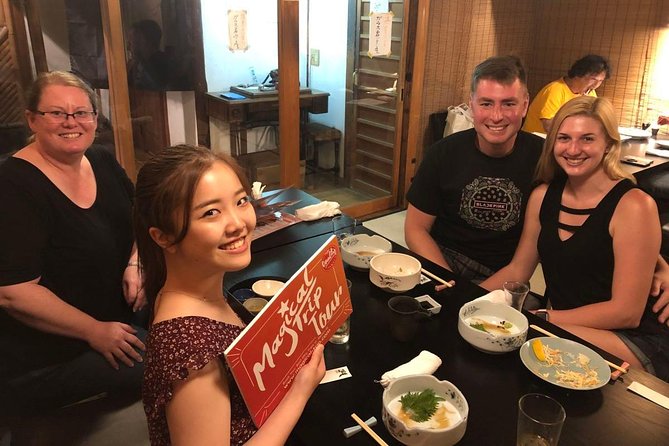
Kyoto can feel huge during the day, but at night it compresses into something easier: alleys, lantern glow, and restaurants that actually feel open and social. This tour is built around that shift. You walk through Gion and Pontocho as the neighborhood comes to life, then sit down (and sometimes stand) to eat and drink along the way.
I like the pacing. You’re not stuck in a single place waiting for the group. Instead, the route keeps your energy up while the food keeps your hunger down. And because the group is capped at 7, you get more time with your guide instead of being one voice in a crowd.
You’ll also get cultural context with your meal. That matters in Kyoto because food is tied to season, place, and routine. When you understand what you’re eating, the same dish tastes more interesting.
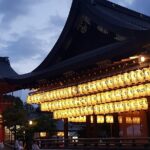
More evenings along the lantern-lit lanes of Gion


Price and What You Get for $163.49
Let’s talk value. $163.49 is not cheap, but it isn’t just you paying for a stroll and a couple of snacks either. The tour is positioned as a full dinner plus a structured sake session: 9+ dishes and six sake tastings. If you try to copy this on your own, you quickly hit three problems: finding places that will feed you as a plan, getting seated without guesswork, and learning what to order without making accidental mistakes.
You also avoid a lot of planning friction. The stops are chosen so the meal flows. Some stops are ticketed as part of the experience, and the last stop is listed with no admission ticket. The point is simple: you show up, follow the guide, and let the route do the heavy lifting.
The tour is also designed for a small group. In my experience, that’s where the price starts to feel more reasonable. When you’re not sharing restaurant space with 20 strangers, the evening feels more like dinner with an informed friend than a bus tour with chopsticks.
The 3.5-Hour Flow: Where You’ll Walk and Why It Matters
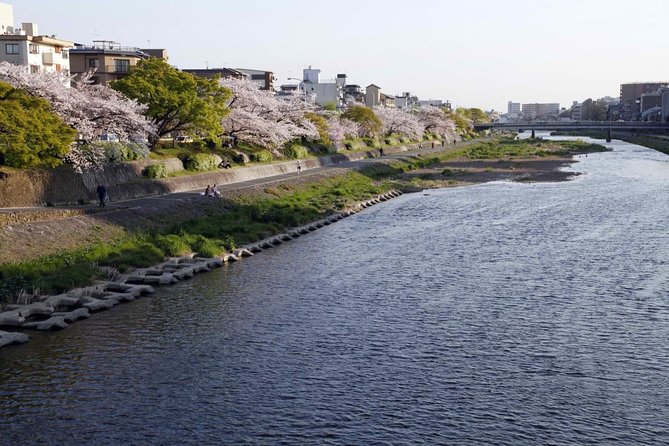
Expect about 3 hours 30 minutes of guided time. You’ll move between neighborhoods in Gion and Pontocho and then finish back at the meeting point.
There’s a practical advantage to the order. First you get your bearings around the Gion Shirakawa area. Then you head into Gion proper for a classic Kyoto food style. After that comes Pontocho, which is a famous dining lane area between the Kamo River and Kiyamachi Street. Finally, you end with sake at a standing bar near Kawaramachidori.
Why does this order help you? Because your eyes adjust as you go. Early on, you’re learning the neighborhood layout. Later, you’re relaxed enough to enjoy the meal without constantly scanning maps. And by the time you reach the final sake tasting, you’ve already built the appetite and the vibe.
Also, you’re walking at night. That’s obvious, but it’s worth saying: wear shoes that don’t complain. Kyoto streets can be uneven, and you don’t want to spend the tour thinking about your feet.
Starting Near Izumo-no-Okuni and Getting Oriented Fast
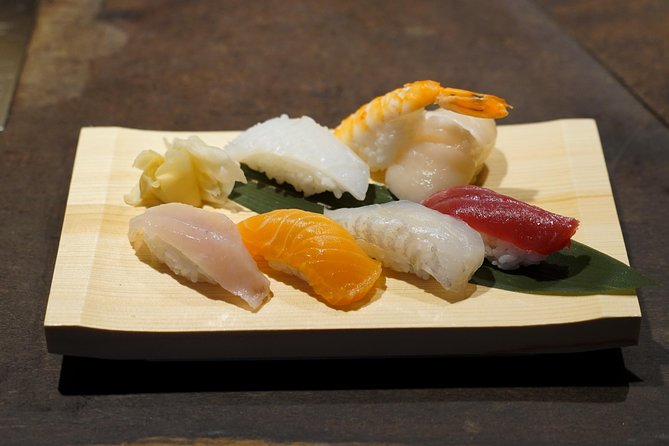
The tour starts at the Statue of Izumo-no-Okuni, Kawabatacho, Higashiyama Ward. That’s a good anchor. Meeting at a named monument keeps the beginning simpler than “look for the guide somewhere near the river.”
From the start, you’re set up for an easy evening: the tour ends back at the meeting point. That matters because you avoid the classic Kyoto problem of leaving dinner and not knowing how to navigate your way back through smaller lanes.
When the route begins around Gion Shirakawa, you get a sense of Kyoto’s historic street pattern before you sit down to eat. That’s the right timing. If you hit restaurants first, you miss the context that makes the places feel connected.
Gion Shirakawa Area: A Night-Walk Before the First Bites
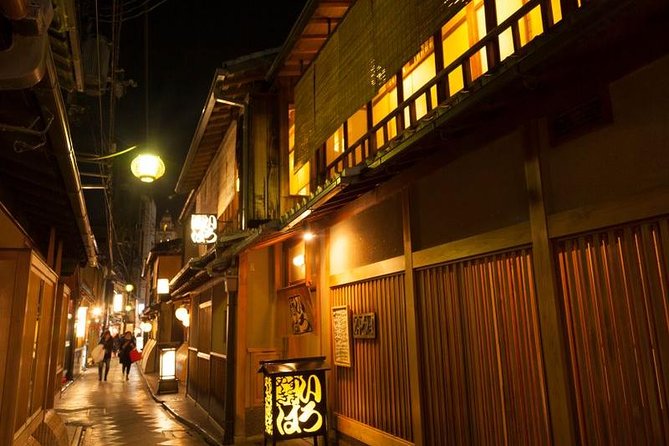
Before the first restaurant stop, you’ll spend time around the Gion Shirakawa area. This is the moment where the tour becomes more than food. Gion at night has a specific rhythm: quiet corners, narrow lanes, and views that look different after sunset.
You’ll also pass into Gion with the help of your guide, which is the big advantage of a local-led night walk. Kyoto is full of streets that look similar until you know what you’re looking at.
If you’re the type who likes to understand where you are, this pre-meal section is helpful. It sets up why the later stops feel special, instead of feeling like random restaurant-hopping.
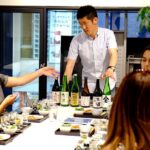
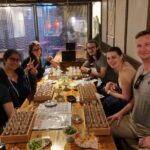
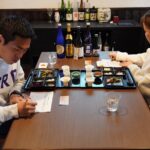
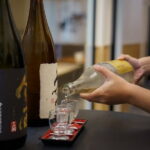
Follow the sake trail through Fushimi and beyond

Stop 1 in Gion: Obanzai-Style Kyoto Local Plates
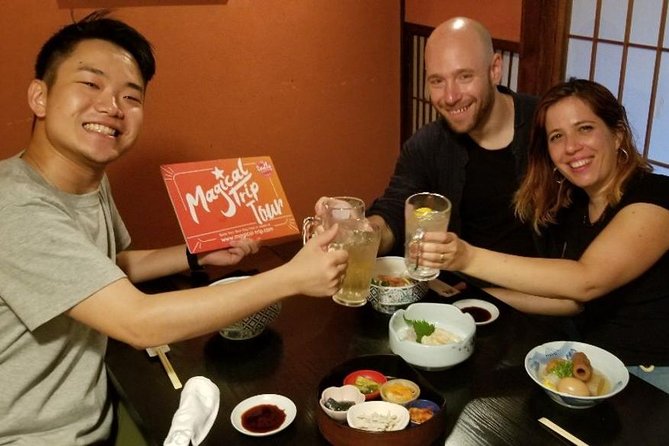
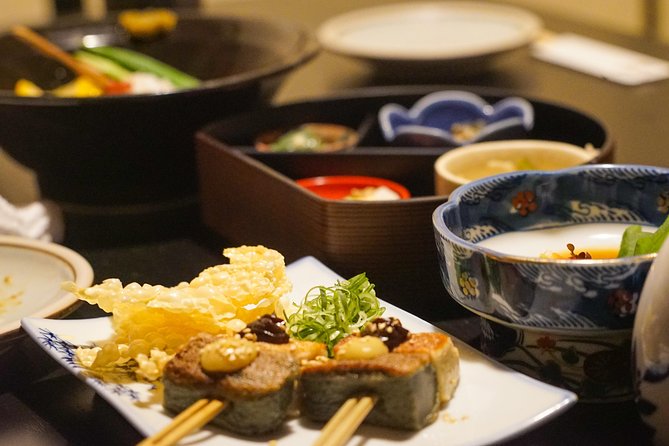
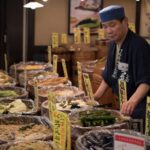
At the first restaurant stop in Gion, you’ll eat Kyoto local foods, including Obanzai (Kyoto vegetable plates). This is one of the smartest parts of the tour because obanzai isn’t just food. It’s a Kyoto habit: seasonal ingredients, small portions, and a focus on what’s available and what fits the season.
You can think of this stop as your “full plate foundation.” It’s where the dinner becomes real. Because it’s Kyoto-style, you’re likely to get flavors and textures you may not recognize from standard Japanese menu items.
A practical tip: Kyoto small plates can stack up faster than you expect. If you usually hold back at the start of food tours, resist that urge here. The tour is designed so the later stops build on what you’ve already had.
Stop 2 in Pontocho: Eating in a Famous Night Dining Corridor
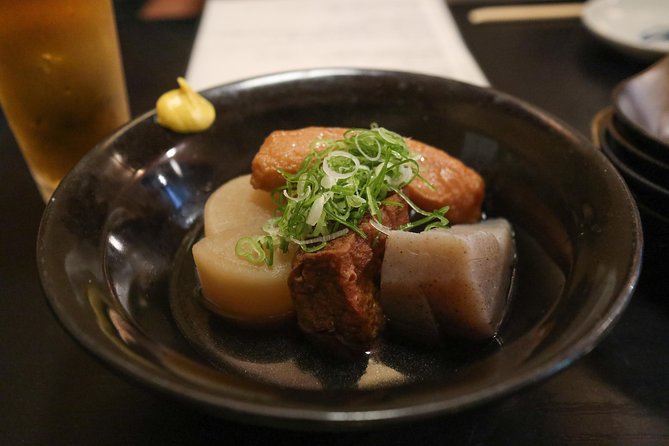
Next comes Pontocho, an entertainment and dining area between the Kamo River and Kiyamachi Street. The tour doesn’t treat Pontocho like a sightseeing stop. It treats it like a place to eat in the evening.
Pontocho works especially well at night because it’s a lane experience. You see the river context, the street glow, and the restaurant energy. Your guide also helps you navigate the vibe, so you’re not stuck standing outside trying to figure out which door is right.
This is where the tour’s “walk + eat” formula really pays off. You don’t just arrive, eat, and leave. You move through the neighborhood so the atmosphere becomes part of the meal.
One small caution: Pontocho is popular. Even with a guide, you’ll still feel that it’s a well-known destination. The good news is the tour timing and small-group structure usually keep it from feeling like a stampede.
Final Stop at Kawaramachidori: Standing Bar Sake Tastings
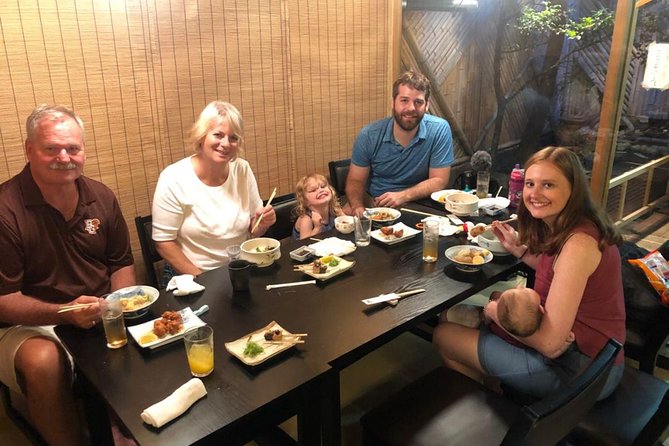
The last stop is at Kawaramachidori, where you’ll do sake at a standing bar. Soft drinks are available too, so you’re not stuck with only alcohol if you prefer something else.
This is the part of the tour that makes the title make sense. You’ll have three types of local sake, and the experience is listed as six tastings. In plain terms, you’re comparing different styles without needing to become a sake expert in advance.
I like this setup because it reduces decision fatigue. You don’t need to figure out what to order. You follow the guide’s tasting flow, compare flavors, and learn what differences you should pay attention to.
If you’re new to sake: standing bars often make things feel more social and casual. You’ll be able to keep up even if you’re not confident ordering alcohol. If you’re a sake fan: it’s a structured sampling, which is usually more fun than random sips in multiple places.
What the 9+ Dishes Really Do for Your Stomach
The tour is designed so the tastings become a full dinner. That phrase matters. “Food tour” can sometimes mean a few bites and a lot of walking. Here, the structure is meant to leave you satisfied.
Because the stops include multiple restaurants, you’ll get a mix of Kyoto-style plates and small bar-friendly bites. And since the tour is listed with 9+ dishes, you’re not just tasting. You’re actually eating.
A couple of useful expectations to set:
- Portion sizes are likely “small plate” style, but the total adds up.
- You may also get small extras at the end, like tea or coffee, as part of the overall dish count.
You’ll have a better night if you don’t over-restrict yourself before the tour. If you skip lunch and arrive hungry, you’ll enjoy the range more.
Guides: The Human Part That Turns Food into Stories
Your guide matters a lot on a night tour. The best versions of this experience are less about the menu and more about what the guide points out while you’re eating.
I’ve seen the kind of impact guides can have in Kyoto food scenes through names like Jimmy, Kumi Yamazaki, Emma, Yuki, Hide, Rika, Shiori, Shun, Yuma, and others. The common thread is not just facts. It’s conversation and context: where you are, why the food fits, and what to pay attention to next.
So here’s my advice: before the tour starts, think of one question you genuinely want answered. Maybe it’s about local dishes in Gion, how sake compares, or why certain areas feel different at night. Your guide will likely connect that question to something you’re tasting.
When you get a friendly guide, the tour stops feeling like a transaction. It turns into a guided dinner with Kyoto as the background.
Dietary Restrictions: How to Handle Them Without Stress
The tour comes with clear limitations. Allergy-free service isn’t guaranteed because food is prepared in kitchens outside the tour’s control. Also, substitutions aren’t always possible at each stop.
So what should you do?
- If you have dietary needs, request them in advance, by the day before.
- If your allergy is severe, consider that this tour may not be the safest option.
If you’re flexible (for example, you can handle vegetarian options but not strict vegan or gluten-free requirements), you may still be able to participate. But you should go in knowing the tour doesn’t promise allergy-level accommodations.
Weather and Comfort: Summer Heat Is Real
Kyoto summers are hot and humid. The tour recommends bringing water and wearing a hat to prevent heat stroke.
Even if you’re doing this in cooler months, comfort still counts. A hat can help even at dusk, and water keeps you from getting sluggish mid-walk. Wear breathable clothes and plan to keep your energy up. A food tour is easier when you’re not fighting dehydration.
Who This Tour Fits Best
This is a strong fit if you:
- Want a guided night walk through Gion and Pontocho without map stress
- Love trying different small bites across multiple locations
- Want a structured sake tasting with enough variety to learn something
- Prefer small-group travel with a ceiling of 7 people
It may not fit as well if you:
- Have significant mobility limitations, since it’s not recommended for people with mobility issues
- Need guaranteed allergy-free meals
- Want a completely hands-off experience where you never have to stand, walk, or move between stops
Should You Book This Kyoto Night Foodie Tour in Gion?
I’d book it if you’re coming to Kyoto mainly for food culture and you want an organized way to taste widely in one night. The combination of Gion Shirakawa, Pontocho, and a final Kawaramachidori standing bar is a smart route for a first (or second) time visitor. The 9+ dishes plus six sake tastings makes the price easier to justify than many shorter sampling tours.
Skip it if your dietary needs are strict and allergy-safe accommodations are essential, or if you don’t handle walking well. Also, if you hate standing bars, you may find the final sake stop less comfortable.
If you’re in the middle, do this: message your dietary needs early, wear comfortable shoes, and go with a learning mindset. Kyoto nights reward curiosity, and this one gives you food and sake in the exact neighborhoods where you’ll want to remember your first impression.
FAQ
How long is the Kyoto Night Foodie Tour in Gion?
It runs for about 3 hours 30 minutes.
How many dishes and sake tastings are included?
You’ll have 9+ dishes and 6 sake tastings.
Where is the tour starting point?
The meeting point is the Statue of Izumo-no-Okuni, Kawabatacho, Higashiyama Ward, Kyoto.
Where does the tour end?
The activity ends back at the meeting point.
Is the tour suitable for people with allergies or special diets?
Allergy-free meals are not guaranteed. Dietary requests can be requested in advance (by the day before), but substitutions may not be possible at every stop.
Are there options besides alcohol at the final stop?
Soft drinks are available at the sake tasting stop at the standing bar.
How many people are in the group?
The tour has a maximum of 7 travelers.
More Kyoto Food Tours

The Fushimi Sake Trail, Continued

Still in Gion? Keep Going

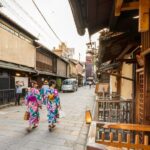
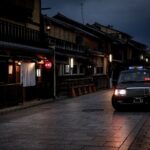
Just added: more Kyoto tours to browse







Gion & Geisha District Tours, compared.
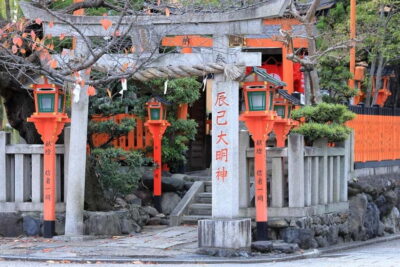 ★ 4.7Kyoto Geisha Walking Tour: Gion District & Hidden GemsFrom $253,273 reviews
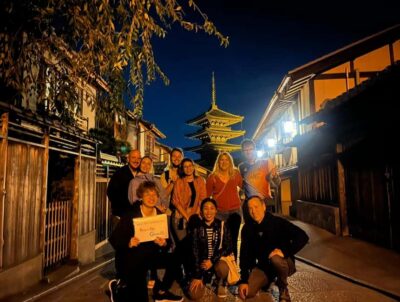 ★ 4.9Gion Magical Night Walking Tour with Geisha TriviaFrom $242,393 reviews
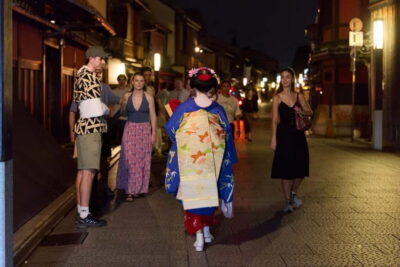 ★ 4.7Gion Geisha District Walking Tour – Stories of GeishaFrom $202,187 reviews
 ★ 4.9Best of Kyoto: Gion, Geisha, Pagodas & CobblestonesFrom $242,058 reviews
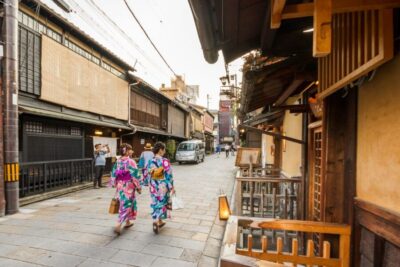 ★ 4.5Night Walk in Gion: Kyoto’s Geisha DistrictFrom $212,003 reviews
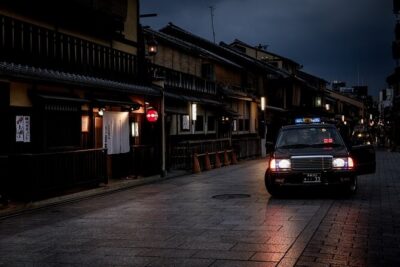 ★ 5.0Kyoto Gion Geisha District Walking Tour – The Stories of GeishaFrom $251,441 reviews
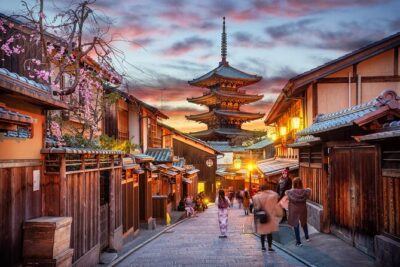 ★ 5.0Kyoto Gion: 2-Hour Geisha Culture & History Walking TourFrom $231,186 reviews
 ★ 5.0Chopsticks Making Workshop in Gion with Engraving OptionFrom $15958 reviews
Browse the lists this tour appears in