
Reviewed · KYOTO SAMURAI & NINJA EXPERIENCES
Ninja 2-hour Hands-on Lesson by Japanese master in Kyoto -Medium
Two hours and you feel ninja-ready. This small-group lesson (max 6) turns Kyoto into a hands-on ninja training session, not just a photo stop. I especially like the step-by-step technique flow and the real weapon practice you get to try. One thing to consider: the experience requires good weather, since the training is planned with that condition in mind.
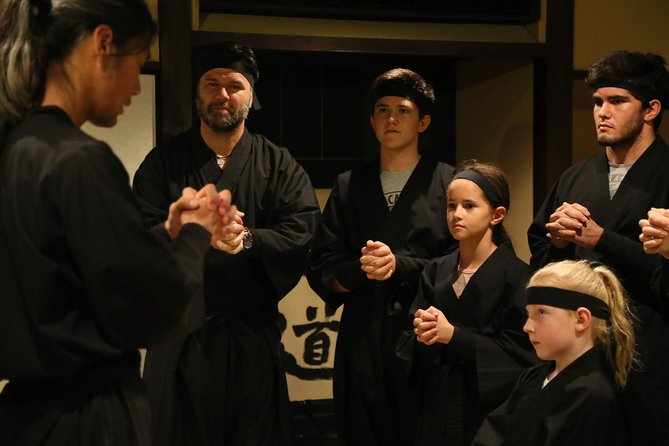
You’ll meet at Ninja Dojo and Store Kyoto and get put in full ninja clothing rental before training starts. The instructor is a Japanese master sensei who teaches in English, so you’re not stuck guessing what a stance or breathing pattern is supposed to do. And yes, you’ll try a lot of techniques in 2 hours, from meditation to shuriken and blowgun darts.
If you want a long, academic lecture about ninja history, this is more about doing than explaining. It’s a skills class first, with just enough context to make the movements make sense.
In This Review
- Key things I think you’ll care about
- Why Kyoto’s Ninja Dojo lesson feels practical (not cheesy)
- Arriving at the Ninja Dojo and Store: first moments matter
- The 2-hour training flow: Kuji-In, breathing, walking, and timing
- Ninja trick house: traps and movement practice you can’t fake
- Weapon training in a beginner-friendly order: from sword to shuriken
- Where the cost fits: $95.51 for tools, time, and a small group
- Best times to slot this into your Kyoto day
- Who should book this ninja lesson
- Final call: should you book the Ninja 2-hour lesson in Kyoto?
- FAQ
- How long is the ninja hands-on lesson?
- What is the group size?
- What time does it start in Kyoto?
- Where do I meet and where does it end?
- Is hotel pickup or drop-off included?
- What is included in the price?
- What is not included?
- What techniques are taught in the 2-hour class?
- Does the class require good weather?
- What is the cancellation policy?
Key things I think you’ll care about
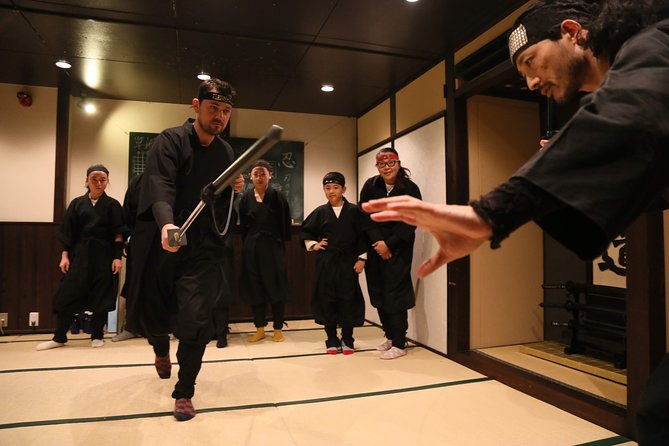
- Small group, max 6 people, so you’re not lost in the crowd
- English instruction from a Japanese sensei, with guidance for beginners
- Ninja clothing rental included, so you get the full look right away
- A full sequence of techniques, including Kuji-In, breathing, walking, and traps
- Weapon practice you handle yourself, from kunai to rope techniques to shuriken
- Entry-level friendly, built for an elementary 2-hour format with extra skills added
Why Kyoto’s Ninja Dojo lesson feels practical (not cheesy)
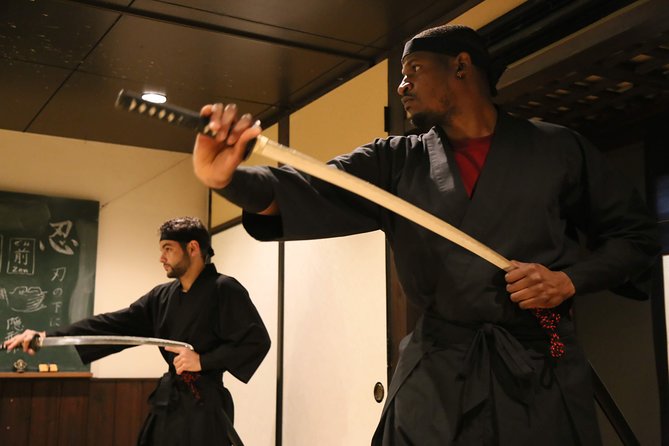
This is the kind of activity that works because it has a clear job: teach you ninja basics through physical practice. You’re not just watching someone perform. You’re learning a sequence—mind (meditation), body (breathing and walking), and tools (weapons and throws)—so you walk out understanding how the pieces fit.
I also like that the class stays grounded in instruction. Reviews highlight instructors who explain carefully and keep the energy up with humor. That matters in a hands-on class, because beginners need correction and structure, not vague pointers.
And for a lot of people, the clothing rental isn’t just for pictures. It helps you step into the role, and it makes the training feel like training instead of a staged show.
Pick up the blade again with these Kyoto sessions
Arriving at the Ninja Dojo and Store: first moments matter
Your start point is Ninja Dojo and Store Kyoto (Hakurakutenchō, 5F? the meeting point address lists 528 2F). The class ends back at the same meeting point, so you’re not zigzagging around Kyoto afterward.
Plan to arrive a little early. One review notes that people came about 15 minutes early, removed shoes at the door, and used slippers provided. That’s a small detail, but it’s worth knowing because it sets the tone: you’re entering a dojo-style training space with rules.
Next comes the clothing part. You’ll get ninja clothing rental for the lesson, and staff help you get dressed. If you’re traveling with kids, this is often when their excitement kicks into full gear.
The 2-hour training flow: Kuji-In, breathing, walking, and timing
This is an elementary-level 2-hour lesson. You get an entry-level component plus additional techniques (so it’s not just one narrow topic).
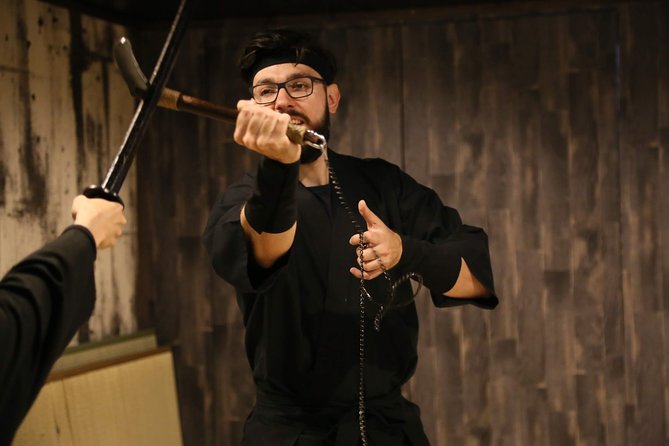
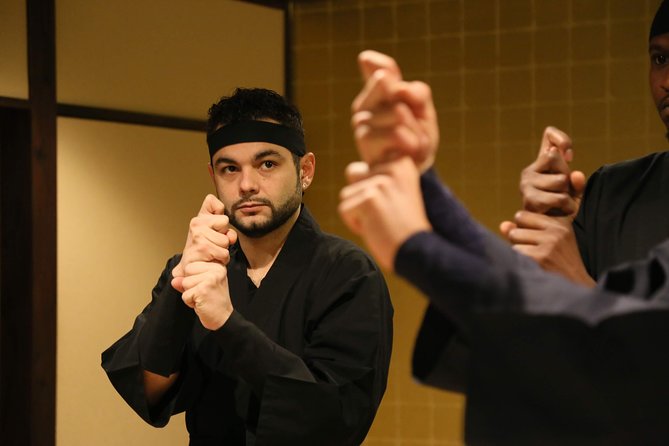
A big early focus is Kuji-In meditation. Even if you’ve never heard the term before, it’s taught as a real skill, not a gimmick. You’ll also work on ninja breathing and ninja walking, which are the kinds of basics that make the later weapon work feel coordinated.
In practical terms, this sequence helps you in two ways:
- It gives you something to do while you’re learning the space, rules, and stance basics.
- It prevents the “I’m clumsy” feeling by teaching control before impact.
If you’re the kind of traveler who needs a reason for the movements, this part supplies it: breathing and walking are used to make your body feel stable and deliberate.
Ninja trick house: traps and movement practice you can’t fake
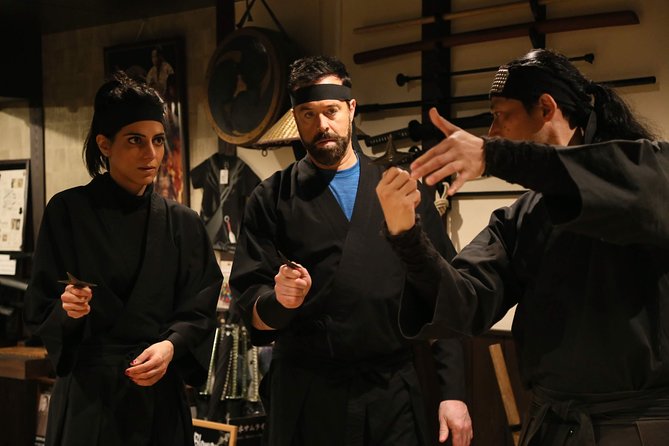
One of the most memorable elements is the introduction gimmick and trap at the ninja trick house. You should expect active participation here, not just observation.
The value is simple: ninja skills aren’t only about standing correctly or throwing a star. The “trick house” component pushes you to move through a situation, react, and follow cues. It’s the part that tends to create that wow feeling, because it turns your training into a mini game.
Also, it’s usually where families and first-timers feel the lesson becomes real. You’re not just pretending to be a ninja; you’re experiencing how a staged scenario changes the way you move.
Weapon training in a beginner-friendly order: from sword to shuriken
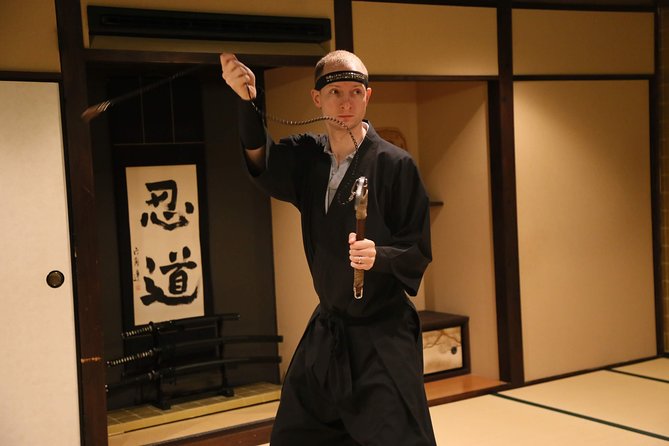
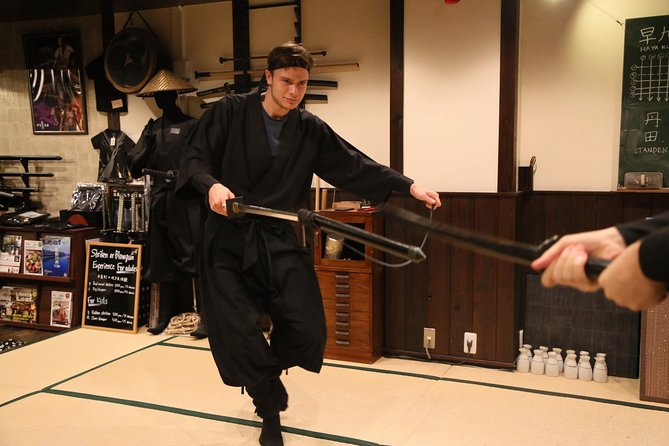
The lesson includes training for a ninja sword plus multiple weapon techniques. The “hands-on” part is a core reason this is such a popular Kyoto add-on, and the technique list is long for a 2-hour class.
Here’s what you should expect to practice:
- Kunai (dagger): basic handling and throwing motion
- Kusarigama (sickle with chain): learning how this tool is used conceptually
- Rope technique and kunai with rope: coordination-focused practice
- Shuriken (ninja star): throwing and aiming on targets
- Ninja sword with shuriken: linking tools, so you understand how one movement flows into another
- Stick type shuriken: an extra shuriken variation
- Ninja blowgun (blow darts): a precision tool for learning controlled release
A key detail from reviews: you’re not only shown how to do it. You get to try the weapons yourself, often on targets, with instructors demonstrating first and then coaching.
Two other practical notes:
- If you’re traveling with kids, this weapon variety keeps attention high. Reviews frequently describe the class as fun for ages roughly 5 to teens.
- If you’re an adult who worries about being “too stiff,” reviews include middle-aged couples who still found the training accessible. You’ll be guided through entry-level versions.
Other Kyoto tours and experiences to compare






Where the cost fits: $95.51 for tools, time, and a small group
At $95.51 per person for about 2 hours, this is not the cheapest activity in Kyoto. But it’s also not pricing you like a casual street event.
Here’s why the value can make sense for you:
- You get a small-group format (max 6). That’s a big deal in a hands-on class where everyone needs attention.
- The instruction includes admission fee and is taught by a Japanese sensei in English.
- Ninja clothing rental is included, so you’re not paying extra for a costume experience.
- You learn multiple techniques in one session, not just one weapon or one photo moment.
- Reviews describe extra bonuses like staff taking photos and videos during the class and sending them via email the same day. That can turn the experience into something you’ll actually remember.
What could make it feel pricey? If you’re hoping for a long, detailed historical program, this lesson is built around practice time. It’s worth it if you want to do the movements and handle the tools.
Best times to slot this into your Kyoto day
The start time listed is 10:00 am. The activity ends back at the meeting point, so you can plan your next stop nearby.
Since hotel pickup and drop-off aren’t included, you’ll want to treat it like a true planned outing: get yourself there using public transportation. The meeting point is near public transport, which helps.
Food and drink aren’t included either. That’s easy to solve—eat before you go. If you’re going with kids, this can also keep energy stable for the training.
Also, the experience requires good weather. Even if the core lesson is structured indoors, the overall plan depends on it. If Kyoto weather is unpredictable while you’re there, keep a flexible day around it.
Who should book this ninja lesson
This is a good match if:
- You want an active, hands-on activity instead of a passive attraction
- You’re traveling with kids or teens, and you want everyone to participate
- You like experiences with clear English instruction and supportive coaching
- You want a fun, role-based activity in Kyoto that goes beyond a costume shop
It’s also a solid choice if you’re traveling as a couple or solo adult and you just want to learn something new for 2 hours. Reviews include solo travelers who picked it as a spontaneous Kyoto activity.
If you hate physical activities or want a quiet cultural lecture, this may not be your best fit. The class is designed for movement, tools, and practice.
Final call: should you book the Ninja 2-hour lesson in Kyoto?
I think you should book it if you want a short Kyoto experience that delivers real participation: meditation basics, breathing, walking, a trick-house scenario, and multiple weapon techniques you handle yourself. The small group size and English-led coaching are big parts of why people rate it so highly.
Skip it if your priority is deep history or museum-style learning. This is training time, not a long storytelling session. If that’s your goal, pair it with other Kyoto stops that focus on history and culture in a more traditional way.
If your goal is to leave Kyoto feeling like you learned a set of ninja skills you can repeat at home, this lesson is a strong bet.
FAQ
How long is the ninja hands-on lesson?
The lesson is about 2 hours.
What is the group size?
The class has a maximum of 6 travelers.
What time does it start in Kyoto?
The start time listed is 10:00 am.
Where do I meet and where does it end?
You meet at Ninja Dojo and Store Kyoto and the activity ends back at the same meeting point.
Is hotel pickup or drop-off included?
No, hotel pickup and drop-off are not included.
What is included in the price?
Included items are the English-speaking Japanese sensei instruction, ninja clothes rental during training, and the admission fee.
What is not included?
Food and drink are not included.
What techniques are taught in the 2-hour class?
The lesson includes Kuji-In ninja meditation, ninja breathing, ninja walking, an introduction gimmick and trap at a ninja trick house, training for ninja sword, and weapon techniques including kunai, kusarigama, rope technique, kunai with rope, shuriken, ninja sword with shuriken, stick type shuriken, and ninja blowgun with blow darts.
Does the class require good weather?
Yes, the experience requires good weather. If canceled due to poor weather, you’ll be offered a different date or a full refund.
What is the cancellation policy?
Free cancellation is available up to 24 hours in advance for a full refund. If you cancel less than 24 hours before the start time, the amount paid isn’t refunded.
More Workshops in Kyoto
More Tour Reviews in Kyoto

More Samurai and Ninja Sessions

Just added: more Kyoto tours to browse






Kyoto Samurai & Ninja Experiences, compared.
 ★ 5.0Kyoto Samurai ExperienceFrom $1191,294 reviews
 ★ 4.9Kendo and Samurai Experience with Uniform and GearFrom $103815 reviews
 ★ 4.9Samurai Sword Class by Experts in Traditional ArtsFrom $64657 reviews
 ★ 4.5Skip the lines Basic Ticket at SAMURAI NINJA MUSEUM KYOTOFrom $28632 reviews
 ★ 5.0Ninja 1-hour Hands-on Lesson by Japanese master in Kyoto -EntryFrom $80489 reviews
 ★ 4.8Ninja Weapon Forging ExperienceFrom $148478 reviews
 ★ 4.5Samurai Kenbu Traditional Sword Dancing ShowFrom $32426 reviews
 ★ 5.0Samurai Training with Modern day Musashi in KyotoFrom $132256 reviews
Browse the lists this tour appears in