
Reviewed · KYOTO CRAFT & CALLIGRAPHY WORKSHOPS
Traditional Japanese Flower Styling Workshop – Ikebana in Kyoto
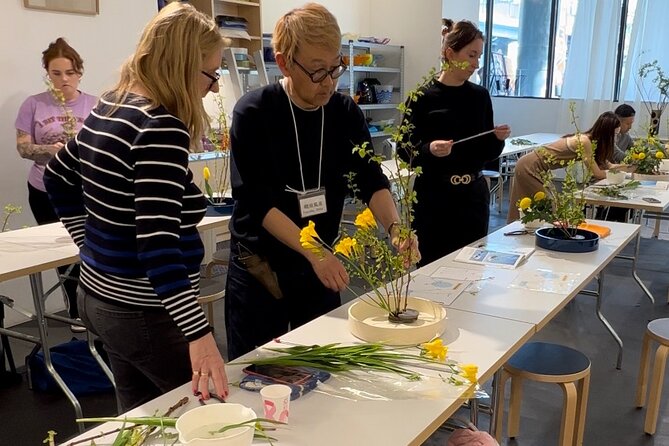
Kyoto flowers, arranged with calm precision. In this traditional ikebana workshop at Sogetsu WEST, you spend about 1 hour 45 minutes learning the basics of Japanese flower styling, including the history, philosophy, and practical know-how for keeping stems looking good.
I like that you are not boxed into rare materials. You’ll make arrangements in different styles even without special flowers or traditional vases once you’re back home, and you’ll get a photo to remember your creation. One possible drawback: because it’s a popular, single-session class, you’ll want to book ahead so you can match your Kyoto schedule.
In This Review
- Key highlights
- Sogetsu WEST and the Real Reason This Workshop Feels Worth It
- Meeting at the Workshop: What the Start Sets Up
- The Teacher Matters: Master Fooraku’s Style of Instruction
- What You Actually Learn: History, Philosophy, and the “Why”
- Choosing Containers and Styles: Why 300+ Options Is More Than a Flex
- Hands-On Time: Making Your Own Arrangement Step by Step
- Keeping Flowers Fresh: Practical Tips You Can Use Immediately
- Photo Moment and the Follow-Up: What You Take Home
- Price and Logistics: Is $104.24 Good Value?
- Who This Workshop Suits Best (and Who Might Want to Skip It)
- My Bottom Line: Should You Book This Ikebana Workshop in Kyoto?
- FAQ
- How long is the Traditional Japanese Flower Styling Workshop in Kyoto?
- Where does the workshop take place?
- Is this a private workshop?
- Do I need special tools or traditional Japanese containers?
- What will I make during the session?
- Can I cancel, and how far in advance?
Key highlights
- Master Fooraku’s 30+ years of ikebana study and relaxed teaching style
- Sogetsu WEST with access to 300+ types of containers
- Learn history and philosophy alongside hands-on arranging steps
- Create styles you can repeat at home without special tools or vases
- Leave with a photo, plus optional session slides by email
- Private setup: only your group participates
Sogetsu WEST and the Real Reason This Workshop Feels Worth It
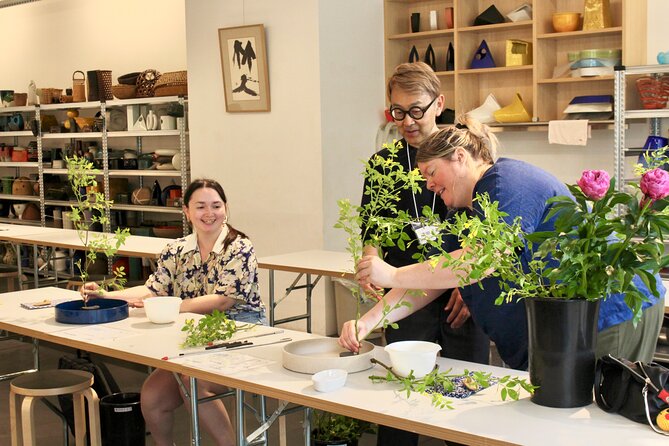
Kyoto does traditions very well, but you still want a workshop that teaches you something you can use later. This one is held at Sogetsu WEST, described as a top ikebana space in western Japan, and that matters because you’re learning in an environment built specifically for flower styling.
The second reason it feels like good value is the focus on transfer. You’re not just creating a pretty arrangement for the moment—you’re learning how to keep the thinking behind ikebana, so your results at home won’t feel random. The class also emphasizes the idea of seasons and everyday Japanese aesthetics, which is exactly where ikebana starts to make sense.
Make something by hand in a Kyoto workshop
Meeting at the Workshop: What the Start Sets Up
You meet at Sogetsu WEST, 20-4 Sujakudōnokuchichō, Shimogyo Ward, Kyoto (600-8842). The location is near public transportation, which is a big deal in Kyoto, where timing can get squeezed fast.
From there, the format is straightforward: you’ll have the workshop, then it ends back at the meeting point. There are no extra hops or long detours, so your 1 hour 45 minutes stays focused on the arranging part, not transit.
The Teacher Matters: Master Fooraku’s Style of Instruction
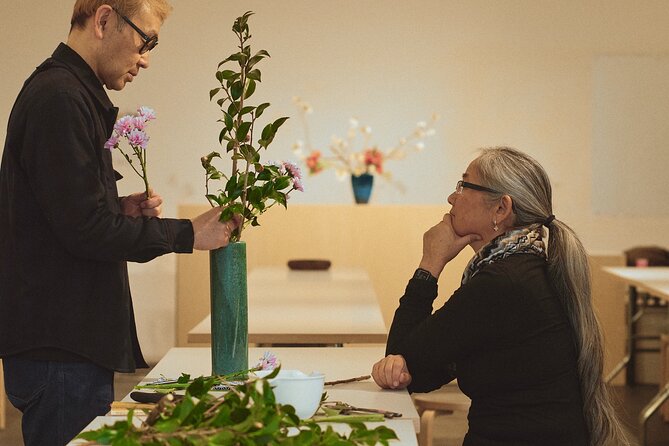
The best part of this workshop is the teaching itself. Reviews point to Master Fooraku as an expert who has studied ikebana for over 30 years, and they also highlight that his English is good, which helps if your Japanese is limited.
What you’ll likely appreciate is the teaching tone. One review describes the lesson as fun and relaxed, not stiff or performative. In a hands-on art class, that style makes it easier to ask questions and fix small technique issues while you’re working.
What You Actually Learn: History, Philosophy, and the “Why”
This isn’t only about where to put flowers. The workshop covers the history, philosophy, and secrets of ikebana, and it pairs those ideas with techniques for arranging and keeping flowers fresh.
That combo is practical, not academic. The history and philosophy help you understand why ikebana values balance, form, and negative space (even if you’ve never used those words). Then the technique portion gives you tools you can apply the next time you’re staring at a grocery-store bouquet and wondering what to do with it.
If you like cultural context that doesn’t slow you down, this structure works well. You get explanation, then you get to build.
Choosing Containers and Styles: Why 300+ Options Is More Than a Flex
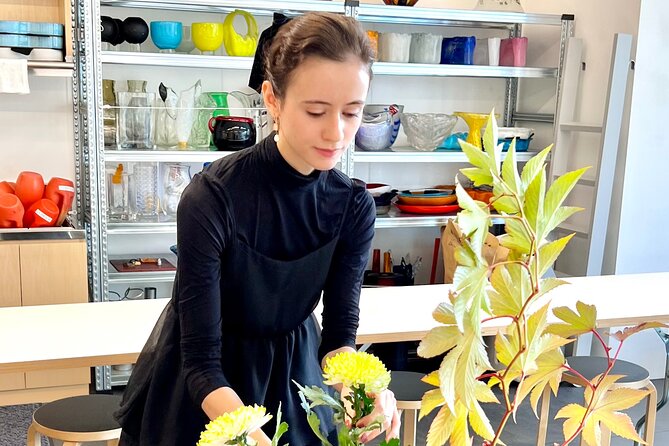
The workshop is held in a space with over 300 types of flower containers. That number sounds like a brag, but in practice it changes your experience.
You’re not forced into one “correct” look. Instead, you can explore how ikebana composition shifts based on the vessel and the style you’re practicing. Even if you don’t know what to look for at the start, the teacher can guide you toward options that fit the arrangement you’re aiming for.
And because the class focuses on multiple ikebana styles, you’ll likely see that the art is flexible. It isn’t only about recreating a single canonical form.
Other Kyoto tours and experiences to compare

Hands-On Time: Making Your Own Arrangement Step by Step
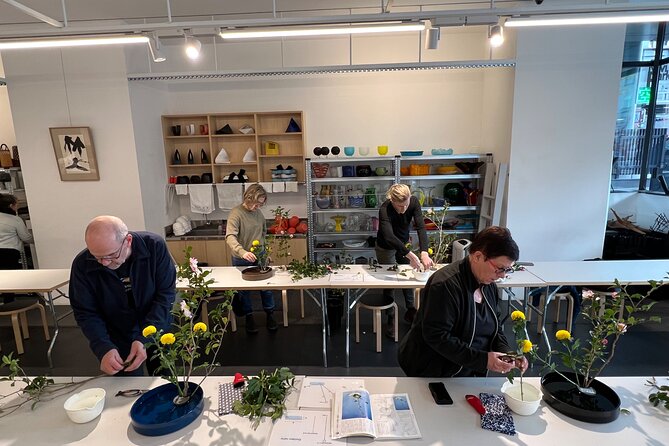
This is a private tour/activity, so it’s your group only. That matters because you’re not competing for the teacher’s attention while you figure things out. With ikebana, small choices make a big difference, so more time and calmer feedback are a real advantage.
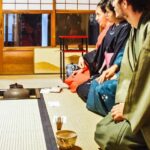
During the hands-on portion, you’ll craft your own unique ikebana masterpiece with guidance. The goal isn’t to produce something identical to a reference photo. It’s to learn the method and apply it creatively with what’s available.
One line in the experience description sticks with me: you can create various ikebana styles even without special flowers or vases after you return home. That’s the promise you should hold them to—by the end, you should feel like you can recreate the approach, not just repeat a one-time trick.
Keeping Flowers Fresh: Practical Tips You Can Use Immediately
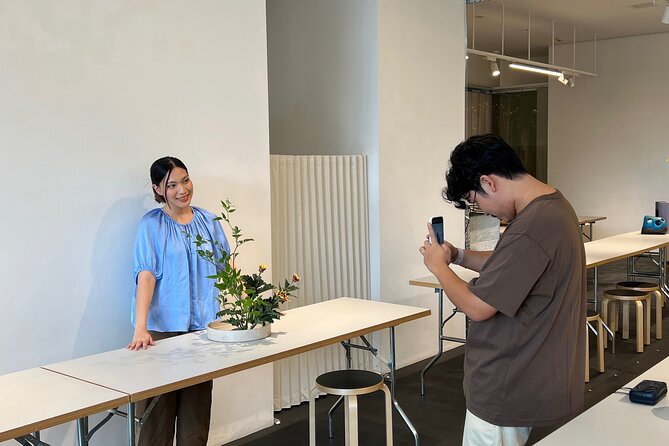
A big part of enjoying flowers is how long they last. The workshop includes techniques for keeping flowers fresh, which is exactly the kind of advice that pays off after your class.
You’ll leave with more than styling ideas. You’ll have at least some basic care guidance so your arrangement doesn’t fade the next day. Even if you only remember a couple of the tips, you’ll feel the difference.
If you’re the kind of traveler who buys a small gift for yourself and then actually uses it later, this is the workshop for you. Learning how to care for your arrangement turns a fun activity into a repeatable habit.
Photo Moment and the Follow-Up: What You Take Home

Once your creation is complete, you’ll take a picture to commemorate your masterpiece. That’s a small thing, but it’s worth it. Flower arranging is tactile and time-limited, and having a photo helps you remember what choices you made while everything is still fresh in your mind.
You can also receive session slides by email upon request. If you’re the type who wants to review and practice later, this is one of the best “future-proof” features in the whole experience. It helps you move from memory to repeatable steps.
Then you’ll have time to relax and chat after your arrangement. One review mentions extra learning about Japanese culture during that conversation, and that’s where the workshop becomes more than a craft lesson. You can ask questions about food, culture, or traditions, and you’ll also be invited to share about your own background if you’re comfortable.
Price and Logistics: Is $104.24 Good Value?
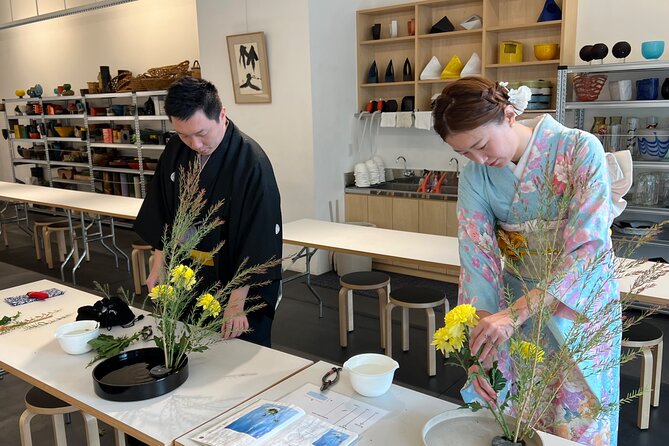
At $104.24 per person, this isn’t a budget activity. So the value question is simple: does it feel like more than a quick novelty?
Here’s where it holds up. First, the duration is about 1 hour 45 minutes, which is enough time to learn, practice, and finish something. Second, it’s taught by Master Fooraku, and reviews highlight his 30+ years of study and good English. You’re paying for skilled instruction, not just access to a table and flowers.
Third, the class is designed to help you at home. The promise that you can create ikebana styles without special vases or flowers after the workshop is exactly what separates a one-time experience from a true skill-building class.
Finally, it’s private for your group. Private time tends to cost more, but it also tends to be more satisfying because you get direct attention.
If you’re only looking for a photo or a quick souvenir, the price may feel steep. If you want a skill you’ll actually use again, it’s easier to justify.
Who This Workshop Suits Best (and Who Might Want to Skip It)
This workshop is a great fit if you want something cultural that you can take home with you in a tangible way—an arrangement, a photo, and guidance for future arranging.
It’s also ideal if you enjoy a calm, guided craft moment during your Kyoto days. The session includes explanation and then hands-on work, so it suits people who like learning but don’t want a lecture.
You’ll probably be less interested if you prefer large group sightseeing or you only want outdoor scenery all day. This is an indoor art class. You’ll get Japanese aesthetics, but it’s focused on flowers and design rather than temple halls.
Accessibility note: the info says most travelers can participate, and that’s encouraging. Still, since it’s a seated workshop, you’ll do best if you’re comfortable sitting for the duration.
My Bottom Line: Should You Book This Ikebana Workshop in Kyoto?
Book it if you want a real craft lesson with cultural context, led by Master Fooraku. The combination of hands-on arranging, guidance on keeping flowers fresh, and the chance to learn styles you can repeat at home makes this feel more useful than many “try it once” experiences.
Skip it if you’re chasing a big sightseeing day or you don’t care about the process—because the value here is the method, not just the finished flowers. And if your schedule is tight, book early so you can find a time that fits your Kyoto plan.
If you’re the sort of traveler who brings home something you’ll actually use, this ikebana workshop is a thoughtful way to turn Kyoto beauty into a lasting habit.
FAQ
How long is the Traditional Japanese Flower Styling Workshop in Kyoto?
It lasts about 1 hour 45 minutes.
Where does the workshop take place?
The meeting point is Sogetsu WEST, 20-4 Sujakudōnokuchichō, Shimogyo Ward, Kyoto (600-8842), and the activity ends back at the meeting point.
Is this a private workshop?
Yes. Only your group participates.
Do I need special tools or traditional Japanese containers?
No. You’ll learn ikebana styles without the need for special tools or traditional Japanese containers, and the experience also emphasizes that you can apply what you learn at home without special vases.
What will I make during the session?
You’ll create your own ikebana arrangement with guidance from the instructor, and you’ll take a photo of your finished piece.
Can I cancel, and how far in advance?
You can cancel for a full refund if you cancel at least 24 hours before the experience’s start time, and you’ll receive confirmation at booking.
More Workshops in Kyoto
More Tour Reviews in Kyoto

More Kyoto Workshops to Try

Just added: more Kyoto tours to browse


Kyoto Craft & Calligraphy Workshops, compared.
 ★ 5.0Chopsticks Making Workshop in Gion with Engraving OptionFrom $15958 reviews
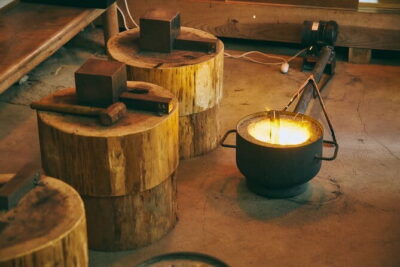 ★ 4.8Authentic knife making experience at a blacksmith in KyotoFrom $154350 reviews
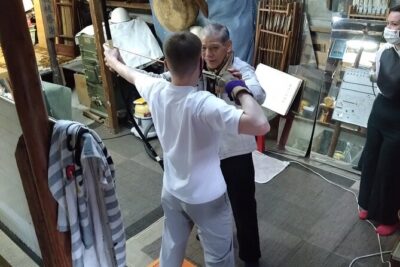 ★ 5.01-Hour Japanese Archery Experience in KyotoFrom $46176 reviews
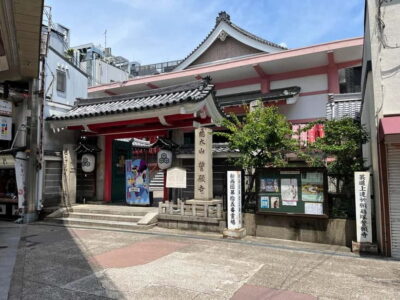 ★ 5.0Calligraphy class at Buddhist temple in city centerFrom $55167 reviews
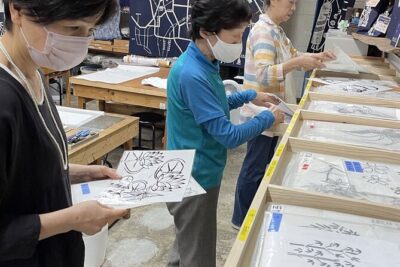 ★ 5.0Roketsu dyeing experience: M course Roketsu Dyeing ExperienceFrom $25163 reviews
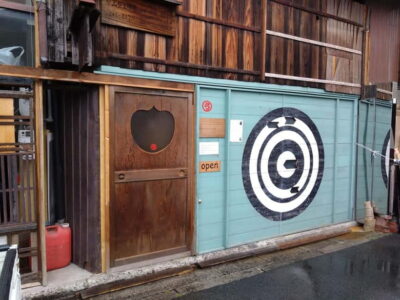 ★ 4.9Japanese Archery Workshop with Experienced InstructorFrom $38132 reviews
 ★ 4.8Japanese Calligraphy ClassFrom $5189 reviews
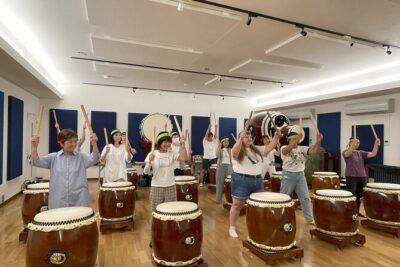 ★ 5.0TAIKO, Japanese Drum Experience from KyotoFrom $11586 reviews
Browse the lists this tour appears in