
Reviewed · GUIDED
Private Kyoto Customizable Day Tour With English Guide
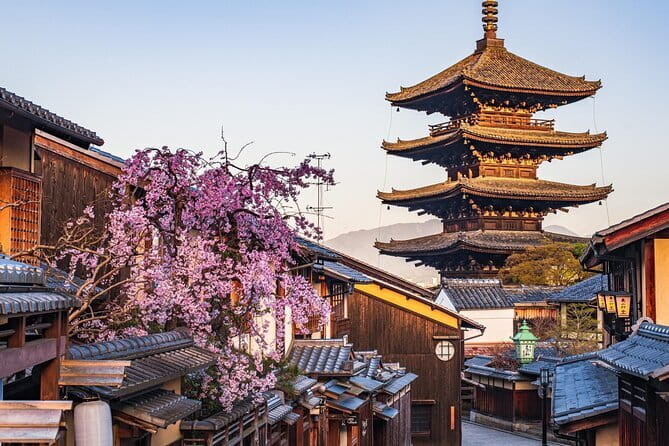
Kyoto in one day, but your way. This private, customizable tour lets you shape the schedule around temples, culture, shopping, and Japanese history, with an English-speaking driver/guide and a comfortable vehicle. I love the privacy (only your group) and the custom flexibility, and I’ve seen praise tied directly to guides like Khan and Charith for being polite, accommodating, and quick to adapt.
One thing to weigh: it’s an 8–10 hour day with a lot of walking and transit between famous sights. Also, entry tickets are not fully included, so you’ll want to budget for temple fees like the 500 yen charges listed for Kinkakuji and Sanjusangendo.
In This Review
- Key highlights
- Private Kyoto, built around your priorities
- Timing: start at 8:00 am and plan for a full day
- Arashiyama: Togetsukyo Bridge and bamboo walks
- Fushimi Inari-taisha: torii gates and the Mount Inari trail
- Kinkakuji Golden Pavilion: gold leaf views and a 500 yen fee
- Kiyomizudera: the wooden stage and UNESCO views
- Gion stroll: geisha neighborhood atmosphere on Shijo Avenue
- Sanjusangendo and Ginkakuji: two different kinds of temple wow
- Sanjusangendo Temple: 1001 statues in a long hall
- Ginkakuji Temple: a Silver Pavilion that’s not the point
- Nishiki Market: Kyoto kitchen shopping and food browsing
- Price and value: $557.45 for up to 6 people
- Should you book this private Kyoto custom tour?
- FAQ
- How long is the Kyoto private day tour?
- What time does the tour start?
- How many people are in a group, and what does it cost?
- Is pickup available?
- What’s included in the tour price?
- Are temple entry fees included?
- Can I customize which Kyoto sights we visit?
- What happens if there’s traffic?
- Are service animals allowed?
- What’s the cancellation policy?
Key highlights
- Private vehicle + English guide: you’re not squeezing in with strangers.
- Customizable routing: you choose what matters most, and the guide can recommend.
- Traffic buffer: if roads slow you down, extra time is provided free of charge.
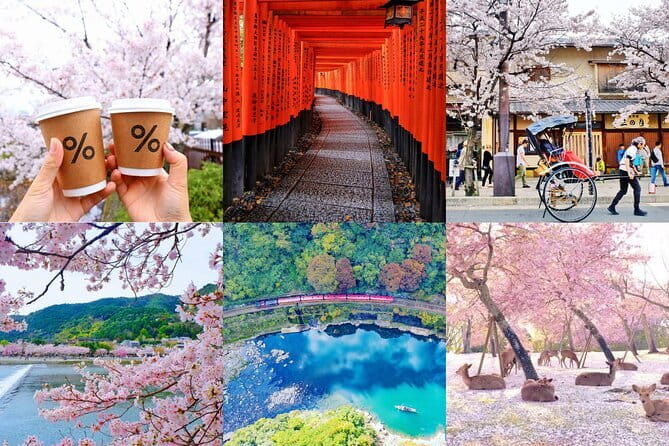
- Iconic Kyoto stops: Arashiyama, Fushimi Inari, Kinkakuji, Kiyomizudera, Gion, more.
- Smart add-ons for your day: Wi-Fi hotspot and a mobile ticket make on-the-go planning easier.
Private Kyoto, built around your priorities
What I like about a private day in Kyoto is simple: you don’t waste time debating what to do next. Your driver/guide helps build a route that matches your interests, whether that’s shrine classics, Zen temple views, old-town strolling, or food-shopping at Nishiki Market.
And because it’s a single group—up to 6 people—you can actually talk about what you want in the moment. That’s where guides like Khan and Charith show up in the feedback: they’re described as polite and accommodating, and they’re willing to shape the day around your interests rather than sticking to a rigid script.
Other Kyoto tours and experiences to compare
Timing: start at 8:00 am and plan for a full day
This tour starts at 8:00 am and runs about 8 to 10 hours. That’s a good length for covering major Kyoto highlights, but it also means you’ll want comfortable shoes and a steady pace.
A useful detail: they note extra time is given free of charge if traffic causes delays. In Kyoto, that matters. Roads can slow down, and famous areas can get crowded fast, so the ability to protect your schedule is more than a nice-to-have.
You also get practical support onboard: a Wi-Fi hotspot plus a mobile ticket. Even if you’re not using the internet constantly, it’s handy for map checks and quick translation help while you’re moving between neighborhoods.
Arashiyama: Togetsukyo Bridge and bamboo walks
Arashiyama is where Kyoto turns poetic on purpose. Your first stop focuses on Togetsukyo Bridge, also called the Moon Crossing Bridge. It’s one of the most recognizable sights here, and it was rebuilt in the 1930s after an earlier creation from the Heian Period (794–1185). The view works best when the wooded hillside is framed behind the bridge, so this is a stop you’ll enjoy even if you’re not a hardcore photography person.
Right nearby, you’ll also have time near the riverbank park with cherry trees. If you’re traveling outside cherry season, it’s still a pleasant riverside pause before you move into the bamboo groves.
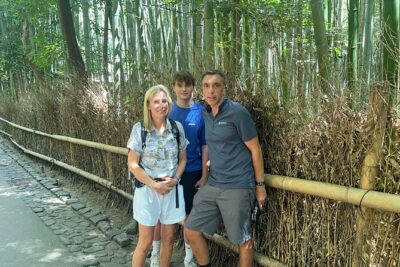
Then comes the bamboo area, described around nice walking routes (and even bicycle rides). Bamboo stalks sway when there’s a light wind, and you can see why local artisans have used bamboo for generations—mats, cups, boxes, baskets, and more. This stop runs about 1 hour 30 minutes, and admission is listed as free for the included time here.
Practical note: bamboo paths can involve more uneven ground than you might expect. If you’ve got knee issues, plan for slower steps and don’t rush the bridge-to-grove flow.
Fushimi Inari-taisha: torii gates and the Mount Inari trail
Fushimi Inari-taisha is the shrine where you can’t help but think in red. You’re walking through thousands of torii gates that lead through paths behind the main structures. Those paths climb into the forested Mount Inari area, which rises to 233 meters and sits right on the shrine grounds.
It’s also a shrine with a story. Inari is the Shinto god of rice, and foxes are believed to act as messengers—so you’ll see fox statues scattered across the grounds. The shrine’s history goes back before Kyoto became the capital in 794, which helps explain why it’s such an enduring pilgrimage spot.
Your time here is about 1 hour, and admission is listed as free for this stop.
One key consideration: Fushimi Inari can turn into a long walk if you decide to go deeper into the mountain routes. Since this is a private tour, you can usually match the depth to your energy—so decide in advance whether you want a shorter gate-and-hall loop or a more hiking-like experience.
Kinkakuji Golden Pavilion: gold leaf views and a 500 yen fee
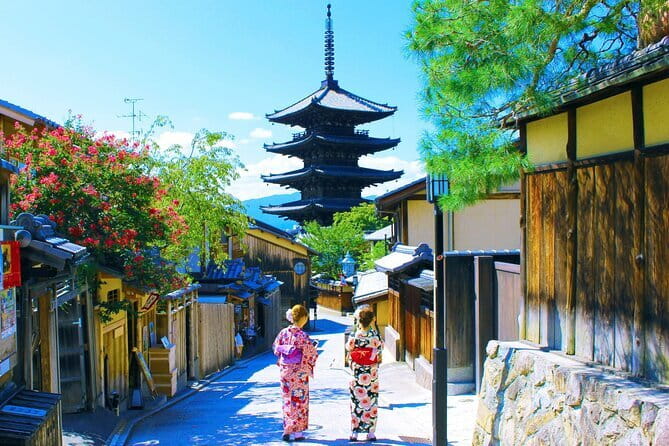
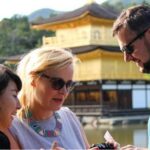
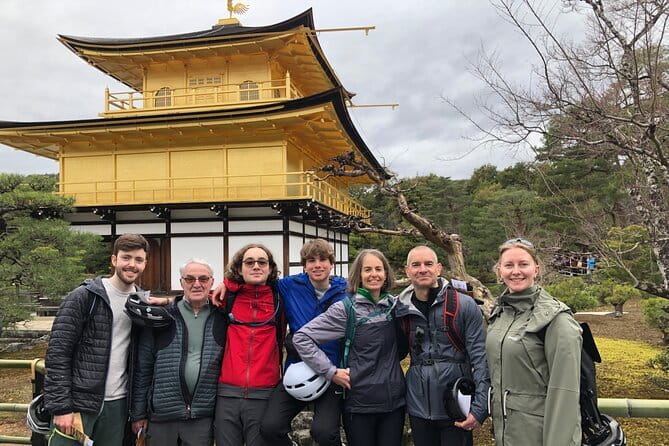
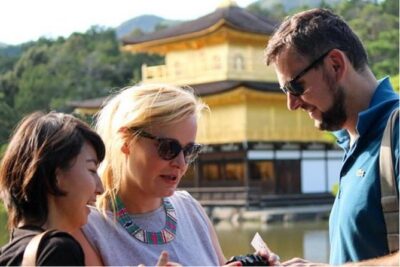
Kinkakuji, the Golden Pavilion, is one of those Kyoto sights that looks like a painting when the lighting hits right. The upper two floors are coated with gold leaf, and the temple—originally called Rokuonji—served as the retirement residence of Ashikaga Yoshimitsu.
After Yoshimitsu died in 1408, the shogun made it a Zen temple belonging to the Rinzai sect. Later, Yoshimitsu’s grandson, Ashikaga Yoshimasa, created Ginkakuji (the Silver Pavilion) across the city. Kinkakuji is also described as the only remaining building from Yoshimitsu’s retirement community, overlooking a large pond—so you’re not just seeing a gold surface. You’re seeing a whole scene designed for reflection.
Time here is about 1 hour, and admission is not included. The tour data also lists an admin fee of 500 yen per person for Kinkakuji, so budget that amount.
Tip for value: if you’re price-sensitive, this is one of the stops to mentally plan for ahead of time. It’s also the type of place where your guide’s context can make a big difference—naming what you’re looking at and why this building matters.
Other Kyoto tours and experiences to compare
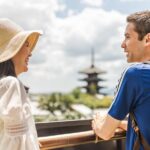
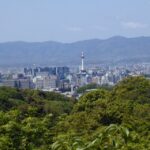
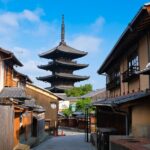
Kiyomizudera: the wooden stage and UNESCO views
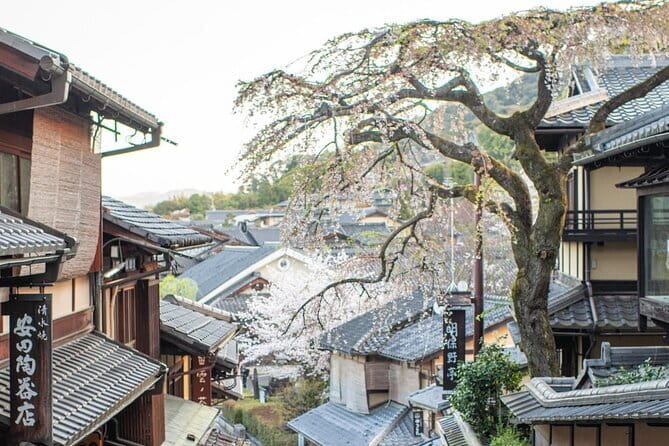
Kiyomizudera is one of Japan’s most famous temples, and it has a very specific feature you’ll feel the moment you see it: the wooden stage. It protrudes about 13 meters out from the main hall, sitting over the hillside.
The name Kiyomizudera means Pure Water Temple, and it connects back to the Otowa Waterfall. The temple was established in 780, and it’s tied to Buddhist history through sect connections, including the Hosso sect. It also became a UNESCO World Heritage Site in 1994.
Your stop here is about 1 hour, and admission is listed as not included (so you’ll want to be ready with some cash or a card you can use for entry).
What makes this stop especially worth it is the view from the stage. You can look out toward cherry and maple trees below, which turn into a color show in the right season. Even outside peak season, the wide perspective helps you understand why this place is still so iconic.
Practical note: you’ll likely stand and look for a while. If crowds are heavy, take breaks and reposition slowly rather than pushing forward.
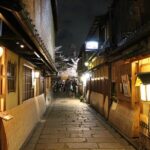
Gion stroll: geisha neighborhood atmosphere on Shijo Avenue
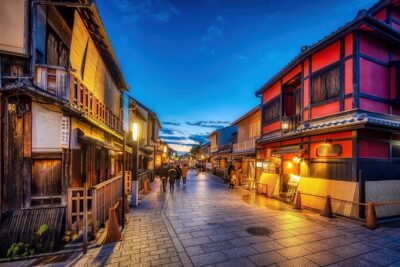
Gion is the best-known geisha neighborhood in Kyoto, and your time here is built for wandering. It’s centered along Shijo Avenue, between the Kamo River to the west and Yasaka Shrine to the east. Expect shops, restaurants, and ochaya (teahouses).
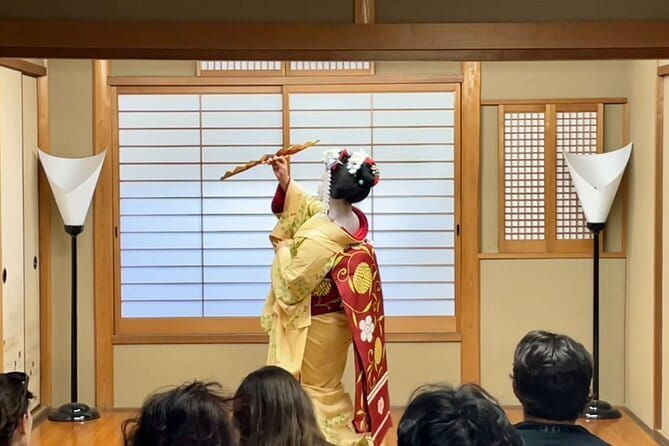
The area is known for entertainment by geiko (Kyoto’s word for geisha) and maiko (geiko apprentices). Even if you don’t have tickets to anything formal, a street-level walk is still part of the experience—watching how the neighborhood feels, how the machiya merchant houses shape the street, and how the shops fit into the old-town layout.
Gion is also described with a strong architectural detail: machiya houses have slender facades—about 5 to 6 meters wide—but go deeper from the street, sometimes up to 20 meters. The reason is explained as old tax rules based on street frontage, which turns zoning into architecture.
This stop is about 1 hour, and admission is listed as free.
One consideration: Gion is a place where people want different things. If you want quiet streets for photos, ask your guide to choose side lanes and timing. If you want more energy near the busiest corners, you can plan that too.
Sanjusangendo and Ginkakuji: two different kinds of temple wow
After Gion, the day leans temple-strong in two more stops that feel different from each other.
Sanjusangendo Temple: 1001 statues in a long hall
Sanjusangendo is famous for its 1001 statues of Kannon, the goddess associated with mercy and compassion. The sanctuary dates to 1164, and it was remodeled after the original building was damaged by fire about a century later.
The hall is a standout: it measures about 120 meters, and it’s described as Japan’s longest wooden structure. Your time here is about 1 hour, and admission is not included. The tour data lists a 500 yen per person admin fee for Sanjusangendo as well.
If you like religious art, this stop is the kind that stays with you. You’ll spend time scanning, not just looking once, because the room is built around repetition and detail.
Ginkakuji Temple: a Silver Pavilion that’s not the point
Next is Ginkakuji, the Silver Pavilion. It sits in the Higashiyama area on Kyoto’s eastern mountains. The background story is very human: in 1482, Ashikaga Yoshimasa built his retirement estate here, modeled after Kinkakuji (his grandfather’s retirement estate). After Yoshimasa died in 1490, the estate became a Zen temple.
The tour notes that Ginkakuji became a center of the Higashiyama Culture, contrasted with the Kitayama Culture from Yoshimitsu’s time. Translation: it’s not just about a building. It’s about how ruling elites influenced arts, aesthetics, and temple life.
Your time here is about 1 hour, and admission is listed as free.
Since Ginkakuji is free in this itinerary, it’s one of those value-friendly stops if you’re counting yen. It’s also a good one to pair with snacks or a breather after you’ve paid fees earlier in the day.
Nishiki Market: Kyoto kitchen shopping and food browsing
Ending the day with Nishiki Market makes a lot of sense because you’re in a neighborhood built for small bites. Nishiki is a narrow shopping street about five blocks long, lined with 100+ shops and restaurants.
It’s known as Kyoto’s Kitchen, specializing in food-related goods like fresh seafood and produce, knives and cookware, and Kyoto specialties. You’ll see Japanese sweets, pickles, dried seafood, and sushi options, plus plenty of seasonal choices depending on what’s available.
Your time here is about 1 hour, and admission is listed as free.
Practical move: treat Nishiki as a tasting and gift-finding stop, not a single restaurant meal. That keeps the day from running late and lets you try a few different things without committing to one sit-down.
Price and value: $557.45 for up to 6 people
The tour price is $557.45 per group, up to 6 people. On a per-person basis, that can be reasonable for a private day—especially in Kyoto where transit, timing, and crowd management can eat up your time fast.
What you’re paying for isn’t just the vehicle. It’s the ability to build a day that fits you: a private route, an English-speaking guide, and the promise of extra time if traffic delays things.
Also, the tour includes a few high-practicality items: a comfortable private vehicle, Wi-Fi hotspot, and a mobile ticket. Those small helpers matter more than they sound when you’re moving between multiple neighborhoods.
Where cost can sneak up is entry. Temple admission tickets are not included. The data specifies 500 yen per person for Kinkakuji and 500 yen per person for Sanjusangendo, and it lists admission not included for Kinkakuji, Kiyomizudera, and Sanjusangendo in general. So add some cash planning to your day.
Who this fits best:
- Families or friend groups who want control over what they see
- People who prefer not to herd themselves across Kyoto on their own
- Visitors who value an English-speaking driver-guide who can explain what you’re seeing and adjust as you go
Should you book this private Kyoto custom tour?
If you want a stress-reducing Kyoto day, I’d say yes. A private setup like this is especially good when you care about the order of things and you don’t want to guess your way through timing.
I’d also book it if your priority list includes at least several of these: Arashiyama, Fushimi Inari, Golden Pavilion, Kiyomizudera, Gion, and a market stop at Nishiki. The itinerary is strong as a framework, and customization is a real feature, not a marketing line.
Skip it—or at least reconsider—if you’re trying to travel ultra-budget. Because entry tickets aren’t included, your final cost depends on temple fees you’ll pay during the day, and Kinkakuji and Sanjusangendo have specific 500 yen admin fees.
If your group is flexible, though, and you want a day that moves with you instead of against you, this is a solid way to cover the big hits without feeling rushed.
FAQ
How long is the Kyoto private day tour?
The tour runs about 8 to 10 hours.
What time does the tour start?
The start time is 8:00 am.
How many people are in a group, and what does it cost?
The tour is priced at $557.45 per group and can include up to 6 people.
Is pickup available?
Yes, pickup is offered.
What’s included in the tour price?
It includes a comfortable private vehicle, an English speaking driver/guide, and a Wi-Fi hotspot, plus a mobile ticket.
Are temple entry fees included?
No. Entry tickets are not included. The tour data also lists a 500 yen per person admin fee for Kinkakuji and a 500 yen per person admission fee for Sanjusangendo.
Can I customize which Kyoto sights we visit?
Yes. You can discover the sights you’re most interested in, and the guide can recommend attractions to build your ideal day.
What happens if there’s traffic?
If traffic causes delays, extra time is provided free of charge.
Are service animals allowed?
Yes, service animals are allowed.
What’s the cancellation policy?
Free cancellation is available up to 24 hours in advance for a full refund. If you cancel less than 24 hours before the start time, the amount paid is not refunded.
More Guided in Kyoto
More Tours in Kyoto

More Tour Reviews in Kyoto


Just added: more Kyoto tours to browse








Guided, compared.
 ★ 5.0Kyoto Early Morning Tour with English-Speaking GuideFrom $681,427 reviews
 ★ 5.0Kyoto 6hr Private Tour with Government-Licensed GuideFrom $1551,369 reviews
★ 4.9Early Morning Tour with English-Speaking GuideFrom $1011,128 reviews
★ 5.0Kyoto 6hr Private Tour with Government-Licensed GuideFrom $1551,369 reviews
★ 4.9Early Morning Tour with English-Speaking GuideFrom $1011,128 reviews
 ★ 4.7Nijo-jo Castle and Ninomaru Palace Guided TourFrom $161,020 reviews
 ★ 4.9Izakaya Bars Guided Walking TourFrom $25815 reviews
 ★ 5.0Kyoto Gion Night Walk & Geisha District Guided TourFrom $18786 reviews
 ★ 4.7Nijo Castle, Kiyomizu & Fushimi Inari Guided TourFrom $54700 reviews
 ★ 5.0Kyoto 4hr Private Tour with Government-Licensed GuideFrom $109629 reviews