
Reviewed · KYOTO COOKING CLASSES
Private Kyoto Cooking Class with Aki in a Beautiful Wooden House
A family kitchen lesson in Kyoto. In Aki’s beautiful wooden house, you get a private, hands-on cooking class with English recipes, plus the comfort of learning in a real home setting. I especially like the Q-and-A freedom as you cook, and the way you can pick up techniques behind classics like miso soup. One possible drawback: this is a food-focused morning, not a tour of temples or streets, and you’ll need to handle getting yourself to the meeting point since there’s no hotel pickup.
If you’re starting your day in Kyoto, this fits nicely: the class begins at 10:30 am and runs about 3 hours total, with the cooking portion about an hour and then you sit down to eat what you made.
In This Review
- Key things that make this class worth it
- Aki’s wooden-house kitchen: the real reason this feels special
- What you’ll cook: seasonal dishes with real Kyoto flavor
- The lesson flow: how hands-on cooking and English guidance actually work
- Cooking questions in a private class: the quiet advantage
- The meeting point and the reality of morning logistics in Kyoto
- The meal: what you get after the cooking work
- Allergies and dietary needs: tell Aki early and clearly
- Price and value: does $95 make sense for a home cooking class?
- Who this private Kyoto cooking class is best for
- Should you book Aki’s Private Kyoto Cooking Class?
- FAQ
- What time does the cooking class start?
- How long is the experience?
- Is this class private?
- What’s included in the price?
- Do I get hotel pickup?
- Do they offer vegetarian options or handle dietary restrictions?
Key things that make this class worth it
- Private home setting instead of a packed group room
- English recipes plus hands-on guidance while you cook
- Seasonal, home-style dishes that are less “restaurant standard”
- Miso soup and other classics taught with practical technique
- Aki’s calm, patient teaching and room to ask questions
- A full meal you helped prepare, often with leftovers
Aki’s wooden-house kitchen: the real reason this feels special
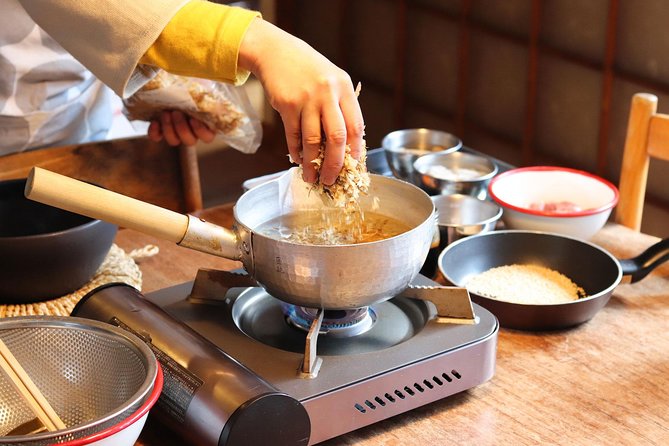
Kyoto cooking classes can be fun, but many turn into a race: chop fast, cook fast, take photos, repeat. This one slows everything down by happening in a home. You’re not standing behind a railing watching someone else work. You’re in the kitchen with Aki, and the pace is geared toward understanding what you’re doing and why.
The setting matters. A wooden house in Kyoto has a different atmosphere than a commercial classroom—more quiet, more personal, and easier to relax into. That helps if you’re nervous about cooking with unfamiliar ingredients or if you just want to learn without feeling rushed. I also like that the class is private, so the lesson can be shaped around your questions instead of covering a script for the loudest group.
Roll up your sleeves for another Kyoto cooking class

What you’ll cook: seasonal dishes with real Kyoto flavor
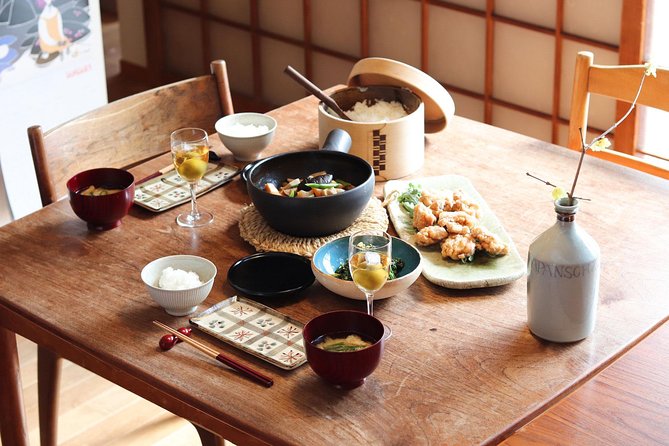
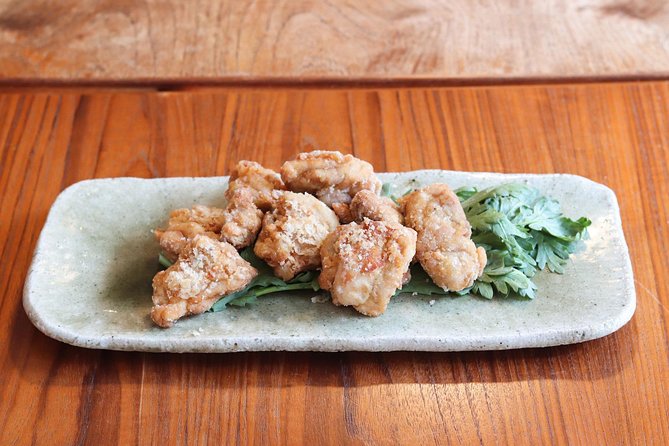
You won’t make one fixed “demo menu.” The dishes vary by the season, and that’s the point. Instead of pulling recipes from the same handful of restaurant items, you get home-style food that reflects what people cook when ingredients are at their best.
Depending on timing, you might work on dishes like:
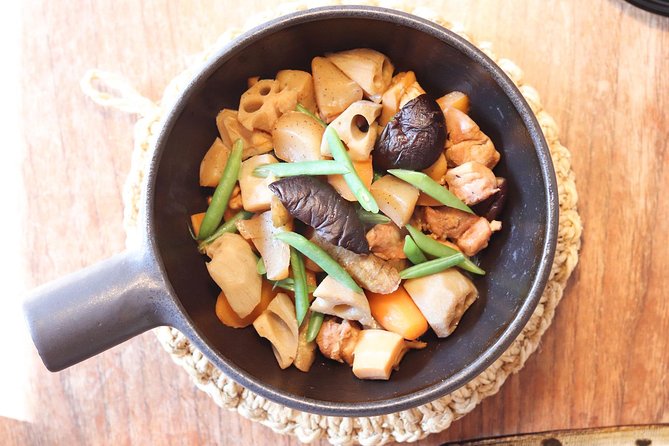
- Chikuzenni (braised chicken and vegetables)
- Braised burdock root
- Miso soup
Even when you’re cooking something you’ve heard of, you’re learning it as a home recipe, not as a performance. That’s where the value lives. Restaurants often simplify for speed and consistency. A family-style dish tends to teach you the core technique—how you build flavor step-by-step, how you judge doneness, and how you balance seasoning.
If you like the idea of eating what you learn right after cooking, this is a great match. These are dishes designed to end up on the table, not just to fill a checklist.
The lesson flow: how hands-on cooking and English guidance actually work
The class is structured so you’re doing the work, not just observing. Aki gives you recipes in English, then guides you as you cook. You’ll have time to ask questions while you’re actively making the food, which is the best moment to clarify anything you’re unsure about—knife work, seasoning, timing, or what a finished texture should look like.
One of the best parts is that you’re not stuck watching through the whole class. The cooking portion is about one hour, which is long enough to learn real skills but short enough to stay focused. When cooking time ends, you eat the meal you made together, so there’s no awkward “wait while we finish plating” stretch.
This pacing also helps you remember what you did. If you want to recreate a dish later, you’ll have a clear mental path: ingredient prep → cooking steps → the final result you tasted.
Cooking questions in a private class: the quiet advantage
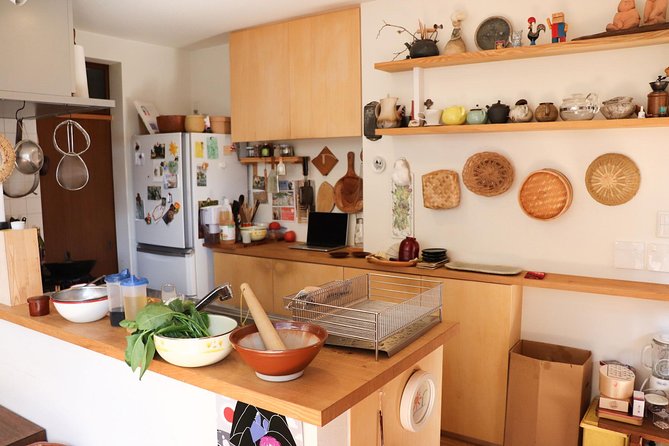
In a group class, questions get crowded out. In a private class, you can stop and ask. That single feature changes how much you learn.
I like this setup because you can get answers that actually fit your situation. Maybe you want to understand how to adjust flavor. Maybe you’re unsure about a Japanese cooking term. Maybe you want to know what makes the broth taste right. Since it’s just you (or your small group), you’re not competing with ten other people trying to talk at once.
Aki is also described as kind and patient with the instructions, and you can feel that in how the class stays comfortable. Good teaching here isn’t about rushing; it’s about making sure you’re confident enough to finish the dish and understand what you did.
The meeting point and the reality of morning logistics in Kyoto
You start and end back at the meeting point, and the start time is 10:30 am. There’s no hotel pickup, so plan to arrive on your own using nearby public transportation.
The meeting location is in the Shimogamo area, listed as Ipponmatsu, Shimogamo Matsunokicho, Sakyo Ward, Kyoto (606-0816, Japan). The specific starting stop is shown as Traveling Spoon. For your planning, the practical takeaway is simple: treat this like a destination you should navigate to calmly, not like something that will pick you up and deliver you.
Also note that the experience uses a mobile ticket. If you’re traveling with spotty signal, save the ticket screen offline before you go.
Other Kyoto tours and experiences to compare



The meal: what you get after the cooking work
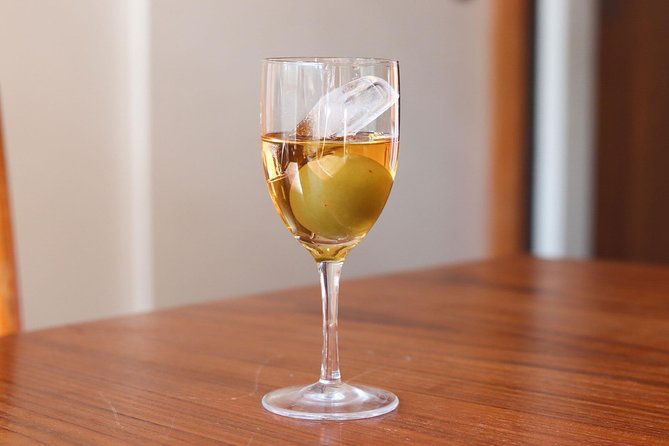
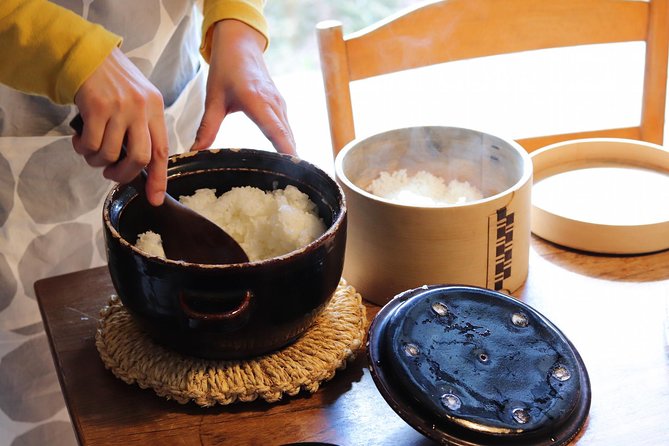
Once the cooking portion is done, you sit down for the meal you helped prepare. It’s part of the experience design, not an add-on. You’ll taste the results while everything is fresh in your mind, which makes the recipes stick.
The class description also points to drinks included with the meal. It specifically mentions non-alcoholic beverages in the included list, and the broader overview includes alcoholic drinks as well. Either way, expect the meal to come with something to drink, so you’re not hunting for refreshments right after class.
One more nice detail: the cooking seems to produce plenty of food. The vibe is that you come away feeling fed, not like you just tasted a bite. That also means leftovers are a real possibility, which can be helpful if you’re spending the rest of your Kyoto day on foot.
Allergies and dietary needs: tell Aki early and clearly
This is a private class, so you’re not trying to fit dietary needs into a rigid group menu. Still, you need to communicate your requirements when you book.
The key info is straightforward:
- If anyone has allergies, dietary restrictions, or cooking preferences, you should advise at booking.
- A vegetarian option is available if you request it ahead of time.
Because you’ll be following recipes and cooking as part of the process, accuracy matters. If you’re allergic, don’t leave it to “I’ll figure it out during class.” Send the details when you reserve, so Aki can adjust what you cook.
Price and value: does $95 make sense for a home cooking class?
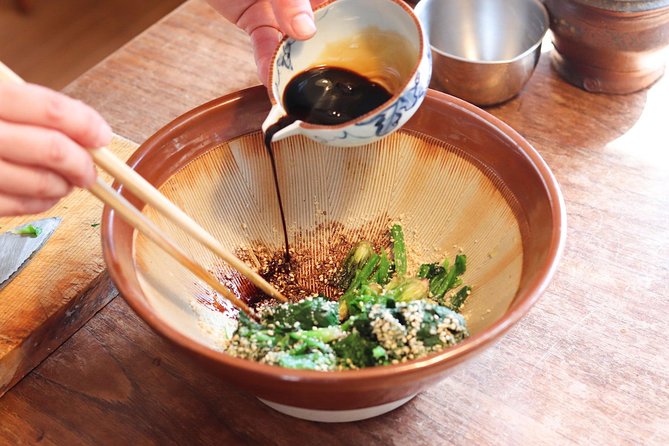
At $95 per person for about 3 hours, this isn’t a budget activity. But it can be good value for the right traveler, and here’s why.
You’re paying for:
- A private home experience (not a crowded shared class)
- Hands-on coaching from Aki with English recipes
- A meal you help make (so you’re not paying separately for food)
- Seasonal dishes and cooking techniques
- Drinks included with the meal
If you compare it to cheaper classes, the difference isn’t just “less money.” Cheaper options often mean larger groups, less time per person, and more “watch and sample” rather than “cook and learn.” In this format, you get more attention and a clearer path to reproducing dishes later.
So if your top priority in Kyoto is food that feels personal—something more than a souvenir—this price can feel fair. If you only want a quick tasting and you’re not interested in cooking, you might decide it’s more than you need.
Who this private Kyoto cooking class is best for
This class fits especially well if you:
- Want a calmer, more intimate Kyoto activity than crowded cooking studios
- Like hands-on learning and want to ask questions mid-recipe
- Care about seasonal home cooking and techniques behind familiar dishes
- Prefer a small-group or private setting over a larger tour group
It’s also a good option for couples or friends who want to share an experience in a genuine home setting. And if you’re traveling solo, the private format can feel like a reset button—quiet, focused, and easy to follow.
Should you book Aki’s Private Kyoto Cooking Class?
I’d book it if you want a Kyoto morning centered on real food and real technique. The private home setting, the English guidance, and the chance to stop and ask questions are the big strengths. You’ll leave with meal satisfaction right away, and you should also leave with enough know-how to cook again later.
If you’re looking for landmark sightseeing, this isn’t that type of activity. And since there’s no hotel pickup, you’ll want to feel comfortable navigating to the meeting point in the morning.
If that sounds like your kind of Kyoto, this class is an easy yes.
FAQ
What time does the cooking class start?
It starts at 10:30 am.
How long is the experience?
It runs about 3 hours total. The cooking portion is about 1 hour, and then you eat the meal you made.
Is this class private?
Yes. It’s a private, personalized experience with only your group participating.
What’s included in the price?
The price includes the private cooking class, a homecooked meal with your host Aki, and beverages (non-alcoholic beverages are listed as included). All taxes, fees, and handling charges are included too.
Do I get hotel pickup?
No. Hotel pickup and drop-off are not included, and the activity ends back at the meeting point.
Do they offer vegetarian options or handle dietary restrictions?
Yes. Vegetarian options are available if you request them at booking. If anyone has allergies, dietary restrictions, or cooking preferences, you should advise at time of booking.
More Private in Kyoto

More Tour Reviews in Kyoto






More Kyoto Cooking Classes

Just added: more Kyoto tours to browse








Kyoto Cooking Classes, compared.
 ★ 5.0Ramen Cooking Class at Ramen Factory in KyotoFrom $1311,937 reviews
 ★ 5.0Sushi Making in Kyoto! Same-day bookings welcome!From $53713 reviews
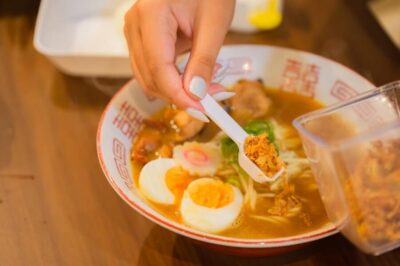 ★ 4.9Ramen Cooking Class at a Ramen Factory with SouvenirFrom $127532 reviews
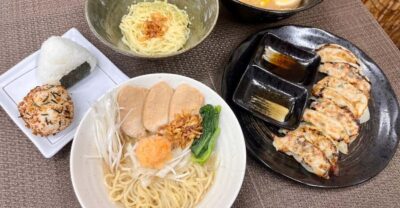 ★ 5.0Ramen, Gyoza, and Onigiri Cooking ClassFrom $90445 reviews
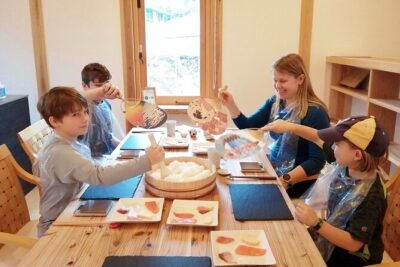 ★ 5.0The Original Small-Group Sushi Making Class in KyotoFrom $69436 reviews
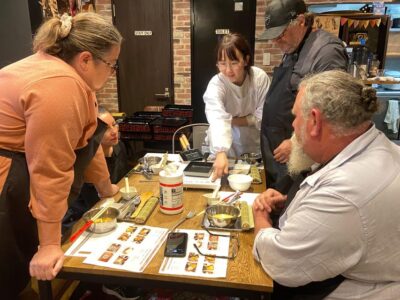 ★ 5.0Japanese Washoku Bento Small Group Cooking ClassFrom $58380 reviews
 ★ 5.0Kyoto Ramen and Gyoza Cooking Class with Professional ChefsFrom $86282 reviews
 ★ 4.9Afternoon Japanese Izakaya Cooking ClassFrom $67241 reviews
Browse the lists this tour appears in