
Reviewed · WORKSHOPS
Private Koto Lesson in Kyoto with a Professional Koto Performer
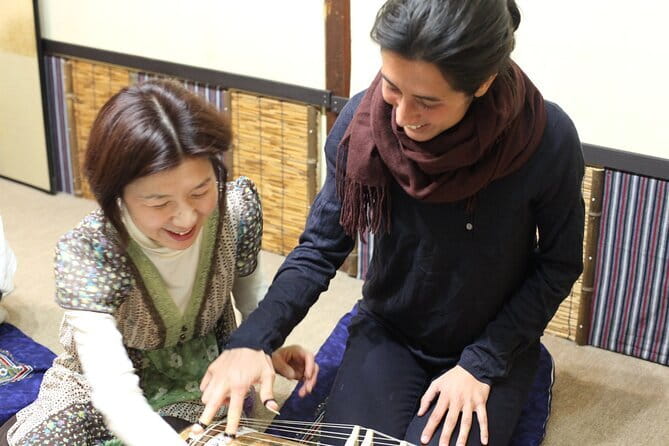
A Koto lesson in Kyoto feels instantly special. You sit down with a professional performer at 箏春庵 soushunan and learn a real song tradition—specifically Sakura—with the calm, hands-on coaching you need.
I like two things most: the focus on learning to play, not just watching, and the way the lesson includes context about the history and tradition behind the music. I also appreciate that the setup is handled for you, including instruments and notation.
One thing to consider is logistics: transportation to and from the meeting point isn’t included, so you’ll want a plan for how you’ll get there.
In This Review
- Key Highlights You’ll Care About
- Why Kyoto, and Why This Koto Lesson Hits
- Inside 箏春庵 soushunan: How the 1 Hour 20 Minutes Flows
- Learning Sakura: What You Actually Practice
- Tea Break and the Teacher’s Performance: Why It’s Included
- Price and Value: Is $60 Fair for a Private Lesson?
- Who This Koto Lesson Is For (and Who Might Want to Skip)
- Planning Your Arrival: Meeting Point, Tickets, and Practical Notes
- Tips to Make Your Lesson Go Smoothly
- Should You Book This Private Koto Lesson?
Key Highlights You’ll Care About
- A private lesson with a professional koto performer, so you get real attention and patient guidance
- You learn to play Sakura, a classic choice that’s beginner-friendly in structure
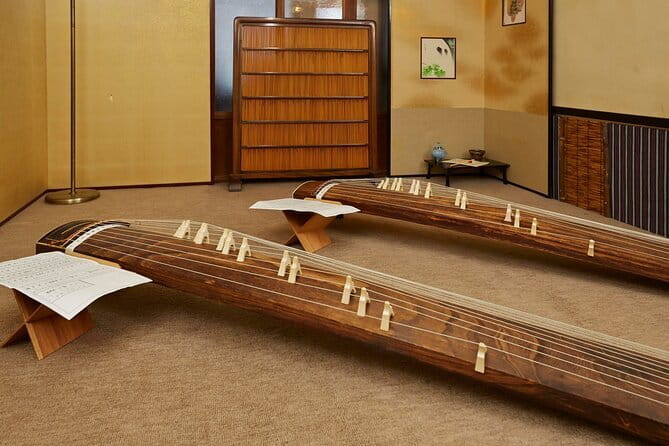
- All instruments and music notation are provided, so you can show up light
- Tea break plus teacher performance, which helps you connect what you just practiced to how it sounds
- Works for a wide age range, from kids (3+) to seniors
Why Kyoto, and Why This Koto Lesson Hits
Kyoto already has the feeling of old music and old manners. A koto lesson here makes that idea practical, because you’re not just learning notes—you’re learning how the instrument is approached in a Japanese cultural setting.
This experience is also built around one key idea: make the koto playable, fast. The goal isn’t to impress with jargon. It’s to get your fingers moving, your ears listening, and you understanding what you’re doing as you go. That balance shows up in the structure: you learn, you get feedback, and then you hear the music performed.
And because the instruction is private, it stays personal. You can move at your pace, whether you’re picking this up for fun or you want to get something you can actually play when you go home.
Other Kyoto tours and experiences to compare


Inside 箏春庵 soushunan: How the 1 Hour 20 Minutes Flows
Plan for about 1 hour 20 minutes total. It’s long enough to learn something real, but short enough that it won’t feel like a full-day commitment.
You’ll start at 箏春庵 soushunan (soushunan288-2 Higashishinmeichō, Kamigyo Ward, Kyoto, 602-8162). From there, the session typically centers on three phases:
1) getting oriented to the koto and the basics of how the lesson will work
2) practicing your chosen piece with guidance
3) finishing with a tea break and the teacher’s performance
That last part matters more than it sounds. When you get to hear the teacher play after your own practice, the music stops being theory. It becomes a target, and it helps you understand how your effort translates into sound.
Since this is a private activity, it’s only your group. That means there’s no pressure to “keep up” with other people’s pace, and the instructor can adjust teaching style on the spot.
Learning Sakura: What You Actually Practice
You’ll learn to play the koto song Sakura. That’s a smart pick for a first lesson because it gives you a clear, recognizable goal. Instead of scattering your energy across multiple songs, you focus on one piece and build confidence through repetition.
The lesson also covers the background: you’ll learn history and tradition alongside the playing. The point isn’t to turn the session into a lecture. It helps you connect the technique to meaning—like why this music is important in formal Japanese ceremonies and cultural life.
A detail that helps beginners a lot: you’re provided with the necessary materials. The koto instrument usage is covered, and you’re also given access to musical notation. That reduces frustration. You’re not trying to find sheet music while you’re learning posture and finger positions.
And yes, the instruction is designed for a wide range of ages. The format is meant to work for kids (3+) and adults, so parents don’t have to worry that the lesson will be too complicated for children, or too basic for adults. You’ll still get technique, just paced appropriately.
Tea Break and the Teacher’s Performance: Why It’s Included
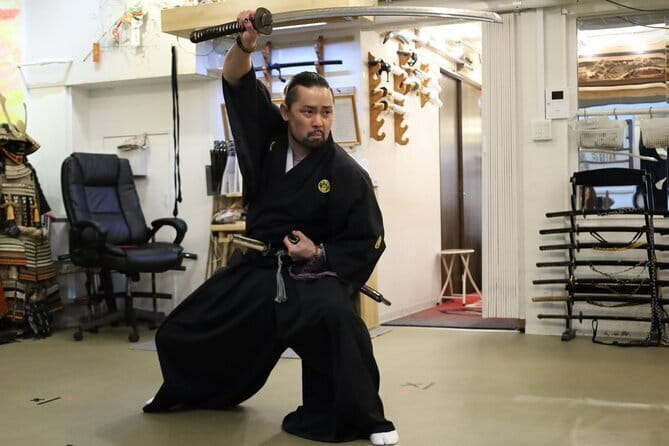
A tea break after you practice might sound like a nice extra. In reality, it’s part of how your brain locks in what you learned.
After a period of focused concentration, your hand movements and timing need a reset. Tea gives you that breathing space without losing the cultural mood. It’s also a chance to ask small questions if anything felt confusing—like where your rhythm should land or how the phrase should feel.
Then comes the teacher’s performance. Hearing a professional koto performer play after you’ve just worked on the piece is one of the best ways to understand what “good” sounds like. You can compare your earlier attempts to the real phrasing and tone, and it helps you leave with a clearer sense of what to practice next time.
This is also where the lesson stops being only about you. The instructor shifts from coaching mode into performance mode, and the contrast makes the experience memorable.
Price and Value: Is $60 Fair for a Private Lesson?
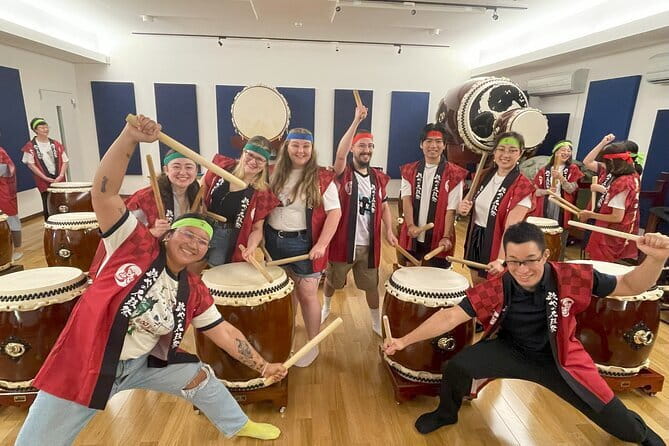
At $60 per person, this isn’t a “cheap thrill” activity—but it’s also not overpriced for what’s included. You’re paying for a private session with a professional performer, plus the koto instrument usage and the lesson itself.
Here’s how I think about value for this kind of experience:
- Private instruction costs more than group classes, but it’s more efficient. You’re not waiting for your turn or getting generic advice.
- The instrument and notation are provided, so you avoid extra rental or searching for materials.
- You also get more than practice time: you get the teacher’s performance and a tea break included in the flow.
If you’ve ever sat through a cultural activity where you watch more than you learn, you’ll appreciate what this offers. The structure is set up so you leave knowing what to do with the koto, not just having taken photos near one.
Other Kyoto tours and experiences to compare



Who This Koto Lesson Is For (and Who Might Want to Skip)
I’d steer you toward this if you want an authentic cultural activity that still feels hands-on. It’s especially good if:
- you’re curious about Japanese instruments and want a real introduction
- you’re traveling as a family and want something your kids can participate in
- you want a private experience where the teacher can adjust pace
- you’d rather learn one song thoroughly than collect lots of partial information
Because it’s designed for people from 3 years old to elderly people, it also works well for multigenerational groups. That’s not always true with music workshops, so it’s a plus.
You might consider choosing something else if you’re looking for a long, sightseeing-heavy itinerary with lots of walking and new locations. This is primarily about the lesson experience, not a tour of multiple sights.
Also, if you’re only interested in watching musicians perform and you don’t want to sit down and practice, you may still enjoy the teacher’s performance—but the main value is in learning.
Planning Your Arrival: Meeting Point, Tickets, and Practical Notes
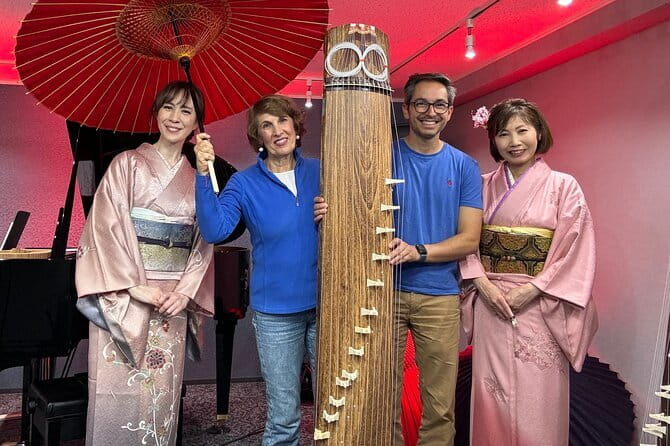
Your meeting point is 箏春庵 soushunan at soushunan288-2 Higashishinmeichō, Kamigyo Ward, Kyoto, 602-8162, Japan. The location is listed as near public transportation, which makes it easier to fit into a day without adding a taxi bill for every leg.
You’ll use a mobile ticket, and you should receive confirmation within 48 hours of booking, as long as space is available. That’s useful if your Kyoto schedule is tight and you want to know you’re locked in.
One more practical note: private means only your group participates. So if you’re bringing kids, traveling with a partner, or going with a small group of friends, you’ll get that calmer, less crowded vibe.
Service animals are allowed too, which is important if you need that accommodation.
Tips to Make Your Lesson Go Smoothly
You can show up as a beginner and be fine, because the session is built for learning. Still, a few small choices help you get more out of the time:
- Arrive a little early so you can settle in without rushing through the start of the lesson.
- Wear comfortable clothing that lets you move easily while you practice.
- When the notation is shown, take a quick moment to connect it to what you’re hearing. That speeds up the learning curve.
- After the tea break, listen closely during the teacher’s performance. Try to notice how phrasing and tone change compared to your own playing.
If you want a souvenir of sorts, think of it as musical knowledge. You’ll leave with a piece you can reference later, not just memories from a session.
Should You Book This Private Koto Lesson?
I think you should book if you want a high-quality, private introduction to a classic Japanese instrument with a professional. The strongest reasons are clear: you learn Sakura, you get patient guidance, and you also get a teacher performance plus tea in the same experience.
Also, the price feels reasonable for what’s included—especially because instrument usage and lesson time are covered. And the format works across ages, which makes it a smart family choice.
If you only want casual cultural vibes with no hands-on playing, you may prefer a performance-focused option. But if you want to walk away knowing how the koto actually works and how a famous piece sounds when played well, this is a strong bet.
More Workshops in Kyoto
More Private in Kyoto


More Tour Reviews in Kyoto






Just added: more Kyoto tours to browse








Workshops, compared.
 ★ 4.345-Minute Tea Ceremony Lesson ExperienceFrom $222,378 reviews
 ★ 5.0Ramen Cooking Class at Ramen Factory in KyotoFrom $1311,937 reviews
 ★ 5.0Chopsticks Making Workshop in Gion with Engraving OptionFrom $15958 reviews
 ★ 4.9Samurai Sword Class by Experts in Traditional ArtsFrom $64657 reviews
 ★ 4.9Ramen Cooking Class at a Ramen Factory with SouvenirFrom $127532 reviews
 ★ 5.0Ninja 1-hour Hands-on Lesson by Japanese master in Kyoto -EntryFrom $80489 reviews
 ★ 5.0Ramen, Gyoza, and Onigiri Cooking ClassFrom $90445 reviews
 ★ 5.0The Original Small-Group Sushi Making Class in KyotoFrom $69436 reviews
Browse the lists this tour appears in