
Reviewed · GION & GEISHA DISTRICT TOURS
Kyoto Gion Cultural Walk & Geisha Show with Dining Options
Gion at night is about meaning, not just photos. This small-group experience strings together a guided Gion district walk with a maiko dance meeting where you can ask questions. You’ll get cultural commentary along the way, plus a route that keeps you from wandering into the wrong alleys.
What I like is the way the story builds in layers: you start with theater origins, then move through Gion streets and Shinto and Zen stops before the performance. Another win is the format of the finale, with a 45-minute meeting/show led by an apprentice geisha where the atmosphere is respectful and interactive. One drawback to consider: the tour isn’t recommended if you have leg problems, and two temple areas have admission fees that are not included.
In This Review
- Key things to know before you go
- Why this Gion walk feels like a guided lesson
- A note on your expectations
- The 45-minute maiko show: what you actually get
- If you’re hoping to photograph
- The route through Gion: seven stops that build the story
- Stop 1: Statue of Izumo-no-Okuni (Kabuki origins)
- Stop 2: Minamiza Theater (old theater architecture + modern connection)
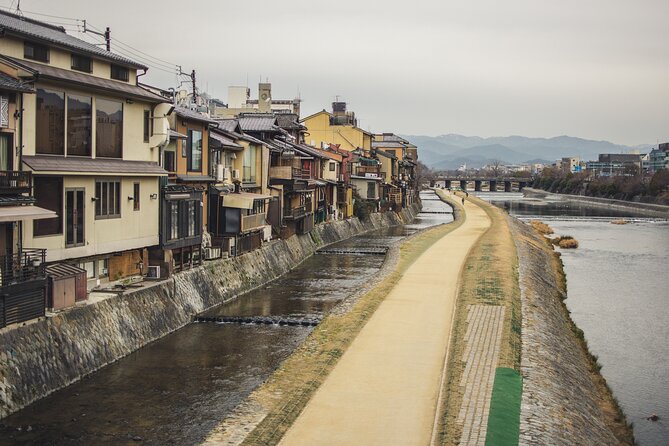
- Stop 3: Gion Shirakawa (the streets people picture)
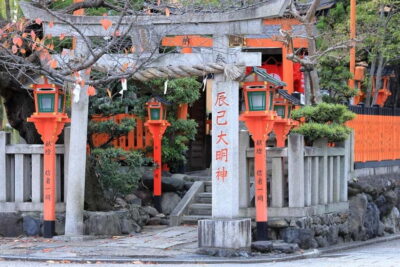
- Stop 4: Tatsumi-jinja Shrine (Shinto in plain terms)
- Stop 5: Hanamikoji Street (the Gion main drag)
- Stop 6: Kennin-ji Temple (Zen Buddhism, built 1202)
- Stop 7: Zenkyo-an (Marishitendo) boar guardians
- Price and value: why $121.37 can make sense
- The one value trap
- Dining options: what to watch for with meal add-ons
- Logistics that matter: timing, tickets, and where you end up
- Weather reality check
- Who this tour fits best
- Should you book this Kyoto Gion Cultural Walk & Geisha Show?
- FAQ
- How long is the Kyoto Gion Cultural Walk & Geisha Show?
- Where does the tour start?
- Where does the tour end?
- Is there a mobile ticket?
- How many people are in the group?
- What is included in the experience?
- Is a maiko meeting guaranteed?
- Are temple or shrine admissions included?
- What should I know about dining options?
- What is the cancellation policy?
Key things to know before you go
- Small group size (max 9) keeps the walk conversational and question-friendly
- 45-minute maiko meeting and show includes one or two songs and time to ask questions
- Gion Shirakawa + Hanamikoji Street are prime for seeing the old streets people come for
- Kabuki stops before Gion give you context for theater connections in the neighborhood
- Some temple entries cost extra at Kennin-ji and Zenkyo-an
- Good-weather dependent: plan for rain flexibility
Why this Gion walk feels like a guided lesson
Kyoto’s Gion district is easy to romanticize. The streets look like a postcard, and it’s tempting to treat the area as scenery only. This experience nudges you in a better direction. It turns the walk into a simple guided lesson, using key locations to explain how Japanese arts and belief systems shaped what you see.
The itinerary also makes practical sense. You’re not just dropped at a street corner and told to wander. A guide leads you through the neighborhood at a relaxed pace, so you can focus on learning the cues: why these shrines are here, what Zen temples look for, and why theater matters to the culture of this part of Kyoto.
I also like the scale. With a maximum of 9 travelers, the group doesn’t feel like a human conga line. It’s much easier to ask questions when you’re not shouting over dozens of people.
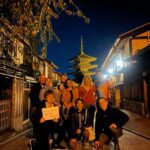
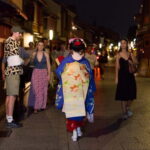
More evenings along the lantern-lit lanes of Gion
A note on your expectations
This is not a long temple marathon. Each stop is short, typically around 10 to 15 minutes, so you’ll get a sense of each place without exhausting yourself. Think of it as a high-signal evening introduction, not a slow day of deep reading in one building.
The 45-minute maiko show: what you actually get
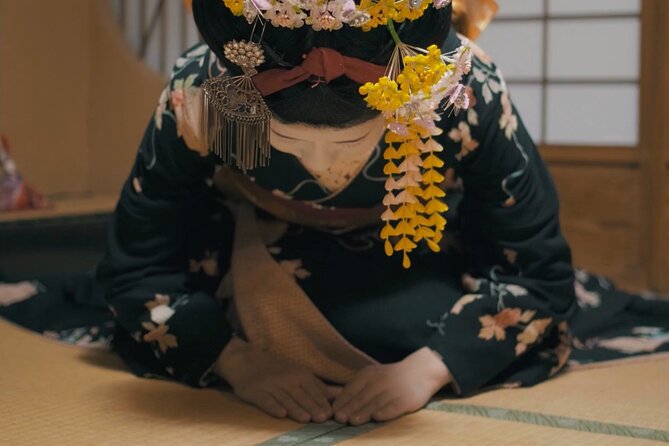
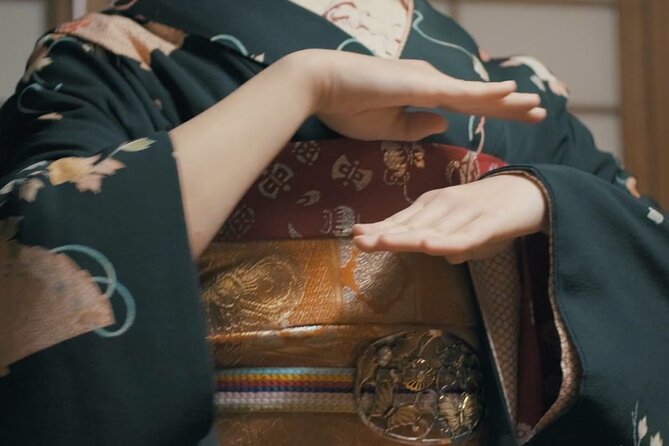
The tour’s finale is the moment most people sign up for: a geisha tradition encounter centered on an apprentice geisha (maiko). You’ll get about 45 minutes that typically includes a meet-and-show with a dance performance featuring one or two songs, plus time for questions.
What matters here is the way the experience is framed. The meeting isn’t presented like a gimmick. It’s handled as a real cultural exchange, with your guide translating and helping you understand what you’re seeing and hearing. That translation support is a big deal, because geisha and apprentice geiko culture uses a lot of context—timing, etiquette, and small details that you’ll miss if you only watch silently.
It’s also why Q&A works well on a small group tour. You can ask more specific questions, and you’re more likely to get answers that connect back to what you learned on the walk.
If you’re hoping to photograph
Your tour time may include rules around where and when you can take photos. One clear hint from past experiences: sharing images publicly can be restricted. If this matters to you, ask your guide about photography expectations before the performance starts.
The route through Gion: seven stops that build the story
The whole walk runs about 3 hours total, with 1.5 to 2 hours of guiding in Gion plus the 45-minute meeting/show. It starts at the Statue of Izumo-no-Okuni in Higashiyama Ward and ends in a different location, so keep your phone handy for end-point instructions.
Below is how the stop-by-stop flow can help you understand what you’re seeing—and where to be a little careful.
Other Kyoto tours and experiences to compare

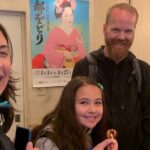


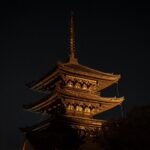
Stop 1: Statue of Izumo-no-Okuni (Kabuki origins)
You’ll begin at the Statue of Izumo-no-Okuni, where the guide connects the origins of kabuki with a feminine beginning of the theater. If you’ve heard that kabuki is traditionally performed by men, this stop gives you the missing origin story—how the craft began and how gender roles shifted over time.
This stop is quick (around 15 minutes) and has no admission fee. It’s a strong opener because it plants the idea that performance arts didn’t spring out of nowhere; they came from social change.
Stop 2: Minamiza Theater (old theater architecture + modern connection)
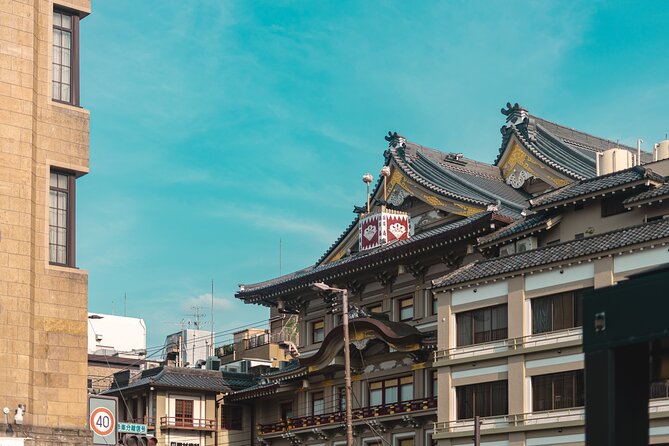
Next is Minamiza Theater, one of the older kabuki theaters in Kyoto. You’ll spend about 10 minutes looking at the building’s architecture and hearing a story that links kabuki with VR. Even if VR is not your thing, the point is about how tradition keeps finding new ways to communicate.
No admission fee is listed here. The short time works well because it keeps you moving, while still giving you at least one “landmark theater” moment early in the evening.
Stop 3: Gion Shirakawa (the streets people picture)
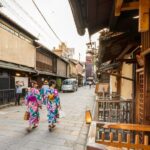
Then you enter the famous feel of Gion at Gion Shirakawa—old-fashioned streets, traditional buildings, and a riverside atmosphere. Expect about 15 minutes here, with free admission.
This is where you’ll start to notice the details that make the area look the way it does: the street scale, the building frontages, and how the neighborhood is designed for quiet movement rather than big-city traffic flow. It’s also a good time to look for signs of traditional businesses and the rhythms of local life.
A small consideration: if it’s rainy or very crowded, it can be harder to take in architecture. Keep your eyes up, and let the guide do the navigation heavy lifting.
Stop 4: Tatsumi-jinja Shrine (Shinto in plain terms)
At Tatsumi-jinja Shrine (Tatsumi Dai-myojin), the guide explains Shinto as Japan’s native religion and brings up the idea of eight million gods. You’ll spend around 15 minutes here, and admission is free.
This stop often helps people connect the dots. A lot of first-time visitors think geisha culture lives in a separate bubble. In reality, it sits inside the same land of shrines, festivals, and spiritual life. Seeing a shrine stop in the route helps your brain stop treating culture as just costume.
Stop 5: Hanamikoji Street (the Gion main drag)
Then comes Hanamikoji Street, the main street of Gion. Plan for about 10 minutes. It’s free, and it’s also the best shot at seeing geisha walking around—if your timing is lucky.
Even if you don’t see anyone in motion, Hanamikoji is still worth the walk. It gives you the sense of where people go, where cameras cluster, and where the neighborhood’s “stage” feel begins. Use this time to look for direction and transitions—how the streets narrow and open as you move.
Stop 6: Kennin-ji Temple (Zen Buddhism, built 1202)
At Kennin-ji Temple, you’ll talk Zen Buddhism and see a major site founded in 1202. This stop is about 15 minutes, and admission is not included.
This is a key cultural pivot point. Geisha traditions are often framed as arts-only. Zen provides another layer: discipline, aesthetics, and everyday conduct. In a short time, you’ll get the gist of what Zen means in practice—less talky, more about how people carry themselves.
If you want to control costs, budget for entry here and at the next stop. The tour doesn’t list admission, so you’ll want to follow your guide’s lead on paying on site.
Stop 7: Zenkyo-an (Marishitendo) boar guardians
Your final stop in the walk is Zenkyo-an (Marishitendo), a subtemple of Kennin-ji in Gion. You’ll spend around 15 minutes and learn about boar guardians, luck, and safety. Admission is not included here either.
This is one of those places that rewards attention. The “boar guardian” idea gives you something concrete to remember when you walk out. Also, the safety/luck theme fits Gion’s overall vibe of protective etiquette—getting through social life correctly.
Price and value: why $121.37 can make sense
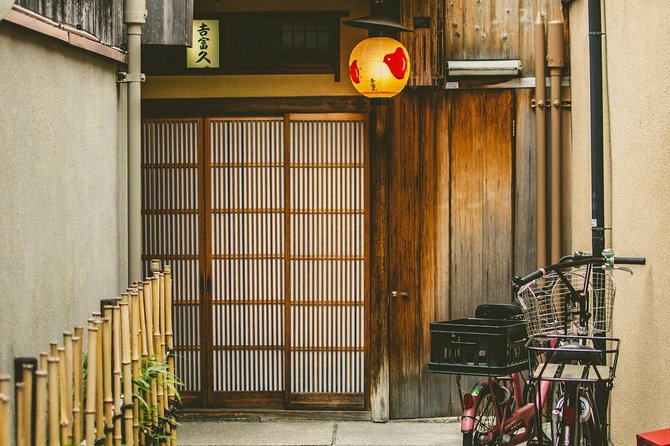
At $121.37 per person, this isn’t a cheap snack of a tour. But it includes two things that typically cost extra when you book them separately: a structured local guide and a performance-style meeting with an apprentice geisha.
You’re paying for:
- Guiding in Gion (1.5 to 2 hours) with commentary
- A 45-minute maiko meeting and show, including dance and Q&A
- A route that links Kabuki, Shinto, and Zen to the real geography of Gion
If you’ve ever tried to piece together “Gion walk + cultural context + a geisha encounter” on your own, you know the hard part isn’t time. It’s knowing what to look at once you’re there.
The one value trap
If your booking includes a meal option, the value can swing based on how much food you actually receive. One past experience called out a mismatch between price and portion size, and that’s the big risk to watch. If dining is included in your specific selection, I’d treat dinner as an added extra, not the main reason to book—then you won’t feel stranded if the portion is modest.
Dining options: what to watch for with meal add-ons
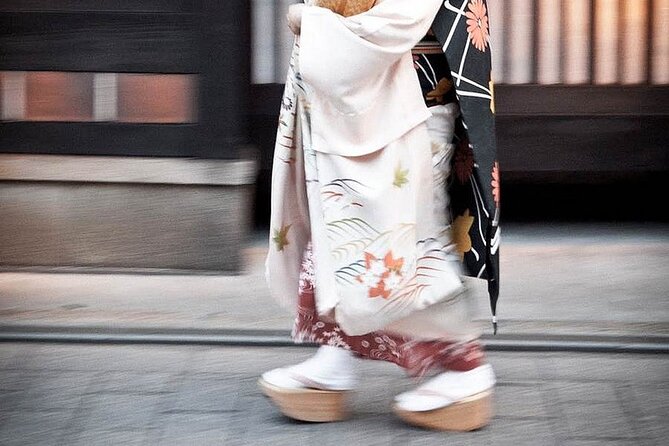
The tour is marketed with dining options, and some versions include food served family style with options and help for dietary restrictions. That part can be genuinely convenient, especially after you’ve been walking for a bit.
But meal add-ons are also where expectations can go wrong. When people feel the food was too little for the added cost, the complaint usually isn’t about taste—it’s about fairness. So use this rule of thumb: confirm what dining includes in your chosen package, and consider eating a light snack before the tour so you’re not hungry if the meal portion is smaller than you expected.
Logistics that matter: timing, tickets, and where you end up
This is a mobile ticket experience and you’ll start at the Izumo-no-Okuni statue in Higashiyama Ward. The end location is different from the start, so don’t plan a tight connection without checking your final instructions.
The tour is near public transportation, which is helpful because evening crowds in Kyoto can make “just walk” plans slower than you expect. Also, the walking is not described as intense, but it is still a walking tour, and it’s not recommended for travelers with leg problems.
Group size stays under 9, which is a practical quality-of-life point. It usually means shorter waits and fewer photo-blocking problems.
Weather reality check
This experience requires good weather. If conditions are poor and it gets canceled, you’ll be offered a different date or a full refund. In rainy season planning, I’d think about bringing a compact umbrella and wearing shoes you can trust on wet stone.
Some guides handle storms well, with practical extras like umbrellas, cold cloths, and drinks in certain situations. You shouldn’t count on a miracle, but good preparation from the guide is a real quality signal.
Who this tour fits best
This tour is best for you if:
- You want a structured Gion introduction rather than a wandering walk
- You care about culture that connects to performance arts (Kabuki links and theater origins)
- You want to ask questions during a maiko meeting and dance show
- You like small-group dynamics where conversation stays possible
It may not be ideal if:
- You have limited mobility (it’s not recommended for leg problems)
- You prefer long temple time with minimal walking
- You’re booking primarily for the meal. Dining value can vary by package, and portion expectations matter.
Should you book this Kyoto Gion Cultural Walk & Geisha Show?
Yes, I’d book it if you want an evening in Gion that teaches you what you’re seeing before the performance happens. The stop sequence—Kabuki origin, theater, Gion streets, Shinto, Zen, then the maiko meeting—gives the night a clean storyline. And the 45-minute meeting/show format is the kind of “one real cultural moment” that’s hard to replicate on your own.
Skip it or think twice if you’re highly sensitive to walking time, or if the dining add-on is the main driver of your decision. For those cases, make sure you know exactly what your meal option includes and consider eating before you arrive.
If you’re ready for a respectful cultural evening with a small group and a real question-and-answer finale, this is a strong choice.
FAQ
How long is the Kyoto Gion Cultural Walk & Geisha Show?
It runs about 3 hours.
Where does the tour start?
It starts at the Statue of Izumo-no-Okuni in Kawabatacho, Higashiyama Ward, Kyoto.
Where does the tour end?
The tour ends in a different location than the start. The exact end details are provided after booking.
Is there a mobile ticket?
Yes, it includes a mobile ticket.
How many people are in the group?
There is a maximum of 9 travelers.
What is included in the experience?
You get 1.5 to 2 hours of guiding in the Gion district and a 45-minute geisha meeting and show with an apprentice geisha dance (with one or two songs).
Is a maiko meeting guaranteed?
The tour includes a 45-minute meeting and show with an apprentice geisha (maiko).
Are temple or shrine admissions included?
Most stops list free admission, but admission for Kennin-ji Temple and Zenkyoan is not included.
What should I know about dining options?
The experience is marketed with dining options, but your specific package may include or exclude dining. If a meal is part of your booking, it’s handled during the experience.
What is the cancellation policy?
Free cancellation is available up to 24 hours before the experience start time for a full refund. If canceled less than 24 hours before, the amount paid is not refunded. The experience also depends on good weather, with a different date or full refund if canceled for poor weather.
More Walking Tours in Kyoto
More Tour Reviews in Kyoto

Still in Gion? Keep Going

Just added: more Kyoto tours to browse





Gion & Geisha District Tours, compared.
 ★ 4.7Kyoto Geisha Walking Tour: Gion District & Hidden GemsFrom $253,273 reviews
 ★ 4.9Gion Magical Night Walking Tour with Geisha TriviaFrom $242,393 reviews
 ★ 4.7Gion Geisha District Walking Tour – Stories of GeishaFrom $202,187 reviews
 ★ 4.9Best of Kyoto: Gion, Geisha, Pagodas & CobblestonesFrom $242,058 reviews
 ★ 4.5Night Walk in Gion: Kyoto’s Geisha DistrictFrom $212,003 reviews
 ★ 5.0Kyoto Night Foodie Tour in Gion (9+ dishes + 6 Sake tastings)From $1631,762 reviews
 ★ 5.0Kyoto Gion Geisha District Walking Tour – The Stories of GeishaFrom $251,441 reviews
 ★ 5.0Kyoto Gion: 2-Hour Geisha Culture & History Walking TourFrom $231,186 reviews
Browse the lists this tour appears in