
Reviewed · KYOTO TEA CEREMONIES
KYOTO: Private Tea Ceremony in Hidden Townhouse (Kid-Friendly)
A quiet cup can say a lot in Kyoto. This private matcha tea ceremony in a hidden townhouse gives you one-on-one attention, includes a plantation film and stone-milling moment, and still makes time for kid-friendly hands-on tea making. The only drawback is the whole experience is about 45 minutes, so it feels more like a focused introduction than a long, formal tea tradition.
I really like that it’s private, so the pace can fit your group instead of you trying to keep up with strangers. I also like the clear, step-by-step flow, because you’re not just watching—you’re making matcha and then tasting what you made. If you expect a full, hours-long ceremony with lots of stages, you may find the timing a bit tight for the price.
You’ll meet your host at WOM-Way of Matcha in Jurakuchō (Kamigyo Ward), and then the session ends back at the same spot. Expect a short film, demonstration, then your turn to make tea—plus time for photos while everything looks its best.
In This Review
- Key highlights at a glance
- Private matcha time in a hidden Kyoto townhouse
- How the 45 minutes runs: from plantation film to latte making
- Stone-milling matcha powder: the part you can recreate at home
- Tea ceremony demonstration: why the order matters
- Making your own tea (and a latte): hands-on, not just watch
- Photo time in a townhouse setting
- Price and value: what $51.24 per person really buys
- Where you meet: WOM-Way of Matcha in Jurakuchō
- Who this tea ceremony suits best
- Should you book this private tea ceremony?
- FAQ
- How long is the private tea ceremony?
- How much does it cost?
- Is it private or shared with other groups?
- Is it kid-friendly?
- What’s included in the session?
- Where is the meeting point?
Key highlights at a glance
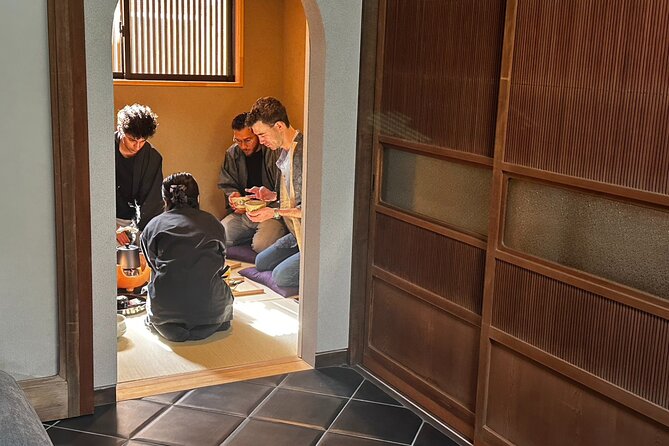
- Private townhouse setting in a quieter corner of Kyoto, for just your group
- Stone-milling matcha powder as part of the process, not just a finished product
- Kid-friendly hands-on time, with a pace built around families
- Photo time included, so you can actually capture the moment
- Make and take practice, including tea making and latte-style making
Private matcha time in a hidden Kyoto townhouse
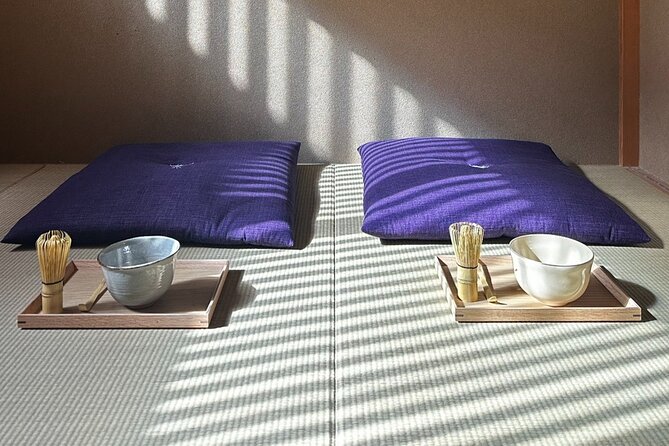
Kyoto does tea everywhere, but this experience takes you out of the typical crowded flow. Instead of joining a large group in a busy room, you get a private setup in a townhouse-style space. That matters more than you’d think. You can hear the host, ask questions without rushing, and settle into the rhythm of the ceremony.
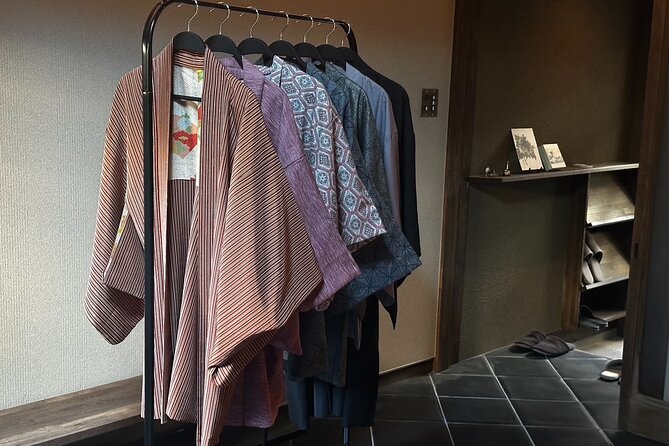
The space is also part of the charm. A townhouse setting feels more intimate—like you stepped into someone’s carefully kept home rather than a staged tourism stop. The goal isn’t to overwhelm you with rules. It’s to help you understand matcha preparation in a way you can repeat later.
Two things I’d call out from the experience vibe: first, the host support. Names like Yuki show up in the feedback, and the tone is consistent—polite, friendly, and careful with explanations. Second, the way it’s built for real people, including children. You’re not expected to sit perfectly still for a long time.
Sit for another bowl of matcha in a Kyoto tea house


How the 45 minutes runs: from plantation film to latte making
The session moves through a clear sequence. You start with a short viewing, then you shift into making, then you finish with your own cups.
Here’s what the timeline is like:
1/ Watch footage of tea plantations
You’ll see matcha in context before you touch anything. It’s a quick way to understand what you’re working with and why matcha is treated differently from other teas. Even if you know nothing about matcha, this step gives you a simple mental picture first.
2/ Make matcha powder with stone-milling
This is one of the most hands-on parts. Stone-milling is the traditional method used to grind matcha. You’ll get the chance to see and experience the grind as part of the preparation process. For me, this is where it stops being abstract. You can connect the texture and aroma to what ends up in the bowl.
3/ Tea ceremony demonstration
After you’ve seen the starting point, your host demonstrates the ceremony steps. The demo is where the host can explain timing and technique in a way that makes sense. You’re not just memorizing movements—you’re learning what the actions are trying to achieve.
4/ Hands-on tea making & tasting, plus making latte
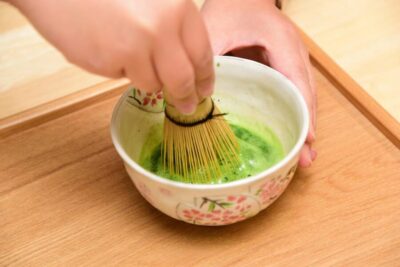
Then you take over. You’ll make your own tea, taste it, and—according to the session outline—also make a latte-style drink during the hands-on portion. This is a smart choice for families and beginners, because it gives you a couple of practical outcomes: a traditional cup and a more casual, drink-like version.
Because the experience is about 45 minutes, the pacing stays tight. That’s good if you want a complete arc without a long time commitment, but you won’t get the deep, slow multi-hour ceremony you’d see in Japan’s most formal settings.
Stone-milling matcha powder: the part you can recreate at home
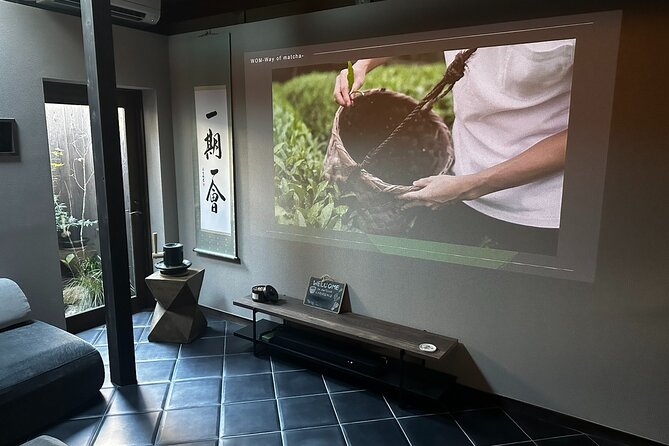
If you’re thinking, I want to learn matcha, not just drink it, then this is the right moment. Stone-milling is specifically called out as part of the experience, and that’s the difference between a quick demo and a real learning segment.
When you see matcha made through stone-milling, you start to understand why preparation technique matters. The end result is more than taste—it’s texture, foam, and the way the drink feels. Your host can walk you through what to aim for as you make your cup later.
Practical tip for you: during the stone-milling and early prep, watch for the small cues your host shares. Even when the session is short, these are the points you’ll want to remember when you’re buying matcha and trying again at home. The goal isn’t perfection. It’s getting close enough that your cup feels like you learned something, not like you checked a box.
Tea ceremony demonstration: why the order matters
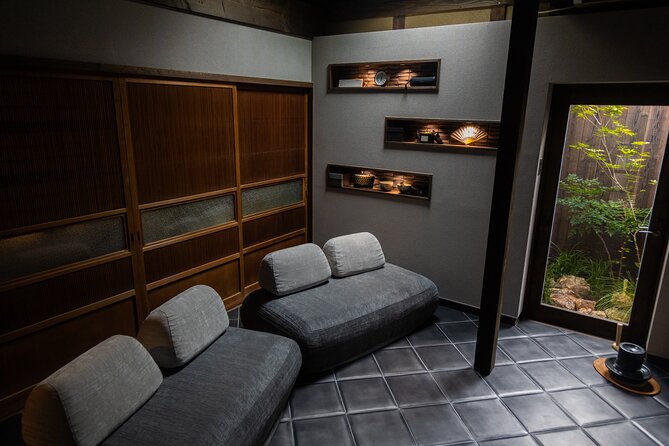
Some tea experiences are all about the atmosphere. This one adds structure. The ceremony demonstration sits between the matcha-making and your hands-on practice, which is exactly where it should be.
You get a chance to see the flow—what happens first, what happens next, and how the host guides the moment from preparation to serving. That order helps you avoid common beginner confusion, like knowing how to whisk but not knowing how to think about serving and tasting.
And because it’s private, you’re less likely to feel like you’re working against a timer. If you have questions, you can ask. If your child needs a pause, you can usually accommodate a bit more than in group settings.
From the feedback, the host explanations tend to be careful and friendly. In other words: you’re not left to figure it out by guessing. That matters when you’re learning matcha steps you’ll want to repeat later.
Making your own tea (and a latte): hands-on, not just watch
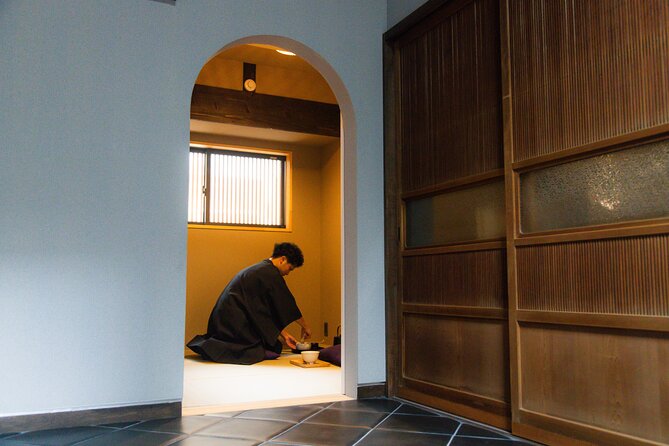
This is the part that makes it worth paying for. You don’t only observe; you make your own cup. And you don’t stop at a plain matcha drink—you also get a chance to make a latte-style drink as part of the hands-on portion.
For kids, that’s a big deal. A family-friendly tea activity has to keep the hands moving and the outcomes tangible. Making something you can taste helps everyone stay engaged, including younger kids who might otherwise lose interest during a long explanation.
For adults, it’s also the fun part. You’ll learn matcha technique in a practical, do-it-yourself way. The tasting step helps you calibrate your expectations: you can recognize what a well-prepared cup tastes like and adjust next time.
If I had to set expectations: the session is short, so the hands-on time is focused. You’ll likely leave feeling confident enough to try again, even if you don’t master every detail on the first attempt.
Other Kyoto tours and experiences to compare



Photo time in a townhouse setting
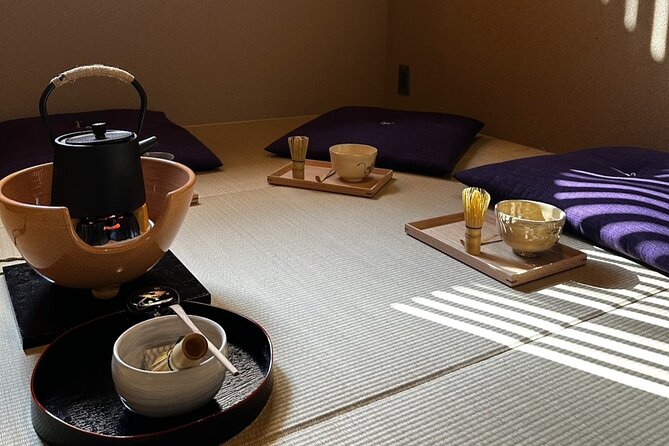
Yes, you’ll want pictures. But this tour doesn’t treat photos like an afterthought. Time is built in to capture photos of your tea ceremony experience.
That’s especially useful in Kyoto, where you can easily end up spending half your energy on where to stand and when to move. Here, you can enjoy the moment first, then document it while things are still in motion.
A practical approach: ask your host when the best photo moment is during the demonstration. Since it’s private, they can usually guide you without rushing the process.
Price and value: what $51.24 per person really buys
At $51.24 per person, you’re not buying a long, formal tea lesson. You’re buying a private, structured experience with multiple parts: a film, matcha prep through stone-milling, a demonstration, and then hands-on making plus tasting.
In value terms, the price makes more sense if you fall into one of these groups:
- You want a private experience rather than squeezing in with others.
- You want hands-on learning you can repeat at home.
- You’re traveling with kids and want a shorter, focused activity that still feels special.
If you’re traveling solo and you’re purely budget-focused, a group tea ceremony might cost less. But if you care about comfort, pacing, and attention, private is where this becomes compelling.
One more thing: it’s about 45 minutes. That’s ideal if your day is full. It’s also a reason to book it as a single, satisfying cultural stop rather than stacking multiple long activities back to back.
Where you meet: WOM-Way of Matcha in Jurakuchō
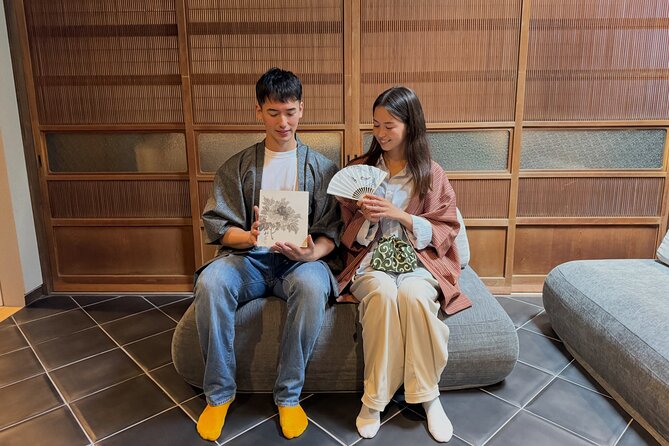
You’ll start at WOM-Way of Matcha, located at kyoto863-41 Jurakuchō, Kamigyo Ward, Kyoto 602-8156, Japan. The activity ends back at the meeting point.
This matters because you don’t need to plan transportation through Kyoto once you arrive. You can treat it like a clean, contained segment in your itinerary. Also, because the meeting point is a specific address tied to the provider setup, you’ll want to confirm you’re at the correct location before your session begins.
If you’re making a family schedule, this round-trip simplicity helps. You can build it around school-time vibes for kids—without the stress of a distant end point.
Who this tea ceremony suits best
This is a strong fit if you want an authentic Kyoto cultural activity without dealing with a crowded room.
It works well for:
- Families with children, since the experience is described as family-friendly and includes hands-on making
- Beginners who want a clear sequence and practical technique
- Couples or small groups who want a quiet moment and photo time
- People who care about learning something they can recreate at home
It might be less ideal if:
- You’re looking for a long, ultra-traditional tea session with many ceremonial stages
- You hate any chance of a short timeline feeling rushed
Should you book this private tea ceremony?
I’d book it if you want matcha learning with a human, not a lecture. The combination of stone-milling, a step-by-step flow, private attention, and hands-on tea making (plus latte-style making) gives you a complete experience for a manageable time.
Book it especially if you’re traveling with kids. The private format and shorter duration make it far more workable than many group-based cultural activities. And if you care about photos, the built-in time makes it easier to enjoy the moment without turning your tea ceremony into a photo hunt.
If you’d rather spend hours in silence doing everything the slow, formal way, you may want a longer tea experience instead. But for most people visiting Kyoto, this hits a sweet spot: focused, friendly, and genuinely learnable.
FAQ
How long is the private tea ceremony?
The experience lasts about 45 minutes.
How much does it cost?
The price is $51.24 per person.
Is it private or shared with other groups?
It’s a private experience. Only your group participates.
Is it kid-friendly?
Yes. The experience is family-friendly, and children are welcome.
What’s included in the session?
You’ll watch footage of tea plantations, make matcha powder with stone-milling, do a tea ceremony demonstration, and then have hands-on tea making and tasting, including making a latte.
Where is the meeting point?
You meet at WOM-Way of Matcha, kyoto863-41 Jurakuchō, Kamigyo Ward, Kyoto 602-8156, Japan, and the activity ends back at the meeting point.
More Private in Kyoto

More Tour Reviews in Kyoto




One More Bowl of Matcha

Just added: more Kyoto tours to browse








Kyoto Tea Ceremonies, compared.
 ★ 4.9Tea Ceremony in a Traditional Tea House in KiyomizuFrom $493,519 reviews
 ★ 4.9Tea Ceremony Ju-An at Jotokuji TempleFrom $293,207 reviews
 ★ 4.345-Minute Tea Ceremony Lesson ExperienceFrom $222,378 reviews
 ★ 4.9Table-Style Tea Ceremony at a Kyo-MachiyaFrom $451,211 reviews
 ★ 5.0Kimono Tea Ceremony at Kyoto Maikoya, NISHIKIFrom $65911 reviews
 ★ 5.0Arashiyama Bamboo Forest, Monkeys, Matcha & Temple TourFrom $53759 reviews
 ★ 4.9Tea Museum Tickets and Matcha Grinding ExperienceFrom $23739 reviews
 ★ 4.9Kimono Tea Ceremony at Orizuruya GionFrom $49618 reviews
Browse the lists this tour appears in