
Reviewed · KYOTO TEA CEREMONIES
Kyoto: Tea Museum Tickets and Matcha Grinding Experience
Matcha starts as green leaf dust. At Chazuna in Uji, you grind tencha and whisk fresh matcha with an instructor, then pair it with what the museum teaches you.
I like the sensory part most: the smell when the powder hits the air, plus the guided steps that turn it into a real cup you can brew. I also like that the museum uses touchable, digital displays so the story of Uji tea feels practical, not just decorative.
One thing to keep in mind: the whole experience is about 1 hour, and the museum portion is more of a focused stop than an all-day wander.
In This Review
- Quick Hits
- Why Uji’s Chazuna Experience Hits Better Than a Generic Tea Show
- Finding the Spot: Chazuna’s 1F Reception in Uji Town
- The History Room Setup: 10-Yen Coin Meets Byodoin Phoenix Hall
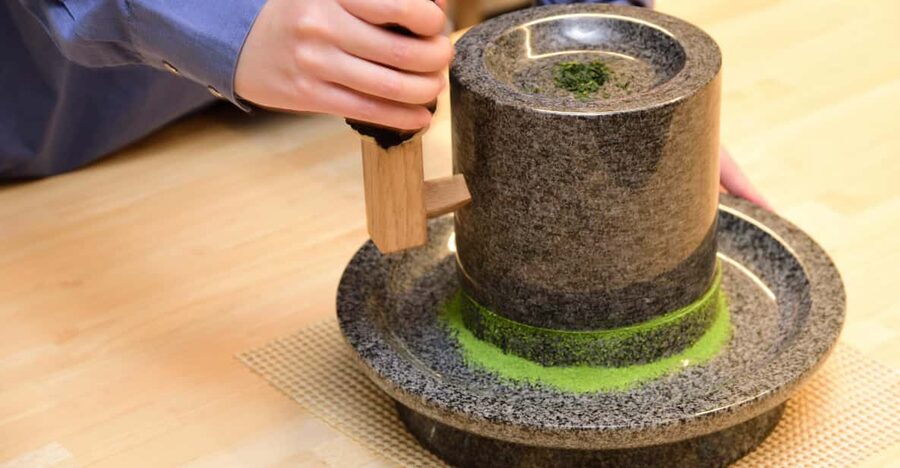
- Grinding Tencha at the Tea Mill: The Hands-On Part That Makes It Stick
- Brewing Your Matcha: Instructor Tips You’ll Use Again
- Museum Add-On: Digital Touch Displays and the Fun Photo Moment
- Summer-Only 2:45 p.m. Treat: Matcha Over Ice Cream
- Price and Time: Does $23 Really Make Sense?
- Who Should Book This Matcha Workshop?
- Should You Book Chazuna Tea Museum and Matcha Grinding?
- FAQ
- How long is the Kyoto Tea Museum tea grinding experience?
- What’s included with the $23 ticket?
- Where do I meet for the class?
- How far is it from Uji Station?
- What languages are used during the class?
- Is the experience wheelchair accessible?
- Is there a summer-only food option?
- What happens if I arrive late?
- Can I get a refund if I need to cancel?
- Can I change my schedule by phone call?
Quick Hits
- Grind your own tencha powder at a tea mill, then make matcha the same way in the session.
- History Room with a big 10-yen coin and Byodoin Phoenix Hall theming, plus 4K digital town views.
- Interactive museum exhibits you can touch, including tea-themed digital experiences.
- Instructor-led brewing and tasting, in Japanese and English, with lots of hands-on guidance.
- Summer-only matcha over ice cream at 2:45 p.m., if your timing fits.
Why Uji’s Chazuna Experience Hits Better Than a Generic Tea Show
Uji is the Kyoto region’s tea town, and Chazuna puts you right inside that theme. The setting matters because this isn’t a lecture hall. It’s a museum-meets-workshop format, built around the idea that you learn faster when you’re doing something with your hands.
The matcha grinding is the headline, but the reason it works is simple: the workshop gives you a cause-and-effect chain. You grind the leaves, you see the powder become something you can actually brew, and you taste the result. That’s how tea education should feel—less like memorizing and more like understanding what changes the cup.
I also like the balance here. You get a structured history stop (with digital displays and themed exhibits), but you’re not stuck watching screens. The exhibits are there to support what you’re about to do with the tea mill and the whisk.
Price-wise, at $23 per person for about 1 hour, you’re not just buying a ticket. You’re paying for the museum entry plus the instructor-led matcha making. For most people, that’s the right trade: you’re paying to learn a skill and bring away real confidence in brewing your own matcha at home.
Sit for another bowl of matcha in a Uji tea house
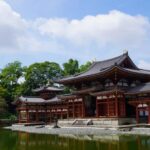
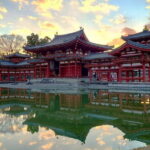
Finding the Spot: Chazuna’s 1F Reception in Uji Town
Your starting point is the 1F reception area at Chazuna, located in the Historical Park of Tea and Uji Town. Show up here first; the class runs on a set start time, and being late can throw off the whole flow for everyone.
If you’re coming by train, the walk is very manageable:
- From Uji Station (Keihan Uji Line): about a 4-minute walk
- From Uji Station South Exit (JR Nara Line): about a 12-minute walk
If you’re driving from Osaka, you exit at Keiji Bypass Uji Nishi IC, then take the road toward Uji (about 10 minutes). From Tokyo or Nagoya, the direction is through Keiji Bypass Uji-higashi IC Exit (about 3 minutes), turning left at the traffic light.
Practical tip: plan to arrive 15 minutes before your reservation. The experience has a strict timing rule: if you’re more than 30 minutes late, you won’t be allowed to join.
The History Room Setup: 10-Yen Coin Meets Byodoin Phoenix Hall
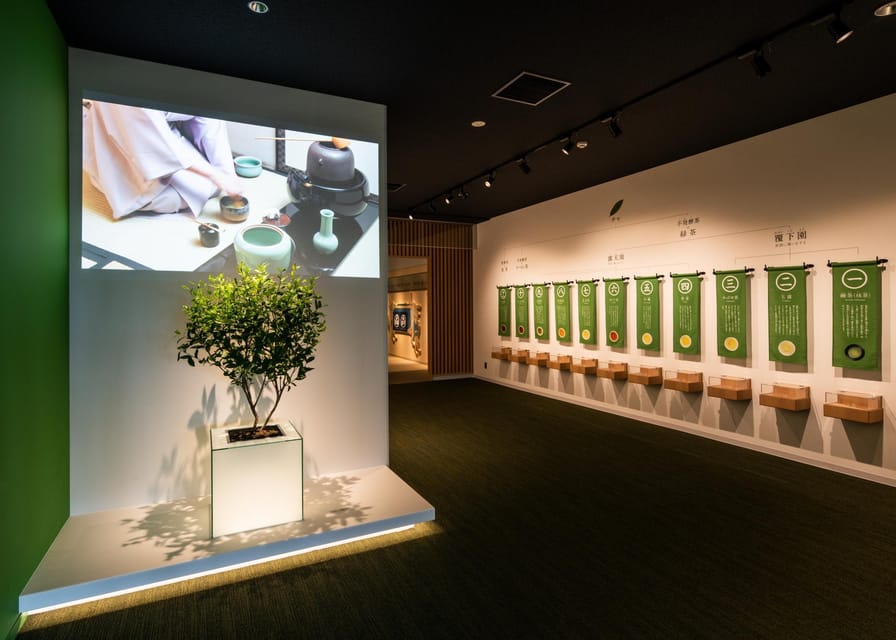
Before you touch anything, you go into the History Room. This is where the experience builds context without getting heavy.
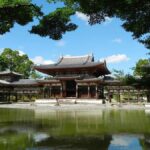
The room welcomes you with a huge 10-yen coin display featuring the Byodoin Phoenix Hall. It’s a smart visual hook because it instantly anchors Uji tea in something everyday and recognizable—Japan’s own imagery.
Then you move into digital exhibits tied to the town. One highlight is a 4K HDTV digital screen with modernized townscape drawings known as Meisho-zue. It’s the kind of display that helps you picture what tea culture looks like in real places, not just as tradition floating in the abstract.
What you’re really getting here: vocabulary. Even if you’re not a tea scholar, you’ll leave with a better sense of how Uji tea became what it is and why matcha has its place in Japanese culture.
Grinding Tencha at the Tea Mill: The Hands-On Part That Makes It Stick
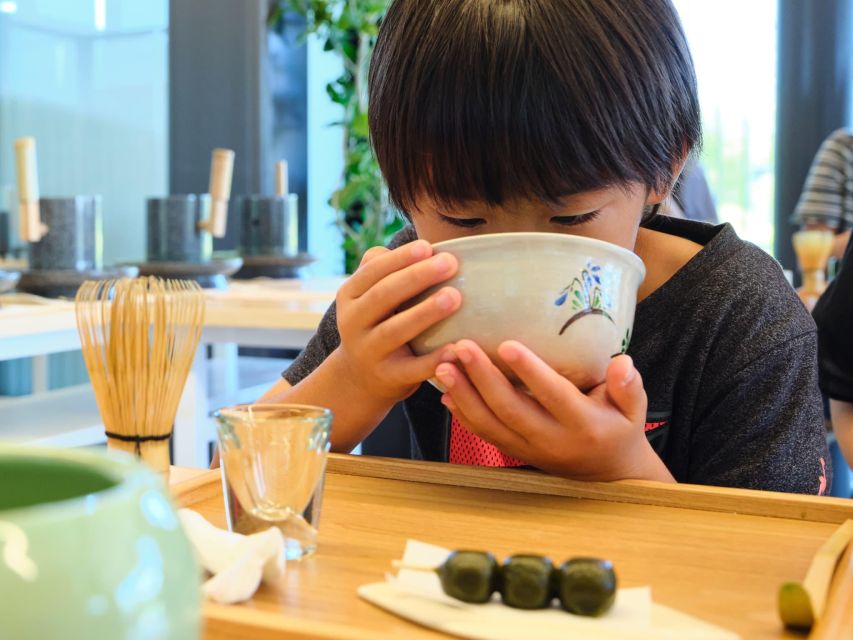
Now comes the part your hands will remember: grinding.
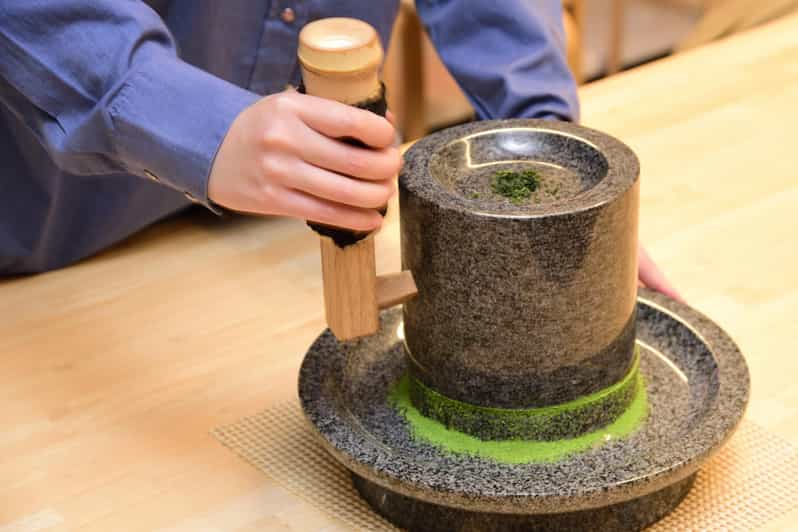
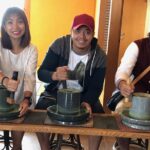
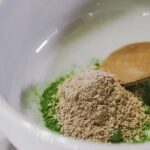
You’ll make matcha by grinding tea leaves into powder using a tea mill. The experience is designed to be more than a photo op. You get to do the action, and you learn the basics of how tencha leaves become matcha powder.
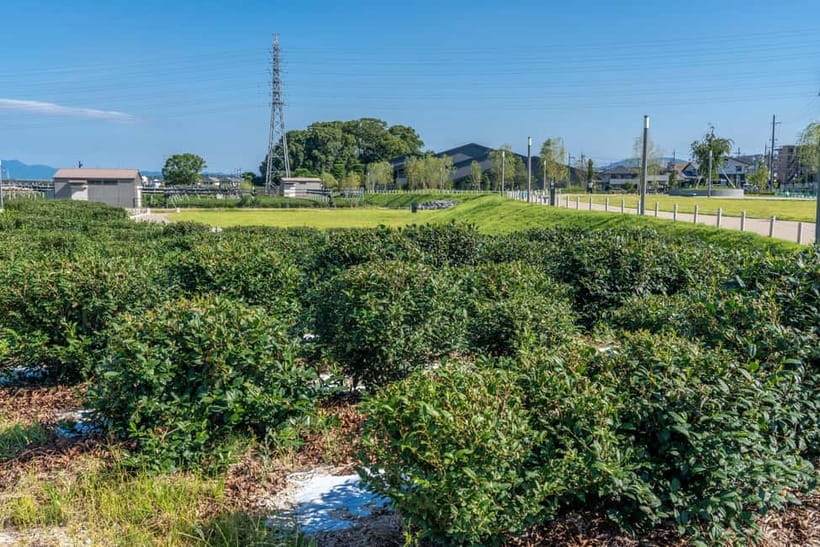
One detail I like: the setting connects the grinding moment to where tea comes from. You’re described as having a view of tea fields and gardens, so the workshop doesn’t feel disconnected from the source.
This is also where instructor guidance really matters. The instructor isn’t just hovering; they’re helping you nail the technique and avoid the common mistakes people make when they try matcha at home later.
If you’re someone who learns by doing, this is the biggest win of the whole ticket.
Brewing Your Matcha: Instructor Tips You’ll Use Again
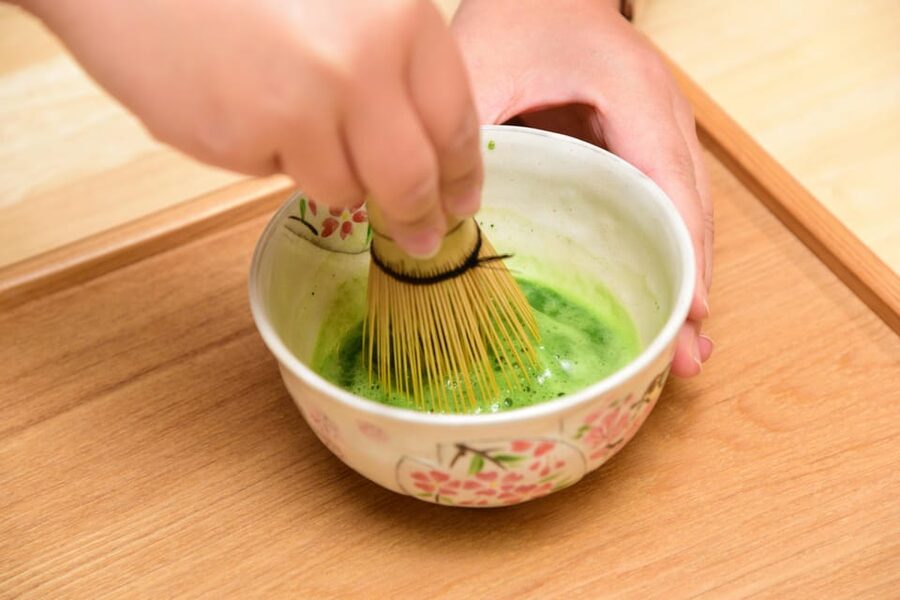
After grinding, you’re not done. You’ll be guided by a Japanese tea instructor to learn how to brew matcha and enjoy what you’ve made.
English support is available (the class uses Japanese and English), and the instruction is hands-on. In past sessions, instructors have included names like Hideko, Keiko, Sukimoto, and Yano-san—and the teaching style is consistently described as patient and encouraging, often with light humor.
This matters because matcha brewing is picky. The difference between flat and frothy can be technique, whisking, and timing. Here, you get a real walkthrough rather than a vague “just mix it” explanation.
And once you taste your own cup, you’ll understand something fast: freshness changes how matcha feels. Even if you buy matcha at home, knowing how it’s turned into powder gives you a better sense of what you’re tasting.

Museum Add-On: Digital Touch Displays and the Fun Photo Moment
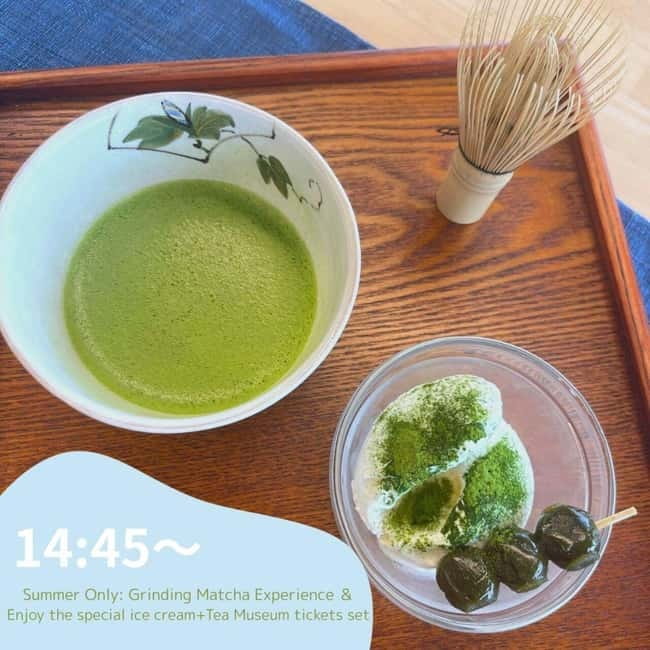
The museum isn’t huge, but it’s built to keep you moving. You’ll see interactive exhibits with digital content you can touch and experience, and you’ll get extra context about Uji tea and matcha production.
There’s also an energy shift at the museum end. Some sessions include a photo spot themed around matcha—people describe it as the kind of funny, playful scene you don’t mind sharing.
If you like learning through visuals, the museum portion is a good match. If you’re expecting hours of deep research, you might find it too short. But as a support act to the workshop, it works.
Summer-Only 2:45 p.m. Treat: Matcha Over Ice Cream
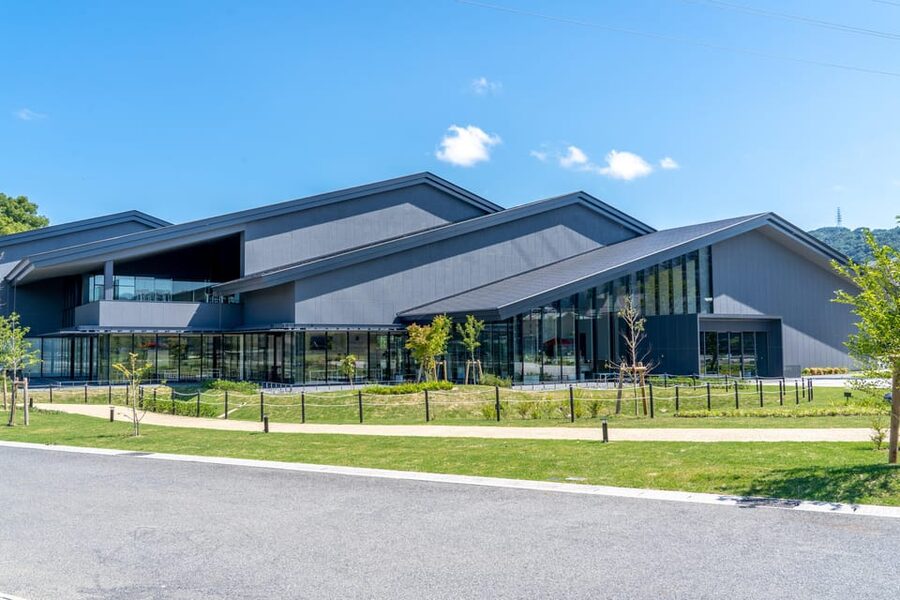
If you’re visiting in summer, there’s a special add-on at 2:45 p.m. only.
The restaurant offers a cool option where you pour your ground matcha over ice cream. You can even have it two ways: pour matcha over ice cream to eat, and also pour it over ice cream in a drink-style way.
This is a fun time slot choice if you’re traveling with kids, if you want something more playful than just tea, or if you’re dealing with peak heat. The workshop is already sensory; this version leans into refreshment.
Only caution: since it’s limited to that one time, check your schedule early. Don’t assume you’ll get it unless you’re booked into the right slot.
Price and Time: Does $23 Really Make Sense?

At $23 per person for about 1 hour, the value is strongest if you want both:
1) the museum entry, and
2) the matcha making with an instructor.
If you only wanted a tea museum visit, you might feel $23 is steep for the time. But the workshop component is the real product: grinding tencha, learning brewing technique, and tasting what you create.
Also, this is an efficient activity. You don’t need a full morning or afternoon. You get a complete tea experience that fits neatly into a Uji day, and you can still spend the rest of your time walking the town and seeing sights.
One more practical point: because the session has strict timing rules, you’ll get more value if you arrive early and stay on track.
Who Should Book This Matcha Workshop?
You’ll like this most if you:
- care about learning a real brewing skill, not just buying a souvenir
- want a hands-on activity in Uji without committing to a long class
- like tea culture explained through practical visuals and tactile exhibits
- enjoy small-group instruction where you can ask questions during the process
It’s also a good fit for couples and families. The workshop format is interactive, and the tasting step helps everyone connect to the experience fast.
Should You Book Chazuna Tea Museum and Matcha Grinding?
If your goal is matcha done properly—leaf to cup with guided steps—yes, book it. The hands-on tencha grinding and instructor-led brewing are the core reasons this feels worth your time, and the museum add-on gives you context without slowing you down.
I’d only think twice if you’re after a long, purely museum-style visit or you need total schedule flexibility. Because the session timing is strict and the summer ice cream option only happens at 2:45 p.m., your planning matters.
If you time it right, this is one of the more satisfying ways to learn Uji tea culture in under two hours of your day.
FAQ
How long is the Kyoto Tea Museum tea grinding experience?
The duration is 1 hour.
What’s included with the $23 ticket?
Your ticket includes the Chazuna Museum entry, the matcha making experience, and an instructor.
Where do I meet for the class?
Meet at the 1F reception area at Chazuna, located in the Historical Park of Tea and Uji Town.
How far is it from Uji Station?
It’s about a 4-minute walk from Uji Station on the Keihan Uji Line, or about a 12-minute walk from the South Exit of Uji Station on the JR Nara Line.
What languages are used during the class?
The instructor provides Japanese and English support.
Is the experience wheelchair accessible?
Yes, it’s listed as wheelchair accessible.
Is there a summer-only food option?
Yes. There’s a summer-only experience at 2:45 p.m. only, where you pour your ground matcha over ice cream and can enjoy it in the provided ways.
What happens if I arrive late?
Please arrive 15 minutes early. Under any circumstances, you can’t participate if you arrive 30 minutes after the start time.
Can I get a refund if I need to cancel?
There is free cancellation up to 24 hours in advance for a full refund. After that, the information notes they cannot refund participation fees.
Can I change my schedule by phone call?
No. The provider says they’re unable to answer schedule-change questions by phone, and you should make changes using the procedure on the website.
More Tour Reviews in Uji

One More Bowl of Matcha
Just added: more Uji tours to browse
Kyoto Tea Ceremonies, compared.
 ★ 4.9Tea Ceremony in a Traditional Tea House in KiyomizuFrom $493,519 reviews
 ★ 4.9Tea Ceremony Ju-An at Jotokuji TempleFrom $293,207 reviews
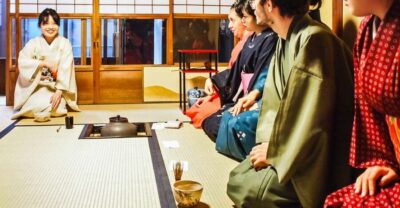 ★ 4.345-Minute Tea Ceremony Lesson ExperienceFrom $222,378 reviews
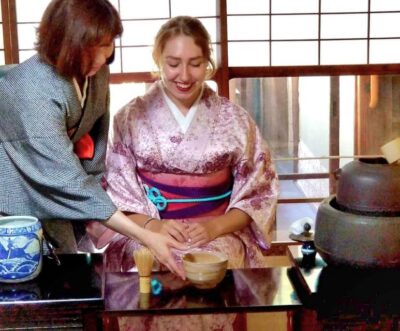 ★ 4.9Table-Style Tea Ceremony at a Kyo-MachiyaFrom $451,211 reviews
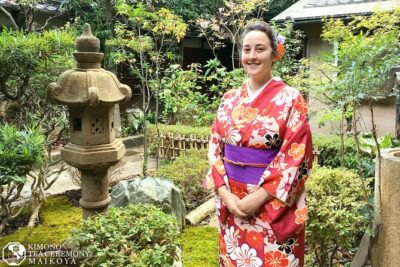 ★ 5.0Kimono Tea Ceremony at Kyoto Maikoya, NISHIKIFrom $65911 reviews
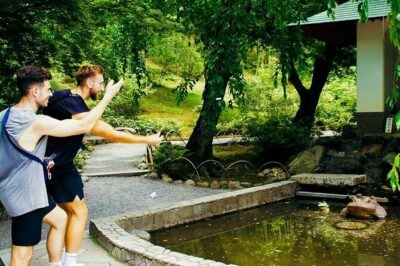 ★ 5.0Arashiyama Bamboo Forest, Monkeys, Matcha & Temple TourFrom $53759 reviews
 ★ 4.9Kimono Tea Ceremony at Orizuruya GionFrom $49618 reviews
 ★ 4.8Tea Ceremony in 100-year-old Kyo-Machiya TownhouseFrom $31546 reviews
Browse the lists this tour appears in