
Reviewed · KYOTO TEA CEREMONIES
Kyoto Private Tea Ceremony at a Japanese Inns
A night tea ritual in Kyoto feels different. I like the private setting in a traditional 20-tatami room and the fact that matcha whisking is hands-on, not just a viewing. One thing to consider: it runs best when you’re okay following a short, structured schedule in a candlelit space where timing matters.
What makes this one stand out in a good way is the after-dark vibe. Even though major sights may go dark, you still get a real Kyoto moment in a long-established inn, with candlelight flickering in a room that’s kept intentionally dim. I’d also add that the hosts use translator devices, which can make the experience feel genuinely conversational even if you don’t speak Japanese.
There’s also a little extra theatre built in. You’ll change into a kimono-style outfit with props (and get photos), then shift into a brief Zen calm-down before you watch the tea flow and make your own matcha. The whole thing takes about 59 minutes, so it’s not a slow, all-evening affair—but it’s also not rushed chaos.
In This Review
- Key Highlights You’ll Actually Feel
- Kyoto After Dark: Why This Tea Ceremony Instead of Another Temple Visit
- Candlelight in a 20-Tatami Banquet Hall You Can’t Just Browse
- Kimono Dressing and the Photo Shoot That Sets the Tone
- A Short Zen Meditation to Reset Your Brain
- Tea Ceremony Demonstration: Welcome as a Guest, Not a Spectator
- Whisking Your Own Matcha for a Real Finish
- Hosts, Names, and the Language Help That Makes It Work
- Price and Value: What You’re Paying For
- Timing, Group Size, and How to Fit It Into Your Kyoto Day
- What to Expect Day-of: The Meeting Point and How It Feels
- Who Should Book This Kyoto Private Tea Ceremony
- Should You Book ZEN: Tea Ceremony Experience in Kyoto?
- FAQ
- How long is the Kyoto private tea ceremony?
- Is this a private tour?
- What do I wear during the tea ceremony?
- Do I need to speak Japanese?
- What is included besides the tea?
- Can I bring children?
- What if the weather is bad?
Key Highlights You’ll Actually Feel
- Private 20-tatami room in a historic ryokan: a room that’s normally closed to the public, turned into a calm evening setting.
- Kimono dressing with photo shoot: bridal uchikake or men’s haori styling plus pro lighting and staff photo help.
- Zen meditation first: a short 4-minute reset that sets the tone before the ceremony.
- Hands-on matcha whisking: you’ll make your own matcha, not just receive a cup.
- Translator devices that remove most language friction: you can ask questions and follow along with less guessing.
- Group size stays intimate (2 to 6): private tour format, so the pace feels designed for your group.
Kyoto After Dark: Why This Tea Ceremony Instead of Another Temple Visit
Kyoto has a way of making you plan around closing times. When the big-name temples shut down, you can end up with empty evenings and lots of wandering. This tea ceremony gives you a cultural activity that doesn’t depend on daylight or open-air sights.
What I like is that the focus stays on experience, not attendance. You’re in one room for the full session, moving through clear steps: dressing and photos, quick Zen, a demonstration, then your own whisking. It’s a small block of time that still feels like you did something meaningful.
Also, it’s private. With a group of 2 to 6, you’re less likely to feel like you’re watching a performance from the back row. Instead, you’re treated as a guest in the space—within the structure of a traditional tea gathering.
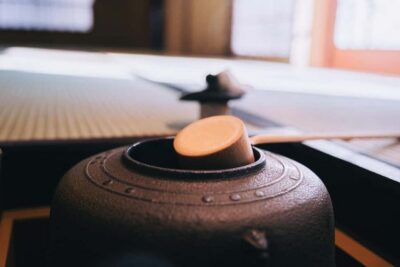
Sit for another bowl of matcha in a Kyoto tea house
Candlelight in a 20-Tatami Banquet Hall You Can’t Just Browse
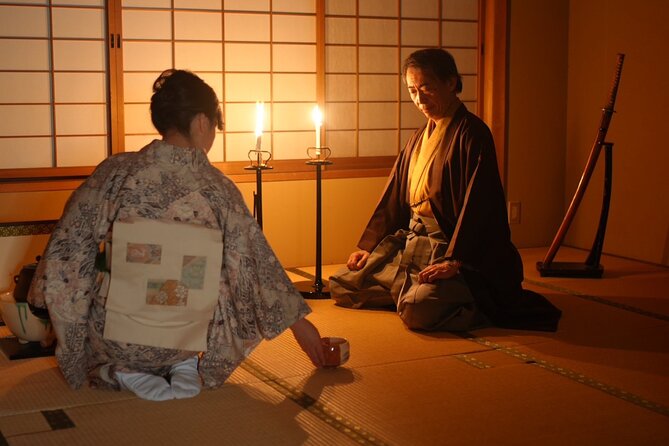
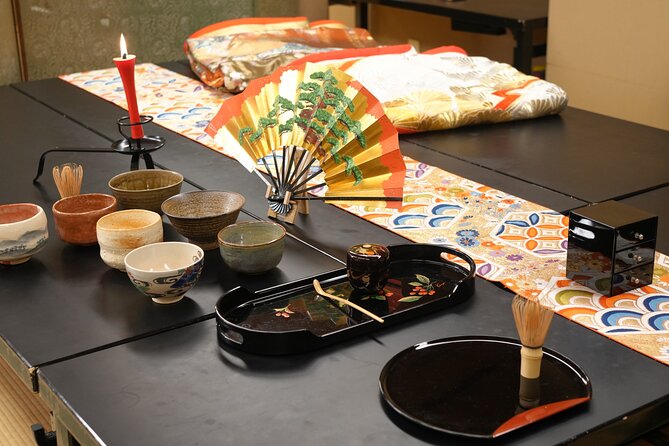
This takes place in a Kyoto ryokan in a private 20-tatami room. The room used is a banquet hall normally kept closed to the public, and the lighting is set for a dramatic, quiet mood.
The information about the space is specific: you’ll enjoy the ceremony in a room with candle light flickering in near darkness. That matters because the tea ceremony isn’t really about spectacle; it’s about attention. Candlelight slows your eyes down and makes the movements feel deliberate.
The main consideration here is practical. A dim room can make photos and small movements a little tricky if you rush. You’ll have staff assistance and photo support, but you’ll get the best experience if you go with the pace and avoid trying to squeeze extra sightseeing around the session.
Kimono Dressing and the Photo Shoot That Sets the Tone
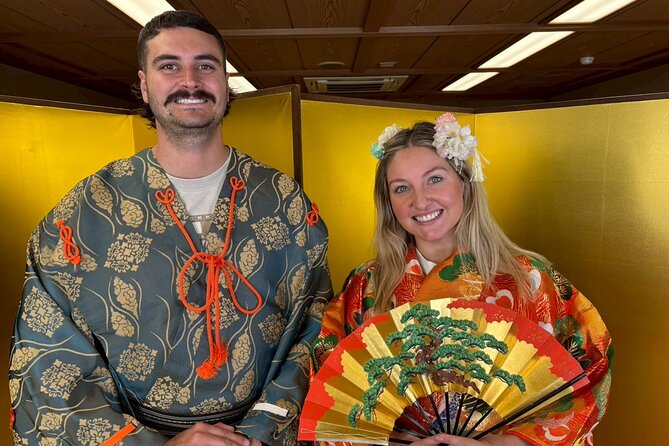
Your evening begins with kimono dressing and a photo shoot, about 15 minutes. You’ll wear either a bridal uchikake or a men’s haori, depending on the option provided for your group.
What makes this more than a basic costume stop is the styling and props. You’re given items like folding fans and swords, and professional lighting is used for photos. The staff will help you with photography, so you’re not stuck trying to pose awkwardly in a traditional setup.
If you care about photos, this is the part to lean into. The room is already set up for ceremony, and the professional lighting gives you shots that usually look better than typical tourist self-timer photos. If you’re not a photo person, you can still appreciate it as part of the experience rhythm—because the ceremony builds off the moment you’re dressed and welcomed as a guest.
One more point: you should expect to be physically guided during dressing and posing. That’s normal here. Go with it, and you’ll feel less time-stressed and more “okay, I’m doing this properly.”
A Short Zen Meditation to Reset Your Brain
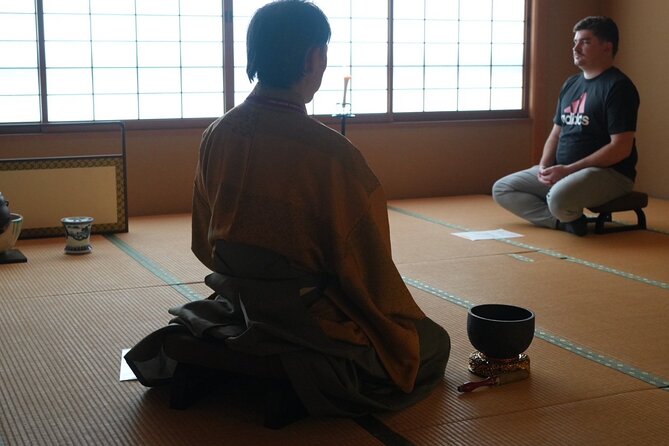
After the kimono-and-photo start, you’ll do Zen meditation for about 4 minutes. It’s brief, but it’s intentionally placed before the tea portion.
This is the practical value: it helps you stop thinking about trains, crowds, and your next reservation. Tea ceremonies reward attention, not speed. A few minutes of guided stillness makes the later steps feel smoother, especially if you’re traveling and your day has been full.
The trade-off is timing. You can’t treat this like optional downtime. It’s part of the script, so if you arrive late or rushed, it’ll be harder to settle. Still, if you show up a few minutes early and keep your head clear, you’ll likely find the meditation genuinely helpful.
Tea Ceremony Demonstration: Welcome as a Guest, Not a Spectator
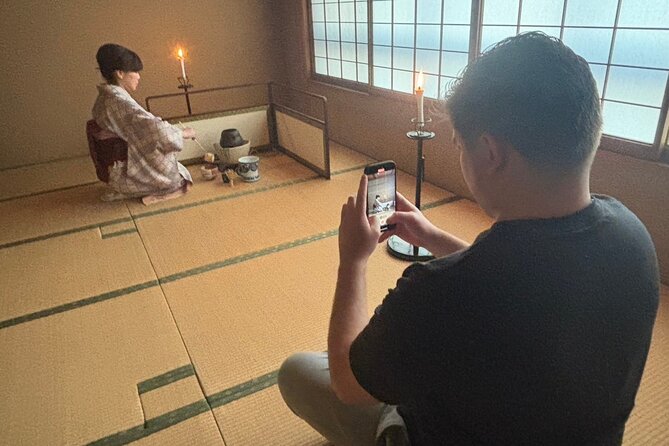
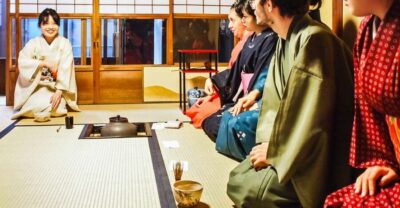
The tea demonstration lasts about 20 minutes. You’re welcomed as a guest, receive a bowl of matcha, and learn the flow of a traditional tea gathering.
This part matters because it changes how you drink matcha afterward. If you’ve only had matcha as a latte or powder drink, the ceremony version teaches you how the ritual is meant to be slow and respectful—how gestures and timing communicate something.
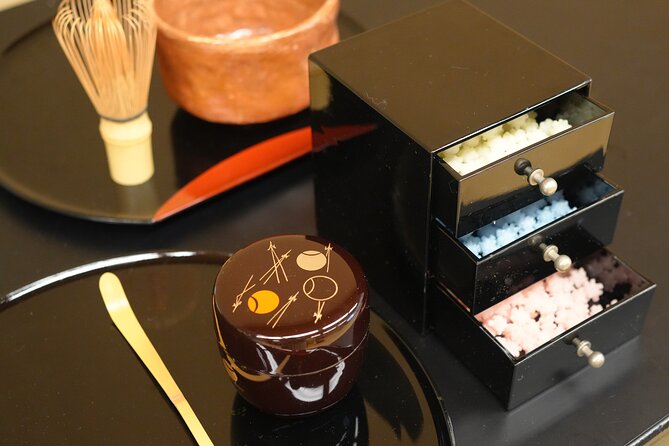
You’ll also get sweets along with the matcha (included). That’s more than a snack. It gives you a flavor rhythm—sweetness first, then the concentrated green matcha—so your palate is ready for the tea’s bitterness and depth.
You should expect instruction and some back-and-forth as you participate. Translator devices are available, so you won’t have to rely on guessing what’s happening.
Other Kyoto tours and experiences to compare
Whisking Your Own Matcha for a Real Finish
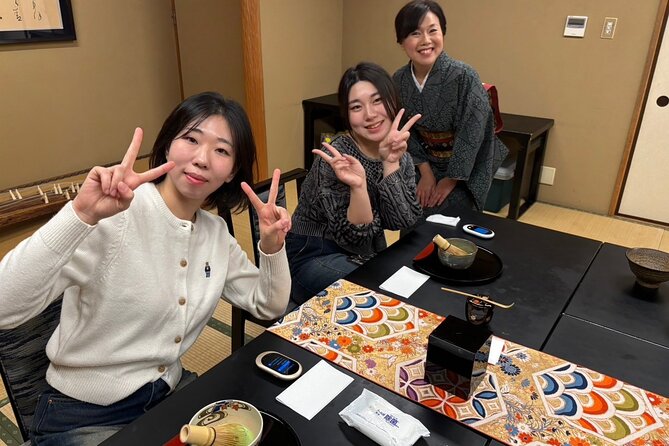
The last segment is where you get hands-on: matcha whisking for about 20 minutes. You’ll make your own matcha, which is the part many tea ceremony visitors actually remember.
Why this is worth it: you learn by doing. Whisking isn’t just stirring; it’s part of the texture and the overall experience of the tea. If you’re the type who likes to take home a skill, this is your moment.
This also changes the ending mood. Watching a ceremony can be beautiful, but making the tea gives you closure. You leave with a deeper understanding of what you just tasted, not just a memory of pretty movements.
Photos are welcome throughout, so you can capture the making process too. Still, don’t spend the whole time behind your phone. If you want the full effect, keep your attention on your hands and the bowl.
Hosts, Names, and the Language Help That Makes It Work

A major reason this gets strong marks is how welcoming the hosts are. The guides are named Matsuda and Mayumi, and the tone coming through in the experience details is friendly, patient, and geared toward questions.
The translation support is also central. Translator devices are available, so communication doesn’t hinge on whether someone in your group happens to speak Japanese. That’s a big deal for private experiences, because you want the conversation to feel natural, not like you’re passing notes.
This is especially helpful if you’re traveling with kids or with anyone who prefers asking questions in their own language. The devices make it easier to clarify what something means or why a step is done.
Price and Value: What You’re Paying For
The price is $97.98 per person, with a yen equivalent listed as ¥15,000 for adults and ¥3,000 for children under 15. Duration is about 59 minutes, and advance reservation is required.
So what do you actually get for that price?
- A private room experience in a 20-tatami space normally not open to the public
- Kimono dressing (bridal uchikake or men’s haori) plus photo support
- Zen meditation, a tea demonstration, and your own matcha whisking
- Included tea and sweets, plus utensils and costumes
- A licensed guide and translator devices
For Kyoto, this is a reasonable value when you look at the full package. You’re not just paying for the tea. You’re paying for access, instruction, guidance, and the chance to participate in multiple steps inside one short session.
Could it be expensive compared to a quick street matcha? Sure. But this isn’t about grabbing caffeine. It’s about ceremony as a lived activity—with structure, support, and a special room.
Timing, Group Size, and How to Fit It Into Your Kyoto Day
This runs about 59 minutes and is offered as a private tour/activity for 2 to 6 people. That group size keeps things comfortable and keeps the guide focused on your group’s pace.
It’s booked fairly in advance on average (about 8 days). Translation devices are available and the ceremony is structured, so you’ll want to lock in your slot rather than assuming you can walk in.
Since it’s a fixed-length activity, plan your evening with a little buffer. Tea ceremony sessions go best when you’re not sprinting between locations. If you’re doing dinner right after, make sure you have enough time to freshen up, especially because you’ll be in kimono-style clothing during the photo and ceremony portion.
What to Expect Day-of: The Meeting Point and How It Feels
The meeting point is 茶道体験所 禅 (ZEN: Tea Ceremony Experience in Kyoto), located in Kyoto’s Shimogyo Ward at 緑風荘 4階, with the address listed as Japan, 600-8323 Kyoto, Shimogyo Ward, Kanayachō, 490 緑風荘 4階.
It’s near public transportation, which matters in Kyoto where getting “close” can still take time. The activity ends back at the meeting point, so you’re not forced into an awkward hop to another end location.
Inside, the experience is designed to feel contained and calm: you start in dressing and photos, shift into Zen meditation, then proceed into the tea steps in the same private room. Expect staff support for guidance and photography so you don’t have to figure everything out alone.
Who Should Book This Kyoto Private Tea Ceremony
This works especially well if you want:
- A non-temple Kyoto cultural activity for the evening
- A private, structured experience where language is handled
- Kimono-style photos that look more intentional than typical tourist shots
- A hands-on ending with matcha whisking
It’s also a strong choice for mixed groups. With translator devices, you’re less likely to end up with one person understanding while others are lost. That makes it easier to enjoy as a family or with friends who don’t all speak Japanese.
If you’re the type who loves quiet rituals, the candlelight room and brief Zen meditation are a good match. If you want lots of roaming, this isn’t it. It’s a single-room experience with a clear schedule.
Should You Book ZEN: Tea Ceremony Experience in Kyoto?
If you’re deciding between another evening of wandering and something that feels distinctly Kyoto, I’d lean toward booking this. You get a private room in a traditional ryokan setting, kimono dressing with pro photo support, and a real chance to participate through Zen and matcha whisking. The translator devices and friendly hosting by Matsuda and Mayumi make the experience smooth even when you’re not speaking Japanese.
Skip it only if you dislike guided steps or you want a long, independent activity with lots of free time. This is a short, curated session with a strong rhythm.
If your schedule allows, I’d book it. It’s one of those rare Kyoto experiences that feels special without requiring you to hunt down the perfect temple timing.
FAQ
How long is the Kyoto private tea ceremony?
The experience is about 59 minutes.
Is this a private tour?
Yes. It’s a private tour/activity, and only your group participates. Group size is listed as 2 to 6 people.
What do I wear during the tea ceremony?
You’ll do kimono dressing and a photo shoot, wearing either a bridal uchikake or men’s haori (with props like folding fans and swords).
Do I need to speak Japanese?
No. Translator devices are available, so you can communicate during the experience.
What is included besides the tea?
You get matcha green tea and sweets, plus katana/costumes/tea utensils used for the ceremony. There is also a licensed guide and staff assistance for photography.
Can I bring children?
Yes. Pricing is listed as Adults ¥15,000 and Children under 15 ¥3,000.
What if the weather is bad?
The experience requires good weather. If it’s canceled due to poor weather, you’ll be offered a different date or a full refund.
More Private in Kyoto
More Tour Reviews in Kyoto
One More Bowl of Matcha

Just added: more Kyoto tours to browse

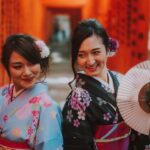
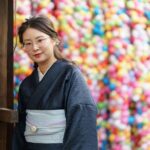

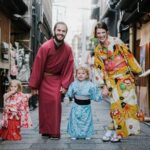
Kyoto Tea Ceremonies, compared.
 ★ 4.9Tea Ceremony in a Traditional Tea House in KiyomizuFrom $493,519 reviews
 ★ 4.9Tea Ceremony Ju-An at Jotokuji TempleFrom $293,207 reviews
 ★ 4.345-Minute Tea Ceremony Lesson ExperienceFrom $222,378 reviews
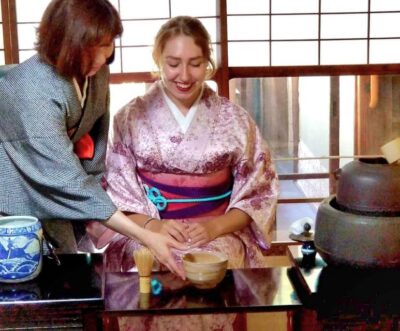 ★ 4.9Table-Style Tea Ceremony at a Kyo-MachiyaFrom $451,211 reviews
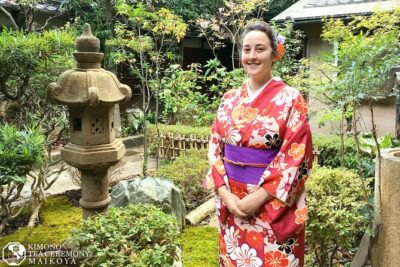 ★ 5.0Kimono Tea Ceremony at Kyoto Maikoya, NISHIKIFrom $65911 reviews
 ★ 5.0Arashiyama Bamboo Forest, Monkeys, Matcha & Temple TourFrom $53759 reviews
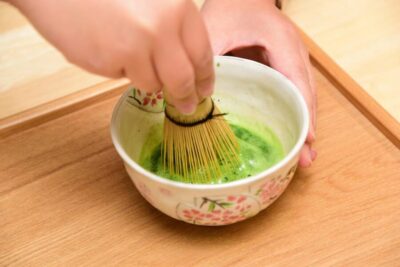 ★ 4.9Tea Museum Tickets and Matcha Grinding ExperienceFrom $23739 reviews
 ★ 4.9Kimono Tea Ceremony at Orizuruya GionFrom $49618 reviews
Browse the lists this tour appears in