
Reviewed · GUIDED
Kyoto Private Customized Day Tour with Guide
Kyoto feels simple on paper. Then the buses show up. This private, customized day tour (up to 6 people) uses a private vehicle and a real guide to stitch together top sights without the subway/bus brain-fog. You’ll start early in Arashiyama Bamboo Forest, then work your way through Kyoto’s signature temples, castles, markets, and alley streets, with hotel pickup and a smooth pace.
Two things I’d put at the top: you get door-to-door transfers, and you can lean on your guide’s know-how when places are crowded, spread out, or confusing to navigate on your own. The other big win is flexibility: you choose from a set list of highlights, so the day fits your energy level, not just a timetable. One consideration: you’ll pay extra for admission at some major stops, like Kinkaku-ji, Nijo Castle, and Kiyomizu-dera.
In This Review
- Key Highlights That Make This Kyoto Day Tour Worth It
- Why a Private Vehicle Beats Kyoto Bus Stress
- Morning Start in Arashiyama Bamboo Forest (Then It Gets Fast)
- Kinkaku-ji Golden Pavilion: 40 Minutes of Gold Leaf Reality
- Nijo Castle’s Tokugawa Story (and Why UNESCO Matters)
- Nishiki Market: Shopping Street Energy Without Getting Lost
- Gion Alleyways With a Guide Who Knows Where to Walk
- Kiyomizu-dera: Make the Most of a Popular Temple With an Hour
- Fushimi Inari-taisha: A Focused Shrine Ending With Real Recognition
- Price and Group Size: When $475 Per Group Feels Fair
- Guide Quality: The Names People Remember (and Why It Matters)
- What a Day Like This Feels Like From Stop to Stop
- Should You Book This Kyoto Private Day Tour?
- FAQ
- What’s included in this Kyoto private day tour?
- What’s the group size limit?
- How long is the tour?
- What time does the tour start?
- Are admissions included for all stops?
- Do they offer hotel pickup?
- Can I cancel and get a full refund?
- Is this tour suitable for most travelers?
Key Highlights That Make This Kyoto Day Tour Worth It

- Private vehicle + hotel pickup keeps the day from turning into a transit scavenger hunt.
- Arashiyama Bamboo Forest first lets you see the iconic grove with a calmer start.
- Golden Pavilion (Kinkaku-ji) gives you the short, high-impact temple visit most first-timers crave.
- Nijo Castle + UNESCO context helps you understand what you’re looking at beyond photos.
- Nishiki Market and Gion on foot mean your guide can steer you through the most walkable lanes.
- Fushimi Inari-taisha rounds out the day with one of Japan’s most recognizable shrine experiences.
Why a Private Vehicle Beats Kyoto Bus Stress
Kyoto is beautiful, but getting around can feel like a puzzle. The rail lines and bus routes are famous for being confusing, especially when you’re bouncing between temples that each sit in different corners of the city. This is exactly where a private day tour pays off: you trade navigation stress for time with a guide.
You’ll be picked up from your hotel (door-to-door transfers are part of the setup), then driven between stops in a private vehicle. For a group of up to 6, that’s a nice way to keep the day together. And because it’s private, you’re not stuck waiting on strangers who wander at their own speed.
There’s also a practical advantage: when your guide controls the timing, you can move through the day without constant check-the-map moments. That matters in Kyoto, where a “quick detour” can easily turn into an extra hour if you’re figuring out transit on the fly.
Other Kyoto tours and experiences to compare

Morning Start in Arashiyama Bamboo Forest (Then It Gets Fast)
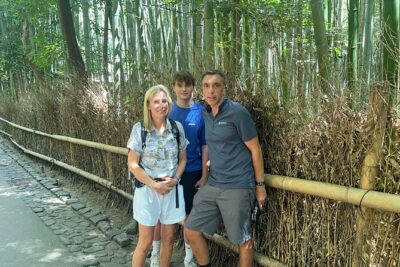
Most people associate Arashiyama with one thing: that bamboo grove photo. Here, you get about two hours in the Arashiyama area, which is enough time to see the forest plus the surrounding streets without feeling rushed. The best part of having this as the first stop is that you’re not trying to squeeze it in at the end of a long day.
Arashiyama is touristy. That’s not a criticism; it’s just the reality. A guide helps you focus on the right walk paths and viewpoint spots so you’re not spending your energy doing trial-and-error.
A small drawback: Arashiyama can feel crowded when tour groups stack up. Starting with the grove in the morning helps, but if you’re very sensitive to crowds, manage expectations. You’ll enjoy it most if you treat it like a “see it, walk it, then move on” experience.
Kinkaku-ji Golden Pavilion: 40 Minutes of Gold Leaf Reality
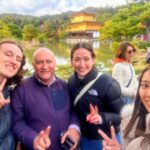
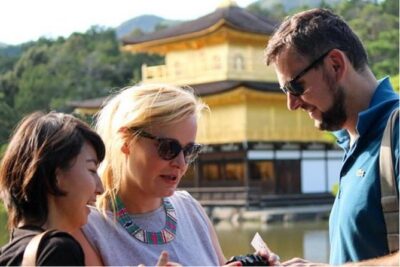
Next up is Kinkaku-ji (the Golden Pavilion), the Zen temple whose top floors are covered in gold leaf. It’s famous for a reason. Even if you’ve seen pictures, being there in person makes it feel more solid—more physical, more “this is what the hype is pointing at.”
Your time here is around 40 minutes. That length is smart. It keeps the day moving while still letting you slow down enough to notice details. You’ll also want to be ready for extra time spent just getting your bearings inside the complex, so a guide’s pacing helps.
Cost note: temple admission is not included for Kinkaku-ji in this tour setup. If you’re budgeting, plan for that additional entry fee rather than assuming everything is covered.
Nijo Castle’s Tokugawa Story (and Why UNESCO Matters)
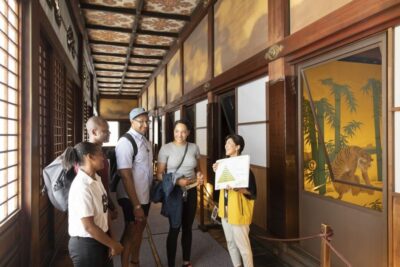
After the temples, you shift gears into history with Nijo Castle, a UNESCO World Heritage site built in 1603 as the Kyoto residence of Tokugawa Ieyasu, the first shogun of the Edo Period. This is one of those stops where a guide can make a huge difference.
Here’s why: castle sites can look like “big buildings” until someone connects the dots—who lived here, what the structure was meant to do, and what makes it important today. With about one hour on the ground, you have time to understand the bigger picture without feeling like you’re rushing through.
Cost note again: Nijo Castle admission is not included. If you’re doing this tour because you want to hit the big-name places efficiently, treat admission as the one variable you’ll add on rather than a surprise.
Nishiki Market: Shopping Street Energy Without Getting Lost
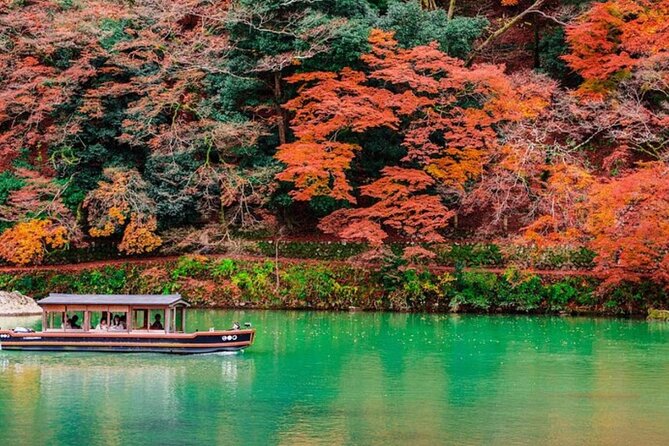
Then you get a very different vibe: Nishiki Market, often called Kyoto’s Kitchen. It’s a narrow, five-block shopping street packed with more than 100 shops and restaurants, and it’s known for food-focused browsing.
You’ll spend about one hour here, and that’s a sweet spot. It’s long enough to snack and pick up small items, but not so long that it turns into sensory overload. If you come hungry, this is the moment to lean in. If you’d rather snack lightly, ask your guide where to start—food stalls can be faster to navigate with local help.
Cost note: Nishiki Market itself is free to enter. What you spend will be up to your appetite.
Practical tip: even if you don’t buy much, the market is useful for learning what Kyoto flavors look like in real life—pickles, sweets, and ingredient-focused treats. It’s also a good place to grab small gifts without committing to a big shopping spree.
Other Kyoto tours and experiences to compare

Gion Alleyways With a Guide Who Knows Where to Walk
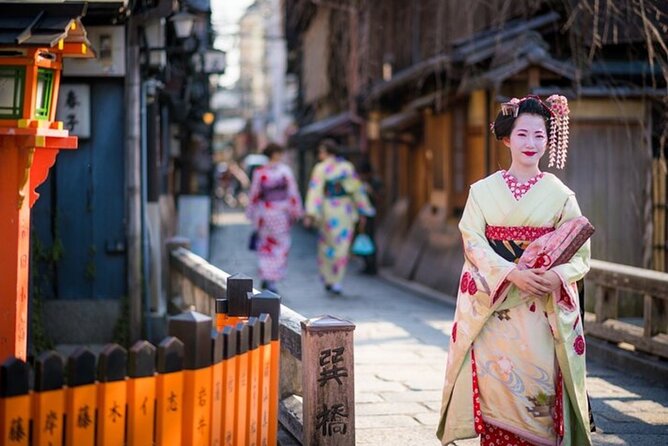
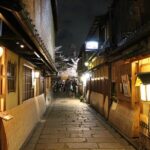
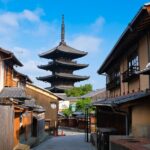
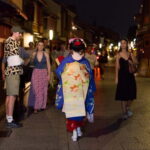
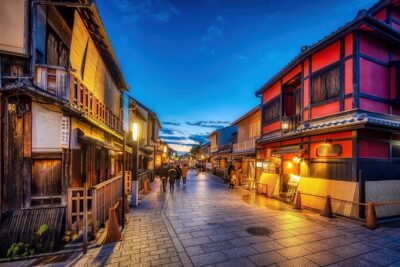
Gion is the Geisha district, and it can be tricky for first-timers. The streets are narrow. The lanes twist. And it’s easy to wander in circles if you’re trying to follow your own sense of direction.
This tour schedules about one hour in Gion, guided. That matters because your guide can steer you toward the areas that are easiest to walk and understand, while also helping you avoid the dead ends that look interesting but don’t add much to your day.
Cost note: no admission fee is listed for this stop.
One thing I appreciate about Gion on a guided day is that you can treat it like a walk-through cultural neighborhood rather than a checklist photo stop. Your guide can help you read the streets—what you’re seeing and why it’s there—so it feels less like an Instagram route and more like a real place.
Kiyomizu-dera: Make the Most of a Popular Temple With an Hour
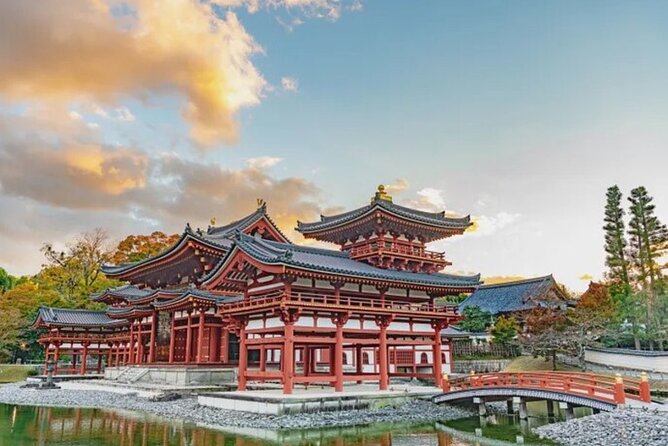
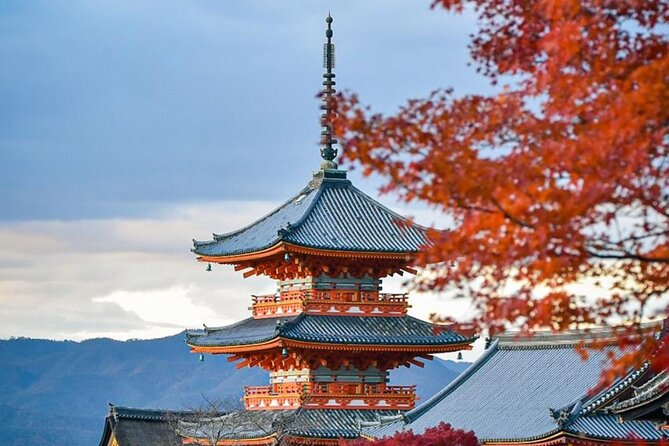
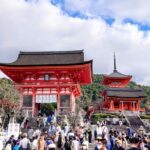
Next comes Kiyomizu-dera Temple, one of Kyoto’s most popular sights. Your time is about one hour with guided access around the grounds.
At Kiyomizu-dera, popularity can cut both ways. You’ll be surrounded by people, and that can make it harder to slow down. A guide helps you focus on what’s worth your attention and keeps you from turning the hour into a stop-start crowd shuffle.
Cost note: admission is not included for Kiyomizu-dera in this tour. Plan on paying an entry fee if you want to see it properly.
The biggest value here is interpretation. Temples can look like they all blur together unless someone points out what makes this one significant. An hour is enough time to see and understand without losing your day to endless wandering.
Fushimi Inari-taisha: A Focused Shrine Ending With Real Recognition
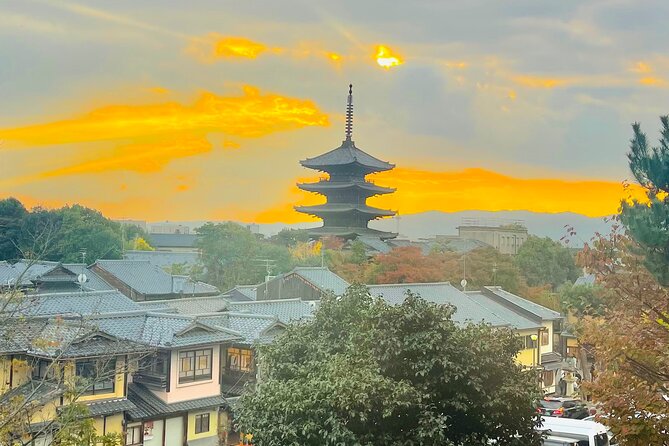
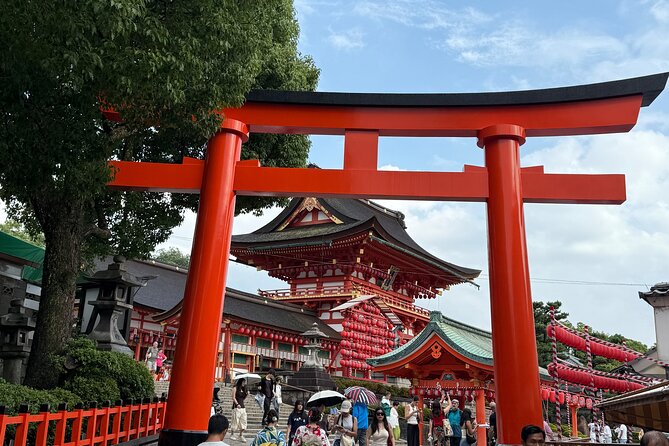
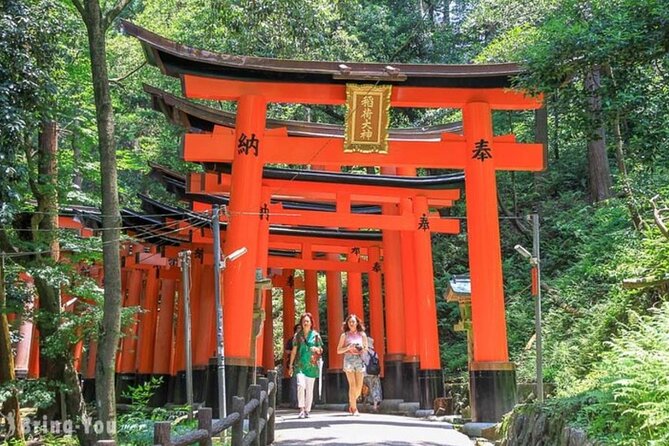
You’ll finish at Fushimi Inari-taisha, with about one hour scheduled. This is the shrine known for its thousands of torii gates, the visual that shows up on everything from postcards to screen savers.
Even if you’ve seen pictures, the gates feel different when you’re walking through them. The scale becomes clearer. The repetition stops feeling like decoration and starts feeling like a path.
Cost note: Fushimi Inari-taisha admission is free in this tour plan.
The guide value at this stop is simple: you don’t want to waste time figuring out where to go and how much walking makes sense after a full day. With a guided hour, you can get the best parts without turning the ending into an endurance test.
Price and Group Size: When $475 Per Group Feels Fair
This tour costs $475 per group, for up to 6 people, and runs about 8 to 10 hours. That price can look high if you’re thinking “I could take the bus.” True—you could. But the question is what your day is worth to you.
Here’s where the value comes from:
- Private door-to-door transfers reduce the biggest hidden cost of Kyoto travel: time. Time you don’t lose commuting is time you spend seeing Kyoto.
- You get a guide for the day. That’s not just facts for facts’ sake. It’s pacing, route choices, and help when sites are crowded or confusing.
- You’re visiting multiple major highlights in one trip. Without a guide, you’ll spend extra effort aligning transit schedules and walking between stops.
If you’re traveling as a small family or a tight group of friends, the per-person math gets much easier. The tour shines when you want a “greatest hits” day without turning your itinerary into logistics homework.
Guide Quality: The Names People Remember (and Why It Matters)
The most repeated praise in the guide feedback is not just that guides talk a lot. It’s that they manage the day like it’s your day.
Guides such as Hamza, Malik, Shah, Ali, Nomi, and Nami are described as friendly, patient, and good at adjusting pacing. One of the practical wins: they handle questions, support families, and keep the day moving smoothly even when schedules shift.
A few examples from that guide approach that you should take seriously:
- Family-friendly pacing: Guides were praised for working well with kids, including storytelling that keeps children interested.
- Adaptability: One review noted a guide working around added breaks for breakfast, snacks, and needs like cash.
- Communication: Multiple guides were praised for strong English (and, in at least one case, Japanese ability), which helps when asking for practical directions or recommendations.
- Photo help: Several guides were noted for taking good group photos, which is a small thing that saves you time and hassle.
If you book, this is also where you can get the best outcome. Tell your guide what matters: early vs. late crowds, temple vs. market focus, and any dietary needs. The stronger your direction, the more your private tour feels like it was built for you.
What a Day Like This Feels Like From Stop to Stop
Think of this tour as a chain of “high points,” each one different:
- Arashiyama Bamboo Forest sets the tone with an iconic visual.
- Kinkaku-ji hits the big temple highlight quickly.
- Nijo Castle adds depth with UNESCO-level history.
- Nishiki Market brings you back to street-level Kyoto food life.
- Gion shows Kyoto’s old-world neighborhood style and atmosphere.
- Kiyomizu-dera delivers a major religious/architectural stop with guidance.
- Fushimi Inari-taisha ends with a classic shrine walk that’s easy to recognize and hard to forget.
You’re not bouncing randomly. You’re moving through a logical route, with guide support at the places where it counts—crowds, layout, and “what should I notice?” moments.
The duration, 8 to 10 hours, is long enough to feel like you had a real day. It’s also short enough that you’re still fresh by the end, instead of collapsing halfway through like some over-packed itineraries.
Should You Book This Kyoto Private Day Tour?
Book it if you want a stress-light Kyoto day: hotel pickup, private driving, and a guide who can keep you oriented through crowded neighborhoods and top sights. It’s especially worth it if you’re traveling with family or a small group and you’d rather spend money than time managing transit and entrances.
Skip or reconsider if your budget is tight and you don’t mind planning routes yourself. Also reconsider if you strongly hate crowds—this tour hits popular places, so you’ll want a calm mindset for places like Arashiyama and Kiyomizu-dera.
If you want a single day that checks off the biggest Kyoto highlights with less friction, this private format is a smart choice.
FAQ
What’s included in this Kyoto private day tour?
The tour includes a private guide and a private vehicle, with door-to-door hotel transfers offered. A mobile ticket is provided. Some temple admissions are not included.
What’s the group size limit?
This is a private tour for your group, up to 6 people.
How long is the tour?
The duration is about 8 to 10 hours.
What time does the tour start?
The start time is 8:00 am.
Are admissions included for all stops?
No. Admission is not included for Kinkaku-ji, Nijo Castle, and Kiyomizu-dera. Arashiyama bamboo forest, Nishiki Market, Gion, and Fushimi Inari-taisha are listed as free.
Do they offer hotel pickup?
Yes. Door-to-door hotel transfers are included, and pickup is offered.
Can I cancel and get a full refund?
Yes. Free cancellation is offered if you cancel at least 24 hours in advance for a full refund.
Is this tour suitable for most travelers?
Most travelers can participate, since it’s a private day tour built for standard sightseeing.
If you tell me your travel dates and whether you care more about temples, food, or neighborhoods, I can suggest a sensible way to prioritize this route within the 8–10 hour window.
More Guided in Kyoto
More Tours in Kyoto
More Tour Reviews in Kyoto
Just added: more Kyoto tours to browse





Guided, compared.
 ★ 5.0Kyoto Early Morning Tour with English-Speaking GuideFrom $681,427 reviews
 ★ 5.0Kyoto 6hr Private Tour with Government-Licensed GuideFrom $1551,369 reviews
★ 4.9Early Morning Tour with English-Speaking GuideFrom $1011,128 reviews
★ 5.0Kyoto 6hr Private Tour with Government-Licensed GuideFrom $1551,369 reviews
★ 4.9Early Morning Tour with English-Speaking GuideFrom $1011,128 reviews
 ★ 4.7Nijo-jo Castle and Ninomaru Palace Guided TourFrom $161,020 reviews
 ★ 4.9Izakaya Bars Guided Walking TourFrom $25815 reviews
 ★ 5.0Kyoto Gion Night Walk & Geisha District Guided TourFrom $18786 reviews
 ★ 4.7Nijo Castle, Kiyomizu & Fushimi Inari Guided TourFrom $54700 reviews
 ★ 5.0Kyoto 4hr Private Tour with Government-Licensed GuideFrom $109629 reviews