
Reviewed · WORKSHOPS
Kyoto: Private Aerial Yoga Class
Aerial yoga in Kyoto feels oddly calming. This one-hour, private class at SUNNY YOU Yoga Studio lets you choose a low or regular-height setup, so you control how intense it feels. I like that you get English instruction throughout, which makes it easier to relax into poses instead of translating cues in your head. The class is also designed around your current physical and mental state, so it doesn’t feel like a one-size session.
The best part is the hammock choice. For the low-altitude class, you can keep part of your body on the mat, which makes stretching more comfortable if you’re stiff, new to aerial yoga, or easily thrown off by motion. For the basic aerial option, hammocks sit at waist height so you can practice weightless poses that target core strength and flexibility.
One thing to consider: even though the low-altitude option is recommended for people who fear heights, the general safety notes still list people afraid of heights as not suitable, along with vertigo, altitude sickness, high blood pressure, and size/age limits. So you’ll want to be honest with yourself before you book.
In This Review
- Key highlights you’ll actually care about
- Kyoto’s SUNNY YOU Yoga Studio: easy to find, easy to settle
- The two class styles: low aerial vs basic aerial yoga
- Low-altitude aerial yoga (grounded, supportive, calmer)
- Basic aerial yoga (waist height, weightless feel, core work)
- What the one-hour private session feels like in practice
- Dress code and prep: small rules that make the session go smoother
- Safety notes you should take seriously (especially the height question)
- English-led guidance: why it changes the experience
- Price and value in Kyoto terms
- Who should book this (and who should skip it)
- Nearby Kyoto time planning: combine with temples (without exhausting yourself)
- Should you book this private Kyoto aerial yoga class?
- FAQ
- What is the duration of the Kyoto private aerial yoga class?
- Where does the class take place?
- How do I get to the studio?
- Can I choose between different aerial heights?
- Is the class taught in English?
- Do I need to bring a yoga mat?
- What should I wear?
- What do I need to bring besides clothes?
- Is this suitable for beginners?
Key highlights you’ll actually care about
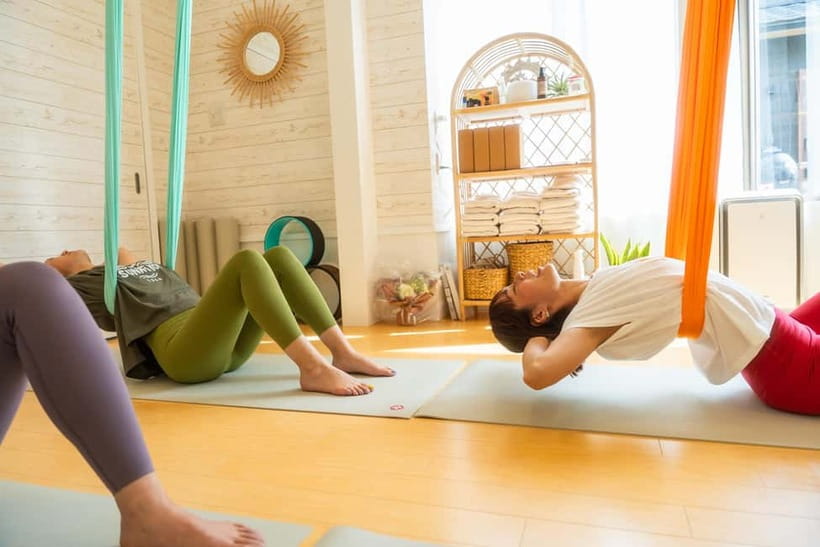
- Two hammock heights, one private class: low-altitude for grounding and basic aerial at waist height for classic weightless poses
- English-led guidance the whole time: you won’t miss key safety cues or posture corrections
- Tailored to your state: the instructor adjusts the session to your physical and mental needs
- Beginner-friendly structure: low aerial is specifically recommended if you’re new
- Simple prep, clear dress rules: mat is included, but you must wear long pants (shorts and sleeveless tops aren’t allowed)
Kyoto’s SUNNY YOU Yoga Studio: easy to find, easy to settle
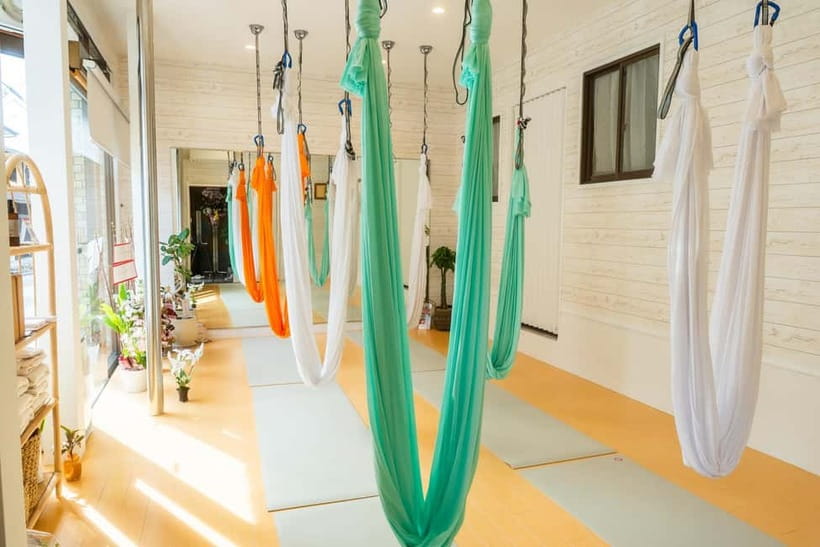
This class centers on a small yoga studio in Kyoto—look for a yellow brick-style storefront with a sign reading SUNNY YOU Yoga Studio. If you arrive by taxi, here’s the practical tip: the studio front is a one-way street, so ask to be dropped off right away and walk the final bit.
Getting there on foot is straightforward. From Arashiyama Randen Omuro-Ninnaji Station, it’s about a 3-minute walk. From the city bus stop for Omuro-Ninnaji Station, plan for around 5 minutes on foot. That matters because after a flight or a full day of sightseeing, you don’t want extra hassle before you even start stretching.
The studio vibe matters too. Small spaces often mean you get more personal attention, and this is a private group format. Even if Kyoto is loud outside, you should feel the volume drop once you’re inside and the instructor starts setting up the hammocks.
Other Kyoto tours and experiences to compare

The two class styles: low aerial vs basic aerial yoga
You’re not forced into one experience here. You choose between two setups, and that choice is the biggest value you’ll get from booking this specific class.
Low-altitude aerial yoga (grounded, supportive, calmer)
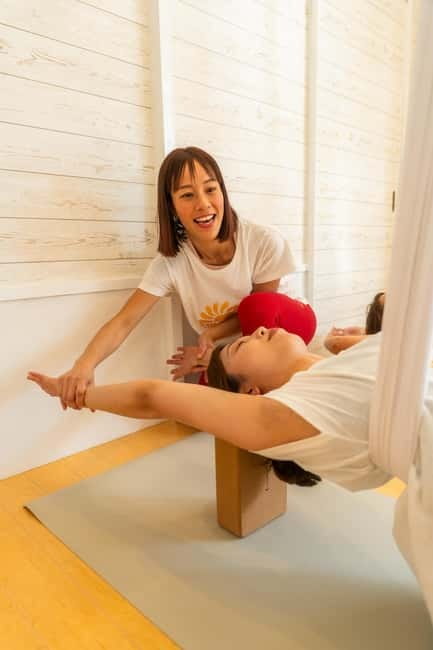
In the low-altitude class, the hammock is set close to the ground. The setup lets you keep part of your body on the mat, which gives you a safety “anchor” while you learn aerial movement.
This is the option I’d steer you toward if any of these are true:
- You’re brand new to aerial yoga
- Heights make you tense
- You get motion sickness or feel uneasy with airborne movement
- You’re stiff or have limited mobility and want stretches that feel doable
Because you’re not fully suspended, you can relax sooner. That tends to help beginners focus on breathing, alignment, and gentle mobility rather than “figuring out” how to stay in the hammock.
Basic aerial yoga (waist height, weightless feel, core work)
In the basic aerial class, the hammock sits at about waist height. Here you’ll experience a more classic aerial sensation—feeling weightless while you practice poses in the air.
The goal shifts toward building strength and mobility through aerial control:
- Core strengthening
- Improved flexibility
- Posture support
- Relaxation and circulation benefits
If you want the fun, buoyant feeling of aerial yoga but you’re still in a beginner-friendly format, this option is a strong match. Think of it as the “more aerial” choice, without the extreme, far-above-the-ground setup you might associate with advanced circus-style training.
What the one-hour private session feels like in practice
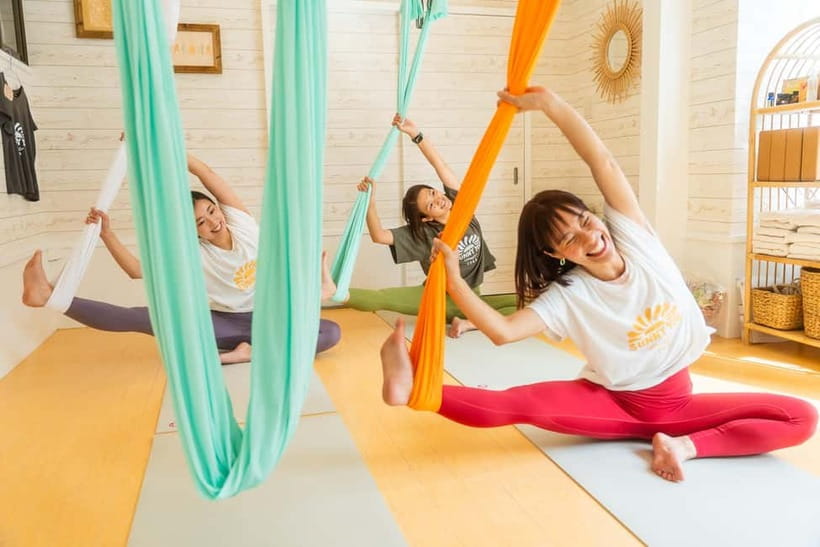
You’re booking a private group class for 1 hour, and that time is meant to feel focused rather than rushed. You’ll have time to get set up, learn how to handle the hammock safely, and then practice poses with guidance.
Because it’s tailored to your current physical and mental state, the instructor doesn’t treat the session like a scripted routine. That kind of adjustment matters in yoga. Some days you’re tight; some days you’re restless. In aerial yoga, that difference becomes even more important, because your body needs the right level of support to move confidently.
Also, the instruction is entirely in English. For a lot of visitors, that’s a big deal. You’re better able to understand what’s happening in your body—especially when you’re learning unfamiliar positions or learning how to grip, support, or transition between postures.
If you like structure, you’ll probably appreciate how the two class options map to your comfort level: low altitude first if you need grounding, basic aerial if you want more lift. If you like flexibility, you’ll like that the instructor can aim the class toward relaxation, strength, or both, depending on where you are that day.
Other Kyoto tours and experiences to compare




Dress code and prep: small rules that make the session go smoother
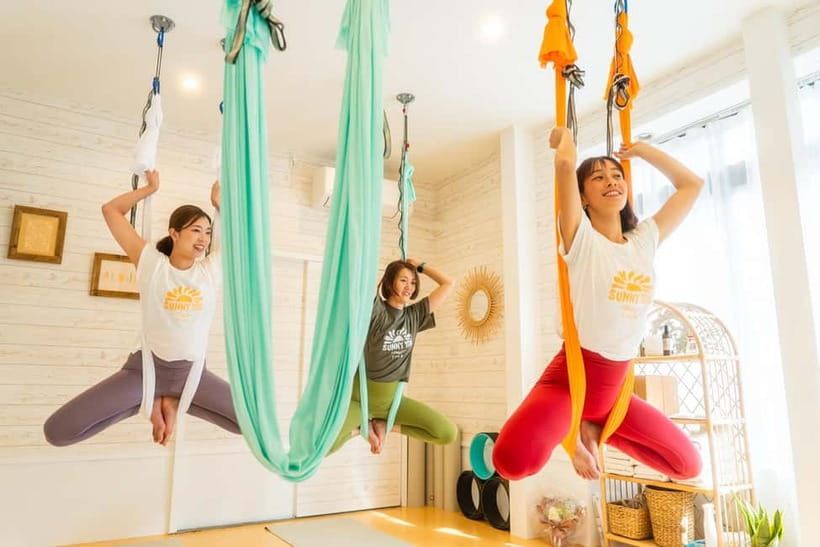
This is the practical part where people usually lose time. Kyoto yoga culture is welcoming, but aerial yoga has specific needs—fabric and coverage affect how you move and how you feel in the hammock.
Bring:
- A towel
- Water
- Comfortable clothes
- A T-shirt
- Long pants
Not allowed:
- Shorts
- Sleeveless shirts
That long-pants rule is especially important for aerial work. You want fabric that helps you stay comfortable and secure during transitions, without feeling restricted.
If you forget anything, don’t assume you can improvise. Aerial yoga isn’t the place to borrow gear at the last second. Pack simple clothes you already trust: breathable layers, long pants, and a shirt you won’t mind getting a bit warm.
One more prep tip: go in with a clear plan for your body today. This class is designed to match your state, but you’ll get better results if you tell the instructor honestly whether you feel stiff, tired, anxious about heights, or ready to focus on strength.
Safety notes you should take seriously (especially the height question)
Aerial yoga is fun, but this one comes with clear boundaries. You’ll want to read them carefully.
The activity is listed as suitable for beginners, and low aerial yoga is recommended for people new to aerial yoga or afraid of heights. But there’s also a general “not suitable for” list that includes people afraid of heights, along with:
- Vertigo
- Altitude sickness
- High blood pressure
- People over 70 years
- People over 209 lbs (95 kg)
So what should you do with that contradiction? Handle it like a grown-up traveler: if heights are a real issue for you, don’t brush it off. Choose the low-altitude option if your comfort improves when you can keep part of your body on the mat—but if your fear is intense or you know you react strongly, take the general not-suitable warning seriously and consider skipping the aerial part.
If you fall into any of the medical-risk categories listed, you should treat the warning as a hard stop rather than a “maybe.” You only get one body.
Also, if you’re prone to motion sickness, the low-altitude option is described as perfect for people prone to motion sickness. That suggests you’ll likely tolerate aerial movement better when you’re grounded and supported.
English-led guidance: why it changes the experience
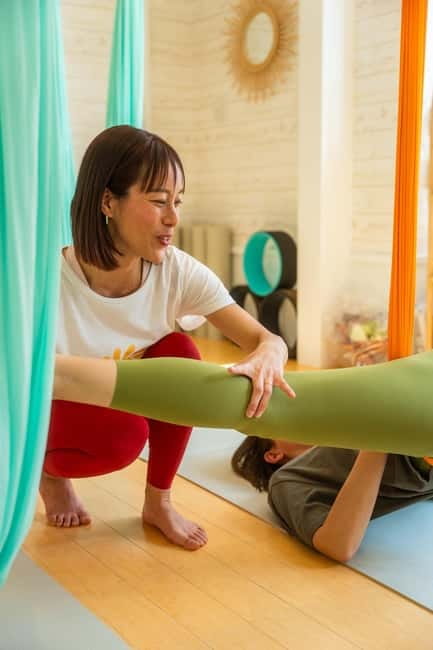
In Kyoto, English is common in major areas, but not every small studio runs fully in English. This class does.
That means you can focus on your movement instead of translating:
- You’ll understand safety cues
- You’ll follow posture adjustments
- You’ll know what the instructor wants you to feel (breath, alignment, stability)
In a hammock, small cues matter. Grip position, how you shift weight, and how you transition between poses are the difference between smooth practice and uncomfortable struggle. When you understand the instructions quickly, you relax faster—so the session feels more like yoga and less like problem-solving.
The instructor also appears to run a positive, organized style. Reviews mention Agata-san with a positive energy and effective class flow, and that’s what you want from a teacher in a format where you’re learning new physical sensations. Whether you’re aiming for relaxation or core strength, you’ll do better when the instructor runs the class confidently in your language.
Price and value in Kyoto terms
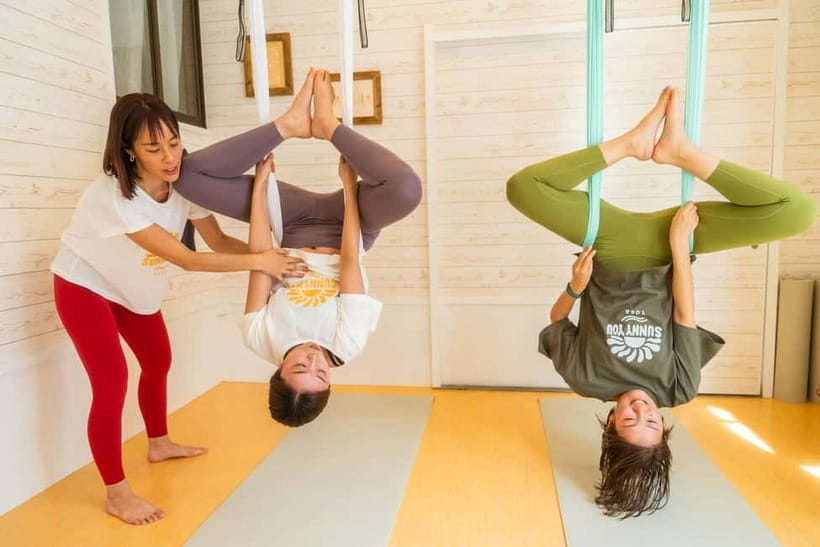
At $61 per person for a 1-hour private class, this isn’t the cheapest thing you can do in Kyoto. But it’s also not trying to be.
You’re paying for three value drivers:
- Private instruction in a niche format (aerial yoga needs setup time, attention, and safety monitoring)
- Two options (low-altitude or basic aerial) so you can pick the intensity that fits your body
- English-only guidance plus a mat included
If you split time during your Kyoto days across many activities, you’ll appreciate the efficient structure here: one hour, clear setup, and a direct experience you can’t replicate on your own without a hammock and trained coaching.
When I look at value, I’d frame it like this: if you want a calm, beginner-friendly aerial session with language support and a tailored approach, this price can feel reasonable. If you’re trying to “do it cheaply,” aerial yoga will almost always cost more than a basic mat class. In that case, you might choose a regular studio practice instead.
Who should book this (and who should skip it)
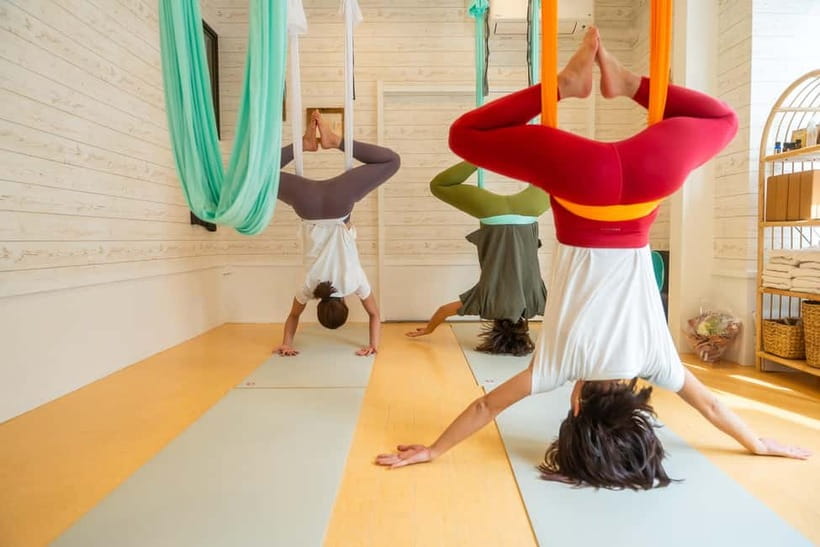
This experience is a strong fit if you want a unique Kyoto activity that’s still beginner-friendly and supportive.
You’re a good match if:
- You’re new to aerial yoga and want a guided starting point
- You want a class tailored to your mental and physical state
- You want the ease of English instruction
- You’d like flexibility and core strengthening, without a complicated learning curve
- You prefer a private setting over joining a larger group
You should think twice or skip if:
- Heights trigger strong anxiety and you fall into the not-suitable warning
- You have vertigo or altitude sickness
- You have high blood pressure
- You’re over 70, or above 209 lbs (95 kg), per the stated limits
If you’re on the fence because of comfort with heights, the low-altitude option is clearly positioned as the gentler entry point. But don’t ignore the safety notes.
Nearby Kyoto time planning: combine with temples (without exhausting yourself)
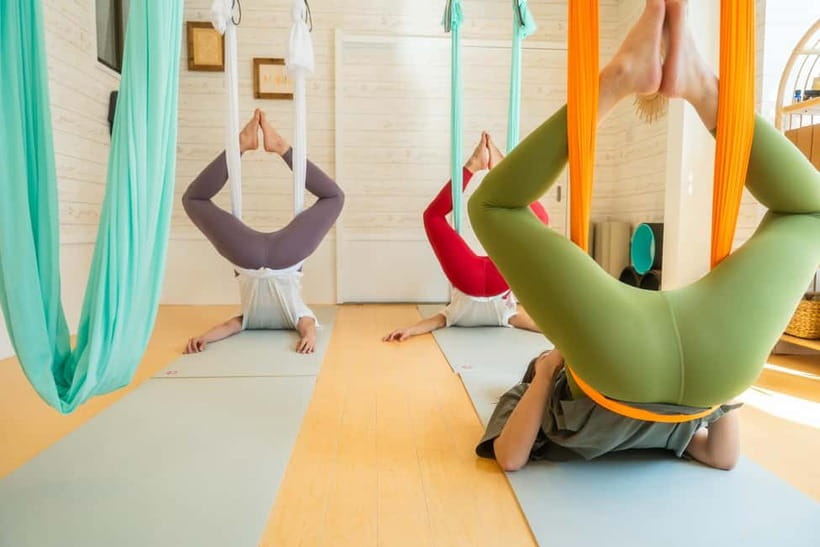
The studio’s location is convenient for a slower day in the Omuro-Ninnaji area. From the nearest station walks, you’re positioned so you can pair this with temple time without burning your whole day in transit.
A useful pacing idea:
- Do this early if you want your body to feel loose before sightseeing
- Or schedule it after a calmer morning if your legs are already tired from walking
Aerial yoga can feel energizing, but it’s also stretching and controlled movement. If you try to stack intense hikes right after, you might feel it the next day. Give yourself an easy buffer before you jump back into heavy walking.
Should you book this private Kyoto aerial yoga class?
Book it if you want a private, English-led aerial yoga session where you can choose low-altitude support or waist-height weightlessness. The big wins are the hammock setup that matches your comfort and the instructor’s ability to tailor the session to how you feel that day. For many first-timers, that combination is what turns aerial yoga from intimidating to genuinely enjoyable.
Skip or reconsider if you have any of the medical-risk items listed, or if fear of heights is a strong, immediate trigger for you. In that case, the safety warnings should guide your decision more than the low-altitude “recommended for” note.
If you want a one-hour activity that’s different from temples but still grounded enough to feel like real yoga, this is a smart pick in Kyoto—especially with the option for a calmer, low-to-the-ground start.
FAQ
What is the duration of the Kyoto private aerial yoga class?
The class lasts 1 hour.
Where does the class take place?
It’s at a small yoga studio marked by a sign for SUNNY YOU Yoga Studio. The storefront looks like a yellow brick-style building.
How do I get to the studio?
It’s about a 3-minute walk from Arashiyama Randen Omuro-Ninnaji Station and about a 5-minute walk from the Kyoto city bus Omuro-Ninnaji Station.
Can I choose between different aerial heights?
Yes. You can choose between low aerial yoga (hammocks set close to the ground) or basic aerial yoga (hammocks set at waist height).
Is the class taught in English?
Yes. Instruction is provided entirely in English.
Do I need to bring a yoga mat?
No. A yoga mat is included.
What should I wear?
Wear comfortable clothes including a T-shirt and long pants. Shorts and sleeveless shirts are not allowed.
What do I need to bring besides clothes?
Bring a towel and water.
Is this suitable for beginners?
Yes, it’s suitable for beginners. Low aerial yoga is recommended if you’re new to aerial yoga.
More Workshops in Kyoto
More Private in Kyoto

More Tour Reviews in Kyoto






Just added: more Kyoto tours to browse








Workshops, compared.
 ★ 4.345-Minute Tea Ceremony Lesson ExperienceFrom $222,378 reviews
 ★ 5.0Ramen Cooking Class at Ramen Factory in KyotoFrom $1311,937 reviews
 ★ 5.0Chopsticks Making Workshop in Gion with Engraving OptionFrom $15958 reviews
 ★ 4.9Samurai Sword Class by Experts in Traditional ArtsFrom $64657 reviews
 ★ 4.9Ramen Cooking Class at a Ramen Factory with SouvenirFrom $127532 reviews
 ★ 5.0Ninja 1-hour Hands-on Lesson by Japanese master in Kyoto -EntryFrom $80489 reviews
 ★ 5.0Ramen, Gyoza, and Onigiri Cooking ClassFrom $90445 reviews
 ★ 5.0The Original Small-Group Sushi Making Class in KyotoFrom $69436 reviews
Browse the lists this tour appears in