
Reviewed · KYOTO GARDENS & ZEN RETREATS
Kyoto: Make Zen Garden and Taste Matcha in Pottery Shop
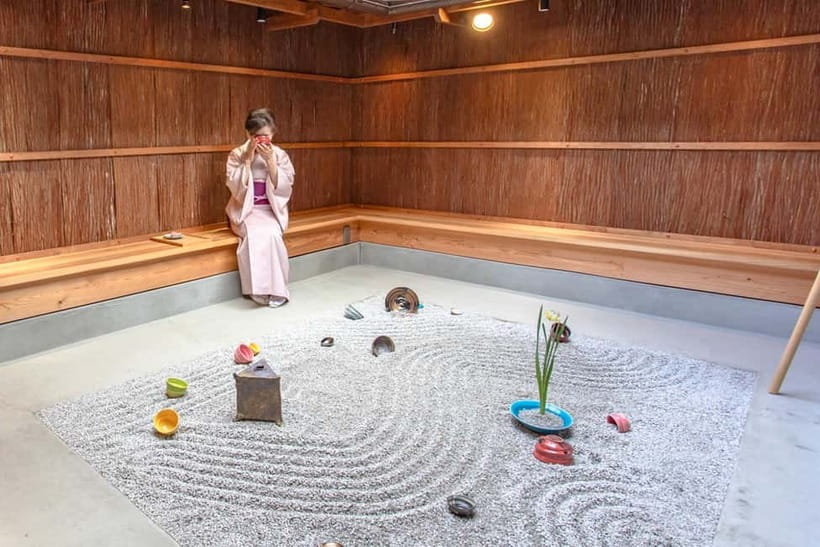
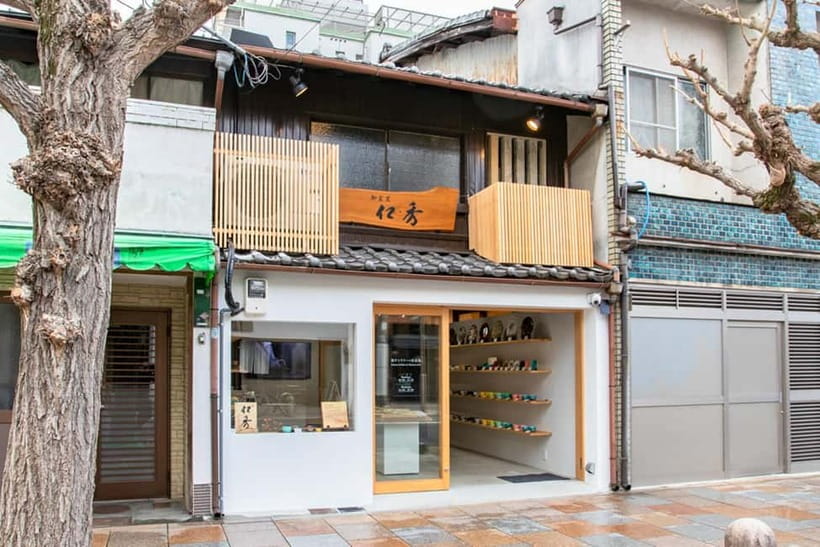
A raked sand garden, but you make it yourself. In a small Ninshu pottery shop inside a renovated 100-year-old machiya townhouse, you create your own karesansui sand composition that’s usually only admired from a distance. Right in front of your garden, you’ll enjoy Ippodo matcha with seasonal wagashi from Senbon Tamajushuken.
What I especially like is how hands-on it is. You’re not just observing a Zen garden—you’re shaping it, then tasting Kyoto-style treats with your creation right there. The one possible drawback: instruction is light, so if you want lots of step-by-step guidance, this 30-minute session may feel more free-form than formal.
In This Review
- Quick hits you’ll care about
- Why this Kyoto Zen garden lesson feels different in a pottery shop
- Where to meet Ninshu: Teramachi Dori near Ippodo and Kyoto Imperial Palace Park
- Inside the machiya: making your karesansui sand garden (in about 30 minutes)
- Matcha and wagashi in front of your garden: Ippodo tea tastes best in the right spot
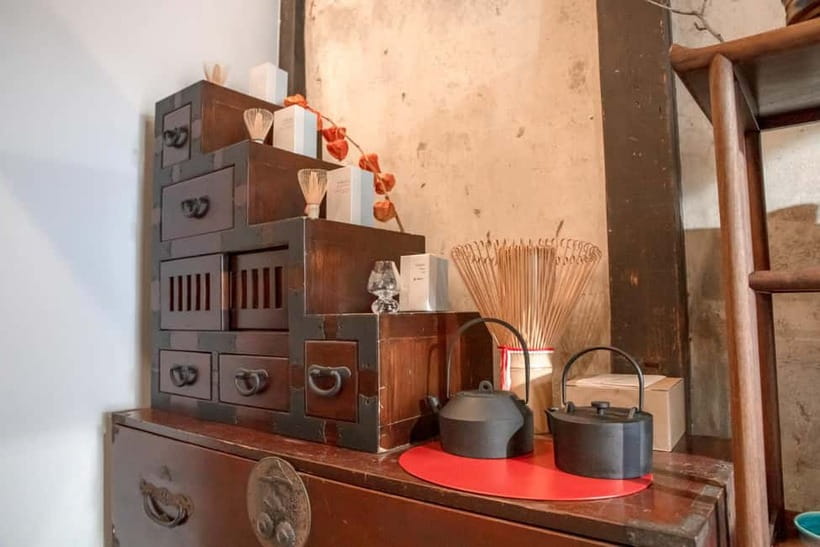
- Pottery shopping after the experience: take home dishwasher-safe Kyoto memories
- Price and value: how $12 makes sense for a Kyoto matcha-and-culture stop
- Who this fits best (and who might want a different plan)
- Should you book this Kyoto Zen garden and matcha pottery workshop?
- FAQ
- How long does the experience take?
- How much does it cost?
- Is it a small group?
- What do I eat and drink during the workshop?
- What do I create during the session?
- Can I buy pottery at the shop?
- What if my plans change?
Quick hits you’ll care about
- You create your own karesansui Zen garden (not just view one)
- Ippodo matcha + seasonal wagashi from Senbon Tamajushuken right by your garden
- A renovated 100-year-old machiya gives the whole experience Kyoto soul
- Small group (up to 8) keeps it calm and practical
- Handmade pottery souvenirs are dishwasher and microwave safe
- Photo-friendly setup: enjoy sweets in front of the garden you made
Why this Kyoto Zen garden lesson feels different in a pottery shop
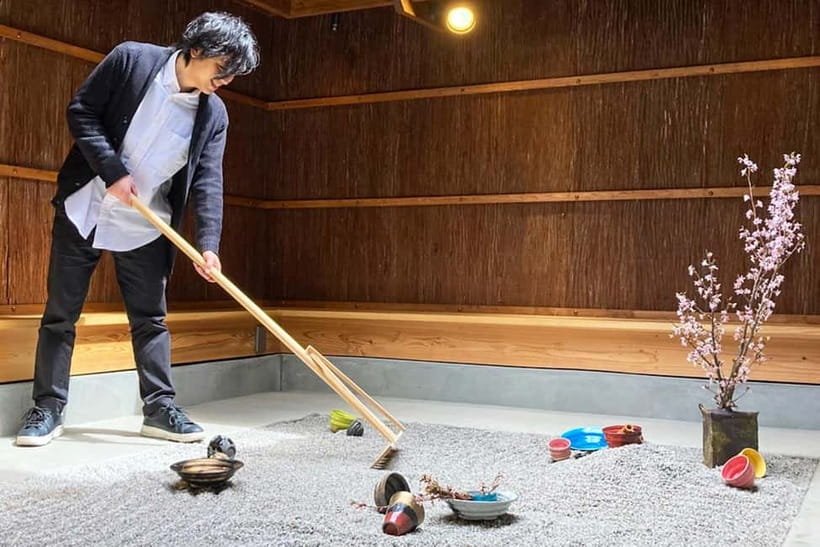
Kyoto Zen gardens are usually a “look, don’t touch” kind of thing. Here, the whole point is the opposite. I love that the experience lets you participate in karesansui—raking and arranging sand to make something personal—then you get to enjoy a tea-and-sweet moment right in front of it.
The setting helps too. Instead of a classroom vibe, you’re in a working pottery shop in a renovated 100-year-old Kyoto townhouse (a machiya). That matters because it keeps the experience feeling like real daily Kyoto life, not a staged demo.
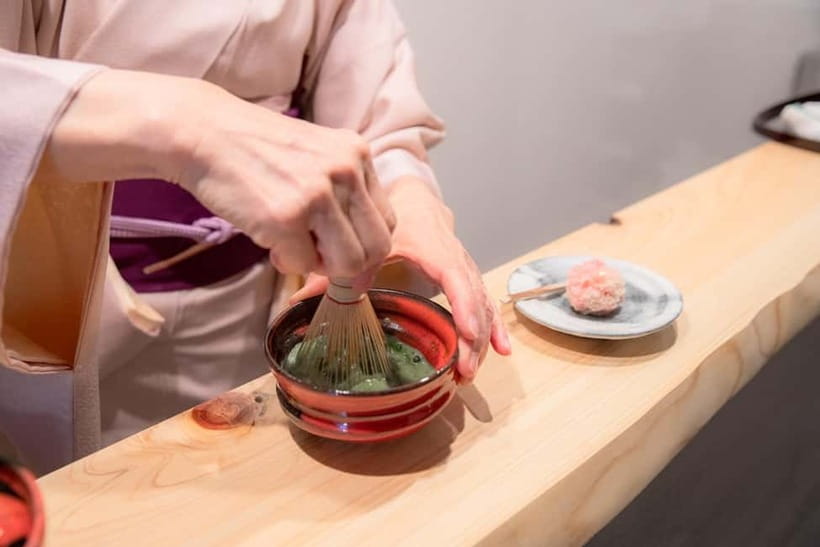
The tea part also pulls its weight. You’re not drinking generic matcha. You’re tasting matcha from Ippodo, paired with seasonal wagashi from Senbon Tamajushuken. It’s the kind of pairing that makes Kyoto culture feel specific, not just thematic.
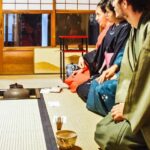
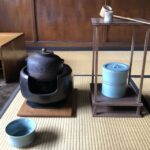
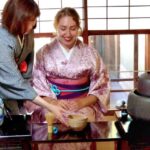
Sit for another bowl of matcha in a Kyoto tea house
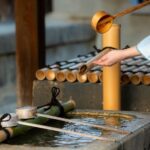
Where to meet Ninshu: Teramachi Dori near Ippodo and Kyoto Imperial Palace Park
This is easy to find if you’re already on the Teramachi Dori side of central Kyoto. The meeting point is about 2 minutes walk north from Ippodo, and roughly 100 meters south from Kyoto Imperial Palace Park along Teramachi Dori.
If you’re using transit, you can plan around either station:
- Kyoto Shiyakusho-mae Station (Subway Tozai Line): about 11 minutes on foot
- Jingu-marutamachi Station (Keihan Main Line): about 9 minutes on foot
The provided coordinates are 35.0157879, 135.7673992. If you plug that into your map app, you should land in the right neighborhood quickly.
Inside the machiya: making your karesansui sand garden (in about 30 minutes)
Once you’re inside Ninshu, you’re heading to the back garden area. The experience centers on creating an original Zen garden designed with sand. In traditional Kyoto temples, karesansui is designed to be appreciated, not actively built by visitors. Here, you get to make your own version inside the store’s garden.
Expect a hands-on session where you rake and decorate the sand. In practice, that means you’ll be actively working with the layout rather than following a long lecture. One helpful note from how people describe it: instruction isn’t heavy. You’ll probably get enough direction to get started, then it becomes free-form. If you’re the creative type, that’s a plus. If you like rigid steps and “do exactly this,” you may want to manage expectations going in.
Also, because the group is limited to 8 participants, the pace doesn’t drag. This is a short experience by design, and the workshop format keeps it moving so you still get time for the tea and sweets afterward.
The overall “why this works” is simple: you build the visual foundation first, then you taste Kyoto’s flavors while your garden is right in front of you. That order turns the moment into a memory, not just a snack break.
Matcha and wagashi in front of your garden: Ippodo tea tastes best in the right spot
After your sand garden is shaped, you shift from hands-on making to tasting. This part is set up so you can enjoy matcha and Japanese sweets directly in front of the garden you created.
Here’s what’s included for the food-and-drink portion:
- Matcha from Ippodo (Kyoto’s famous tea company)
- Seasonal wagashi from Senbon Tamajushuken
- You can have matcha hot or iced, and it comes alongside a mochi cookie
That combination is a big reason the experience feels like Kyoto, not like a generic cultural activity. Ippodo’s matcha has a distinct reputation in Kyoto, and Senbon Tamajushuken’s seasonal sweets tie the tasting to the time of year. Even when your garden outcome is quirky, the flavor moment lands.
And yes, it’s photo-friendly. The setup is meant for you to take pictures while eating matcha and sweets in front of your garden. You’re capturing your own raked-sand creation, plus the Kyoto tea ritual in the same frame.
Practical tip: if you’re taking photos, do it after the first few sips and bites. Matcha cools quickly if it’s iced, and sweets don’t wait around politely. Start tasting, then capture your moment.
Pottery shopping after the experience: take home dishwasher-safe Kyoto memories
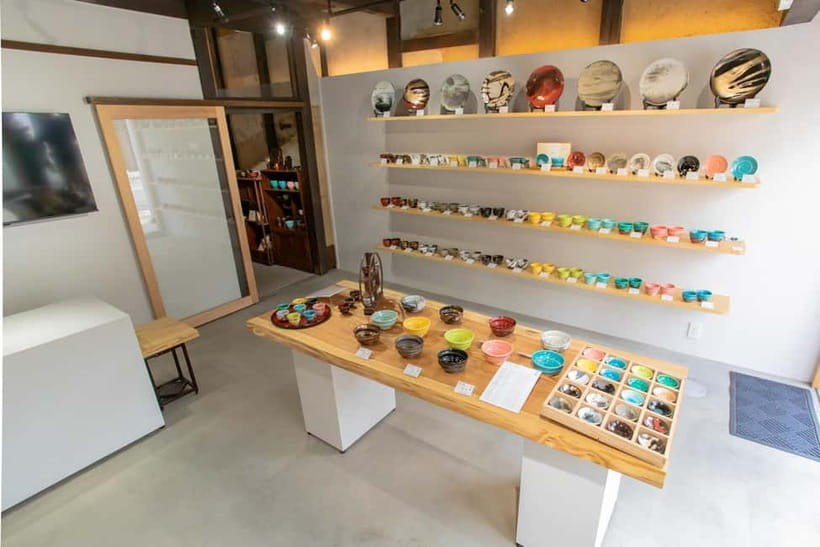
The experience doesn’t end when you finish your garden and tea. You also get time to browse the store and buy traditional handmade pottery as souvenirs.
One of the most practical details here is that the pottery is said to be dishwasher and microwave safe. That’s huge for overseas visitors. You’re not just buying “nice for show.” You’re buying something that can live in your kitchen.
You’ll likely notice the shop’s broader atmosphere too. People describe the pottery shop as being in a great area with antiques and traditional home goods. That’s a nice bonus because you can treat the workshop as the anchor stop, then turn your time before or after into casual wandering.
When you shop, keep it simple:
- Check the size against how you’ll use it at home (cups, small bowls, serving items)
- Think about packing: plan to cushion anything fragile
- If you’re buying for gifts, consider multiple smaller items rather than one big one
The pottery part adds value because it turns a 30-minute activity into something you can keep using long after your Kyoto days end.
Make something by hand in a Kyoto workshop



Price and value: how $12 makes sense for a Kyoto matcha-and-culture stop
At $12 per person, this can feel like a steal—if you compare it to how expensive matcha tastings can be on their own. Your price covers the workshop plus the matcha and sweets portion, along with reservation and system fees.
Here’s where the value comes from:
- You get a hands-on Zen garden creation (something usually reserved for viewing)
- You drink Ippodo matcha, not just “tea”
- You eat seasonal wagashi from Senbon Tamajushuken
- You’re in a real machiya setting that makes the experience feel Kyoto-shaped
- You get pottery browsing time to turn the cultural moment into a usable souvenir
The only trade-off is time. This is built for speed and clarity, not for an extended cultural lecture. If you want a long guided program or multiple workshop rounds, you might feel you’re done quickly. But if you want a focused taste of Kyoto art, food, and craft in one compact slot, the pricing and structure line up well.
Who this fits best (and who might want a different plan)
This experience is best for you if:
- You like creative activities that still feel culturally grounded
- You’re craving matcha tasting with a specific Kyoto tea maker attached
- You enjoy small-group settings where you don’t feel rushed by crowds
- You want a souvenir idea that isn’t purely decorative
It may be less ideal if you:
- Expect lots of detailed instruction like a class
- Want a long temple-style talk plus a slow walk through gardens
- Need a very structured outcome (because your Zen garden is free-form)
In other words, it’s a great fit for people who enjoy making something with their hands and then tasting the result immediately.
Should you book this Kyoto Zen garden and matcha pottery workshop?
I’d book it if you want a compact, high-satisfaction Kyoto experience. The big draw is that it combines hands-on karesansui with an actual tea-and-sweets ritual from Kyoto heavyweights, all inside a renovated machiya pottery shop. For $12, you’re not just paying for an activity—you’re paying for the feeling of Kyoto craftsmanship plus the edible part of the culture.
I’d also book it if you’re already near Ippodo or Kyoto Imperial Palace Park and you want a nearby activity that doesn’t require a big time commitment. Thirty minutes is a friendly length. It’s easy to slot before dinner or between other stops.
One last practical reason: this is the kind of experience that’s easy to remember because you made the centerpiece. Your sand garden becomes the background for your matcha moment, and then you may bring pottery home too.
If that sounds like your travel style, reserve your spot and go. If you’re the type who needs heavy instruction and a longer program, you might choose something else—but for many people, this one is exactly the right size.
FAQ
How long does the experience take?
The experience lasts about 30 minutes.
How much does it cost?
It costs $12 per person.
Is it a small group?
Yes. It’s limited to 8 participants.
What do I eat and drink during the workshop?
You’ll have matcha from Ippodo and seasonal wagashi from Senbon Tamajushuken. The matcha can be served hot or iced, and it comes with a mochi cookie.
What do I create during the session?
You make your own original Zen garden (karesansui) using sand.
Can I buy pottery at the shop?
Yes. You can purchase traditional handmade pottery as souvenirs, and it’s described as dishwasher and microwave safe.
What if my plans change?
You can cancel up to 24 hours in advance for a full refund, and you can reserve and pay later to keep plans flexible.
If you tell me your travel dates and what else you’re doing that day in Kyoto, I can suggest the best time to fit this in.
More Gardens and Quiet Corners


More Kyoto Workshops to Try
One More Bowl of Matcha

Just added: more Kyoto tours to browse





Kyoto Gardens & Zen Retreats, compared.
 ★ 5.0Kyoto Arashiyama Walking Tour: Bamboo, Monkeys, Gardens & SecretsFrom $651,216 reviews
 ★ 5.0Kyoto Zen Meditation & Garden Tour at a Zen Temple with LunchFrom $110441 reviews
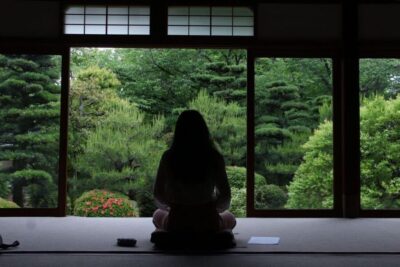 ★ 5.0Zen Experience in a Hidden TempleFrom $109437 reviews
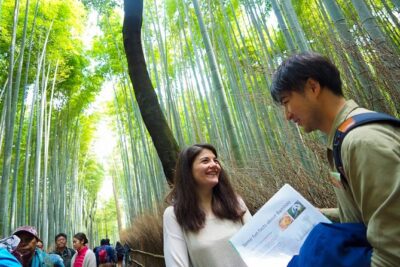 ★ 5.0Kyoto Arashiyama Bamboo forest & Garden Half-Day Walking TourFrom $129413 reviews
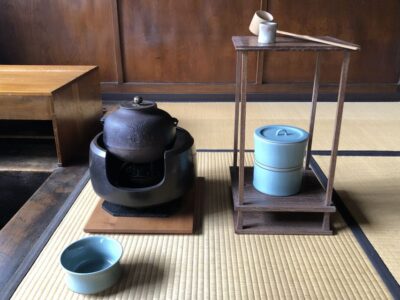 ★ 4.8Tea Ceremony Meditation – Make Matcha with Tea MasterFrom $45406 reviews
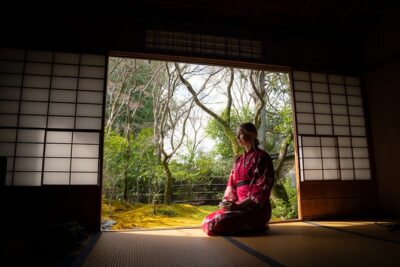 ★ 5.0Zen Meditation at a Private Temple with a MonkFrom $91202 reviews
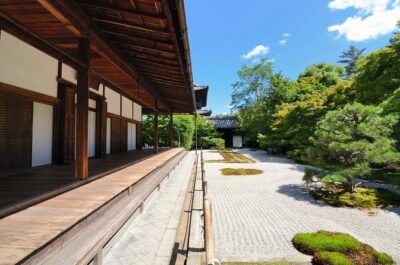 ★ 5.0Zen Garden, Zen Mind (Private)From $380126 reviews
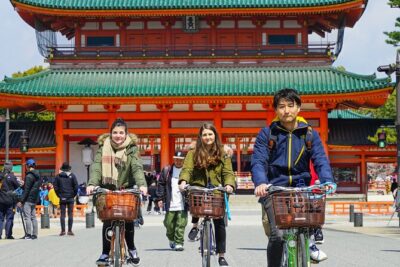 ★ 5.04.5-Hour Kyoto Bike Tour with Lunch and UNESCO Zen TemplesFrom $99122 reviews
Browse the lists this tour appears in