
Reviewed · KYOTO GARDENS & ZEN RETREATS
Kyoto Arashiyama Walking Tour: Bamboo, Monkeys, Gardens & Secrets
Arashiyama feels like Kyoto’s cooler, calmer side. This 5–6 hour walk takes you through bamboo, key temples and gardens, and up to the Monkey Park Iwatayama viewpoint, with tickets handled and a guide steering you through the mess of arrivals and crowds. I love that it’s built around the big hits and the quieter angles, and I also love the clear pacing that keeps the day from turning into a sprint. The main thing to consider is the 20–25 minute uphill hike to the monkeys, which is a bit steep.
If you’ve ever tried to plan Arashiyama on your own, you know the trap: there are multiple stations with Arashiyama in the name, and they’re not close. This tour starts at the right meeting point (Saga-Arashiyama), so you can get your bearings fast and focus on the sights. One other practical note: it’s English-only and maxes at 12 people, so you get a small-group experience, but you’ll still want comfy shoes and a little stamina.
In This Review
- Quick take: who this fits
- Key things that make this tour worth your time
- Starting at Saga-Arashiyama: getting oriented without wasting time
- Nonomiya Shrine: the small stop that adds meaning
- Okōchi Sansō Garden: the calm intermission after the bamboo
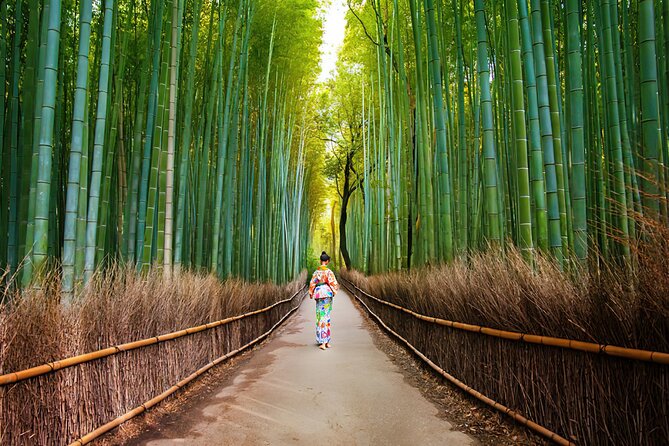
- Bamboo Forest Trail: iconic, but managed
- Tenryu-ji and its Sōgenchi Teien garden: the UNESCO “pause button”
- Togetsukyo Bridge (and the Kimono Forest): classic views, quick hit
- Monkey Park Iwatayama: the hike that makes the day
- Lunch break and shopping time: plan for your own food
- Price and value: why $65.57 can feel fair
- Guides, pacing, and the small touches that land
- What to bring (so you enjoy the hike and the gardens)
- Should you book this Kyoto Arashiyama walking tour?
- FAQ
- How long is the Arashiyama walking tour?
- What’s included in the tour price?
- Do I have to pay for lunch?
- Is there a hike during the tour?
- Where do I meet the tour, and where does it end?
- Can I cancel for free?
Quick take: who this fits
- You want a guided route that hits the essentials without you playing map detective all day.
- You like nature plus culture: bamboo grove, Shinto shrine, UNESCO garden, and monkeys.
- You’re okay with stairs and a real hike for the best payoff.
Key things that make this tour worth your time
- Tickets included for the stops that actually cost admission, so you’re not constantly checking counters.
- A schedule that stays on track, with guides like Teri, Marie, and Mari repeatedly praised for keeping momentum without rushing.
- Hidden back streets and less crowded routes, so the bamboo and viewpoints feel more manageable.
- Tenryu-ji’s UNESCO garden is the calm break in the middle of the day, not just a quick stop.
- Monkey Park access with a guided uphill route, which makes the hike less stressful.
- Small-group size (up to 12), which helps you ask questions and move as a unit.
Deeper into Arashiyama, past the bamboo and the Hozu river

Starting at Saga-Arashiyama: getting oriented without wasting time
The day begins at Saga-Arashiyama Station, where you’ll meet your group and get a few minutes to settle in. I like this approach because Arashiyama is not one single “thing.” It’s a district, spread out, and easy to misjudge if you’re arriving cold from Kyoto Station or a bus stop.
Here’s your practical checklist: confirm you’re at Saga-Arashiyama, not one of the other similarly named Arashiyama stations. A review I read highlighted how this mix-up can happen if you accidentally head to the wrong station first. Arrive a few minutes early so you can spot your group and avoid that last-minute scramble.
You’ll spend the early stretch orienting and moving into the quieter rhythm of the area, rather than immediately getting stuck in the densest photo-lines.
Nonomiya Shrine: the small stop that adds meaning
Next up is Nonomiya Shrine, a compact Shinto shrine with historic significance tied to purification rituals. Even though it’s not the headline attraction, it works well in the itinerary: it gives you cultural context before you start stacking up big scenery.
The main value here is not just seeing a shrine sign and moving on. You’ll have your guide explain why shrines like this matter in Arashiyama’s religious landscape, and how the area’s spiritual sites connect to the wider Kyoto tradition.
The drawback: it’s a short stop (about 10 minutes). If you prefer slow temple wandering, treat it as an introduction rather than your “deep visit.”
Okōchi Sansō Garden: the calm intermission after the bamboo
Then you reach Okōchi Sansō Garden, tucked away at the end of the bamboo forest stretch. This is the garden stop I recommend you actually pay attention to. It’s peaceful in a way that hits differently after the open paths and crowds.
This garden also has a story: it was once the private villa of a famous Japanese actor. That little detail changes how you look at the layout. Instead of thinking only “beautiful plants,” you start noticing how the views and pathways were designed for a person’s everyday life.
Time is about 30 minutes. That’s enough to walk the main areas and slow down briefly, but not enough to turn it into a long, unhurried garden retreat. If you’re the type who likes to linger, plan to use this stop to pause and breathe.
Bamboo Forest Trail: iconic, but managed
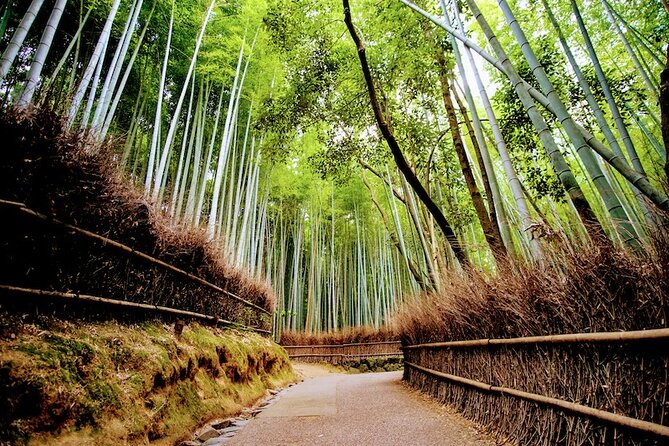
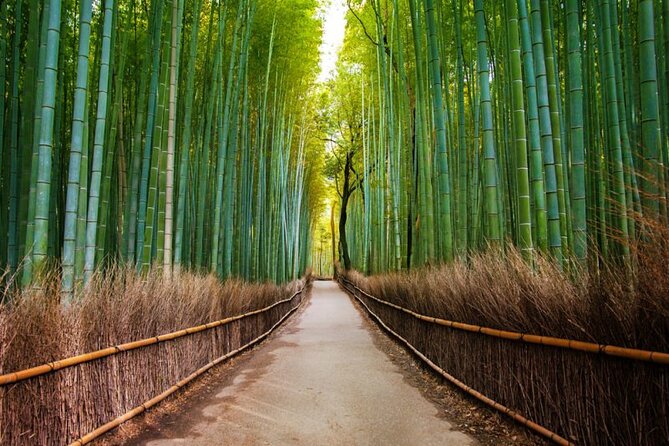
Yes, you’re going to the Bamboo Grove, and yes, it’s crowded at peak times. The difference with a guided walk is that you’re not standing there asking yourself where to go next while the wave of visitors rises around you.
You’ll move along the bamboo forest trail for about 30 minutes, with the natural rhythm of the area doing most of the work. The guide also helps by pointing you toward workable viewpoints and timing, so you can get that classic bamboo feeling without spending your whole time dodging stop-and-go tourists.
Important practical note: bamboo photos can tempt you to forget what you’re wearing. Keep your shoes solid and your footing careful. Paths can be slick, and the crowd can push you closer to the edges.
Find another quiet garden to sit with in Kyoto

Tenryu-ji and its Sōgenchi Teien garden: the UNESCO “pause button”
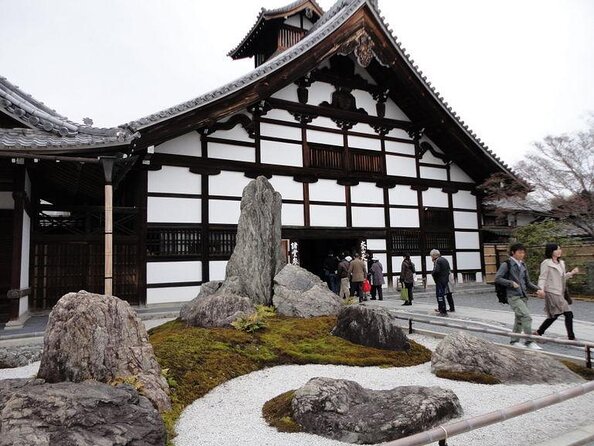
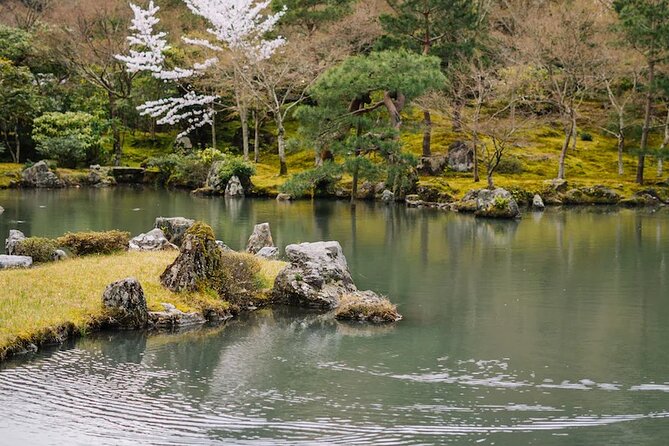
Next comes Tenryu-ji Temple, specifically the Sogenchi Teien Garden (a UNESCO World Heritage Site). This is a key pivot point in the day. If the bamboo is your energy boost, this garden is your reset.
You’ll have about 35 minutes here. That’s a sweet spot: long enough to walk the garden areas, read the visual logic of ponds and plantings, and actually understand why people say it’s among Japan’s top gardens. Short enough that you still keep the day moving without feeling like you got stuck in a ticket line forever.
The main drawback for some folks: gardens take a different kind of attention. If you’re only in Kyoto for fast hits and selfies, you might find yourself underwhelmed. But if you enjoy quiet design and slow looking, this is one of the more satisfying stops on the itinerary.
Togetsukyo Bridge (and the Kimono Forest): classic views, quick hit
At Togetsukyo Bridge, you get the “Arashiyama postcard” view over the Hozu River and the mountains beyond. Your visit is about 15 minutes, so keep your camera ready but don’t just freeze in place. The best photos tend to come from shifting angles and timing, which is exactly what a guide helps with.
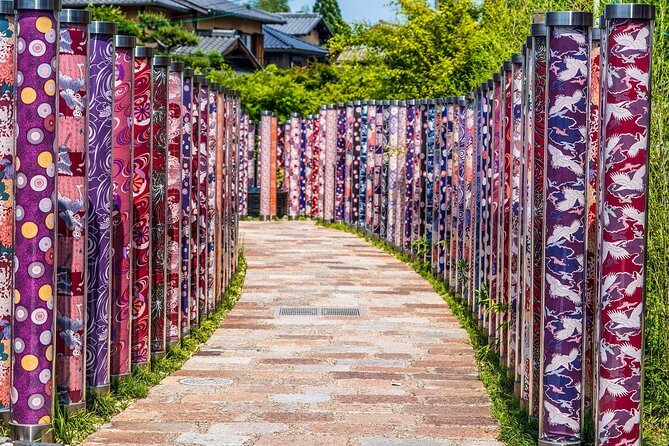
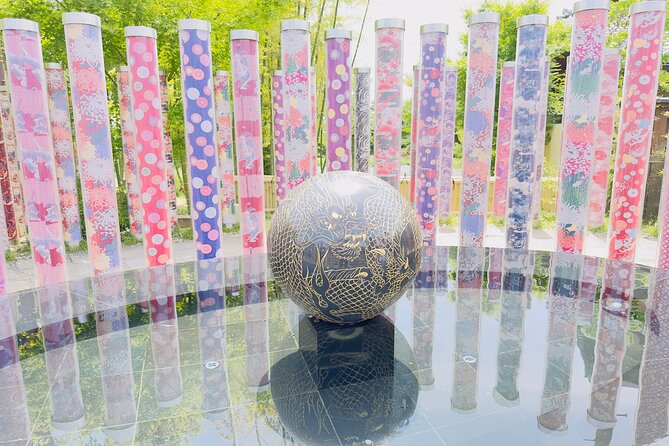
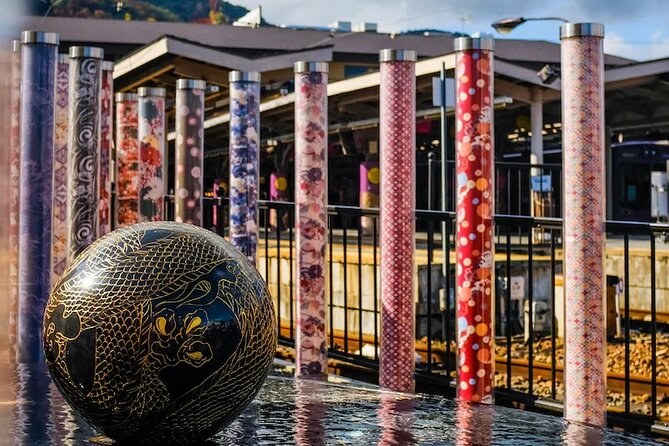
The route includes a stop described as the Kimono Forest before the bridge. Even if you don’t treat it as a must-stay, it adds variety to the walk and breaks up the bamboo-to-garden contrast.
Here’s a consideration: bridges are photo magnets. If you’re sensitive to crowding, go with the mindset of moving through, not camping out.
Monkey Park Iwatayama: the hike that makes the day
Then you climb to Monkey Park Iwatayama, with about an hour set aside. This is the highlight for animal lovers, but it’s also the one part you shouldn’t treat as casual.
Plan for a 20–25 minute hike with a path that’s described as a bit steep. The climb is where good shoes matter, and where you’ll feel the difference between an easy stroll and a real effort. If you do this day in sandals or worn-out sneakers, you’ll regret it.
Once you’re up there, the payoff is huge: you’re looking out over Arashiyama and interacting with wild Japanese macaques (monkeys). Your guide helps you handle the situation safely and stay focused on what’s happening around you.
A practical tip from the vibe of the reviews: the monkeys can be both hilarious and a little startling at close range. Bring your patience, not just your bravery.
Lunch break and shopping time: plan for your own food
After the park, the tour includes a quick lunch break (about 35 minutes), but lunch isn’t included. This is smart, honestly. It gives you flexibility based on what you like: something quick near the area, or a simple bite you can enjoy without turning the whole day into “search for food” logistics.
You’ll also have time around the end of the walk for shopping for souvenirs in the Arashiyama area. This isn’t about turning Kyoto into a mall; it’s more about capturing that last practical moment—buy something small and local while you’re already here.
Price and value: why $65.57 can feel fair
At $65.57 per person, the math works best when you look at what’s included. The tour lists admission for the main paid stops, and it also provides a bilingual guide, plus the structure that helps you avoid wrong turns and wasted time.
If you were to DIY Arashiyama and buy tickets one by one, you’d still spend money on admissions. What you’re paying for here is the guide’s routing, timing, and explanation—plus the fact that you don’t have to figure out how to group the sites efficiently across the district.
Group size (max 12) also matters. In a crowded district, a smaller group makes the whole experience more comfortable.
Guides, pacing, and the small touches that land
This is where I notice the biggest pattern in the feedback: guides like Teri, Marie, Mari, Meri, and Osin are repeatedly praised for being engaging and for giving context at each stop. People also mention that the tour stays well-paced—finished on time and run with enough structure that you’re not left wandering.
Some guides also add small extras that can make the day feel less scripted. For example, one review mentions a sake tasting as a surprise stop, and another mentions the guide helping with photos so you get better results than you would on your own.
Also, one rule you should know: recording and live streaming aren’t allowed, and even smart glasses with recording capabilities are not permitted. If you planned to film the entire hike, adjust that plan ahead of time. You’ll still get plenty of scenic moments worth photographing the normal way.
What to bring (so you enjoy the hike and the gardens)
This tour is not physically extreme, but it’s not a zero-effort walk either. You’re dealing with paved paths plus that steep section up to the monkey viewpoint.
Bring:
- Comfortable shoes with grip for the uphill route
- A light layer (weather in Kyoto can shift)
- Water for the hike
- Your best patience for crowds around the bamboo and bridge
If you’re traveling with kids, this can still work well. One review mentioned a 13-year-old calling it a favorite day—likely because the mix of shrine, garden, and monkeys is just a better match for teens than a pure temple day.
Should you book this Kyoto Arashiyama walking tour?
Book it if you want the Arashiyama highlights with less guesswork. You’ll get a tour flow that makes sense: bamboo for atmosphere, shrine and temple for culture, UNESCO garden for calm, bridge for the scenery shot, and the monkey hike for the big payoff.
Skip (or choose a gentler alternative) if the uphill hike sounds like a dealbreaker. The monkey park segment is the make-or-break part. Also, if you hate any crowd at all, know that bamboo and bridges are inherently popular—even when your guide tries to steer you away from the worst of it.
Finally, arrive at Saga-Arashiyama Station and give yourself a buffer. That one small logistics move can be the difference between starting the day relaxed or starting it annoyed.
FAQ
How long is the Arashiyama walking tour?
It runs about 5 to 6 hours.
What’s included in the tour price?
Admission is included for the places on the itinerary. You’ll also have a knowledgeable bilingual guide. Tickets are listed as included for sites like Nonomiya Shrine, Okochi Sanso Garden, the bamboo forest segment, Tenryu-ji Garden, Monkey Park, and Togetsukyo Bridge.
Do I have to pay for lunch?
Lunch is not included. There is a quick lunch break on your own.
Is there a hike during the tour?
Yes. There’s a 20–25 minute hike up to the Monkey Park hilltop, and the path is described as a bit steep.
Where do I meet the tour, and where does it end?
You meet at Saga-Arashiyama Station. The tour ends in the Arashiyama Monkey Park Iwatayama area.
Can I cancel for free?
Yes, free cancellation is available. You can cancel up to 24 hours in advance for a full refund. If you cancel less than 24 hours before the start time, the amount you paid won’t be refunded.
More Tour Reviews in Kyoto





More Gardens and Quiet Corners
More of Arashiyama and Sagano
Just added: more Kyoto tours to browse








Kyoto Gardens & Zen Retreats, compared.
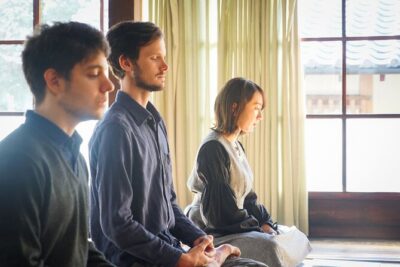 ★ 5.0Kyoto Zen Meditation & Garden Tour at a Zen Temple with LunchFrom $110441 reviews
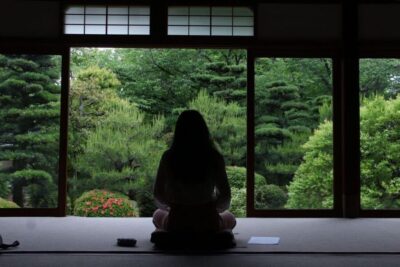 ★ 5.0Zen Experience in a Hidden TempleFrom $109437 reviews
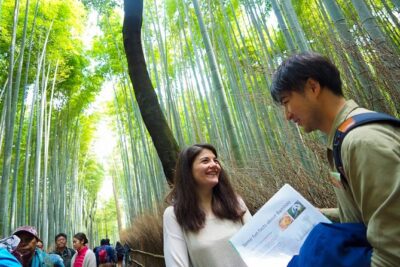 ★ 5.0Kyoto Arashiyama Bamboo forest & Garden Half-Day Walking TourFrom $129413 reviews
 ★ 4.8Tea Ceremony Meditation – Make Matcha with Tea MasterFrom $45406 reviews
 ★ 5.0Zen Meditation at a Private Temple with a MonkFrom $91202 reviews
 ★ 5.0Zen Garden, Zen Mind (Private)From $380126 reviews
 ★ 5.04.5-Hour Kyoto Bike Tour with Lunch and UNESCO Zen TemplesFrom $99122 reviews
 ★ 5.0Kyoto Kiyomizu Tea Ceremony with Scenic Garden ViewsFrom $50101 reviews
Browse the lists this tour appears in