
Reviewed · KYOTO CRAFT & CALLIGRAPHY WORKSHOPS
Kyoto: Local Home Visit and Japanese Calligraphy Class
Kyoto has a way of slowing your thoughts down fast. A local home visit plus a Japanese calligraphy class near Nijo Castle makes this more than a souvenir photo stop. I especially like learning correct brush movements and then writing a piece you can actually take home. One consideration: it’s only one hour, so you’ll get solid basics, not instant mastery.
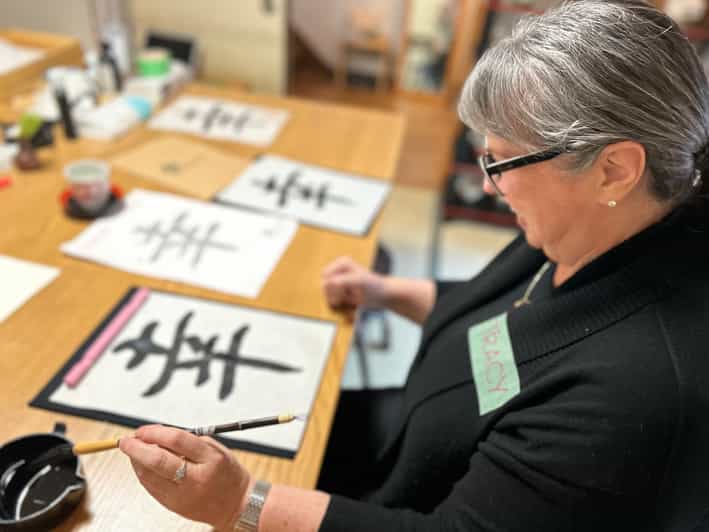
The best part is the setting. You’re not just sitting in a studio—you’re in a real home area by a UNESCO site, with a chance to talk with hosts and see daily life around the neighborhood. Then the lesson turns practical: you start with strokes, practice your chosen kanji, and finish with an artwork on traditional washi paper that becomes your memory in ink.
In This Review
- Key things you’ll do in this Kyoto calligraphy visit
- Why calligraphy at a local home near Nijo Castle feels different
- Meeting up 200 meters west of Nijo Castle (and not getting lost)
- The 1-hour structure: what happens from first hello to finished artwork
- How you learn kanji strokes that actually make sense
- Choosing meaning: love, peace, strength, and adding your name in Japanese
- What’s included (and what you’ll take home)
- Home-visit etiquette: socks, indoor shoes rules, and comfort
- Time, price, and how to judge the value of a $66 private class
- Who should book this calligraphy class (and who might want to skip it)
- Should you book this Kyoto home calligraphy visit?
- FAQ
- How long is the Kyoto local home visit and Japanese calligraphy class?
- What is the price per person?
- Is this a private group experience?
- What languages are offered during the class?
- Where is the meeting point?
- What should I bring?
- Are shoes allowed indoors?
- What’s included in the class fee?
- What if I arrive late?
- Who is the class not suitable for?
Key things you’ll do in this Kyoto calligraphy visit
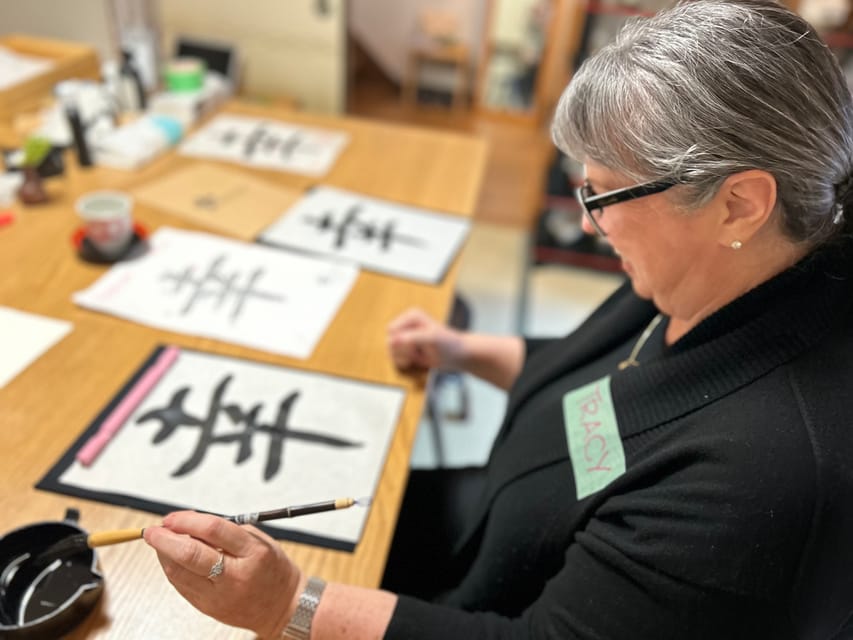
- Write your own kanji by learning stroke-by-stroke brush control instead of copying blindly
- Practice in a private group format, so you can get help when your brush timing feels off
- Choose a character with meaning, then add your own name in Japanese for a personal touch
- Take your artwork home, made with ink and Japanese paper you use during class
- Meet near Nijo Castle (about 200 meters west), so you can pair this with temple and castle area wandering
Why calligraphy at a local home near Nijo Castle feels different
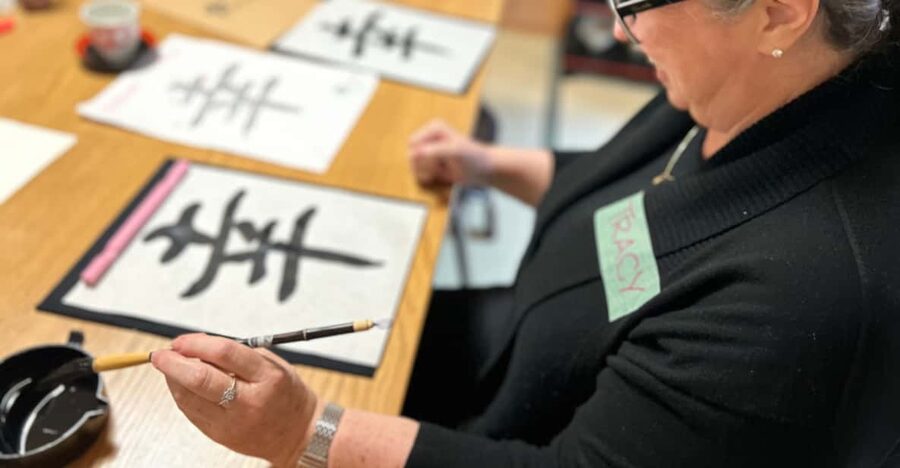
A regular calligraphy class can be nice. This one hits harder because the experience starts from home life. That matters in Kyoto, where traditions aren’t just on signs—they’re in how people live, host, and share.
I like that the lesson balances technique with calm. You learn the brush movements, but you’re also guided toward the mindset calligraphy trains: steadiness, attention to pressure, and the rhythm of each stroke. In a short session, that kind of focus can feel almost like a reset, especially if you’ve been walking all day.
And because it’s based around kanji rather than just decorative letters, you get a satisfying payoff. Your final piece isn’t random. You choose a character that resonates, then you add your name in Japanese so it feels like yours, not a template.
Make something by hand in a Kyoto workshop
Meeting up 200 meters west of Nijo Castle (and not getting lost)
This class is close to Nijo Castle, which is great for planning your day. The meeting location is about 200 meters west of Nijo Castle (UNESCO World Heritage Site). It’s on the north side of Ebisugawa Street, just west of Nishinotoin Street. On the south side across the street, you’ll see the Lions Mansion building.
A practical tip: use the venue name in your map app, not just the street address. Kyoto has multiple places with similar names, and the wrong pin can cost you time—time you don’t have if you’re trying to stay on schedule.
If you’re taking a taxi, have the phone number ready for the driver. Since the meeting point is specific and close to landmark streets, a short phone check helps you arrive at the exact door.
The 1-hour structure: what happens from first hello to finished artwork
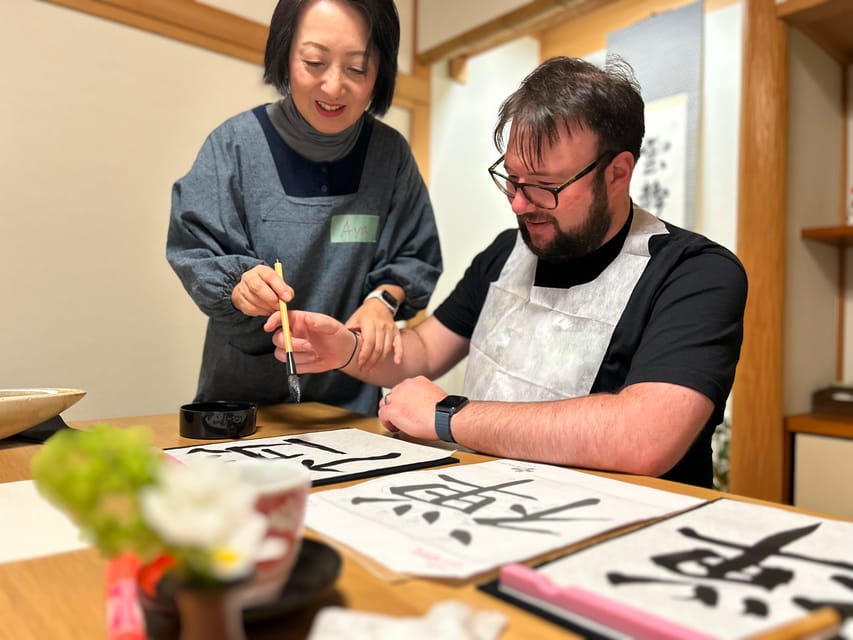
You’re in class for about one hour, in a private group setting. The pace is designed for beginners—think basics first, then practice, then a final piece you can proudly display.
Here’s the typical flow you should expect:
1) Welcome and setup at the home
You’ll be shown the tools, the paper setup, and how the session works. Since calligraphy is all about hand positioning and stroke order, getting the basics right early makes the rest of the class easier.
2) An explanation of Japanese calligraphy and its history
You’ll hear background that connects the strokes to Japanese writing tradition. Even if you don’t memorize every detail, the explanations help you understand why the strokes look the way they do.
3) Demonstration of correct brush movements
This is the heart of the lesson. You’ll practice the mechanics—how to start, how to move, and how to finish a stroke with control. The goal isn’t perfection. It’s learning what to correct next time.
4) Your turn: practicing several characters or strokes with guidance
You’ll write and rewrite, with real coaching. This is where you start to feel the relaxing rhythm people talk about.
5) Choose your character and personalize it
You’ll pick one kanji that connects with you (options shared in class commonly include meanings like love, peace, strength, or wisdom). Then you can add your name in Japanese.
6) Final polish and take-home moment
You’ll complete the artwork on the provided paper and bring it home as your souvenir. It’s the part that makes the whole hour feel worth it.
How you learn kanji strokes that actually make sense
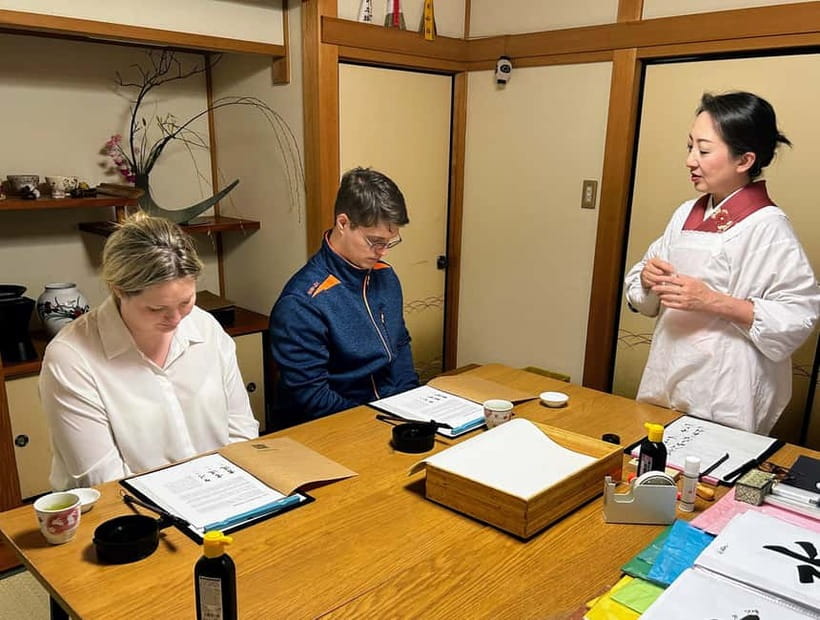
The class focuses on the fundamentals of stroke order and brush movement. That’s important because a kanji doesn’t just look correct—it has structure. When one stroke is off, the character loses balance.
I like that the instruction is built around technique you can feel in your hand. You’re guided on how to move the brush in a way that creates a clean, confident line. The best beginners-friendly classes do this: they show you the action, then correct you while you try again.
In past sessions, the teaching style shows up as patient, hands-on coaching. The instructor and assistant help you shape your strokes, and you get feedback rather than just a demo. That makes a difference if you’re nervous about getting it wrong.
And yes, in an hour you won’t become an expert. But you should leave with real “I get it now” progress—the kind that makes your next attempt outside class much better.
Choosing meaning: love, peace, strength, and adding your name in Japanese
One of the most memorable parts is the meaning behind your choice. You’re encouraged to select a kanji that resonates personally—things like love, peace, strength, or wisdom come up as options. That turns the lesson from writing-for-fun into writing-with-intent.
Then comes the personalization: adding your name in Japanese. It’s a small step, but it changes everything. Your final piece stops being a generic example and becomes a personal artifact you’ll recognize later.
This is also a good strategy for beginners. If you pick a character that matters to you, you’re more likely to slow down and focus on the right details while you write. That focus is where the calming effect comes from.
Other Kyoto tours and experiences to compare



What’s included (and what you’ll take home)
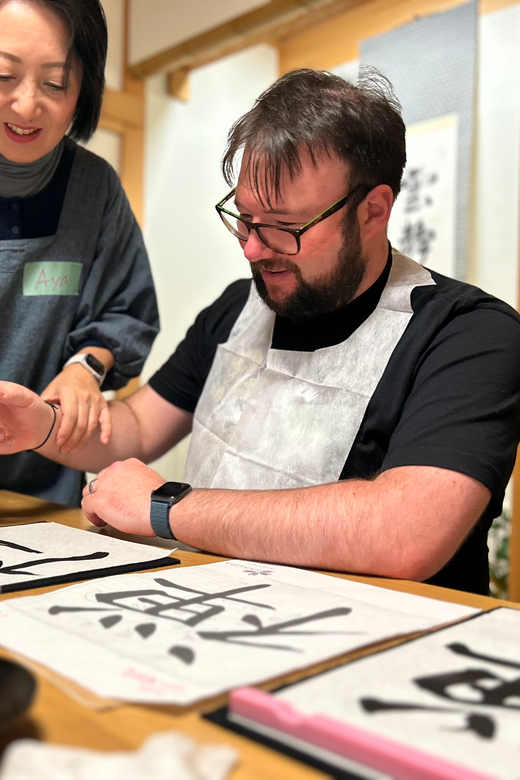
You won’t need to source supplies. The class includes the essentials:
- Calligraphy tools rental
- Ink
- Japanese paper (washi)
- Instruction and explanations about Japanese calligraphy
So you’re free to show up with just what they request from you. That matters for value—your money goes into learning and finishing an artwork, not shopping for equipment.
When you finish, you take home your own calligraphy piece. That’s a bigger deal than it sounds. In Kyoto, so many experiences end as photos. This one ends as something you can frame, gift, or keep as a quiet reminder that you learned a real skill.
Home-visit etiquette: socks, indoor shoes rules, and comfort
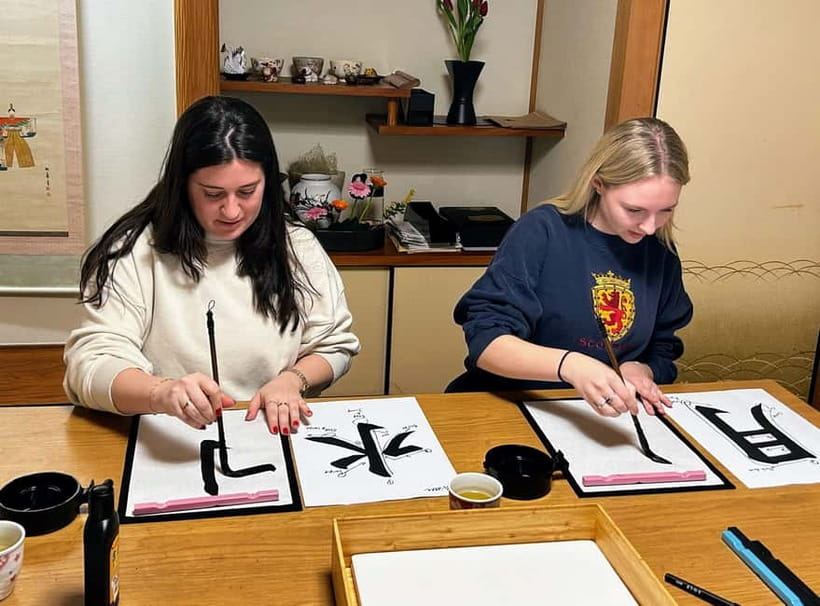
This is a home setting, so you’ll follow household rules. The big ones:
- Bring socks (bare feet are not acceptable)
- No shoes indoors
- No smoking, no vaping
- Avoid strong fragrances
- No alcohol or drugs
If you forget your socks, the info says you can buy socks on site. Still, it’s smarter to pack them—Kyoto mornings and plane transfers can make you forget one small item.
Also note the timing rules matter here. The session is short, and if you arrive late, your lesson time gets shortened. If you’re late by more than 15 minutes, they may not offer the class. So plan to arrive a few minutes early and settle in.
Time, price, and how to judge the value of a $66 private class
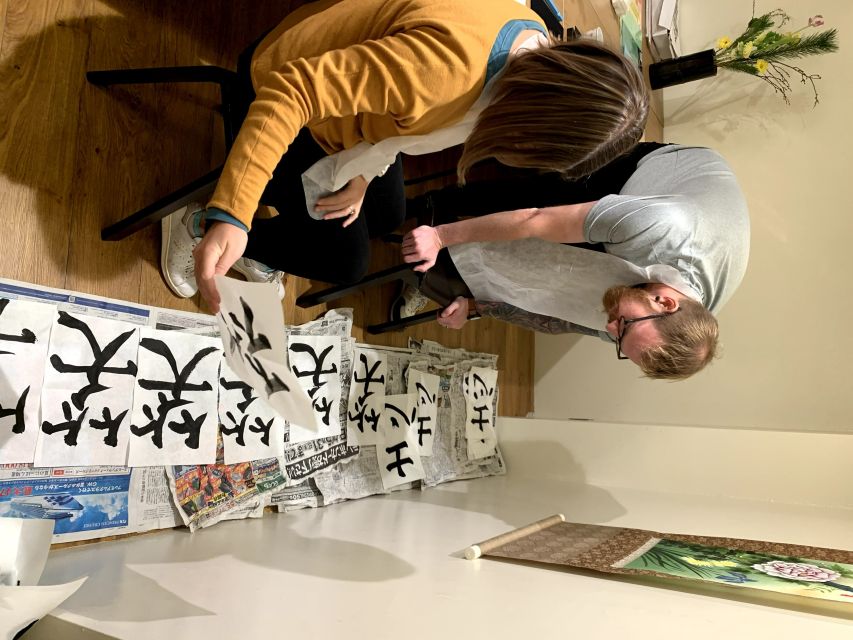
At $66 per person for a one-hour session, you’re paying for three things: instruction, materials, and the home-based setting near major sights. You’re not paying for a big bus tour. You’re paying for quality attention and a finished product.
Is it expensive? It’s not bargain-bin, but it’s also not trying to be. The included tools, ink, and wash paper are part of the value. The private group format also tends to make the teaching more responsive, especially for beginners who want corrections.
Think of it like this: if you want to leave Kyoto with an actual artwork made with your own brushwork, that’s a clear value case. If you just want quick entertainment, you may prefer a longer workshop or something broader that fills more time.
This one works especially well if you’re:
- a beginner who wants structure (stroke basics first)
- a couple or small group seeking a calmer, quieter activity
- the type who likes taking home something tangible rather than another photo
Who should book this calligraphy class (and who might want to skip it)
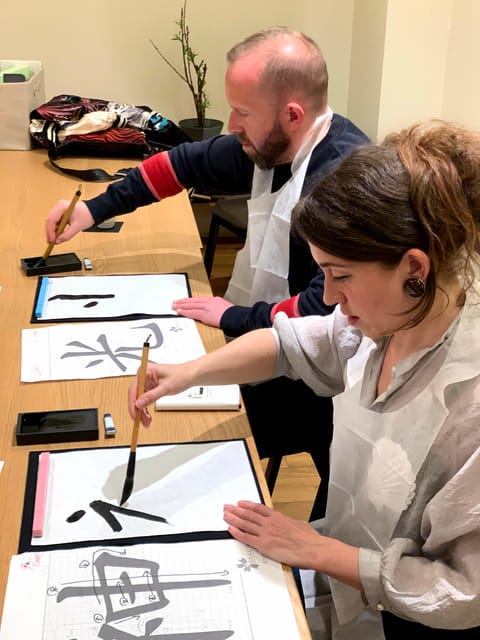
This is a strong pick if you want Japanese culture that’s hands-on and personal. It’s also a good fit if you like the idea of meeting people in a real neighborhood setting near a landmark.
It’s not a great fit for everyone. The class isn’t suitable for children under 13, and because it’s a focused one-hour session with indoor rules, families with very young kids might find it stressful rather than fun.
Language support includes English and Japanese, which helps if your Japanese is basic. And the location is very close to Nijo Castle, so you can stitch this into a day that includes walking around the castle area and nearby streets.
Should you book this Kyoto home calligraphy visit?
If you want an activity with a real payoff—skill basics, meaningful personal choice, and a take-home artwork—then yes, I’d book it. The private group setup, plus the home setting near Nijo Castle, makes it feel more human than a typical workshop.
I’d book it especially if you like the idea of slowing down for an hour and learning something you can repeat. Calligraphy is hard to master, sure. But this kind of lesson gives you a starting point with feedback, not just a brief demo.
Skip it only if you’re looking for a long, multi-stop day plan or you can’t follow the indoor socks/shoes rules. With the timing sensitivity, it also helps if you’re good at arriving on time.
FAQ
How long is the Kyoto local home visit and Japanese calligraphy class?
It lasts 1 hour.
What is the price per person?
The price is $66 per person.
Is this a private group experience?
Yes, it’s listed as a private group.
What languages are offered during the class?
The instructor can teach in English and Japanese.
Where is the meeting point?
The location is about 200 meters west of Nijo Castle. It’s on the north side of Ebisugawa Street, just west of Nishinotoin Street, and across the street on the south side you’ll see the Lions Mansion building.
What should I bring?
You should bring socks. Bare feet are not acceptable, and there are socks available if you don’t have them.
Are shoes allowed indoors?
No. Shoes are not allowed indoors.
What’s included in the class fee?
Instructions/explanations, calligraphy tools rental, ink, and Japanese paper (washi).
What if I arrive late?
If you arrive late, your lesson time will be shortened accordingly. The info also notes they can’t offer the class if you are late more than 15 minutes.
Who is the class not suitable for?
It’s not suitable for children under 13 years.
More Workshops in Kyoto
More Tour Reviews in Kyoto

More Kyoto Workshops to Try

Just added: more Kyoto tours to browse




Kyoto Craft & Calligraphy Workshops, compared.
 ★ 5.0Chopsticks Making Workshop in Gion with Engraving OptionFrom $15958 reviews
 ★ 4.8Authentic knife making experience at a blacksmith in KyotoFrom $154350 reviews
 ★ 5.01-Hour Japanese Archery Experience in KyotoFrom $46176 reviews
 ★ 5.0Calligraphy class at Buddhist temple in city centerFrom $55167 reviews
 ★ 5.0Roketsu dyeing experience: M course Roketsu Dyeing ExperienceFrom $25163 reviews
 ★ 4.9Japanese Archery Workshop with Experienced InstructorFrom $38132 reviews
 ★ 4.8Japanese Calligraphy ClassFrom $5189 reviews
 ★ 5.0TAIKO, Japanese Drum Experience from KyotoFrom $11586 reviews
Browse the lists this tour appears in