
Reviewed · KYOTO CRAFT & CALLIGRAPHY WORKSHOPS
Kyoto: Japanese Calligraphy Workshop
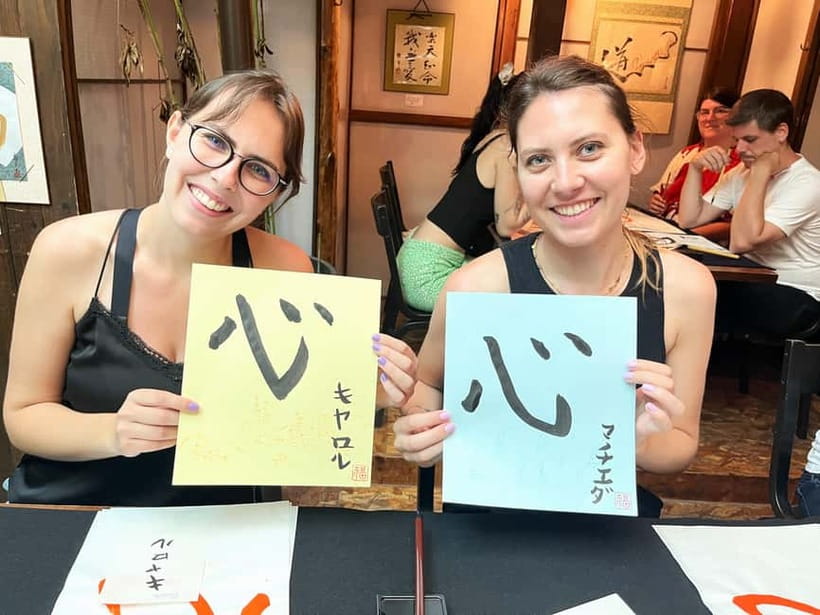
Kyoto’s quiet brushwork can be surprisingly moving. In a small workshop at Gojo Paradiso, you learn traditional shodo step by step, and you leave with your own signed kanji piece on rice paper. I especially like the patient, detail-focused teaching (even for complete beginners) and the fact that you can turn your practice into a real keepsake. One consideration: it’s a seated, hands-on class—so if you want all-day temple hopping, this will feel short.
The setting helps. The workshop takes place along the Takase River on Kiyamachi Street, and it runs in 1–2 hours, so it fits neatly into a day of Kyoto sightseeing. The instructor I’m drawing from is Takako, plus helpers, and the class stays small (up to 10 people), which makes it easier to get feedback as you learn.
In This Review
- Key takeaways you’ll care about
- Kyoto Japanese Calligraphy Workshop: What “Shodo” feels like in real life
- Gojo Paradiso and the Takase River setting on Kiyamachi Street
- A clear 1–2 hour flow: from strokes to a finished kanji keepsake
- Brush strokes and kanji: what you learn as a beginner
- Meet Takako and her helpers: patient coaching that keeps you from guessing
- Your take-home shodo masterpiece: rice paper, signatures, and stamps
- Price and value: is $32 for 1–2 hours worth it?
- Where it fits in your Kyoto day (and who should book)
- Logistics that matter on arrival (without turning your day into a spreadsheet)
- Should you book this Kyoto calligraphy workshop?
- FAQ
- FAQ
- Do I need a reservation in advance?
- How long is the calligraphy workshop?
- Where do I meet for the workshop?
- How do I get there from Kyoto stations?
- What language is the instruction offered in?
- What’s included in the price?
- What should I do if I want to take photos?
- Can I take my calligraphy artwork home?
- Is it suitable for children?
- What if I need to change my plans?
Key takeaways you’ll care about
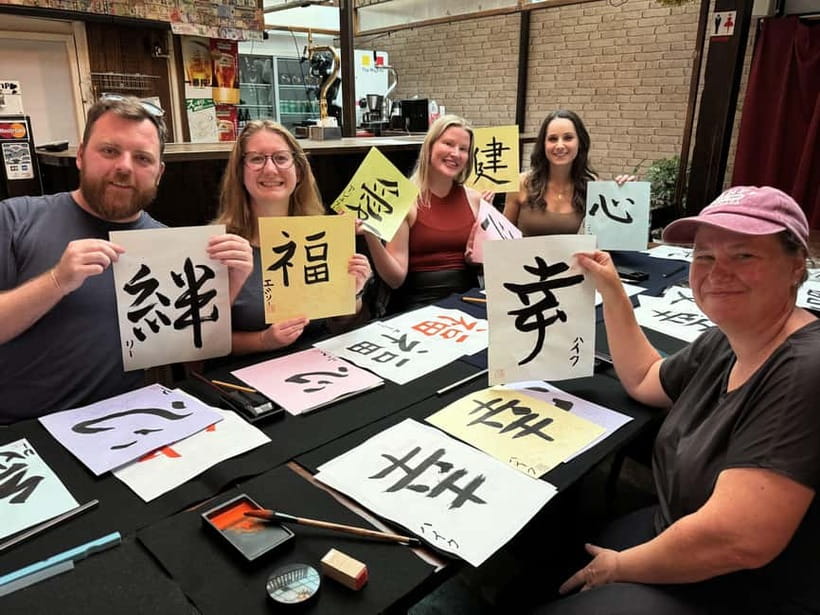
- Small group size (up to 10) means you’re not stuck writing alone.
- Beginner-friendly pacing starts with basic brush strokes before kanji.
- Take-home artwork comes out on rice paper, signed in kanji and stamped.
- Central Kyoto location near Keihan Kiyomizu Gojo and Keihan Shichijo makes it easy to plug in.
- Photos and gallery time happen near the end, with the option to place special orders.
Kyoto Japanese Calligraphy Workshop: What “Shodo” feels like in real life
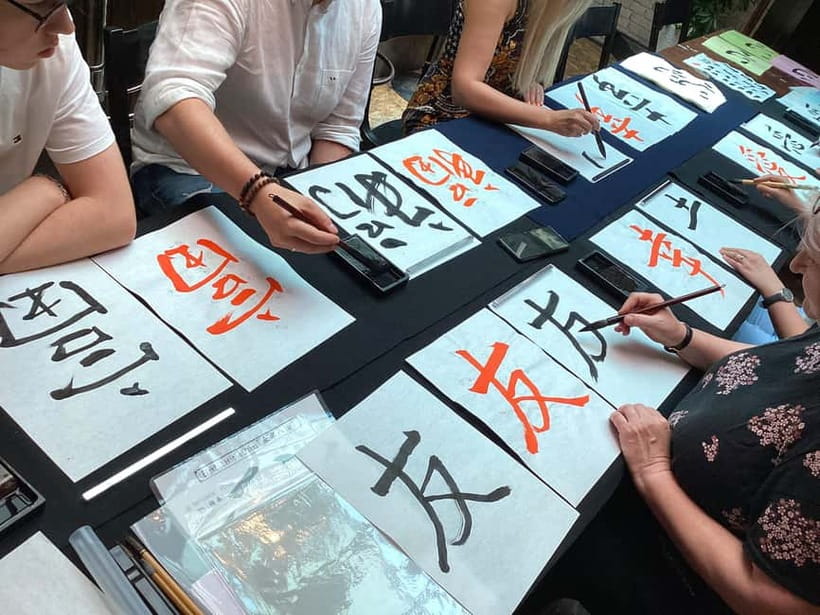
Japanese calligraphy, shodo, is one of those cultural skills that looks simple from a distance and turns out to be craft-deep up close. The charm here is that you’re not just watching ink dry. You’re practicing brush control—slow, deliberate strokes—until your kanji starts to look like kanji.
What makes this workshop work for most people is that it’s structured. You start with a short introduction to the meaning and history of calligraphy, then you move into the physical basics: how the brush moves, how each stroke begins, and how it ends. After that, you build toward writing a character (and, in many cases, your own name) in kanji. By the end, your work isn’t a random worksheet. It’s a finished piece you can keep.
Make something by hand in a Kyoto workshop
Gojo Paradiso and the Takase River setting on Kiyamachi Street
This class meets at Gojo Paradiso along the Takase River on Kiyamachi Street. It’s a practical location if you’re already exploring central Kyoto. The walk is short from Keihan Kiyomizu Gojo Station (about 5 minutes), and it’s also doable from Keihan Shichijo Station (about 10 minutes). The venue is listed as about 386 meters from Kiyomizu Gojo Station.
Why that matters: calligraphy is a calm activity. If your meeting point is stressful to reach, the whole experience starts off tired. Here, you can keep your day moving smoothly—especially if you’re pairing it with nearby Kiyamachi-area wandering.
The venue itself is described as quiet, which is exactly what you want for learning brush technique. Even if your writing has never been your strength, the mood helps you focus on the stroke-by-stroke process.
A clear 1–2 hour flow: from strokes to a finished kanji keepsake
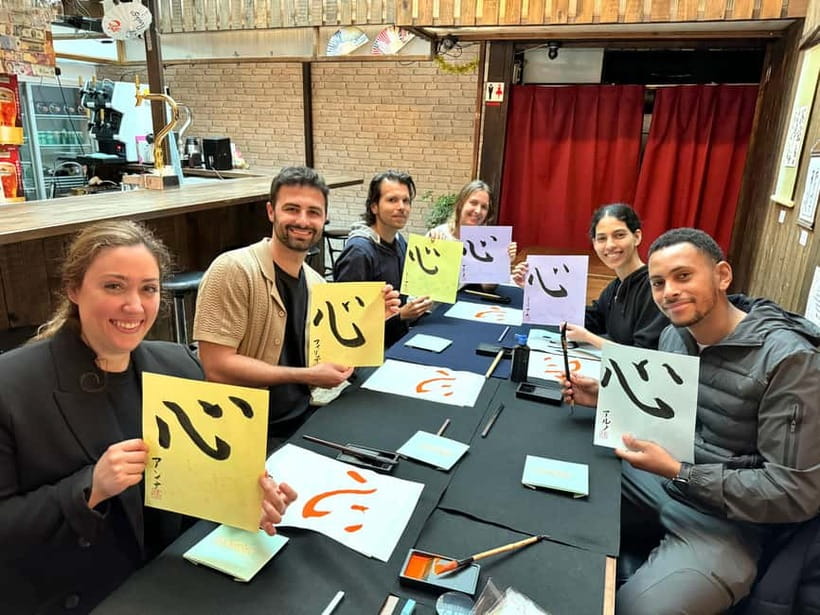
Plan on 1–2 hours total. The exact starting time depends on availability, but the sequence is consistent.
You’ll typically begin with an introduction: what shodo is, why brush movement matters, and how kanji characters are constructed. Then the instructor shifts into hands-on teaching. The goal is to help you translate an idea (write a character) into physical action (control the brush).
After basic practice, you move to writing the character(s) you’ll ultimately keep. You also have time for photos at the end, and you can explore the gallery. If you’re feeling motivated, there’s an option to place special orders during the workshop.
One of the most useful parts of the format is that it doesn’t jump from zero to masterpiece. It layers skill: fundamentals first, then application. That’s the difference between a fun novelty and a class where you actually learn something.
Brush strokes and kanji: what you learn as a beginner
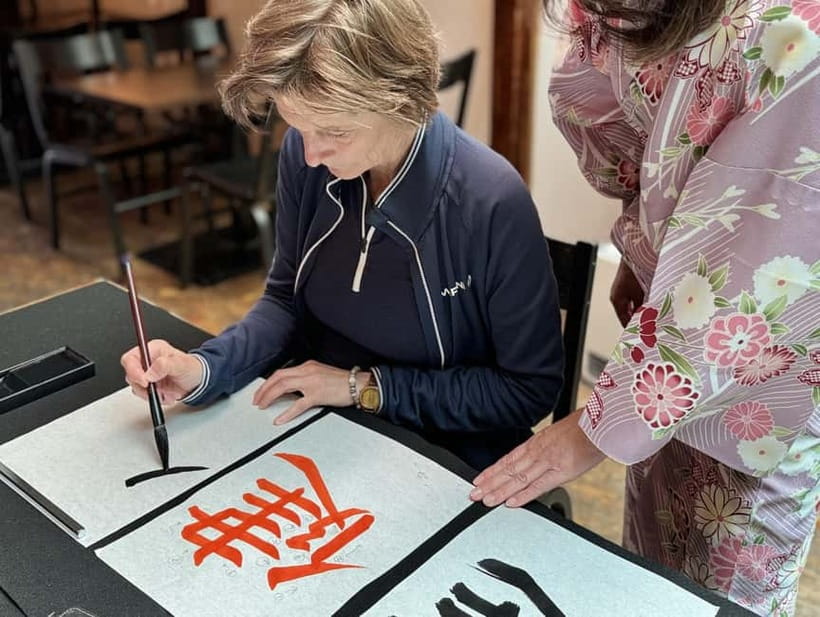
The workshop is built for beginners. You’ll learn basic brush strokes and then apply them to kanji characters. Even if your Japanese is limited, the instructor’s guidance is meant to make the writing process understandable through technique rather than memorization.
A few details that show up in how the teaching is described:
- The instruction is step by step, with corrections as you practice.
- You get individualized attention during exercises, not just a group overview.
- The instructor is patient—focused on helping you do better rather than rushing you through.
There’s also a personal-touch element. Many participants leave having written their name in kanji. That’s a small thing, but it changes the emotional value of the artwork. It turns the class from a general skill lesson into something connected to you and your Kyoto trip.
Meet Takako and her helpers: patient coaching that keeps you from guessing
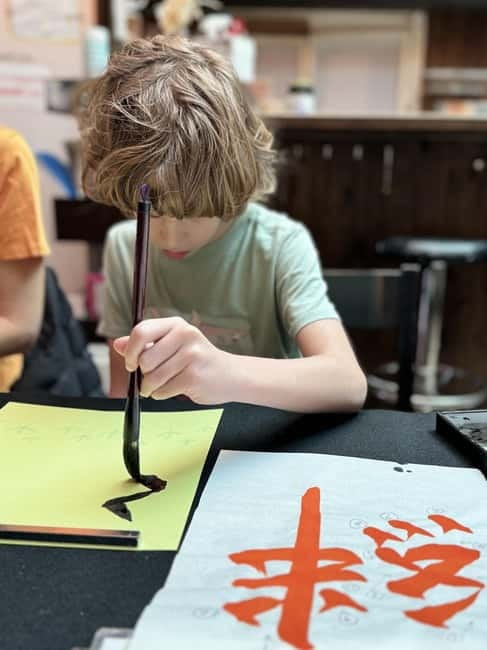
The instructor is listed as English/Japanese, and the teaching style described in the experience is encouraging and structured. Takako appears in multiple accounts as the main teacher, and she’s described as both kind and patient, with clear English instruction.
Helpers also play a role. That matters more than it sounds. In a class limited to 10 people, having extra support helps keep your writing steady—especially when brush handling is new.
What you should expect from this kind of teaching:
- You get feedback while you’re still practicing the fundamentals.
- The instructor doesn’t treat kanji like a mystery to be endured.
- You’re guided through the rhythm of writing: start, stroke, pressure, and finish.
If you worry you’ll be clumsy, this is a good choice. The workshop approach seems designed to reduce the guessing game.
Other Kyoto tours and experiences to compare


Your take-home shodo masterpiece: rice paper, signatures, and stamps
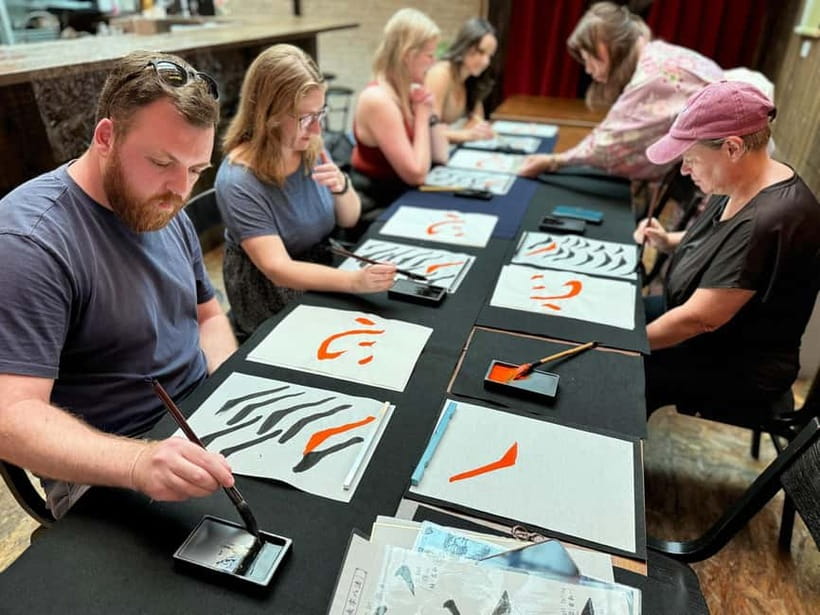
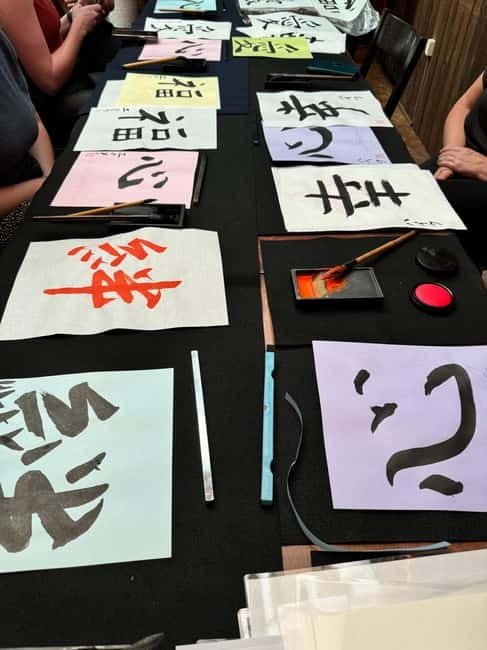
The best souvenir here is the one you make with your own hands. You’ll create a calligraphy piece and take it home. The materials are included, and your final work comes out on rice paper.
The finishing touches are part of the value. In descriptions of the class, your piece is signed in kanji, and the instructor stamps it. That stamp isn’t just decoration—it signals that what you made has gone through proper finishing steps, so it feels like something you’d see in a real calligraphy setting.
There’s also mention of a gift: a handmade calligraphy piece accented in gold. If that’s included in your session, it’s a wonderful extra. Even when you ignore the bonus gift, the core value remains: you leave with a physical artwork that captures the process—not just a photo of your process.
Price and value: is $32 for 1–2 hours worth it?
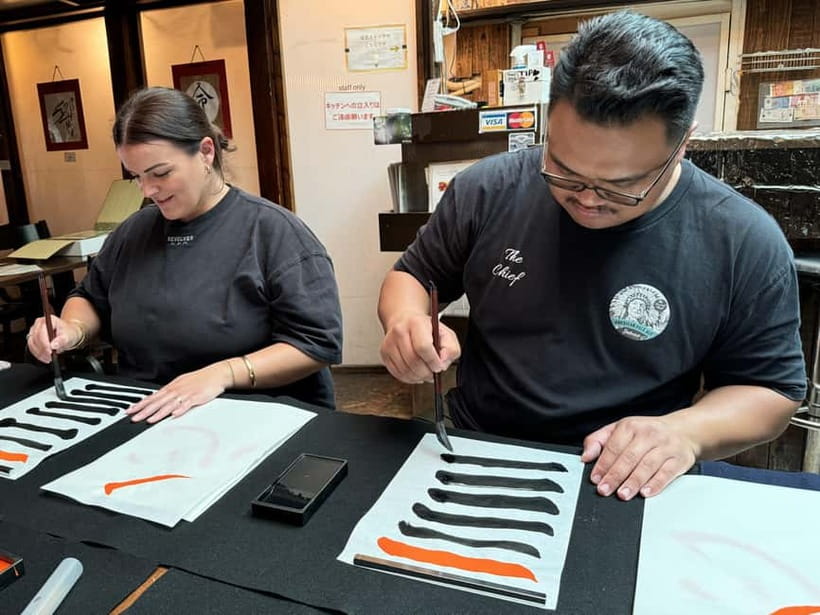
At about $32 per person, this sits in the sweet spot for hands-on cultural workshops in Kyoto. You’re paying for more than materials. The big costs are the teacher’s time, the small-group size, and the included supplies.
Calligraphy requires supplies you might not want to buy for a one-time try. Here, you’re given everything you need, and you’re taught by an instructor who can correct your brush technique. You also leave with a finished keepsake (rice paper work, signed in kanji, stamped). That’s what turns a short lesson into a souvenir you’ll actually display.
If you’re budget-conscious, it’s worth comparing against things like paid tours where you’re mostly listening. This one has tangible output. You can measure the experience by what you take home.
Where it fits in your Kyoto day (and who should book)
This workshop is ideal when you want a break from walking and crowds. Kyoto days can stack temples and viewpoints until your feet feel like sandpaper. A calm, seated workshop can reset your energy without switching into a full museum day.
It’s also a strong choice if you like learning through doing. If you enjoy crafts—anything from ceramic sketching to textile workshops—this is in the same zone. You’re practicing a skill, not just collecting facts.
Who it might not suit:
- Children under 10 years old aren’t suitable for the workshop.
- If you’re expecting a high-energy sightseeing tour, this is a studio-style class.
- If you only want casual photo ops, the real reward is in the hands-on practice and the finished piece.
For most adults, it’s a smart add-on: short enough to fit, cultural enough to matter, and interactive enough to remember.
Logistics that matter on arrival (without turning your day into a spreadsheet)
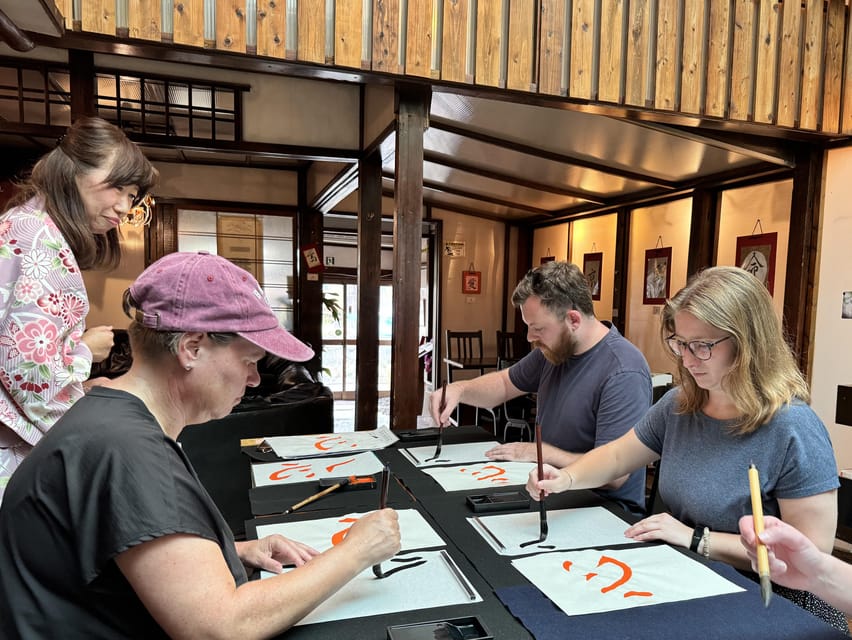
You meet at Gojo Paradiso on Kiyamachi Street by the Takase River. The nearby stations make it easy to reach on foot from central Kyoto. Since reservations are required at least 1 day in advance, I’d plan earlier rather than counting on last-minute luck.
In terms of language, you’re supported by an instructor who teaches in English and Japanese, which helps if you want to understand not just the motions but the meaning behind them.
Group size is limited to 10 participants, so once you’re there, you’ll likely feel the advantage of being among a manageable number of people. It’s not a lecture hall situation.
Should you book this Kyoto calligraphy workshop?
If you want a Kyoto memory that’s personal and physical, I’d book it. A shodo workshop is one of the rare cultural activities where the souvenir is not mass-produced. It’s your brushwork, on rice paper, signed in kanji and stamped—plus the chance to learn basic strokes you can repeat later if you catch the bug.
It also has strong signals of quality: an average rating of 4.7 across 84 bookings, and lots of consistency in what people value—clear instruction, patience, and taking home a finished piece they’re proud of. For a $32 class that lasts about 1–2 hours, the value is hard to ignore.
FAQ
FAQ
Do I need a reservation in advance?
Yes. You need to reserve at least 1 day in advance.
How long is the calligraphy workshop?
The duration is listed as 1–2 hours, depending on the starting time availability.
Where do I meet for the workshop?
You meet at Gojo Paradiso on Kiyamachi Street along the Takase River.
How do I get there from Kyoto stations?
It’s about a 5-minute walk from Keihan Kiyomizu Gojo Station and about a 10-minute walk from Keihan Shichijo Station. The distance from Kiyomizu Gojo Station is listed as 386 meters.
What language is the instruction offered in?
Instruction is provided in English and Japanese.
What’s included in the price?
The price includes an expert calligraphy instructor and all necessary supplies.
What should I do if I want to take photos?
Photos are part of the workshop experience toward the end, so you’ll have time to take pictures then.
Can I take my calligraphy artwork home?
Yes. You can take home your own unique calligraphy masterpiece on rice paper.
Is it suitable for children?
No. It is not suitable for children under 10 years old.
What if I need to change my plans?
You can cancel up to 24 hours in advance for a full refund, and there’s also a reserve now & pay later option.
More Workshops in Kyoto
More Tour Reviews in Kyoto

More Kyoto Workshops to Try
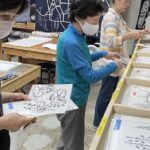

Just added: more Kyoto tours to browse




Kyoto Craft & Calligraphy Workshops, compared.
 ★ 5.0Chopsticks Making Workshop in Gion with Engraving OptionFrom $15958 reviews
 ★ 4.8Authentic knife making experience at a blacksmith in KyotoFrom $154350 reviews
 ★ 5.01-Hour Japanese Archery Experience in KyotoFrom $46176 reviews
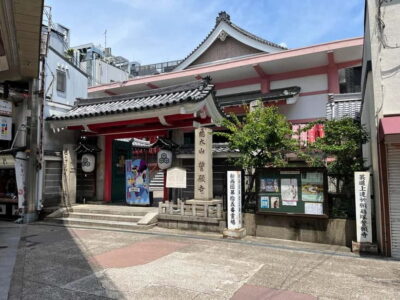 ★ 5.0Calligraphy class at Buddhist temple in city centerFrom $55167 reviews
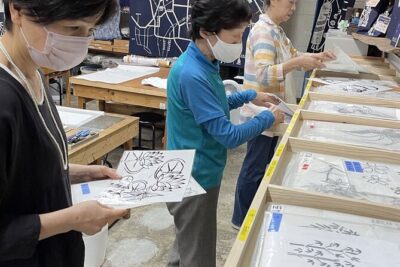 ★ 5.0Roketsu dyeing experience: M course Roketsu Dyeing ExperienceFrom $25163 reviews
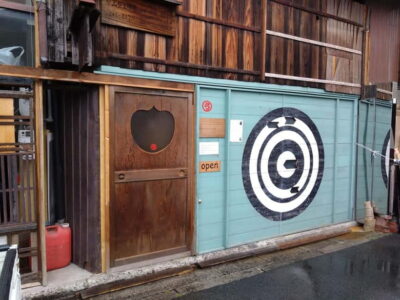 ★ 4.9Japanese Archery Workshop with Experienced InstructorFrom $38132 reviews
 ★ 4.8Japanese Calligraphy ClassFrom $5189 reviews
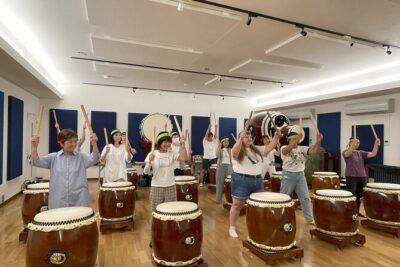 ★ 5.0TAIKO, Japanese Drum Experience from KyotoFrom $11586 reviews
Browse the lists this tour appears in