
Reviewed · NARA DAY TRIPS FROM KYOTO
From Kyoto: Nara Guided Morning Tour
Nara happens fast, especially early in the morning. This half-day tour strings together the Great Buddha of Nara and the shrine lanes of Kasuga Taisha, then gives you time to enjoy the famous deer chaos (the cute kind). Guides like Ciel, Den, and Sakura keep the pace easy to follow, while multilingual audio headsets help you catch the stories without needing perfect English.
I love the practical structure: you get a clear route that hits the big sites with guided time, then you’re released for your own deer moments in Nara Park. I also love the way the guides turn the deer feeding from a photo-op into a real etiquette lesson, like keeping your crackers controlled and showing empty hands so they don’t crowd you. One consideration: this tour ends around noon at Kintetsu Nara Station, not back in Kyoto, so you’ll need to plan your return.
In This Review
- Key things to know before you go
- From Kyoto’s Avanti Meet-Up to Nara’s Morning Rhythm
- Kasuga Taisha: 40 Minutes Among the Lantern Paths
- Nara Park Deer Time: Cracker Etiquette That Actually Works
- Todaiji Temple and the Great Buddha Hall: The Main Event
- Coach Comfort, Wi-Fi, and Multilingual Audio Headsets
- Timing, Weather, and How to Pack for Real Walking
- One-Way Logistics: Ending at Kintetsu Nara Station
- Price and Value: Is $77 Worth a Half-Day?
- Who This Tour Suits (and Who Should Skip It)
- Should You Book the Kyoto to Nara Morning Tour?
- FAQ
- Where is the meeting point?
- What time does the tour depart?
- How long is the tour?
- Where does the tour end?
- What’s included in the price?
- Is there an audio guide? Which languages are available?
- Are meals included?
- Can I feed the deer?
- Can I take photos with flash?
- Will the tour return me to Kyoto?
Key things to know before you go
- Early timing helps you see Kasuga Taisha’s lantern pathways before the day gets noisy
- Todaiji Temple admission included means you don’t waste time hunting tickets
- Deer feeding is allowed, but only with the special crackers sold in the park
- Audio headsets in 7 languages plus an English guide make explanations easy to follow
- Air-conditioned coach with free Wi-Fi keeps the trip comfortable even on hot days
- Stairs and hills are part of the experience, and the tour isn’t set up for wheelchairs
From Kyoto’s Avanti Meet-Up to Nara’s Morning Rhythm
This tour starts in Kyoto at Tully’s Coffee by the Kyoto Avanti building. You meet at 7:50 AM, then the coach leaves at 8:00 AM, which is smart if you want your Nara morning to feel like sightseeing instead of waiting in lines.
The ride itself is part of the value. You travel by air-conditioned coach with free Wi-Fi, so you can quickly get organized: map-check your next stop, look up a few basics in advance, or just relax with a cold drink you brought yourself. On the way, the bus passes historic landmarks along the route, including the area around Fushimi Castle and Heijokyo Palace, which gives you a sense that you’re leaving Kyoto behind but still moving through Japan’s past.
The morning timing matters. Kasuga Taisha and the Todaiji complex can feel more intense when crowds build. Starting early also helps the deer moment feel calmer, because you’re less likely to enter the park when everyone is hunting the same selfie angle.
More day trips out to Nara and its bowing deer
Kasuga Taisha: 40 Minutes Among the Lantern Paths
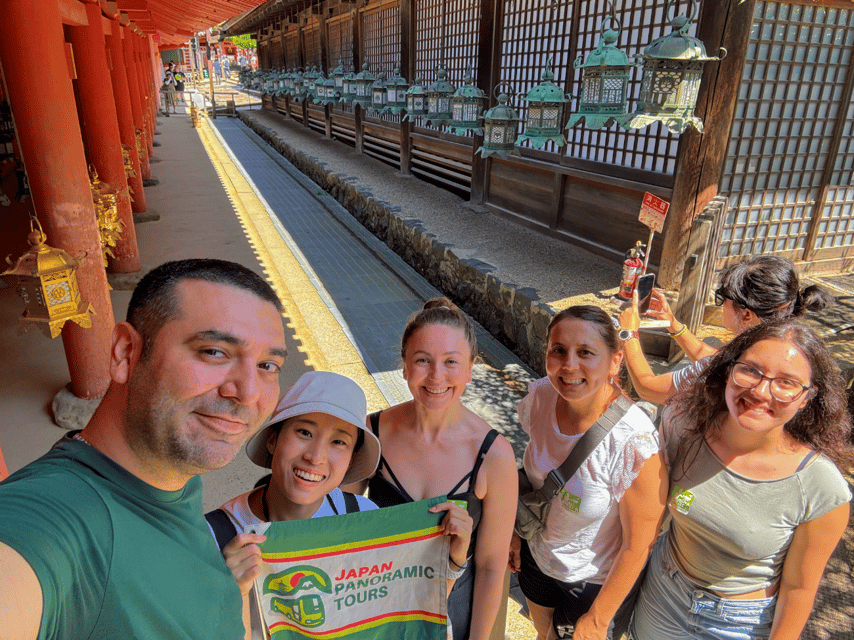
Kasuga Taisha is one of Nara’s spiritual must-sees, and the tour gives it dedicated guided time (about 40 minutes). This shrine is a UNESCO World Heritage Site, and what most people remember is the famous lantern-lined pathways—about 3,000 stone lanterns—that create that lantern-alley feeling you only get here.
What I like about this stop on a half-day format is that it doesn’t try to cram everything into a blur. You get the core context from the guide—what the shrine represents, why it’s set up the way it is, and how to move through the space without getting lost.
A practical note: photo rules can be strict at temple sites. Flash photography isn’t allowed, so plan to use natural light and turn your camera settings so you’re not stuck with shaky indoor-style photos. Also, wear shoes you trust. Even “short” shrine time can include uneven ground and some steps.
If you’re the type who gets turned around easily in Japan, this stop is perfect. The guide keeps you oriented and helps you focus on what to notice instead of just where to walk.
Nara Park Deer Time: Cracker Etiquette That Actually Works
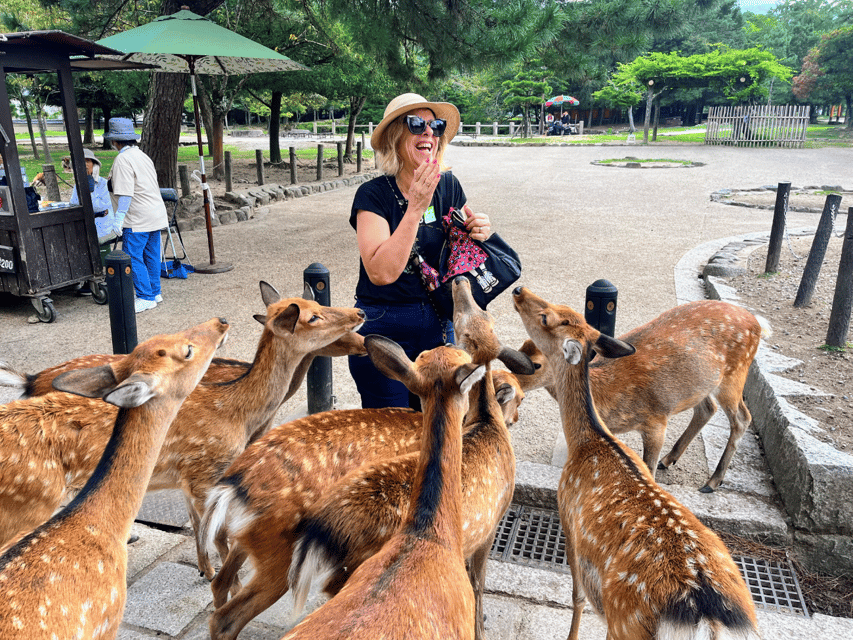
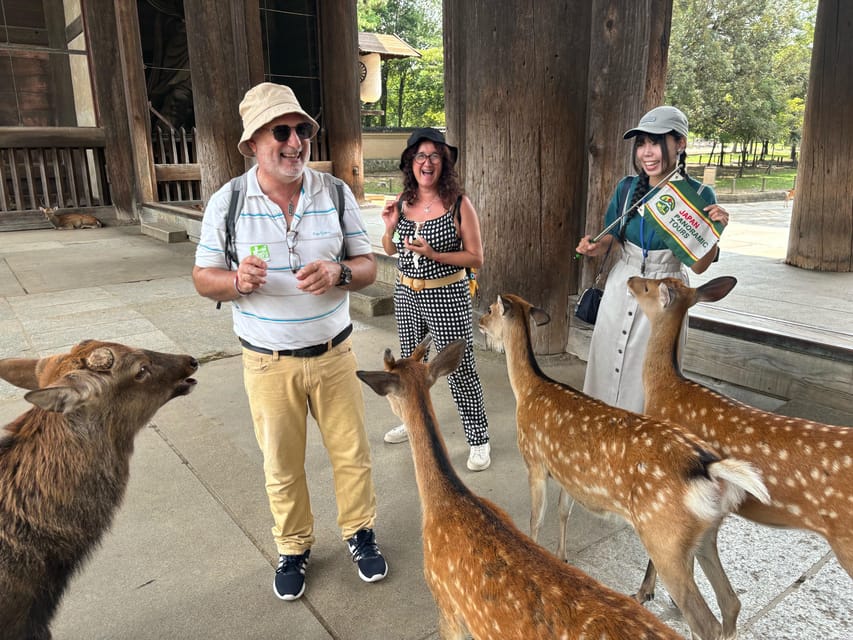
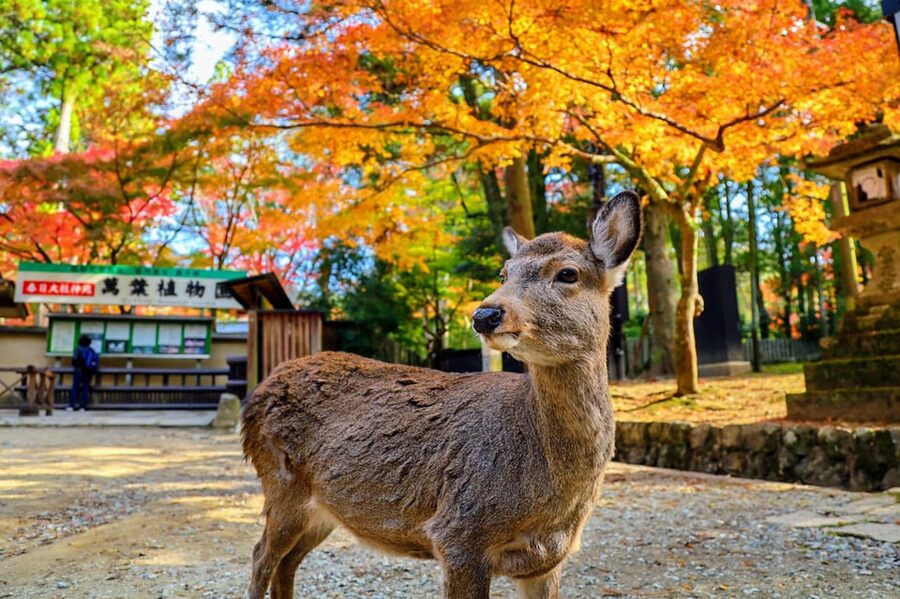
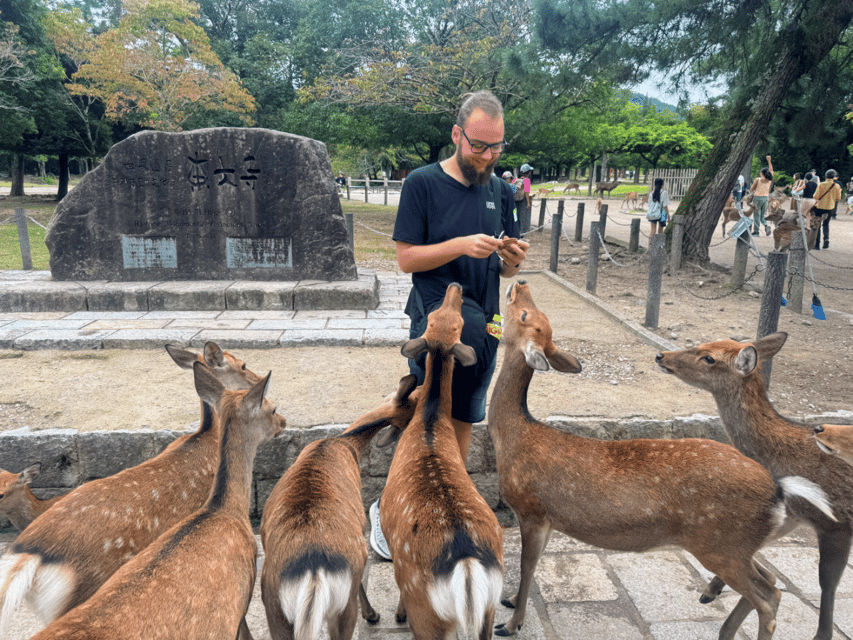
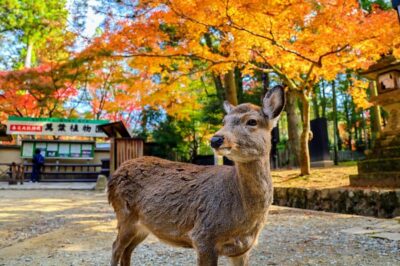
Now for the part everyone talks about: the deer of Nara Park. The park is home to over 1,400 wild deer, and they roam freely. The deer aren’t just background animals here—they’re part of the experience and the local tradition.
This tour gives you free time in Nara Park (about 30 minutes). That’s enough to feel the magic without turning it into a full-day “chasing deer with your camera.” But you need to go in with the right expectations.
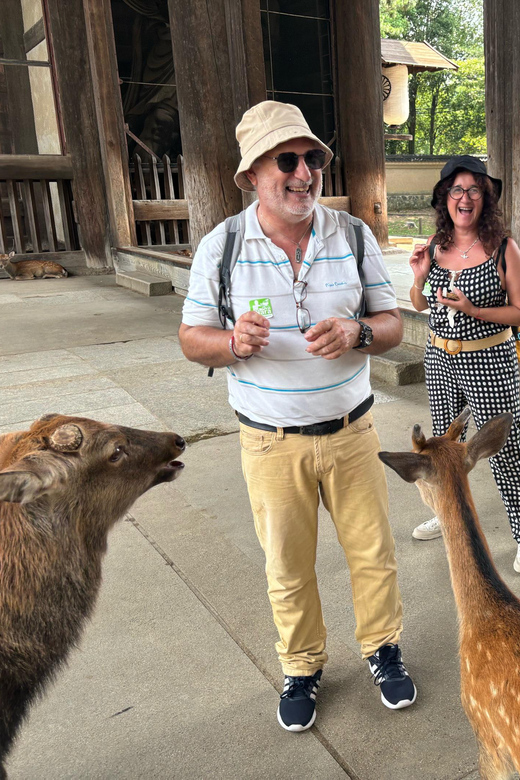
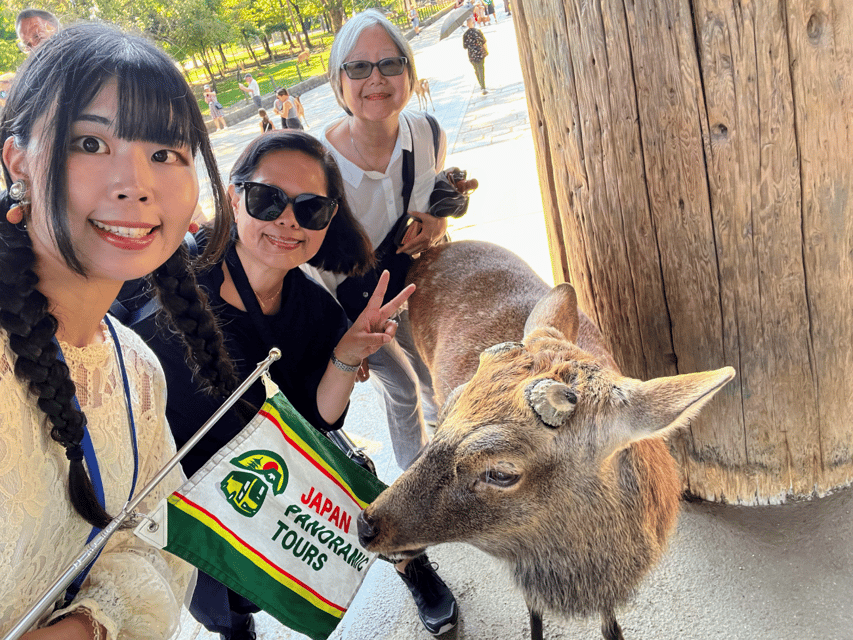
Here’s the etiquette that makes a big difference, and it’s the kind of advice your guide will pass along. Feeding the deer is allowed, but only with the special crackers sold in the park. Don’t try to use random snacks. Keep your crackers secure—more than one guide emphasizes using pockets carefully so deer don’t crowd your hands.
Also, watch your body language. Some deer will approach confidently, and they may get pushy if they think you have food. One helpful tip I’ve heard emphasized by guides: if you’re out of crackers, show your empty hands so deer learn there’s nothing to grab. If you have crackers, keep them controlled and avoid sudden movements.
Quick reality check: deer can be bold. That’s part of the charm, but it can also surprise you if you pictured gentle, posed animals. You’ll have a better time if you treat the deer like enthusiastic (and sometimes grabby) co-stars—smile, stay calm, and manage your hands.
Todaiji Temple and the Great Buddha Hall: The Main Event
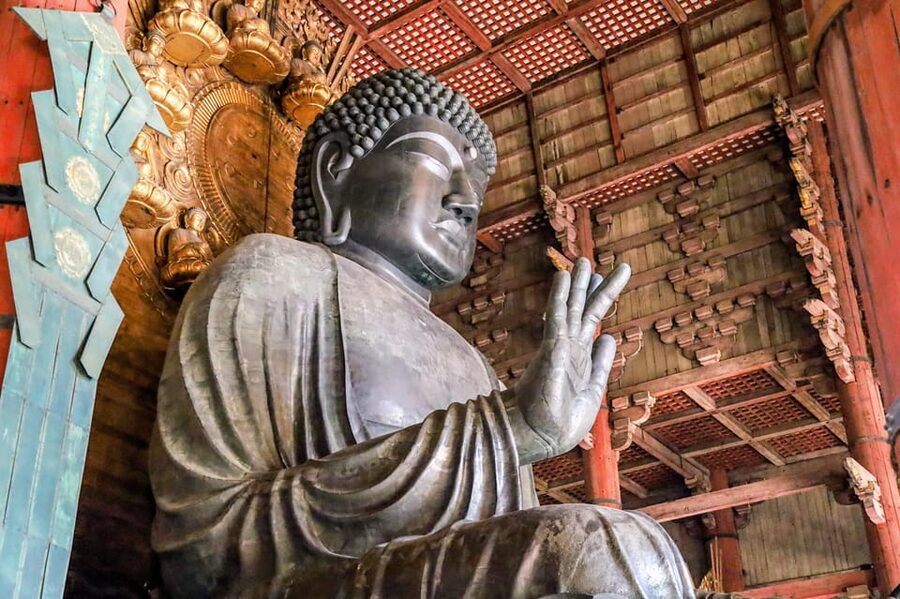
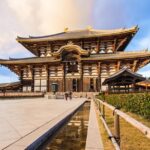
The centerpiece stop is Todaiji Temple, with guided time of about 50 minutes. This is where you see the Great Buddha of Nara in the Daibutsuden, the Great Buddha Hall. The hall is famous for its scale—so big and so wooden that even people who don’t “do temples” usually get quiet for a minute.
The best part of having a guide here is not just the facts. It’s the pacing and the way you’re directed to the right viewpoints and details. Todaiji can feel overwhelming because it’s a whole complex, not one single photo spot. With guided structure, you understand what you’re looking at as you walk through.
Another value point: admission to Todaiji Temple is included, so you’re not stuck doing paperwork or paying separately while your morning schedule ticks away.
A few practical reminders for this stop:
- Expect walking and some stairs/hills in and around the complex.
- Bring water and take a breather if you need it. (This tour is half-day, but it’s still a real outing.)
- Flash photography isn’t allowed, so don’t plan on lighting tricks in the hall.
If you want one reason this tour is worth considering even if you think you can “just do Nara on your own,” it’s this: you get the main event with context, not just a checklist of buildings.
Coach Comfort, Wi-Fi, and Multilingual Audio Headsets
Japan tours can either feel smooth or chaotic. This one aims for smooth.
You’re on an air-conditioned coach, and the bus has free Wi-Fi, which helps on short tours where every minute counts. You’re also given audio headsets for the guided content in seven languages: Spanish, French, Italian, German, Portuguese, and Ukrainian. That means you don’t have to rely only on what your English guide says in the moment.
In practice, audio headsets make the experience easier for mixed-language groups. You can keep your attention on the sights without constantly reading lips or trying to translate in your head. And even if you understand English well, it can still help to hear the same idea explained again as you walk.
The guide is a key part of the flow. Many guides are noted for being upbeat and organized, with humor and clear instructions on how to handle the deer time. If you get nervous in a crowd (the park can get busy fast), the guide’s directions help you relax.
Other Kyoto tours and experiences to compare
Timing, Weather, and How to Pack for Real Walking
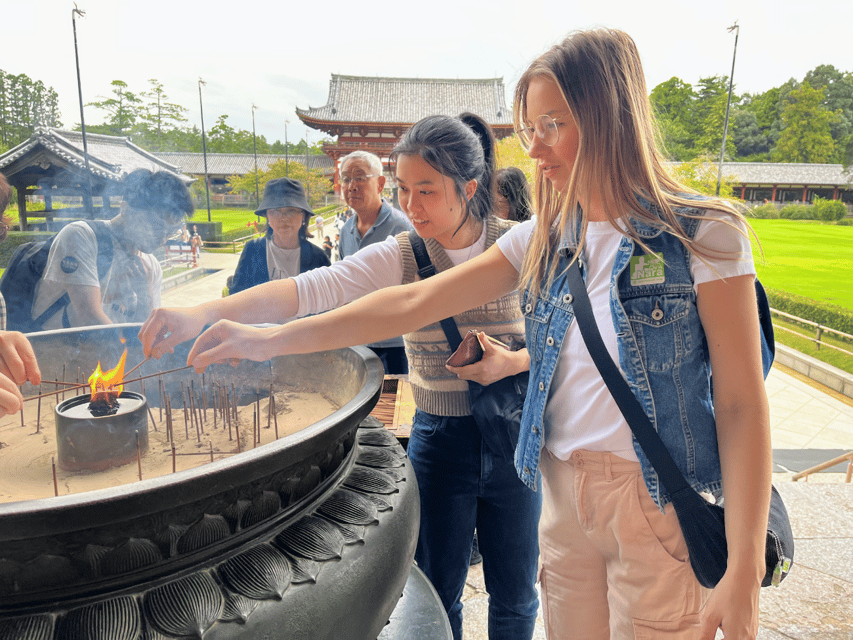
This tour is only about four hours, but it’s not “sit-and-stare.” You should pack like you’ll walk at least a few miles on uneven surfaces.
Bring:
- Comfortable shoes
- Water
- Hat and sunscreen
- Camera
- Cash (especially for the deer crackers sold in the park)
Weather matters in Nara, just like anywhere. The tour expects you to go out in sun or rain, so bring an umbrella or raincoat if your forecast looks unstable.
Another detail that matters: the tour order can change depending on traffic, weather, or operations. That’s not a deal-breaker, but it does mean you should stay flexible with your expectations. Also, if a place is closed, you’ll go to an alternative place.
One-Way Logistics: Ending at Kintetsu Nara Station
This is the big planning point: the half-day format ends at Kintetsu Nara Station around 12 PM. There is no included bus return to Kyoto station. That means the tour is built for mornings, not for a full day door-to-door.
This matters because you should avoid treating Nara station time as a casual afterthought. Kyoto is easy for experienced public-transit users, but it can feel intimidating when you’re tired and you’ve been walking.
The good news: there’s support at Nara station, and staff can help you figure out next steps. Still, your best move is to check your return plan before you leave for the tour. Have a route in mind. Know which station entrance you’ll exit from. Then you’ll spend your morning enjoying the sights instead of calculating your afternoon at speed.
Price and Value: Is $77 Worth a Half-Day?
At $77 per person, this isn’t a bargain tour, but it’s also not pricing itself like a luxury day. The value comes from the bundle:
- Professional English-speaking guide
- Guided visits at both major cultural sites (Todaiji and Kasuga Taisha)
- Todaiji admission included
- Audio headsets in multiple languages
- Air-conditioned coach transport with free Wi-Fi
- A timed deer-park window so you don’t lose the day to wandering
If you try to DIY this with trains, you’ll still spend time coordinating transit and figuring out where to enter each site. You’ll likely pay for admissions and still need a strategy for the deer moment. A guided half-day gets you the highlights with less decision fatigue.
The main reason someone might feel it’s not worth it is if you already know you want to stay in Nara longer after noon, or if you hate one-way logistics. But if you want the best Nara hits fast—especially the Great Buddha and the shrine atmosphere—this price usually lands as fair.
Who This Tour Suits (and Who Should Skip It)
This is a strong fit if:
- You’re short on time in Kyoto
- You want major UNESCO sites plus the deer experience in one morning
- You prefer a guided plan with time to roam
- You’ll appreciate multilingual audio headsets
It’s less ideal if:
- You have mobility limitations. The tour involves walking, stairs, and hills, and it’s not suitable for wheelchair users.
If you’re traveling with kids, it can work well because the route is compact and the deer make it fun. If you’re someone who gets stressed in crowds, the guide-led structure during Todaiji and Kasuga can actually help you enjoy the park time more.
Should You Book the Kyoto to Nara Morning Tour?
Book it if you want an efficient morning with Todaiji Temple’s Great Buddha, Kasuga Taisha’s lantern paths, and a real shot at enjoying the deer without spending hours planning.
Skip it (or upgrade your plan) if you hate one-way logistics or you want a slow, full-day wander in Nara. The tour ends around noon at Kintetsu Nara Station, so the experience isn’t complete unless you’re ready to handle your return.
If you decide to go, do two things that will make the biggest difference: wear comfortable shoes, and bring cash for the deer crackers. Manage the deer time with the etiquette your guide recommends, and this half-day can feel like you got the essential Nara experience without the usual morning chaos.
FAQ
Where is the meeting point?
You meet in front of the Kyoto Avanti building at Tully’s Coffee, on the Tully’s side. Address: 〒601-8003 Kyoto City, Minami Ward, Higashikujo Nishiyamao-cho 31 AVANTI.
What time does the tour depart?
Meeting time is 7:50 AM, and the coach departs at 8:00 AM.
How long is the tour?
The duration is about 4 hours.
Where does the tour end?
The tour concludes at Kintetsu-Nara Station around 12 PM.
What’s included in the price?
Included are a professional English-speaking guide, an air-conditioned coach with free Wi-Fi, admission to Todaiji Temple, and audio headsets for multiple languages.
Is there an audio guide? Which languages are available?
Yes. Audio headsets are included in Spanish, French, Italian, German, Portuguese, and Ukrainian (plus the guide is in English).
Are meals included?
No. Meals and drinks are not included.
Can I feed the deer?
Feeding is allowed, but only responsibly and using the special crackers sold in the park.
Can I take photos with flash?
No. Flash photography is not allowed.
Will the tour return me to Kyoto?
Not by bus. The half-day tour does not include a return to Kyoto station. It ends in Nara at Kintetsu-Nara Station.
More Tours in Kyoto

More Tour Reviews in Kyoto


More Nara Day Trips
Just added: more Kyoto tours to browse








Nara Day Trips from Kyoto, compared.
 ★ 4.7Kyoto/Osaka: Nara, Fushimi Inari Taisha, Arashiyama Bus TourFrom $521,275 reviews
 ★ 4.4Osaka/Kyoto: Arashiyama, Nara & Fushimi Inari Shrine w/LunchFrom $61754 reviews
 ★ 4.5Kyoto and Nara Day Trip from KyotoFrom $194445 reviews
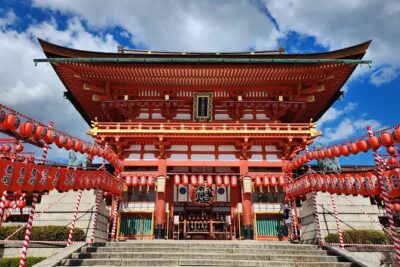 ★ 5.0Full Day Guided Tour to Kyoto and Nara from Osaka by VanFrom $106420 reviews
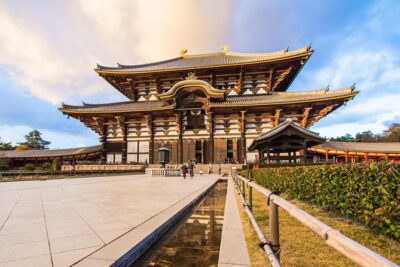 ★ 4.5Nara Afternoon Tour from Kyoto or OsakaFrom $102390 reviews
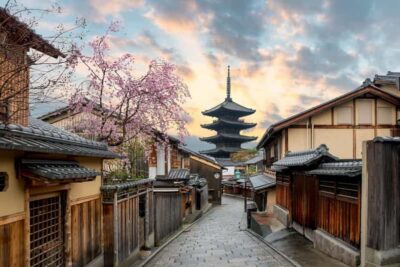 ★ 4.6Kyoto/Osaka: Kyoto and Nara Customized Private Guided TourFrom $477258 reviews
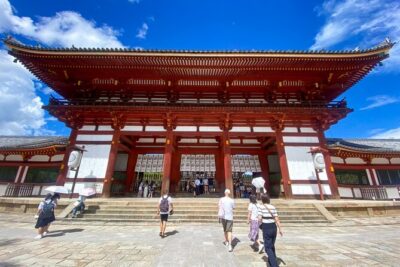 ★ 5.0Nara Park, Osaka & Kobe from Kyoto Full Day tourFrom $90207 reviews
 ★ 4.9Nara & Traditional Matcha Experience Bus TourFrom $122185 reviews
Browse the lists this tour appears in