
Reviewed · MORNING
Traditional Japanese Washi Papermaking- Kyoto morning
This Kyoto morning makes handmade paper. In a traditional house near central transit, you’ll make washi paper from raw materials and decorate it with seasonal botanicals.
I love how hands-on it feels, with patient teaching from Hiro and Junko and their team, plus clear support in Japanese and English. I also like that you’re not just watching a craft—you design a real, take-home paper item that actually looks like something from Japan.
One consideration: the main session is about 1 hour, so if you want multiple gifts, plan on the optional extra hour at your own expense.
In This Review
- Key highlights I’d circle in your Kyoto plan
- A calm Kyoto morning: where sightseeing goes quiet
- Where the class is: Sanjōchō and easy station walks
- Inside the workshop: small group attention from Hiro and Junko
- Making washi from raw materials (not just a craft project)
- Your design: cherry blossoms, maple leaves, and cut-out accents
- What you take home: a real souvenir in about an hour
- Adding more time for more gifts (and why it can be worth it)
- Timing it in your Kyoto day: morning-friendly and indoors
- Is it worth $33.03? Value for skill, materials, and a real take-home
- Who should book this washi papermaking class?
- Should you book kamitowa kyoto for your Kyoto morning?
- FAQ
- How long is the washi papermaking class?
- What can I make during the workshop?
- Do the instructors speak English?
- How small is the group?
- Where is the meeting point in Kyoto?
- Is transportation included?
- Is there an option to make more paper?
- What is the cancellation policy?
Key highlights I’d circle in your Kyoto plan
- Raw-material washi making: you’ll go beyond decorating paper
- Seasonal pressed botanicals: cherry blossoms, maple leaves, and paper cut-outs
- Small group size: capped at 4 travelers for more attention
- Bilingual instruction: Japanese and English guides
- Video while paper dries: quick context as you wait for results
- Useable souvenirs: postcards, table mat, and lampshade-style items
A calm Kyoto morning: where sightseeing goes quiet
Kyoto can feel like a moving parade—temples, crowds, photos, repeat. This washi workshop is different. It’s one of those experiences that slows you down fast, because you’re working with your hands and watching a process that takes time (even when everything is explained clearly).
The heart of the class is traditional paper craft: you start from raw materials, then form a sheet and decorate it with seasonal elements like cherry blossoms and maple leaves. The result isn’t just pretty for a moment. You leave with a handmade piece you can use or give away, which is a big deal when you’re trying to bring home something real instead of another trinket.
The setting also matters. You’ll be in a traditional Japanese-style house, not a loud studio. That quiet, small-scale atmosphere is part of why people rate it so highly: it feels like you’ve stepped into a working craft space rather than a rushed tourist stop.
Other Kyoto tours and experiences to compare


Where the class is: Sanjōchō and easy station walks
You’ll meet at 345 Sanjōchō, Nakagyo Ward, Kyoto. Since it’s a class and not a bus tour, you’ll make your own way there. The good news is it’s very transit-friendly.
From what’s listed, you can reach it on foot from:
- Shijo Station (Kyoto Metro Karasuma Line), about a 9-minute walk from exit #24
- Karasuma Station (Hankyu Line)
- Karasuma Oike Station (Kyoto Metro Karasuma Line), about a 6-minute walk from exit #6
This is a practical location if you’re trying to do a morning activity and then hit a market or temple afterward. You don’t have to build in huge travel buffers.
Inside the workshop: small group attention from Hiro and Junko
The class runs for about 1 hour and the group is capped at 4 travelers. That small size is one of the best parts. You’re not waiting for a guide to finish with someone else. You get real support while you work.
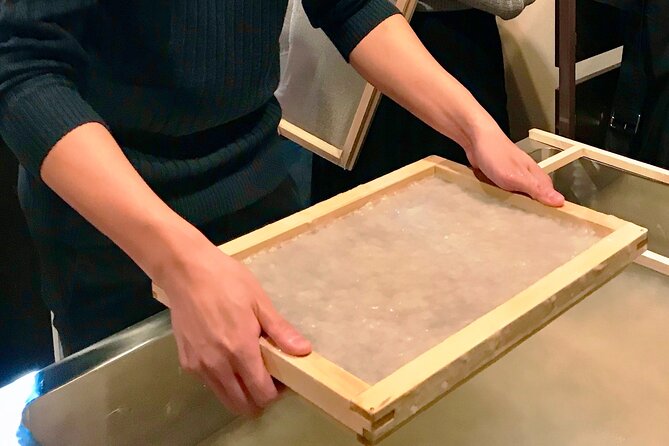
The instructors and assistants are bilingual (Japanese and English), and the teaching style is hands-on. You’ll go step by step, from prepping materials to forming the sheet and adding your seasonal decorations. People consistently mention how kind and patient the team is, especially when they’re working with kids or first-time makers.
Another thing I’d call out: while the paper dries, you’ll watch an information video about the craft process. It’s not just filler. It helps you understand what you’re waiting for, and it turns the downtime into part of the lesson instead of idle time.
Making washi from raw materials (not just a craft project)
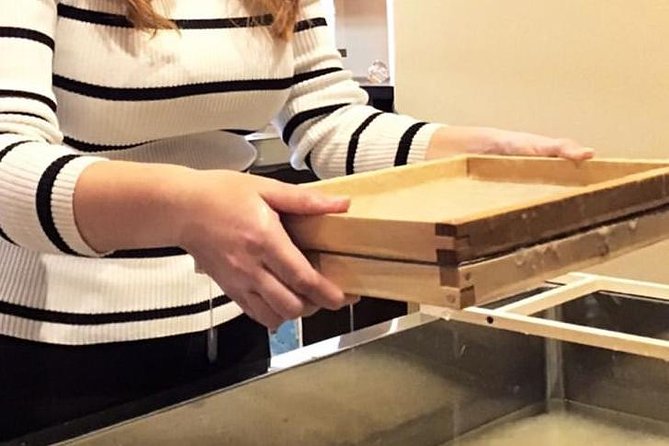
A lot of “paper” activities are basically design sessions on pre-made sheets. Here, you actually make the washi. That means you learn the core idea of traditional paper-making: turning plant fibers into a sheet you can decorate and shape.
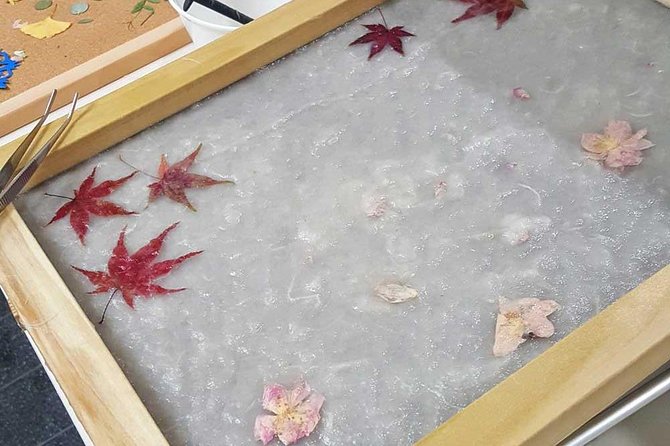
The class flow is simple to follow, but the craft steps add up. You’ll form the base sheet, then work with it as it’s staged for decorating. Because there’s a watchful instructor, you don’t need to worry about guessing the technique. You just follow the process and focus on your own design.
This is also why the experience feels educational without being heavy. You’re learning a traditional method through doing it, not through a lecture.
Your design: cherry blossoms, maple leaves, and cut-out accents
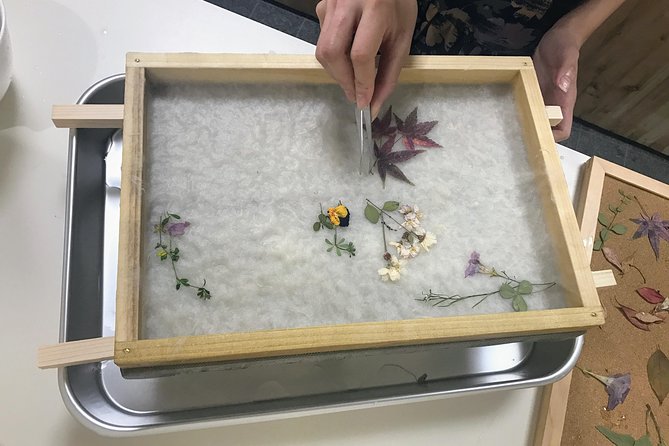
One reason people love this workshop is the design part. You won’t just get to pick colors—you’ll use actual seasonal botanicals: cherry blossoms, maple leaves, and paper cut-outs.
In practice, that means you spend time arranging your elements on the sheet so you like the balance. Some designs work best when leaves and flowers aren’t crowded. You’ll naturally start thinking like a paper artist instead of a tourist with a glue stick.
You also get to choose what you’re making. Options include:
- Postcards (a set)
- A table mat
- A wraparound lampshade
- A tapestry panel
Some people also opt for a lantern-style item with a supplement. If you want your souvenir to feel more functional than decorative, lampshade and table-mat options are great targets.






What you take home: a real souvenir in about an hour
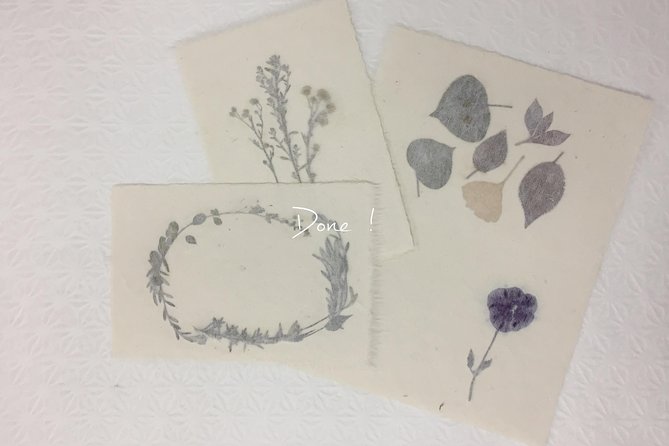
The whole point of a paper workshop is that your effort becomes an object you can keep. Here, the class is designed so you leave with a finished, take-home piece.
Most likely, your included project centers around a small set of paper goods (postcards are commonly mentioned as part of the base). Then, depending on what you choose, you may pay extra for larger or more specific items like lampshade-style creations.
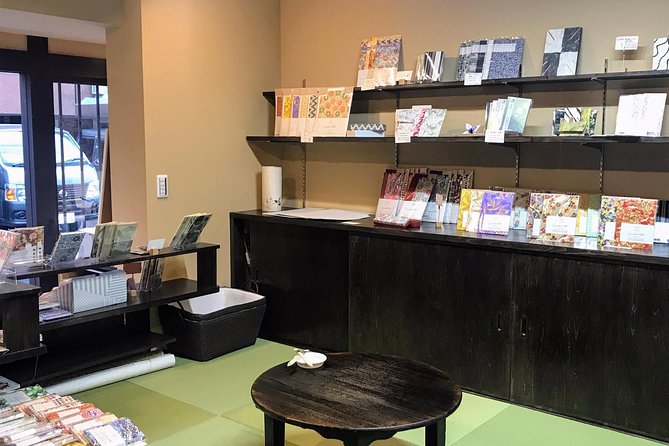
One useful detail: the paper-making shop area is part of the experience after your class. You can browse paper products they’ve made or sell locally. And multiple reviews say there’s no hard sales pressure, which matters when you’re just trying to enjoy your morning and not get pulled into shopping.
Also, plan to handle your finished item carefully on your way through Kyoto. It’s usually packaged well, but paper goods still deserve a bit of common sense in bags and on busy train rides.
Adding more time for more gifts (and why it can be worth it)
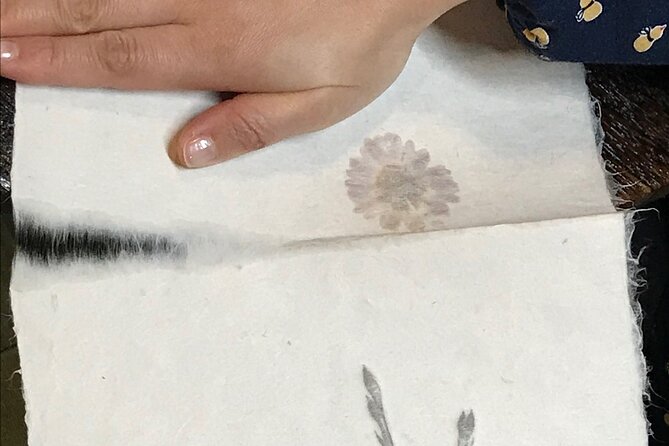
The standard class is about 1 hour. If you’re hoping to make more than one item—or you want a stack of gifts for friends—there’s an option to add an additional hour of unlimited paper making (listed as your expense).
That add-on is not just about quantity. It changes the vibe. With more time, you can experiment a bit more with composition, and you’re less likely to feel like you ran out of room in your bag for ideas.
If you’re doing this as a couple, a family, or a group of friends, the extra hour can also be a way to turn one “souvenir” experience into several personalized gifts without repeating the class across multiple days.
Timing it in your Kyoto day: morning-friendly and indoors
This is a true morning option, and it works for a couple of reasons.
First, the process is indoors. If Kyoto weather turns—rain, sudden wind, too much heat—you’re already covered. Second, you don’t spend half your day traveling. You’re walking distance from key transit points and you finish with a take-home item right after the session.
Many visitors plan it around lunch or a nearby market area. Since you end back at the meeting point, you can head straight out afterward without figuring out a complicated route.
If you’re building an itinerary, I’d treat this like a “breather block.” Do it early, then go back outside with a lighter head.
Is it worth $33.03? Value for skill, materials, and a real take-home
At $33.03 per person, this isn’t a cheap craft. But it doesn’t pretend to be a one-minute souvenir either. You’re paying for instruction, a traditional technique, and the materials needed to make your own sheet and then create a finished object.
A key value detail: the price includes all taxes, fees, and handling charges. That makes it easier to plan without surprise extras at checkout.
Also, the class is capped at 4 travelers. Small group instruction usually costs more, and here it’s part of the deal. When you’re learning a multi-step craft, time with the instructor matters.
What you should mentally budget for:
- Your included project (commonly described as a set of postcards in base pricing)
- Optional upgrades like lampshade-style items
- The optional extra hour if you want multiple pieces
If you want a souvenir you can actually feel proud of—something handmade, personalized, and rooted in a craft practice—this price can make sense fast.
If you only want a quick decor activity and you don’t care about learning the process, you might find cheaper tourist crafts. But if you like doing things with your hands, this workshop fits that preference better than most.
Who should book this washi papermaking class?
This is a strong match if you:
- Want a traditional Japanese craft experience with real skill-building
- Prefer smaller groups and patient teaching
- Like seasonal details like pressed flowers and maple leaves
- Want a souvenir that’s both personal and usable
It also works well for families. The class is designed so kids can participate, as long as they’re with an adult. The pace and support from Hiro, Junko, and their assistant are part of why it gets praised for all ages.
It’s also a good pick if you’re tired of crowd-heavy Kyoto highlights and want an hour that feels restful.
Should you book kamitowa kyoto for your Kyoto morning?
Yes—if your travel style includes hands-on learning and you’d like a take-home item made by you. This workshop combines a traditional method (making washi from raw materials) with a design session using seasonal botanicals, then hands you a finished souvenir in a short, manageable timeframe.
I’d book it especially if you want something calmer than temple lines, and if you value small-group attention. The only real “no” is if you hate crafts or you expect to make lots of gifts without paying for the optional extra hour. For a focused morning and a memorable paper souvenir, it’s a very solid choice.
FAQ
How long is the washi papermaking class?
The class is about 1 hour (approx.).
What can I make during the workshop?
You can choose from items such as a set of postcards, a table mat, a wraparound lampshade, or a tapestry panel.
Do the instructors speak English?
Yes. The workshop is operated by bilingual instructors who speak Japanese and English.
How small is the group?
The workshop has a maximum of 4 travelers, so instruction and help are more personal.
Where is the meeting point in Kyoto?
Meet at 345 Sanjōchō, Nakagyo Ward, Kyoto, 604-8205, Japan. It’s listed as about a 6-minute walk from Karasuma Oike Station exit #6 and about a 9-minute walk from Shijo Station exit #24.
Is transportation included?
No. You’ll need to arrange your own transportation to and from the workshop.
Is there an option to make more paper?
Yes. You can add an additional hour of unlimited paper making, and it’s listed as your expense.
What is the cancellation policy?
You can cancel for a full refund up to 24 hours before the experience starts. Cancellation within 24 hours is not refundable.
More Morning in Kyoto

More Tour Reviews in Kyoto
Just added: more Kyoto tours to browse








Morning, compared.
 ★ 5.0Kyoto Early Morning Tour with English-Speaking GuideFrom $681,427 reviews
★ 4.9Early Morning Tour with English-Speaking GuideFrom $1011,128 reviews
★ 5.0Kyoto Early Morning Tour with English-Speaking GuideFrom $681,427 reviews
★ 4.9Early Morning Tour with English-Speaking GuideFrom $1011,128 reviews
 ★ 4.6From Kyoto: Nara Guided Morning TourFrom $77335 reviews
 ★ 4.0Kyoto Morning Tour from Kyoto or OsakaFrom $87281 reviews
 ★ 5.0Morning Japanese Bento Cooking ClassFrom $67149 reviews
 ★ 5.0Arashiyama Bamboo Forest Morning Tour by BikeFrom $103115 reviews
 ★ 5.0Explore Hidden Alleyway with a Local Expert (Morning tour)From $10361 reviews
 ★ 4.9Early Morning Fushimi Inari Shrine – Beat the CrowdsFrom $7048 reviews