
Reviewed · MORNING
Explore Hidden Alleyway with a Local Expert (Morning tour)
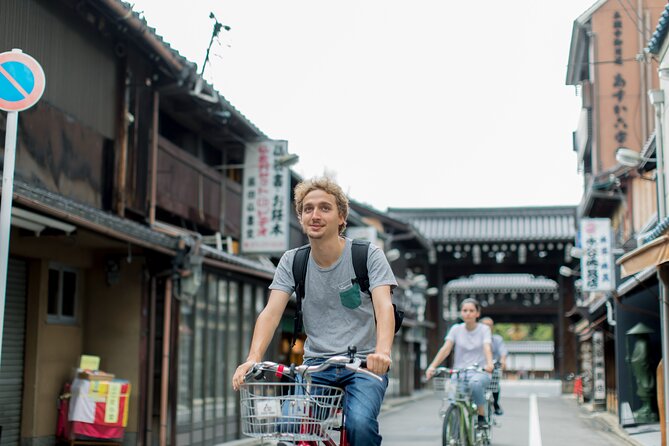
Kyoto’s backstreets feel closer on an e-bike. I like that e-bike rental is included so you skip the stress of renting and route-finding, and I like the private pacing that makes it easy to stop, ask questions, and move when your group wants to move. The only real catch: if the weather is ugly, you may shift to a walking-and-transit plan, and the guide’s English level can vary a bit.
This is a 3-hour morning loop starting at 9:00 am, with just your group. It typically runs with 2 to 6 people per guide (solo participants aren’t accepted), so you get the feel of a guided stroll—just faster. Plan to be comfortable riding on city streets for about a morning.
In This Review
- Key things to know before you go
- Why a morning e-bike tour works in Kyoto
- Meeting point, group size, and how the private setup feels
- Your ride and comfort: battery help, street riding, and what to wear
- Miyagawacho Kaburenjo: calm alleys, old wooden houses, no rush
- Gion: Maiko and Geiko atmosphere in a focused 15 minutes
- Tatsumi Bridge: willows, a stream path, and a breath between sights
- Kyoto Imperial Palace: gardens and gravel paths by bike
- Kashiwayacho and the Kamo River: the included rest that makes the tour work
- The guides: where the real Kyoto detail comes from
- Value check: is this $103.04 morning tour a good deal?
- Rain plan: ponchos on bikes or bus/metro walking mode
- Who this tour is best for (and who should skip it)
- Should you book this Hidden Alleyway morning e-bike tour
- FAQ
- How long is the morning e-bike tour in Kyoto?
- What time does the tour start, and where does it meet?
- Is this a private tour, and how many people can go?
- What’s included in the tour fee?
- What happens if it rains?
- Are there minimum age and height requirements?
Key things to know before you go
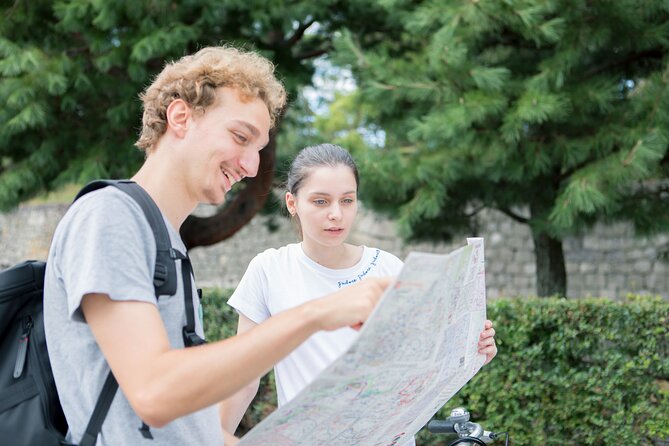
- E-bike rental included so you don’t waste your Kyoto morning handling logistics
- Private tour for your group with a pace that won’t bully you into keeping up
- Geisha districts on purpose: Miyagawacho and Gion in short, manageable chunks
- Kyoto Imperial Palace by bike along gravel paths (20 minutes)
- Kamo River break included in Kashiwayacho, so you’re not just “touring nonstop”
- Rain plan built in: ponchos and bike mode, or bus/metro walking mode
Why a morning e-bike tour works in Kyoto
Kyoto is full of streets that look similar until you’re right on top of them. A guided e-bike tour solves that problem in one move: you focus on where you’re going and what you’re seeing, not on reading signs every thirty seconds.
The morning timing matters too. You get that early-day quiet in places like Miyagawacho—where old wooden houses line narrow lanes—and the vibe feels more personal than rushing through later crowd peaks. And because this is only about three hours, you get a real “first overview” without turning the day into a stair-climbing marathon.
Other Kyoto tours and experiences to compare

Meeting point, group size, and how the private setup feels
The tour starts at 9:00 am from 552-13 Higashiaburanokōjichō, Shimogyo Ward, Kyoto, 600-8235, Japan, and ends back at the same meeting point.
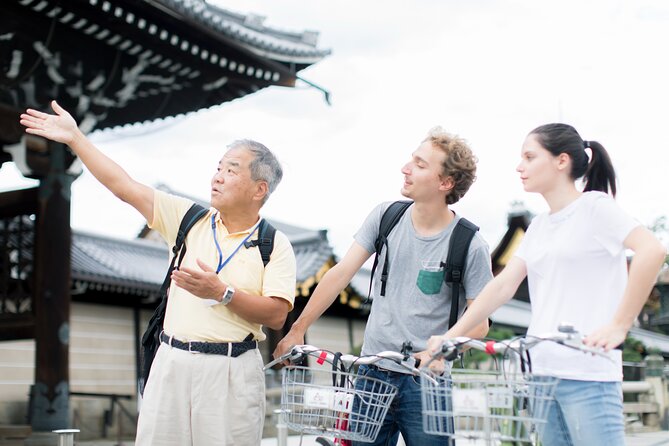
It’s set up as a private tour for your group, but there’s a practical limit: minimum 2, maximum 6 guests per guide. That’s a good thing. Smaller groups make it easier to stop for photos, get explanations in plain language, and adjust for comfort—especially when you’re learning the rhythm of riding in a foreign city.
One small consideration: 1-person participation isn’t accepted, so this is best for couples, friends, or small families traveling together.
Your ride and comfort: battery help, street riding, and what to wear
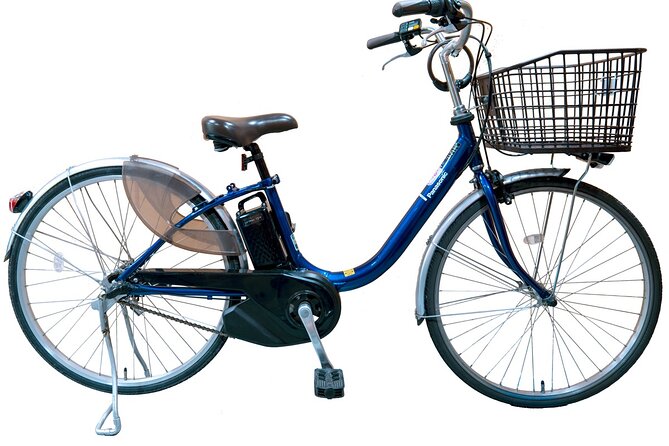
You’ll get the e-bike equipment rental as part of the experience, and the bike’s electric assist makes the ride feel manageable for most people. In hot or humid weather, that difference is huge—you can cover more ground without arriving drained.
Still, e-bike doesn’t mean “no effort.” You’ll be riding city streets and lanes, then dismounting for short stops. If you’re not used to riding a bike, I’d pack the smart stuff: padded pants can save your backside, especially on gravel and when the ride includes frequent stopping and starting.
For rain, you have options (more on that below). Either way, the tour is designed to keep moving, not freeze your plans.
Miyagawacho Kaburenjo: calm alleys, old wooden houses, no rush
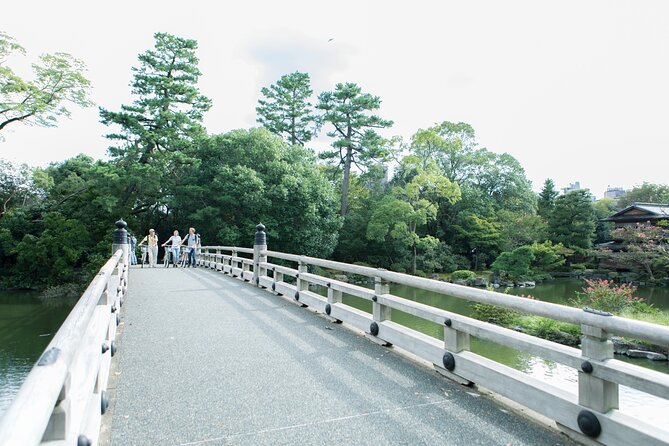
Stop 1 is Miyagawacho Kaburenjo, a geisha district area often described as the second biggest among Kyoto’s five main geisha districts. The key thing here isn’t a single landmark—it’s the feel.
You’ll walk through a lane lined on both sides with traditional wooden houses, and that’s where the “hidden alleyway” idea actually shows up. These are narrow, quieter streets where the city doesn’t broadcast itself loudly. The visit is about 15 minutes, and that short window is perfect: enough time to notice details, not enough time for it to blur into “another street.”
What to watch for: the shift from open street views into enclosed alley walls. It’s a reminder that Kyoto’s history lives at street level.
Gion: Maiko and Geiko atmosphere in a focused 15 minutes
Next comes Gion, where Kyoto’s geisha culture remains a major draw. This stop is also around 15 minutes, which is exactly what you want if you’re trying to see Gion without turning it into a long, confusing walk.
This is one of those places where the pace of the street matters. With a guide, you can slow down just enough to understand what you’re seeing—how the district developed, and what Maiko and Geiko mean in Kyoto’s social world.
You’re not just passing by storefronts. You’re being shown a place with an elegant, refined atmosphere from a time when Kyoto’s entertainment districts were more central to public life.
Practical tip: if you want photos, do it quickly, then move on. Narrow lanes make crowding easy, so short stops keep things respectful.
Tatsumi Bridge: willows, a stream path, and a breath between sights
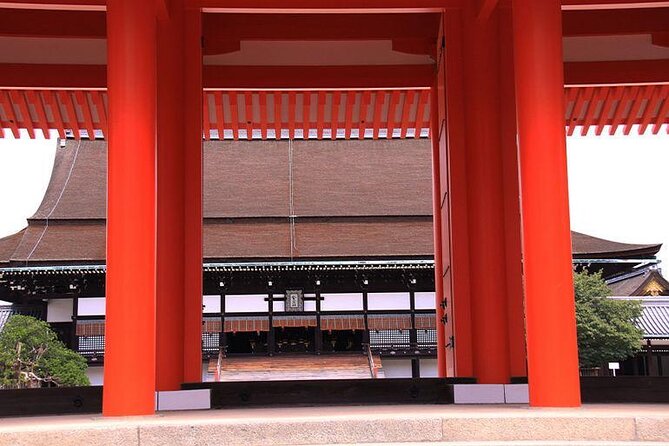
Stop 3 is Tatsumi Bridge, and the mental picture is simple: a path along a limped stream (think water running close by) with willows swinging in the breeze. That little pocket of nature and water is a nice reset after geisha districts.
You’re there for about 15 minutes, and it doesn’t need more than that. The value here is the contrast: Kyoto isn’t only temples and palaces. It’s also the everyday spaces where water and trees shape the street feel.
If you’re riding earlier, this is a good place to slow down mentally. You’ll be able to hear the water more than you can in heavier traffic areas.
Kyoto Imperial Palace: gardens and gravel paths by bike
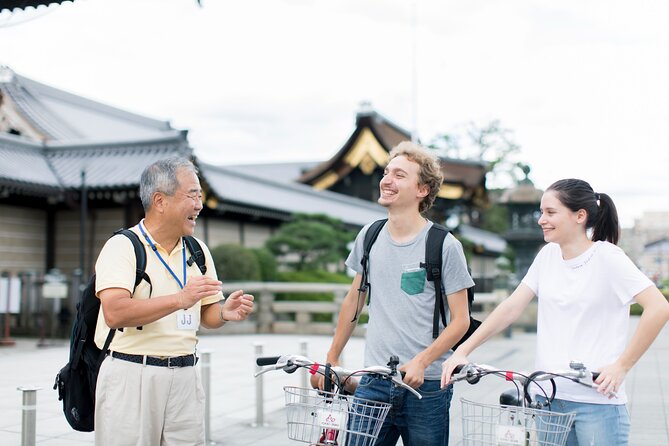
Stop 4 is Kyoto Imperial Palace, and this part changes the pace again. The Kyoto Imperial Palace used to be the residence of Japan’s Imperial Family, and today it’s open to the public as a national garden, including seasonal flowers.
You’ll spend about 20 minutes, and you cycle along gravel paths. That sounds minor, but it matters: gravel paths make the bike ride feel different from road riding. You’ll likely slow naturally while adjusting, which keeps this stop from turning into a “drive-by.”
If you’re visiting for the first time, this is the kind of stop that helps you understand Kyoto’s scale. It’s not just tight lanes and compact neighborhoods. It’s also big grounds and structured gardens where seasonal changes are the main story.
Kashiwayacho and the Kamo River: the included rest that makes the tour work
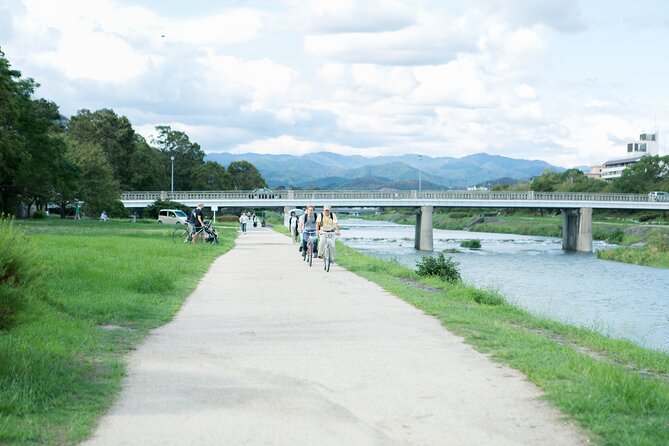
Stop 5 is Kashiwayacho, and this is where you get an actual break built into the plan. You’ll have about 20 minutes to relax by the Kamo River—a local favorite—and the rest time is included.
Why this matters: on a bike tour, it’s easy to keep thinking you’re only “covering distance.” The river pause keeps the morning from feeling mechanical. You get to sit, breathe, and enjoy Kyoto at ground level—the way locals do.
If your legs are feeling it, this is the moment to appreciate that e-bikes exist.
The guides: where the real Kyoto detail comes from
This tour’s strength is the human side. The information isn’t just trivia dumped on you while you pedal. It’s shaped into explanations that fit the moment you’re standing in.
In past tours with guides such as Rich-San, Yuichi, and Annie, the pattern is consistent:
- They answer questions without acting like you’re slowing them down.
- They connect what you see (districts, buildings, gardens, religion/culture themes) to how Kyoto developed.
- They keep the tour moving at a comfortable rhythm, even when the group is curious.
If you love conversation, you’ll likely enjoy how guides respond when you ask lots of questions. One nice detail: guides have shown flexibility for something like a coffee stop request, as long as it fits the flow.
One potential downside to keep in mind: on at least one rainy day, communication was harder due to the guide’s English level. That doesn’t mean it’ll happen to you, but it’s worth knowing that language depth can vary.
Value check: is this $103.04 morning tour a good deal?
Let’s talk value, not just price.
At $103.04 per person for about 3 hours, you’re paying for three things at once:
- Bike/equipment rental included, so you don’t add separate costs or time spent arranging gear.
- A guided route that connects multiple key areas without you having to build the map in your head.
- A small private group setup that makes stops smoother than a large-group bus tour.
If your plan is to see Miyagawacho, Gion, and Kyoto Imperial Palace in one morning, you’d otherwise spend a lot of time figuring out transit and walking routes between them. This tour trades that uncertainty for a structured loop, plus the explanations that help you recognize what you’re looking at.
For first or second day in Kyoto, it’s especially strong. It gives you a fast mental layout of the city’s textures: old lanes, entertainment district atmosphere, and major garden grounds.
Rain plan: ponchos on bikes or bus/metro walking mode
Kyoto weather can flip fast, and this tour is designed to handle it. The tour operates in rain, with two possible modes you can choose from:
- Continue as usual on bikes with rain ponchos (free of charge)
- Switch to a walking tour using public transportation (bus or metro), included in the tour fee
That flexibility is a real comfort. A rain-only cancellation would wreck your schedule. Instead, you’re choosing the level of comfort: keep riding, or slow down and transit-walk.
One more practical note: if it’s pouring, you might feel more satisfied switching modes, especially if riding wet streets is less comfortable for you.
Who this tour is best for (and who should skip it)
This e-bike tour is a great fit if you:
- Want a morning overview of Kyoto without long walking
- Like geisha district atmosphere (Miyagawacho and Gion) but want it in short, guided segments
- Enjoy gardens and historical sites like Kyoto Imperial Palace
- Prefer a private-group pace for questions and small detours
It may not be ideal if:
- You’re traveling solo (the tour doesn’t accept 1-person bookings)
- You’re uncomfortable riding a bike on city roads
- You’re hoping for a totally indoor, all-temple-style morning (this is streets + gardens, with riding in between)
Kids must be at least 10 years old, 145 cm or above, and able to ride a bicycle safely on the road unassisted.
Should you book this Hidden Alleyway morning e-bike tour
If you want to experience Kyoto’s “small streets + major sights” balance in one easy morning, I’d say yes. The e-bike setup plus private-group pacing makes it feel like you’re being shown the city by someone who understands how to keep things moving without turning it into a race.
Book it if you:
- Like asking questions and getting real context, not just photo stops
- Want geisha districts and Imperial Palace in one loop
- Appreciate a rest by the Kamo River built into the schedule
Consider a different option if:
- You’re very sensitive to rain and don’t want the decision of bikes-with-ponchos vs public transit walking
- You can’t do unassisted street riding (requirements are clear for kids, and safety is always the first concern)
Either way, this is the kind of Kyoto morning that helps you get your bearings fast—then you can enjoy the rest of your trip with more confidence.
FAQ
How long is the morning e-bike tour in Kyoto?
The tour lasts about 3 hours.
What time does the tour start, and where does it meet?
It starts at 9:00 am and meets at 552-13 Higashiaburanokōjichō, Shimogyo Ward, Kyoto, 600-8235, Japan. It ends back at the meeting point.
Is this a private tour, and how many people can go?
Yes, it’s private, and only your group participates. The guide can accept 2 to 6 guests. A 1-person participant isn’t accepted, and if your group is 7 to 12, an extra guide can be arranged.
What’s included in the tour fee?
The tour includes e-bike equipment rental and a rest stop at Kashiwayacho by the Kamo River (with what’s listed as included there). You’ll also receive a mobile ticket.
What happens if it rains?
The tour runs in rain. You can choose to continue on bikes with a rain poncho or switch to a walking tour using bus or metro, which is included in the tour fee.
Are there minimum age and height requirements?
Yes. Children must be at least 10 years old, 145 cm or above, and able to ride safely on the road unassisted.
More Morning in Kyoto

More Tours in Kyoto
More Tour Reviews in Kyoto
Just added: more Kyoto tours to browse





Morning, compared.
 ★ 5.0Kyoto Early Morning Tour with English-Speaking GuideFrom $681,427 reviews
★ 4.9Early Morning Tour with English-Speaking GuideFrom $1011,128 reviews
★ 5.0Kyoto Early Morning Tour with English-Speaking GuideFrom $681,427 reviews
★ 4.9Early Morning Tour with English-Speaking GuideFrom $1011,128 reviews
 ★ 4.6From Kyoto: Nara Guided Morning TourFrom $77335 reviews
 ★ 4.0Kyoto Morning Tour from Kyoto or OsakaFrom $87281 reviews
 ★ 5.0Morning Japanese Bento Cooking ClassFrom $67149 reviews
 ★ 5.0Arashiyama Bamboo Forest Morning Tour by BikeFrom $103115 reviews
 ★ 5.0Traditional Japanese Washi Papermaking- Kyoto morningFrom $3377 reviews
 ★ 4.9Early Morning Fushimi Inari Shrine – Beat the CrowdsFrom $7048 reviews