
Reviewed · MORNING
Kyoto Morning Tour from Kyoto or Osaka
A 4-hour morning can feel like Kyoto speed-walking. This tour strings together three major sights in a smart loop, so you get orientation fast and still have time to roam later. I like how it mixes UNESCO stops with very different flavors of Kyoto, from shogun power to garden calm.
What I like most is the “you don’t have to figure it out” part. Entrance fees and transport between sites are built in, which matters when Kyoto can be a maze at peak hours. The guide helps you connect the dots—people even mention guides by name such as Mr. Harada, KC (Casey), Jessie, and Jun for being organized and quick with stories.
One thing to consider: the Imperial Palace (and sometimes Nijo Castle) can be closed on specific days, and the tour swaps in other places. That can disappoint if your goal is a single building, so check the day you’re going.
In This Review
- Key Things to Know Before You Go
- A Tight Morning Route: Nijo, Kinkakuji, and Imperial Palace Area
- Meeting at Kyoto Avanti and Getting Around Smoothly
- Stop One: Nijo Castle’s Tokugawa Interiors and Garden-Style Spaces
- Stop Two: Kinkakuji Golden Pavilion, Ponds, and the One-Way Flow
- Stop Three: Kyoto Imperial Palace Architecture and What Happens When It’s Closed
- Timing and Pace: Why This Feels Fast (and How to Make It Better)
- Price and Value: What $87.19 Really Covers
- Who This Tour Suits Best (And Who Should Skip It)
- Should You Book This Kyoto Morning Tour?
- FAQ
- Where do I meet for the Kyoto Morning Tour?
- What time length should I plan for?
- Is the Imperial Palace included every day?
- What if Nijo Castle is closed?
- Are entrance fees included in the price?
- Is food included?
Key Things to Know Before You Go
- Three high-impact sites in one morning, with ride time between them
- Admission fees included (and Kyoto Imperial Palace is usually free when open)
- Air-conditioned bus plus a fixed drop-off at Kyoto Station area
- Closure swaps are real, especially for Kyoto Imperial Palace and Nijo Castle
- Crowds can affect listening, and hearing the guide may be tough in busy zones
A Tight Morning Route: Nijo, Kinkakuji, and Imperial Palace Area
This is a great option if your Kyoto schedule is packed or you’re coming in from Osaka and want a clean introduction. You’re not trying to “do everything.” You’re getting the main characters of old Kyoto, fast—then you can come back later (or not) based on what you liked.
The route is built around three different experiences. Nijo Castle shows power and design from the Tokugawa era. Kinkakuji (Golden Pavilion) gives you the iconic temple image with ponds and gardens. Then the Kyoto Imperial Palace area shifts the mood to imperial life and ceremony—if it’s open that day.
The timing is short by design. Expect a morning that feels efficient rather than leisurely. If you like slow wandering, this will feel like a warm-up, not the full Kyoto picture.
Other Kyoto tours and experiences to compare


Meeting at Kyoto Avanti and Getting Around Smoothly
You’ll meet at Kyoto Avanti, at 31 Higashikujō Nishisannōchō (Minami Ward). The end of the tour is also at Kyoto Avanti, in front of the building across from Kyoto Station Hachijo Exit.
A couple practical notes that affect your stress level:
- It’s close to public transit, which helps if you’re arriving by shinkansen or coming from Osaka.
- Seats may not be designated, so you might not get the exact spot you want on the bus.
- The tour uses a mobile ticket, so have your ticket ready on your phone.
If you’re starting from the Osaka side, there’s mention of an English-speaking assistant helping with the outbound trip from Hotel Granvia Osaka to the Sunrise Tours Desk in Kyoto Avanti B1F. The bigger point for you: don’t assume you’ll get hotel pickup and drop-off everywhere. This tour is very Kyoto Station–centric.
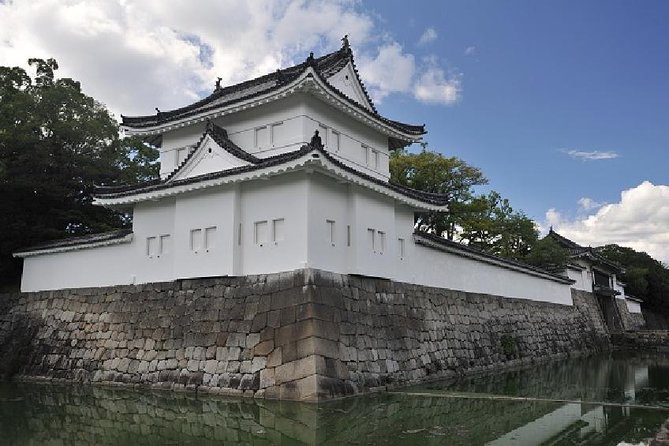
Stop One: Nijo Castle’s Tokugawa Interiors and Garden-Style Spaces
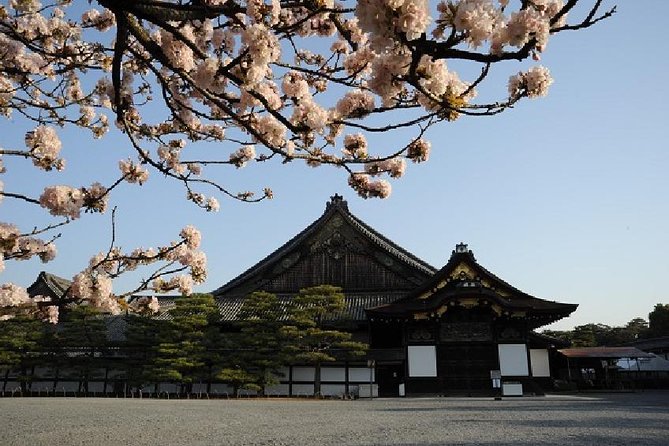
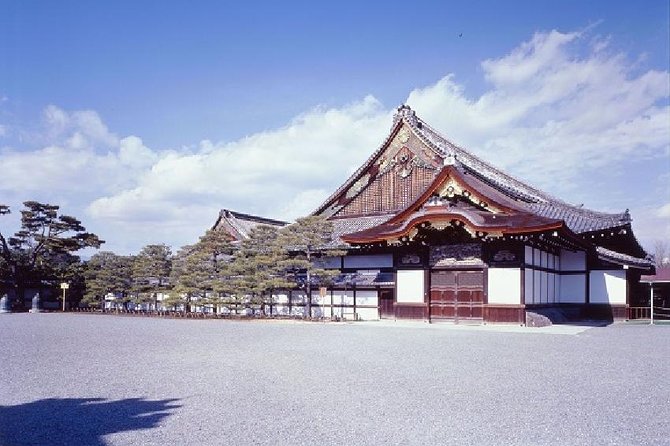
Nijo Castle is the “this is why rulers cared about design” stop. Built under Tokugawa Ieyasu’s orders in 1603, it gives you a glimpse into the Tokugawa shogunate’s world. The castle complex includes multiple connected structures made with cypress wood, plus formal rooms and outdoor garden areas.
What makes it worth your time is how much attention is paid to craft. The interiors in places like the Ninomaru Palace are known for elaborate decor and carvings. If you like details—woodwork, patterns, the overall structure—this stop can reward you even in a brief visit.
Practical consideration: the castle experience is very “inside-outside.” You’ll want comfortable shoes. Also, double-check your date—Nijo Castle is closed on Tuesdays during certain months, and it also closes from Dec. 26 to Jan. 3. If it’s closed on your day, the tour visits Ryoan-ji Temple instead. That swap keeps the morning moving, but it does change the feel.
Stop Two: Kinkakuji Golden Pavilion, Ponds, and the One-Way Flow
Kinkakuji is the postcard Kyoto stop for a reason. The Golden Pavilion is covered in thin layers of pure gold, and the temple sits beside a pond that mirrors the scene when conditions are right. Even if you’ve seen it online a hundred times, it lands differently in person—partly because of the setting and partly because it’s so visually concentrated.
This is also where you’ll feel the reality of popular Kyoto. Expect crowds, and expect a walking route that can feel structured. One-way flow is part of how the visit works, and there’s mention of uneven rocky steps in the path system. That means: go slow on the feet, not on your schedule.
Time here is limited, so I suggest you do this in two passes:
- First pass: get your bearings and see the pavilion from the main viewpoints.
- Second pass: spend a few extra minutes with the pond reflection area if the crowd thins.
If listening to your guide matters, this is also the stop where it can be hardest. One of the most repeated issues is that crowds and nearby groups can make audio feel messy. If you’re sensitive to that, bring your own small earphones and use them only if your setup lets you.
Stop Three: Kyoto Imperial Palace Architecture and What Happens When It’s Closed
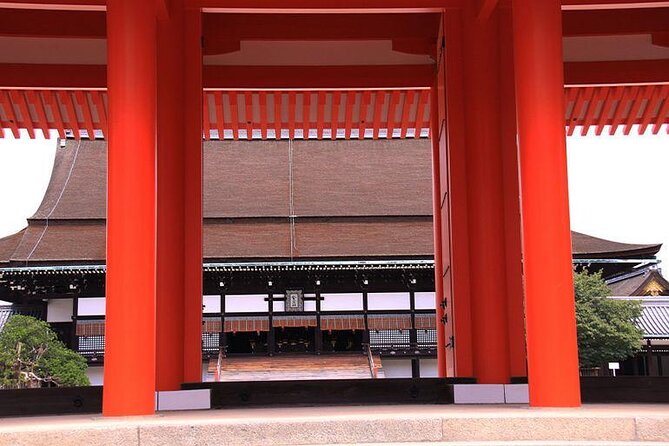
The Imperial Palace stop is all about ceremony and everyday imperial presence, even though the building you’re seeing isn’t the entire living machine of an empire. When it’s open, you’ll visit the area that served as the Emperor’s residence until Japan’s capital shifted to Tokyo in 1868. The building style is known for an elegant simplicity, and you can look for the spot tied to former enthronement ceremonies.
Two big practical points:
- Kyoto Imperial Palace is closed on Mondays (and sometimes the following day if Monday is a holiday).
- It can also close on days when there’s an Imperial Household Agency event.
If it’s closed on your day, the tour swaps in Kitano Tenmangu Shrine instead. And if the closed day falls on the 25th, you’ll visit Nishi Hongan-ji Temple.
This is the biggest “fit” test for you. If you booked primarily for the palace itself, you should treat closure info as essential, not fine print. One person called out that their main aim was the palace and they didn’t get to tour it, so you’ll want to confirm you’re going on an open day if that’s your top priority.






Timing and Pace: Why This Feels Fast (and How to Make It Better)
This tour is about covering three major sights in one morning. That naturally makes it fast-paced. Some stops feel like a quick walkthrough rather than a slow, sit-and-stare experience. That doesn’t make them bad. It just means you should adjust your expectations.
The bus helps. You’re moving between locations with ease, and the air-conditioning is a real comfort when Kyoto mornings turn hot. Still, you’ll be walking enough that your feet will notice it later—especially at Kinkakuji with its step-and-crowd reality.
Hearing the guide is another pacing factor. In a group tour, there are two problems: noise and distance. Some people note that it can be hard to hear if the group is larger or if the site is crowded with other tour groups speaking at the same time. Others mention the microphone/headset system may not always be used how you expect.
What you can do:
- Try to stay toward the front half of the group when you can.
- If you know you struggle with noisy audio, consider bringing earphones or using one ear to stay aware of directions.
- Take photos, then pause. Don’t rush your eyes faster than you can process what you’re seeing.
Price and Value: What $87.19 Really Covers
At $87.19 per person, you’re paying for convenience plus guided context. The tour includes:
- a national government licensed English guide interpreter fee
- admission fees and transportation between sites
Not included:
- food and drinks
- hotel pickup and drop-off
Here’s the value angle. Kyoto is expensive in time. Waiting for transit, buying multiple tickets, and figuring out how to get from one highlight to another can eat your morning. This tour buys you a plan, the right order, and between-stop transport in an air-conditioned vehicle.
The value drops slightly if your day’s main attraction is swapped due to closures. That’s not a scam—closure rules are part of Kyoto tourism—but it’s still the key variable. If you care most about one building (especially the Imperial Palace), your best move is to sanity-check opening days before you lock it in.
Who This Tour Suits Best (And Who Should Skip It)
This is a strong match if:
- you’re short on time and want a quick Kyoto overview
- you like structure and want someone else to handle routing
- you enjoy seeing iconic sights with history tied in, not just pictures taken
It’s less ideal if:
- you hate a tight schedule and want hours at one site
- you are physically sensitive to walking steps and crowd flow
- your goal is a single closed-on-your-day building
Families can work well too. The tour mentions a max of 40 travelers and that children up to 5 can join free, but bus seats aren’t provided for them unless you book the child rate. If you’re traveling with kids, the short duration can be a plus.
Also, keep in mind you’ll be dropped off at Kyoto Station, not returned to Osaka. You’ll want your onward plan ready.
Should You Book This Kyoto Morning Tour?
Book it if you want a high-yield morning and you’re fine with a morning that feels efficient. The combination of Nijo Castle + Kinkakuji + the Imperial Palace area gives you three big Kyoto “themes” in one run, and the included transportation and admissions make it easy to justify.
Hold off or book with extra care if the Imperial Palace is your top must-see. Closure swaps are part of the deal, and one of the most frustrating outcomes is spending money expecting the palace tour and ending up at a substitute site instead. If your dates are flexible, aligning your visit with palace opening days is the difference between “great tour” and “wrong day.”
If you’re unsure, treat this as a smart way to get oriented. You’ll learn what to target later on your own. Kyoto rewards repeat visits—this just helps you choose where to put your feet next.
FAQ
Where do I meet for the Kyoto Morning Tour?
You meet at Kyoto Avanti, 31 Higashikujō Nishisannōchō, Minami Ward, Kyoto. The tour ends in front of Kyoto Avanti, across from Kyoto Station Hachijo Exit.
What time length should I plan for?
The tour runs about 4 hours 40 minutes.
Is the Imperial Palace included every day?
No. Kyoto Imperial Palace is closed to visitors on Mondays (or the following day if Monday is a holiday) and on days when there’s an Imperial Household Agency event. If it’s closed, the tour visits Kitano Tenmangu Shrine instead (and if the closed day falls on the 25th, it visits Nishi Hongan-ji Temple).
What if Nijo Castle is closed?
Nijo Castle is closed on Tuesdays in January, July, August, and December, and from Dec. 26 to Jan. 3. If it’s closed, the tour visits Ryoan-ji Temple instead.
Are entrance fees included in the price?
Yes. Admission fees are included, and transportation between sites is also included. (Kyoto Imperial Palace is listed as admission free when it’s part of the tour.)
Is food included?
No. Food and drinks are not included, so you’ll want to eat on your own after the tour.
More Morning in Kyoto


More Tours in Kyoto
More Tour Reviews in Kyoto
Just added: more Kyoto tours to browse








Morning, compared.
 ★ 5.0Kyoto Early Morning Tour with English-Speaking GuideFrom $681,427 reviews
★ 4.9Early Morning Tour with English-Speaking GuideFrom $1011,128 reviews
★ 5.0Kyoto Early Morning Tour with English-Speaking GuideFrom $681,427 reviews
★ 4.9Early Morning Tour with English-Speaking GuideFrom $1011,128 reviews
 ★ 4.6From Kyoto: Nara Guided Morning TourFrom $77335 reviews
 ★ 5.0Morning Japanese Bento Cooking ClassFrom $67149 reviews
 ★ 5.0Arashiyama Bamboo Forest Morning Tour by BikeFrom $103115 reviews
 ★ 5.0Traditional Japanese Washi Papermaking- Kyoto morningFrom $3377 reviews
 ★ 5.0Explore Hidden Alleyway with a Local Expert (Morning tour)From $10361 reviews
 ★ 4.9Early Morning Fushimi Inari Shrine – Beat the CrowdsFrom $7048 reviews