
Reviewed · ARASHIYAMA & BAMBOO GROVE TOURS
Kyoto: Descending Arashiyama (Private)
Arashiyama can feel like a maze. This private, small-group tour helps you flow from one iconic (and a few quieter) spots to the next without stopping to figure out what’s where.
I especially like two things: the off-the-main-path temple stops that add surprise, and the way the guide keeps the day moving at a human pace while still taking time to look closely. You’ll also get that rare mix of famous scenery plus places most people skip.
One consideration: this is a lot of walking and the route is spread across several temple grounds, so you’ll want moderate fitness and good shoes.
In This Review
- Key things to love about this Arashiyama private tour
- From Randen Arashiyama Station to Togetsukyo Bridge: the day starts with an easy win
- Tenryu-ji Temple: Zen garden time that explains what you’re looking at
- Otagi Nenbutsu-ji: 1,200 stone Buddhas you won’t forget
- Ayuchaya Hiranoya: the Edo-period tea break that keeps the day from dragging
- Pottery studio stop: craft time that turns sightseeing into learning
- Adashino Nembetsu-ji and Gio-ji: memorial stones, bamboo pockets, and moss gardens
- Okochi Sanso Garden and Sagano Bamboo Grove: views plus the famous trail
- How a guide changes Arashiyama (and saves your energy)
- Price and the real cash budget: what $690 covers (and what it doesn’t)
- Comfort, pace, and who this tour suits best
- FAQ
- FAQ
- What time does the Arashiyama tour start, and where does it meet?
- How long is the tour?
- Is this tour private?
- Are admission tickets included in the $690 price?
- What about lunch—do I need cash?
- Is the tour okay for strollers and for moderate walkers?
- Should you book this Kyoto: Descending Arashiyama private tour?
Key things to love about this Arashiyama private tour
- Small-group setup (max 7) that still feels personal, not like a conveyor belt
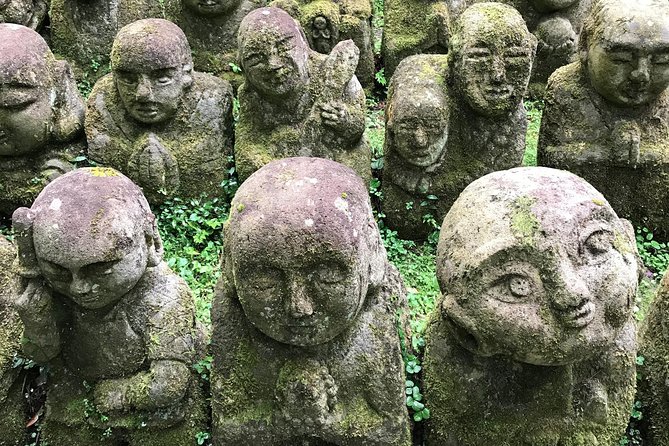
- 1,200 stone Buddhas at Otagi Nenbutsu-ji, a truly memorable Arashiyama experience
- Edo-period tea stop to reset your energy halfway through the day
- Adashino Nembetsu-ji memorial stones plus a bamboo pocket that’s quieter than the headline sites
- Okochi Sanso Garden views that earn their place in the route
- Sagano Bamboo Grove timing, with a trail segment that fits the schedule without dragging
From Randen Arashiyama Station to Togetsukyo Bridge: the day starts with an easy win
Meeting at Randen Arashiyama Station Center (20-2 Tsukurimichi-cho) is convenient and keeps the morning stress low. You start at 9:30am and the tour ends back at the same meeting point, which means you don’t have to worry about getting back across town after a long day.
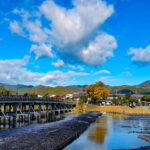
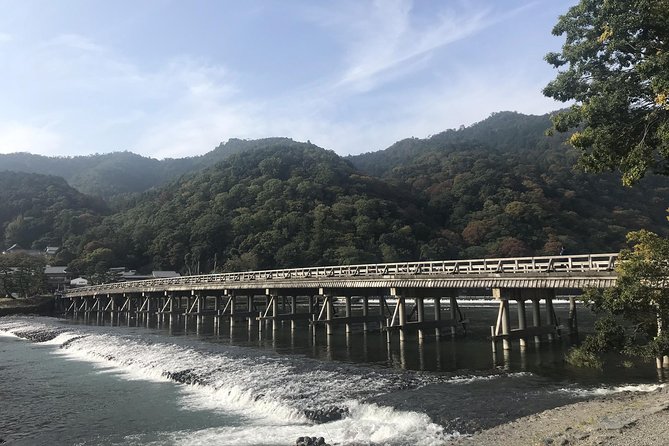
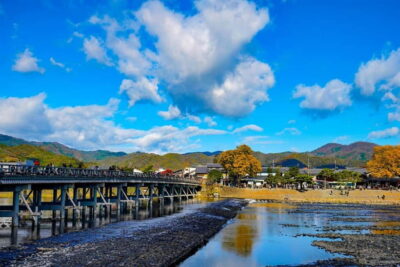
The first stop is Togetsukyo Bridge, one of Kyoto’s most recognizable Arashiyama images. Even if you’ve seen it in photos, seeing it early helps—morning light changes how the river and the surrounding greenery read. You’ll get a quick orientation, then your guide steers you onward so the rest of the day doesn’t turn into a sightseeing scavenger hunt.
Also, this tour is set up as a private experience for your group. That matters because Arashiyama is popular. Having a guide helps you spend your attention where it counts instead of fighting crowds just to navigate.
Deeper into Arashiyama, past the bamboo and the Hozu river

Tenryu-ji Temple: Zen garden time that explains what you’re looking at
Tenryu-ji Temple is a top-name Arashiyama stop for a reason. You’ll spend about an hour here, and admission isn’t included in the tour price (you’ll budget separately, more on that later).
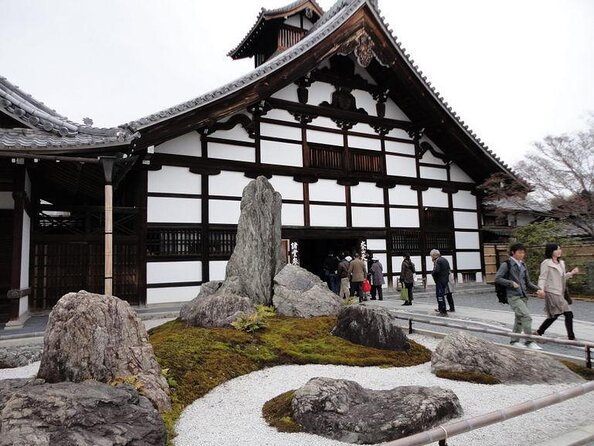
What makes it worth a guided visit is that the garden is built for observation. It’s not just a pretty background. A guide helps you notice the structure—where the eye is pulled, how the garden layout supports Zen-style calm, and why the place became an early Zen anchor in Japan. Even if you’re not a garden expert, you’ll come away with a clearer sense of how to look, not just what to photograph.
The small-group format helps, too. You can pause, step aside, and reset without the whole group hovering behind you.
Otagi Nenbutsu-ji: 1,200 stone Buddhas you won’t forget
The standout stop for most people is Otagi Nenbutsu-ji Temple. Plan on about an hour walking the grounds, and this is where Arashiyama stops being only scenic and turns into genuinely strange—in the best way.
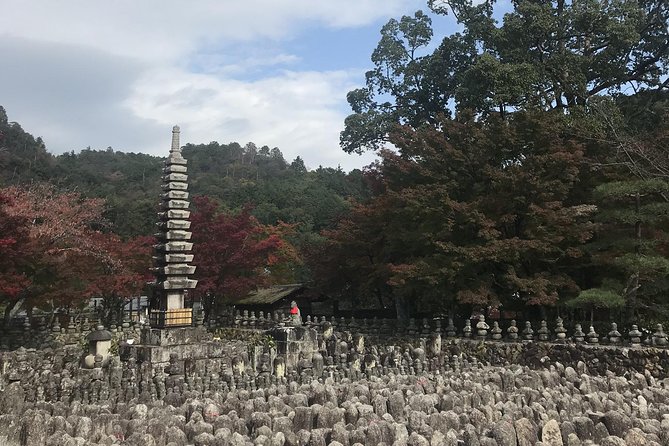
This temple is famous for its 1,200 stone Buddha statues. Your guide will point out details you might miss if you were simply following signs. The statues are grouped across the grounds, and the repetition makes it feel like a living story told in stone rather than a single monument you glance at and move on.
Practical note: walking temple grounds can be a little uneven. If you’re traveling with anyone who has trouble with steps or slick surfaces, this is the segment where you’ll want to move slowly.
Ayuchaya Hiranoya: the Edo-period tea break that keeps the day from dragging
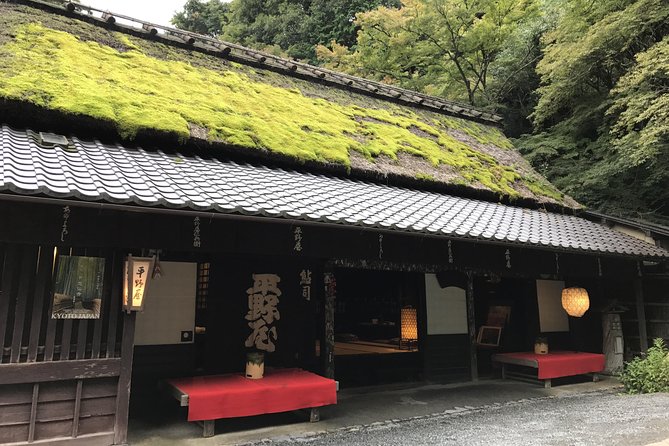
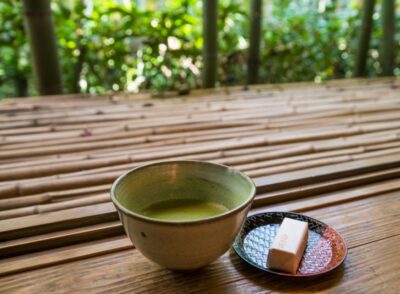
After temples, you’ll hit Ayuchaya Hiranoya, where you enjoy tea and sweets at an Edo-period café. It’s about an hour, and admission isn’t included (this is part of the “bring a cash budget” reality of the day).
This stop does two jobs. First, it gives you a comfortable break without breaking the rhythm of the route. Second, it lets you step into a slightly different side of Arashiyama beyond gardens and stone. When you’re walking for hours, a real pause matters. It’s the difference between “I saw a lot” and “I absorbed a lot.”
If you’re sensitive to heat or crowds, the café time can be a lifesaver.
Pottery studio stop: craft time that turns sightseeing into learning
Arashiyama isn’t only bamboo and temples. The tour also includes time for a pottery studio stop, which adds a hands-on, local-craft angle.
You’re not there just to buy souvenirs. The point is to watch how craft fits into daily life and why certain techniques matter. Even a short visit can change how you see the region—suddenly Arashiyama feels less like a theme park and more like a place with makers and traditions.
If you’re the type who usually skips “workshops,” this one can still be worth it because it’s placed inside a full day of walking. It gives your eyes and brain a different kind of focus for a while.
Other Kyoto tours and experiences to compare

Adashino Nembetsu-ji and Gio-ji: memorial stones, bamboo pockets, and moss gardens
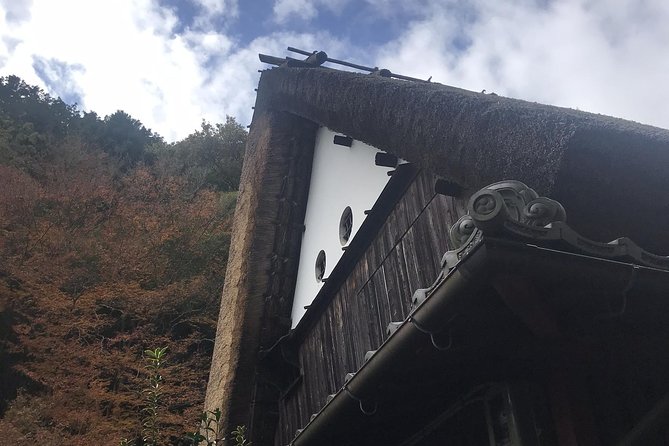
Next comes Adashino Nembetsu-ji Temple, where you’ll see over 8,000 memorial stones gathered from surrounding mountains and placed together. Expect about one hour here. This isn’t a temple designed for spectacle. It’s more quiet, more contemplative, and it can hit emotionally if you let it.
You’ll also walk through a small bamboo grove inside/near the site. It’s a nice contrast: less famous than Sagano Bamboo Grove, but very atmospheric in its own way. The guide helps you connect the space to what it represents rather than treating it like another photo stop.
Then you’ll go to Gio-ji Temple (about 30 minutes). This was once a nunnery founded by two ex-geisha, and that detail gives the place extra character. You’ll walk through the moss garden surrounded by bamboo, where the textures and shades feel soothing rather than showy.
This part of the tour is one reason the day doesn’t feel too touristy. It’s not trying to win on crowd size. It wins on mood.
Okochi Sanso Garden and Sagano Bamboo Grove: views plus the famous trail
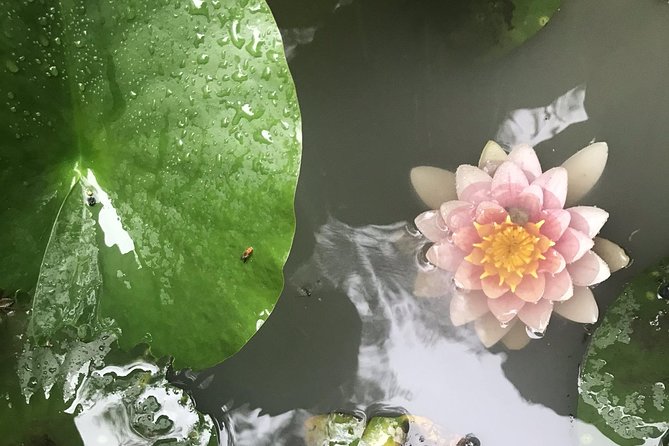
No Arashiyama day is complete without bamboo, but this tour tries to do it thoughtfully. Okochi Sanso Garden takes about one hour, and it’s the kind of estate stop that makes people understand why Arashiyama became a destination.
The views here are noted as among the best in Arashiyama, and you’ll have enough time to slow down and really look. If you like gardens, this is a strong “payoff” segment. If you’re more about scenery, it still delivers because the viewpoint makes sense: you see why this area pulls people back again and again.
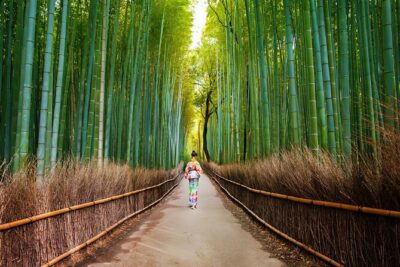
After that, you’ll head to the Bamboo Forest Trail as a segment through Sagano Bamboo Grove (about 30 minutes). This is the famous one, so you can expect it to be popular. The advantage of having a schedule is you’re less likely to spend your whole day just standing still in lines or drifting aimlessly from one crowd to another.
The guide’s job isn’t to magically erase crowds. It’s to help you get in, get your bearings fast, and enjoy the bamboo for what it is: tall, quiet, and strangely calming when you’re not rushing.
How a guide changes Arashiyama (and saves your energy)
Arashiyama can eat time. The area is spread out, signs can be confusing, and the biggest sites are never the only sites worth seeing. A guide fixes that.
I like the way this tour is set up for navigation and pacing. With a guide, you’re not stopping to read every junction. You’re walking with context. That’s huge in Kyoto, where the difference between a “random temple” and a “place with meaning” often comes down to a few key details.
The best part is the guide approach—especially how Andrew works the gardens and storytelling into the walk. Instead of only listing facts, he connects what you’re seeing to how the gardens are shaped and why they feel the way they do. It makes the day feel less like checking boxes and more like understanding the logic of the place.
Small group size matters, too. With a maximum of 7 travelers, it’s easier to pause for photos, step aside for views, and keep moving without feeling herded.
Price and the real cash budget: what $690 covers (and what it doesn’t)
The tour is $690 per group (up to 4). That’s for a private setup, and it can be good value if you’re traveling as a small family or a pair of couples. Split four ways and the cost drops sharply per person. Even split two ways, you’re paying for a guide-driven day rather than just access to attractions.
Here’s what you need to plan for:
- Professional guide service is included.
- You must bring an additional 5,000 yen in cash per guest for admission tickets.
- Lunch is not included, and lunch cost should not exceed 1,500 yen per guest.
That cash detail is important. Many Kyoto visitors show up expecting everything to be prepaid. This tour requires cash for entries, so I’d build that into your money plan before you head out.
Also, each stop has its own admission situation—so don’t assume all temple gates are bundled. The tour structure is built around guided timing, and you’re expected to cover entry fees directly.
Comfort, pace, and who this tour suits best
This is a 7-hour 30-minute day, and the route includes multiple temple grounds plus walking between stops. The physical requirement is listed as moderate, which usually means you should be comfortable on uneven paths and short stretches of stairs or slopes.
Strollers are available for use during the walk from site to site, but you can’t bring them into the sites themselves. You can store them at the reception desk of each site. If you’re traveling with very young kids, plan on small adjustments rather than expecting a frictionless day.
If your ideal Kyoto day is focused—temples, gardens, and nature without spending hours planning directions—this fits well. If you want a super-fast “hit every landmark” day with no time to look, you might find this a bit slower. But if you prefer a calmer Arashiyama experience with guidance, it’s a strong match.
FAQ
FAQ
What time does the Arashiyama tour start, and where does it meet?
It starts at 9:30am at Randen Arashiyama Station Center (20-2 Tsukurimichi-cho, 嵯峨天龍寺芒ノ馬場町 右京区 京都市 京都府 616-8384, Japan). The tour ends back at the same meeting point.
How long is the tour?
The duration is approximately 7 hours 30 minutes.
Is this tour private?
Yes. This is a private tour/activity, and only your group participates. The tour is priced for up to 4 people per group, and it also notes a maximum of 7 travelers for the small-group format.
Are admission tickets included in the $690 price?
No. Each guest must bring 5,000 yen cash for admission tickets. Admission for individual stops is listed as not included.
What about lunch—do I need cash?
Lunch is not included. The guidance is that lunch cost should not exceed 1,500 yen per guest.
Is the tour okay for strollers and for moderate walkers?
Strollers will be available as you walk between sites, but they are not allowed inside the sites; you store them at each site’s reception desk. The tour is described as suitable for moderate physical fitness.
Should you book this Kyoto: Descending Arashiyama private tour?
I’d book it if you want an Arashiyama day that feels more thoughtful than trendy. You get the famous scenery, but the route also includes memorial-stone depth, bamboo in quieter pockets, and an Edo-period café break that keeps you from burning out. The guide-driven navigation is the real value: you spend less time figuring out where to go and more time enjoying what’s in front of you.
I’d skip it if you’re aiming for a minimalist day with minimal walking, or if you hate handling cash for entry fees. For most people who want a guided, not-too-touristy Arashiyama experience, this is a strong choice.
More Private in Kyoto

More Tour Reviews in Kyoto



More of Arashiyama and Sagano

Just added: more Kyoto tours to browse








Arashiyama & Bamboo Grove Tours, compared.
 ★ 4.8Fushimi Inari, Kinkakuji, Bamboo Grove 1 Day Bus TourFrom $1224,316 reviews
 ★ 4.1Osaka/Kyoto:Kinkakuji,Arashiyama,FushimiInariShrine,NaraParkFrom $661,596 reviews
 ★ 4.7Kyoto/Osaka: Nara, Fushimi Inari Taisha, Arashiyama Bus TourFrom $521,275 reviews
 ★ 5.0Kyoto Arashiyama Walking Tour: Bamboo, Monkeys, Gardens & SecretsFrom $651,216 reviews
 ★ 4.8Arashiyama Bamboo, Temple, Monkeys, or Secret Sake BreweryFrom $87886 reviews
 ★ 5.0Arashiyama Bamboo Forest, Monkeys, Matcha & Temple TourFrom $53759 reviews
 ★ 4.4Osaka/Kyoto: Arashiyama, Nara & Fushimi Inari Shrine w/LunchFrom $61754 reviews
 ★ 5.0Nijo, Kinkaku-ji, Arashiyama, Kiyomizu & Fushimi InariFrom $51699 reviews
Browse the lists this tour appears in