
Reviewed · FUSHIMI INARI SHRINE TOURS
Kyoto/Osaka: Nara, Fushimi Inari Taisha, Arashiyama Bus Tour
Torii gates and bamboo in one long day. What makes this trip fun is the way it strings together three of the most iconic Kyoto-area experiences—Nara deer feeding, Fushimi Inari’s torii tunnel, and Arashiyama’s calm bamboo—without you having to plan every connection on your own.
I like that the day feels structured but not stiff. Your guide keeps the group together, but you still get real time to wander, snack, and take photos.
One catch: the schedule is full, so you may feel a bit of time pressure at the busier stops.
In This Review
- Key Things I’d Highlight Before You Go
- Why This Day Tour Works (Even If You’re Short on Time)
- The Route: What the Day Feels Like From Stop to Stop
- Nara Park and the Deer That Ignore Your Personal Space
- Fushimi Inari Taisha: Torii Gates and Quiet Sweat
- Arashiyama Free Time: A Big Area With Good Timing
- Bamboo Forest: Zen Calm in a Crowd-Managed Window
- Nonomiya Shrine: Love and Academic Blessings, With a Rare Gate
- Tenryu-ji Temple (Extra Fee): UNESCO Grounds With Garden Views
- Togetsukyo Bridge: Classic Arashiyama Views
- Kimono Forest: Fast, Colorful Photos Without the Big Waiting
- Arashiyama Station Foot Bath: The Best Kinda Reset
- Price and What You’re Actually Paying For
- What to Bring (So the Day Doesn’t Beat You)
- The Group Experience and Why Guide Style Matters
- Who This Tour Suits Best (And Who Should Skip It)
- Should You Book This Kyoto/Nara/Arashiyama Tour?
- FAQ
- FAQ
- How long is the Kyoto/Osaka Nara and Arashiyama bus tour?
- What is included in the tour price?
- Is food included?
- What stops are included during the day?
- Is Tenryu-ji Temple included or is there an extra cost?
- Where do I meet the tour?
- Is this tour suitable for wheelchair users or limited mobility?
Key Things I’d Highlight Before You Go
- Nara Park deer time with shika senbei: close-up, silly, and very Japanese-cute.
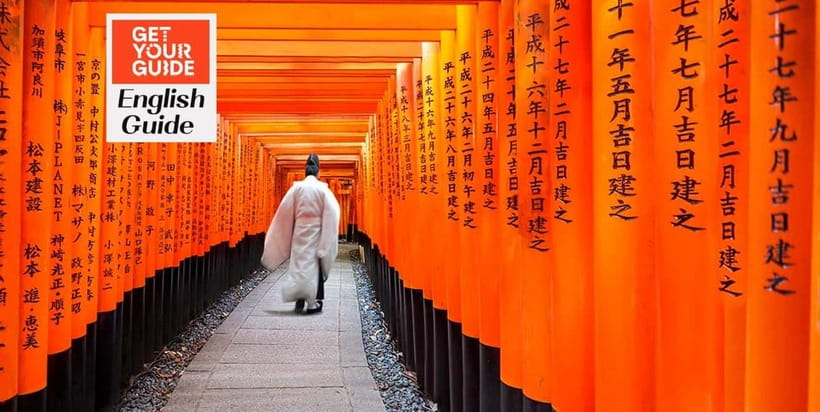
- Fushimi Inari’s long torii walk: 10,000+ gates and a steady climb that changes the mood as you go.
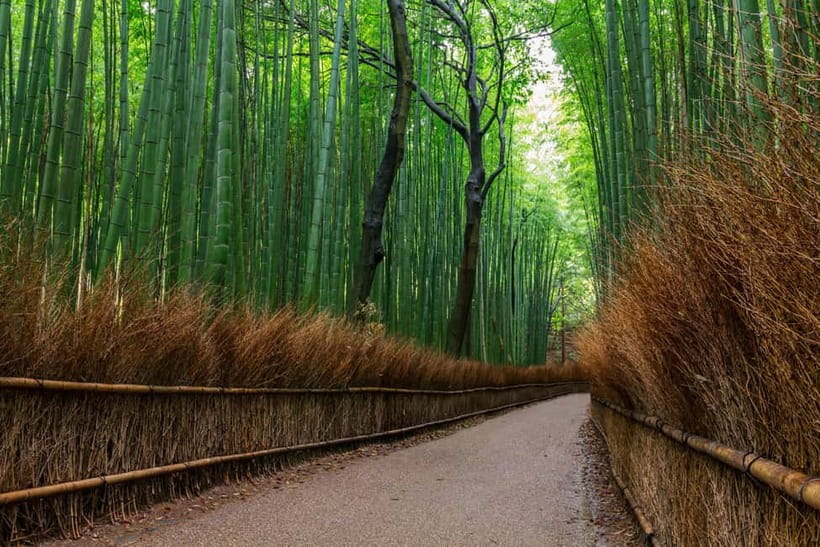
- Arashiyama bamboo forest walking: quick enough to fit the day, quiet enough to feel like a reset.
- Nonomiya Shrine for love and academics: a smaller stop that adds variety to the big sights.
- Kimono Forest photo stop: 600 patterned pillars for easy, colorful shots without hunting too long.
- Tenryu-ji Temple is extra: it’s worth knowing up front so you can decide in advance.
Why This Day Tour Works (Even If You’re Short on Time)
If this is your first trip to Osaka or Kyoto, you’re probably trying to do two things at once: see the classics and avoid the travel friction. This tour does both. You’re covered by an English-speaking guide with an air-conditioned vehicle, and you get a clear route that connects Nara, Fushimi Inari, and Arashiyama in one day.
The biggest value isn’t just convenience. It’s time. Instead of figuring out trains, transfers, and the “wrong turn that costs you 20 minutes,” you show up, meet the group, and start sightseeing fast. For a day that runs 9–10 hours, that matters.
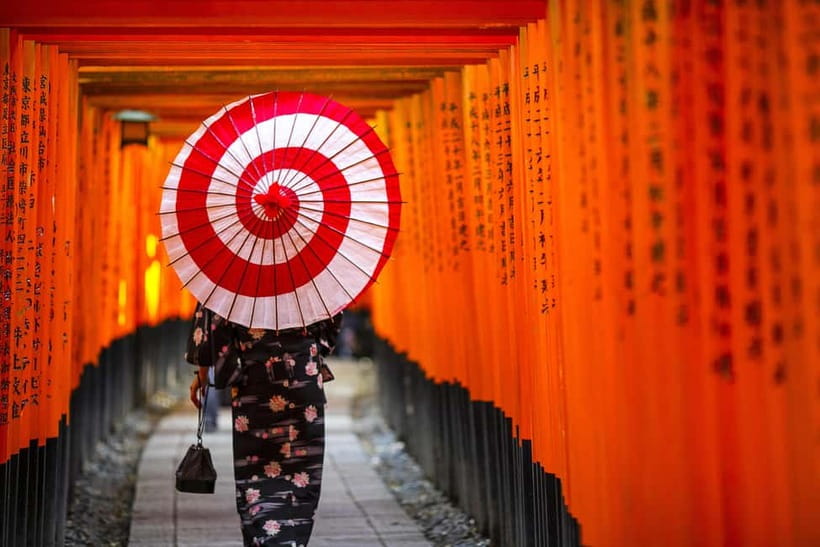
More walks up through the vermilion torii of Fushimi Inari

The Route: What the Day Feels Like From Stop to Stop
This trip runs in a tight loop. It starts in the morning from either Osaka or Kyoto (departure times are listed as 8:00 AM from Osaka and 9:00 AM from Kyoto). You’ll also be asked to choose your drop-off as Osaka or Kyoto at booking.
Here’s how each stop plays in real life.
Nara Park and the Deer That Ignore Your Personal Space
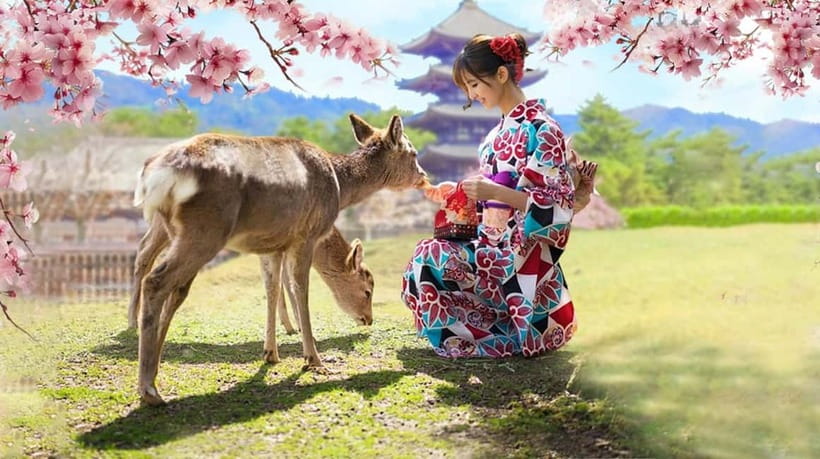
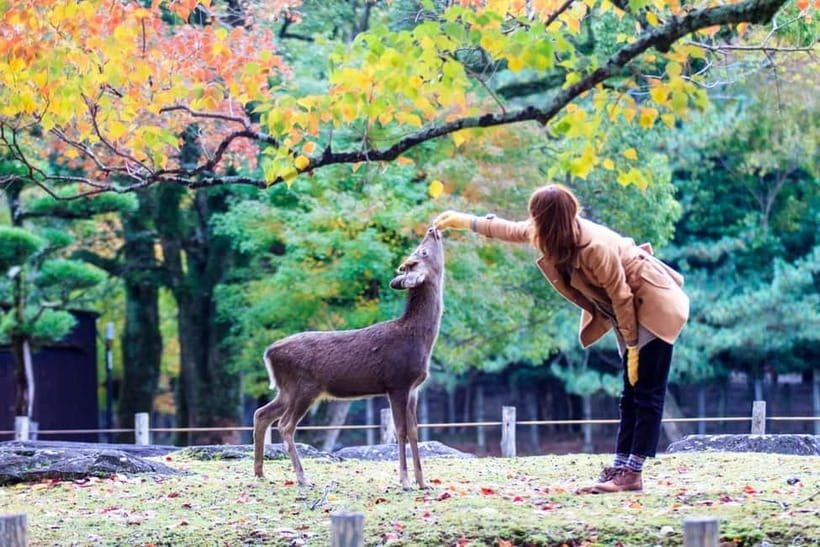
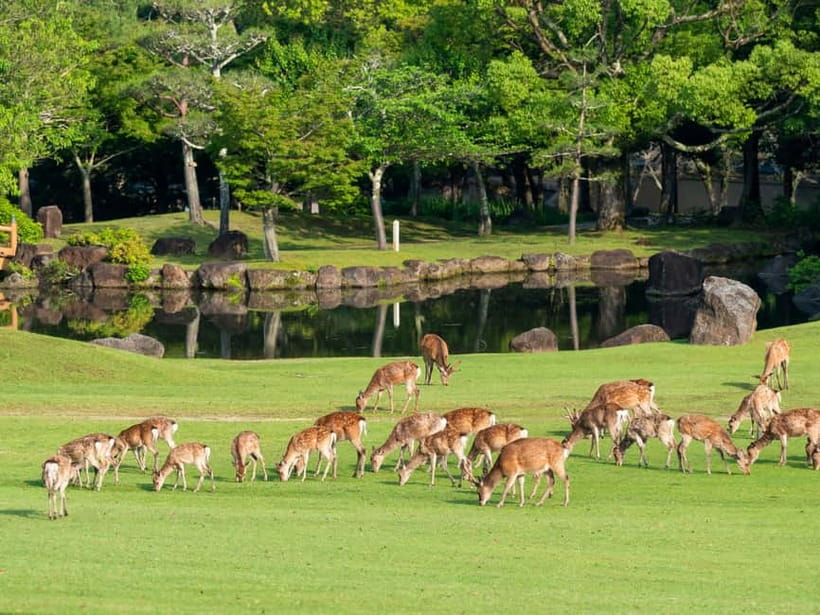
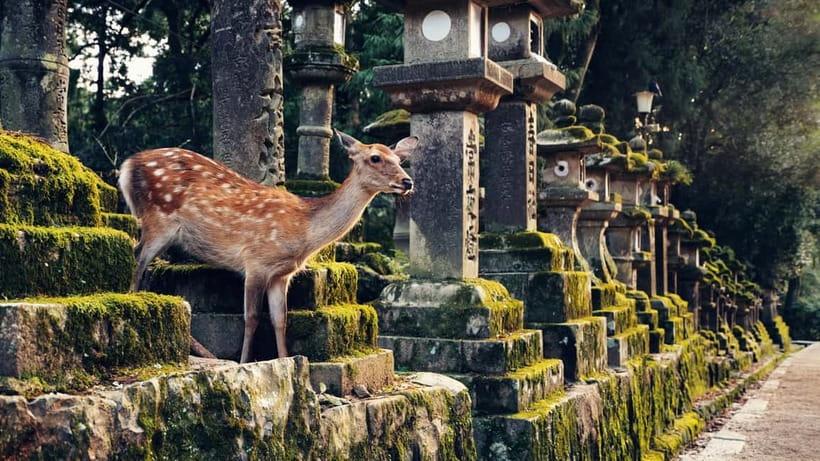
You’ll reach Nara Park for about 1 hour. Over 1,000 deer roam freely here, and they’re treated like revered messengers. The fun part is that you don’t just watch from a distance—you get to interact (carefully) with the deer using shika senbei, the deer crackers.
This is one of those experiences that’s simple on paper and surprisingly memorable in person. The deer are gentle, but they’re also quick. You’ll want to keep the crackers ready, stay calm, and remember you’re sharing space, not feeding pets in your backyard.
Practical tips:
- Wear comfortable shoes. The ground can be uneven and busy.
- If you’re holding crackers, keep your other hand free for balance and photos.
- Bring water for later. Nara walking adds up.
Fushimi Inari Taisha: Torii Gates and Quiet Sweat
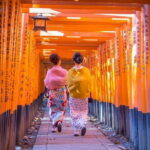
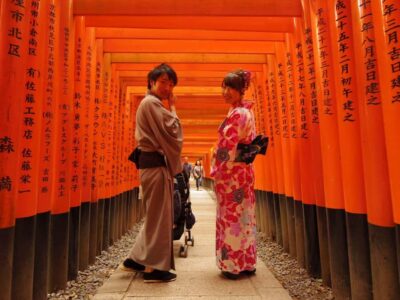
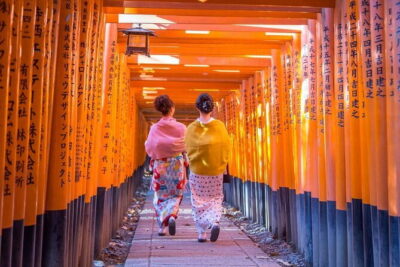
Next comes Fushimi Inari Taisha for about 70 minutes. This is the torii-gate experience—vermilion gates stretching up the hillside, with 10,000+ gates in the overall complex.
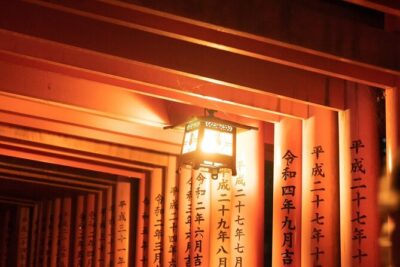
What I love about this stop is the change in atmosphere. At street level, it’s crowd energy. Move deeper into the gate tunnel and the mood turns slower and more spiritual, even if you’re just walking at an easy pace.
Also, this shrine has a pop-culture footprint. It’s noted as an inspiration for films like Memoirs of a Geisha and Detective Conan. That matters because you’ll recognize the look even before you get there.
One consideration: this is a walking-heavy segment. You’ll want shoes that can handle slopes and constant stop-and-go. Ten minutes here feels different than ten minutes elsewhere.
Arashiyama Free Time: A Big Area With Good Timing
After Fushimi Inari, you’ll head to Arashiyama with about 1.5 hours of time where you can self-guide a bit through the area.
Arashiyama is famous for scenery, but what makes it a great tour stop is flexibility. You can choose what matches your mood that day:
- the quiet walk approach (bamboo and shrines),
- the photo-and-stroll vibe (bridge views and art installations),
- or food and browsing (local street snacks and small restaurants).
This is also where you can squeeze in a few extra moments if you’re feeling it. The tour info highlights things like a Kimono Forest photo stop and mentions Arashiyama’s options to explore, including the Rilakkuma Tea House. That’s not mandatory, but it’s a fun detour if you have energy.
Deeper into Arashiyama, past the bamboo and the Hozu river
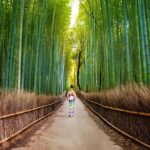

Bamboo Forest: Zen Calm in a Crowd-Managed Window
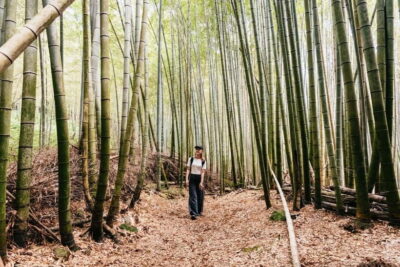
Your tour then includes a focused bamboo forest stop (about 15 minutes). It’s short, but it’s long enough to feel the effect: tall stalks, filtered light, and that whispery stillness people chase in Kyoto.
Real talk: bamboo forests get busy. A tour slot helps because you’re not losing time trying to time the perfect moment. You’re being guided toward a workable window, then you’re moved on before fatigue sets in.
If you want a calmer experience, arrive ready to walk slowly. Look up. The light changes as you shift positions.
Nonomiya Shrine: Love and Academic Blessings, With a Rare Gate
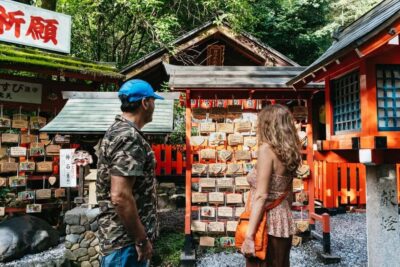
Next is Nonomiya Shrine (about 15 minutes). It’s known for love and academic blessings, and it includes a Kuroki Torii, described as an unpainted gate, located within the bamboo area.
This stop matters because it adds variety. You’re not stuck with only big-name landmarks. You’re getting a smaller shrine moment that still feels special—quiet, photogenic, and easy to understand in the context of the day’s theme: spirituality, fortune, and personal hopes.
Tenryu-ji Temple (Extra Fee): UNESCO Grounds With Garden Views
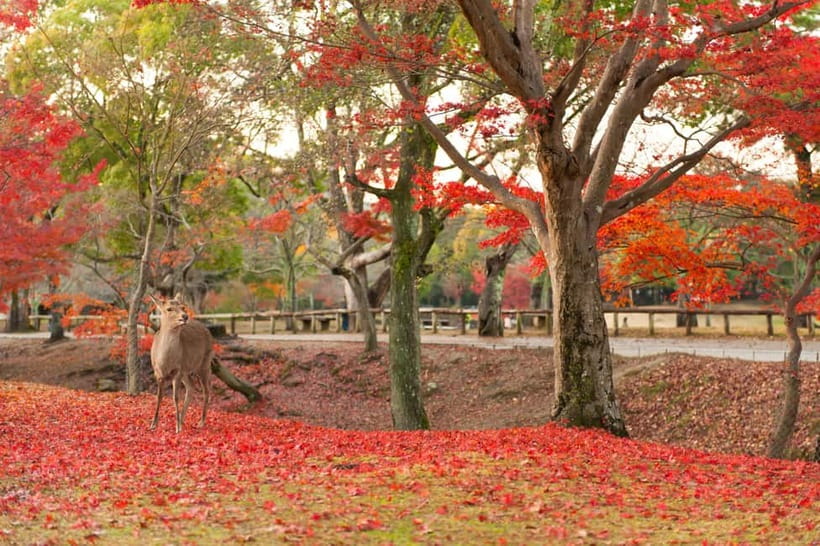
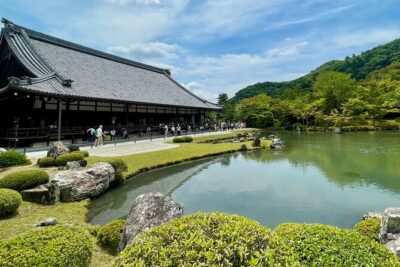
You’ll have Tenryu-ji Temple as a self-guided visit, and it’s called out as an extra fee. It’s also a UNESCO World Heritage site, noted for the Sogenchi Garden, which uses borrowed scenery and is especially highlighted in autumn hues.
Since you’re self-guided, you’ll get the benefit of spending your time in the way that fits you. If you like gardens and temple architecture, this can be your “slow down” stop. If you’re photo-first, you’ll still get plenty of visual payoff.
The only caution: because it’s extra and self-guided, decide quickly in your head whether you’ll do it fully or just do a highlight route.
Togetsukyo Bridge: Classic Arashiyama Views
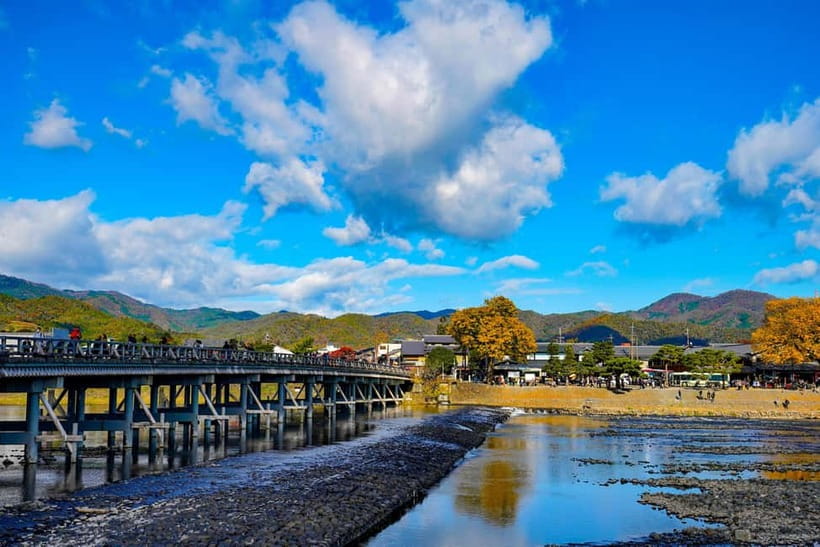
You’ll spend about 15 minutes at Togetsukyo Bridge. This is where you get sweeping views of Arashiyama. It’s also described as a nostalgic-looking spot, with passing rickshaws in the mix.
Even if you don’t care about rickshaws, the bridge gives you a clean “big picture” moment after all the walking paths and shrine gates.
Kimono Forest: Fast, Colorful Photos Without the Big Waiting
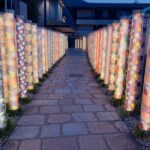
Then there’s Kimono Forest, about 15 minutes. This one is almost made for a tour day: it’s structured, photogenic, and quick. You’ll see 600 pillars decorated with Kyo-Yuzen textile patterns, and it’s treated as a perfect photo stop in the provided info.
This is also a good spot to regroup. If your feet are getting loud, this is a light, fun pause before the final Arashiyama moments.
Arashiyama Station Foot Bath: The Best Kinda Reset
To wrap up the Arashiyama section, you get time at the Arashiyama Station foot bath. The idea is simple: soak your feet, cool down, and let your body catch up with your photos.
Even if you don’t use it, the timing is smart. You’ll be returning toward your drop-off after a long day, so building in a recovery moment helps.
Price and What You’re Actually Paying For
The listed price is $52 per person for a 9–10 hour day with:
- an English-speaking tour guide (English, and also Chinese is listed),
- an air-conditioned vehicle,
- and all taxes, parking fees, gas fees, and handling charges.
Food isn’t included, and Tenryu-ji Temple is extra—so plan for that. But the main thing you’re buying is fewer hassles and a guided flow through places that are popular enough to be stressful on your own.
Is it worth it? For most first-timers, yes. You get three headline days’ worth of sights packed into one, and you’re not wrestling with transit times. If you already know Kyoto well and love to move on your own schedule, the main downside is that your time at each stop is fixed by the group plan.
What to Bring (So the Day Doesn’t Beat You)
The tour info is clear on essentials. I’d follow it:
- Comfortable shoes (you’ll walk)
- Umbrella (weather changes fast)
- Water
- Comfortable clothes
Also note the rule: no smoking. Not a surprise in Japan, but still good to remember.
The Group Experience and Why Guide Style Matters
This trip is packed, so the guide’s job is partly logistics and partly mood-setting. The reviews attached to this operator show a recurring pattern: guides like Willa, Christine, Amy (Happy Bunny), Fiona, Laura, Frederick, Tracy, and others are praised for keeping departures smooth and making the day feel organized without killing the fun.
You’ll feel that most at transitions:
- when the group is rounded up on time,
- when you’re told what to do at each stop,
- and when you’re given clear expectations so you don’t wander off and lose the bus.
In other words, you’re not just seeing places. You’re getting “how to do this day” in a way that saves stress.
Who This Tour Suits Best (And Who Should Skip It)
This tour fits best if you:
- want classic Kyoto and Nara highlights in one day,
- prefer a guide to handle timing and routing,
- don’t mind a full schedule.
It’s not suitable for people with mobility impairments or wheelchair users, so if accessibility is a factor, you’ll want a different format.
If you’re the type who hates group movement and wants long, slow stays, this may feel too structured. The stops are meaningful, but none of them are “all day.”
Should You Book This Kyoto/Nara/Arashiyama Tour?
I’d book it if you want a smart first-day itinerary with minimum planning and you’re okay with walking and fixed time windows. The combination of deer at Nara, Fushimi Inari’s torii climb, and Arashiyama’s bamboo + temple + bridge moments hits the sweet spot for most people who only have one day.
I wouldn’t book it if you know you’ll want to linger for hours at just one place. This is a “cover the territory” tour, not a “stay until your legs stop complaining” tour.
FAQ
FAQ
How long is the Kyoto/Osaka Nara and Arashiyama bus tour?
It runs about 9 to 10 hours.
What is included in the tour price?
You get an English-speaking tour guide and an air-conditioned vehicle, plus all taxes, parking fees, gas fees, and handling charges.
Is food included?
No. Food and beverage are not included.
What stops are included during the day?
The tour includes Nara Park, Fushimi Inari Taisha, and Arashiyama highlights such as the bamboo forest, Nonomiya Shrine, Tenryu-ji Temple (self-guided), Togetsukyo Bridge, and Kimono Forest, plus time at the Arashiyama Station foot bath.
Is Tenryu-ji Temple included or is there an extra cost?
Tenryu-ji Temple is noted as an extra fee.
Where do I meet the tour?
Meeting points can vary depending on the option you book, including Harimaya Nippombashi 1-chome and Kyoto Station Hachijo Entrance Square Sunken Garden.
Is this tour suitable for wheelchair users or limited mobility?
No. It is listed as not suitable for mobility impairments or wheelchair users.
More Kyoto Sightseeing Loops

More of Arashiyama and Sagano
Fushimi Inari, a Few More Ways
Just added: more Kyoto tours to browse





Fushimi Inari Shrine Tours, compared.
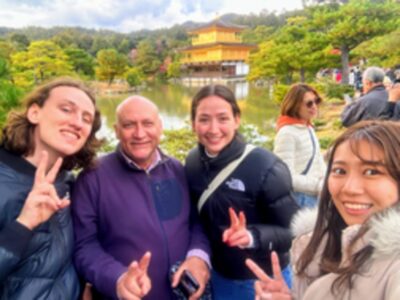 ★ 4.8Fushimi Inari, Kinkakuji, Bamboo Grove 1 Day Bus TourFrom $1224,316 reviews
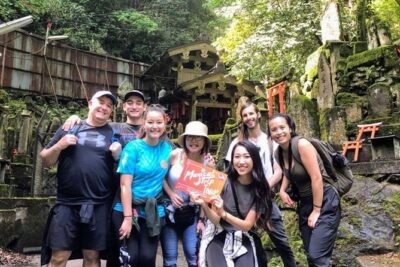 ★ 5.0Fushimi Inari Hidden Hiking Tour (Private Option Available)From $631,750 reviews
 ★ 4.4Osaka/Kyoto: Arashiyama, Nara & Fushimi Inari Shrine w/LunchFrom $61754 reviews
 ★ 4.7Nijo Castle, Kiyomizu & Fushimi Inari Guided TourFrom $54700 reviews
 ★ 5.0Nijo, Kinkaku-ji, Arashiyama, Kiyomizu & Fushimi InariFrom $51699 reviews
 ★ 5.0Kyoto Fushimi-Inari Night Walking TourFrom $43320 reviews
 ★ 4.93-Hour Fushimi Inari Shrine Hidden Hiking TourFrom $72270 reviews
 ★ 5.0Kyoto Early Bird English Tour: Fushimi-Inari and ArashiyamaFrom $96198 reviews
Browse the lists this tour appears in