
Reviewed · KYOTO CRAFT & CALLIGRAPHY WORKSHOPS
Japanese Calligraphy – Shodo – Lesson (near Kyoto Station)
Shodo makes Kyoto feel personal. This hands-on Japanese calligraphy lesson near Kyoto Station turns learning into something you can hold, with a small group and a real instructor guiding your brushwork from ink to finished characters.
I like two things a lot: the small group size (you get the kind of attention you usually miss in bigger classes), and the fact that you take home what you make—including a set of Kanji characters you practice and your name written in Kanji with staff help. It’s also family-friendly, so you’re not stuck in a rigid adult-only workshop.
The one catch to plan for is location: it can be a little tricky to spot at first near the MK Taxi stand by Hachijo Exit. Once you know where to look, it’s easy—but you’ll want to arrive a few minutes early.
In This Review
- Key things to know before you go
- Why this shodo lesson near Kyoto Station is such a smart one-hour stop
- Finding the MK Taxi VIP Station meeting point by Hachijo Exit
- The brush-and-ink briefing that makes your strokes look intentional
- Writing the starter Kanji characters (and why that sequence helps)
- Your name in Kanji: meaning support, staff help, and a real keepsake
- What you actually take home (not just a certificate)
- Family-friendly shodo: calm guidance for kids and adults
- Price and value: what $50.40 really covers in Kyoto
- Instructor support and how confident you’ll feel by the end
- Who should book this shodo lesson—and who might skip it
- Should you book Japanese calligraphy with Kyoto MK?
- FAQ
- How long is the Japanese calligraphy (shodo) lesson?
- Is the group size small?
- What’s included in the price?
- What will I write during the class?
- Where do I meet the instructor?
- Can I cancel for a refund?
Key things to know before you go
- Near Kyoto Station (Hachijo Exit area): great if you want something cultural without losing half a day to transfers.
- Max 10 people: the class stays hands-on, with real feedback while you’re writing.
- All materials provided: brushes, ink, and washi paper are included, so you travel lighter.
- Beginner-friendly Kanji practice: you start with simple characters, then move to writing your own name.
- You leave with souvenirs: your finished calligraphy becomes a take-home memory, not just a photo.
- English support: the instruction is described as engaging and easy to follow, including for non-Japanese speakers.
Why this shodo lesson near Kyoto Station is such a smart one-hour stop
One hour is exactly the sweet spot for a first try at calligraphy. You get enough time to learn the basics of brush use and ink application, but the pace doesn’t drag. For many people, it also feels like a friendly break from constant temple and market walking.
The location matters too. Being near Kyoto Station means you can slot this in on a travel day without planning your entire itinerary around it. If your Kyoto plan has you hopping from place to place, this is the kind of activity that doesn’t ask for a big scheduling rethink.
Make something by hand in a Kyoto workshop

Finding the MK Taxi VIP Station meeting point by Hachijo Exit
This is the part to take seriously. The meeting point is at the MK Taxi VIP Station near Kyoto Station’s Hachijo Exit, and it’s close to an Ibis Styles Kyoto Station. The staff are used to people finding it, but at least one visitor noted that it’s not instantly obvious—looking for the MK building diagonally across the street helps.
My practical advice: before you leave your hotel, open your map and save the exact pin for the meeting area. Then, when you exit Hachijo, slow down and scan for the MK Taxi signage rather than rushing straight into crowds.
The brush-and-ink briefing that makes your strokes look intentional
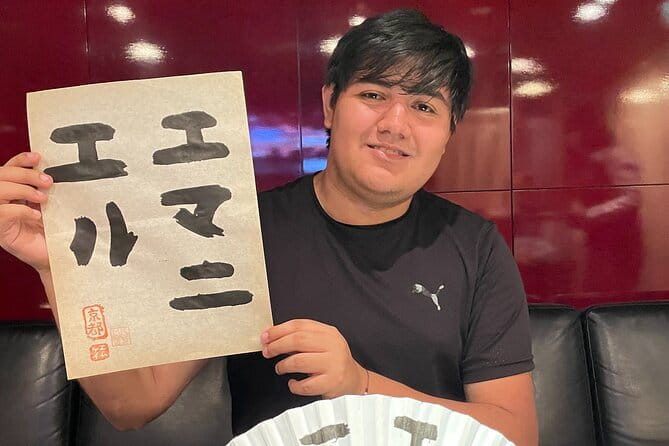
The class starts with a short lecture on how to use a brush and how to apply ink correctly. This isn’t just theory. The point is to help you understand what changes your strokes—like how you hold the brush and how ink behaves once it’s on the washi paper.
This matters because shodo is one of those skills where a small adjustment can make your writing look cleaner fast. In a book, you see characters. In a lesson, you learn why your line turns out the way it does.
You’ll get tips that don’t fit neatly on a page, like the way to control pressure and movement so your characters don’t look shaky or inconsistent. The small-group format helps here: if something looks off on your paper, you can get help while you’re still in the learning phase.
Writing the starter Kanji characters (and why that sequence helps)
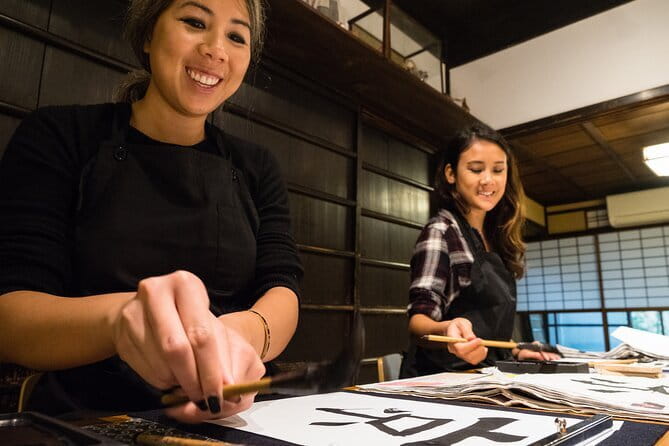
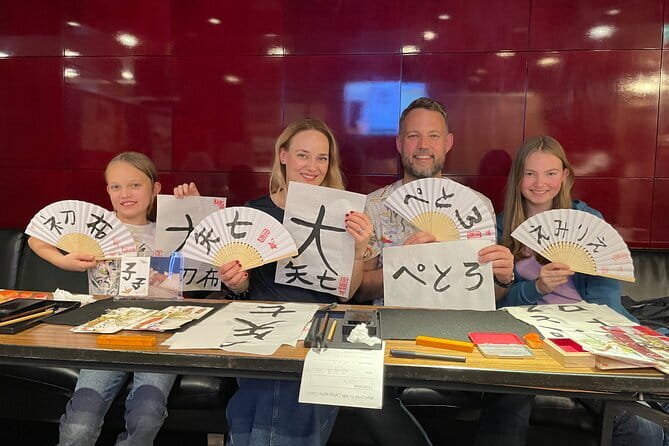
After the briefing, you begin with basic characters: Kanji for One, A, Forever, and Kyoto. This set is useful because it introduces you to common shapes and stroke patterns you’ll keep seeing later.
Here’s what I like about the structure: you’re not thrown immediately into writing something meaningful before you know how strokes work. You practice simpler forms first, then you build confidence. By the time you write the more personal stuff, you understand the brush basics well enough to focus on getting the character proportions right.
If you’re traveling with kids, this step is also a win. It gives them something tangible and achievable that isn’t too abstract, and it builds “I can do this” momentum quickly.
Your name in Kanji: meaning support, staff help, and a real keepsake
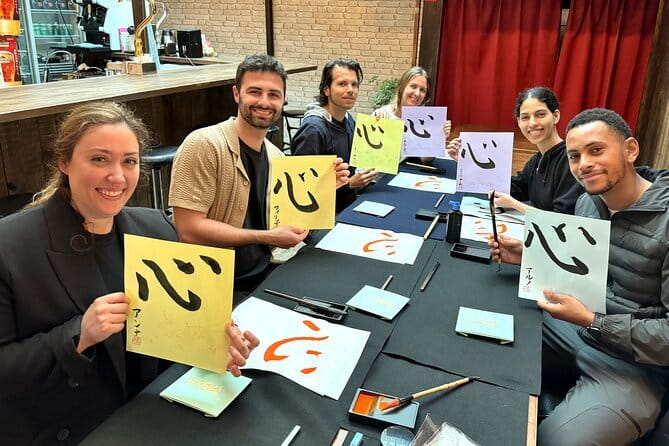
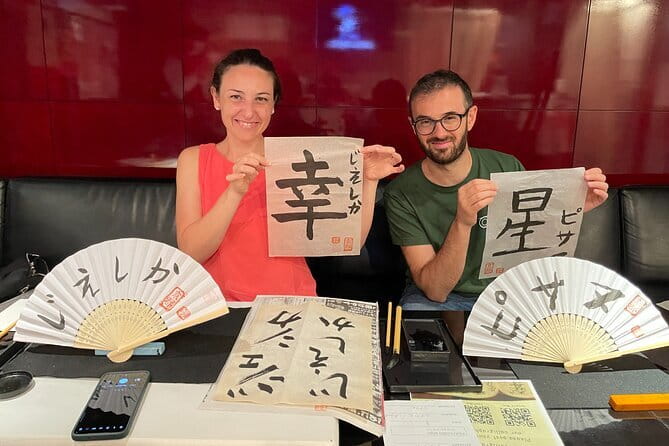
Then comes the best part for most people: writing your own name in Kanji characters. The staff assist you with possible Kanji options and explain meanings. For example, one name was mapped with characters linked to ideas like martial/bravery, courtesy/gratitude, and peace. Another name got a choice based on a pear-related character and a painting-related character.
Even if you don’t speak Japanese, that meaning support makes the project feel personal instead of mechanical. You’re not just selecting symbols—you’re connecting letters to a story.
You’ll also be able to make a scroll from the Kanji you write. That’s a big deal in a city where many cultural activities turn into photos only. With shodo, you leave with something you can display or wrap carefully at home.
Other Kyoto tours and experiences to compare




What you actually take home (not just a certificate)
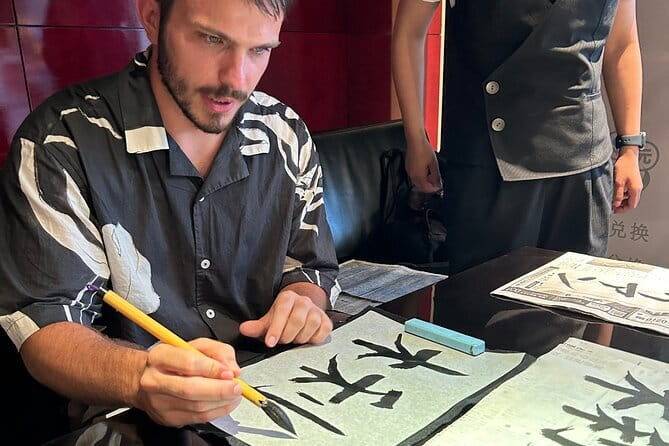
The lesson is designed around finished work. At minimum, you take home the calligraphy scroll made from the characters you practice. That alone is a solid souvenir because it’s durable and meaningful.
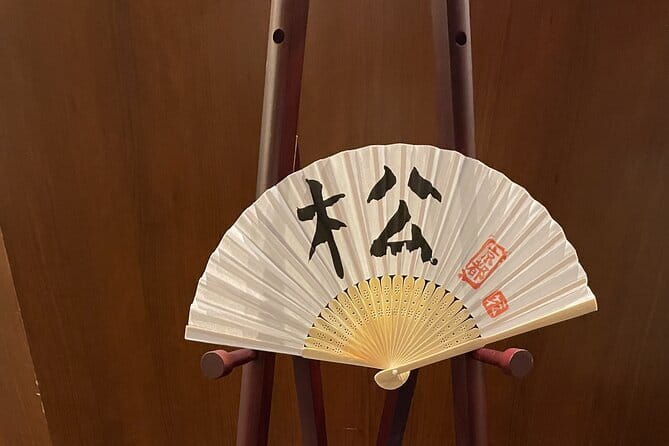
Some participants describe extra keepsakes made during the session—items like a photo frame and custom fans created using calligraphy. Even if you’re mainly focused on the scroll, it’s worth planning as if the class will give you more than one way to remember the day.
Either way, the value is that you bring home your own handwriting. In Kyoto, where so much is beautiful but untouchable, that kind of souvenir feels different.
Family-friendly shodo: calm guidance for kids and adults
This is a family-friendly activity, with activities available for kids. That usually means two things in practice: the atmosphere stays patient, and the instruction is flexible enough for different ages to participate without the class turning into a one-person show.
In the reviews-style feedback you’ll likely notice, the staff come across as engaging and helpful, including being conversant in English. For families, that matters because you don’t want a lesson where adults understand and kids feel lost. You want everyone to be doing something with the brush.
If you’re traveling with a 9-year-old (or similar), this is a good fit because the tasks are short, the results are visible quickly, and the staff can assist with characters when needed.
Price and value: what $50.40 really covers in Kyoto
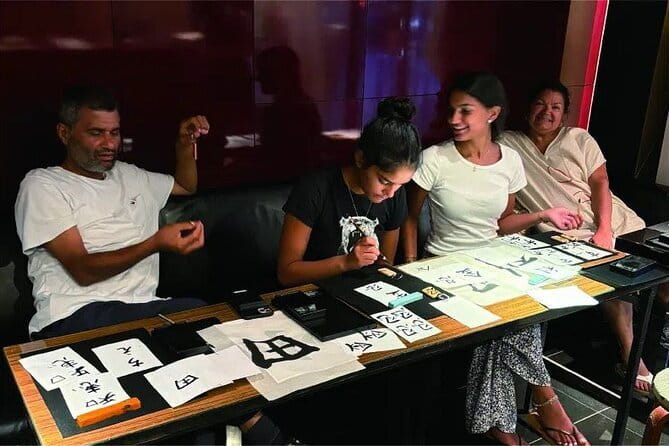
At $50.40 per person for about one hour, the price can feel high or fair depending on what you compare it to. Here, it’s fair because you’re paying for three things you’d otherwise need to source yourself:
- Instruction on brush technique and ink use
- A small group that keeps feedback practical
- Supplies included (brushes, ink, and washi paper)
Many DIY souvenir options in Kyoto are “pay and pick.” This is “learn and make.” When you factor in the included materials and the fact that you leave with finished work, you’re paying for a guided outcome, not just access to tools.
Also, being near Kyoto Station can save you money indirectly. You’re not arranging complicated transport for a short activity.
Instructor support and how confident you’ll feel by the end
You don’t need to be artistic. What you need is a willingness to try, then adjust based on feedback. The class is set up to teach correct brush use and ink application first, then guide you through the characters step by step.
Staff assistance is built in for the personalized name part, too. That’s important for non-Japanese speakers, because choosing Kanji isn’t simple without guidance—and getting help with possible characters and meanings turns the lesson from frustrating into fun.
If you prefer instructions in English, the teaching style described here is friendly and easy to follow.
Who should book this shodo lesson—and who might skip it
Book it if you want a hands-on cultural activity that ends with a real souvenir. It’s especially good if:
- you’re short on time in Kyoto (or you want a simple plan on a travel day)
- you want something beginner-friendly
- you’re traveling with family and need an activity that works for kids and adults
You might skip it if you’re hoping for an advanced, long-form calligraphy training session. This is structured for first learning: brush technique, basic characters, then your name in Kanji. You’ll improve your strokes, but you won’t suddenly become a calligraphy master in an hour.
Should you book Japanese calligraphy with Kyoto MK?
Yes, if your goal is a quick, meaningful, low-stress creative activity near Kyoto Station. I think it’s a great value because you get guided technique, included materials, small-group attention, and a take-home scroll that actually represents what you learned.
Just do one thing to make your experience smoother: show up a few minutes early and take an extra moment to locate the MK Taxi VIP Station area by Hachijo Exit. After that, the rest of the lesson is straightforward, friendly, and surprisingly satisfying.
FAQ
How long is the Japanese calligraphy (shodo) lesson?
The lesson is about 1 hour.
Is the group size small?
Yes. The experience has a maximum of 10 travelers.
What’s included in the price?
Your ticket includes the use of brushes, ink, and washi-paper, so you don’t need to bring supplies.
What will I write during the class?
You’ll practice basic Kanji characters such as One, A, Forever, and Kyoto. Then you’ll write your own name in Kanji with staff assistance, including help with possible characters and their meanings.
Where do I meet the instructor?
The meeting point is at MK Taxi VIP Station Kyoto Station Hachijo Exit (Taxi Stand / Kyoto sightseeing reception area) near Ibis Styles Kyoto Station.
Can I cancel for a refund?
Free cancellation is available. You can cancel up to 24 hours in advance for a full refund. If you cancel less than 24 hours before the start time, the amount paid is not refunded.
More Workshops in Kyoto

More Tour Reviews in Kyoto

More Kyoto Workshops to Try

Just added: more Kyoto tours to browse






Kyoto Craft & Calligraphy Workshops, compared.
 ★ 5.0Chopsticks Making Workshop in Gion with Engraving OptionFrom $15958 reviews
 ★ 4.8Authentic knife making experience at a blacksmith in KyotoFrom $154350 reviews
 ★ 5.01-Hour Japanese Archery Experience in KyotoFrom $46176 reviews
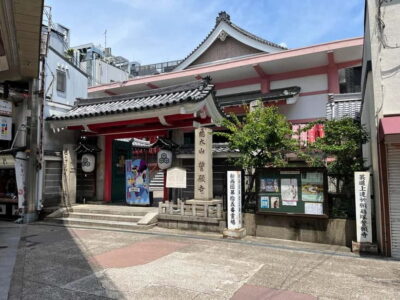 ★ 5.0Calligraphy class at Buddhist temple in city centerFrom $55167 reviews
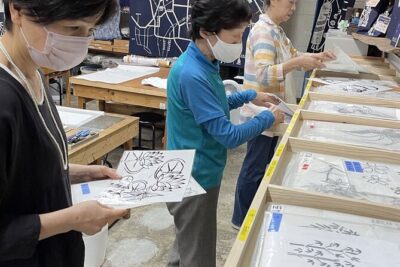 ★ 5.0Roketsu dyeing experience: M course Roketsu Dyeing ExperienceFrom $25163 reviews
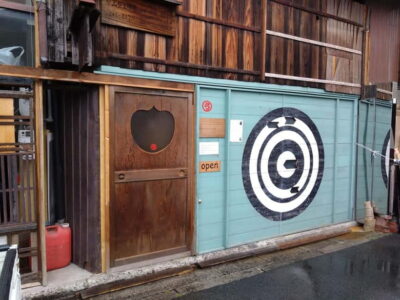 ★ 4.9Japanese Archery Workshop with Experienced InstructorFrom $38132 reviews
 ★ 4.8Japanese Calligraphy ClassFrom $5189 reviews
 ★ 5.0TAIKO, Japanese Drum Experience from KyotoFrom $11586 reviews
Browse the lists this tour appears in