
Reviewed · KYOTO CRAFT & CALLIGRAPHY WORKSHOPS
Ikebana Floral Design Workshop in Kyoto
Kyoto has a way of slowing you down. This ikebana class at HanaYou lets you make a real floral arrangement step-by-step, even if you’ve never held scissors for Japanese flower arranging before. I love the hands-on, no-prior-experience setup, and I especially like that you get fresh seasonal flowers to take back to your hotel afterward. One thing to keep in mind: the studio is up a flight of stairs to the 2nd floor.
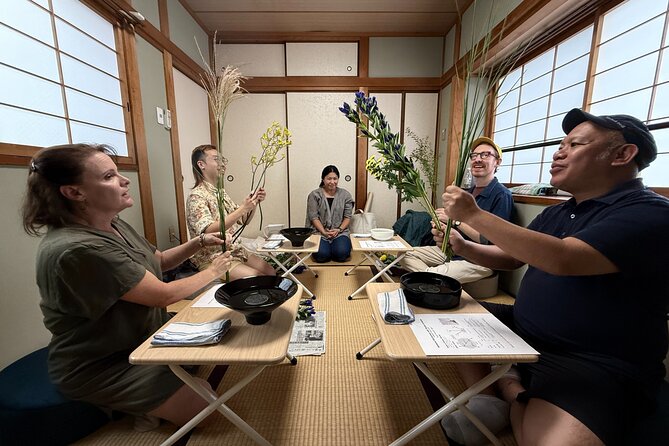
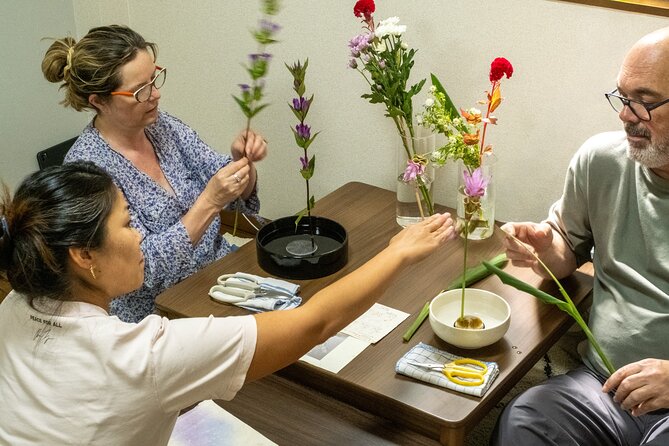
The class is led by HanaYou’s founder, Ryoko Arnwine, with guidance available in either English or Japanese based on your preference. I like the small-group feel too (maximum 4 people), because it keeps the pace calm and makes it easier to ask questions about balance and placement without feeling rushed.
The only real “watch out” is logistics: you’ll need to handle your own transport to and from the meeting point, and that includes getting up those stairs.
In This Review
- Key points before you book
- A Kyoto studio class that feels personal, not performative
- Your 90 minutes: what you’ll do step by step
- What you learn in ikebana: balance, harmony, and placement
- The included touches: tea, a sweet, and photos that won’t look awkward
- Price and value in Kyoto: $97.73 for a skill you can reuse
- Meeting point, getting there, and the one real physical hurdle
- Is this the right workshop for you?
- Should you book Ikebana Floral Design in Kyoto?
- FAQ
- How long is the ikebana class?
- Where is the class meeting point?
- Is transportation included?
- Is this class suitable for beginners?
- What language will the instruction be in?
- Are materials and flowers included?
- Can I take my ikebana arrangement home?
- Is there a place to take photos?
- What should I bring for tools?
- What’s the cancellation policy?
Key points before you book
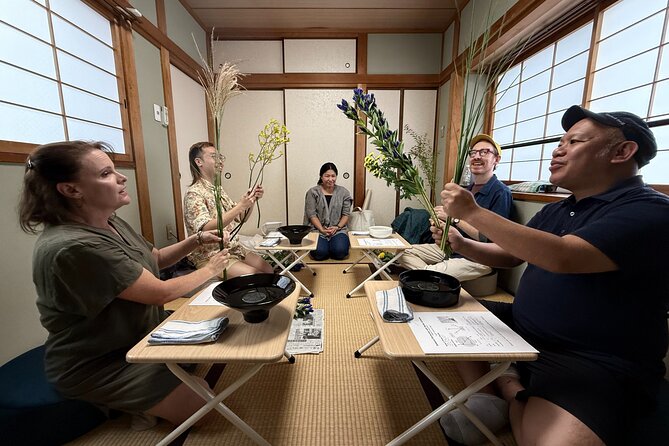
- 90 minutes of guided making, not a demo where you just watch
- Beginner-friendly instruction with English or Japanese support
- Small group (max 4) for more hands-on attention
- Take-home seasonal flowers so the experience continues after class
- Traditional tea and a seasonal sweet included during the session
- Photo corner setup so you can document your arrangement without hunting for props
A Kyoto studio class that feels personal, not performative
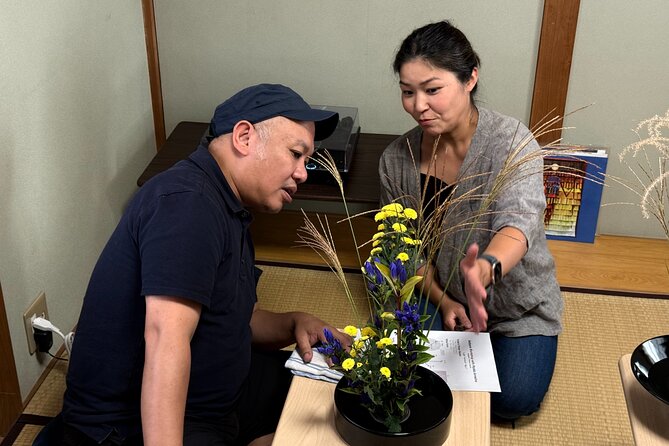
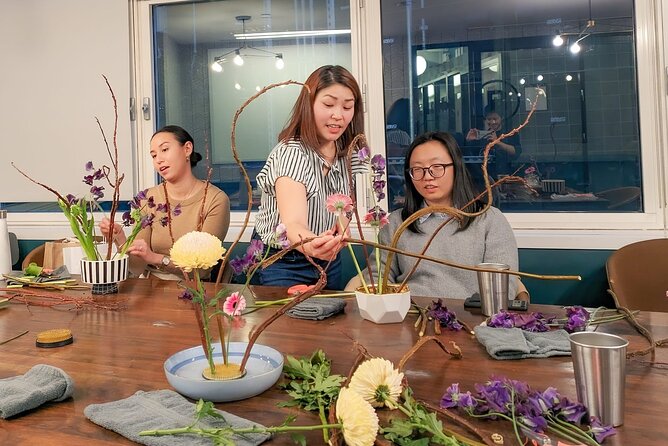
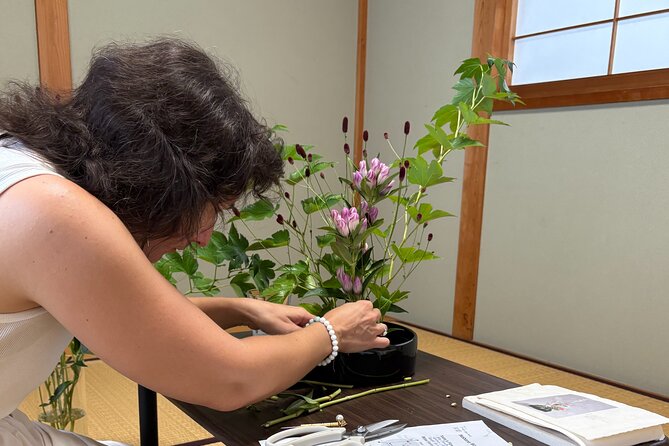
Some cultural workshops are “watch and copy.” This one is different. At HanaYou’s studio, you’re placed in front of real materials and real tools—vase, scissors, pins, and the rest used during class—then guided into building an arrangement with intention.
What I like most is the tone: it’s quiet, focused, and practical. The experience is designed for people without prior experience, so you’re not expected to already know how stems should be angled or how to interpret a basic ikebana form. Instead, you learn by doing, with the instructor right there to correct things while it’s still easy to adjust.
The class is taught by Ryoko Arnwine, the founder of HanaYou. Having the creator of the studio lead the session tends to change the vibe. You’re not just receiving instructions; you’re also getting cultural context for what you’re making and why the placement matters.
Make something by hand in a Kyoto workshop
Your 90 minutes: what you’ll do step by step
The session runs about 1 hour 30 minutes, and it’s built to move at a steady, beginner-friendly tempo. You’ll start at the studio in Kyoto at the meeting point near Kawaramachi Marutamachi Iseyacho, Kamigyo Ward (602-0873).
From there, the rhythm typically looks like this:
First, you settle in and get oriented. You’ll be using studio items during class (like the vase and cutting tools), not your own take-home equipment. That means you can relax. No need to bring anything special, and no need to guess what tools are used for this style.
Next comes the actual arranging. You’ll work with real seasonal flowers and follow guidance on how to structure your arrangement. Ikeabana has rules, but the workshop keeps it human: you’re learning balance, harmony, and the idea behind where each stem goes.
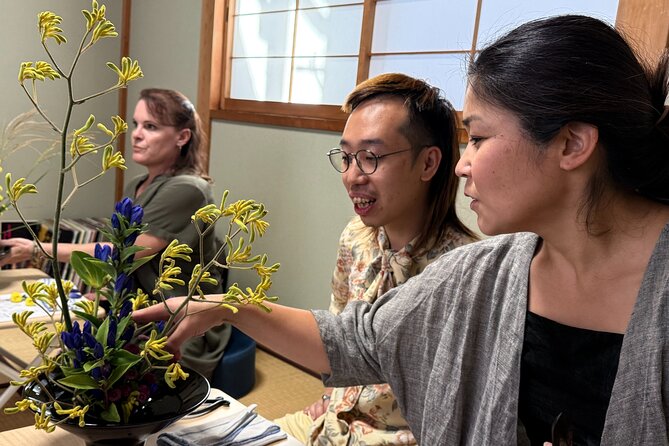
As you build, the instructor helps you adjust the shape and spacing. This is where patience matters, and the tone here is explicitly supportive—so if you don’t get it instantly, you still keep moving forward. By the end, you’ll have something you can actually take home.
Then you’ll have time for the practical finishing touches: preparing your arrangement for transport and using the studio’s photo corner setup. That photo corner isn’t just a random wall; it’s there so you can capture your work clearly without borrowing someone’s phone stand or trying to find a decent angle in an unfamiliar room.
Finally, you wrap up with traditional Japanese tea and a seasonal sweet. It’s a nice counterbalance to the hands-on making—time to sit, reset, and appreciate the quiet you just created.
What you learn in ikebana: balance, harmony, and placement
Here’s the big reason this workshop is worth your time: you’re not only assembling flowers. You’re learning how ikebana thinks.
The key concepts you’ll work with are balance and harmony, along with the meaning behind where flowers are placed. Even if the class doesn’t turn you into a future ikebana teacher, it gives you a mental model you can reuse.
A useful way to think about it: flowers aren’t arranged to “look pretty in general.” They’re arranged to communicate relationships—between lines, between height and weight, between negative space and form. That’s why you’ll likely be guided on how the arrangement’s structure should feel, not only how it should look.
And since the class is designed for first-timers, you’ll learn these ideas in a way that doesn’t require reading a book afterward. You’ll leave with your own arrangement and a clearer sense of what to notice next time you see ikebana in Kyoto.
The included touches: tea, a sweet, and photos that won’t look awkward
I like workshops that include the small extras that make them feel complete. This one does.
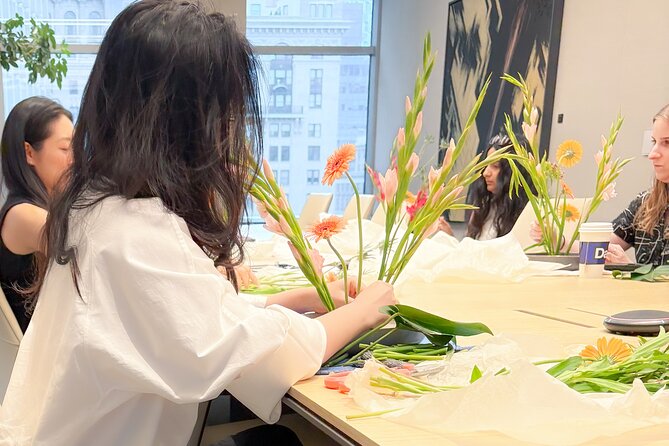
During the session, you get traditional Japanese tea and a seasonal sweet. It’s not just a snack break—it’s part of the pacing. You get a quiet moment after you’ve worked with your hands, which helps you actually enjoy what you made instead of rushing to finish.
Then there’s the photo corner. Plenty of activities include “time to take photos,” but not many provide a dedicated setup. Here, there’s a designated photo space so you can photograph your ikebana arrangement properly. It’s a simple thing, but it matters—especially when you want to remember the shape you made, the angles, and the final balance.
Finally, you take home your creation. You’re given fresh seasonal flowers to take back to your hotel. That turns the workshop from a temporary event into something that keeps working for you for days.
Price and value in Kyoto: $97.73 for a skill you can reuse
At $97.73 per person, this isn’t the cheapest activity in Kyoto. It is a solid value when you look at what you actually get.
You’re paying for:
- 90 minutes of hands-on instruction with the studio founder (Ryoko Arnwine)
- fresh seasonal materials included
- tools and equipment used during class
- tea and a seasonal sweet
- a photo corner setup
- flowers to take back to your hotel
So you’re not only buying an experience—you’re also walking away with something tangible you made yourself. That makes the price feel more reasonable than many “watch a demo” workshops.
One more practical detail: it’s booked about 46 days in advance on average, so plan ahead if you want a specific day/time. Mobile ticketing is included, which is convenient for keeping things simple once you’re in Kyoto.
Other Kyoto tours and experiences to compare


Meeting point, getting there, and the one real physical hurdle
You’ll meet at Kawaramachi Marutamachi Iseyacho, Kamigyo Ward, Kyoto 602-0873, Japan, and the activity ends back at the meeting point. The studio is near public transportation, which helps.
The main physical consideration is straightforward: you’ll need to walk up stairs to the 2nd floor. If stairs are tough for you, it’s worth assessing carefully before booking.
The group size is small—maximum 4 people—which also affects the vibe. It’s not a crowded workshop where you have to wait your turn. You should feel more comfortable asking questions and getting guidance.
Also, transportation is not included, so you’ll want to build in transit time from your hotel. In Kyoto, that usually means checking your route the day before and giving yourself a little buffer for walking.
Is this the right workshop for you?
This ikebana class is a good match if you want:
- a calm, hands-on cultural experience in Kyoto
- a workshop that welcomes beginners without judgment
- to create something you can take home and enjoy later
- a small group setting with guidance available in English or Japanese
It’s less ideal if:
- you strongly prefer activities that don’t involve stairs
- you want a large-group, party-style atmosphere (this is small and quiet by design)
- you need included transport as part of the price
If you’re the type who likes structured creativity—learning rules and then making something within them—this should land well. If you want a free-form art session with no structure, you might find ikebana’s guidance a different style than you expected, but it’s still beginner-friendly.
Should you book Ikebana Floral Design in Kyoto?
If you’re looking for a Kyoto activity that’s genuinely hands-on, structured, and calming, I think this is an easy yes. The small group size, instruction from Ryoko Arnwine, and the fact that you take home fresh seasonal flowers makes it feel like more than a souvenir workshop.
Before you book, just check two things: you can handle the stairs to the 2nd floor, and you’re comfortable arranging your own transportation to the studio. If those are fine, you’ll leave with an arrangement, a few key ideas about balance and harmony, and a quieter mind than the one you started with.
FAQ
How long is the ikebana class?
It’s about 1 hour 30 minutes.
Where is the class meeting point?
The start point is Kawaramachi Marutamachi Iseyacho, Kamigyo Ward, Kyoto 602-0873, Japan.
Is transportation included?
No. Transportation to and from the studio is not included.
Is this class suitable for beginners?
Yes. Prior experience isn’t needed, and the class is designed so most people can participate.
What language will the instruction be in?
Guidance is available in English or Japanese based on your preference.
Are materials and flowers included?
Yes. You’ll use real seasonal flowers and the class provides the materials and studio equipment used during the session.
Can I take my ikebana arrangement home?
Yes. You’ll take home fresh flowers to your hotel.
Is there a place to take photos?
Yes. The studio has a photo setup so you can capture your arrangement.
What should I bring for tools?
Nothing special. Studio items are for use during class only, and you don’t need personal ikebana tools.
What’s the cancellation policy?
Free cancellation is available up to 24 hours in advance for a full refund. Cut-off times are based on local time. You’ll receive confirmation at booking.
More Workshops in Kyoto
More Tour Reviews in Kyoto





More Kyoto Workshops to Try

Just added: more Kyoto tours to browse








Kyoto Craft & Calligraphy Workshops, compared.
 ★ 5.0Chopsticks Making Workshop in Gion with Engraving OptionFrom $15958 reviews
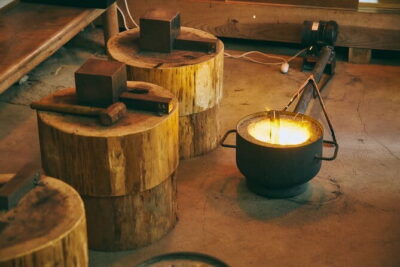 ★ 4.8Authentic knife making experience at a blacksmith in KyotoFrom $154350 reviews
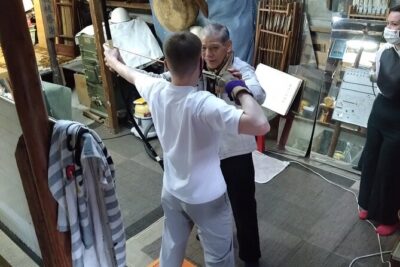 ★ 5.01-Hour Japanese Archery Experience in KyotoFrom $46176 reviews
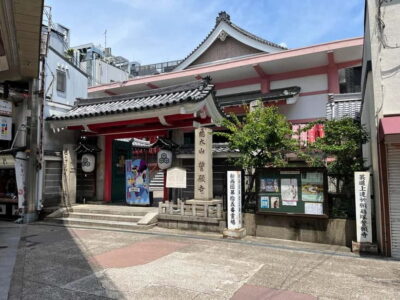 ★ 5.0Calligraphy class at Buddhist temple in city centerFrom $55167 reviews
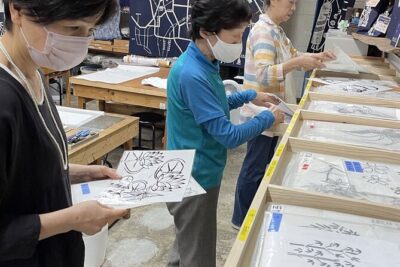 ★ 5.0Roketsu dyeing experience: M course Roketsu Dyeing ExperienceFrom $25163 reviews
 ★ 4.9Japanese Archery Workshop with Experienced InstructorFrom $38132 reviews
 ★ 4.8Japanese Calligraphy ClassFrom $5189 reviews
 ★ 5.0TAIKO, Japanese Drum Experience from KyotoFrom $11586 reviews
Browse the lists this tour appears in