
Reviewed · KYOTO CRAFT & CALLIGRAPHY WORKSHOPS
Calligraphy & Digital Art Workshop in Kyoto
Kyoto is where old and new arts shake hands. This calligraphy and digital art workshop pairs traditional brush practice with iPad etegami picture letters in about 1.5 hours. I like that you get real instruction on strokes first, then you switch gears to iPad-based picture letters. I also like the calm studio pace, with tea and snacks built in. A possible drawback: it’s fixed for a 3:00 pm start, so you’ll want to plan your Kyoto day around it.
Ami and her team at Studio Aya bring both art discipline and modern tech know-how. Ami runs the teaching approach through her background in digital art (she studied in the UK) and her YouTube channel, amity_sensei, with 340,000+ subscribers. You’ll be working with an iPad provided by the studio, so you don’t need to bring your own gear.
In This Review
- Key Highlights (What Makes This Workshop Worth Your Time)
- Why Kyoto’s Studio Aya mixes ink calligraphy with iPad creativity
- Meeting at iPadmate kids in Kamigyo: what to do before 3:00 pm
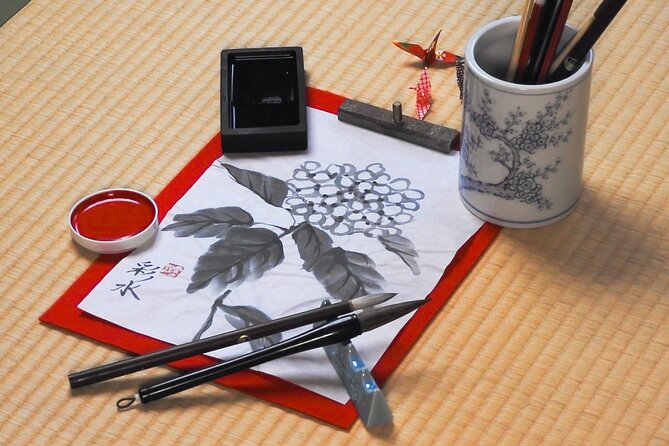
- 30 minutes of brushwork: traditional calligraphy or suibokuga
- Tea break and practice pause: keep your momentum
- The iPad portion: making etegami-style picture letters
- How the Zen approach to strokes actually helps beginners
- What you get, what it costs, and where the value shows
- Who should take this workshop in Kyoto
- The biggest practical considerations before you book
- Should you book this tour or skip it?
- FAQ
- What’s the duration of the Calligraphy & Digital Art Workshop in Kyoto?
- Where does the workshop meet, and what time does it start?
- What will I learn during the workshop?
- What’s included in the price?
- Is this a private group activity?
- What’s the cancellation policy?
Key Highlights (What Makes This Workshop Worth Your Time)
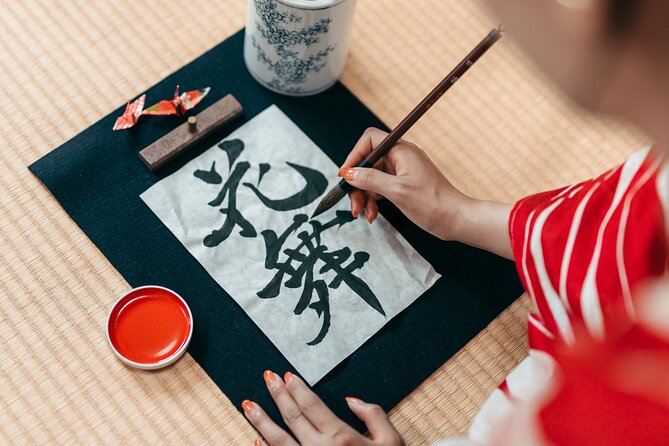
- Traditional brushwork first: start with Japanese calligraphy or suibokuga (ink painting) guidance, then build on it.
- iPad art after a tea break: you switch mediums mid-workshop with snacks and tea to reset.
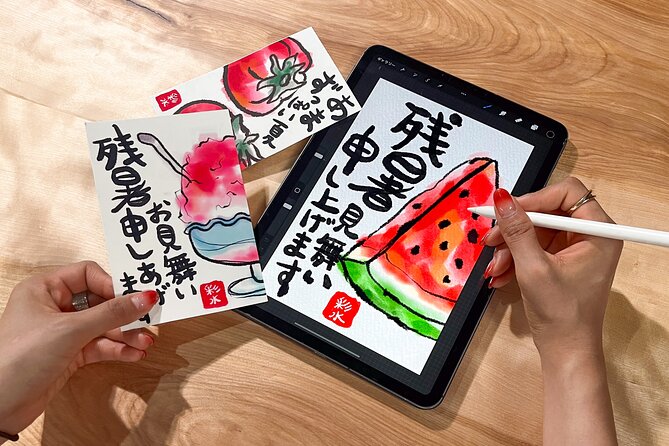
- Make etegami picture letters: create Japanese picture letters that mix writing and illustration on an iPad.
- Instructors who teach for real: Ami founded iPadmate kids and teaches adults and children with a creative, structured approach.
- Private group feel: it’s only your group for the session, so you’re not competing for attention.
- Mobile ticket, near public transport: easier day-of logistics than many stand-alone art classes.
Why Kyoto’s Studio Aya mixes ink calligraphy with iPad creativity
This is one of the more practical “culture + skills” workshops I’ve seen for Kyoto. You’re not only watching someone write pretty characters. You practice how strokes form, then you apply the look and feel of calligraphy to a digital picture-letter format.
The two-medium structure matters because it keeps you from getting stuck. If you start with the iPad first, you might treat it like a fancy drawing app. Starting with traditional calligraphy or suibokuga instead gives you a physical reference point for how marks should flow.
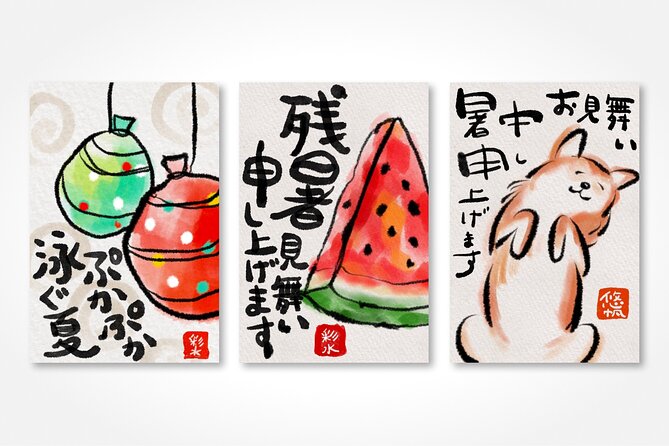
You’ll also learn etegami, which is basically Japanese picture letters. Think of it as writing plus imagery, designed to look like a postcard you’d actually want to send. In this workshop, that picture-letter idea lives on the iPad, so the final result should feel like modern keepsake art, not just a one-time sheet of paper.
Make something by hand in a Kyoto workshop

Meeting at iPadmate kids in Kamigyo: what to do before 3:00 pm
Your workshop starts at 3:00 pm at iPadmate kids, 47 Daikokuyachō, Kamigyo Ward, Kyoto (602-8055). The activity ends back at the meeting point. That’s nice if you’re planning your day around one clear anchor point, rather than hopping across town.
You’ll need a mobile ticket. If you’re the type who hates fumbling with phone confirmations while other people are waiting, arrive a little early and get your ticket ready on your screen.
It’s also stated as near public transportation. Since private transportation isn’t included, this is a good fit if you’re already using buses or trains for your Kyoto route.
30 minutes of brushwork: traditional calligraphy or suibokuga
The workshop begins with about 30 minutes of greetings and an introduction to either traditional calligraphy or suibokuga (Japanese ink painting). Even if you’ve never picked up a brush, the structure is beginner-friendly: the focus is on fundamentals first.
In the calligraphy portion, you’ll work on brush strokes and learn how to improve them. One of the most praised parts is how instructors help you refine stroke work, not just copy the final character shape. That detail matters. Calligraphy looks simple until you try it and realize how much depends on pressure and movement.
If your group does suibokuga, you’ll still get that same core idea: learning how marks are formed with ink. Ink painting can look forgiving from far away, but close up it’s all about controlling the flow and thickness.
Tea break and practice pause: keep your momentum
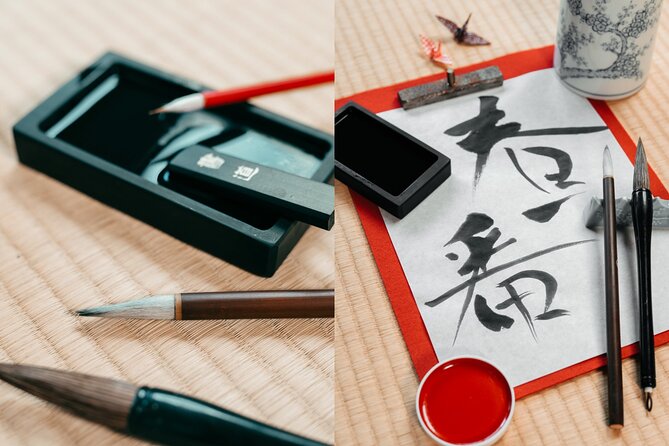
At roughly the halfway point, you’ll get a 15-minute break with Japanese tea and snacks provided. This is more than a nice extra. It’s a smart pacing tool, especially when you’ve been concentrating on physical technique.
Tea breaks in Japanese classes often reset your attention. Your hands also get a moment to recover. That’s helpful because brushwork and careful lettering can make your writing hand feel like it’s doing pushups.
If you’re traveling with kids, this break is also a practical win. Several people highlight that children enjoyed the whole flow, not just the digital finale.
The iPad portion: making etegami-style picture letters
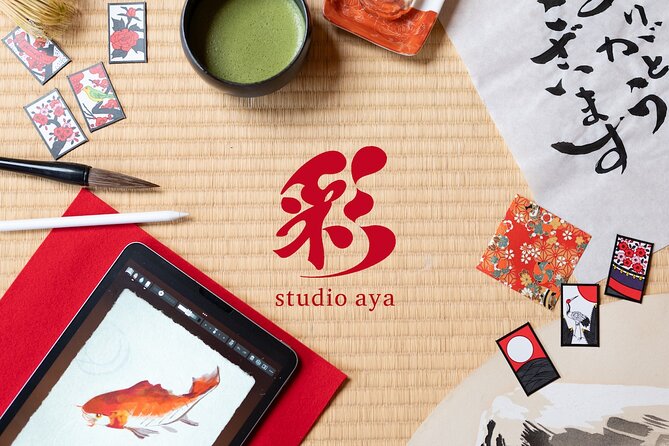
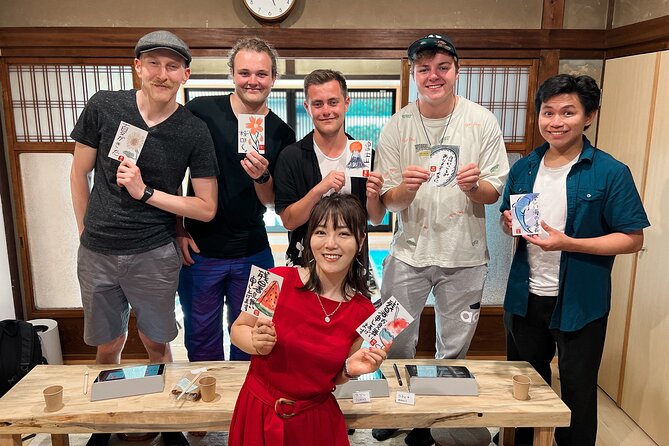
After the tea break, you shift to about 30 minutes of digital art on an iPad. You’ll create calligraphy or suibokuga-style artwork on the iPad, then apply it in the etegami (picture letters) format.
What I like about this setup is that it doesn’t treat digital art as separate from Japanese style. The workshop connects the physical look of strokes to the digital result. So instead of learning “drawing on a tablet,” you’re learning “Japanese picture-letter art, using iPad tools.”
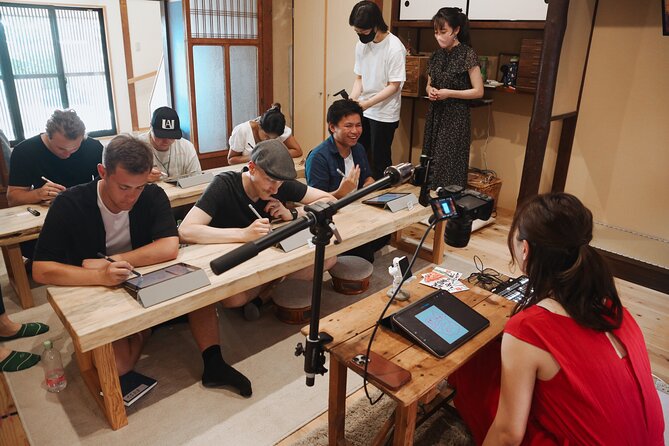
The iPad is included. That’s a big deal for value and convenience. You don’t have to worry about compatibility, battery life, or whether your own device settings will get in the way.
Also, your session ends with a Q&A for about 15 minutes. That’s a chance to ask what you can take forward after the class, whether it’s about stroke technique or how to approach the digital format.
Other Kyoto tours and experiences to compare




How the Zen approach to strokes actually helps beginners
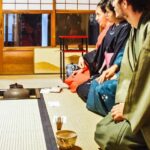
Calligraphy gets linked to Zen a lot, and this workshop seems to treat that idea as practical, not mystical. There’s an emphasis on the Zen approach to calligraphy—how calm focus affects your strokes and your control.
You’ll see why that works fast. When you slow down and aim for fewer, cleaner movements, your characters start looking more intentional. Even if your first attempt isn’t perfect, it becomes a better lesson: you can feel what you corrected.
This is especially useful if you’re traveling on a short Kyoto timeline and don’t want a class that turns into a lecture. You want guidance you can use immediately. Here, the structure supports that: brushwork first, a break, then digital practice with Q&A at the end.
What you get, what it costs, and where the value shows
The price is $72 for about 1 hour 30 minutes (including the break). You also get an iPad plus tea and snacks. That combo is part of what makes this feel fair, not just “cheap for a workshop.”
Here’s why the value holds up:
- You’re paying for instruction in both a traditional art form and its digital translation.
- The included iPad reduces friction. That alone can easily add up if you were trying to book something similar and source devices yourself.
- Tea and snacks turn the time into a real studio experience, not a quick photo-op.
Also, it’s described as a private tour/activity for your group. Private doesn’t always mean fancy, but in classes it often means you get less attention competition. If your group includes beginners (or kids), that matters.
One practical note: private transportation isn’t included, so build your plan around walking time or public transit to Kamigyo Ward.
Who should take this workshop in Kyoto
This is a strong fit if you want something more hands-on than a typical temple or museum stop. You’ll be creating rather than just observing.
It’s also a good match for:
- Families who want Japanese culture that kids can actually do. People specifically mention that kids enjoyed learning about kanji and practicing characters both on paper and on an iPad, then creating a postcard-style etegami.
- Couples or friends who like shared activities with a clear result.
- Solo travelers who want a guided, friendly studio setting where you can ask questions without feeling awkward.
If you already love art apps, you’ll enjoy the iPad side. If you’re more into traditional arts, you’ll still get the physical calligraphy foundation first.
The biggest practical considerations before you book
Before you sign up, make sure the timing works. The start time is 3:00 pm, and the session lasts about 1.5 hours including a break. In Kyoto, that can slot neatly between a late lunch and an early evening walk, but it’s not ideal if you’re banking on morning-heavy sightseeing.
Also, pick your mindset. This is a workshop for making art. It’s not described as a museum-style overview where you just take notes. If you want something you can do quickly with minimal effort, you may feel the time pressure. If you like learning a skill step by step, you’ll probably feel right at home.
Should you book this tour or skip it?
Book it if you want a Kyoto activity that feels both cultural and modern, with a clear creative output. For $72, you’re getting instruction across traditional brushwork plus iPad etegami, and you don’t have to bring equipment. The built-in tea/snack break also makes it feel like a real studio class rather than a rushed stop.
Skip it only if your schedule can’t handle a 3:00 pm start, or if you strongly prefer either pure traditional calligraphy or pure digital art with no cross-training. Otherwise, this is the kind of workshop that leaves you with something personal: a piece of picture-letter art you can be proud of, not just a souvenir.
FAQ
What’s the duration of the Calligraphy & Digital Art Workshop in Kyoto?
The workshop is approximately 1 hour 30 minutes, including a break.
Where does the workshop meet, and what time does it start?
It starts at 3:00 pm at iPadmate kids, 47 Daikokuyachō, Kamigyo Ward, Kyoto, 602-8055, and it ends back at the meeting point.
What will I learn during the workshop?
You’ll learn traditional calligraphy or suibokuga (Japanese ink painting), and then you’ll use an iPad to create digital art and draw etegami (Japanese picture letters).
What’s included in the price?
The price includes the iPad and Japanese snacks and tea.
Is this a private group activity?
Yes. It’s listed as a private tour/activity, meaning only your group will participate.
What’s the cancellation policy?
You can cancel for a full refund up to 24 hours before the experience’s start time. If you cancel less than 24 hours before, the amount paid isn’t refunded.
More Workshops in Kyoto
More Tour Reviews in Kyoto






More Kyoto Workshops to Try


Just added: more Kyoto tours to browse








Kyoto Craft & Calligraphy Workshops, compared.
 ★ 5.0Chopsticks Making Workshop in Gion with Engraving OptionFrom $15958 reviews
 ★ 4.8Authentic knife making experience at a blacksmith in KyotoFrom $154350 reviews
 ★ 5.01-Hour Japanese Archery Experience in KyotoFrom $46176 reviews
 ★ 5.0Calligraphy class at Buddhist temple in city centerFrom $55167 reviews
 ★ 5.0Roketsu dyeing experience: M course Roketsu Dyeing ExperienceFrom $25163 reviews
 ★ 4.9Japanese Archery Workshop with Experienced InstructorFrom $38132 reviews
 ★ 4.8Japanese Calligraphy ClassFrom $5189 reviews
 ★ 5.0TAIKO, Japanese Drum Experience from KyotoFrom $11586 reviews
Browse the lists this tour appears in