
Reviewed · KYOTO SAMURAI & NINJA EXPERIENCES
Ninja Trekking half-day tour at Mt.Daimonji Kyoto
Kyoto, but with ninja lessons on your hike. This half-day experience pairs Ninjutsu training with a walk up Mt. Daimonji, one of Kyoto’s famous power spots in the Higashiyama Sanju-roku (East Mountain) peak area. You’ll climb from the Nanzenji/Keage side toward Daimonji (Nyoigatake) and then descend toward Ginkakuji.
I especially liked the way the guide focuses on practical mountain skills. The route is about 7.5 km and designed to be relatively gentle and safe, with the pace stretched to around 4 hours so it feels manageable even for non-experts. I also really valued the coaching style—when Izo Sensei talked us through breathing and efficient movement, it made the hiking feel smoother and less tiring.
One thing to consider: at $347.48 per person, this is not a budget add-on. Also, snacks and bottled water aren’t included, so plan to bring what you need for a comfortable hike.
In This Review
- Key things to know before you go
- Kyoto’s Mt. Daimonji hike, taught like Ninjutsu
- Where you start: the Ninja Dojo and Store Kyoto (10:00 am)
- The route plan: Keage (Nanzenji) to Daimonji, then down toward Ginkakuji
- Mt. Daimonji climb: where breathing and step-efficiency matter
- Learning ninja manners and protection rituals along the way
- Descending toward Ginkakuji: putting skills into motion
- What’s included (and what you need to bring)
- Price and value: $347.48 per person, and why it might be worth it
- Who this tour fits best (and who should reconsider)
- The guides and teaching style: why it feels personal
- Should you book Ninja Trekking at Mt. Daimonji?
- FAQ
- What time does the Ninja Trekking tour start?
- How long is the Mt. Daimonji Ninja Trek?
- Where do we meet and where does the tour end?
- Is the route suitable for beginners?
- How far do you walk?
- What should I bring?
- Is transportation included?
- Are there entrance tickets you need to pay for?
- Is this a private tour?
- What happens if the weather is bad?
Key things to know before you go
- Dojo-to-trail training in half a day: You get ninja instruction and then apply it on the mountain walk.
- A beginner-friendly route length: About 7.5 km, with a relaxed timing (a typical 3-hour course takes closer to 4 hours).
- Mountain breathing and walking efficiency: You’ll learn techniques to move with less wasted effort.
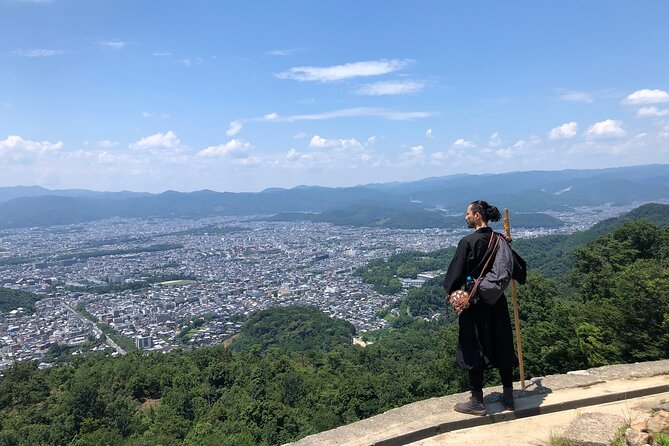
- A real Mt. Daimonji power-spot route: Climb toward Daimonji and descend toward Ginkakuji, staying in the Higashiyama peak area.
- Private experience for your group: Only your group participates, which makes it more personal.
- Bring your own food and water: Not included, and you’ll feel the difference on a 4–5 hour outing.
Kyoto’s Mt. Daimonji hike, taught like Ninjutsu
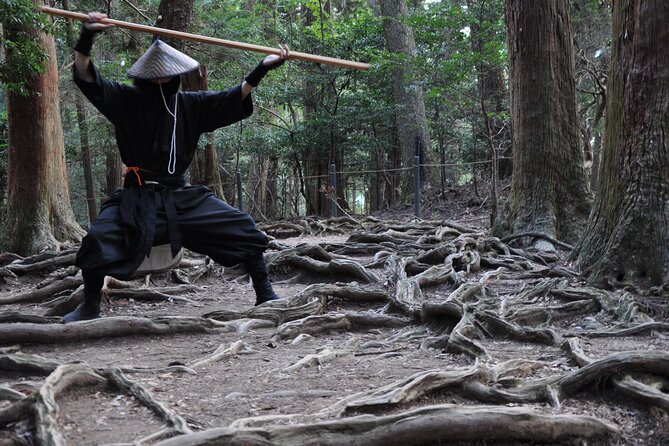
This isn’t just a sightseeing walk. The whole point is to learn a simple way to move—mind, breath, and footwork—while you’re on a Kyoto mountain path. You’re guided by Ninjutsu and mountain-walking specialists, so you’re not left to figure things out on your own.
Mt. Daimonji sits in the wider East Mountain peak circuit often described as Kyoto’s “36 peaks.” That matters because the route is built around a spiritual-and-practical idea: mountain walking isn’t only for exercise; it’s a training method. You’ll feel that shift from being a tourist looking at views to being a student learning how to walk.
The experience is scheduled as a 4–5 hour half-day, starting at 10:00 am. You return to the meeting point at the end, so you can slot it into your Kyoto day without needing complex transport plans.
Pick up the blade again with these Kyoto sessions
Where you start: the Ninja Dojo and Store Kyoto (10:00 am)
Your tour meets at NINJA DOJO and STORE KYOTO Japan, 528 2F, Hakurakutenchō, Shimogyo Ward, Kyoto (600-8422). It’s described as near public transportation, which is handy in a city where trains and buses can save your legs later.
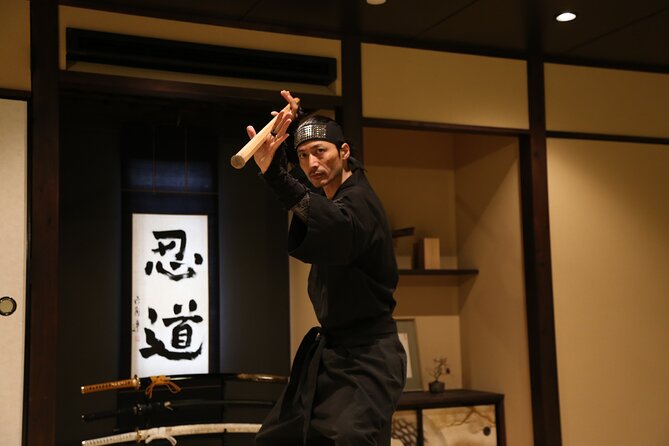
Starting at the dojo matters because you begin with instruction before you hit the steps and slopes. Expect a short, structured introduction to ninja ways of moving and behaving. In past experiences with this guide, people have highlighted things like manners (including bowing) and practical movement coaching—so you’re not thrown straight onto the trail without context.
Because this is a private tour/activity with only your group participating, the guide can adapt pace and explanations to your comfort level. That’s a big deal on a mountain walk—small corrections to how you step can reduce strain fast.
The route plan: Keage (Nanzenji) to Daimonji, then down toward Ginkakuji
The core walking idea is simple: you climb from the Keage/Nanzenji side up toward Daimonji (Nyoigatake), then descend toward Ginkakuji. Overall distance is listed as 7.5 km, and the course is described as relatively gentle and safe.
That “gentle and safe” wording doesn’t mean flat. Kyoto hills can still feel steep when you’re concentrating on form and breath. But compared to many mountain-day hikes, this one is timed and coached to keep things doable.
One of the best signals here is the pacing. A standard course is often around 3 hours, but your walk is planned closer to 4 hours. That extra time gives you room to practice techniques the guide teaches—especially breathing and movement efficiency.
Mt. Daimonji climb: where breathing and step-efficiency matter
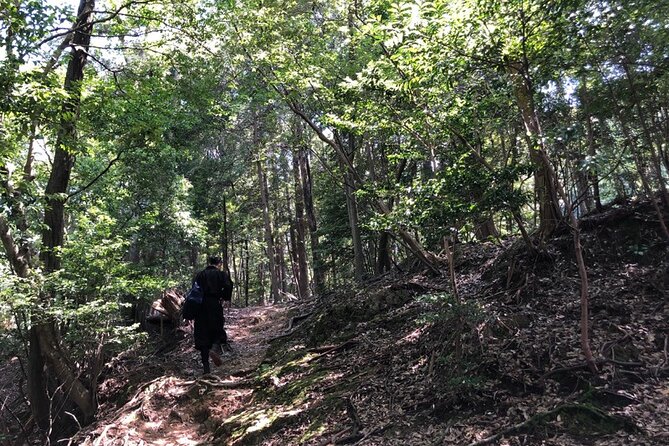
The Mt. Daimonji segment is the heart of the training. You’re not just climbing for the sake of altitude; you’re climbing as part of Ninjutsu-style mountain walking. Ninjutsu is described here as a comprehensive survival art—survival techniques, body manipulation methods, breathing methods, mind and body training, meditation methods, and mountain-walking wisdom.
In practical terms, what you’ll feel is less strain and more control. People who’ve done this type of instruction often notice that breathing cues help you avoid that common “gas out then slow down” pattern. When a guide explains breathing rhythm and foot placement for efficiency, the hike can feel less like fighting your legs and more like cooperating with them.
Also, because the course is relatively safe and guided, beginners tend to get confidence quickly. One of the most useful details from the experience: the guide leads at the front, so first-timers can copy pacing and learn how to place steps. If you’re new to climbing, having that early guidance can be the difference between enjoying it and being anxious.
Learning ninja manners and protection rituals along the way
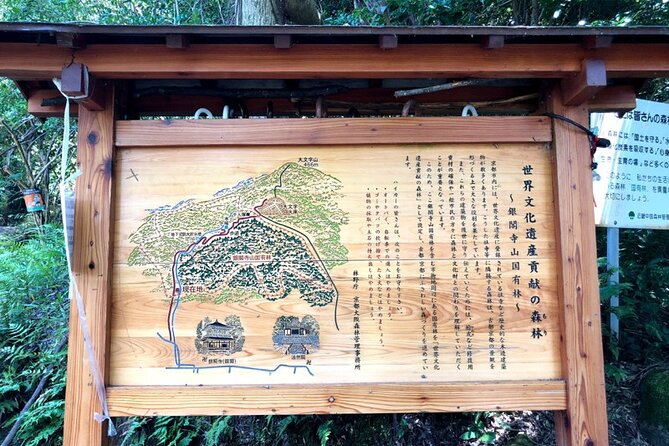
This tour isn’t only physical training. You’ll also get instruction tied to the culture and mindset around the hike.
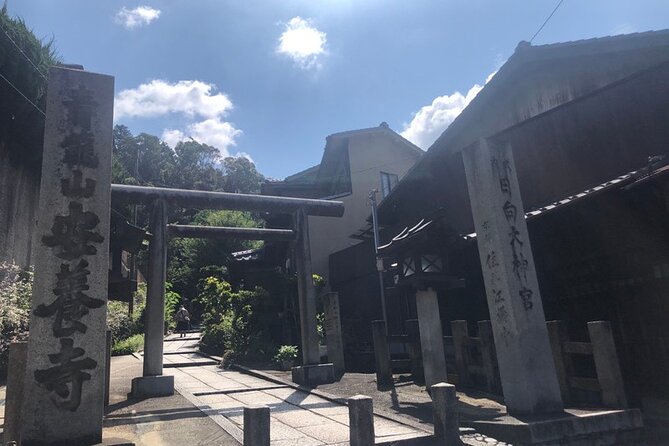
Based on what’s been shared by past participants, you can expect some focus on respectful behavior—like bowing in front of a torii. You may also learn a small ritual action tied to entry (one past participant mentioned tying a mark as they entered sacred space). These are brief, but they help you slow down and treat the route as something more than a walking path.
There’s also mention of Kuji-in protection, a protection technique associated with the practice. In a real travel sense, this isn’t about mysticism for its own sake. It’s taught as a way to center the mind during movement—so you stay focused and less scattered while you walk.
If you’re the type who likes cultural context mixed into activity, this part is a real win. If you’re only there for photos, you might find the pauses add time—but they usually also make the experience more memorable.
Other Kyoto tours and experiences to compare
Descending toward Ginkakuji: putting skills into motion
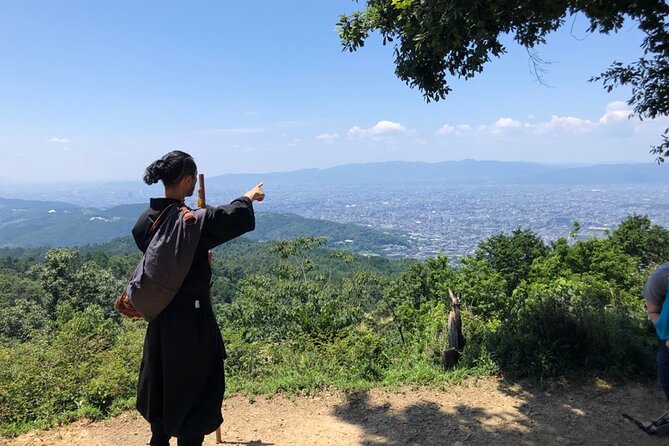
The descent is where the “walking like a ninja” lesson really shows. Going down can burn out knees and mess up balance, especially when you’re tired. A good guide will keep you aware of weight shifting and step placement so you don’t just stumble your way back down.
Coming down toward Ginkakuji also means your training route ends with a familiar destination in Kyoto. Even if you didn’t plan extra time at Ginkakuji afterward, it’s a meaningful way to connect the mountain walk back to the city’s heritage rhythm.
One practical advantage: you end back at the meeting point, so you don’t need to coordinate a long, complicated finish. After a walk like this, that matters. You can keep exploring Kyoto without worrying about transport timing for the end of the hike.
What’s included (and what you need to bring)
The listing says all fees and taxes are included, and you’ll use a mobile ticket. That’s a plus because you won’t get surprised by extra entrance fees for the experience itself.
But a few key things are not included:
- snacks
- bottled water
- private transportation
Also, the info notes there’s no restroom on board. (On a mountain hike, you’ll typically rely on breaks and whatever facilities are available near trail access points, but you should not plan on guaranteed restroom access the whole time.)
So here’s your practical checklist:
- Wear comfortable hiking shoes with good grip.
- Bring water and a small snack so you don’t make the hike harder than it needs to be.
- Use light layers; Kyoto weather can shift during a morning walk.
- Bring any regular medications you need.
The experience also requires good weather. If conditions aren’t safe, the tour can be offered on another date or refunded—so don’t lock this into a day where rain would ruin your schedule.
Price and value: $347.48 per person, and why it might be worth it
At $347.48 per person, this is a premium activity. It’s not “cheap fun,” and it’s not just because you’re paying for a guide. You’re paying for instruction: Ninjutsu and mountain-walking coaching, plus the time it takes to teach breathing and walking efficiency in a way that helps you apply it on the trail.
The value gets stronger if:
- you want a private and coached experience (your group stays together and the guide can adjust pacing)
- you like martial traditions and want more than a costume photo-op
- you appreciate learning practical techniques you can use later, not just collecting stamps
The value drops if:
- you want a low-cost group bus style tour
- you’re mainly chasing scenery and don’t want a training-focused format
- you’re traveling solo on a tight budget and would prefer a cheaper hike guide
My take: this price can feel steep, but it starts to make sense when you treat it as an instruction session that happens to include hiking.
Who this tour fits best (and who should reconsider)
This tour is described for travelers with moderate physical fitness. The route is relatively gentle and safe, and it’s planned to be doable for beginners—but the hike still has an effort level. If you have knee issues or you dislike sloped trails, you might find it tiring.
It tends to be a great match for:
- first-time hikers who want guidance rather than a solo struggle
- families with teenagers who can follow instructions and enjoy hands-on learning
- people interested in Japanese martial arts and want real-world movement coaching
- anyone who wants an off-mainline Kyoto experience without sacrificing comfort and safety
If you’re expecting an easy stroll with no training cues, adjust your expectations. This is activity with instruction—breathing, movement, manners, and focus.
The guides and teaching style: why it feels personal
The strongest praise in the experience is about the guide’s style—especially Izo Sensei. Past participants have described him as friendly, interesting, and knowledgeable, and they’ve called out specific coaching topics like breathing and efficiency of movement.
That coaching isn’t abstract. When a guide explains how to walk with less waste—how to place your foot, how to manage breath, how to keep your mind from racing—you get immediate benefit. You can feel it within the first part of the hike.
And the private format amplifies that. When corrections happen on the spot, you don’t have to guess or wait your turn. It’s a big quality difference from large-group walking tours.
Should you book Ninja Trekking at Mt. Daimonji?
Book it if you want Kyoto with motion and meaning. This tour gives you a half-day Ninjutsu-inspired mountain walk, guided step-by-step, with practical breathing and walking tips you can actually apply after you get home.
Skip it (or choose a different tour) if you mainly want a low-effort photo route or you’re on a tight budget. Also reconsider if your fitness level is below moderate, because while the course is planned as gentle, it’s still a real hike.
If you’re on the fence, here’s my simple decision rule: if you’d enjoy learning how to move better while walking through Kyoto’s power-spot mountain terrain, this is a strong match.
FAQ
What time does the Ninja Trekking tour start?
The start time is 10:00 am.
How long is the Mt. Daimonji Ninja Trek?
It runs about 4 to 5 hours.
Where do we meet and where does the tour end?
You meet at NINJA DOJO and STORE KYOTO Japan (5?28 2F, Hakurakutenchō, Shimogyo Ward). The activity ends back at the meeting point.
Is the route suitable for beginners?
The course is described as relatively gentle and safe, and it’s paced so even beginners can participate.
How far do you walk?
The overall course length is about 7.5 km.
What should I bring?
Bring your regular medications if needed, and plan to bring your own snacks and bottled water since these are not included. Comfortable walking shoes are a must.
Is transportation included?
No. Private transportation is not included.
Are there entrance tickets you need to pay for?
Admission for the Mt. Daimonji segment is listed as free.
Is this a private tour?
Yes. Only your group participates.
What happens if the weather is bad?
The experience requires good weather. If it’s canceled due to poor weather, you’ll be offered a different date or a full refund.
More Tours in Kyoto

More Tour Reviews in Kyoto
More Samurai and Ninja Sessions

Just added: more Kyoto tours to browse





Kyoto Samurai & Ninja Experiences, compared.
 ★ 5.0Kyoto Samurai ExperienceFrom $1191,294 reviews
 ★ 4.9Kendo and Samurai Experience with Uniform and GearFrom $103815 reviews
 ★ 4.9Samurai Sword Class by Experts in Traditional ArtsFrom $64657 reviews
 ★ 4.5Skip the lines Basic Ticket at SAMURAI NINJA MUSEUM KYOTOFrom $28632 reviews
 ★ 5.0Ninja 1-hour Hands-on Lesson by Japanese master in Kyoto -EntryFrom $80489 reviews
 ★ 4.8Ninja Weapon Forging ExperienceFrom $148478 reviews
 ★ 4.5Samurai Kenbu Traditional Sword Dancing ShowFrom $32426 reviews
 ★ 5.0Samurai Training with Modern day Musashi in KyotoFrom $132256 reviews
Browse the lists this tour appears in