
Reviewed · KYOTO TEA CEREMONIES
Kyoto Tea Ceremony and Samurai Photo Session
Matcha, history, and samurai photos in Kyoto. This Kyoto tea ceremony packs hands-on matcha making, seasonal wagashi, and a modern matcha latte, all inside a 100-year-old machiya before you switch gears to authentic samurai armor photos.
I especially like two things: you don’t just watch, you make your own matcha and learn the process in a way that sticks. I also like that you get to taste seasonal wagashi and finish with a Kyoto-style matcha latte, so it’s not only traditional, it’s practical and fun.
One consideration: at about 1 hour 20 minutes, it’s a short, focused experience. If you’re craving a long, slow, multi-course tea ritual, plan for a quick hit rather than a full afternoon.
In This Review
- Key Highlights You’ll Feel Right Away
- Kyoto Matcha Ceremony With a Modern Twist (and Samurai Armor Photos)
- Getting There: Samurai Gyoza Factory as Your Start Point
- Inside the Machiya: How the Tea Ceremony Runs in About 50 Minutes
- Matcha Latte Mastery: Turning Tradition Into Something You’ll Actually Use
- Wagashi and the Tasting Moment You Should Slow Down For
- Samurai Armor Photos: Fun Props With Real Cultural Feel
- Your Host Matters: Maya’s Humor, Patience, and Clear English
- Small Group Size (Up to 10) and What It Means for You
- Price and Value: What $71.74 Buys in Kyoto
- Who This Experience Fits Best (and Who Might Want Something Else)
- Quick Tips So You Don’t Waste a Minute
- Should You Book Kyoto Tea Ceremony and Samurai Photo Session?
- FAQ
- How long is the Kyoto Tea Ceremony and Samurai Photo Session?
- Is this experience hands-on or mostly watch-and-learn?
- Do you get to try wagashi during the tea ceremony?
- Do I also get matcha latte training, not just matcha tea?
- Are samurai armor photos included?
- How large is the group?
- Where do we meet for the tour?
- Is the tour near public transportation?
- Is there a mobile ticket?
- Can I cancel for free?
Key Highlights You’ll Feel Right Away
- 100-year-old machiya setting: a real traditional townhouse atmosphere that makes the lesson feel grounded
- Small group of up to 10: more interaction, less waiting around
- Hands-on matcha making: you learn the steps and then do them, not just watch
- Matcha latte + seasonal wagashi: you get the traditional sweets plus a modern twist
- Samurai armor photo time: you leave with images that are part costume, part cultural storytelling
- Instructor Maya’s friendly English: clear explanations with humor and patience
Kyoto Matcha Ceremony With a Modern Twist (and Samurai Armor Photos)
Kyoto tea culture has a reputation for being formal, precise, and almost too beautiful to touch. What I like about this experience is that it keeps the spirit of the ceremony, while making it doable for normal humans with limited time. You’ll learn the basics, participate, taste what you make, and then add a playful photo finish.
The setting helps. You’re doing this in a traditional Kyoto machiya that’s about 100 years old. That old-house feel matters because it slows you down just enough to pay attention. You’ll also hear about the tea ceremony’s meaning, not only the steps.
And then comes the curveball that makes the whole thing memorable: you wear authentic samurai armor and get photo opportunities. It’s not just a craft class. It’s a mini cultural performance with a strong “Kyoto” vibe.
Sit for another bowl of matcha in a Kyoto tea house


Getting There: Samurai Gyoza Factory as Your Start Point
The meeting point is the Samurai Gyoza Factory Kyoto, at 230-1 Kamimyōkakujichō in Nakagyō Ward. The good news is that it’s described as near public transportation, so you’re not stuck in the countryside or requiring a car.
Here’s how I’d handle logistics on a busy Kyoto day:
- Aim to arrive a bit early so you don’t rush into your lesson
- Confirm you can access your mobile ticket on your phone before you leave
- Leave yourself a small buffer after your last Kyoto stop, because streets can be crowded and signage can be quirky
This tour ends back at the meeting point, which is handy. You don’t have to build an after-plan around getting to a new area.
Inside the Machiya: How the Tea Ceremony Runs in About 50 Minutes
The core experience happens in the machiya and takes roughly 50 minutes. That’s long enough to learn, try your hands at matcha, and taste it properly, without stretching so much that you lose focus.
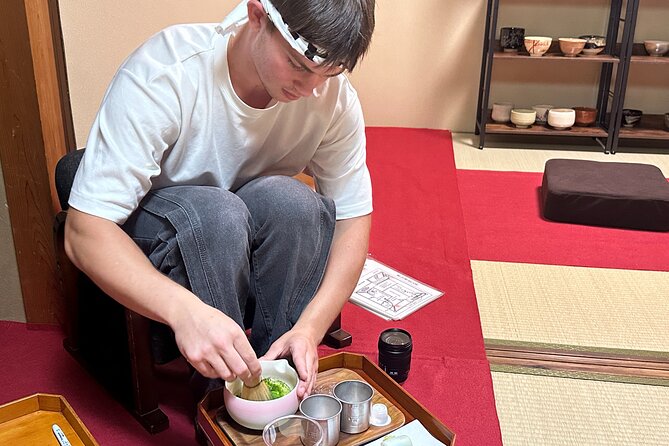
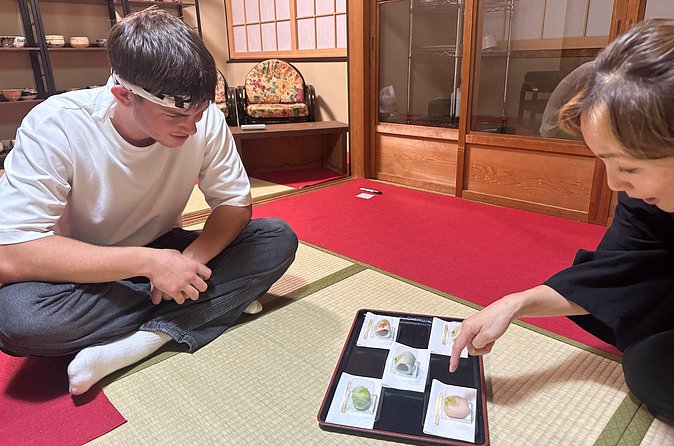
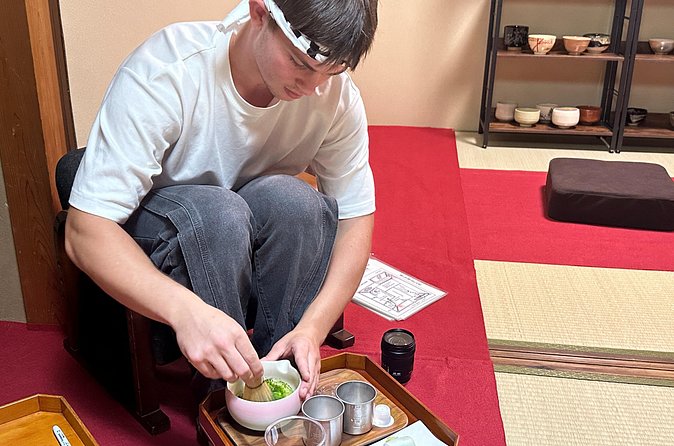
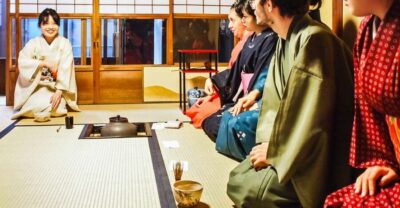
You’ll start by stepping into the calm of the townhouse and getting oriented. Then you’ll watch the instructor demonstrate how the tea ceremony works. After that, it becomes hands-on. You make your own matcha using the traditional method taught during the session.
This is where most people get the most value: you’re learning the “why” behind the motion, not just copying a recipe. In the feedback you can see the pattern—people consistently highlight how the instruction is easy to follow and how they felt encouraged while trying.
Also worth noting: the matcha is treated as quality. People call it out directly, which matters because matcha can be either a satisfying experience or a chalky disappointment. Here, it’s clear you’re tasting something worth paying attention to.
Matcha Latte Mastery: Turning Tradition Into Something You’ll Actually Use
Kyoto does tradition with style, and this experience matches that. After you make matcha traditionally, you also craft a modern matcha latte—described as a creamy Kyoto-style latte.
You’re not just making a drink for the moment. You’re training your senses:
- You learn how the matcha flavor works when it meets milk
- You get a feel for balance, texture, and sweetness cues through the process
- You walk away with enough confidence to recreate it at home
One detail that stood out in the feedback: some participants received a recipe to take home. That’s the kind of “takeaway” that makes the cost feel more justified. You’re not buying entertainment only—you’re buying a skill you can repeat.
If you’re a first-time tea person, this latte portion is a smart bridge. You still get the ceremony context, but you end with a flavor format that’s familiar and craveable.
Wagashi and the Tasting Moment You Should Slow Down For
The experience includes seasonal wagashi, which are traditional Japanese sweets served with tea. This matters more than it sounds. Wagashi are part of how Japanese tea culture balances taste, seasonality, and presentation.
Since the wagashi are seasonal, you’ll get whatever the time of year calls for. You’re not just eating a snack—you’re experiencing a pairing. People in the feedback call the wagashi delicious, which is a good sign that it’s more than filler.
Practical tip: keep your energy for tasting. It’s easy to treat sweets as a quick finish, but wagashi are one of the points where people remember the experience most. If you’re rushed that day, this is where you can still reset your pace.
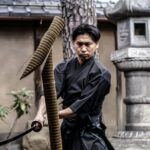
Pick up the blade again with these Kyoto sessions

Samurai Armor Photos: Fun Props With Real Cultural Feel
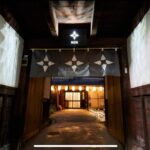
After the tea portion, you shift into the photo session. This is one of the headline features: you can don authentic samurai armor for pictures. That means you’ll get a visual memory that goes beyond smiling with a landmark in the background.
A quick reality check before you go: putting on armor (even for photos) takes some time and attention. Plan to spend a few minutes moving carefully and following directions so you’re comfortable and the fit works for photos.
Also, bring the right mindset. This isn’t a museum reenactment lecture. It’s a photo opportunity that lets you experience the look and feel of the armor in a structured, guided way.
If you care about getting great shots, take advantage of the photo opportunities during the session. Don’t wait until the end when momentum has dropped.
Your Host Matters: Maya’s Humor, Patience, and Clear English
Many participants specifically mention the instructor by name: Maya. That isn’t just a name drop. It points to what you’re likely to experience in the room: teaching that feels friendly and interactive, with English that’s described as excellent.
What gets praise repeatedly is the combination of:
- A clear explanation of tea ceremony history and process
- Patience when you’re learning something new
- A light sense of humor that keeps the mood relaxed
- Encouragement to try steps yourself instead of sitting back
For you, that translates into less stress. A tea ceremony can feel intimidating if you worry about doing things wrong. Here, the style described is that you’ll be coached through it.
And yes, that same coaching shows up in the details: people mention making both matcha traditionally and then as a latte, plus plenty of photo time. That’s a lot to fit into about 1 hour 20 minutes, so the pacing depends on the host doing their job well.
Small Group Size (Up to 10) and What It Means for You
This experience caps at 10 travelers. That’s a meaningful detail, because it affects everything from how quickly you can ask questions to how long you wait for your turn.
In small groups:
- You’re more likely to get personal attention during hands-on parts
- You don’t feel like a number in a schedule
- You can ask about taste, technique, or what you’re doing in real time
If you’ve done tours in big groups before, you know how that goes: one person drops a question, and everyone else waits. Here, the setup is built for interaction.
Price and Value: What $71.74 Buys in Kyoto
At $71.74 per person, this is not the cheapest way to spend an hour and change in Kyoto. So let’s talk value in a practical way.
You’re paying for several bundled parts:
- A guided tea ceremony in a real machiya setting
- Hands-on matcha making
- Seasonal wagashi
- A matcha latte you make and taste
- Samurai armor for photos
- A small-group format that supports participation
On top of that, participants mention getting an official certificate at the end. Some also mention receiving a recipe for making matcha latte at home. Those are real “you can take it with you” benefits that go beyond an experience where you only consume.
Finally, the booking pace is strong—on average, it gets booked about 72 days in advance. That often signals two things: demand is decent, and you may want to reserve early so you can pick a time that fits your Kyoto plan.
If your goal is a quick, high-impact cultural activity with memorable photos, this pricing starts to make sense.
Who This Experience Fits Best (and Who Might Want Something Else)
I think this is a great fit if:
- You want an easy entry point into Kyoto tea culture
- You like learning by doing, especially with food
- You want a souvenir photo experience that isn’t cheesy
- You’re traveling with friends and want a shared, fun activity
You might skip it if:
- You want a longer, deeply traditional tea ritual that lasts much longer than 1 hour 20 minutes
- You already know matcha techniques well and mainly want advanced tasting workshops
- You hate hands-on classes or find photo-costume activities distracting
If you fall into the first group, you’ll likely come away with something tangible: know-how, taste memories, and photos you’ll actually want to post.
Quick Tips So You Don’t Waste a Minute
You don’t need special prep, but a few small habits will improve your experience:
- Bring your curiosity. Ask questions about what you’re tasting and doing
- Take your time with the wagashi pairing. That’s not a throwaway sweet
- If you care about photos, pay attention when the timing window starts so you can be ready
- Wear comfortable shoes. Kyoto is a lot of walking, even when the activity itself is indoors
- If you’re new to matcha, treat the latte step as your “confidence builder” at the end
The best part of a short class is that it gives you a reset. You leave with calm for your brain and a story for your camera roll.
Should You Book Kyoto Tea Ceremony and Samurai Photo Session?
If you want one activity in Kyoto that combines hands-on matcha, seasonal tasting, and a fun samurai armor photo finale, I’d book it. The small group size and the instructor’s clear, friendly teaching style make it a low-stress way to learn something real.
I’d also book it if you like experiences with takeaways like a certificate and a recipe. Those details help justify the price and give you a reason to remember the day after you’re back home.
If you’re the type who wants a long, slow ceremony with fewer “extra” elements, this may feel fast. But for most people, the mix of tradition and modern matcha latte plus the armor photos is exactly the point.
FAQ
How long is the Kyoto Tea Ceremony and Samurai Photo Session?
It runs for about 1 hour 20 minutes.
Is this experience hands-on or mostly watch-and-learn?
It’s interactive. You’ll make your own matcha, and you’ll also craft a matcha latte.
Do you get to try wagashi during the tea ceremony?
Yes. You’ll enjoy seasonal wagashi as part of the experience.
Do I also get matcha latte training, not just matcha tea?
Yes. You make a creamy Kyoto-style matcha latte as part of the session.
Are samurai armor photos included?
Yes. You can wear authentic samurai armor for photos.
How large is the group?
The maximum group size is 10 travelers.
Where do we meet for the tour?
The meeting point is Samurai Gyoza Factory Kyoto, 230-1 Kamimyōkakujichō, Nakagyō Ward, Kyoto, 604-0025, Japan.
Is the tour near public transportation?
Yes, the meeting area is described as near public transportation.
Is there a mobile ticket?
Yes. The tour uses a mobile ticket.
Can I cancel for free?
Yes. Free cancellation is available up to 24 hours in advance for a full refund. Changes made less than 24 hours before the start time aren’t accepted.
More Kyoto Photo Walks


More Samurai and Ninja Sessions
One More Bowl of Matcha

Just added: more Kyoto tours to browse








Kyoto Tea Ceremonies, compared.
 ★ 4.9Tea Ceremony in a Traditional Tea House in KiyomizuFrom $493,519 reviews
 ★ 4.9Tea Ceremony Ju-An at Jotokuji TempleFrom $293,207 reviews
 ★ 4.345-Minute Tea Ceremony Lesson ExperienceFrom $222,378 reviews
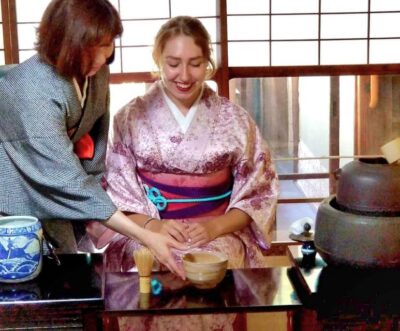 ★ 4.9Table-Style Tea Ceremony at a Kyo-MachiyaFrom $451,211 reviews
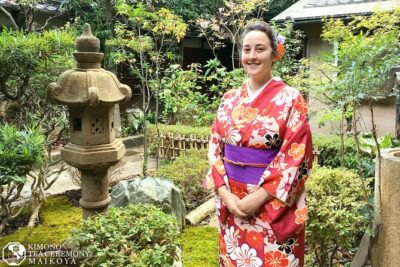 ★ 5.0Kimono Tea Ceremony at Kyoto Maikoya, NISHIKIFrom $65911 reviews
 ★ 5.0Arashiyama Bamboo Forest, Monkeys, Matcha & Temple TourFrom $53759 reviews
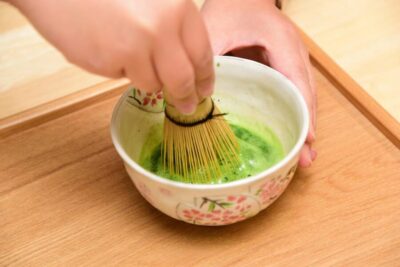 ★ 4.9Tea Museum Tickets and Matcha Grinding ExperienceFrom $23739 reviews
 ★ 4.9Kimono Tea Ceremony at Orizuruya GionFrom $49618 reviews
Browse the lists this tour appears in