
Reviewed · GION & GEISHA DISTRICT TOURS
Kyoto Samurai and Geisha Town Private Walking Tour
Kyoto can feel like a living textbook. This private walking tour connects samurai-era power to the streets you still walk today, with stops at Nijo Castle, Kinkakuji, Gion, and Kennin-ji.
I especially like the early-morning pacing, which helps you see big sights before they get crowded, and the way your guide ties the sites together into a clear Japan story as you move. One thing to consider: it’s a solid 7 hours of walking and temples, so plan for some steady pace and comfortable shoes.
In This Review
- Key things I think you’ll care about
- Walking Kyoto’s samurai story, not just snapping photos
- Nijo Castle: the shogun’s Kyoto base
- Kinkakuji Temple: Golden Pavilion and the pond reflection
- Gion in daylight: geisha district culture at a human pace
- Kennin-ji: Kyoto’s early Zen landmark in the Gion area
- How the guide makes the route feel efficient (without rushing you)
- Price and value: $135.59 that includes tickets and transit
- Timing and logistics: 8:00 am start and about 7 hours
- Who should book this tour?
- Should you book this Kyoto Samurai and Geisha Town Private Walking Tour?
- FAQ
- Where does the tour start and end?
- What time does the tour begin?
- How long is the tour?
- Is this a private tour?
- Which stops are included?
- What’s included in the price?
- Is food included?
- Is the tour stroller-friendly?
- How does cancellation work?
Key things I think you’ll care about
- Early start for quieter streets: You begin at 8:00 am to beat the busiest hours.
- Samurai and court connections in one route: Shogun-linked temples and castles plus Gion’s preserved culture.
- Golden Pavilion plus reflections: Kinkakuji’s famous look is a centerpiece of the day.
- Gion without the chaos: You get time in the biggest geisha district, focused and unhurried.
- Kennin-ji’s early Zen roots: A history-heavy stop in the Gion area.
- Tickets and transit handled: Admission fees, guide service, and public transportation are included.
Walking Kyoto’s samurai story, not just snapping photos
Kyoto ruled for centuries, and it wasn’t only emperors and noble families calling the shots. The city also mattered deeply to the samurai world—especially shoguns—because leaders needed places to stay, pray, and project power when they came through. That’s the thread I liked most here: you’re not just visiting famous buildings. You’re watching how authority shaped the places around you.
This is set up as a private tour, so you’re not stuck in a fast-moving pack. Your guide keeps you moving efficiently between sites, while still leaving time to take in details and ask questions. The result feels like a walk with context, not a checklist.
You’ll also appreciate that the tour leans into the Kyoto you can still recognize today: old temples, preserved neighborhood streets, and the world-famous Gion area. It’s a smart way to understand why people say Kyoto holds onto tradition.
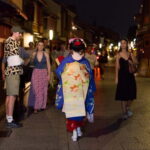
More evenings along the lantern-lit lanes of Gion
Nijo Castle: the shogun’s Kyoto base
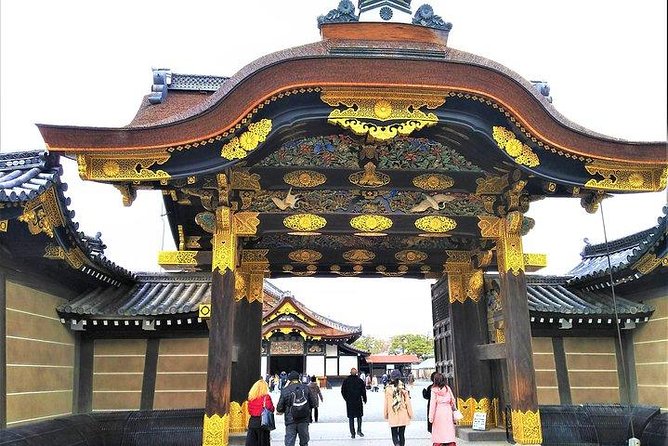
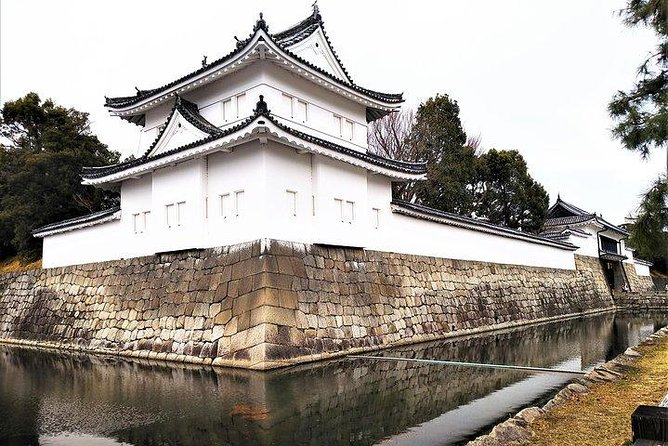
Your day starts at Kyoto Station and then heads to Nijo Castle, a key stop if you want to understand the samurai link to Kyoto. The big idea is simple: in 1603, when the shogun shifted the seat of power toward Edo (today’s Tokyo), Nijo Castle became the place where the shogun stayed when visiting Kyoto.
That purpose matters. When you walk through a building designed for political presence, you can feel how architecture served power. You’re looking at a residence meant to impress, not a casual castle open to everyone.
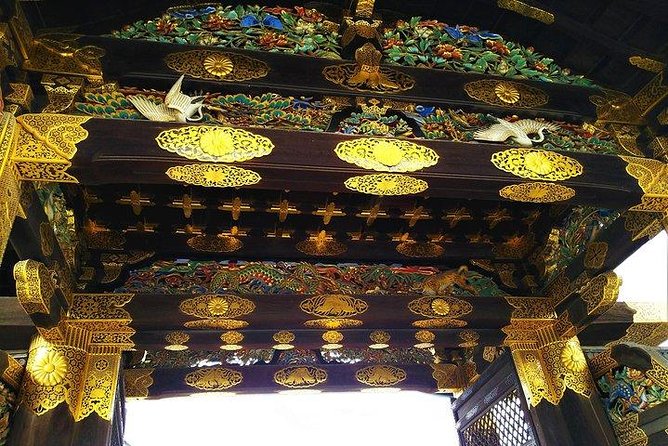
Inside, you’ll see plenty of ornate craftsmanship and fine details—enough to make you slow down, even if you’re used to speeding through attractions. The tour time here is about an hour, which is a good length: long enough to get oriented, short enough that you’re not exhausted before the more visually dramatic stops.
A practical tip: if you like taking notes or photos, use the castle’s interior time to get your bearings early. Once you step into the next stops, your brain will already be tuned to the shogun-to-temple storyline.
Kinkakuji Temple: Golden Pavilion and the pond reflection
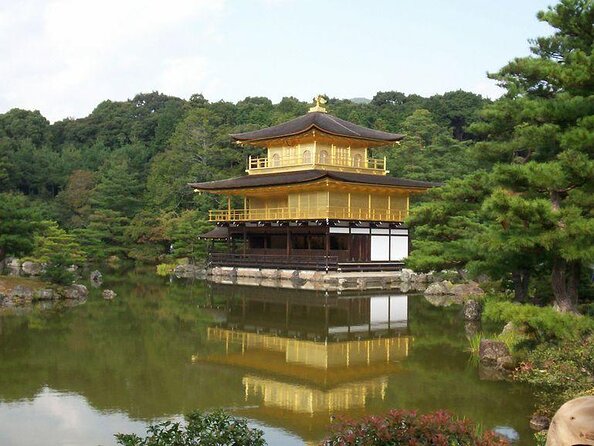
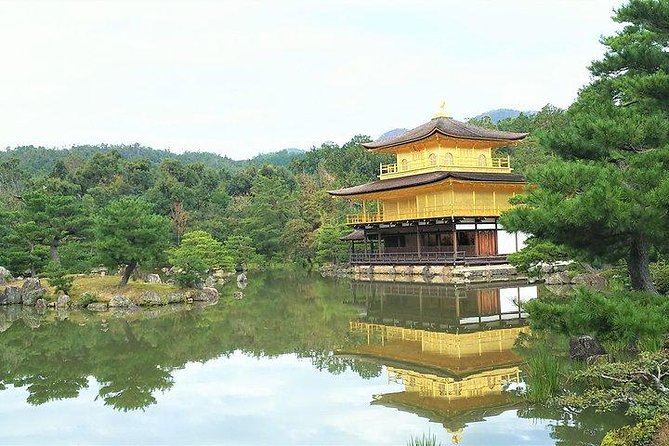
Next comes Kinkakuji Temple, the famous Zen temple built in 1397 by the 3rd shogun of the Ashikaga shogunate. If you’ve seen images online, you already know it’s striking—but seeing the pavilion in person is where it lands. The combination of the golden pavilion and its reflection on the pond is the core visual moment.
What I like is that this stop doesn’t feel random. Kinkakuji fits the same theme as Nijo Castle: power, culture, and belief tied together. Kinkakuji is often treated like a standalone photo stop, but in a guided flow it becomes part of the larger “who influenced Kyoto and how” picture.
The tour gives you about an hour at Kinkakuji, including admission. That’s a sweet spot: enough time to walk around and see how the view changes, without feeling trapped in a long line waiting your turn. And because this tour begins early, you’re less likely to feel like you’re fighting the crowd for your angle.
One small drawback: this is one of Kyoto’s headline sights, so no matter what, it can feel popular. Your best defense is timing—arrive ready to look closely right away.
Gion in daylight: geisha district culture at a human pace
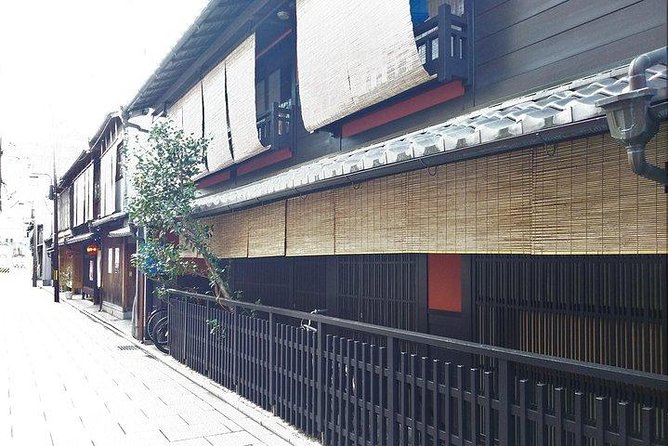
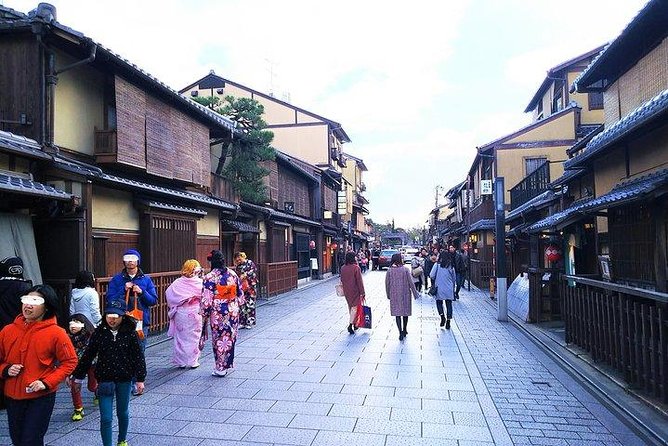
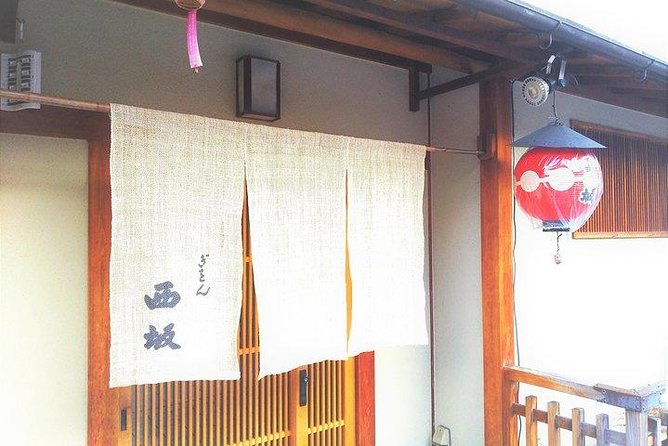
Then you head into Gion, the biggest of Kyoto’s five geisha districts. The time here is about 40 minutes, and it’s ticket-free, which helps keep the day moving without turning every block into an expensive add-on.
Geisha culture is more than costumes and stories. Geisha are trained professional performers and successors of tradition, and this is where that tradition is most visible in everyday streets. Even if you don’t catch performances, you can still sense the cultural weight of the neighborhood: the preserved townhouses, the lanes, and the careful way the district has held onto its identity.
I also liked that the tour doesn’t rush you through Gion. A guided walking route gives you a structure—so you’re not wandering randomly with no sense of what you’re seeing. And since you’re here earlier in the morning, it’s easier to notice details that people miss when they only visit late-day.
How to get more from this stop: keep your eyes open for small architectural cues and street rhythm. Gion becomes more than a name when you slow down and watch the neighborhood’s shape.
Kennin-ji: Kyoto’s early Zen landmark in the Gion area
After Gion, the day shifts to Kennin-ji Temple, located right in the Gion area. This temple was founded in 1202 by the 3rd shogun of the Kamakura shogunate, and it’s noted as the first Zen temple in Kyoto.
That historical “first” matters. It’s one of those stops where the surroundings feel quieter and older, and the guide’s explanation helps you connect the dots between eras. You’re moving from shogun-related context into Zen tradition, and Kennin-ji acts like a bridge between political influence and spiritual development.
The tour time is about 40 minutes with admission included. One of the highlights here is the temple’s dry garden (the type of scene designed to be understood through careful looking). Even if you don’t know the terminology, you can still appreciate the idea: attention as a practice, not just a tourist activity.
A consideration: dry gardens and Zen temple spaces ask for a bit of patience. If you’re the type who wants maximum action every minute, you might find yourself wishing for more time at the most famous photo points. But if you like atmosphere and context, this is where the tour slows down for a reason.
Pick up the blade again with these Kyoto sessions


How the guide makes the route feel efficient (without rushing you)
The best part of this kind of tour isn’t just which places you visit. It’s the way someone connects them into a route you can actually enjoy.
In my experience with tours like this, the difference is pacing. You get efficient movement between stops—so you’re not wasting time figuring out transit connections or where to go next—but you’re not pushed to sprint through temples. You’re given room to take a breath, look, and absorb.
I also liked the extra bits you can’t easily pull from a standard guidebook. Your guide can explain why certain shogun eras mattered to Kyoto’s development and how that shows up in the specific buildings you’re standing in. Even small clarifications can change how you look at the same wall, garden, or gate.
If you’re the kind of visitor who likes understanding what you see, this is a strong match.
Price and value: $135.59 that includes tickets and transit
At $135.59 per person, this isn’t a budget “see everything for cheap” tour. But it does include a lot of the cost drivers that quickly add up in Kyoto.
Here’s what you’re getting for that price:
- Admission fees are included for the major paid sites (Nijo Castle, Kinkakuji, and Kennin-ji).
- Your guide fare is included.
- Public transportation is included.
Food and drink are not included, so you’ll want to plan lunch or snacks on your own. That’s the usual trade-off with tours that keep a tight schedule and focus on sights.
The best value angle is the way admissions and transit are wrapped in. Instead of paying several separate line items while also trying to coordinate directions, you’re paying once and letting the day flow. For a private tour, that matters.
Also, the tour averages are a clue: it’s typically booked about 53 days in advance. That often means popular dates fill up. If your schedule is fixed, it’s smart to plan ahead rather than gamble.
Timing and logistics: 8:00 am start and about 7 hours
This tour runs for about 7 hours, starting at 8:00 am. Your meeting point is at the Kyoto Station Building, with the address listed as 901 Higashishiokōjichō in Shimogyo Ward. It also ends back at the meeting point.
That “early start” is not just a gimmick. Kyoto’s most famous sights can get packed, and starting earlier helps you keep the day enjoyable. It also helps you avoid that late-morning feeling where every lane looks the same because you’re too tired to look closely.
You’ll want moderate physical fitness. This isn’t described as a marathon, but it’s still a full morning-to-afternoon walking tour with temple stops. Wear comfortable shoes and plan your energy like you’re touring on foot for most of the day.
The tour also uses a mobile ticket, which tends to make entry smoother. And since the tour includes public transportation, you won’t be stuck figuring out every transfer yourself.
Who should book this tour?
I’d book this if you want a Kyoto day that feels tied together, not random. The combination of Nijo Castle + Kinkakuji + Gion + Kennin-ji hits both sides of Kyoto: shogun influence and preserved cultural life.
This is also a good fit if you care about explanation. The guide’s job is to connect the sites into a story you can remember, and the tour pacing is set up for that.
If you’re only chasing the most famous photo at each stop, you might feel like the day is slightly too guided and story-focused. But if you want to understand what you’re seeing—and why it matters—this tour makes that easy.
Should you book this Kyoto Samurai and Geisha Town Private Walking Tour?
If your goal is a calm, well-timed Kyoto day with major landmarks and real cultural context, I think this is worth considering. The value is strongest because admissions and public transit are included, and the early start helps you enjoy the day instead of just surviving it.
Book it especially if you like historical connections—shogun eras, Zen temple origins, and why Gion looks the way it does today. I’d skip it only if you don’t want to walk much or you prefer fully self-guided sightseeing with no structure.
FAQ
Where does the tour start and end?
The tour starts at Kyoto Station Building (901 Higashishiokōjichō, Shimogyo Ward, Kyoto 600-8216) and ends back at the same meeting point.
What time does the tour begin?
The start time is 8:00 am.
How long is the tour?
It’s listed as about 7 hours.
Is this a private tour?
Yes. It’s a private tour/activity, and only your group participates.
Which stops are included?
The tour includes Nijo Castle, Kinkakuji Temple, Gion, and Kennin-ji Temple.
What’s included in the price?
Admission fees, guide fare, and public transportation are included.
Is food included?
No. Food and drink are not included.
Is the tour stroller-friendly?
It is not stroller accessible.
How does cancellation work?
You can cancel for a full refund up to 24 hours in advance of the experience’s start time. It may not be refundable if you cancel less than 24 hours before start time.
More Tour Reviews in Kyoto
More Samurai and Ninja Sessions
Still in Gion? Keep Going

Just added: more Kyoto tours to browse





Gion & Geisha District Tours, compared.
 ★ 4.7Kyoto Geisha Walking Tour: Gion District & Hidden GemsFrom $253,273 reviews
 ★ 4.9Gion Magical Night Walking Tour with Geisha TriviaFrom $242,393 reviews
 ★ 4.7Gion Geisha District Walking Tour – Stories of GeishaFrom $202,187 reviews
 ★ 4.9Best of Kyoto: Gion, Geisha, Pagodas & CobblestonesFrom $242,058 reviews
 ★ 4.5Night Walk in Gion: Kyoto’s Geisha DistrictFrom $212,003 reviews
 ★ 5.0Kyoto Night Foodie Tour in Gion (9+ dishes + 6 Sake tastings)From $1631,762 reviews
 ★ 5.0Kyoto Gion Geisha District Walking Tour – The Stories of GeishaFrom $251,441 reviews
 ★ 5.0Kyoto Gion: 2-Hour Geisha Culture & History Walking TourFrom $231,186 reviews
Browse the lists this tour appears in