
Reviewed · KYOTO PRIVATE GUIDED TOURS
Kyoto: Private tour with Kyoto’s licensed guide. Spanish
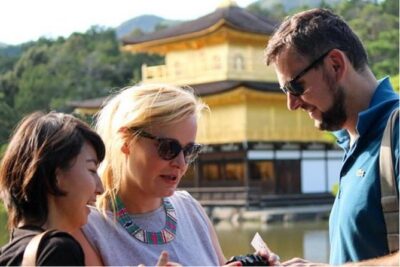
Gold leaves shine in Kyoto in daylight. This private Spanish tour is interesting because it strings together Kyoto’s big-name sights with a Kyoto-city licensed guide and iPad explanations with images so the history lands quickly. The main catch is simple: it’s a long day with a fair amount of walking, so you’ll want comfortable shoes and decent stamina.
I like that the day feels organized but not rigid. You get a smooth flow using public transport, plus time buffers to breathe and eat a short lunch at Nishiki Market. It’s also rain or shine, so you should dress for the weather and expect wet streets if it pours.
In This Review
- Key highlights worth planning for
- Kyoto in one day: what makes this tour work
- Getting started: Kyoto Station pickup and smooth transit
- Kinkaku-ji (Golden Pavilion): gold leaf plus Zen context
- Nijo Castle: shogunal authority from the Edo period
- Nishiki Market lunch break: Kyoto’s Kitchen for a short bite
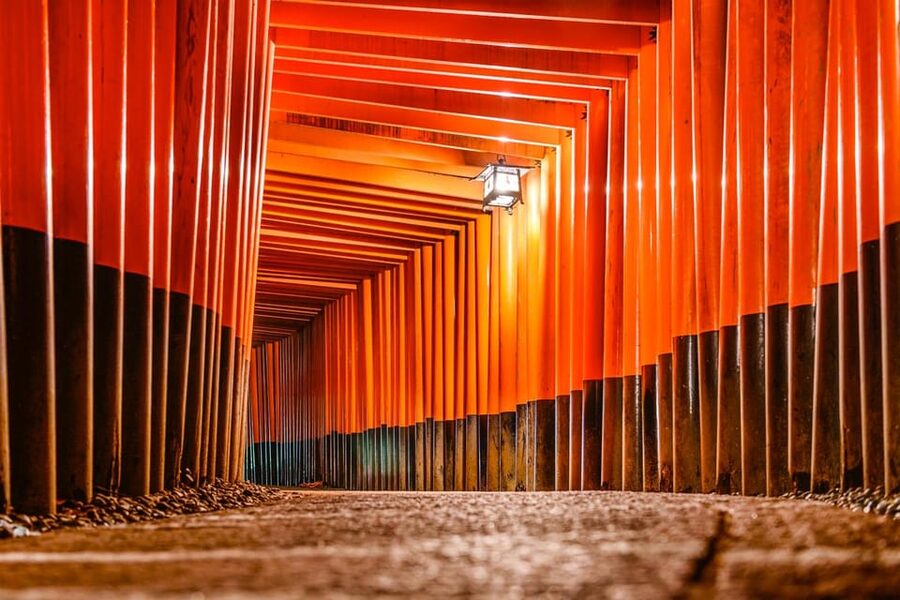
- Fushimi Inari Taisha: torii gates and fox statues on a long stroll
- Kiyomizu-dera and the Sannenzaka lanes: temple plus shopping streets
- Gion: geiko, maiko, and Kyoto’s old wooden streets
- Price and what you’re really paying for (plus the extras)
- Who this tour is best for (and who should skip it)
- Should you book this Spanish private Kyoto day tour?
- FAQ
- What language is the tour in?
- Where do we meet the guide?
- Is this a private group tour?
- How long is the tour?
- Are temple entrance fees included?
- Are food and drinks included?
- Is transportation included in the price?
- Can I take pictures during the tour?
- Does the tour run in bad weather?
- Is the tour suitable for people with limited mobility?
Key highlights worth planning for
- City-licensed Kyoto guide who leads you through the sights in Spanish
- iPad with illustrated explanations that help you follow along fast
- UNESCO stops plus Kyoto food time with Kinkaku-ji, Nijo Castle, Nishiki Market, and more
- Lots of photo time for you (with guidance on where photos are restricted)
- A practical route using public transportation to cover major areas efficiently
Kyoto in one day: what makes this tour work
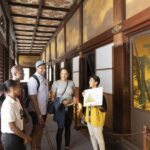
Kyoto can be overwhelming on your own. Streets twist. Signs help, but context helps more. That’s where a licensed guide makes a real difference. They don’t just point. They explain what you’re looking at and why it matters, in Spanish, with the support of an iPad full of visual explanations.
The iPad part is a big deal. When you’re standing in front of something iconic, it’s easy to miss details. With images and guided context, you can connect the dots while you’re actually there. I also like the private-group feel. Even with several major stops, you’re not fighting for attention.
One practical note: it’s still a full schedule. You’re visiting multiple major areas, using subway/train/bus and then walking at several temples and neighborhoods. If you need frequent rests, this schedule may feel like too much.
Have a local lead the way on more Kyoto tours

Getting started: Kyoto Station pickup and smooth transit
Your day begins at Kyoto Station Building, in front of Seven Eleven. That’s a simple meeting point, and it matters because Kyoto Station is big. Once you’re in the rhythm, the tour moves by subway, bus/coach, and train, with guided time inside key sites.
The timing is built around travel between areas rather than lingering forever in one place. That’s great if you only have one day, but you should go in with the right mindset: this is a “see the essentials well” plan, not a slow wander with hours to spare at each stop.
This tour runs rain or shine. So bring clothes for wet weather, even if the forecast looks decent. The route uses public transportation, and inside temples there’s quite a bit of walking. If you have back issues or leg limitations, you’ll want to read the suitability section carefully before booking.
Kinkaku-ji (Golden Pavilion): gold leaf plus Zen context
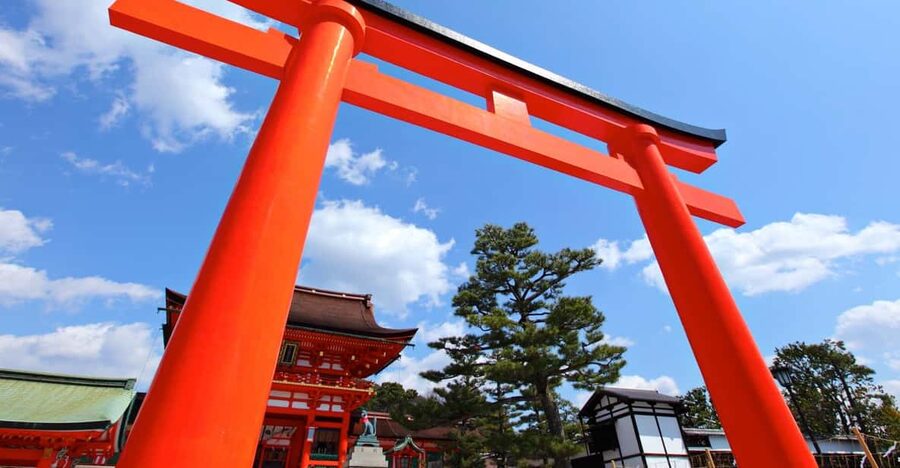
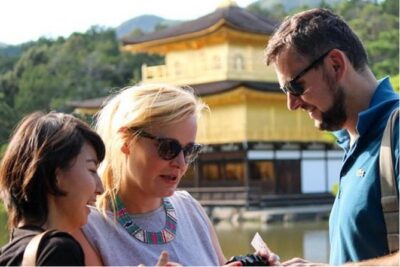
Kinkaku-ji, the Golden Pavilion, is one of Kyoto’s most photographed sights for a reason. It’s a UNESCO World Cultural Heritage site and a Zen Buddhist temple famous for the upper floors covered with gold leaf.
What makes the guided time valuable is how quickly you learn how to look. The gold leaf isn’t random decoration. It has long been used to signal wealth, power, and devotion. With a guide actively walking you through that meaning, you’re not just chasing a picture. You’re understanding the symbolism while you’re standing in front of it.
The tour includes 75 minutes at Kinkaku-ji. That’s usually enough time to see the main viewpoints without feeling rushed. Also keep in mind the tour notes: inside some temples, there are places where taking pictures is forbidden. It’s not something you can control, so just be ready for a few “no photo” zones.
Practical tip: wear shoes you’re happy to keep on for hours. This stop is part of a larger walking day, not a quick photo sprint.
Nijo Castle: shogunal authority from the Edo period
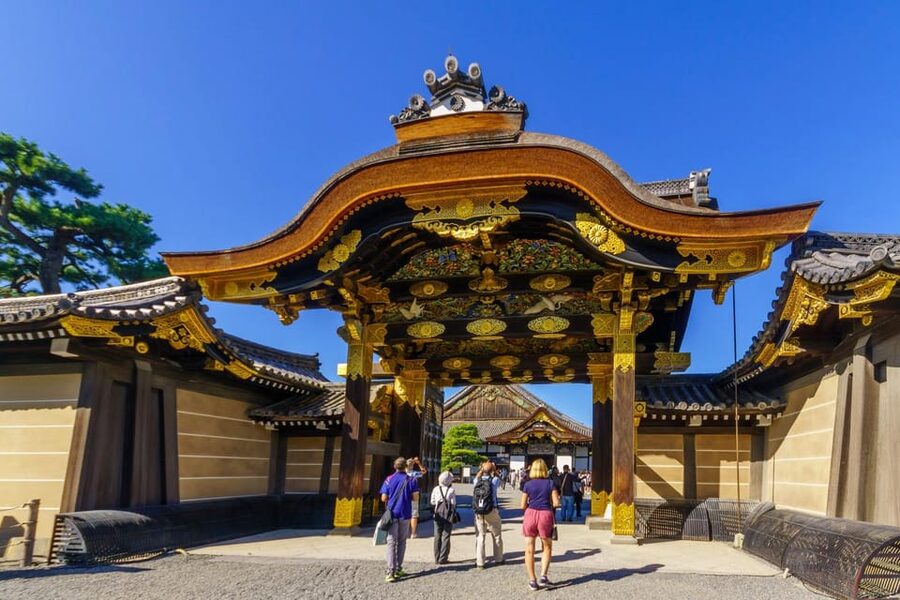
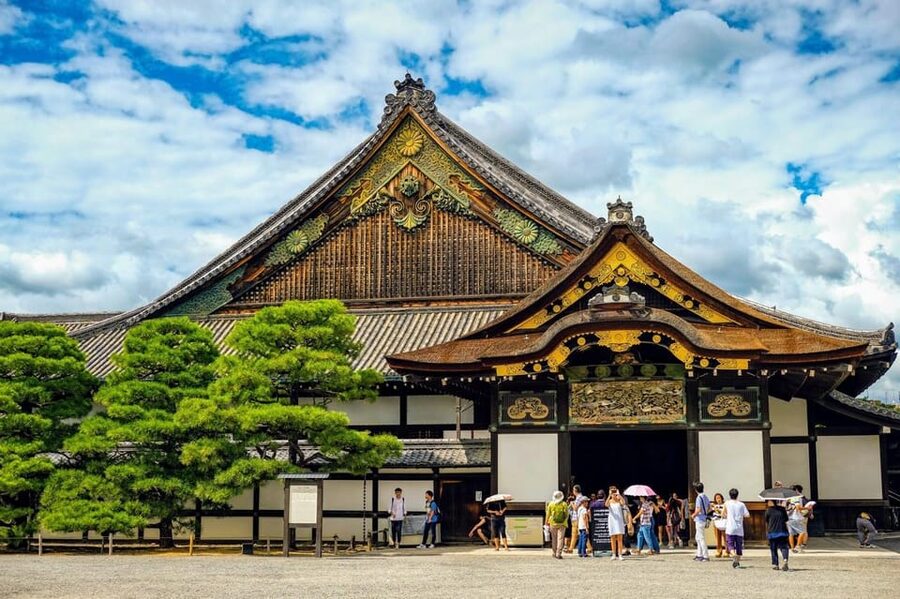
Next comes Nijo Castle, a powerful Edo-period symbol of shogunal authority (1603–1867). It’s also a UNESCO World Heritage site, and the story here is about political power and the Tokugawa legacy.
The tour’s guided focus helps you understand the castle as more than a set of buildings. Once a residence of Tokugawa Ieyasu, the founding shogun of the Tokugawa dynasty, Nijo Castle ties into Japan’s historical arc for over 200 years. With a guide interpreting what you’re seeing, you can grasp why people treat this as a must-do.
You’ll have about 1.5 hours on this stop, which is a good amount for castle grounds and interpretation without turning it into a marathon. One cost detail to plan for: entrance to Nijo Castle is listed as 1,300 yen (about US$8.50). It’s not included in the base price, so budget for it.
Photo note: like the other temple sites, there are rules about what you can and can’t photograph inside certain areas. Your guide can help you navigate this smoothly.
Nishiki Market lunch break: Kyoto’s Kitchen for a short bite
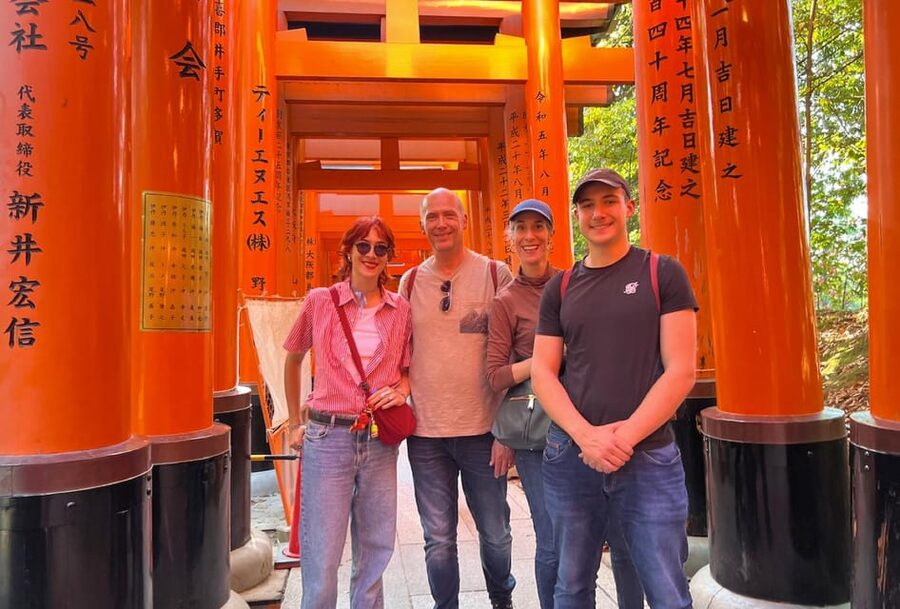
After castles and temples, you get a reset at Nishiki Market, often called Kyoto’s Kitchen. It’s a central shopping street filled with a mix of traditional and modern Japanese food, ingredients, and crafts.
This is your break time (about 30 minutes). Food and drinks aren’t included, so you choose what fits your taste and your budget. Even with only half an hour, Nishiki works well because it’s practical: you can grab something quick, browse a bit, and get moving again.
What I like about this stop is that it’s not a “sit-down meal” that eats the day. It’s a short, lively break in the middle of a structured route. If you use it well, you’ll come out energized for the long walk at Fushimi Inari and the big temple area at Kiyomizu-dera.
Practical advice: since it’s only 30 minutes, decide your plan early. Look around for something you want right away so you’re not stuck deciding while everyone else is moving on.
Other Kyoto tours and experiences to compare

Fushimi Inari Taisha: torii gates and fox statues on a long stroll
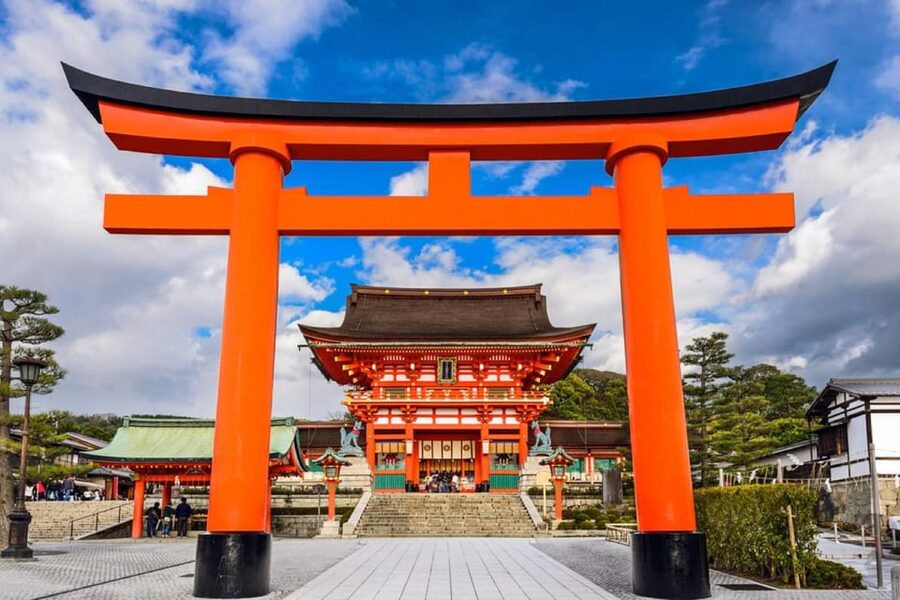
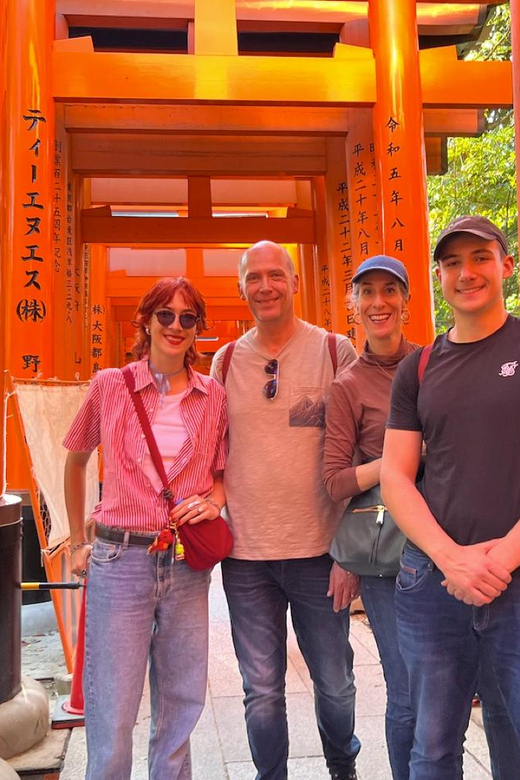
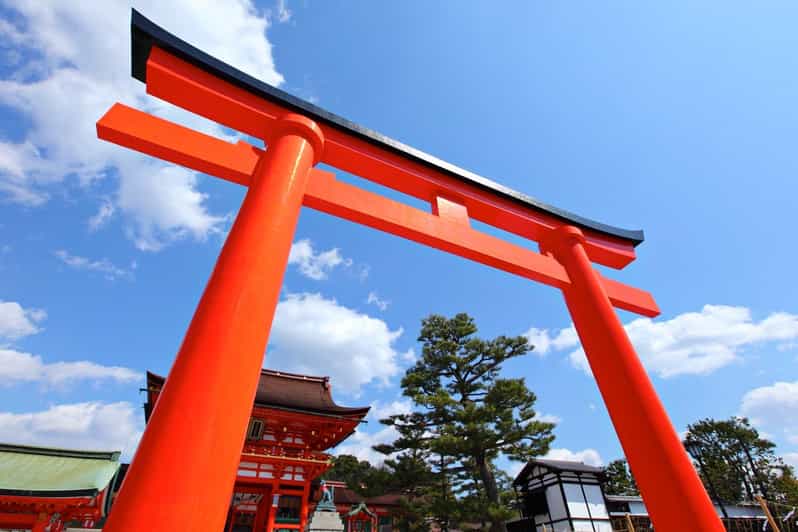
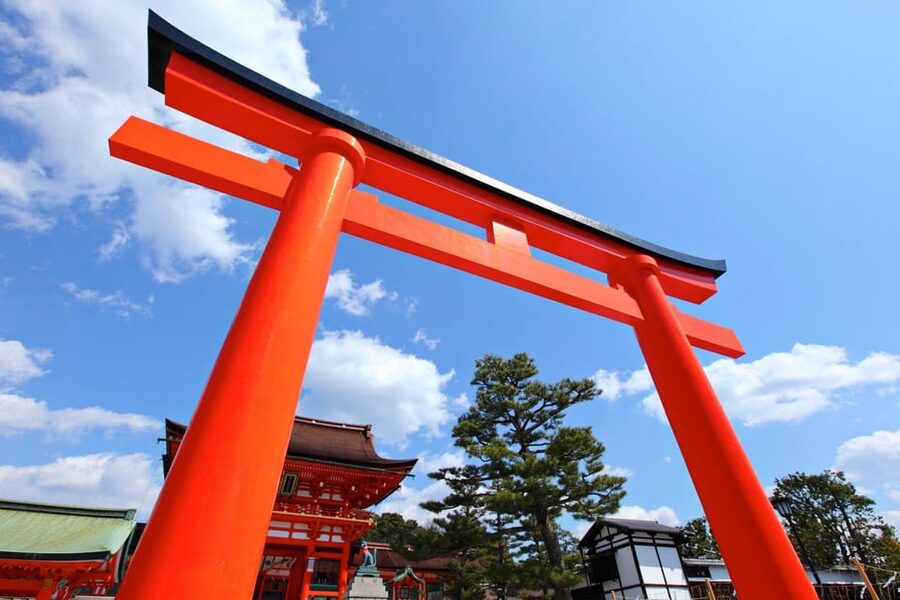
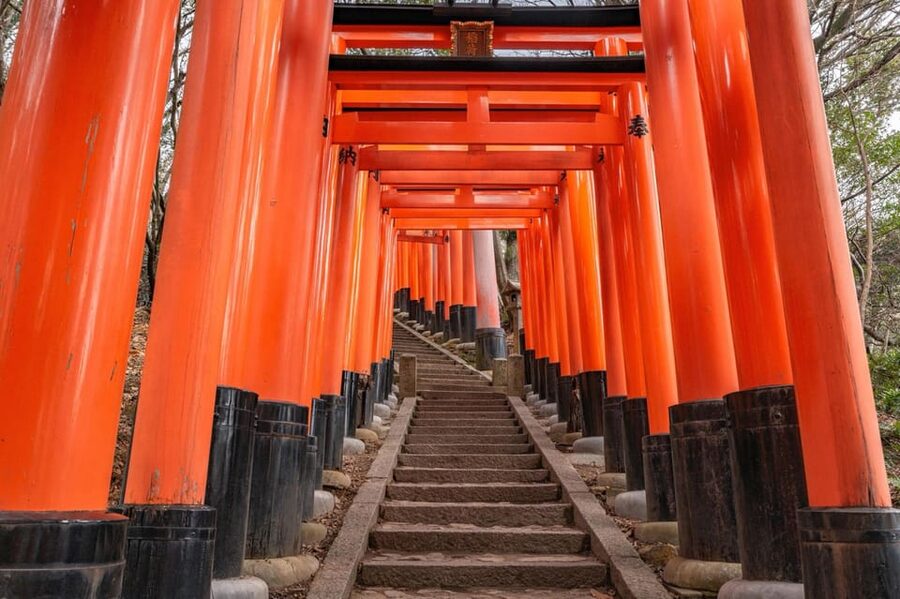
Then you’re headed to Fushimi Inari Taisha, a Shinto shrine in the south of Kyoto known for its vermillion torii gates. The signature experience here is walking along paths where the gates intertwine behind the main structures, giving you that layered, maze-like feel.
Your guided time at Fushimi Inari is 75 minutes, which helps because this stop is all about walking and noticing. The shrine is also famous for the many fox statues placed around the grounds. That small detail changes the whole vibe. You go from seeing red gates to feeling like you’re stepping into a spiritual world with its own visual language.
The tour is careful about physical expectations: it’s not described as climbing mountains or tackling long stair climbs. Still, it’s a walking-heavy day. If you’re someone who needs frequent rests, don’t assume this will feel easy just because it’s not mountain climbing.
A big win: entrance to Fushimi Inari Taisha is listed as free, so you can spend your money on snacks or small items instead of tickets.
Photo tip: you can take many photos of you during the day, but expect some rules in certain indoor temple areas. Fushimi is mostly outdoors, so you’ll likely do most of your shooting here.
Kiyomizu-dera and the Sannenzaka lanes: temple plus shopping streets
Next up is Kiyomizu-dera, another UNESCO World Heritage site and one of Japan’s most famous temples, known for Buddhist traditions and history. You’ll spend about 1.5 hours here with a guide, which is enough time to understand the temple’s importance and also enjoy what’s around it.
Kiyomizu-dera isn’t just about the main temple. The surrounding streets, including Sannenzaka and Ninenzaka, are lively with shops selling Kyoto sweets, souvenirs, and traditional crafts. That’s a huge part of why people love this area. Even if you’re not shopping, the lanes help you slow down and feel like you’re in old-style Kyoto.
Keep expectations realistic about photos. The tour notes mention that there are areas inside temples where taking pictures is forbidden. Your best strategy is to follow the guide’s pace and watch for posted signs.
Cost planning: entrance to Kiyomizu-dera is listed as 500 yen (about US$3.10). That’s not expensive, but it’s still a cost you should factor into your day.
Gion: geiko, maiko, and Kyoto’s old wooden streets
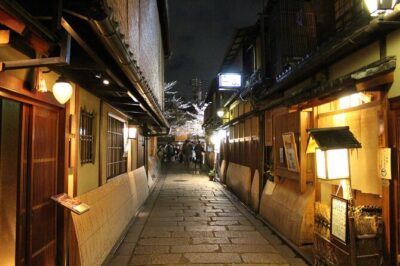
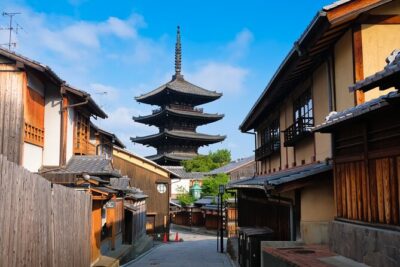
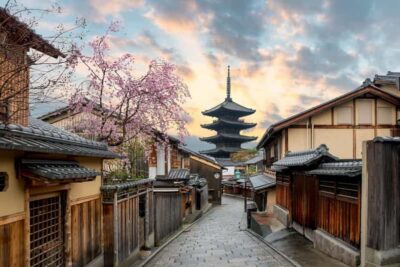
The final stop is Gion, where you can see the traditional side of Kyoto in the form of geiko (Kyoto’s term for geisha) and maiko (apprentice geisha). The district is lined with traditional machiya townhouses, tea houses (ochaya), and narrow cobblestone streets that preserve the feel of older Kyoto.
This portion is guided for about 30 minutes. It’s short on purpose. By this point in the day, you’ve already packed in major temples and historical sites. So the Gion time is more about atmosphere and recognition: you learn what you’re seeing and how it fits together.
You might spot geiko or maiko in full attire during the evening heading to appointments, but you should treat that as a bonus, not a promise. The real value is learning the neighborhood’s character and seeing the traditional street style up close.
Photo note: your tour includes the ability to take as many pictures of you as you wish, but of course you still need to respect any on-site rules and crowd flow.
Price and what you’re really paying for (plus the extras)
The tour price is $180 per person for about 510 minutes (8.5 hours), and it’s a private group experience. That means you’re paying primarily for three things:
1) A city-licensed guide leading in Spanish
2) The structured route across multiple major Kyoto areas
3) The iPad explanations with images that help you make sense of what you’re seeing
That value is strongest if you like context and you want confidence to keep exploring after. The tour also gives you time after the day to roam Kyoto on your own, with recommendations offered by the guide.
Now for the important money details. Entrance fees to temples are not included, except for places noted as free. From the provided costs:
- Golden Pavilion entrance: 500 yen (about US$3.10)
- Kiyomizu-dera entrance: 500 yen (about US$3.10)
- Nijo Castle entrance: 1,300 yen (about US$8.50)
- Fushimi Inari: free
- Geisha District (Gion): free
Food and drinks aren’t included either. Transportation fees are also listed as not included, even though the tour uses public transport to move you between sights. In practice, you should expect to pay your own transit fares for the day, on top of the entrance fees and whatever you choose to eat.
So the real “all-in” cost depends on your appetite and how many extras you buy at markets and shops. But even with those added costs, you’re buying a smooth, guided day with major sights handled efficiently.
Who this tour is best for (and who should skip it)
This tour is not for everyone. It’s not meant for heavy mobility limits.
It’s not suitable if you’re:
- Children under 7
- People with back problems
- People over 287 lbs / 130 kg
- People with low level of fitness
- Anyone who can’t comfortably handle a walking day with temple interiors and neighborhood walking
It also notes you shouldn’t expect long stair climbs or mountain hikes. Still, you’ll do a lot of walking across multiple stops. If you need frequent breaks or you use leg prosthetics, the schedule may be difficult.
Best fit:
- You want a Spanish-led Kyoto day with a guide you can ask questions to
- You want help making sense of major sites fast
- You’re comfortable paying separate entrance fees and choosing your own food
Should you book this Spanish private Kyoto day tour?
If you want a confident first taste of Kyoto with a city-licensed guide, I think this is a strong pick. The biggest reason is the pairing of major sights with understandable explanations using an iPad. You leave with not just photos, but a clearer picture of what you visited and why.
Book it if:
- You’re aiming to hit Kinkaku-ji, Nijo Castle, Fushimi Inari, Kiyomizu-dera, and Gion in one day
- Spanish language guidance matters to you
- You’re okay with a long day and lots of walking
Skip or reconsider if:
- You need frequent rest stops or you know you struggle with long walking segments
- You’re trying to keep costs fully inside the base price (because entrance fees and transit fares are not included, and food isn’t either)
If you’re in good walking shape, this is the kind of day that helps you understand Kyoto quickly, then gives you the confidence to explore the rest on your own.
FAQ
What language is the tour in?
The tour is conducted in Spanish.
Where do we meet the guide?
Pickup is included at Kyoto Station Building, in front of Seven Eleven.
Is this a private group tour?
Yes, it’s a private group.
How long is the tour?
The duration is 510 minutes (about 8.5 hours).
Are temple entrance fees included?
No. Entrance fees are not included for Golden Pavilion (500 yen), Kiyomizu-dera (500 yen), and Nijo Castle (1,300 yen). Fushimi Inari is free, and the Geisha District is free.
Are food and drinks included?
No. Food and drinks are not included.
Is transportation included in the price?
Transportation fees are listed as not included. The tour uses public transportation during the day.
Can I take pictures during the tour?
You can take as many pictures of you as you want. Also note that inside some temples there are areas where taking pictures is forbidden.
Does the tour run in bad weather?
Yes. It takes place rain or shine.
Is the tour suitable for people with limited mobility?
It’s not recommended for people with back problems, for children under 7, for people over 287 lbs (130 kg), or for those with low level of fitness.
More Tours in Kyoto


More Tour Reviews in Kyoto


More Private Tours of Kyoto

Just added: more Kyoto tours to browse








Kyoto Private Guided Tours, compared.
 ★ 5.0Private Kyoto Tour with a Local, Highlights & Hidden Gems, PersonalisedFrom $1021,543 reviews
 ★ 5.0Kyoto 6hr Private Tour with Government-Licensed GuideFrom $1551,369 reviews
 ★ 5.010 Must-see Spots in Kyoto One Day Private Tour (up to 7 people)From $1791,108 reviews
 ★ 5.0Kyoto 4hr Private Tour with Government-Licensed GuideFrom $109629 reviews
 ★ 4.8Private Tour with Local Licensed GuideFrom $106463 reviews
 ★ 5.0Private Kyoto Tour with Licensed Guide & Vehicle (Max 15 persons)From $634417 reviews
 ★ 5.0Kyoto Customized Private Tour: See Top Attractions in 1 DayFrom $132342 reviews
 ★ 4.6Kyoto/Osaka: Kyoto and Nara Customized Private Guided TourFrom $477258 reviews
Browse the lists this tour appears in