
Reviewed · KYOTO PRIVATE GUIDED TOURS
Kyoto Early Morning Private Tour with Government-Licensed Guide
Early Kyoto feels like a secret. This private, government-licensed guide morning outing helps you knock out top sights in a calmer rhythm, with 2–3 stop choices and a route you can shape around your interests.
I love the early start—it keeps famous places like Fushimi Inari and Kiyomizu-dera from feeling like a stampede. I also like how the experience stays flexible, so you spend time looking, not waiting.
One thing to plan for: it’s mainly a walking tour, and admission fees for some sites are not included, so you’ll want to decide what’s worth paying for.
In This Review
- Key highlights you’ll actually feel
- Early Kyoto starts before the tour buses
- What private and government-licensed really changes
- How to pick your 2–3 sites from the Kyoto list
- Fushimi Inari and the calm torii-gate walk
- East-side streets and temples: Kiyomizu, Gion, and Higashiyama
- Kiyomizu-dera Temple (and why early matters)
- Gion: the alleyways, without getting lost
- Nishiki Market: Kyoto’s kitchen in bite-sized form
- Higashiyama Ward: classic old Kyoto walking
- Nijo Castle and the Kyoto Imperial Palace for a history break
- Nijo Castle
- Kyoto Imperial Palace
- Arashiyama early-morning loop: bamboo, Tenryu-ji, and Togetsukyo
- Walking logistics, ticket reality, and how to make it smooth
- Price and value for about $101.82 per person
- When this tour is a great fit (and when to choose another)
- Should you book this Kyoto early morning private tour?
- FAQ
- How long is the Kyoto early morning private tour?
- Can I choose which sites I visit?
- Is it a private tour or a group tour?
- Is pickup included?
- Are entrance tickets included?
- Is there free cancellation?
Key highlights you’ll actually feel
- Early-morning crowd control at Kyoto’s most popular landmarks
- Private, government-licensed English guiding with real storytelling and practical tips
- Choose 2–3 sites from a large menu, instead of committing to a fixed mega-route
- Walking-first pace that’s easy to adapt if your group wants slower photo stops
- Guide-covered entry only for selected sights, while other admission is on you
Early Kyoto starts before the tour buses
Kyoto is famous for sights that can feel overbooked. The big win here is timing. When you start early, your photos look different, your walks feel lighter, and you’re not constantly dodging groups that move like a school of fish.
The tour is designed around a roughly 4-hour window, which matters because Kyoto gets less enjoyable as the day stretches out. Early morning also tends to make temples and neighborhood streets feel more human—quiet enough to notice details, not just buildings.
Even within the same area of Kyoto, the change is dramatic. Guides on this kind of early schedule have specifically pointed out that Kiyomizu-dera and Fushimi Inari feel far smoother before peak crowds.
Have a local lead the way on more Kyoto tours
What private and government-licensed really changes
“Private” in Kyoto isn’t just about avoiding other tourists. It’s about having someone who can slow you down where it matters and move you along when it helps.
A government-licensed local English-speaking guide is the center of the experience. In practice, that shows up in:
- clear historical context you can understand quickly (not a lecture)
- help orienting yourself so you don’t waste time backtracking
- flexibility when you notice something interesting and want to linger
I also like the human touch from the guide examples people shared. Names like Rie, Tomy, Kay, Yasu, Mayumi, and Nabet came up in positive feedback for being responsive and ready with thoughtful guidance. One guide even added a little extra time to help with an ankle issue, which is a reminder that a good guide doesn’t just follow a script.
How to pick your 2–3 sites from the Kyoto list
The tour is built around a menu of top Kyoto stops. You then customize your day by choosing 2–3 sites (from the options), instead of trying to cram in everything.
So your best move is to choose based on what you want to feel:
- If you want shrine-tunnel magic: pick Fushimi Inari-taisha
- If you want classic temple scenery with big foot traffic (but early): pick Kiyomizu-dera
- If you want palace-and-castle history: pick Nijo Castle or the Kyoto Imperial Palace
- If you want traditional streets and evening-district energy: pick Gion and add time near Pontocho
- If you want Zen gardens and mountain-temple vibes: pick Ginkakuji, Nanzenji Suirokaku, Tofuku-ji, or Nanzenji
- If you want the famous “Kyoto postcard” region: pick the Arashiyama options like Tenryu-ji, Togetsukyo Bridge, and the Bamboo Forest Street
You’ll cover far more ground and enjoy it more when you pick a theme. Trying to mix far-apart areas in a short morning can turn into transit time, and you don’t come to Kyoto to spend the best hours on movement.
Fushimi Inari and the calm torii-gate walk
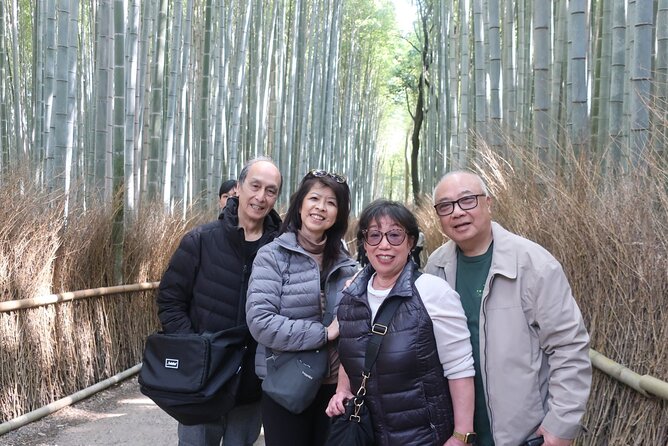
If you pick just one “must” for early Kyoto, Fushimi Inari-taisha Shrine is usually it. It’s famous for the vermillion-red torii gates. Most people focus on the tunnels and the big photo angles—but the shrine has plenty of stories and meaning beyond the obvious.
What changes at dawn is the experience of walking. Without the crowds, it’s easier to:
- notice the rhythm of the paths
- pause for views without feeling rushed
- take in the shrine atmosphere rather than the crowd energy
Also, this is a smart first stop because it sets the tone for the day. If your guide knows the pacing, you won’t feel like you’re sprinting to the next place.
East-side streets and temples: Kiyomizu, Gion, and Higashiyama
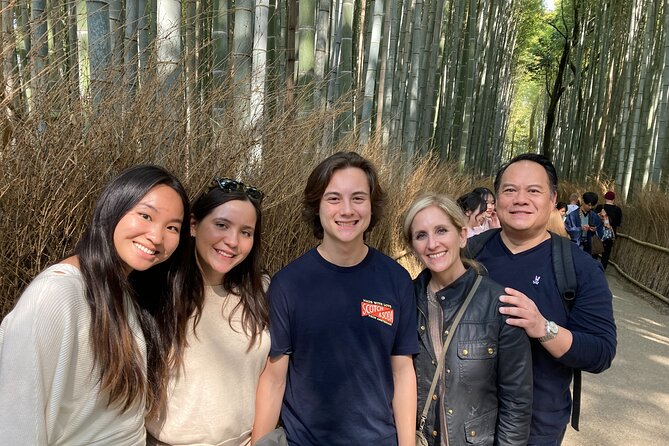
One of the best Kyoto combinations is “sight + neighborhood + atmosphere.” Here’s how that looks when you’re choosing from the tour’s options.
Other Kyoto tours and experiences to compare
Kiyomizu-dera Temple (and why early matters)
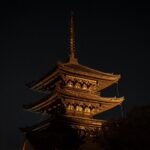
Kiyomizu-dera is one of Kyoto’s most popular temples. With an early start, the grounds feel less chaotic and more walkable. A guide also helps you understand what you’re seeing as you move through the temple area, rather than treating it like just another stop on a list.
Gion: the alleyways, without getting lost
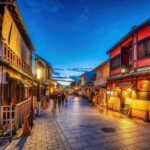
Gion can feel intimidating for a first-timer, mainly because the streets are narrow and you can easily end up turning in circles. With a guide, you’re less stressed, and you’ll also be guided toward the kind of street-level moments that don’t show up if you only do the main roads.
Nishiki Market: Kyoto’s kitchen in bite-sized form
Nishiki Market is narrow and packed with shops and restaurants, and it’s often described as Kyoto’s Kitchen. In the morning, it can be a fun place to grab a snack or two, especially as part of a “temples + food” morning plan.
A practical note: this tour doesn’t include lunch, so you’ll likely handle food expenses on your own. But Nishiki is a good place to start the day with small tastes.
Higashiyama Ward: classic old Kyoto walking
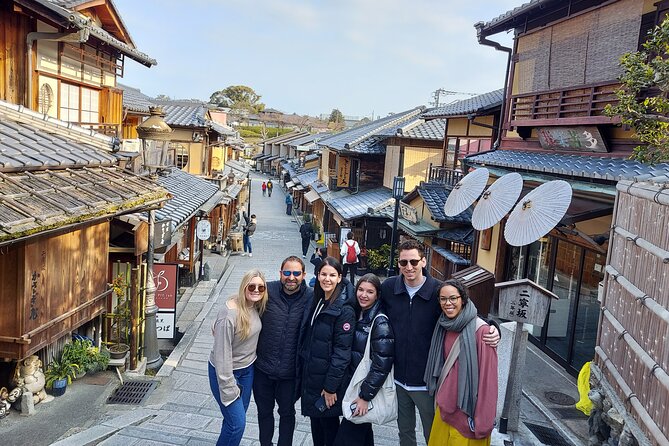
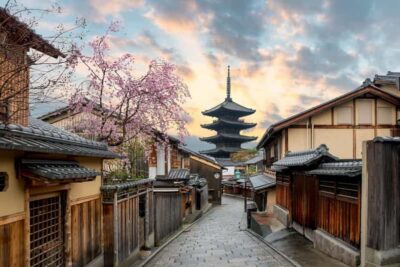
Higashiyama District is one of the best-preserved historic areas along the slopes of eastern mountains. It’s ideal if you want Kyoto scenes that feel rooted in old street patterns and architecture rather than modern shortcuts.
Nijo Castle and the Kyoto Imperial Palace for a history break
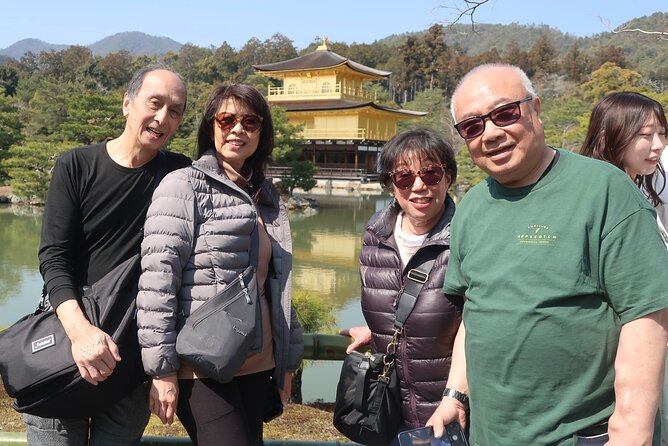
Not every Kyoto morning has to be all temple steps. If you like power, politics, and the way ruling families shaped the city, these are good pivots.
Nijo Castle
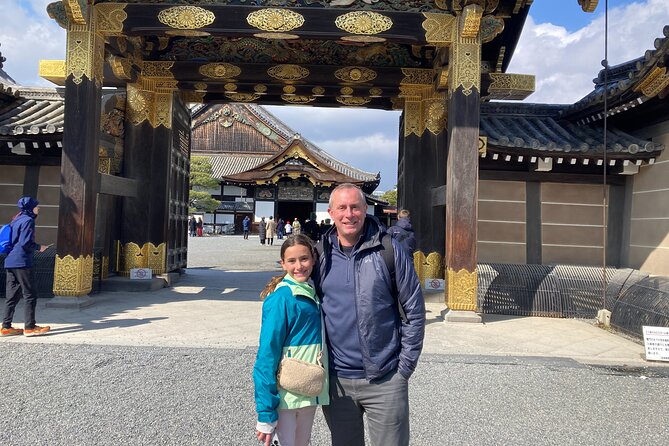
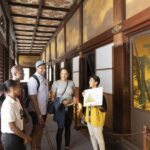
Nijo Castle is a UNESCO World Heritage site, built in 1603 as the Kyoto residence of Tokugawa Ieyasu, the first shogun of the Edo Period. Even if you’re not a “castle person,” a guided visit here helps you connect the architecture to the era it came from.
Kyoto Imperial Palace
The Kyoto Imperial Palace is where the imperial family lived until 1868, when the emperor and capital moved to Tokyo. It also helps you understand Kyoto’s role shifting from seat of power to cultural powerhouse.
If your group wants a morning that isn’t all religion-focused, pairing one of these with a neighborhood like Gion or a scenic temple option can balance the day nicely.
Arashiyama early-morning loop: bamboo, Tenryu-ji, and Togetsukyo
If your Kyoto trip includes Arashiyama, early morning is the difference between a scenic stroll and a slow shuffle.
The Arashiyama options in this tour include:
- Tenryu-ji Temple, a major Zen temple in the Arashiyama district
- Togetsukyo Bridge, one of the most iconic bridges in the area
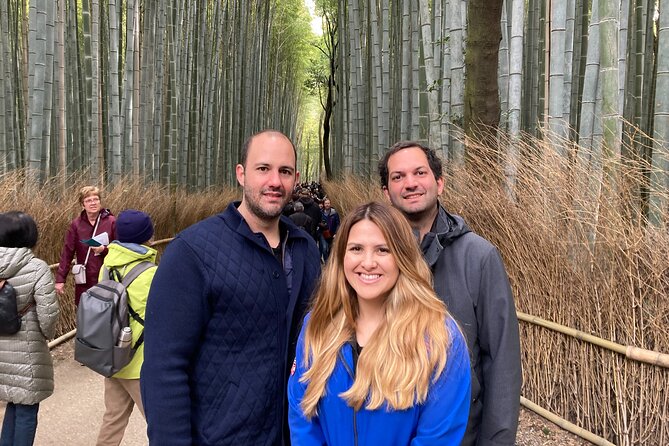
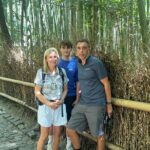
- Bamboo Forest Street, where the walk through the bamboo groves can feel almost cinematic early on
- optional add-ons like Okochi Sanso Garden (a villa and garden set behind the bamboo)
In one positive experience shared with this kind of route style, the early bamboo forest was described as magical. That matches what you’ll feel when you’re not fighting crowds for walking space.
One more helpful strategy: if you want Arashiyama, consider choosing a tighter cluster. Focus on the “same region” choices so your 4-hour window stays enjoyable and not logistical.
Walking logistics, ticket reality, and how to make it smooth
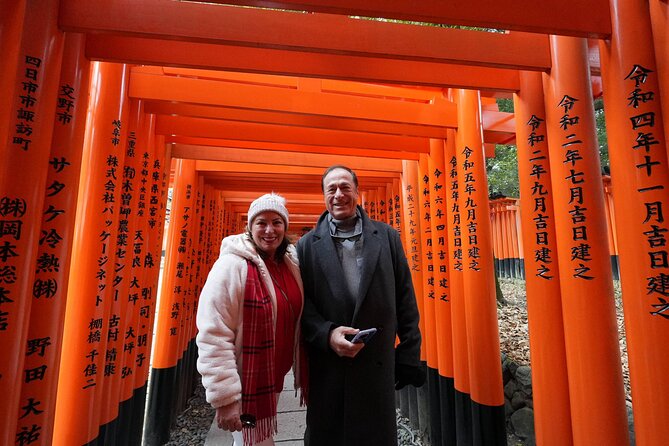
This experience is a private walking tour. That sounds simple until you’re standing in Kyoto heat, on uneven stones, with temples that have lines or entry rules.
Here’s how to set yourself up:
- Expect a walk-first day. The tour also mentions “pickup on foot,” so you’ll meet the guide on foot within a designated area rather than being driven door-to-door.
- You’re near public transportation. That’s important because if your group’s chosen sites are spaced out, your guide can use practical local connections.
- Admission is not fully bundled. Some sites list admission as free, while many others are not included. Even when guide entry is covered for selected sights, you should still expect to pay your own admission for attractions that require tickets.
What about comfort? The best guides in this tour style are usually very good at adjusting pacing. One review example specifically mentioned extra time to help with ankle problems, which tells you it’s okay to ask for slower routing or more breaks.
Price and value for about $101.82 per person
At $101.82 per person for around 4 hours, this is not a budget “group bus” deal. But it is often good value when you treat it like a time-saver and a quality-upgrader.
You’re paying for:
- a government-licensed guide with strong local context
- private attention (your group only)
- the ability to choose 2–3 sites instead of overcommitting to a rigid script
Where value can drop a bit is when you choose all the ticketed, time-consuming highlights and then also add extra transit friction. You’ll get the best return by picking the stops that match the morning timing—places that feel better before the peak crush.
Also, group discounts are listed. If you’re traveling with friends or family, splitting attention costs across a small group can make the whole experience feel more “worth it per hour.”
When this tour is a great fit (and when to choose another)
This tour shines if you:
- want to see top Kyoto highlights without the stress of crowds
- like having a guide to explain what you’re looking at (and what it means)
- prefer planning a short, focused morning instead of doing a long all-day march
- care about photo timing and walkability
It may feel less ideal if you:
- want a fully transportation-based tour with lots of vehicle rides (a private vehicle is not included)
- expect all entry fees and lunch to be covered
- want to do a huge number of far-apart places in one morning (you’re choosing 2–3 sites for a reason)
And one honest caution: there has been at least one serious complaint where a guide did not show up, and refund timing became a hassle. That appears as an outlier, but it’s worth taking seriously. If you book, keep your confirmation details handy and make sure you have contact info ready in case of last-minute changes.
Should you book this Kyoto early morning private tour?
If your main goal is Kyoto without the crowd headache, I’d book it. The early start is the core advantage, and the private format turns Kyoto’s top sights into something you can actually enjoy instead of just survive.
I’d particularly choose it if you’re picking a thoughtful mix—like Fushimi Inari plus one major temple on the east side, or an Arashiyama morning cluster with Tenryu-ji and the bamboo area.
If you hate walking or you’re trying to do too much in 4 hours, consider trimming your choices to just the sites that matter most to your trip style.
FAQ
How long is the Kyoto early morning private tour?
It’s listed as about 4 hours.
Can I choose which sites I visit?
Yes. The tour is customizable and focuses on choosing 2–3 sites from the available options.
Is it a private tour or a group tour?
It’s private, so only your group participates.
Is pickup included?
Pickup is offered, and the tour also notes that pickup is on foot, with meeting on foot within a designated area.
Are entrance tickets included?
Admission tickets are not included for many sights. Some stops are free, while others are not included, so you should plan on paying any required attraction admissions.
Is there free cancellation?
Yes. You can cancel up to 24 hours in advance for a full refund.
If you want, tell me which 2–3 stops you’re leaning toward (for example: Fushimi Inari + Kiyomizu-dera + Gion, or Arashiyama + Tenryu-ji + Bamboo), and I’ll help you build a morning plan that fits the 4-hour pace.
More Tours in Kyoto



More Tour Reviews in Kyoto

More Private Tours of Kyoto
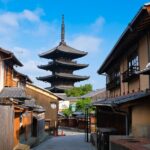
Just added: more Kyoto tours to browse








Kyoto Private Guided Tours, compared.
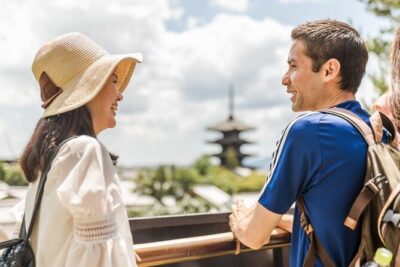 ★ 5.0Private Kyoto Tour with a Local, Highlights & Hidden Gems, PersonalisedFrom $1021,543 reviews
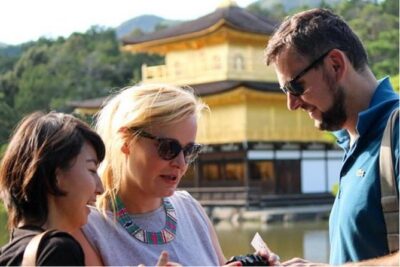 ★ 5.0Kyoto 6hr Private Tour with Government-Licensed GuideFrom $1551,369 reviews
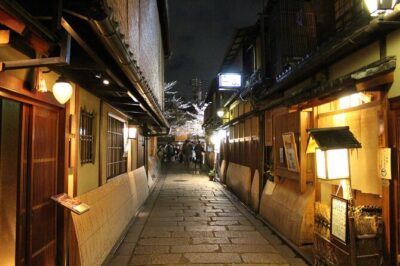 ★ 5.010 Must-see Spots in Kyoto One Day Private Tour (up to 7 people)From $1791,108 reviews
 ★ 5.0Kyoto 4hr Private Tour with Government-Licensed GuideFrom $109629 reviews
 ★ 4.8Private Tour with Local Licensed GuideFrom $106463 reviews
 ★ 5.0Private Kyoto Tour with Licensed Guide & Vehicle (Max 15 persons)From $634417 reviews
 ★ 5.0Kyoto Customized Private Tour: See Top Attractions in 1 DayFrom $132342 reviews
 ★ 4.6Kyoto/Osaka: Kyoto and Nara Customized Private Guided TourFrom $477258 reviews
Browse the lists this tour appears in