
Reviewed · KYOTO PRIVATE GUIDED TOURS
Kyoto 8hr Private Tour with Government-Licensed Guide
Kyoto makes sense when someone local walks you. This government-licensed private tour is a smart way to see the big sights and understand what you’re actually looking at, without getting stuck in the usual self-guided maze. I like that you can customize the day (usually 4–6 stops chosen from a long menu), and I also like the guide-focused details—like how Fushimi Inari can include views most casual visitors don’t get. Main drawback: it’s a walking tour, so you’ll want solid shoes and a plan for slower moments at temple steps.
You start on foot with your guide in a designated area, and the tour stays flexible once you meet. In one review, a guide named Karkoo Tanigawa helped a group of six start immediately, especially because they had yen and transport cards ready. If you hate “deciding on the fly,” you might find it a little stressful at first—because the best experience depends on telling your guide what you care about.
In This Review
- Key Points That Make This Kyoto Tour Worth Considering
- How the 8 Hours Works (and How to Choose Your Best Mix)
- Meeting Your Guide on Foot, Then Going All Day Walking
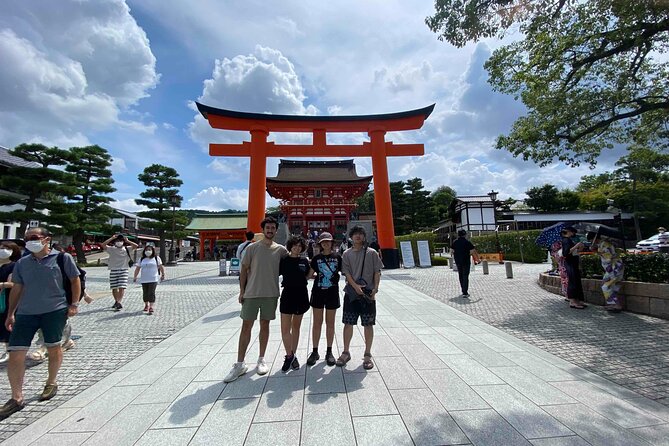
- Fushimi Inari-taisha: More Than the Usual Torii Walk
- Kiyomizu-dera and the Higashiyama Story: Architecture With Explanations
- Gion, Pontocho, and Nishiki Market: Culture Without Getting Lost
- Nijo Castle, Kyoto Imperial Palace, and the Edo-to-Imperial Shift
- Zen Temples and Garden Stops: Picking Your Zen Mood
- Arashiyama in One Day: Bamboo, Bridge Views, and Garden Calm
- Price and Value: What $201.46 Buys You in Kyoto
- Who This Private Walking Tour Suits Best
- Should You Book This Kyoto 8-Hour Private Tour?
- FAQ
- How long is the Kyoto private tour?
- Is this a private tour or a shared group?
- Do I get a licensed English-speaking guide?
- How many places can we visit?
- Are entrance fees included?
- Will there be transportation in a vehicle?
- Can I cancel for a full refund?
Key Points That Make This Kyoto Tour Worth Considering
- Government-licensed English guidance for temples, castles, and districts, not just photo stops
- 4–6 site customization in an 8-hour walking day, so you’re not dragged across Kyoto
- Meet on foot with pickup/drop-off also on foot, keeping the logistics simple and direct
- Fushimi Inari includes special access-style perspectives, beyond a typical sightseeing glance
- Past guide names show consistency, including Karkoo Tanigawa, Ichiro, and Shu, with strong feedback
- Some stops have free admission, so you can manage costs better while still paying for the paid sites
How the 8 Hours Works (and How to Choose Your Best Mix)
This is built as a private walking tour, so the pace and route are shaped around your group. You don’t “inherit” a fixed route. After you book, the guide contacts you to plan a personal itinerary. The operator suggests choosing 3 to 4 spots you want, and the format supports a day that typically lands around 4–6 stops from the list.
That matters because Kyoto is spread out. If you pick too many far-apart areas, you’ll lose time to transit. If you pick the wrong mix, you’ll end up with a day full of similar-looking temple gates with no clear story.
A simple way to choose:
- Pick one signature shrine/temple (for the iconic Kyoto moment)
- Pick one neighborhood (Gion, Higashiyama areas, Nishiki area, Pontocho)
- Pick one Zen-garden temple cluster (Kinkakuji, Ginkakuji, Nanzenji, Eikando, etc.)
- Keep the rest for a second neighborhood or a scenic district like Arashiyama
If you tell your guide what you love—architecture, ceremonies, gardens, photography, history—you’ll get a route that feels like a coherent day instead of a checklist.
Have a local lead the way on more Kyoto tours


Meeting Your Guide on Foot, Then Going All Day Walking
This tour is strictly walking. Pickup and drop-off are on foot, and there’s no private vehicle included. You meet your guide within a designated pickup area (on foot). Translation: you’ll start the day already in motion, which is convenient, but it also means you should plan for stairs and uneven ground.
In practical terms, I’d pack:
- Comfortable, broken-in walking shoes (Kyoto is not a sneaker museum—count the steps)
- Water, especially in warmer months
- A small snack if you’re sensitive to hunger (lunch is not included)
One review highlights how starting quickly worked when their group had local currency (yen) and transportation cards ready. That’s good advice. Kyoto often runs best when you’re not scrambling at ticket machines.
Fushimi Inari-taisha: More Than the Usual Torii Walk
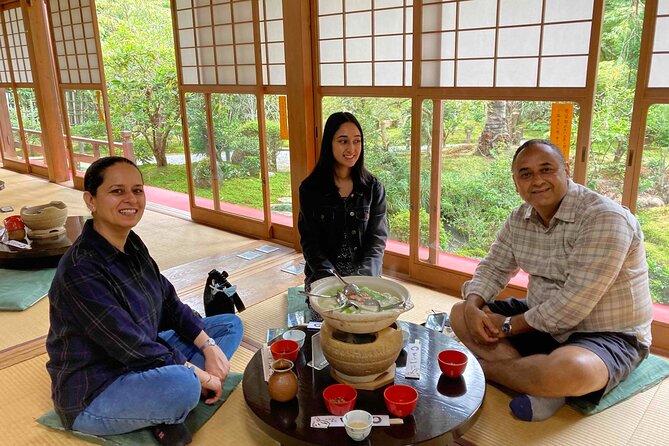
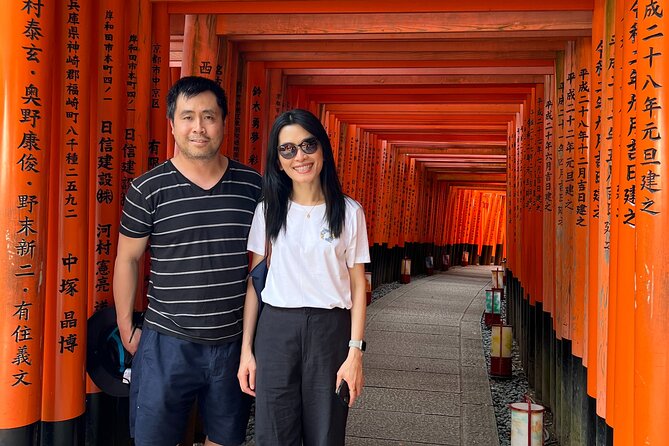
Fushimi Inari-taisha is the stop most people think they already know. The torii gates are the headline, but the guide experience is what helps the place click.
This tour’s Fushimi Inari stop is described as offering a view that can be off-limits or not available to ordinary tourists, after the regular sightseeing—an important difference. Even if you’re not chasing secrets, you’ll likely appreciate the context and layout so you don’t wander randomly for an hour.
Also, because the tour is private and guided, you can often manage the “I’m seeing the same gate for the 200th time” feeling. Your guide can help you time and place your walking so it feels purposeful.
Cost note: admission here is marked free in the stop list you get, which helps the budget if you’re adding other paid sites.
Kiyomizu-dera and the Higashiyama Story: Architecture With Explanations
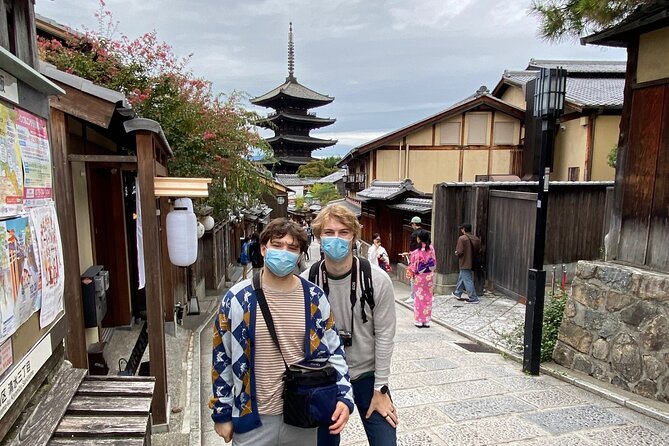
Kiyomizu-dera is one of Kyoto’s biggest names, and it can feel chaotic if you’re just drifting. With a guide, you get a focused walkthrough—this tour lists Kiyomizu-dera as a guided visit (about one hour on that stop).
Then you can layer in Higashiyama (the preserved historic district) and Sannenzaka-style streets in the same general zone, depending on what you choose. This is where Kyoto stops being “temples, temples, temples” and becomes a living streetscape.
How the guide helps:
- You’ll understand what you’re looking at, not just where to stand for a postcard
- You’ll move more efficiently between landmarks
- You’re less likely to get pulled into the most crowded lanes without meaning
Cost note: Kiyomizu-dera is listed as admission ticket not included, so expect a separate payment there (and at other paid temples you select).
Gion, Pontocho, and Nishiki Market: Culture Without Getting Lost
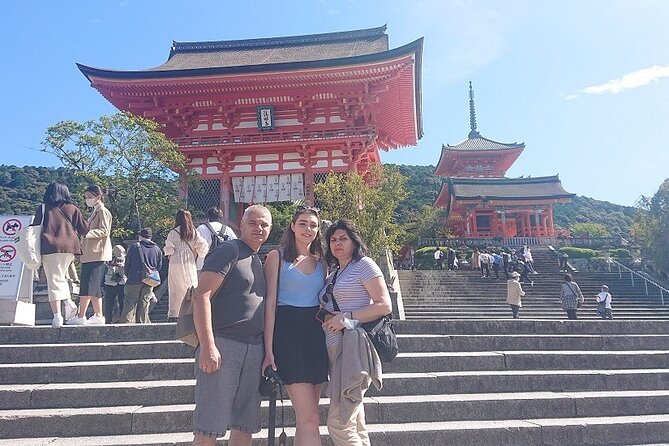
Kyoto neighborhoods can be tough on a first visit because the streets twist, and signage alone won’t always guide you to what matters. This tour includes stops like:
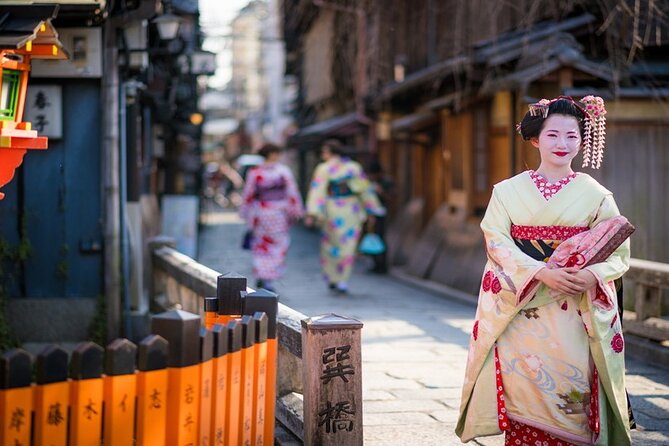
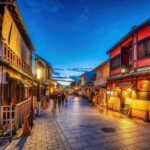
- Gion (the geisha district lanes)
- Pontocho (the narrow dining alley by the river area)
- Nishiki Market (Kyoto’s kitchen-style shopping street)
What you gain with a guide is confidence. The itinerary description specifically notes that Gion can be daunting for first-timers, and a guided route helps you avoid that lost-in-a-labyrinth feeling.
Nishiki Market works especially well with guidance because it’s easy to wander in “snack mode” and forget to look around. Your guide can point out what to prioritize and how to pace it.
Also, these stops are listed with free admission in the tour’s stop details for Gion, Nishiki, and Pontocho—so you can spend money where it counts (food you choose, not mandatory entry fees).
Other Kyoto tours and experiences to compare

Nijo Castle, Kyoto Imperial Palace, and the Edo-to-Imperial Shift
If you like when Kyoto explains itself through power and politics, these stops are your payoff.
- Nijo Castle: described as a UNESCO World Heritage site built in 1603 as the Kyoto residence of Tokugawa Ieyasu, linking directly to the Edo period.
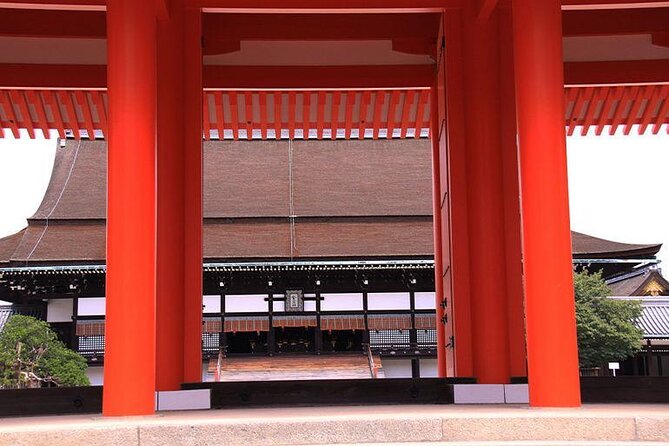
- Kyoto Imperial Palace: the former residence of Japan’s Imperial Family until 1868, when the capital moved to Tokyo.
Even in short guided time blocks, this kind of stop adds a backbone to the day. Temples look timeless, but castles and palaces show you what changed—and who controlled the country when Kyoto was Japan’s center.
You’ll want to treat these as story points, not “quick photo stops.” If you enjoy context, you’ll appreciate having a licensed guide connect the dots.
Cost note: both Nijo Castle and Kyoto Imperial Palace are listed as admission ticket not included, so plan for entry fees if your chosen itinerary includes them.
Zen Temples and Garden Stops: Picking Your Zen Mood
Kyoto’s Zen temples can feel similar until you learn the differences. This tour’s list lets you choose which type of Zen experience you want, such as:
- Ginkakuji (Silver Pavilion): a Zen temple with a retirement villa background tied to Ashikaga Yoshimasa.
- Nanzenji and Suirokaku: Nanzenji is described as a major Zen temple complex; it also ties into impressive temple grounds at the base of Higashiyama.
- Tofuku-ji: famous for autumn colors (timing matters if you’re visiting in fall).
- Toji: a major temple founded around the Heian period after the capital shift.
- Kinkakuji (Golden Pavilion): a Zen temple whose top floors are covered in gold leaf.
Then you can go even deeper with options like:
- Eikando (known for autumn colors and evening illumination)
- Sanjusangendo (famous for 1001 statues of Kannon)
- Kennin-ji (near busy streets, with expansive grounds and dry landscape gardens)
- Northern complex temple options like Daitoku-ji and Myoshinji, which are large walled complexes with multiple subtemples
How I’d decide in real time:
- If you want the iconic Kyoto temple image, choose Kinkakuji or Ginkakuji.
- If you want a different kind of wow, choose Sanjusangendo for the sheer scale of statuary.
- If you want quiet grounds and multiple structures, choose one of the big complex temples.
Cost note: many of these are listed as admission ticket not included, so your personal total will depend on which you choose.
Arashiyama in One Day: Bamboo, Bridge Views, and Garden Calm
If your itinerary includes Arashiyama, your day gets a scenic shift from central Kyoto. The list includes:
- Tenryu-ji (the key Arashiyama Zen temple, also registered as World Heritage)
- Togetsukyo Bridge (Moon Crossing Bridge) as the iconic landmark
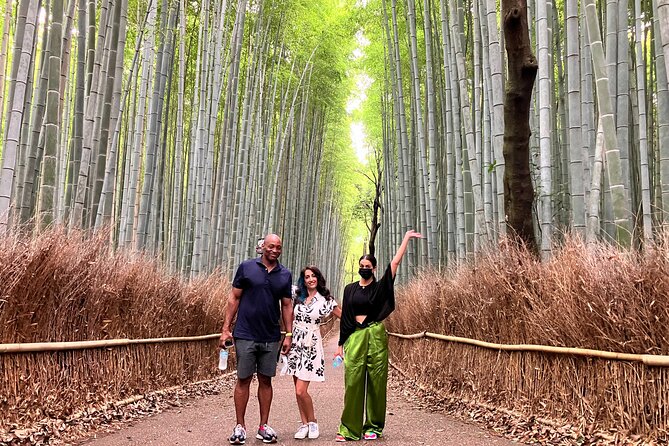
- Bamboo grove walking paths, described as especially nice with a light breeze
- Garden and hillside temples like Okochi Sanso Garden, plus smaller mountain-adjacent temples
This is also where the “guide value” really shows up. The bamboo grove is famous, so crowds happen. A guide can help you move in a way that still feels like sightseeing, not stampeding.
If you’re a architecture-and-design person, the list also includes Katsura Imperial Villa—not a quick stop, but a strong reason to choose Arashiyama as one of your day’s themes.
Cost note: these Arashiyama-related stops are listed as admission ticket not included for most temples/gardens, except some general viewing areas marked free.
Price and Value: What $201.46 Buys You in Kyoto
At $201.46 per person, you’re paying for three things:
- A licensed local English guide (not just a generic “tour helper”)
- A private route shaped around your interests
- Time-saving planning, so you don’t spend your day figuring out how to connect Kyoto’s neighborhoods
Is it the cheapest way to see Kyoto? No. But it can be good value if:
- You care about explanations, not only photos
- You want to hit 4–6 meaningful stops in a tight 8-hour window
- Your group is large enough that buying your own taxis or train tickets repeatedly starts to feel wasteful
Also, the operator notes group discounts and suggests booking about 69 days in advance on average. That lines up with Kyoto’s reality: good guides and good days sell out.
Who This Private Walking Tour Suits Best
This tour is ideal for:
- First-time visitors who want to understand Kyoto instead of just walking past it
- Couples or small groups who prefer a route that fits them
- People who like temples and neighborhoods, but want someone to keep the day logical
It might feel like too much if:
- You have mobility limitations and don’t like stairs and uneven walking surfaces
- You want a “sit down often” day—this is a walking tour, and time blocks are short per stop
Should You Book This Kyoto 8-Hour Private Tour?
I’d book it if you want Kyoto to feel organized—with a government-licensed English guide helping you pick the best mix of shrines, Zen temples, and classic districts. The customization is the real power here: you’re not stuck with a route that doesn’t match your interests.
I’d pause before booking if you’re price-sensitive or you already plan to use transit plus guidebooks and don’t care much about interpretation. In that case, you might do fine on your own.
FAQ
How long is the Kyoto private tour?
It runs for about 8 hours.
Is this a private tour or a shared group?
It’s a private tour. Only your group participates.
Do I get a licensed English-speaking guide?
Yes. The tour includes a licensed local English speaking guide, and your itinerary is planned with their help after booking.
How many places can we visit?
The format is designed for a personalized day based on your interests. You choose 3 to 4 spots you wish to visit, and the customizable tour supports selecting 4–6 sites from the options.
Are entrance fees included?
No. Entrance fees are not included, and the tour lists that entrance tickets are not included for many of the stops. Some stops are marked free in the stop list, but you should still expect to pay for paid sights you select.
Will there be transportation in a vehicle?
No. It’s a walking tour, and pickup/drop-off is on foot. Private vehicle transportation is not included.
Can I cancel for a full refund?
Yes. Free cancellation is available up to 24 hours before the experience start time for a full refund.
More Tours in Kyoto




More Tour Reviews in Kyoto


More Private Tours of Kyoto

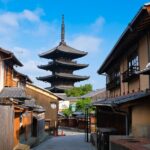
Just added: more Kyoto tours to browse








Kyoto Private Guided Tours, compared.
 ★ 5.0Private Kyoto Tour with a Local, Highlights & Hidden Gems, PersonalisedFrom $1021,543 reviews
 ★ 5.0Kyoto 6hr Private Tour with Government-Licensed GuideFrom $1551,369 reviews
 ★ 5.010 Must-see Spots in Kyoto One Day Private Tour (up to 7 people)From $1791,108 reviews
 ★ 5.0Kyoto 4hr Private Tour with Government-Licensed GuideFrom $109629 reviews
 ★ 4.8Private Tour with Local Licensed GuideFrom $106463 reviews
 ★ 5.0Private Kyoto Tour with Licensed Guide & Vehicle (Max 15 persons)From $634417 reviews
 ★ 5.0Kyoto Customized Private Tour: See Top Attractions in 1 DayFrom $132342 reviews
 ★ 4.6Kyoto/Osaka: Kyoto and Nara Customized Private Guided TourFrom $477258 reviews
Browse the lists this tour appears in