
Reviewed · ARASHIYAMA & BAMBOO GROVE TOURS
Arashiyama from Kyoto: Private & Personalized with a Local Guide
Arashiyama can feel like chaos fast, but this private walk gives you breathing room. I especially like the way you get temple admissions bundled in and the fact that the day is built around what you want. My other big win is having a guide who can steer you away from the worst crowd pressure. The main drawback is also the biggest reality: this is a walking-focused day, with real climbs, so comfortable shoes matter.
You start at the JR Kyoto Station area (at Mister Donut), and you end back there. In between, you’ll cover the bamboo grove area plus several key temple stops on and around the Arashiyama hills, with options to adjust the route if the weather or your energy level changes.
In This Review
- Key things I’d book for
- Arashiyama, the smart way: private guide versus the main rush
- Price and what you actually get for $288.17
- Where you meet and how the day is paced
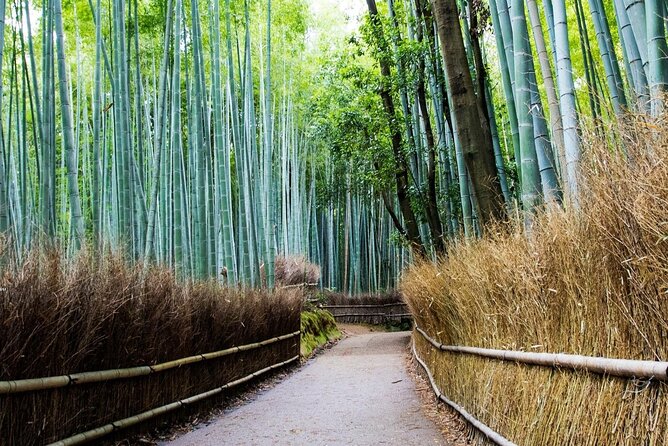
- Entering the bamboo grove without losing your mind
- Jojakko-ji on Ogura Mountain: moss, a tall pagoda, and big views
- Monkey Park Iwatayama: wild macaques, a steep climb, and etiquette
- Tenryu-ji UNESCO Zen temple: why the garden takes time
- Otagi Nenbutsu-ji and its 1,200 rakan statues
- Daikaku-ji: an imperial-villa-to-temple story beside a pond
- Okochi Sanso Villa: a traditional home and garden with cultural weight
- How your guide customizes the day (and why it matters)
- Walking reality check: what to wear and how to prepare
- Who should book this Arashiyama private tour
- Should you book it?
- FAQ
- What’s the duration of the Arashiyama private tour?
- Is the tour private or shared?
- What’s included in the temple and attraction admissions?
- Can I choose which departure time I want?
- Where does the tour start?
- Is pickup included?
- Does the tour include food?
- Is this mostly walking?
Key things I’d book for
- Bamboo Grove with a crowd strategy: you’ll spend time in the area, but the route can be timed to reduce stress.
- 4 temple tickets included: you choose 4 of 5 major temples in the area, so the planning is simpler.
- Okochi Sanso Villa admission included: a traditional villa and garden, listed as national cultural properties.
- Monkey Park Iwatayama admission included: you get the viewpoint moment plus the chance to see wild macaques.
- Your guide customizes everything: pre-tour questionnaire plus direct messaging to shape the pace and priorities.
- Private tour means no sharing: only your group, so you can move at your speed.
Arashiyama, the smart way: private guide versus the main rush
Arashiyama is one of those Kyoto places that pulls visitors from everywhere. That’s great for atmosphere, but it can also mean slow moving crowds in the bamboo grove zone. This kind of private guiding works because it turns a busy area into a sequence of smaller moments: a shrine lane here, a garden view there, then a temple with room to actually look.
What I like is that your guide isn’t just escorting you between ticket lines. They’re there to make sense of what you’re seeing. You’ll get context for Zen temples and why certain buildings, statues, and gardens matter, and you’ll also get practical help with where to stand, when to take photos, and how long to linger.
The other big advantage: flexibility. One of the best examples from past groups is guides adapting when it rains. If weather pushes you away from the bamboo grove at a certain moment, your guide can shift to calmer shrines and historic spots without turning your day into a frantic scramble.
Deeper into Arashiyama, past the bamboo and the Hozu river
Price and what you actually get for $288.17
At about $288.17 per person for roughly 6 hours, this isn’t a budget deal. But it does include a lot that would normally add up fast on your own.
Here’s the value logic:
- Admission tickets are included for 4 temples (chosen from Tenryu-ji, Jojakko-ji, Gio-ji, Otagi Nenbutsu-ji, and Daikaku-ji).
- Admission is also included for Okochi Sanso Villa.
- Admission is included for Monkey Park Iwatayama.
- You get a private, personalized walking experience with a local host and a pre-tour questionnaire.
So you’re not paying only for walking time. You’re paying for guided sequencing plus multiple paid entrances bundled together. That matters in Arashiyama because waiting, crowding, and ticket management can drain a day even when you’re excited.
Where you meet and how the day is paced
This tour starts at Mister Donut in the JR Kyoto Station Building (Shop 901). You also end back at that same meeting point.
You should expect a walking-focused route. The activity doesn’t include a private vehicle, and transfers between sites may use public transportation or taxis at an additional cost, depending on what your guide recommends. That said, the core experience is walking.
The pacing is the key. Because it’s private, your guide can slow down for:
- temple reading time (time to really look, not just “walk through”)
- viewpoints on the hills
- photo stops that don’t derail the schedule
If you’re traveling with kids or you want a calmer pace, guides have been praised for adjusting time around the monkey park climb and keeping younger travelers engaged.
Entering the bamboo grove without losing your mind
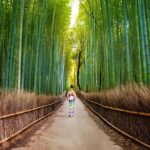
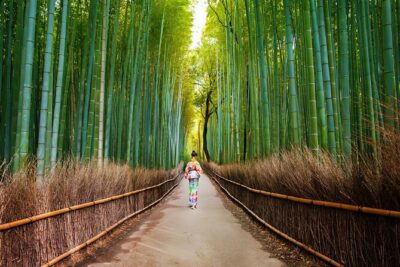
The bamboo grove is the headline for Arashiyama, and you’ll spend time in that famous area. What you’ll feel on arrival is the contrast: it’s dramatic, it’s beautiful, and it can be packed. For that reason, crowd timing matters.
This is where a private guide can help you use your time better. A strong strategy is to go early in the day if you can, so you spend more moments in the bamboo and fewer moments standing in lines of people trying to get the same shot.
Also note what can surprise people: there often aren’t many places to sit and just breathe in the grove. If you’re hoping for a long, quiet rest, plan to balance bamboo time with stops where you’ll naturally slow down, like temple gardens or viewpoint areas.
Jojakko-ji on Ogura Mountain: moss, a tall pagoda, and big views
One of your included temple options in this Arashiyama circuit is Jojakko-ji. In the route, this stop is built around the hills near Ogura Mountain.
What makes it special is the combination of softness and height:
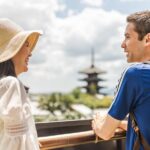
- a peaceful setting with moss gardens
- a 12-meter pagoda
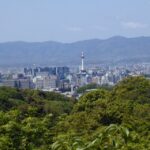
- panoramic views over Arashiyama from higher ground
The advantage of doing this stop with a guide is that you’re not just climbing to a view. You’re also getting the story of how temples like this relate to the terrain—Kyoto’s religion often follows the geography, not just the city grid.
A practical consideration: this area involves walking and rising ground. If you’re not used to sloped paths, go slowly and wear shoes with grip.
Have a local lead the way on more Kyoto tours
Monkey Park Iwatayama: wild macaques, a steep climb, and etiquette
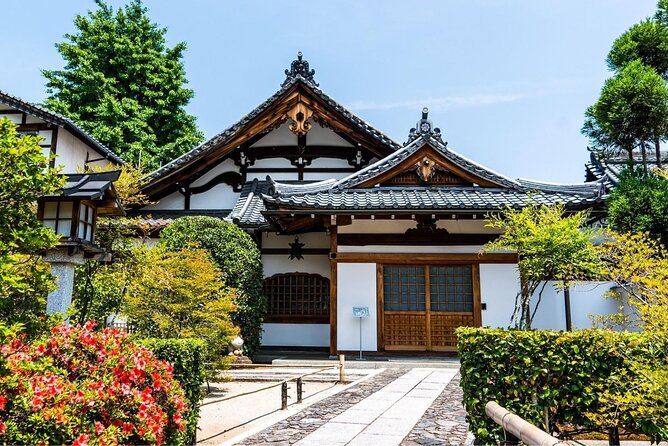
The monkey park stop is one of the most memorable parts of Arashiyama for many people, mainly because it’s not staged. Monkey Park Iwatayama lets you see Japanese macaques in a natural hillside setting, and you’ll get admission included.
Here’s the real-world caution: the climb can be steeper than you expect. Past visitors have described it as a serious hill workout. Your legs will feel it, especially if you’re wearing unsupportive shoes or traveling with kids who need frequent breaks.
The other practical tip is behavior. You’ll want to treat the monkeys like wildlife, not entertainment. That means keeping a respectful distance and being mindful with photos and food (your guide can give you the do’s and don’ts for what’s allowed at the park).
If you’re traveling as a family, this stop has been handled well in practice because guides can spend a bit longer here if your kids are engaged or if you need a break.
Tenryu-ji UNESCO Zen temple: why the garden takes time
A major included temple on this itinerary is Tenryu-ji, which is a UNESCO World Heritage site and one of Kyoto’s five great Zen temples.
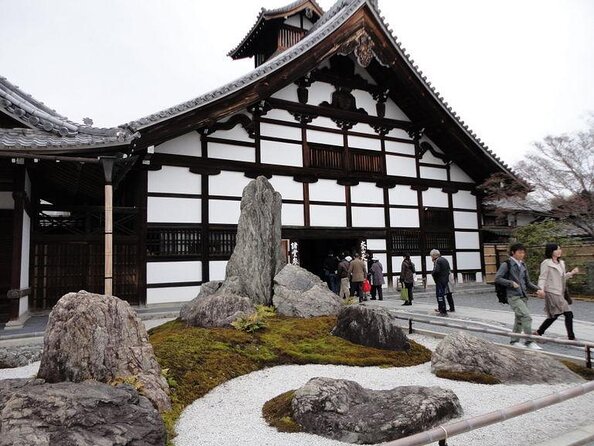
What you’ll feel here is the shift from “busy sights” to “slow looking.” Zen temple spaces are meant for attention. You’ll stroll through areas tied to the famous Zen garden concept, and you’ll learn enough to understand what you’re seeing—why certain views, stone arrangements, and structures draw the eye.
The main drawback to Tenryu-ji is the opposite of a temple’s goal: many people rush. If your goal is photos only, you can end up moving too quickly. If your goal is to understand how gardens are composed, this is one of the better stops in Arashiyama for that.
If weather goes sideways, a good guide will often keep you in covered or calmer temple spaces and adjust the bamboo timing.
Otagi Nenbutsu-ji and its 1,200 rakan statues
This is the kind of stop that surprises people in the best way. Otagi Nenbutsu-ji sits on Arashiyama’s outskirts and is known for more than 1,200 rakan statues, each with its own expression.
It’s quirky and strangely human in its feel. You’ll spend time walking among the statues, and the guide’s job is to help you notice patterns, not just count figures. This stop is also a breather from the biggest crowd magnets because it’s more about the slower discovery of details.
Practical tip: because you’ll be moving through outdoor areas, dress for the weather. In rain or cold, it still works, but you’ll want layers.
Daikaku-ji: an imperial-villa-to-temple story beside a pond
Another included temple stop is Daikaku-ji, a former imperial villa turned temple. This place is closely tied to Japan’s cultural history, and your guide can share the literary connection to The Tale of Genji, where scenes are set here.
What you’ll likely remember is the atmosphere of the grounds—especially the pond and serene settings. Compared to the bamboo grove’s intensity, Daikaku-ji feels like your day finally settles into a slower rhythm.
One consideration: if your group is tired from climbing and walking, Daikaku-ji is a good stop to slow down. But you should still be ready for uneven paths and stairs in temple areas.
Okochi Sanso Villa: a traditional home and garden with cultural weight
Your tour includes Okochi Sanso Villa—a traditional Japanese home and garden listed as national cultural properties.
This stop adds variety to the day. You’re not only seeing religious spaces; you’re seeing how leisure and architecture were expressed in a preserved setting. The guide can help you connect what you’re looking at to the broader Kyoto idea of nature + design.
Practical note: because it’s a villa and garden environment, it rewards patience. If you keep moving at a fast pace all day, you might miss the little sightlines and calmer corners that make it feel special.
How your guide customizes the day (and why it matters)
The tour includes a pre-tour questionnaire plus direct communication with your host to tailor the plan. In practice, customization can mean a few important things:
- shifting time toward history or viewpoints if that’s what you care about
- taking a different order of stops to avoid the worst crowd pressure
- spending extra time at places that hold your group’s attention
Past groups have also praised guides for meeting specific needs, including:
- adjusting the schedule for people with limited mobility (like help for a sprained ankle)
- keeping young kids engaged, often by spending extra time where they’re most interested
- adapting when it’s raining, skipping bamboo momentarily and swapping to other historic stops
- giving family-friendly pacing for kids and teens who have different energy levels
If you’re a first-time visitor to Arashiyama, this kind of guiding is a big deal. Without it, you’d likely do the headline sights and then feel rushed. With it, you get a sequence that feels intentional.
Walking reality check: what to wear and how to prepare
This is a private walking tour, so prepare like one. My practical advice:
- wear comfortable, grippy shoes for slopes and stairs
- bring a light layer, even in mild weather (Kyoto can shift fast)
- if you’re prone to leg fatigue, plan to take the climbs slowly and build in short rest stops
Also, consider crowd management. If you hate shoulder-to-shoulder sightseeing, pick the departure time that gives you a chance to start earlier rather than later. Your guide can help you time key moments.
Finally, remember that food and drinks are not included. If you want a specific meal style, tell your guide in advance. They can often suggest timing and options so your day doesn’t get stuck on a “whatever is open” plan.
Who should book this Arashiyama private tour
Book it if:
- you want a private Arashiyama day with less chaos
- you care about temples and gardens, not just bamboo photos
- you like the idea of multiple admissions included
- you want a guide to tailor the pace for your group
Skip it if:
- you’re not comfortable with a hill climb (Monkey Park Iwatayama is a workout)
- you prefer self-guided wandering with no structured ticket planning
- you want zero walking time
Should you book it?
If your ideal Arashiyama day is: bamboo + temples + gardens + monkeys, but you also want to avoid turning the whole day into a crowd navigation exercise, then this is a very solid choice. The price is easier to justify when you factor in the included admissions for four temples plus Okochi Sanso Villa and Monkey Park Iwatayama.
Just be honest about the walking. If you can handle slopes and stairs, you’ll get a smoother, more memorable Arashiyama than you’d manage on your own.
FAQ
What’s the duration of the Arashiyama private tour?
It runs for about 6 hours.
Is the tour private or shared?
It’s private. Only your group will participate.
What’s included in the temple and attraction admissions?
You get tickets to 4 of these 5 temples: Tenryu-ji, Jojakko-ji, Gio-ji, Otagi Nenbutsu-ji, and Daikaku-ji. Admission is also included for Okochi Sanso Villa and Monkey Park Iwatayama.
Can I choose which departure time I want?
Yes. You can select from available departure times that work with your schedule.
Where does the tour start?
The meeting point is Mister Donut at the JR Kyoto Station Building (Shop 901).
Is pickup included?
Pickup is offered, but the tour also lists the Mister Donut meeting point at JR Kyoto Station.
Does the tour include food?
No. Food and drinks are not included.
Is this mostly walking?
Yes. It’s primarily a walking experience, and a private vehicle is not included. Public transportation or local taxis may be used for transfers at additional cost.
More Tour Reviews in Kyoto
More Private Tours of Kyoto
More of Arashiyama and Sagano
Just added: more Kyoto tours to browse




Arashiyama & Bamboo Grove Tours, compared.
 ★ 4.8Fushimi Inari, Kinkakuji, Bamboo Grove 1 Day Bus TourFrom $1224,316 reviews
 ★ 4.1Osaka/Kyoto:Kinkakuji,Arashiyama,FushimiInariShrine,NaraParkFrom $661,596 reviews
 ★ 4.7Kyoto/Osaka: Nara, Fushimi Inari Taisha, Arashiyama Bus TourFrom $521,275 reviews
 ★ 5.0Kyoto Arashiyama Walking Tour: Bamboo, Monkeys, Gardens & SecretsFrom $651,216 reviews
 ★ 4.8Arashiyama Bamboo, Temple, Monkeys, or Secret Sake BreweryFrom $87886 reviews
 ★ 5.0Arashiyama Bamboo Forest, Monkeys, Matcha & Temple TourFrom $53759 reviews
 ★ 4.4Osaka/Kyoto: Arashiyama, Nara & Fushimi Inari Shrine w/LunchFrom $61754 reviews
 ★ 5.0Nijo, Kinkaku-ji, Arashiyama, Kiyomizu & Fushimi InariFrom $51699 reviews
Browse the lists this tour appears in